Article Contents:
- What is a Console and Why It's Important in Interior Design
- Versailles Console: Description, Dimensions, Construction
- Manufacturing Materials: Why Oak and Beech
- Versailles Console Placement Options in the Home
- Entryway: First Impression
- Living Room: Behind the Sofa or Against the Wall
- Dining Room: Serving Element
- Bedroom: Dressing Table or Wall Accent
- Wall Decoration Above the Console: Basic Principles
- Mirror Above the Console: Shapes, Sizes, Frames
- Mirror Shape
- Mirror size
- Mirror frame: decorative dominant
- Moldings Around the Mirror: Architectural Frame
- Wall Decor: Panels, Molding Frames, Overlays
- Wall Panels: Boiserie
- Molding Frames on Walls
- Decorative appliqués
- Paintings and Panels Above the Console
- Choosing a Painting
- Gallery Hanging
- Accessory Composition on the Console
- Basic Composition Elements
- Principles of Composition
- Seasonality and Variability
- Lighting the Console Composition
- Daylight
- Table Lamps
- Accent Lighting
- Color Palette of the Composition
- Monochromatic palette
- Contrast Palette
- Accent Palette
- Gilding
- Stylistic Variations
- Strict Classic
- Baroque and Rococo
- Modern classicism
- Eclecticism
- Practical aspects of installation and care
- Console installation
- Mirror installation
- Molding Installation
- Care for Wooden Furniture
- Frequently Asked Questions
- What is the optimal console height for an entryway?
- Can the Versailles console be used in a small entryway?
- Is it mandatory to use wall moldings?
- What console color should be chosen for a light interior?
- How many accessories can be placed on a console?
- Can heavy objects be placed on a console?
- How to combine a console with other furniture in the entryway?
- Is it necessary to protect the mirror from moisture in the entryway?
- Can the Versailles console be used in a modern interior?
- Which mirror is better: with beveled edges or without?
- Conclusion: The Art of Creating a Harmonious Space
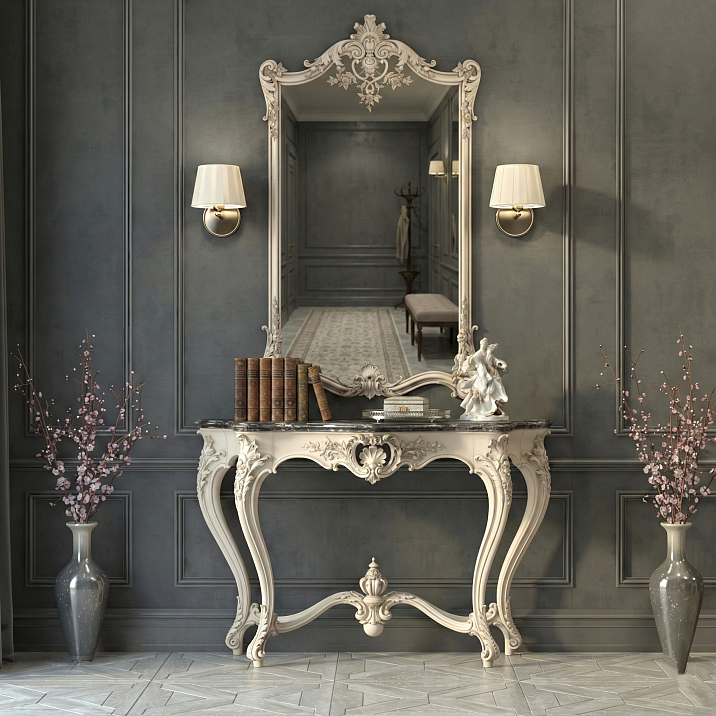
Upon entering a home, we want to see beauty from the first step. The entryway is the calling card of the interior, a space that forms the first impression of the owners' taste. Every element is important here: from the wall color to furniture capable of combining functionality and aesthetics.Console Versaillesembodies the ideal of accent furniture — elegant, luxurious, capable of transforming any space. This piececlassic furnituredoesn't just store keys and small items — it becomes the focal point of the composition, around which the entire interior of the entryway or living room is built.
In this article, we will explore in detail the possibilities of using the Versailles console in various areas of the home, its structural features, manufacturing materials, and ways to decorate the space around it. You will learn how to work with mirrors, paintings, moldings, and accessories to create a complete interior composition, full of nobility and sophistication.



What is a console and why is it important in interior design
A console is a narrow wall-mounted table that historically served a decorative function in palace halls and aristocratic living rooms. Unlike a regular table, a console does not claim a central position in the room; it lives along the wall, creating an accent and organizing the space. It is an ideal solution for narrow corridors, entryways, areas behind sofas in living rooms, or even for dining rooms, where a console can replace a serving table.
The modern console retains its decorative function but also gains practical value. Lamps, vases, books, decorative objects, keys, and mail are placed on it. A console zones the space, creates a visual anchor for wall decor — mirrors, paintings, compositions ofof furniture decor. In a classic interior, the console becomes the focal point of the composition, an element that unites wall architecture, furniture, and accessories into a single whole.
Furniture and interior itemsin a classic style, especially consoles, require careful attention to materials and craftsmanship. Wood, carving, proportions, balance — all these aspects determine how harmoniously the piece will fit into the space and whether it can become a true decoration of the home.




Versailles Console: description, dimensions, construction
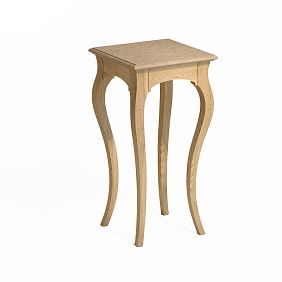
The Versailles console is the embodiment of French classicism, inspired by the era of Louis XIV. The name refers to the Palace of Versailles, a symbol of luxury, elegance, and impeccable taste. This model combines carved elements, smooth lines, precise proportions, and noble materials. The console is made of solid oak and beech, which guarantees durability, load-bearing capacity, and the preservation of aesthetic qualities for decades.
The dimensions of the Versailles console (model 006-001) are: length 1385 mm, width 534 mm, height 905 mm. These parameters make the console spacious enough for decorative compositions, yet it remains elegant and does not overwhelm the space. The depth of the tabletop allows for placing a lamp, vase, photo frames, or books without fear that the items will look cramped.
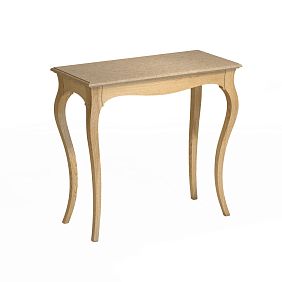
Structurally, the console consists of a tabletop, frame, and carved legs. The tabletop can be made of solid wood or veneered board with natural veneer, depending on the chosen finish. The carved legs — the hallmark of the model — are adorned with floral patterns, volutes, and acanthus leaves. The frame is reinforced with internal connections, ensuring structural rigidity and stability even under intensive use.
The console's finish can vary: from natural wood with clear varnish that highlights the grain, to painting in white, cream, gray, or dark shades with patination and gilding. Patina adds a vintage feel, creating an effect of noble antiquity; gilding accentuates the carved details, making them more expressive. The possibility of customization allows adapting the console to a specific interior, whether it's an entryway in light tones or a living room in rich brown shades.
Our factory also produces:




Manufacturing materials: why oak and beech
Choice of material forclassic furnitureis critical. Solid oak and beech are traditional species used in the production of elite furniture for centuries. Oak is renowned for its hardness, moisture resistance, and beautiful grain with pronounced annual rings. It does not warp over time, does not crack, and retains its shape even under fluctuating temperature and humidity conditions. Oak furniture serves for generations, is passed down as heirlooms, and becomes a family relic.
Beech is a denser and more uniform species, with a fine grain, ideal for delicate carving. Beech wood is easy to work with, takes any shape, and allows for creating complex patterns with fine details. Beech is also strong, load-resistant, and has a warm honey hue that looks excellent both in its natural state and under paint. The combination of oak and beech in one structure provides an optimal balance of strength and decorative appeal.
The use of solid wood makes the console eco-friendly, safe for health, fills the room with natural warmth and the scent of wood. Unlike furniture made of particleboard or plastic, a wooden console 'breathes,' regulates humidity in the room, and creates a unique atmosphere of coziness.interior decorationNatural wood always remains relevant, never goes out of style, and organically fits into any style—from strict classic to modern eclectic.
Get Consultation
Placement options for the Versailles console in the home
Entryway: first impression
The hallway is a classic place for a console. Here it serves several functions: a visual focal point, a storage spot for small items (keys, gloves, mail), and a base for a decorative composition with a mirror and accessories. The Versailles console in the hallway creates a sense of order and elegance from the first step into the home. It doesn't take up much space due to its shallow depth but sets the tone for the entire interior.
Traditionally, a mirror is placed above the console in the hallway. This is not only functional (allowing you to check your appearance before leaving) but also decorative: the mirror visually expands the space, reflects light, and makes a narrow corridor appear wider and brighter. A mirror in a carved frame that echoes the console's decor creates a complete composition. On the console's surface, you can place a table lamp, a vase with flowers, a key tray, or decorative candles.
Living room: behind the sofa or against a wall
In the living room, the console can stand behind the sofa, parallel to its back. This technique is popular in American and European design: the console zones the space, creates a horizontal line for placing lamps, books, and photo frames. The sofa is separated from the wall, making the composition three-dimensional and layered. On the console behind the sofa, it's convenient to place drinks, remotes, magazines—everything you need within reach without cluttering the coffee table.
An alternative option is placing the console against a free wall in the living room, between windows, or next to a door. Here, it functions as an independent decorative object, the center of a wall composition. Above the console, you can hang a mirror, painting, panel, or create a gallery wall of photos. On the surface, symmetrical compositions are arranged: two lamps at the edges, a vase in the center, books, figurines. Symmetry is characteristic of classic style, creating balance, calm, and visual harmony.
Dining room: serving element
A console in the dining room can replace a serving table or sideboard. It's convenient for placing dishes for serving, drinks, and utensils. During gatherings, the console serves as an additional work surface, freeing the dining table from extra items. In everyday use, it stores tablecloths, napkins, and serving accessories.
Above the console in the dining room, you can hang a still-life painting, a framed mirror, or create a wall composition of plates. The decor should echo the overall style of the dining room, support the color scheme, but not be too colorful—the dining room requires calm and elegance.
Bedroom: dressing table or accent against a wall
In the bedroom, a console can serve as a dressing table if complemented with a mirror and a comfortable chair. This is especially relevant for spacious bedrooms with room for a separate beauty area. A console against the wall in the bedroom functions as a spot for decorative items, books, aromatic candles, creating coziness and interior completeness.
Wall decoration above the console: basic principles
The wall above the console is a canvas for creating an interior composition. A bare wall above the console looks unfinished, wasting the space's potential. A properly decorated wall turns the console into a focal point, creating a visual connection between the furniture and the room's architecture.
Basic principles for decorating the wall above the console:
-
Proportions: The wall decor should be proportionate to the console. A mirror or painting shouldn't be too small (they'll get lost) or too large (they'll overwhelm the console). The optimal width for wall decor is 60-80% of the console's width.
-
Height placement: The center of the mirror or painting should be at eye level for a standing person, typically 150-160 cm from the floor. The lower edge of the decor should be 10-20 cm above the console's surface to create a visual connection without touching items on the surface.
-
Symmetry or balance: In classic style, symmetry is preferred—one large mirror centered, two identical lamps on the console, symmetrical accessories. An alternative is visual balance, where asymmetrical elements are balanced in mass and color.
-
Color scheme: The decor on the wall and console should support the overall interior palette. If the walls are light, the mirror frame can be contrasting (dark wood, gold); if the walls are dark, the frame should be light or gilded.
-
Lighting: It's important to consider how light falls on the wall above the console. If there's natural light, the mirror will reflect and enhance it. If light is scarce, lamps on the console are needed to highlight the composition and create shadow play on relief elements.
Mirror above the console: shapes, sizes, frames
A mirror is the most popular decorative element for the wall above a console. It's functional and decorative, visually expands space, reflects light, and creates depth. The choice of mirror depends on the interior style, console size, and overall design concept.
Mirror shape
In classic interiors, traditional shapes are preferred: vertical rectangle, square, oval, arch. A vertical rectangular mirror visually elongates the wall and makes the ceiling appear higher. A square mirror suits medium-length consoles, creating harmonious proportions. An oval mirror softens geometry, adds elegance, and looks especially good in feminine spaces—bedrooms, boudoirs. An arched mirror references architectural elements of classic style, creating a window-in-the-wall effect.
Round mirrors are less characteristic of strict classicism but can be used in eclectic interiors where a classic console combines with modern accents. A circle creates dynamism, contrasts with the console's straight lines, and draws attention.
Mirror size
The mirror above the Versailles console should be proportionate to its width. With a console width of 1385 mm, the optimal mirror width is 800-1100 mm. A too-narrow mirror will get lost on the wall; a too-wide one will extend beyond the console and disrupt balance. Mirror height depends on shape: for a vertical rectangle—1000-1400 mm, for a square—800-900 mm, for an oval—1000-1200 mm.
A full-length mirror (from floor to ceiling) is not placed above a console—it overwhelms the furniture and disrupts proportions. Such a mirror is appropriate in a separate niche or on a free wall, but not above a console.
Mirror Frame: The Decorative Dominant
The mirror frame is a key element of the composition. In a classic interior, the frame should be expressive, carved, with decor that echoes the console's decoration.Furniture decorClassic options for mirror frames include carved overlays, moldings, gilding, patination. The frame can be made of wood, plaster, polyurethane—the choice depends on budget and style.
A carved wooden frame is a classic choice. Solid oak, beech, or walnut with hand carving creates a sense of luxury, solidity, and tradition. Carving can be floral (acanthus, laurel, grapevine), geometric (meander, beads, egg-and-dart), or baroque (scrolls, rocaille, cartouches). The frame is painted in a color harmonizing with the console or gilded—either entirely or partially (only the raised carving elements).
A plaster frame is cheaper than a wooden one but can also be very decorative. Plaster holds details well, allowing for the creation of complex ornaments. The downside is fragility and sensitivity to moisture. Plaster frames are suitable for living rooms, bedrooms, and dining rooms, but not for bathrooms or hallways with high humidity.
A polyurethane frame is a modern alternative, affordable, lightweight, and moisture-resistant. Polyurethane imitates wood carving or plaster stucco, can be painted any color, or gilded. A high-quality polyurethane frame is visually indistinguishable from a wooden one but weighs less and is easier to install.
The width of the frame depends on the size of the mirror and the interior style. Classic style is characterized by wide frames—10-20 cm on each side. Narrow frames (3-5 cm) look more modest and are suitable for small rooms or minimalist interpretations of classic style.
Moldings around the mirror: an architectural frame
A framed mirror hanging on a bare wall can look lonely. Moldings installed on the wall around the mirror create an additional frame, integrating the mirror into the wall's architecture.interior decorationWall moldings are a way to turn a plain wall into an architectural element, adding depth, structure, and rhythm.
Moldings are mounted on the wall at a distance of 10-20 cm from the edge of the mirror frame, forming a rectangle or oval (if the mirror is oval). The width of the molding is 5-10 cm, with a classic relief: beads, egg-and-dart, ovolos, meanders. The molding profile should echo the profile of the mirror frame or the decor of the console, creating visual unity in the composition.
The wall inside the molding frame (between the molding and the mirror frame) can be painted in a contrasting color relative to the main wall: if the wall is white, the area around the mirror can be beige, gray, or colored. This creates depth, highlights the composition, and makes the mirror the focal point. An alternative is to cover the wall inside the frame with fabric (silk, velvet) or wallpaper with a pattern: damask, stripes, geometry.
Moldings are attached with adhesive (liquid nails, polyurethane glue), and corners are cut at 45 degrees with a miter box for a perfect joint. After installation, moldings are painted white, wood-toned, wall-colored, or in a contrasting shade. Painting moldings the same color as the mirror frame creates a unified composition effect; painting them the same color as the wall creates a relief or graphic effect.
Can you do without wall moldings? Yes, but the composition will be less complete. Moldings create architectural structure, link the console to the wall, and add depth. If moldings seem excessive, use at least a frame around the mirror—this is the minimum decor for a classic style.
Wall decor: panels, molding frames, overlays
The walls of a hallway or living room are the backdrop against which the composition with the console and mirror unfolds. Bare painted walls are a missed opportunity.Furniture decorMoldings, panels, and carved overlays turn walls into architectural elements, adding depth, structure, and richness.
Wall panels: boiserie
Boiserie (from the French 'boiserie'—wood paneling) is a traditional element of classic interiors, especially French ones. Wall panels are made from solid wood or MDF, mounted on the wall, forming vertical or horizontal surface divisions. Panels can cover the wall completely (from floor to ceiling) or partially (the lower third of the wall—panels, the upper two-thirds—paint or wallpaper).
Carved wall panels create volumetric relief, play of light and shadow, and add depth and richness to the interior. They are not only decorative but also functional: they protect walls from mechanical damage, provide additional sound insulation, and hide surface irregularities. Natural wood panels 'breathe,' regulate humidity, and fill the room with natural warmth.
Panels are painted in classic colors: white, cream, gray, beige, or retain the natural color of the wood with a varnish finish. Panels can be patinated (artificially aged), gilded on raised carving elements, or painted in two tones (light base with dark moldings or vice versa).
Molding frames on walls
If panels seem too substantial, an alternative is molding frames on walls. Moldings are mounted directly on a painted wall, forming rectangular frames. Inside the frames, the wall can be painted the same color (monochrome relief), a contrasting color, covered with patterned wallpaper, or upholstered with fabric.
The molding profile is classic, 5-8 cm wide. Moldings are attached with adhesive, and corners are cut at 45 degrees for a perfect joint. After installation, moldings are painted white, wood-toned, or wall-colored. Molding frames create rhythm, structure, make walls appear taller, and add elegance. They are especially good in high-ceilinged rooms where bare walls look empty.
Decorative appliqués
Decorative overlays are flat or three-dimensional carved elements attached to walls or furniture, creating accents. Overlays can be floral (leaves, flowers, grapevines), geometric (rosettes, medallions, cartouches), or narrative (angels, cupids, coats of arms). They are placed in the center of molding frames, at corners, along moldings, enhancing the decorative quality of the composition.
Overlays are made from wood, plaster, or polyurethane, attached with adhesive, and painted or gilded. A central overlay is placed in the geometric center of a panel created by moldings, acting as a focal point. Linear overlays are placed along a molding, turning a simple molding into a luxurious frame.
Paintings and panels above the console
An alternative to a mirror is a painting or panel. This is suitable for dining rooms, living rooms, and bedrooms where a mirror is not functionally necessary. A painting works as a color and narrative accent, sets the mood, and supports the interior's style.
Choosing a painting
For a classic interior with a Versailles console, suitable paintings include genres such as landscape (park views, seascapes, architecture), still life (flowers, fruits, game), and portrait (aristocratic portraits, family portraits). The subject should be calm, harmonious, and not aggressive. Abstraction and contemporary art can be used in eclectic interiors where classic furniture is combined with modern elements but require caution.
The size of the painting is determined by the same principles as a mirror: width 60-80% of the console's width, height depends on the canvas format. The painting should be framed—classically, wide, carved, or gilded. The painting's frame should echo the decor of the console and other interior elements.
Gallery hanging
Instead of one large painting, you can create a gallery hanging—a composition of several paintings, graphics, or photographs. The hanging can be symmetrical (mirrored arrangement relative to a central axis) or asymmetrical but visually balanced.
For a symmetrical hanging: a central painting above the console, two to four smaller paintings on the sides, at the same level or cascaded. All frames are of the same style and color, with subjects that echo each other. For an asymmetrical hanging: paintings of different sizes and shapes but with a unified color palette or style. The composition is arranged so that the visual center of gravity is above the center of the console.
The hanging should not be chaotic. Before mounting on the wall, it is recommended to lay out the composition on the floor, adjust distances, and assess balance. The distance between paintings in a hanging is 5-10 cm, and the distance from the bottom painting to the console tabletop is 10-20 cm.
Console Accessory Composition
The console tabletop is a stage for a decorative composition. An empty console looks unfinished, an overloaded one looks chaotic. The art lies in finding the balance between functionality and aesthetics, creating a composition that is both beautiful and convenient.
Basic Composition Elements
Lighting: A table lamp or a pair of lamps is a mandatory element on a console. Lamps create coziness, highlight the composition, and are functionally necessary in an entryway. In classic style, lamps with fabric shades, ceramic or wooden bases, and crystal pendants are used. Two identical lamps at the edges of the console create symmetry; one lamp on one side is balanced by another large object (vase, sculpture) on the other.
Vase with Flowers: Fresh or artificial flowers add freshness, color, and life. The vase should be proportional to the console: not too small (it will get lost), not too tall (it will block the mirror or painting). Classic vase shapes: amphora, krater, footed vase. Materials: ceramic, porcelain, glass, metal.
Books: A stack of beautiful books (art albums, photo albums) adds intellectuality, creates visual weight, and works as a stand for other items. Books are laid horizontally, in a stack; a small vase, box, or decorative object can be placed on them.
Decorative Objects: Candles in candlesticks, boxes, figurines, photo frames, clocks. Objects should echo each other in style, color, and material. Avoid clutter—it's better to have three to five items in a unified palette than ten disparate ones.
Principles of composition
Symmetry: Two lamps at the edges, a vase in the center, two candlesticks next to the vase. Symmetry creates order, calm, and is characteristic of the classic style.
Asymmetrical Balance: A large lamp on the left, a stack of books on the right, a vase on the books. The visual weight is distributed evenly, but the objects are different. Asymmetry adds dynamism and modernity.
Height Balance: The composition should have height levels—low objects (books, boxes), medium (vases, candlesticks), high (lamps, tall vases with branches). This creates volume and visual interest.
Rule of Odd Numbers: Compositions of three, five, or seven objects work better than those of two, four, or six. An odd number creates visual dynamism and avoids staticness.
Seasonality and Variability
The composition on the console can be changed depending on the season, mood, or event. In spring—flowers, light pastel shades. In summer—greenery, seashells, nautical themes. In autumn—pumpkins, yellow-red palette, branches with leaves. In winter—candles, pine needles, New Year's decor. Such variability maintains the freshness of the interior and creates a sense of a living, changing space.
Lighting the Console Composition
Lighting is a critical element that determines how the console composition will look at different times of the day. Daylight, artificial lighting, accent lighting—all work to create an atmosphere.
Daylight
If the console is opposite a window or near one, the mirror above the console will reflect light, making the room brighter. This is ideal for narrow, dark entryways. If the console is against a wall without windows, it's important to provide sufficient artificial lighting.
Table Lamps
Lamps on the console create local lighting, highlight the composition, and work as a decorative element. Shades diffuse light, creating a soft glow. Lamps should be bright enough to illuminate the console area but not blinding. Recommended wattage for incandescent bulbs is 40-60 W, for LED—equivalent to 6-10 W.
Accent Lighting
Additional lighting for the mirror or painting above the console creates a dramatic effect, highlights the composition, and makes it the center of attention. Lighting can be built-in (LED strip around the mirror frame perimeter), wall-mounted (sconces above or on the sides of the mirror), or ceiling-mounted (spotlights or track lights directed at the wall with the console).
An LED strip is mounted behind the mirror frame, creating a glow effect, a halo around the mirror. This is a modern solution but can also be used in classic interiors if the strip is hidden and the light is not directly visible, only the reflection.
Wall sconces in classic style (with fabric shades, crystal pendants, forged elements) are placed on the sides of the mirror, at the level of the upper third. Sconces create symmetrical lighting, emphasize the composition, and add elegance.
Ceiling spotlights or track lights are directed at the wall with the console, creating accent lighting from above. This works well in rooms with high ceilings, where it's possible to create multi-level lighting.
Composition Color Palette
Color is a powerful tool in creating a console composition. The right color palette unites elements, creates harmony, and sets the mood. The wrong one destroys the composition and creates chaos.
Monochromatic palette
A monochrome composition is built on shades of one color: white, cream, beige, gray. The console is white or light, walls are white or beige, the mirror frame is white or gilded, accessories are in the same palette. Monochrome creates calm, lightness, visually expands the space, and is suitable for small rooms, entryways, bedrooms.
Contrast Palette
A contrast composition is built on the combination of opposite colors: a dark console on a light wall, a light console on a dark wall. Contrast creates drama, highlights the furniture, and makes it the center of attention. Suitable for spacious rooms, living rooms, dining rooms, where bold solutions can be afforded.
Accent Palette
The accent composition is built on a neutral base (white, gray, beige) with the addition of color accents (blue, green, burgundy, gold). The console and walls are neutral; accents are introduced through accessories: vases, pillows on the bench under the console, lamp shades, paintings. Accents enliven the composition, add individuality, but do not overload it.
Gilding
Gold is a classic element of luxury in interior design. Gilding the mirror frame, carved console elements, and wall moldings creates a palatial luxury effect. Gold pairs well with white, cream, gray, burgundy, and dark green. It's important not to overdo it: if the mirror frame is gilded, the console should be more restrained, and vice versa.
Stylistic variations
The Versailles console is classic furniture, but it can be used in various stylistic contexts, from strict classicism to modern eclecticism.
Strict classicism
Strict classicism is about symmetry, proportions, natural materials, and a restrained color palette. A console in natural wood or white, a mirror in a carved wooden frame, wall moldings, wall panels, two lamps on the console, symmetrical accessories. Colors: white, cream, beige, gray, brown. Decor is minimal but high-quality.
Baroque and Rococo
Baroque is maximum luxury, an abundance of carving, gilding, patina, and curved lines. A console with rich carving, gilding, patination; a mirror in a heavy gilded frame; wall moldings with carved overlays; an abundance of accessories; heavy fabrics. Colors: gold, burgundy, emerald, sapphire, ivory. Baroque suits spacious rooms, palatial interiors.
Rococo is a lighter version of Baroque, more playful, with asymmetrical scrolls, floral motifs, and pastel shades (pink, blue, mint). A console with delicate carving, light gilding; a mirror in an asymmetrical frame with rocaille; light walls; light accessories.
Modern classic
Modern classicism is classical forms in a modern interpretation, restrained decor, neutral colors, minimal ornamentation. A Versailles console in light wood or painted gray; a mirror in a simple frame without excessive carving; minimalist wall moldings; laconic accessories. Combining classic furniture with modern lighting, abstract paintings, and contemporary fabrics. This is a compromise for those who love classicism but want to avoid a museum-like feel.
Eclecticism
Eclecticism is a mix of styles, eras, and cultures. A Versailles console in a classic style is combined with a modern frameless mirror, an abstract painting, and unusual accessories (African sculpture, Indian vase, Scandinavian ceramics). A sense of proportion is important: eclecticism requires confidence, taste, and the ability to balance disparate elements. Chaos is unacceptable—there must be a unifying idea: color, material, mood.
Practical aspects of installation and care
Console installation
The Versailles console is placed against a wall and can be additionally secured to the wall for stability (especially if there are children or pets in the house). It is fastened through the back panel of the console frame to the wall using dowels or anchors. The console should stand level and horizontally, checked with a level.
Installing a mirror
The mirror is mounted on the wall at a height of 10-20 cm from the console tabletop. The mounting method depends on the mirror's weight: light mirrors are hung on screws or dowels; heavy ones require special mirror mounts or anchors. The mirror should hang securely, not wobble, and not pose a risk of falling. If the mirror is very heavy (massive wooden frame), mounting at multiple points is recommended.
Molding installation
Moldings are attached with adhesive (liquid nails, polyurethane glue). The wall is pre-leveled and primed. The molding is cut to size, corners at 45 degrees, test-fitted on the wall, adhesive is applied, pressed to the wall, and secured with painter's tape until the adhesive dries (usually 24 hours). After drying, the moldings are painted, joints are filled with putty, and sanded for a seamless connection.
Care for wooden furniture
A solid wood console requires regular care to maintain its appearance. Dust is removed with a dry or slightly damp soft cloth (microfiber). Do not use abrasive cleaners, hard sponges, or aggressive chemicals—they damage the varnish finish and carving.
Every few months, it is recommended to treat the wood with furniture polish or natural wax. This nourishes the wood, restores shine, and protects against drying out. If scratches or minor damage appear on the console, they can be concealed with a furniture marker matching the wood tone or wood oil.
Avoid placing hot items without coasters, wet vases without mats, or heavy objects that could dent the tabletop on the console. Protect the console from direct sunlight—it fades the wood and damages the varnish.
Frequently asked questions
What is the optimal console height for an entryway?
The Versailles console has a height of 905 mm, which is standard for consoles. This is a convenient height for placing items, requiring no bending or reaching. The tabletop is approximately at waist level for an adult, making it comfortable to use.
Can the Versailles console be used in a small entryway?
Yes, the Versailles console has a shallow depth (534 mm), allowing it to be used in narrow spaces. Its length of 1385 mm requires a free wall of at least 1.5 meters, which is quite feasible even in standard urban apartment entryways. A mirror above the console will visually expand the space, making the entryway brighter and more spacious.
Are wall moldings mandatory?
No, moldings are not mandatory but are desirable if you want to create a complete classic composition. Moldings add architectural depth and connect the console to the wall. If the budget is limited or the interior style is more minimalist, you can do without moldings, limiting yourself to a mirror in a beautiful frame and accessories on the console.
What console color should I choose for a light interior?
For a light interior, a console in natural light wood (oak, beech), white, or cream is suitable. A light console will harmoniously blend in, not overload the space, and create a sense of lightness and airiness. If you want contrast, you can choose a console in dark wood (walnut, wenge), but then it's important to balance it with other dark elements in the interior (picture frames, furniture legs).
How many accessories can be placed on the console?
Optimally, 3-5 items. Fewer—the console looks empty; more—it looks cluttered. Follow the principle 'less is more': a few high-quality, beautiful items look more impressive than many small ones. Leave free space on the tabletop—this creates a sense of order and gives the eye a rest.
Can heavy objects be placed on the console?
The Versailles console is made of solid wood and can withstand significant loads, but it's best not to overdo it. It is not recommended to place aquariums, large sculptures, or heavy boxes on the console. The tabletop is designed for decorative items, lamps, vases, books—typical of its function. Excessive weight can deform the tabletop or loosen the frame.
How to combine the console with other furniture in the entryway?
The Versailles console pairs well with otherclassic furniturepieces: a bench, an ottoman, a cabinet, a coat rack. It's important that the furniture shares a unified style, echoing in color, material, and decor. If the console has carved legs, the ottoman can feature similar carvings. If the console is white, the rest of the furniture can also be white or in light tones with the same accents.
Does a mirror in the hallway need protection from moisture?
A mirror in the hallway isn't exposed to the same level of humidity as in a bathroom, but protection doesn't hurt. A frame made of natural wood should be coated with varnish or wax to prevent the wood from absorbing moisture. The mirror glass itself isn't afraid of moisture, but it's worth avoiding direct water contact at the joints between the mirror and the frame—this can lead to the amalgam peeling.
Can the Versailles console be used in a modern interior?
Yes, the Versailles console can be used in modern eclecticism, where classical elements are combined with contemporary ones. A console in light wood or painted gray, paired with a modern frameless mirror, minimalist accessories, and contemporary lighting, will create an interesting contrast between classic and modern. A sense of proportion and a unified color palette are important.
Which mirror is better: with a bevel or without?
A bevel is a slanted edge of a mirror that creates volume and plays with light. A mirror with a bevel looks richer, more decorative, and is characteristic of classic style. A mirror without a bevel is more modern and minimalist. For a Versailles console in a classic interior, a mirror with a bevel is better, as it will support the style. In a modern interpretation, you can use a mirror without a bevel but in a beautiful frame.
Conclusion: the art of creating a harmonious space
Console Versailles— it's not just a piece of furniture; it's a tool for creating an interior composition, a centerpiece around which the space of a hallway, living room, dining room, or bedroom is built. A correctly chosen console, a well-decorated wall above it, a thoughtfully composed arrangement of accessories, and proper lighting—all together create a harmonious, beautiful, functional space that is pleasant to be in.
Wall decor using moldings, panels, and carved overlays transforms an ordinary hallway into an elegant hall and a living room into an aristocratic salon. A mirror in a carved frame, a composition of paintings, carefully selected accessories—every detail works to create a cohesive image that reflects taste, status, and respect for tradition.
ChoosingFurniture and interior itemsfor your home, pay attention to the quality of materials, craftsmanship, and the possibility of customization.Classic Furnituremade of natural wood, crafted with skill and attention to detail, will last for decades, retain its beauty, and become a family heirloom.
The company STAVROS offers a full range of classic furniture, moldings, decorative overlays, and carved elements made from solid oak, beech, ash, and linden. In-house production, quality control at every stage, and the possibility of custom orders—all this guarantees that you will get exactly the result you dream of. A wide selection of molding profiles—from laconic modern to richly decorated classic—allows for the realization of any concept.
Creating an interior is an art that requires knowledge, taste, and attention to detail. The Versailles console and the entire complexinterior decoraround it—is an opportunity to embody your ideas of beauty, comfort, and harmony. Don't be afraid to experiment, to seek your unique solution, but remember the basic principles: proportions, balance, material quality, and stylistic unity. Then your home will become not just a place to live, but a space that inspires, delights, and creates an atmosphere of well-being and beauty.