Article Contents:
- Console as the architectural center of the hallway
- Console placement: geometry and symmetry
- Console decor: carving and gilding
- Console functionality: beauty and utility
- Mirror above the console: doubling space and light
- Mirror size and shape
- Mirror frame: decorative dominant
- Moldings around the mirror: wall frame
- Sconce symmetry: light as a compositional element
- Sconce placement: strict symmetry
- Sconce style and shape
- Light and mood
- Wall decor: moldings, panels, overlays
- Panels on the lower part of the wall: practicality and aesthetics
- Molding frames on walls: rhythm and structure
- Carved overlays: wall accents
- Hallway floor: practicality and style compliance
- Materials: tile, stone, parquet
- Baseboards: tall and decorative
- Minimum furniture — maximum decor: philosophy of the classic hallway
- Bench or pouf: seating at the entrance
- Coat rack: functionality and style
- Decorative objects: final touches
- Color palette of the classic hallway
- Light tones: expanding space
- Contrast combinations: drama and depth
- Accent colors: individuality
- Frequently Asked Questions
- What console width is optimal for a narrow hallway?
- Can you do without wall moldings?
- Which mirror to choose: oval or rectangular?
- Are sconces needed if there is a ceiling light in the hallway?
- What color console to choose: dark or light?
- Can you use a frameless mirror in a classic interior?
- How much does it cost to decorate a classic hallway with a console and decor?
- Conclusion: create a hallway that greets like a royal hall

The hallway decides everything in five seconds. A guest steps over the threshold — and instantly reads information about you, your home, your taste. A chaos of shoes, bare walls, a random coat rack — or a thoughtful composition whereClassical Consolebecomes the center of attraction, around which the entire interior is built? The hallway is not a room for living, it is a theatrical stage on which the first act of acquaintance with the house is played out. And the console here plays the main role.
in the hallway — it's not about maximum storage, but about creating an atmosphere. A console table on elegant legs, graceful, light, decorative, sets the tone for elegance. It does not fill the space, but structures it. Above the console — a mirror. On the sides — sconces. Around — moldings. All this adds up to a symmetrical, harmonious composition that says: people with taste live here, beauty is valued here.Classic FurnitureThe console as the architectural center of the hallway
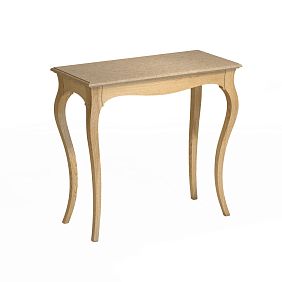
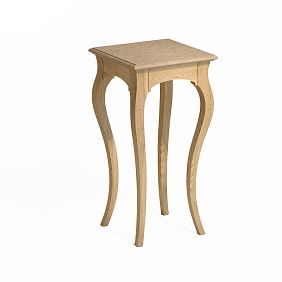


The console in the hallway is not just a stand for keys. It is a pedestal on which the entire decorative concept of the room unfolds. Visual lines stretch from the console to the mirror, to the lights, to the wall decor, to the floor. Everything is connected, everything works for a single idea.
Console placement: geometry and symmetry




The console is placed against a wall, most often opposite the entrance door (if the layout allows) or along a long corridor wall. Opposite the door is the optimal option: upon entering, the guest immediately sees the composition, and it becomes a focal point, distracting from the narrowness of the corridor or layout imperfections.
Console height: standard 75–85 cm (like a dining table). This height is convenient for placing keys, a bag, a vase with flowers, a lamp. Console width: from 80 to 140 cm. Narrow hallway — narrow console (80–100 cm). Spacious — you can allow 120–140 cm. Console depth is minimal: 30–45 cm. The console should not eat up the passage space.
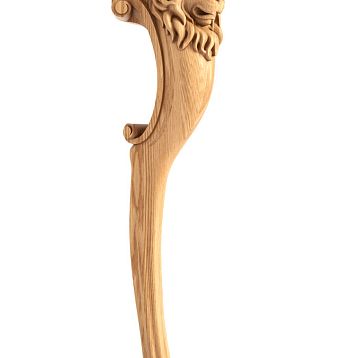
Console material: solid wood. Oak, beech, ash — species that hold carving, age beautifully, and withstand loads. Console legs — turned, carved, curved (cabriole for baroque) or straight and strict (for classicism). The tabletop can be wooden, marble, granite. Marble adds luxury but requires care. Wood is warmer, more practical.
Console decor: carving and gilding
Our factory also produces:


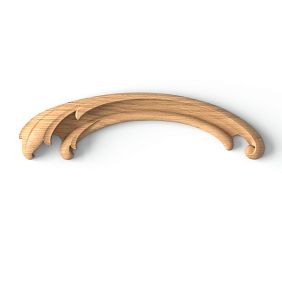


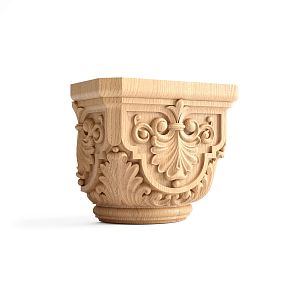

differs from modern minimalist precisely in decor. Carved overlays on the legs, a frieze (decorative strip under the tabletop) with a floral ornament, gilded elements — all these are signs of classicism. But it is important not to overload: the console in the hallway should be graceful, not monumental.
Classical ConsoleCarving on the legs: acanthus leaves (classical motif), grapevines, floral garlands. Carving can be deep relief (baroque) or flatter and more graphic (neoclassical). Gilding — gold leaf, imitation gold leaf (patina) or gold paint — is applied to the protruding parts of the carving, emphasizing the relief.
Console color: natural wood with oil or varnish (emphasizes texture), white or cream (for light interiors, visually expands space), dark (wenge, mahogany — for contrast with light walls). Patination (artificial aging) adds nobility, creates an antique effect.
Console functionality: beauty and utility
Get Consultation
The console is not only decorative but also functional. A tray for keys, mobile phones, small items is placed on the tabletop. A vase with flowers (live or artificial) adds life, color, aroma. A table lamp (if there is no natural light in the hallway) creates local lighting, coziness.
Under the tabletop, there can be a shelf (if the console design provides) for books, baskets with gloves, an umbrella. But you should not turn the console into a storage unit — it should remain light, neat. Minimalism in content — maximum aesthetics.
Mirror above the console: doubling space and light
A console without a mirror is like a theater without a curtain. A mirror above the console is a mandatory element of a classical composition. It performs several functions: practical (to look at yourself before leaving), visual (expands space, reflects light), decorative (the mirror frame is a work of art).
Mirror size and shape
The width of the mirror should be approximately equal to the width of the console or slightly less (by 10–20 cm). A too wide mirror will visually overwhelm the console. Too narrow — it will get lost. Mirror height: from 80 cm to 150 cm depending on the ceiling height and the scale of the hallway. In a standard hallway with a 2.7 m ceiling, a mirror height of 100–120 cm is optimal.
Mirror shape: vertical rectangular (classic, visually stretches space), vertical oval (baroque, rococo, softness of lines), arched (gothic, romanticism, solemnity), round (modern classic, graphic quality). The choice of shape depends on the interior style and hallway proportions.
Mirror placement: strictly centered above the console, on the same vertical axis. Asymmetry in a classic interior is unacceptable. The lower edge of the mirror frame should be 10–20 cm above the console tabletop. Too low — the mirror will 'sit' on the console. Too high — the composition will fall apart.
Mirror placement: strictly centered above the console, on the same vertical axis. Asymmetry is unacceptable in classic interiors. The lower edge of the mirror frame should be 10–20 cm above the console tabletop. Too low — the mirror will 'sit' on the console. Too high — the composition will fall apart.
Mirror Frame: The Decorative Dominant
A mirror frame is not just a border; it is a decorative object that can be even more important than the mirror itself.Furniture decorfor mirror frames includes carved overlays, moldings, gilding, patination. The frame should echo the console's decor but not copy it entirely.
Frame width: 8–15 cm for small mirrors, 15–25 cm for large ones. A wide, massive frame suits spacious hallways with high ceilings. A narrow, elegant one suits compact spaces. Frame profile: classic (with coves, shelves, beads), baroque (complex, multi-level, with large carved elements), neoclassical (concise, with minimal decor).
Frame material: solid wood (oak, beech, walnut), polyurethane (for complex baroque shapes, cheaper than wood, lighter), plaster (for molded frames, requires careful handling). Wood is more noble but more expensive. Polyurethane is more practical but requires quality painting to avoid looking like plastic.
Frame color: matching the console tone (monochrome composition, emphasis on form), contrasting (white frame on a dark wall, black on a light one — graphic style), gilded (luxury, palace style, baroque), silvered or patinated (vintage, shabby chic, Provence).
Moldings around the mirror: a frame on the wall
A framed mirror hanging on a bare wall can look lonely. Moldings installed on the wall around the mirror create an additional frame, integrating the mirror into the wall's architecture.interior wall decorin the form of moldings is a way to turn a plain wall into an architectural element.
Moldings are mounted on the wall at a distance of 10–20 cm from the edge of the mirror frame, forming a rectangle or oval (if the mirror is oval). Molding width: 5–10 cm, classic relief (beads, egg-and-dart, ovolos). The molding profile should echo the profile of the mirror frame or console.
The wall inside the molding frame (between the molding and the mirror frame) can be painted in contrast to the main wall: if the wall is white, the area around the mirror can be beige, gray, or colored. This creates depth and highlights the composition. Alternatively, the wall can be covered with fabric (silk, velvet) or wallpapered with a pattern.
Symmetry of sconces: light as a compositional element
Lighting in the hallway is often underestimated. A single ceiling fixture is insufficient: it provides flat light, does not highlight decor, and creates shadows on the face when looking in the mirror. Wall sconces on either side of the mirror solve these problems: they provide local lighting, illuminate the face evenly, and add decorativeness.
Sconce placement: strict symmetry
Two sconces are placed on either side of the mirror, strictly symmetrical relative to the vertical axis of the console and mirror. Distance from the edge of the mirror to the sconce: 30–50 cm. Too close — the sconces will merge with the mirror. Too far — the composition will fall apart. Sconce mounting height: at the level of the upper third of the mirror or slightly higher. This ensures optimal facial illumination.
If the mirror is very tall (over 150 cm), sconces can be placed on two levels: a pair at the bottom (at the middle of the mirror) and a pair at the top (near the upper edge). This creates more even lighting and enhances symmetry. But this option requires a spacious hallway; in a small one, it will be overwhelming.
Style and form of sconces
Sconces should match the style of the console and mirror. For a classic interior, sconces with arms (imitating candles), with textile shades, or with crystal pendants are suitable. For baroque — opulent, gilded, with many decorative elements. For neoclassical — concise, with simple lines, metal or glass shades.
Sconce material: brass (a noble metal, patinates beautifully), bronze (darker than brass, more luxurious), wrought iron (for rustic interiors, Provence), painted metal (white, black, gold). Shades: textile (cotton, linen, silk), glass (transparent, frosted, colored), crystal (luxury, play of light).
Sconce size: proportional to the size of the mirror and console. For a small console (80–100 cm) — compact sconces 20–30 cm high. For a large console (120–140 cm) — more substantial sconces 30–50 cm high. Too small sconces will get lost, too large ones will overwhelm the composition.
Light and mood
Type of bulbs in sconces: warm white light (2700–3000K) creates coziness, softness, suitable for evening lighting. Neutral white (4000K) — for morning, more invigorating light. Incandescent or LED bulbs that mimic warm glow are preferable to cold energy-saving ones.
Bulb wattage: 40–60 W (LED equivalent — 5–8 W) per sconce. Too bright light in the hallway is inappropriate; it creates tension. Soft, diffused light is more comfortable. The possibility of dimming (brightness adjustment) is a plus, allowing you to change light intensity depending on the time of day and mood.
Wall decor: moldings, panels, overlays
Hallway walls are the backdrop against which the composition with the console and mirror unfolds. Bare painted walls are a missed opportunity.Solid Wood Itemsin the form of moldings, panels, carved overlays turn walls into architectural elements, adding depth, structure, and richness.
Panels on the lower part of the wall: practicality and aesthetics
A classic technique — panels (boiserie) on the lower third of the wall (height 90–120 cm from the floor). Panels protect the wall from dirt, mechanical damage (hits from bags, suitcases, shoes), and also create architectural structure. Panels can be smooth (simple wood cladding) or paneled (with frames and recessed central parts).
Panel material: solid wood (oak, ash, pine), MDF with natural veneer (cheaper than solid wood but looks decent), painted MDF (for white or colored panels). Panels are mounted on battens or directly on the wall (if it is even) with adhesive and micro-screws.
Panel color: matching the console (creates a unified composition), contrasting (dark panels on light walls — a classic of English interiors), white or cream (for light hallways, visual expansion). The upper part of the wall above the panels is painted or wallpapered. The border between the panels and the upper part of the wall is finished with a molding (strip 3–5 cm wide).
Wall molding frames: rhythm and structure
If panels seem too substantial for your hallway, an alternative is wall molding frames. Moldings are mounted directly onto a painted wall, forming rectangular frames. Inside the frames, the wall can be painted the same color (monochrome relief) or a contrasting one, wallpapered with a pattern, or covered with fabric.
Frame size: depends on the wall area. In a narrow hallway — one or two vertical frames on the sides of the console (height 150–200 cm, width 40–60 cm). In a spacious one — several frames forming a rhythmic composition. Important: frames must be symmetrical relative to the console axis.
Molding profile: classic, width 5–8 cm. The molding is attached with adhesive (liquid nails, polyurethane glue), corners are cut at 45 degrees with a miter box for perfect joining. After installation, moldings are painted white, wood-toned, or to match the wall color.
Carved overlays: wall accents
Carved wooden overlays (rosettes, corner elements, vertical strips) are used as accents on walls. A rosette can be placed in the center of a molding frame, corner overlays — in the corners of frames, vertical strips — on the sides of the console (imitating pilasters).
interior wall decorCarved overlays add three-dimensionality, relief, and artisanal value. Overlays are mounted with adhesive, additionally secured with micro-screws (if the overlay is large and heavy). They are painted to match the wall color, in a contrasting color, or gilded.
Important: avoid overloading. If the wall already has molding frames, carved overlays should be minimal. If the wall is smooth, overlays can be more noticeable. Balance between decor and emptiness is the key to elegance.
Hallway floor: practicality and style compatibility
The hallway floor is the most heavily used area: dirt from outside, moisture, wear. But this doesn't mean aesthetics must be sacrificed for practicality. The floor material must be durable, easy to clean, and still suit the classic style.
Materials: tile, stone, parquet
Porcelain tile is the optimal choice for a hallway. Durable (wear class PEI IV–V), moisture-resistant, not afraid of dirt. Porcelain tile design can imitate marble, natural stone, wood. For a classic interior, marble-look porcelain tile (white, beige, gray with veining) or stone-look (travertine, limestone) is suitable.
Natural stone (marble, granite, travertine) — a premium option. Beautiful, durable, but expensive and requires maintenance. Marble can absorb stains, it needs regular treatment with protective compounds. Granite is stronger but visually colder.
Parquet in the hallway is a debatable solution. Wood fears moisture, scratches. But if you really want the warmth of wood, options are possible: solid plank with protective oil or varnish (thickness 20–22 mm, withstands loads), engineered plank (top layer — veneer, base — plywood, more stable than solid), high-class laminate (wood imitation, moisture-resistant).
Baseboards: tall and decorative
The baseboard in a classic hallway is not a thin plastic strip, but a full-fledged architectural element 10–15 cm high, or better 15–20 cm. A tall baseboard protects the wall from dirt, creates solidity, visually raises the ceiling (paradoxically, but true — a wide baseboard makes a room appear taller).
Baseboard material: solid wood (oak, ash, pine), MDF with natural veneer, painted MDF. Baseboard profile is classic (with curves, shelves), can be simple or carved. Baseboard color: matching the floor (blends, creates a monolith), contrasting (white baseboard on a dark floor — classic), matching the wall (the wall visually continues to the floor).
Minimum furniture — maximum decor: the philosophy of a classic hallway
A hallway in classic style should not be cluttered with furniture. A console, possibly a small bench or pouf for putting on shoes, a coat rack (built into a niche or a freestanding wooden one) — this is enough. The rest is decor: mirror, sconce, moldings, overlays, paintings, vases.
Bench or pouf: seating by the entrance
A bench (narrow seat) or pouf (soft seat without a back) is placed next to the console or under the console (if the structure allows). Function: to sit to put on or take off shoes. Seat height: 45–50 cm (standard chair height).
Upholstery of bench or pouf: fabric (velvet, velour, jacquard) in the overall color palette or contrasting, leather (genuine or faux) for practicality. Legs: wooden, in the style of the console (turned, carved, curved). The bench can have a niche under the seat for shoe storage (lift-up seat).
Coat rack: functionality and style
If there is no built-in closet in the hallway, a coat rack is needed. A freestanding wooden coat rack in classic style (post with hooks, cross-shaped base) takes up little space, is mobile. A wall-mounted coat rack (bar with hooks) is mounted on the wall, compact, but less decorative.
Hooks: wooden, metal (brass, bronze, wrought iron), carved. Number of hooks: 4–6 for a family of 2–3 people. The coat rack is placed to the side of the console, so as not to block the composition with the mirror.
Decorative objects: final touches
On the console: a tray (brass, silver, inlaid wood) for keys and small items, a vase with flowers (fresh or high-quality artificial), a table lamp (for additional light and coziness), a candle in a candlestick (creates atmosphere), a small sculpture or figurine (classical, not kitschy).
On the walls: a painting or engraving in a frame (landscape, still life, classical subject) next to the console or above the coat rack, a decorative plate (porcelain, ceramic with painting) on a wall bracket, wall clock (classic design, wooden or metal case).
Important: avoid overloading. Each object should be high-quality, significant. Better three good items than ten mediocre ones. Minimalism in quantity — maximalism in quality.
Color palette of a classic hallway
Color creates mood. A classic entryway gravitates toward neutral, noble tones that don't become tiresome, never go out of style, and create a sense of stability and taste.
Light tones: Expanding space
White, cream, light gray, beige — colors that visually expand a small entryway, reflect light (important if there are no windows), and create a feeling of cleanliness and freshness. Walls are light, the ceiling is white, the console is white or light wood, the mirror frame is white or gilded.
The danger of light tones: They show dirt. The entryway is a dirty zone; light surfaces require frequent cleaning. However, modern paints with dirt-repellent properties and washable wallpapers solve this problem.
Contrasting combinations: Drama and depth
Dark panels + light walls: A classic English combination. Panels up to a height of 90–120 cm are painted in dark gray, graphite, dark green, or dark blue. Walls above are in white, cream, or light gray. The console is dark, matching the panels. The mirror frame is white or gilded, contrasting with the dark panels.
Dark walls + light furniture: A bolder option. Walls are dark gray, dark blue, or emerald. The console is white or light wood. The mirror frame is white. Sconces are brass or white. This creates dramatic contrast, depth, and a modern classic look.
Accent colors: Individuality
Classic doesn't have to be boring. An accent color (terracotta, deep blue, emerald, burgundy) on one wall, in the upholstery of a bench, or in sconce lampshades adds individuality. An accent wall behind the console, painted in a rich tone, highlights the composition and makes it a focal point.
Frequently asked questions
What is the optimal console width for a narrow entryway?
For a narrow entryway (a corridor 120–150 cm wide), a console 80–100 cm wide and 30–35 cm deep is optimal. It won't obstruct the passage but will create a compositional center. Deeper than 35 cm — you risk eating into the walkway space.
Is it possible to do without wall moldings?
It is possible, but the composition will be less complete. Moldings create architectural structure, connect the console to the wall, and add depth. If moldings seem excessive, use at least a frame around the mirror — this is the minimum decor for a classic style.
Which mirror to choose: oval or rectangular?
Depends on the interior style and the proportions of the entryway. An oval mirror is for Baroque, Rococo, romantic interiors; it softens corners and creates elegance. A vertical rectangular mirror is for Classicism, Neoclassicism, more strict interiors; it visually elongates the space. In a narrow entryway, a vertical rectangular one is preferable.
Are sconces needed if the entryway has a ceiling light fixture?
Yes. The ceiling light provides general illumination but creates shadows on the face when looking in the mirror. Sconces on either side of the mirror provide local lighting, illuminate the face evenly, and add decorative appeal. This is not a luxury but a functional necessity and an element of style.
What color console to choose: dark or light?
Depends on the overall palette of the entryway and the size of the space. A light console (white, cream, light wood) visually expands the space, suits small entryways, and creates an airy feel. A dark console (wenge, mahogany, dark walnut) adds solidity, contrast, and suits spacious entryways with light walls.
Is it possible to use a mirror without a frame in a classic interior?
It is not advisable. A mirror without a frame (a panel glued to the wall or hung on hidden mounts) is modern minimalism, which contradicts classic aesthetics. Classic style requires a frame — wooden, gilded, carved. The frame is not just a border but a decorative object that turns the mirror into a work of art.
How much does it cost to decorate a classic entryway with a console and decor?
Depends on the size of the entryway, choice of materials, and complexity of decor. Basic option (solid wood console of simple shape, mirror in a wooden frame, a pair of sconces, wall moldings, painting) — from 150–200 thousand rubles. Mid-range (console with carving, mirror in a gilded frame, designer sconces, panels or complex molding compositions) — 300–500 thousand. Premium (antique or custom console, mirror with an exclusive frame, marble floor, complex decor) — from 800 thousand and above.
Conclusion: Create an entryway that welcomes like a royal hall
The entryway is not just the square footage in front of the room doors. It is a space that sets the tone for the entire home, creates a first impression that lasts.Classical ConsoleSolid wood, a mirror in a luxurious frame, symmetrical sconces, wall moldings, carved overlays — all these are elements that transform a utilitarian room into an architectural composition, where a minimum of furniture is compensated by a maximum of decor.
Classic FurnitureFor the entryway — it's not about the quantity of items, but about their quality, style, and alignment with the overall concept. A console on carved legs with a marble top, a mirror in a gilded frame with acanthus leaves, sconces with crystal pendants — each element works to create an atmosphere of elegance, taste, and dignity.Solid Wood ItemsThey complement the composition, create an architectural context, and connect the furniture with the walls, floor, and ceiling.
Symmetry is the foundation of classic aesthetics. The console strictly centered on the wall, the mirror strictly above the console, sconces strictly on either side of the mirror at equal distances — this order creates harmony, calms the eye, and gives a sense of stability and correctness.Furniture decorandinterior wall decorThey support symmetry and enhance it.
STAVROS has been creating solid wood furniture and decor for classic interiors for over twenty years.Classical Consolefrom the STAVROS catalog is a handcrafted piece made of solid oak or beech, with carving executed by artisans using traditional techniques. Each console can be adapted to specific hallway dimensions, painted or tinted in any color, and enhanced with custom decorative elements.
Assortmentof furniture decorSTAVROS includes carved overlays for consoles, solid wood mirror frames with classic profiles and baroque carving, wall moldings, panels, baseboards, cornices — everything needed to create a complete classic hallway. The option for custom tinting (from light Scandinavian to rich wenge) allows the furniture and decor to fit into any color palette.
STAVROS professional consultants will help you select a console, mirror, sconce, decorative elements, and compose a layout that will transform your hallway from a utilitarian corridor into a space worthy of a palace. STAVROS workshops execute custom projects — from sketch to installation — creating hallways that greet guests like royal halls.
The first impression of a home begins at the threshold. Make it unforgettable. With STAVROS, your hallway will become not just a place to remove shoes, but a space where beauty, elegance, and the story of your home begin.