Article Contents:
- History of Wooden Columns in Staircase Architecture
- From Antiquity to Modernity: The Evolution of Staircase Columns
- Cultural Significance of Staircase Columns in Different Countries
- Types of Wooden Columns for Stairs: Variety of Forms and Styles
- Classic Columns: Grandeur and Traditions
- Modern Design Solutions: Minimalism and Functionality
- Carved Columns: Artworks for Your Home
- Materials for Wooden Columns: From Selection to Processing
- Premium Wood Species: Beauty and Durability
- Wood Processing Technologies for Maximum Strength
- Ecological Safety: Choice for Responsible Buyers
- Structural Features of Wooden Columns for Stairs
- Anatomy of the Ideal Column: From Base to Capital
- Engineering Solutions for Maximum Reliability
- Dimensions and Proportions: The Mathematics of Beauty
- Stylistic Solutions: Columns for Different Interiors
- Classic Style: Grandeur and Elegance
- Modern Minimalism: Functionality and Clean Lines
- Ethnic Motifs: Columns in Russian, Scandinavian, and Eastern Styles
- Manufacturing Process of Wooden Columns: From Sketch to Masterpiece
- Traditional Handcrafted Technologies
- Modern manufacturing technologies
- Custom Order: From Idea to Realization
- Installation of Wooden Columns: Technical Aspects
- Preparation Work: What to Know Before Installation
- Professional Installation: Secrets of Mastery
- DIY Installation: Is It Possible?
- Maintenance and Care of Wooden Columns
- Daily Care: Preserving Beauty for Years
- Seasonal Maintenance: Preventing Problems
- Restoration and Renewal: A Second Life for Old Columns
- Economic Aspects: Investment in Beauty and Functionality
- Pricing: What Determines the Cost of Wooden Columns
- Long-term economic benefit of quality columns
- Comparison with alternative materials: what is more cost-effective?
- Choosing and purchasing a wooden column: practical tips
- What to pay attention to when choosing
- Where to buy: specialized stores vs. online purchases
- Ordering and installation process
- Trends and innovations in wooden column design
- Modern trends in staircase column design
- Innovative materials and technologies
- Ecological Trends and Sustainable Development
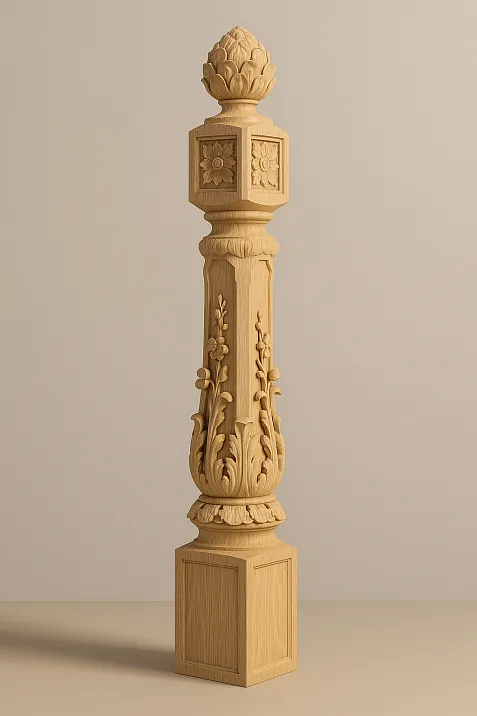
In the world of interior architectural elements, there are details capable of transforming a space beyond recognition. Among them, wooden staircase columns hold a special place — elements combining functionality and aesthetic perfection. When you decide to buy a wooden staircase column, you are purchasing not just a structural element, but a true work of art capable of becoming the central accent of your home.
Wooden columns are more than just support. They are a visual embodiment of stability, reliability, and refined taste. They give staircases a sense of completion, becoming their architectural focal point. In this article, we will delve into the wonderful world of wooden staircase columns, uncovering their structural features, aesthetic possibilities, and practical advantages.



History of wooden columns in staircase architecture




From antiquity to modernity: evolution of staircase columns
The history of using wooden columns in architecture spans millennia. Even in ancient Greece and Rome, columns were not only structural elements but also symbols of status, power, and grandeur. Over time, their aesthetic role only intensified, while manufacturing technologies improved.
In medieval castles, massive wooden columns supported spiral staircases, showcasing the skill of woodcarvers. The Renaissance brought elegance and refinement of forms, Baroque — opulence and ornamentation, Classicism — strictness and symmetry. Each historical period left its mark on the design of staircase columns.
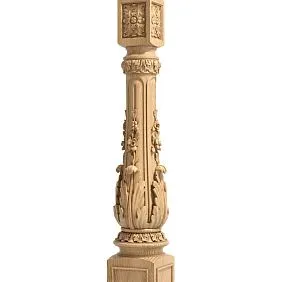
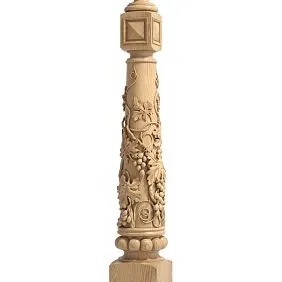
Our factory also produces:


Cultural significance of staircase columns in different countries
Interestingly, in different cultures, wooden staircase columns acquired special symbolic meaning. In Victorian English estates, richly decorated columns demonstrated the wealth of the owners. In 19th-century Russian manors, grand staircases with carved columns became venues for balls and important meetings. In Japanese tradition, minimalist wooden supports embodied the philosophy of harmony with nature.
Today, when you decide to buy a wooden staircase column, you become part of this rich cultural tradition, continuing a history spanning centuries.
Get Consultation
Types of wooden staircase columns: variety of forms and styles
Classical columns: grandeur and tradition
Classical wooden staircase columns are embodiments of traditional elegance. They are characterized by proportionality, symmetry, and often include elements such as the capital (top part) and base (bottom part). Among classical types, we can distinguish:
- Doric columns — distinguished by strictness and simplicity, without a base, and the capital consists of a simple cushion and abacus (square plate)
- Ionic columns — more elegant, with characteristic volutes (spiral scrolls) on the capital
- Corinthian columns — the most decorative, with a capital in the form of stylized acanthus leaves
Classical columns impart dignity and status to interiors, creating an atmosphere of aristocracy and refined taste.
Modern design solutions: minimalism and functionality
Modern design offers an alternative perspective on wooden staircase columns. Here, clean lines, functionality, and organic integration into space take precedence. Popular are:
- Minimalist rectangular columns without decorative elements
- Column-posts with beveled or rounded edges
- Combined columns of wood and metal, glass, or stone
- Modular systems allowing for unique configurations
Modern columns often serve not just as support for staircases, but as functional elements—for example, they may include built-in lighting or niches for decoration.
Carved columns: works of art for your home
Carved wooden columns constitute a special category—true works of art created by master woodcarvers. Such columns may be adorned with:
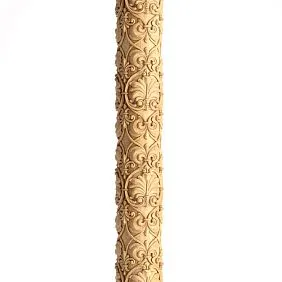
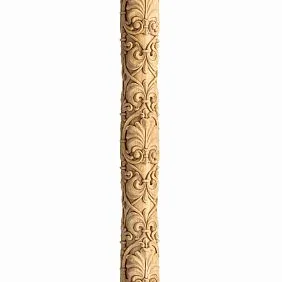
- Plant motifs (grapevines, floral garlands, leaves)
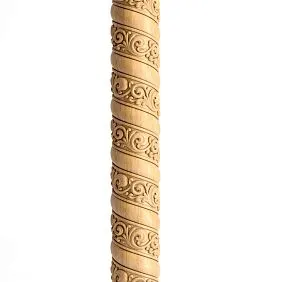
- Geometric patterns (diamonds, spirals, braids)
- Figurative elements (mascarons, coats of arms, symbolic imagery)
- Fluting (vertical grooves)
Carved columns become the central element of interior design, drawing attention and inspiring admiration. They transform staircases from functional elements into works of art.
Materials for wooden columns: from selection to processing
Elite wood species: beauty and durability
Choosing the material for a column is one of the key factors determining its appearance and performance characteristics. Elite wood species possess a unique texture, noble color, and high strength:
- Oak—the king among wood species for column production. It is distinguished by exceptional strength, durability, and expressive texture. Oak columns can serve for centuries, acquiring an even more noble appearance over time.
- Beech—dense and hard wood with fine, uniform grain. It is easy to process and has a pleasant pinkish hue, which can be tinted in various colors.
- Ash—features an attractive pattern of growth rings and high strength. Ash wood is elastic, allowing for the creation of columns with complex shapes.
- Walnut—dark, noble wood with a silky sheen. Walnut columns look luxurious and become true interior ornaments.
- Cherry—distinguished by a warm reddish tone that deepens and enriches over time. Cherry wood is dense and resistant to deformation.
Wood processing technologies for maximum strength
Modern wood processing technologies allow for significantly improved performance characteristics of wooden columns:
- Kiln drying—a controlled process of removing moisture from wood, preventing cracks and deformations in the future.
- Laminated construction—a technology in which a column is created from several layers of wood bonded together. This increases strength and shape stability.
- Thermo-treatment—a special process of heating wood without oxygen access, enhancing its resistance to moisture and biological influences.
- Protection with preservative compounds—treatment of wood with special antiseptics and fire retardants, protecting against rot, insects, and ignition.
- Finish coating—application of varnishes, oils, or waxes that not only highlight the beauty of the texture but also create a protective barrier against external influences.
Ecological safety: choice for conscientious buyers
Modern consumers increasingly pay attention to ecological aspects of purchased goods. When deciding to buy a wooden staircase columnthe following factors should be considered:
- Legality of wood origin—responsible manufacturers use wood from forests with certified sustainable management (FSC, PEFC certificates).
- Natural processing—prefer columns treated with non-toxic, eco-friendly water-based compounds or natural oils and waxes.
- Health safety – high-quality wooden columns should not emit formaldehyde and other harmful substances.
- Recyclability potential – wood is a renewable resource that can be recycled with minimal environmental impact.
The ecological nature of wooden columns is not only care for the planet, but also for the health of your family, as wooden elements create a unique microclimate in the home, positively affecting well-being.
Constructive features of wooden columns for staircases
Anatomy of the ideal column: from base to capital
A wooden column for a staircase is a complex architectural element consisting of several parts, each having its own functional and aesthetic significance:
- Base (foundation) – the lower part of the column, providing stability and a smooth transition from the floor to the column’s shaft. Can be simple or profiled, square or round.
- Shaft (fust) – the main part of the column, which may be smooth, fluted (with vertical grooves), or adorned with carving. The shaft’s shape may be cylindrical, conical, or polygonal.
- Capital – the upper part of the column, connecting the shaft to the supported structure. The capital is often the most decorative element, defining the column’s stylistic affiliation.
- Neck – transitional element between the shaft and the capital, often executed as a ring profile or astragal.
- Abacus – the upper plate of the capital, on which the supported structure rests.
The proportions of these elements determine the overall appearance of the column and must correspond to the selected architectural style.
Engineering solutions for maximum reliability
Modern wooden columns for staircases are not only aesthetics, but also high-tech constructions ensuring safety and durability:
- Reinforced attachment to the floor – special metal fastening elements, often hidden within the column’s base, ensure secure fixation to the foundation.
- Connection system with balustrade – columns may include special grooves or fastening elements for secure connection to handrails and balusters.
- Internal reinforcement – for particularly tall or heavily loaded columns, internal reinforcement with a metal rod is applied, significantly increasing load-bearing capacity.
- Compensatory elements – special constructive solutions allowing compensation for natural expansion and contraction of wood due to changes in humidity.
- Modular construction – some columns consist of several interconnectable elements, simplifying transportation and installation.
Dimensions and proportions: the mathematics of beauty
Choosing the correct dimensions and proportions of the column is an art based on architectural and ergonomic principles:
- Column height is typically 900 to 1200 mm for stair landings and 2400 to 3000 mm for two-level spaces.
- Shaft diameter varies from 100 to 250 mm depending on the overall scale of the staircase and interior.
- In classical columns, the diameter-to-height ratio is typically 1:7 to 1:10, ensuring visual harmony.
- Base size is usually 20–30% larger than the shaft diameter, creating a sense of stability.
- Capital height is approximately 1/7 to 1/10 of the total column height, depending on the selected order.
Properly chosen proportions make the column visually attractive and harmoniously integrated into the overall composition of the staircase and interior.
Stylistic solutions: columns for different interiors
Classic style: grandeur and elegance
Classical interiors with their symmetry, proportionality, and attention to detail perfectly complement traditional wooden columns:
- Doric order columns, with their strictness and minimalism, suit interiors in the style of English classicism or neoclassicism.
- Ionic columns with characteristic volutes will become a decoration for interiors in the style of French classicism or Empire.
- Corinthian columns with lush acanthus leaf capitals will perfectly fit into Baroque or Rococo interiors.
Classic interiors are characterized by the use of noble wood species – oak, walnut, mahogany – with emphasized texture and deep, rich color. The finishing typically includes polishing to a shine and coating with transparent varnishes that highlight the natural beauty of the wood.
Modern minimalism: functionality and purity of lines
Modern interiors in the styles of minimalism, high-tech, or Scandinavian require a completely different approach to designing wooden columns:
- Lacquered rectangular or square-section columns without decorative elements, with clear geometric forms.
- Cylindrical columns of simple form, without capitals or bases, with smooth surfaces.
- Composite columns made of wood and metal, glass, or concrete, creating interesting textural and color contrasts.
In modern interiors, light wood species – maple, beech, birch – or, conversely, very dark, almost black tones are often used. The finishing is usually matte, emphasizing the naturalness of the material, or with a "invisible" coating effect.
Ethnic motifs: columns in Russian, Scandinavian, and Eastern styles
Ethnic styles offer a rich source of inspiration for designing wooden columns:
- The Russian style is characterized by rich carving with plant and geometric ornaments, using "blind" carving techniques. Traditionally, coniferous species – pine, spruce, larch – are used.
- The Scandinavian style is distinguished by simple forms, light wood species (birch, pine), and minimal processing that highlights the natural beauty of the material.
- The Eastern style (Japanese, Chinese, Indian) offers elegant columns with ornaments and forms characteristic of each culture. For example, Japanese columns are distinguished by their simplicity and minimalism, while Indian columns feature rich carving and bright colors.
Ethnic columns often become not just a structural element, but also a carrier of cultural code, telling a story and reflecting the traditions of a particular people.
The process of making wooden columns: from sketch to masterpiece
Traditional handcrafting techniques
Despite the development of modern technologies, many masters continue to create wooden columns by hand, preserving centuries-old woodworking traditions:
- Material selection and preparation – an experienced craftsman personally selects the wood, assessing its quality, texture, and absence of defects. This is followed by natural drying, which may take several months to several years.
- Creating the rough shape – from prepared material, the basic column shape is carved using traditional tools: planes, chisels, hand-driven lathes.
- Hand carving – the most labor-intensive and creative stage, during which the craftsman creates decorative elements, ornaments, and patterns. Dozens of different chisels and gouges are used for this.
- Sanding – gradual leveling of the surface using abrasive materials of varying grit, from coarse to the finest.
- Final finishing – applying natural oils, waxes, or shellac using traditional methods, often including polishing with a cloth or special brushes.
Handmade columns possess a special energy and uniqueness – even when made according to the same sketch, each one will have its own character and unique features.
Modern manufacturing technologies
Modern production of wooden columns combines traditional craftsmanship with innovative technologies:
- Computer modeling – creating a 3D model of the future column, taking into account all proportions and decorative elements.
- CNC machining – using computer numerical control machines to precisely reproduce the model in the material. This allows creating complex shapes with high accuracy.
- Laser cutting and engraving – a technology that allows creating the finest patterns and ornaments with previously unattainable detail.
- Vacuum drying – an accelerated and controlled process of removing moisture from the wood, significantly reducing production time.
- Automated final finishing – applying protective and decorative coatings in special chambers with controlled conditions.
Modern technologies allow creating columns of the highest quality with perfect geometry and repeatability, which is especially important when manufacturing a series of identical elements.
Custom order: from idea to realization
The process of creating a wooden column to order – an exciting journey from idea to physical realization:
- Consultation and concept development – discussion with the client about his preferences, interior style, functional requirements. At this stage, the overall appearance of the column, material, and dimensions are determined.
- Creating a sketch and 3D model – visualization of the future column, allowing the client to see how it will look in the interior and make necessary adjustments.
- Material selection and preparation – choosing wood of the required species, quality, and texture, matching the project.
- Manufacturing – creating the column using selected technologies (handwork, CNC machining, or their combination).
- Final finishing – applying protective and decorative coatings according to the client's preferences.
- Delivery and installation – professional installation of the column at the site in accordance with all technical requirements.
A custom order allows you to create a truly unique column, perfectly matching the architecture of the house and the owner's taste.
Installation and mounting of wooden columns: technical aspects
Preparatory work: what you need to know before installation
Proper preparation is the key to successful installation of a wooden column:
- Acclimatization – the columns must be in the room for at least 48–72 hours before installation to adapt to temperature and humidity.
- Foundation preparation – the surface on which the column will be installed must be level, strong, and dry. Reinforcement may be required if necessary.
- Marking – precise determination of the installation location, taking into account the overall composition of the staircase and interior.
- Checking verticality – using a level and plumb bob to ensure the future column is perfectly vertical.
- Preparing fasteners – selecting appropriate fasteners depending on the column’s weight and the type of foundation.
Thorough preparation helps avoid many problems during installation and operation.
Professional installation: secrets of craftsmanship
Installing a wooden column – a process requiring specific skills and knowledge:
- Mounting to the foundation – depending on the column’s construction and foundation type, various methods may be used:
- Mounting on a metal anchor
- Installation using anchor bolts
- Using special adhesive compounds
- Ensuring verticality – using temporary supports and braces to fix the column in the correct position until final securing.
- Connecting to upper structures – attaching the column to beams, floors, or other staircase elements using special fasteners.
- Installing decorative elements – mounting additional details such as capitals, bases, rings, if they are not an integral part of the column.
- Final treatment of connection areas – concealing fasteners, filling joints and seams, touch-up if necessary.
Professional installation ensures not only an aesthetic appearance but also the durability and safety of the structure.
Can it be done by oneself?
For those who possess certain skills in construction and finishing, installing a wooden column independently is entirely feasible:
- Required tools: drill, screwdriver, level, plumb bob, tape measure, square, drill bit set, hammer, chisel, clamps.
- Step-by-step instructions:
- Unpack the column and allow it to acclimate in the room.
- Perform precise marking of the installation location.
- Prepare the base and fastening elements.
- Install the column base (if separate).
- Install the column shaft, ensuring vertical alignment.
- Secure the column to upper structures.
- Install the capital (if separate).
- Perform final finishing.
- Typical mistakes during self-installation:
- Insufficient wood acclimatization.
- Incorrect selection of fastening elements.
- Violation of vertical alignment.
- Over-tightening fasteners, leading to wood cracking.
Self-installation requires attention, patience, and adherence to the manufacturer's instructions.
Care and maintenance of wooden columns
Daily care: preserving beauty for many years.
Proper care of wooden columns does not require significant effort, but allows maintaining their attractive appearance for many years:
- Regular dry cleaning – removing dust with a soft cloth or specialized furniture brush, moving along the grain of the wood.
- Wet cleaning – wiping with a slightly damp (not wet!) cloth, followed by drying thoroughly. Abrasive materials and aggressive cleaning agents are strictly prohibited.
- Maintaining optimal microclimate – wooden columns are best preserved at relative air humidity of 40–60% and temperature of 18–24°C. Sudden fluctuations in these parameters may cause wood deformation.
- Protection from direct sunlight – prolonged exposure to ultraviolet rays may cause color changes in wood. It is recommended to use curtains or blinds during periods of intense sunlight.
- Preventing mechanical damage – avoid impacts, scratches, and other mechanical damage to the column surfaces.
Seasonal maintenance: prevention of problems.
In addition to daily care, wooden columns require periodic more thorough maintenance:
- Spring inspection – after the heating season, when air in the room is especially dry, it is recommended to carefully inspect columns for signs of cracks or delamination.
- Summer refreshment – during warm seasons, when humidity increases, it is advisable to apply special compositions to renew the protective coating.
- Autumn preventive maintenance – before the heating season begins, it is recommended to check the reliability of fasteners and tighten them if necessary.
- Winter care – during the operation of heating appliances, it is especially important to monitor the humidity level in the room, using humidifiers if necessary.
Regular seasonal maintenance allows timely detection and elimination of potential problems before they become serious.
Restoration and Renewal: A Second Life for Old Columns
Even the highest-quality wooden columns may require restoration over time:
- Light refreshment – if the column retains structural integrity but has lost its appearance, a light sanding and application of a new protective coating will suffice.
- Repairing minor defects – small cracks, chips, and scratches can be filled with specialized wax pencils or wood putty matched to the column’s color.
- Deep restoration – in cases of serious damage, it may be necessary to remove the old finish, sand, replace damaged fragments, and fully restore the final coating.
- Professional restoration – for particularly valuable or antique columns, it is recommended to consult specialists-restorers with the necessary knowledge and experience.
Properly executed restoration not only restores the column’s original appearance but also extends its service life by many years.
Economic aspects: Investment in beauty and functionality
Pricing: What affects the cost of wooden columns
The cost of wooden columns for staircases may vary significantly depending on a number of factors:
- Wood species – premium and exotic species (oak, walnut, mahogany) cost significantly more than common ones (pine, spruce, birch).
- Design complexity – the more complex the shape and the richer the decorative elements, the higher the cost. Carved columns with handcrafted details may cost several times more than simple ones.
- Dimensions – larger columns require more material and are more complex to manufacture, which affects the price.
- Manufacturing technology – handcrafted work is valued higher than machine processing. Columns created by master woodworkers may cost several times more than mass-produced items.
- Final finish – using expensive varnishes, patinas, or gold leaf increases the column’s cost.
- Brand and manufacturer reputation – well-known companies with impeccable reputations typically set higher prices for their products.
Long-term economic benefits of quality columns
Despite a higher initial cost, quality wooden columns represent a profitable long-term investment:
- Durability – a properly manufactured and installed column made of quality wood can serve for decades, or even centuries, without requiring replacement.
- Increased property value – elegant wooden columns enhance the aesthetic and monetary value of a home or apartment.
- Reduced maintenance costs – quality columns require minimal upkeep and rarely need repair or replacement.
- Energy efficiency – wooden interior elements contribute to natural humidity regulation in rooms, potentially reducing costs for air conditioning and heating.
- Environmental sustainability – products made of natural wood are eco-friendly and can be recycled or reused at the end of their service life.
Comparison with alternative materials: What is more cost-effective?
The market offers columns made from various materials, each with its own advantages and disadvantages:
- Wooden columns – characterized by naturalness, warmth, unique texture, and eco-friendliness. Require maintenance and may react to changes in humidity.
- Polyurethane columns – lightweight, moisture-resistant, do not rot or attract insects. However, they are less strong, may appear artificial, and may yellow over time.
- Gypsum columns – allow for complex decorative elements, but are brittle, fear moisture, and may crumble over time.
- Metal columns – strong, durable, resistant to moisture. However, they feel cold to the touch, may produce noise during thermal expansion and contraction, and are susceptible to corrosion.
- Composite columns – combine advantages of different materials, but often fall short of natural wood in aesthetics and eco-friendliness.
When comparing ownership costs (including initial expenses, installation, maintenance, and lifespan), wooden columns are often the most cost-effective solution in the long term, especially for those who value naturalness and aesthetics.
Choosing and purchasing a wooden column: practical tips
What to pay attention to when choosing
Choosing the ideal wooden column for a staircase requires attention to several key aspects:
- Wood quality – inspect the column for cracks, knots, and uneven texture. A quality column should be made from well-dried wood without visible defects.
- Manufacturing accuracy – check the column’s geometry: it should be symmetrical, with straight lines and clear details. Pay special attention to joints and connections.
- Finish quality – the surface should be smooth, free of roughness, lacquer streaks, or uneven tinting.
- Style compatibility – the column should harmoniously fit into the overall room design, matching the style of furniture and finishes.
- Structural compatibility – ensure the selected column matches your staircase in size and mounting method.
- Certification and warranty – check for quality certificates and warranty terms from the manufacturer.
Where to buy: specialized stores vs. online purchases
Each method of purchasing wooden columns has its own advantages and disadvantages:
Specialized stores and boutiques:
- Advantages: ability to see and touch the product, receive expert consultation, assess material and finish quality.
- Disadvantages: limited selection, higher prices due to overhead costs of maintaining retail space.
Online stores:
- Advantages: wide selection, ability to compare prices and features, convenience of ordering, often lower prices.
- Disadvantages: inability to physically assess quality before receiving the item, risk of the actual product not matching photos.
Ordering directly from the manufacturer:
- Advantages: possibility of custom ordering, absence of middleman markup, manufacturer warranty.
- Disadvantages: usually longer manufacturing times, need to arrange delivery yourself.
The optimal option often depends on the specific situation: standard columns are best purchased from an online store, exclusive items are better ordered directly from the manufacturer, and those who wish to personally evaluate quality should visit a specialized boutique.
Custom order vs ready-made solutions
Choosing between custom ordering and purchasing a ready-made column depends on your priorities:
Custom order:
- Advantages:
- Full compliance with your preferences and interior features
- Ability to choose material, shape, size, and decorative elements
- Uniqueness and exclusivity
- Disadvantages:
- Higher cost
- Longer manufacturing times (from several weeks to several months)
- Need for active involvement in the design process
Ready-made solutions:
- Advantages:
- Lower cost
- Fast availability (often in stock)
- Ability to see the finished product before purchase
- Disadvantages:
- Limited selection of shapes, sizes, and finishes
- Possible compromises according to interior design
- Less uniqueness
If you are creating a unique interior or have non-standard requirements for size and design, an individual order will be the best solution. If, however, saving time and money is important, and the ready-made options suit you — choose from the available models.
Trends and innovations in wooden column design
Modern trends in staircase column design
Wooden column design for staircases is constantly evolving, reflecting general trends in architecture and interior design:
- Minimalism and geometry — popularity is growing for columns with simple geometric shapes and minimal decoration, but with emphasis on material quality and perfect proportions.
- Ecological and natural — trend toward using untreated or minimally processed wood with emphasized texture and natural features (knobs, cracks, unevenness).
- Combining materials — combining wood with metal, glass, stone, or concrete creates interesting contrasts and expands design possibilities.
- Integrated lighting — columns with built-in lighting that creates dramatic lighting effects and highlights the wood texture.
- Modularity and transformation — columns made of separate elements that can be combined in various ways to create unique compositions.
Innovative materials and technologies
The modern industry offers innovative solutions that expand the design and functional possibilities of wooden columns:
- Thermowood — wood that has undergone special thermal treatment, increasing its stability, durability, and resistance to moisture without using chemicals.
- Wood-based composite materials — combination of wood with other materials to improve its properties, for example, wood-polymer composites that combine the aesthetics of wood with the strength and stability of plastic.
- Nanotechnology coatings — ultra-thin protective layers that make the wood surface resistant to dirt, moisture, and UV radiation while preserving its natural appearance and tactile feel.
- 3D printing with wood composites — technology that allows creating columns of complex shapes with detailed features unattainable through traditional processing methods.
- Smart coatings — special compositions that change their properties depending on environmental conditions: for example, becoming more vapor-permeable when humidity increases.
- Bio-composites — materials combining wood fibers with biodegradable polymers derived from renewable sources, making them ecologically safe throughout their entire life cycle.
Growing attention to ecological issues makes wooden balusters even more attractive. Wood is a renewable resource, and its production does not harm the environment when managed sustainably.
Modern approaches to producing wooden columns are inseparably linked with principles of sustainable development and ecological responsibility:
- Certified wood — use of material from responsibly managed forests, certified by international FSC or PEFC certificates.
- Zero-waste production — technologies that allow maximum efficient use of wood, recycling waste into biofuel or other useful products.
- Non-toxic finishing materials — use of water-based or natural oil and wax paints, varnishes, and stains instead of compositions with high volatile organic compound content.
- Carbon footprint — calculation and minimization of CO₂ emissions at all stages of production, transportation, and installation of columns.
- Second life of wood — use of reclaimed or recycled wood to create new columns, reducing the need to cut down new trees.
Ecological trends not only respond to the demands of environmentally conscious consumers but also contribute to preserving forest resources for future generations.