Article Contents:
- Unique Structure and Strength Characteristics
- Advantages Over Traditional Materials
- Geometric Stability and Absence of Deformations
- Increased Dimensional Possibilities
- Application Areas and Architectural Possibilities
- Luxury Residential Construction
- Commercial Architecture and Public Buildings
- Restoration Work and Historical Architecture
- Standard Parameters and Tolerances
- Technical specifications and size range
- Strength Classes and Sorting
- Economic Aspects and Appropriateness of Use
- Cost Analysis of the Lifecycle
- Carbon Footprint and Ecological Safety
- Impact on property value
- Ecological Advantages and Sustainable Development
- Renewability of Resources and Forestry
- Modern Processing and Finishing Technologies
- Surface Treatment and Protective Coatings
- Thermal Treatment and Modification
- Assembly and Working Characteristics with the Material
- Preparation Operations and Acclimatization
- Joints and Structural Nodes
- Production Control
- Quality control and certification
- International Standards and Certification
- Competition Among Wooden Materials
- Comparative Analysis with Alternative Materials
- Alternatives Among Inorganic Materials
- New Production Technologies
- Development Prospects and Innovations
- Local Construction Traditions
- Digital technologies in design
- Regional application specifics
- Climate factors
- For centuries, builders have dreamed of a material that would combine the natural beauty of oak with technological perfection. Today, this dream has become reality —
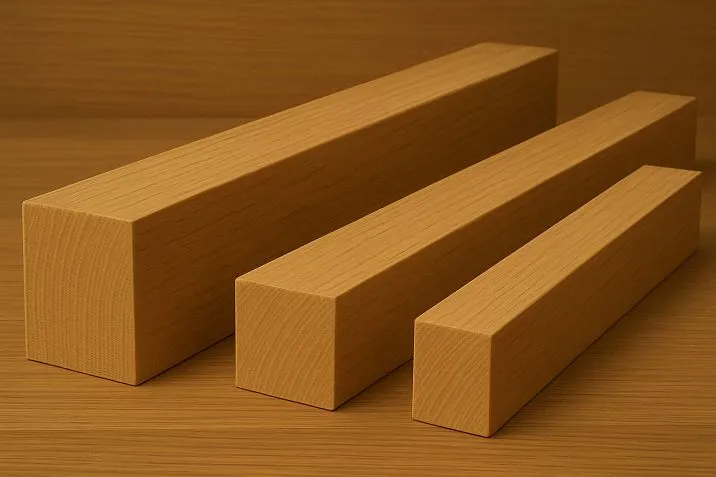
For centuries, builders have dreamed of a material that would combine the natural beauty of oak with technological perfection. Today, this dream has become reality — It is the pinnacle of engineering thought, where centuries-old woodworking traditions meet innovative manufacturing technologies. This material does not merely surpass its predecessors — it redefines the rules of the game in the field of elite construction and finishing. Technological revolution in the production of oak beams

The manufacturing process of glued oak beams is a high-tech operation, where each stage is controlled with jewel-like precision. Selected oak boards undergo kiln drying to a moisture content of 8-12%, ensuring absolute stability of the finished product. The material then undergoes meticulous sorting — all defects, knots, cracks, and inconsistencies are removed.
Glued oak beams consist of individual lamellas bonded with special D4-class adhesives according to the European standard DIN EN 204. These adhesives are completely waterproof and contain no formaldehyde, making the material ecologically safe for residential spaces.
Unique structure and strength characteristics




The multi-layered structure of glued beams imparts exceptional mechanical properties. Flexural strength increases by 50-70% compared to solid wood, reaching 120 MPa. The modulus of elasticity is 13.5 GPa, exceeding the performance of many modern composite materials.
A feature of the technology is the ability to alternate the direction of fibers in adjacent lamellas, practically eliminating deformation and cracking. The shrinkage coefficient of glued oak beams does not exceed 0.3% — dozens of times less than that of solid wood.
Advantages over traditional materials
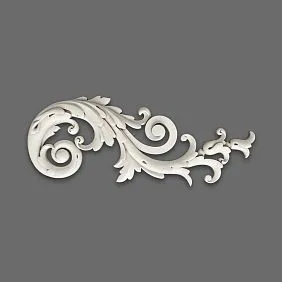
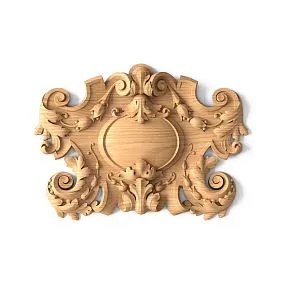
Our factory also produces:



Geometric stability and absence of deformations
Get Consultation
Main advantage
glued oak beams lies in its geometric stability. The material is not subject to warping, twisting, or bending, which is typical for solid wood. This quality is especially important when manufacturing long-span structures — beams, purlins, rafters. Humidity stability is ensured not only by low initial moisture content but also by the material's unique structure. Even under significant fluctuations in air humidity, the beam maintains its dimensions, preventing gaps in structures.
Increased dimensional capabilities
The technology allows producing beams up to 20 meters long and up to 500×500 mm in cross-section, which is impossible with solid wood. Such capabilities open new horizons in architecture, enabling the creation of unique structures without intermediate supports.
Large cross-sections are especially in demand in industrial construction, where materials capable of bearing significant loads are required. A glued oak beam with a 300×300 mm cross-section can replace steel beams in many structures.
Application areas and architectural possibilities
Elite residential construction
In elite home construction, glued oak beams are used to create premium-grade load-bearing structures. The material is ideal for building chalet-style homes, where massive wooden beams serve not only as structural but also decorative elements.
Homes with open truss systems made of glued oak beams have gained particular popularity. Such structures create a unique atmosphere of coziness and solidity characteristic of old castles and manors.
Commercial architecture and public buildings
In commercial construction, glued oak beams are used in building restaurants, hotels, and spa complexes. The material creates a sense of luxury and prestige, which is especially important for premium-class establishments.
Public buildings — concert halls, exhibition centers, sports facilities — also actively utilize the capabilities of glued oak beams. Large spans without intermediate supports allow creating impressive architectural spaces.
Restoration work and historical architecture
Glued oak beams are indispensable in restoring historical architectural monuments. The material allows reproducing historical structures with maximum accuracy while ensuring modern safety and durability standards.
Particularly valued is the ability to manufacture elements of complex configuration — arched beams, curved structures, carved elements. Traditional methods did not allow creating such items from solid wood without significant waste and defects.
Standard parameters and tolerances
Technical specifications and size range
Glued oak beams are produced in a wide range of cross-sections — from 60×60 mm to 500×500 mm. The length of the products can reach 20 meters, opening boundless possibilities for architects and designers.
The moisture content of the finished material is 12±2%, which corresponds to European quality standards. Dimensional tolerances do not exceed ±1 mm, allowing the use of beams in the most precise constructions without additional processing.
The moisture content of the finished material is 12±2%, which corresponds to European quality standards. Dimensional tolerances do not exceed ±1 mm, allowing the use of beams in the most precise constructions without additional processing.
The density of glued oak timber varies within the range of 680–720 kg/m³, which is slightly less than solid wood due to the removal of defects and optimization of structure.
Strength classes and sorting
The material is classified according to strength characteristics in accordance with European standards. Class GL24h corresponds to a bending strength of 24 MPa, GL28h — 28 MPa, and the highest class GL32h provides strength up to 32 MPa.
Visual sorting includes several categories: "Extra" — without visible defects, "Rustic" — with natural wood characteristics, "Industrial" — for concealed structures.
Economic aspects and justification of application
Lifecycle cost analysis
Initial cost lies in its geometric stability. The material is not subject to warping, twisting, or bending, which is typical for solid wood. This quality is especially important when manufacturing long-span structures — beams, purlins, rafters. It is 2–3 times higher than the price of coniferous analogs, but project economics should be considered in the long term. The service life of oak structures exceeds 100 years with minimal maintenance.
The absence of the need for regular repairs, replacement of elements, or additional protective treatments makes glued oak timber an economically advantageous solution for load-bearing structures.
Impact on property value
Using glued oak timber significantly increases the market value of real estate. Homes and commercial buildings with oak structures are always priced in the premium segment, making investments in quality materials financially justified.
Ecological advantages and sustainable development
Carbon footprint and ecological safety
Glued oak timber is a carbon-negative material — during tree growth, it absorbs more CO2 than is emitted during timber production. This makes it an ideal choice for ecologically responsible construction.
The adhesives used do not contain formaldehyde or other toxic substances, as confirmed by international eco-safety certifications. The material is recommended for use in childcare facilities and medical buildings.
Renewability of resources and forestry
Modern forestry ensures sustainable regeneration of oak forests. FSC (Forest Stewardship Council) certification guarantees that timber is harvested in accordance with sustainable forestry principles.
Waste recycling from production reaches 95% — offcuts are used to manufacture small joinery items, sawdust is used to produce pellets, bark is processed into mulch for gardening.
Modern processing and finishing technologies
Surface treatment and protective coatings
Glued oak timber does not require mandatory finishing due to its high surface quality after production. However, various treatments are applied to accentuate the natural beauty of the wood.
Oil treatment highlights the oak’s texture and provides additional moisture protection. Waxing creates a silky surface with a noble matte sheen. Lacquering provides maximum protection and coating longevity.
Thermal treatment and modification
Thermomodification at 180–220°C imparts oak timber with additional properties — increased dimensional stability, resistance to biological damage, and a darker, more noble color tone.
The process occurs in a steam atmosphere without the use of chemical substances, preserving the material’s ecological purity. Thermally treated glued oak timber is especially valued for outdoor structures in harsh climatic conditions.
Installation and material handling specifics
Preparation operations and acclimatization
Before installation, glued oak timber must undergo acclimatization under the conditions of the site. The material must be left for at least 7 days at temperature and humidity levels matching the intended operating conditions.
Ends are treated with special sealants to prevent moisture penetration and cracking. Use of special stainless steel fasteners eliminates the appearance of dark corrosion spots.
Joints and structural connections
Various types of joints — mortise-and-tenon, dowel, and metal plate connections — are used to join elements made of glued oak timber. Each joint type is calculated based on material characteristics and anticipated loads.
Special attention is paid to sealing joints to prevent moisture ingress. Special polyurethane-based sealants are used, maintaining elasticity over a wide temperature range.
Quality control and certification
Production Control
The quality of glued oak beams is controlled at every stage of production. Incoming raw material inspection includes checking moisture content, board grade, and absence of defects. Gluing control is performed by testing samples for adhesive joint strength.
Finished products undergo visual inspection, geometric parameter checks, and moisture content control. Each batch is accompanied by a quality certificate specifying all material characteristics.
International Standards and Certification
Glued oak beam production is carried out in accordance with European standards EN 14080 and EN 386. These standards regulate requirements for raw materials, production technology, and quality control methods.
CE marking certification confirms compliance of the material with European safety requirements. Environmental certifications confirm the safety of adhesive compositions and compliance with sustainable development principles.
Comparative analysis with alternative materials
Competition Among Wooden Materials
Among wooden structural materials, glued oak beams occupy a unique position. In terms of strength, they exceed glued beams made from coniferous species by 1.5–2 times, and in durability — by 3–4 times.
Comparison with LVL (Laminated Veneer Lumber) shows advantages of oak beams in aesthetic and ecological aspects. LVL has higher strength but lags behind in decorative qualities and contains more adhesive.
Alternatives Among Inorganic Materials
Compared to steel and reinforced concrete structures, glued oak beams offer several unique advantages. Low thermal conductivity eliminates cold bridges characteristic of metal structures.
Specific strength (ratio of strength to density) of glued oak beams is comparable to steel but with significantly lighter structures. This allows reducing foundation load and simplifying installation.
Development prospects and innovations
New Production Technologies
Advancements in technology enable the creation of glued oak beams with even higher performance characteristics. Microwave drying ensures more uniform moisture removal and reduces processing time.
Use of ultrasonic welding for joining laminates opens possibilities for creating structures without adhesive. This technology ensures absolute ecological safety and full material recyclability at the end of its service life.
Digital Technologies in Design
Use of BIM technologies (Building Information Modeling) allows optimizing glued oak beam structures even during the design stage. Digital models account for all material characteristics and enable minimizing material use while maximizing efficiency.
Production automation ensures the highest manufacturing precision and quality stability. Modern CNC machines enable manufacturing of elements with the most complex geometry to within fractions of a millimeter.
Regional application specifics
Climate factors
In different climatic zones, glued oak beams exhibit varying behavior. In continental climates with large temperature fluctuations, the material maintains stability due to low moisture content and multi-layered structure.
In marine climates with high humidity, special attention is paid to protective coatings and ventilation of structures. Tannins contained in wood provide natural protection against biological damage.
Local Construction Traditions
In regions with traditions of wooden house construction It is the pinnacle of engineering thought, where centuries-old woodworking traditions meet innovative manufacturing technologies. This material does not merely surpass its predecessors — it redefines the rules of the game in the field of elite construction and finishing. integrates organically into the architectural context. The material allows creating buildings in national style using modern technologies.
Adaptation to local requirements includes consideration of seismic loads, wind effects, and soil characteristics. Glued oak beams possess sufficient strength and elasticity to operate under complex conditions.
STAVROS, as a leader in supplying premium construction materials, offers a full range of solutions based on glued oak beams. Decades of experience and deep understanding of market needs enable the company to guarantee the highest product quality and comprehensive project support of any complexity.
Choosing glued oak beams from STAVROS, you get not just a construction material, but a comprehensive solution combining centuries-old craftsmanship traditions with innovative production technologies. Each product is the result of meticulous work by specialists and embodies the pursuit of perfection characteristic of the entire company’s product line.