Article Contents:
- What is Considered Classic Furniture
- Main Features of Furniture in Classic Style
- How Classic Differs from Neoclassical
- Why Classic Furniture Remains in Demand
- For Which Interiors Classic Style Furniture is Suitable
- For Apartments
- For Country Houses
- For Office
- For Dining Room and Living Room
- For Prestigious and Formal Interiors
- What classic furniture can be bought in Moscow
- living room
- for the bedroom
- For Office
- For the dining room
- For the hallway
- In Sets and Individual Pieces
- How to choose furniture in a classic style to match the interior
- By room size
- By room purpose
- By color and finish
- By decorativeness: restrained classic or expressive
- By combination with doors, walls, textiles, and decor
- What materials are most often chosen for classic furniture
- Solid wood
- Veneer and combined solutions
- Facades, decorative elements, and finishing
- When carving, patina, and complex decor are appropriate
- How material affects the perception of furniture in the interior
- What to choose for different rooms
- If you need classic furniture for the living room
- If you need furniture for the bedroom
- If you need a study in a classic style
- If you need to decorate a dining room
- If you need a restrained classic interior
- If you need a more expressive decorative effect
- How to buy classic furniture in Moscow and not make a mistake
- First, determine the interior style
- Understand which items are really needed
- Compare complete and phased design
- Select materials and finishes
- Check furniture proportions relative to the room
- What mistakes are most commonly made when choosing
- Buying too bulky furniture for a small room
- Mixing classic style with incompatible elements
- Taking too much decor
- Not considering the room's purpose
- Choosing furniture separately without an overall composition
- What's better to choose: a set or individual pieces
- When a ready-made set is justified
- When it's better to assemble the interior step by step
- How to combine different items without visual conflict
- When a unified collection is needed
- How to preserve the integrity of a classic interior
- How to incorporate classic furniture into a modern interior
- Restrained Classic
- Neoclassical combinations
- Accent classic items
- How not to overload the space
- When classic furniture works better than minimalism
- Checklist before buying classic furniture
- Comparison table: classic furniture by types and purposes
- FAQ: Answers to Popular Questions
- What furniture is considered classic?
- Where to buy classic furniture in Moscow?
- What to choose for a living room in classic style?
- What furniture is best for a bedroom?
- How does classic differ from neoclassic?
- Is classic furniture suitable for an apartment?
- What's better: a set or individual pieces?
- How to match classic style furniture to the interior?
- Conclusion

Classic style never dies. It survives eras, design revolutions, and waves of minimalism—and returns again to the interiors of those seeking something more than mere convenience. Something with history, proportion, dignity.
Classic furniture in Moscow— this is not nostalgia for the past. It is a conscious choice in favor of an interior that does not become outdated. An interior in which every item has meaning: a form refined over centuries, a material that improves with age, details backed by craftsmanship, not cost-cutting.
But this is precisely where the main difficulty begins. The market for classic furniture is vast, and navigating it without an understanding of style, proportions, and purpose means risking buying 'something beautiful' that doesn't come together in an interior. How to choose? What's important? What furniture to buy for the living room, bedroom, study — and how not to overload the space? Let's break this down in detail and honestly.



What is considered classic furniture




The main features of furniture in the classic style
Classic style is not just an 'antique look.' It is a system of features that makes furniture recognizable, proportionate, and aesthetically complete.
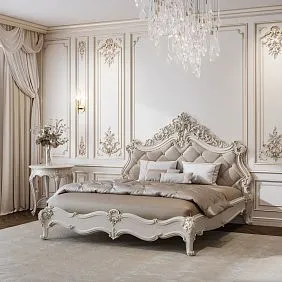
Symmetry. Classic furniture is built on symmetrical forms: even facades, balanced proportions, paired elements. An armchair is symmetrical left and right. A chest of drawers has drawers arranged mirror-like. A bed has a headboard and footboard balanced in height.
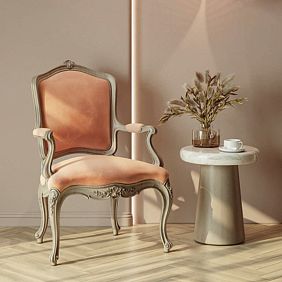
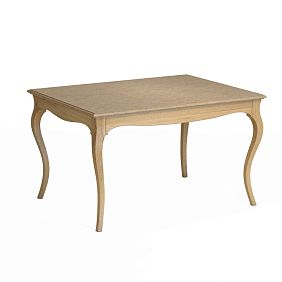
Smooth lines and rounded shapes. Unlike the geometric sharpness of modern design, classic style works with soft arcs, rounded corners, and ornate legs. Cabriole, twisted leg, splat — characteristic forms of the classic silhouette.
Carved decorative elements. Wood carving is one of the main markers of the classic style. Acanthus leaves, shells, volutes, floral garlands, cartouches — these motifs came from antiquity and Baroque and are preserved in classic furniture to this day.
Natural materials. Solid oak, beech, cherry, walnut, mahogany — the foundation of classic furniture. Natural veneer of valuable species, marquetry, and intarsia — decorative techniques that distinguish quality furniture in the classic style from cheap imitations.
Noble finishes. Natural-based lacquer, patina, gilding, wax polishing — finishes that emphasize the natural beauty of wood and add age and depth.
Textiles. Upholstered furniture in the classic style is covered with silk, velvet, genuine leather, brocade, and damask fabrics with patterns.
Our factory also produces:



How does classic differ from neoclassic?
This question arises almost always — and the answer is fundamental for making the right choice.
Classic furniture is based on historical styles: Baroque, Rococo, Empire, Renaissance, Georgian. It is characterized by rich decoration, massiveness, and an abundance of finishes and ornamentation. This is furniture with character — expressive, status-oriented, requiring appropriate space.
Neoclassical furniture is a reinterpretation of classicism from a modern perspective. The same proportions and symmetry, the same natural materials — but the decoration is minimized, the lines are cleaner, the volumes are more restrained. Neoclassicism is comfortable in modern apartments: it retains the architectural quality and dignity of the classic style but does not overload the space.
A simple rule: if the interior is rich, with high ceilings, stucco, and moldings — expressive classicism will suit. If the space is moderate and modern — choose neoclassicism.
Get Consultation
Why classic furniture remains in demand
The furniture market moves according to trends that change every five to seven years. ButClassic Furniturecontinues to hold strong positions — and this is no coincidence.
The first reason is investment. High-quality classic furniture made of solid wood only gains value over the years. It does not become 'outdated' stylistically and does not wear out with proper care.
Second — versatility. The classic style works equally well in a city apartment, a country house, a manager's office, and a formal living room.
Third — aesthetic depth. Furniture with carving, patina, and natural wood creates a sensation that cannot be reproduced with imitations: a sense of authenticity, lived-in character, and personality.
For which interiors is classic style furniture suitable
For apartments
Classic furniture in an apartment is, first and foremost, a question of scale. In spacious apartments with high ceilings, expressive classic feels natural. In apartments with standard layouts, it's better to choose restrained neoclassicism or light interpretations — with less massive pieces, without excessive decoration.
The main thing is proportionality. Classic furniture should fit the square footage, not overwhelm the space.
For a country house
A country house is the ideal context for full-fledged classic style. Here there is room for tall cabinets, massive sofas, dining tables for eight people, voluminous beds with carved headboards. The style of an estate, an English mansion, a French chateau — all of this naturally unfolds in a house with spacious rooms and high ceilings.
For an office
An office in classic style is one of the strongest interior statements. A massive desk, a leather armchair with wooden elements, bookshelves, a display case with decor — all of this creates an environment where one thinks differently than at a plastic desk in an open space style.
For dining room and living room
A classic living room is a formal zone, the center of the home's interior life. Here, sofas with carved wooden frames, armchairs with high backs, coffee tables with curved legs, and display cases with porcelain work to their full potential. A classic dining room implies a dining set of a table and chairs with fabric seats, a sideboard or china cabinet for dishes, and a console with a mirror.
For status and formal interiors
Banks, law offices, meeting rooms, executive offices, lobbies of luxury hotels — in these spacesClassic Furniturespeaks of status, seriousness, and tradition. It is not a decorative whim, but a thoughtful tool for creating the desired impression.
What classic furniture can be bought in Moscow
This is one of the key sections — we'll break it down by room types.
For the living room
A living room in a classic style is built around several main pieces:
-
A sofa with a wooden frame, high legs, and upholstery in fabric or leather — the central element.
-
Armchairs — paired, symmetrically arranged relative to the sofa or fireplace.
-
A coffee table — with curved legs, a marble top, or a wooden surface.
-
A display cabinet or hutch — for porcelain, books, decorative items.
-
A console with a mirror — against the wall, creates depth and reflects light.
-
A chest of drawers — with decorative overlays, drawers with hardware in a historical style.
In the STAVROS catalog, the living room can be furnished with either a complete set from a single collection or individual pieces —classical furniture made of oak and beechwith carved elements, polished and matte finishes.
For the bedroom
A bedroom in a classical style is a space that is both impressive and cozy.
-
A bed with a carved headboard is the main piece. The headboard can be soft (upholstered in fabric within a wooden frame) or entirely carved wood.
-
Nightstands — paired, symmetrically placed on both sides of the bed.
-
A wardrobe — with carved fronts, decorative cornices, and mirrored sections.
-
A dressing table with a mirror and a pouf — for a classic women's bedroom.
-
A chest of drawers — additional storage and a decorative element.
For an office
The office requires a special approach: here the furniture must be both representative and functional at the same time.
-
The writing desk is massive, with drawers on pedestals, with a leather or wooden top.
-
The executive chair has wooden armrests, with leather upholstery.
-
The bookcase has glass-fronted sections, carved pilasters, and a cornice.
-
Guest chairs or armchairs for visitors.
-
A conference table if the office is used for negotiations.
For the dining room
The classic dining room implies:
-
The dining table is extendable or monolithic, for four to ten people, with carved legs.
-
Chairs with soft seats and wooden carved backs.
-
A sideboard or display cabinet for storing and displaying dinnerware sets.
-
Console — along the wall, for serving dishes and decor.
For the hallway
A hallway in classic style creates the first impression of the interior:
-
Console with a mirror in a carved frame.
-
Pouf or bench with upholstery.
-
Wardrobe for clothing with classic fronts.
-
Mirror in a wooden frame or frame with console — as a single piece.
In sets and individual items
Choosing between a complete set and a step-by-step furnishing approach is one of the main questions when buying classic furniture. STAVROS offers both approaches:buy classic furniturein ready-made collection solutions or selecting items individually for a specific project. Custom manufacturing is also available — with the option to choose non-standard sizes, finish shades, and additional decorative elements.
How to choose classic-style furniture for your interior
By room size
The scale of furniture should match the scale of the room. This is the most important and most frequently violated rule.
In rooms up to 15 sq. m — compact items with moderate decor: a small sofa, armchair, coffee table. No bulky cabinets or massive beds.
In rooms 20–35 sq. m — medium scale: sofa and armchairs, chest of drawers, display cabinet. A floor-to-ceiling wardrobe is possible if the walls allow.
In spacious halls from 40 sq. m — full expressive classic: large sofas, tall cabinets, dining sets, consoles, fireplace with mirror. Here, decor works to its full potential.
By room purpose
Living room — formal accent: sofa, armchairs, chest of drawers, display cabinet, console.
Bedroom — coziness and proportion: bed and bedside tables are mandatory, wardrobe — as needed.
Study — functionality and representativeness: desk, chair, bookcase.
Dining room — dining set plus sideboard.
Hallway — console with mirror, pouf, coat rack.
By color and finish
Color is one of the key parameters. Classic furniture is available in several basic color options:
-
Dark walnut, cherry, natural oak — rich, status, traditional.
-
Light tones: ivory, white with patina — elegant, visually light, suitable for small spaces.
-
Gold patina, gilding on decor — for rich classic interiors.
-
Gray-white tones combined with silver hardware — for modern neoclassicism.
LightClassic Furniture in white or cream is an excellent choice for small apartments: it does not overload the space and creates a sense of airiness.
By decorativeness: restrained classic or expressive
There is no single correct answer here — there is a task. If the interior is already rich with moldings, cornices, moldings — the furniture can be restrained: the main architectural elements already create a classic environment. If the furniture should become the main decorative accent in a laconic space — choose richer carving, expressive forms.
In combination with doors, walls, textiles, and decor
Classical furniture works as part of a system. Dark wooden furniture with equally dark doors and dark walls is heavy. Dark furniture against a light wall background is expressive and proportionate.
Textiles: classical furniture pairs with silk, velvet, jacquard, and patterned fabrics. Monochromatic tones often lose in a classical interior: texture and noble patterns are needed here.
Which materials are most often chosen for classical furniture
Solid wood
Solid wood is the pinnacle of classical furniture. Oak, beech, cherry, walnut, mahogany—each species provides its own texture, color, and character. Oak is strict and durable. Beech is warm and pliable. Cherry has a soft reddish hue. Walnut has an expressive grain.
Classic furniture made of solid woodIt is heavier, more expensive, and more valuable than veneer counterparts. It is passed down through generations.
Veneer and combined solutions
Veneer is a thin slice of natural wood glued onto an MDF or particleboard base. High-quality veneer from valuable wood species is practically indistinguishable from solid wood in appearance—with proper processing and finishing.
Combined solutions: MDF frame, veneer on facades, solid carved overlays made of natural wood. This is a reasonable balance between price and aesthetics.
Facades, decorative elements, and finishing
Classical furniture facades can be:
-
Profiled (with molding frames)
-
With carved solid wood overlays
-
With marquetry or intarsia (veneer mosaic of different wood species)
-
With gilded decorative elements
Hardware is also an important detail. Bronze, brass, or aged handles, hinges with decorative overlays — they complete the look of each piece.
When carving, patina, and complex decor are appropriate
Carving is appropriate in any classical interior — the question is its scale and intensity. Light carving on chair legs is a delicate accent. Deep carving with acanthus leaves on a bed headboard is an expressive architectural statement.
Patina — artificial surface aging: a light golden coating on relief parts, dark shadows in recesses. Patina gives furniture a sense of age, nobility, and history.
Complex decor — marquetry, gilding, paintings — is appropriate in formal rooms with high ceilings, large areas, and corresponding architectural context.
How material affects the perception of furniture in an interior
Dark-toned wood — seriousness, status, intimacy. Light wood — lightness, freshness, spaciousness. White furniture with gold patina — French classic, refined and elegant. Leather upholstery — study and living room in English style.
The choice of material and finish is a choice of the interior's character. It should be conscious.
What to choose for different rooms
If you need classic furniture for the living room
The living room is the most saturated room in a classic interior. Start with the sofa — it sets the scale for the entire group. Add two armchairs to the sofa. Add a coffee table to the seating area. Complement with a display cabinet or sideboard, a console with a mirror. This is sufficient for a living room of 25–35 sq. m.
For more spacious halls, add a dining area, a second sofa, a bar cabinet. Key point: all furniture from one collection or from coordinated series.
If you need furniture for the bedroom
In the bedroom, you don't need a lot of furniture — you need proportionate furniture. A bed 160×200 or 180×200 with a classic headboard is the foundation. Bedside tables — must be a matching pair. A wardrobe — only if the area allows without compromising proportions. A dressing table — if there is a corner for it.
For small bedrooms, choose light finishes — this creates a sense of spaciousness without compromising style.
If you need a study in a classic style
A study begins with a desk. Choose a desk with pedestals — it creates monumentality and provides storage. The executive chair — with wooden armrests, leather upholstery. The bookcase — glass-fronted, with an architectural cornice. Guest chairs — two, symmetrically in front of the desk.
Finishing colors for the study — dark walnut, dark-toned oak, wenge.
If you need to furnish a dining room
A dining room is built around a dining set. The table should be proportionate to the room: a too-small table in a spacious dining room looks pitiful, a too-large one creates crampedness. Chairs — with fabric seats and carved backs. A sideboard or china cabinet — against the wall, for dinnerware and decor.
If you need a restrained classic interior
For a restrained solution: minimal carving, clean profiles, moderate decor. Light finishes. A small number of items. Emphasis on proportions and material, not on ornament. This is a neoclassical interpretation of classicism — contemporary and elegant.
If you need a more expressive decorative effect
For expressive classicism: rich carving, dark finishes, gold patina, paired symmetrical items, heavy patterned textiles. Cornices and moldings on the walls will enhance the effect. This requires a corresponding room scale — at least 30–40 sq. m and ceilings from 3 meters.
How to buy classic furniture in Moscow and not make a mistake
First, determine the interior style
Before opening the catalog, answer the question: classic or neoclassic? These are two different paths with different solutions. Classic is rich decor, dark tones, and ornate patterns. Neoclassic is clean lines, restrained decor, and light or neutral tones. Mixing is possible, but must be done consciously.
Understand which items are truly needed
The furniture list should be compiled not on the principle of 'what looks nice,' but on the principle of 'what is needed for living in this room.' A dining table for eight in a one-room apartment is a mistake, even if it's beautiful.
Compare complete set and step-by-step design
A ready-made set from one collection guarantees unity of style, color, and proportions. Step-by-step selection offers flexibility and the ability to change the interior over time. Both paths are viable. The first is more reliable. The second requires experience or a designer's consultation.
Select materials and finishes
Coordinate the furniture color with the floor, walls, and doors. Dark furniture + dark floor + light walls works well. Dark furniture + dark floor + dark walls feels heavy. Light furniture + light walls feels fresh and modern.
Check furniture proportions relative to the room
Measure. Always. The height of the wardrobe, depth of the sofa, width of the bed—everything should be measured in the context of the actual space. Classic furniture can be monumental, and without measurements, it's easy to make a mistake.
What mistakes are most often made when choosing
Buying furniture that is too bulky for a small room
This is the most common mistake. A massive classic wardrobe in a 12-square-meter bedroom takes up a third of the room. A sofa with a high back in a 14-square-meter living room makes the space look like a warehouse. The size of the furniture should be proportionate to the area and ceiling height.
Mixing classic style with incompatible elements
Classic furniture with loft-style bar stools. A carved bed against a concrete wall. A gilded display case next to a Scandinavian sofa. All these are style conflicts that destroy the sense of unity. If there are elements of different styles in the interior, they need to be coordinated consciously, not accidentally.
Taking too much decor
Classic style does not mean 'as many decorations as possible.' An overloaded space with heavy curtains, carved panels, an abundance of figurines, and heavy furniture on every meter creates a feeling of clutter, not luxury. Luxury lies in details and proportions, not in the quantity of items.
Not considering the purpose of the room
A study desk in the bedroom. A sofa without armchairs in the living room. A china cabinet in the hallway. Every piece of furniture should be in its place and perform its function.
Choosing furniture separately without an overall composition
A wardrobe from one collection, a bed from another, nightstands from a third—and none of them match in color. As a result, each piece is beautiful on its own, but together they don't create a cohesive interior. Buy furniture as a system, at least for one room.
What is better to choose: a set or individual pieces?
When is a ready-made set justified?
A ready-made set from one collection is the perfect solution when you need to quickly and reliably create a unified interior. All furniture is the same color, same style, same proportions. No risk of mismatch.
Especially relevant for the bedroom—here the unity of the collection (bed, nightstands, wardrobe) works flawlessly.
When is it better to assemble an interior step by step?
Step-by-step selection is justified when the interior is created over time: first the main pieces, then additional ones. Or when non-standard sizes are needed—then some furniture is ordered individually.
How to combine different pieces without visual conflict?
Different pieces from different manufacturers or collections can be combined under the condition:
-
A unified color tone (all in dark walnut, all in white with patina).
-
Comparable style (both classics, or both neoclassics)
-
Uniform 'character' of carving — either rich everywhere, or minimal everywhere
When a unified collection is needed
For formal rooms, for the bedroom, for the study — a unified collection gives impeccable results. Items developed together have coordinated proportions, hardware, and finishes.
How to preserve the integrity of a classic interior
Two principles: color coordination and style coordination. If everything is in the same tone and the same 'mood' — the interior will be cohesive, even if the furniture is from different sources.
How to incorporate classic furniture into a modern interior
Restrained classic
If the interior is modern — choose neoclassics: clean lines, minimal decor, light finishes. Such furniture fits organically into any space without creating a style conflict.
Neoclassical combinations
A classic-style sofa with wooden armrests, but with modern neutral cushions. A classic writing desk with a modern office chair. A carved mirror frame on a white wall in a minimalist interior. These are working neoclassical combinations.
Accent classic pieces
One expressive classic piece in a modern interior is a design technique. A carved console with a mirror in a modern hallway. A classic display cabinet in a Scandinavian living room. An antique bureau in a white office. One accent — no overload.
How to avoid overloading the space
Rule: in a modern interior, no more than one or two classic pieces. Three or more — that's already a style. If you want style — be consistent, don't mix.
When classic furniture works better than minimalism
In rooms with high ceilings. In spaces with moldings and architectural decor. In rooms with heavy textiles and a fireplace. Where atmosphere is needed, not just organized space.
Checklist before buying classic furniture
-
For which room is the furniture needed — living room, bedroom, office, dining room, hallway?
-
Is a full set needed or a separate piece — how important is collection unity?
-
What is the size of the room — area, ceiling height, number of windows and doors?
-
Is strict classic style or neoclassicism needed — rich decor or restrained?
-
Are carving, patina, decorative elements important — or is purity of form preferred?
-
Which materials are preferred — solid wood, veneer, combined construction?
-
How will the furniture coordinate with floor, wall, door finishes and textiles?
Comparison table: classic furniture by type and purpose
| Item | For which room | What effect does it create | When to choose |
|---|---|---|---|
| Sofa with wooden frame | Living room, study | Prestigious centerpiece | Always as the foundation of the living room |
| Bed with a carved headboard | Bedroom | Monumental architectural accent | In spacious bedrooms from 16 sq. m |
| Display case | Living room, dining room | Displaying collections and decor | If there is sufficient wall space |
| Commode | Bedroom, living room, hallway | Functional and decorative | As an addition to the main furniture set |
| Console with mirror | Hallway, living room, dining room | Depth, light, architectural accent | At the entrance or at the accent wall |
| Desk on pedestals | Office | Representativeness and functionality | As the foundation of any classic study |
| Dining set | Dining room | Formal center of the dining area | If there is a separate dining room |
| Bookcase | Study, library | Architectural wall, status | If there is a large wall in the office |
FAQ: Answers to popular questions
What furniture is considered classic?
Classic furniture is characterized by symmetrical proportions, natural materials (solid wood, veneer), decorative carved elements, profiled fronts, and historical hardware. Styles include Baroque, Rococo, Empire, Louis, Georgian, and Neoclassical.
Where to buy classic furniture in Moscow?
In the STAVROS company catalog — a full rangeclassic furniturefor the living room, bedroom, office, and dining room. Furniture made of solid oak and beech, with carved elements, in various finishes. Custom orders are available according to individual sizes and parameters.
What to choose for a living room in a classic style?
The foundation is a sofa and armchairs with wooden frames. Additions include a coffee table, a display cabinet or hutch, and a console with a mirror. All items should be from the same collection or coordinated series, in a unified color.
What furniture is best for a bedroom?
A bed with a carved or upholstered headboard in a classic style, paired nightstands. If needed — a sliding wardrobe with profiled fronts. For a small bedroom — light finishes.
How does classic differ from neoclassical?
Classic — rich ornamentation, dark tones, massive pieces, historical styles. Neoclassical — clean lines, restrained decor, neutral tones, suitable for modern apartments. Both — on natural materials, with symmetrical proportions.
Is classic furniture suitable for an apartment?
Yes, with proper scale selection. For standard apartments, choose neoclassical or restrained classic in light tones. For spacious apartments with high ceilings — full-fledged expressive classic.
What is better: a set or separate pieces?
A set — guarantees unity of style and color. Separate pieces — flexibility and gradual furnishing. For a bedroom and study — a set is preferable. For a living room — you can combine, maintaining stylistic unity.
How to choose furniture in a classic style to match the interior?
Focus on the color of the floor and walls, ceiling height, room area, and architectural features (moldings, stucco). Dark furniture looks good against a light background. Light furniture — in small or bright spaces. Consultation helps avoid mistakes.
Conclusion
Classical furniture is not a style 'for those who love antiquity.' It is the choice of those who understand: a good interior is built not on trends, but on proportions, materials, and concept. And that is precisely why classic never goes out of style—it merely finds new interpretations in every era.
BuyClassic Furniture should not be based on the principle 'I like this chest of drawers,' but on a system: room, scale, purpose, material, collection. Only then does each piece become part of the interior, not a random guest within it.
STAVROS is a manufacturer and supplier of classical and neoclassical furniture, as well as decor made from wood and polyurethane for interiors and facades. In the STAVROS catalog, you will find furniture for the living room, bedroom, study, and dining room—made from solid oak and beech, with carved elements, in a wide range of finishes and configurations. Custom manufacturing to individual parameters and turnkey project design are possible.
For over 24 years, STAVROS has been creating pieces that live in interiors for decades—because they are made from the right materials, with the right craftsmanship, and the right understanding of what a true classical interior is.Open the catalog—and find furniture that will be not a purchase, but an investment.