












































































Article Contents:
- Anatomy of perfection: what constitutes the soul of a classic living room
- Philosophy of space in the Italian understanding
- Color palette as the basis of mood
- Architecture of comfort: key elements of a classic living room
- Sofas as central characters
- Chairs: individual thrones of comfort
- Tables: functional sculptures
- Materials as carriers of character
- Solid wood: the soul of Italian furniture
- Upholstery materials: tactile luxury
- Hardware: unnoticed heroes of style
- Stylistic directions: diversity in unity
- Neoclassicism: elegant restraint
- Empire Style: Imperial Grandeur
- Biedermeier: bourgeois coziness
- Spatial organization: the art of arrangement
- Principles of zoning
- Symmetry and asymmetry in composition
- Circulation and passages
- Lighting: play of light and shadow
- Multi-Level Lighting System
- Natural Lighting
- Textiles as the soul of interior design
- Upholstery fabrics: selection and combinations
- Decorative textiles
- Accessories and decor: finishing touches
- Works of art
- Mirrors: magic of reflections
- Plants: living accents
- Modern technologies in classic style
- Hidden innovations
- Modern materials in classic forms
- Care and preservation: extending the life of beauty
- Daily care
- Preventive maintenance
- Restoration: Returning to Life
- Conclusion
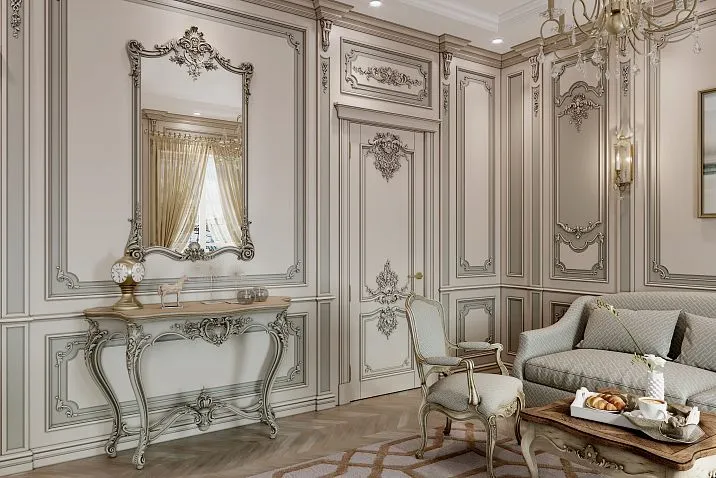
Living room... This is not just a room in a house, it is a theater of family life, where the most important scenes of human relationships are staged. It is here that we welcome guests, host family evenings, and create an atmosphere of warmth and comfort. And what props could be more worthy of this stage than classic Italian living room furniture? Every chair, every sofa, every coffee table becomes not just a piece of furniture, but a participant in the great spectacle called 'Life'.
Imagine: you enter the living room, where every detail breathes history, where the craftsmanship of centuries is embodied in noble lines of furniture. Here, time flows differently — not rushing, measured, allowing you to savor every moment. This is the magic of classic Italian style, which transforms an ordinary space into an oasis of elegance and comfort.
But what makes Italian classicism so irresistible? Why does it continue to inspire designers and enchant lovers of beauty a century later? Let’s embark on a journey around the world, where every detail tells a story of craftsmanship, and every line sings a hymn to beauty.


Anatomy of perfection: what constitutes the soul of a classic living room




Philosophy of space in the Italian understanding
Italians have always understood the living room not as a set of furniture, but as a single organism, where each element exists in harmony with the others. classic Italian living room furniture is created according to the principle of the golden section, where proportions are mathematically precise but intuitively perceived as natural beauty.
The center of composition is always the conversation zone — sofas and chairs arranged to encourage communication while not compromising the privacy of each participant. This is the art of creating intimacy in a large space, the skill to make a large living room cozy and a small one spacious.
Light plays a key role in the Italian concept of the living room. Natural lighting is complemented by a thoughtfully designed artificial lighting system: floor lamps with fabric shades create cozy, warm islands, table lamps on consoles add intimacy, chandeliers form a formal atmosphere. Each light source has its own purpose in the overall symphony of light.
Our factory also produces:


Color palette as the foundation of mood
Colors in a classic Italian living room never shout — they converse with each other in the language of half-tones and nuances. The base consists of noble shades of natural materials: warm tones of wood from golden oak to deep walnut, cream and beige tones of natural fabrics, soft sheens of natural leather.
Accent colors are introduced delicately — deep emerald velvet cushions, noble burgundy silk drapes, golden threads in the upholstery of an antique chair. These color flashes do not dominate but complement the main palette, creating visual focal points.
Patina occupies a special place — noble aging of surfaces that adds depth and character. Light darkening in carved recesses, soft sheen of worn gilding, barely noticeable traces of time on leather — all this creates a sense of history, filling the space with soul.
Get Consultation
Architecture of comfort: main elements of a classic living room
Sofas as central characters
A sofa in a classic Italian living room is not just a place to sit — it is the center of attraction for the entire space, around which the life of the room is organized. Italian furniture Traditionally distinguished by a special approach to creating sofas: here, every detail — from the height of the backrest to the depth of the seat — is calculated for maximum comfort.
Classic Italian sofas impress with variety of forms while maintaining stylistic unity. A Chesterfield sofa with its characteristic buttons and deep upholstery folds creates an atmosphere of an English club in Italian interpretation. Carriage stitching is executed with jewel-like precision — each button is set to the same depth, each fold has the correct shape.
Modern interpretations of classic forms take into account the specifics of contemporary lifestyle. Modular systems allow transforming the space according to needs: in the evening, it becomes a cozy zone for family movie nights, during the day — a reception area for guests, at night — an additional sleeping space for unexpectedly late friends.
Chairs: individual thrones of comfort
If the sofa is a place for conversation, then the chair is a personal space, a throne for contemplation and solitude. Classic Italian chairs impress with variety of forms and styles: from monumental bergere chairs with high backs to elegant medallion chairs with oval backs in the Louis XVI style.
A rocking chair in Italian interpretation — is not rustic simplicity, but refined elegance. Curved runners are made from solid precious wood, upholstery is selected from noble materials. The rocking mechanism is tuned so that movement is smooth and soothing, promoting relaxation.
Special attention is given to chairs with transformation mechanisms. Modern technologies allow embedding complex recliner mechanisms into classic forms without compromising aesthetics. Control buttons are hidden in armrests, motors operate completely silently, and the transformation process occurs smoothly and elegantly.
Tables: functional sculptures
Coffee tables in classic Italian living room furniture are not just coffee cup holders, but functional sculptures that decorate the space even when unused. Oval, round, rectangular — the tabletop shape is chosen based on the overall living room composition and ergonomic principles.
Tabletop materials impress with variety: from classic wood with its warm texture to the cold elegance of marble. Glass tabletops create a sense of lightness and airiness, not visually cluttering the space. Combined options — wood with glass, marble with metal — allow creating unique compositions.
Console tables play a special role in classic interiors — they create transitional zones, linking different functional areas of the living room. Placed against a wall or behind a sofa, they serve not only for displaying decorative items but also as additional work surfaces.
Materials as carriers of character
Solid wood: the soul of Italian furniture
Solid wood furniture — this is the foundation of classic Italian style. Each wood species has its own character, energy, processing and application features. Oak, with its powerful energy and pronounced texture, is ideal for creating substantial items — dining tables, bookcases, heavy chairs.
Walnut — the aristocrat among wood species. Its noble texture, ranging from light brown to dark chocolate, creates a sense of luxury without vulgarity. Walnut surfaces polish beautifully, creating a deep, rich sheen that highlights the natural grain.
Cherry brings warmth and coziness to the interior. Its pinkish tones darken over time, acquiring a noble patina. Cherry wood is ideal for creating medium-sized items — coffee tables, side tables, small cabinets.
Processing solid wood in classic Italian furniture is a high art. Each board is selected individually, its structure studied, and optimal use determined. Drying occurs under special regimes that prevent warping and cracking.
Upholstery materials: tactile luxury
Leather in classic Italian furniture is not just upholstery material, but a philosophical category. High-quality natural leather is selected with great care: animal age, living conditions, tanning quality are considered. The leather preparation process may take several months and includes dozens of operations.
Different types of leather create different effects: smooth leather with minimal processing retains its natural texture and develops a noble patina over time. Embossed leather adds extra texture, hiding minor imperfections and enhancing decorative appeal.
Fabrics for classic Italian furniture are produced in specialized manufactories using traditional techniques. Natural silk, linen, wool, cotton — only natural fibers can create that special atmosphere characteristic of classic style.
Jacquard fabrics with large patterns turn every chair into a piece of decorative art. Damask patterns, floral ornaments, geometric compositions — each design has its own history and symbolism.
Hardware: the unnoticed heroes of style
Italian furniture hardware — this is a world where every detail is crafted with jewel-like precision. Handles, hinges, locks, guides — all these elements not only perform functional tasks but are also key components of the overall stylistic solution.
Bronze and brass hardware creates a sense of antiquity and nobility. Patinated surfaces add depth and character. Each handle is cast in individual forms, hand-finished, and coated with protective compounds.
Transformation mechanisms in modern classic furniture have reached incredible perfection. Gas struts ensure smooth, silent movement. Ball-bearing guides allow sliding elements to operate flawlessly for decades.
Stylistic directions: diversity in unity
Neoclassicism: elegant restraint
Neoclassical style in classic Italian living room furniture — this is a triumph of proportions and harmony. There is no room for baroque excesses, but all the elegance of classical forms is preserved. Lines are clear and precise, decoration restrained yet noble.
The color palette of neoclassicism is built on contrasts: white with gold, black with silver, warm wood tones with cool metallic shades. These contrasts are soft, creating visual depth and interest.
Neoclassical furniture is distinguished by functionality while preserving grandeur. Each item has a clear purpose, yet is capable of decorating the interior simply by its presence.
Empire: imperial grandeur
The Empire style brought to classic furniture the spirit of victory and triumph. Here, every item is a monument to glory, every detail carries symbolic weight. Eagles, lions, laurel wreaths, military trophies — all this symbolism is reflected in carving and inlay.
Furniture in the Empire style is characterized by monumental forms and rich decoration. Gold is used generously, creating an effect of luxury and grandeur. Dark wood species — mahogany, rosewood — contrast with gold, creating dramatic effects.
Biedermeier: bourgeois comfort
The Biedermeier style brought to classic furniture an understanding of home comfort and coziness. Here, forms are simplified, decoration becomes more restrained, but functionality increases. This is furniture for everyday life, yet crafted with the same quality as formal pieces.
Light wood species — birch, maple, pear — create a sense of freshness and purity. Upholstery is done in light tones, often with small floral patterns. The overall atmosphere — home comfort without loss of elegance.
Spatial organization: the art of arrangement
Zoning principles
Smart zoning of the living room with classic Italian furniture requires understanding of the family's functional needs and principles of aesthetic harmony. Each zone should be self-sufficient, yet organically connected to the rest of the space.
The main relaxation zone is formed around the sofa and chairs. The distance between seats is calculated to ensure comfortable conversation — not too close for intimacy, not too far for easy conversation. The coffee table is placed at arm's length from each seat.
The reading zone is created in the corner of the living room or near the window. A comfortable chair with a high back, a lamp with adjustable light, a small table for a cup of tea and books — this is enough to create a cozy nook for solitude.
Symmetry and asymmetry in composition
Classic Italian style allows both symmetrical and asymmetrical compositions, but in each case, the principle of visual balance must be observed. Symmetry creates a sense of order and grandeur, while asymmetry adds dynamism and modernity.
Paired items — two chairs on either side of the sofa, two table lamps on the console, two floor lamps in the corners of the room — create a symmetrical composition. But even in symmetry, there should be variety — identical items can become boring.
Asymmetrical compositions require a more delicate sense of balance. A large chair can be balanced by a group of several small items. A tall floor lamp is compensated by a low coffee table with decorative objects.
Circulation and pathways
The layout of the living room should ensure free circulation for people, without compromising the intimacy of individual zones. Main pathways should be wide enough — at least 80 centimeters for comfortable movement of one person, at least 120 centimeters for opposing movement.
Furniture is arranged so as not to create obstacles for natural movement around the room. It is important to avoid the feeling of a 'passing courtyard' — relaxation zones should be protected from constant movement.
Lighting: play of light and shadow
Multi-level lighting system
Lighting in a classic Italian living room is based on the principle of multi-level design. Each level of lighting serves its own purpose and can operate independently or in combination with others.
General lighting is created by a central chandelier or ceiling light fixtures. It should provide sufficient illumination for active activities — reading, working, playing with children. However, general lighting should not be too bright and cold — warm light tones create a cozy atmosphere.
Local lighting is formed by table lamps, floor lamps, and wall sconces. These light sources create lighting accents, highlight individual zones, and provide comfortable lighting for specific activities.
Decorative lighting solves exclusively aesthetic tasks — it highlights paintings, sculptures, beautiful furniture pieces. LED strips hidden in niches and cornices create the effect of floating surfaces.
Natural Lighting
Working with natural light is the most important aspect of creating a classic interior. Large windows, characteristic of Italian architecture, require delicate treatment that does not obstruct light penetration but controls its intensity.
Curtains in a classic style serve not only practical but also decorative functions. Heavy drapes made of noble fabrics with fringe and tassels create a sense of luxury. Light curtains diffuse direct sunlight, creating soft lighting.
Wooden or natural material blinds allow precise control of the amount of incoming light. Modern automated systems make this process comfortable and efficient.
Textile as the soul of the interior
Upholstery fabrics: selection and combinations
Choosing upholstery fabrics for classic Italian living room furniture — is an art requiring knowledge of properties of different materials and understanding of their interaction with the overall interior style.
Velvet and satin create a sense of luxury and comfort. Their soft texture is pleasant to the touch, and the play of light on the pile adds visual depth. These materials are ideal for sofas and chairs in relaxation zones.
Jacquard fabrics with large patterns turn furniture into works of decorative art. Floral ornaments, geometric compositions, stylized historical motifs — each pattern tells its own story.
Natural leather remains a classic choice for formal furniture. It ages beautifully, acquiring a noble patina, and becomes even more attractive over time.
Decorative textile
Cushions, blankets, throws — these elements allow easily changing the mood of the interior, adding seasonal accents, introducing color accents. In a classic style, decorative textile should support the overall concept, but may be more flexible in color and pattern choices.
Silk cushions with hand embroidery transform into interior treasures. Each cushion is a mini work of art, crafted by master embroiderers.
Throws made from natural materials — cashmere, alpaca, merino wool — not only warm but also add textural variety. A casually draped throw over a sofa back creates the feeling of a lived-in, inhabited room.
Accessories and decor: finishing touches
Artworks
Paintings, sculptures, antique pieces in a classic Italian living room are not merely decorations but meaningful focal points around which space is organized. Each artwork must have appropriate framing and proper lighting.
Paintings in gilded frames are a genre classic. But the frame must match not only the interior style but also the character of the artwork itself. A heavy baroque frame suits historical paintings, while an elegant rocaille frame complements 18th-century galant scenes.
Sculptures in marble, bronze, or wood add volume and tactile quality to interiors. Placed on consoles, fireplace mantels, or special pedestals, they become compositional focal points.
Mirrors: the magic of reflections
Mirrors in a classical interior serve multiple functions: they enlarge space, add light, and create interesting visual effects. Mirror placement requires special attention — they should reflect beautiful views, not random details.
Antique mirrors in carved frames become artworks in themselves. Slightly darkened glass over time creates a unique atmosphere, adding mystery and depth.
Modern mirrors in classical frames allow for perfect reflection while preserving historical aesthetics. New silvering technologies ensure longevity and quality of reflection.
Plants: living accents
Live plants in a classical living room should enhance style, not disrupt it. Large plants in decorative planters create vertical accents. Small compositions on side tables add life and freshness.
Plant selection must consider lighting conditions and overall interior style. Classic options — palms, ficus, laurel — in terracotta or ceramic pots with suitable decor.
Modern technologies in classical style
Hidden innovations
Modern Classic Furniture Successfully integrates advanced technologies while preserving historical aesthetics. Wireless charging devices are embedded in console tops, USB ports are concealed in chair sides, climate control systems are integrated into furniture structures.
Sound systems become invisible — speakers are embedded into furniture without disrupting its appearance. Sound spreads evenly throughout the room, creating an immersive effect.
Smart home systems control lighting, climate, and security, but all control elements are hidden or styled as classical forms. Touch panels are disguised as antique frames, motion sensors are integrated into decorative elements.
Modern materials in classical forms
New composite materials allow creating furniture that visually indistinguishable from classical examples, yet surpasses them in performance characteristics. Artificial stone replicates marble’s beauty without its capriciousness. Synthetic fabrics mimic silk and velvet, yet are resistant to stains and fading.
However, true connoisseurs prefer natural materials with all their peculiarities and care requirements. Authenticity, unpredictability, ability to age and acquire patina — these qualities cannot be replaced by the most sophisticated imitations.
Care and preservation: extending the life of beauty
Daily care
Classic Italian furniture requires attentive and gentle care. Daily cleaning must be gentle — dust is removed with soft cloths or specialized brushes. Aggressive cleaning agents may damage finishes, so only specialized formulations are used.
Leather upholstery requires regular conditioning — special creams and balms maintain material elasticity, prevent cracking. The procedure is performed no less than once every three months, and more frequently in dry climates.
Wooden surfaces are polished with special compounds that not only impart shine but also create a protective film. Wax polishes nourish the wood, highlighting its natural beauty.
Preventive maintenance
Furniture should undergo annual preventive inspections by specialists. All joints are checked, mechanisms are adjusted, minor repairs are performed if needed. Timely maintenance prevents serious breakdowns and extends furniture lifespan.
Upholstery materials are periodically professionally cleaned. Modern technologies allow deep cleaning of fabric or leather without damage, removing stains and restoring original appearance.
Restoration: returning to life
Antique classical furniture may require serious restoration. This is a complex process requiring deep knowledge of historical techniques and high craftsmanship. The restorer must not only restore the item’s functionality but also preserve its historical value.
Modern restoration methods allow restoring even severely damaged furniture. Computer tomography reveals hidden defects, laser cleaning removes contaminants without damaging the base, new adhesive compounds ensure joint strength for centuries.
In an era of rapid change and temporary solutions classic Italian living room furniture it remains an island of constancy and quality. It does not merely furnish space — it creates an atmosphere, shapes the character of the home, influences the mood and lifestyle of its inhabitants.
Choosing classic Italian furniture, we choose the philosophy of quality, invest in beauty, create a legacy for future generations. Each piece becomes part of family history, a witness to important events, a keeper of memories.
Beds and other classic-style furniture do not age — they mature, acquiring a noble patina of time. What today seems an investment, tomorrow becomes antiques, and the day after tomorrow — a family heirloom.
Conclusion
The world of classic Italian furniture for the living room — it is a universe where time flows by special laws, where beauty is not subject to fashion, and quality knows no compromises. Each piece is created as a message to future generations about the fact that humans are capable of surrounding themselves with beauty.
In an era of globalization and standardization, classic furniture preserves individuality, in a world of disposable items, it proclaims the value of longevity, among synthetic materials, it defends the right to naturalness.
Creating a living room with classic Italian furniture, we create not just a beautiful interior — we form a space for a full life, where each day begins with the contemplation of beauty, and each evening ends surrounded by harmony and comfort.
This is the choice of people who understand the true value of quality, who are willing to invest in beauty, who want to live surrounded by real art. It is a philosophy of life, where it is not the quantity, but the quality, not speed, but perfection.
STAVROS Company presents a revolutionary approach to creating classic furniture, combining the best traditions of Italian craftsmanship with innovative technologies of its own production. On its own manufactories, STAVROS creates unique designer furniture from solid wood, which not only meets the highest quality standards, but also surpasses Italian samples on many parameters. STAVROS exclusive collections are developed by leading designers specifically for the Russian market, taking into account the specifics of climate, layouts, and preferences of domestic buyers. Each STAVROS product is a symbiosis of centuries-old traditions of Italian furniture art and advanced production technologies, resulting in furniture of exceptional quality, surpassing even renowned Italian brands in its characteristics. Choosing STAVROS, customers receive not just the highest quality furniture, but also the assurance that they support domestic production capable of creating world-class masterpieces.


