Article Contents:
- Artistic Processing as a Philosophy of Form
- Material as a Source of Form
- Craft as Meditation
- Transmission of Traditions
- Artistic Woodworking Products - Traditional Techniques and Aesthetics
- Traditional Carving Techniques
- Turning processing
- Marquetry and Inlay
- Polyurethane Products - Industrial Technologies, Precision, and Scale
- Casting Technology
- Scaling Production
- Ecological Aspects
- Reimagining Craft in the 21st Century: Digital Methods, 3D Modeling
- 3D Modeling
- CNC machines
- Hybrid Technologies
- Examples of Contemporary Decorative Sculpture
- Neoclassicism
- Modern interpretation
- Avant-Garde Experiments
- Practical Possibilities of Combination
- Zoning Strategies
- Technical Implementation
- Economic optimization
- Conclusion - Craft as a Source of Inspiration

Artistic processing of materials is the oldest form of human creativity, where utilitarian necessity transforms into aesthetic expression, function acquires form, craft becomes art. For millennia, masters have extracted hidden beauty from formless materials—stone, clay, metal, wood—creating objects that serve not only practical purposes but also carry spiritual content, cultural codes, and philosophical meanings.Artistic WoodworkingIt embodies the dialogue between man and nature, where the craftsman's tool follows the material's structure, reveals the natural beauty of texture, and utilizes the individuality of each piece of wood.
The history of artistic craftsmanship demonstrates continuous technological evolution while preserving aesthetic principles. From primitive stone tools to modern computer numerical control machines—the tools have changed and improved, but the essence remains unchanged: creating beauty through transforming material. Each era introduced new technologies, expanding the craftsman's possibilities, yet not abolishing fundamental principles of form, composition, and proportion harmony.
The 21st century brought revolutionary changes to artistic craftsmanship. Digital technologies—3D modeling, CNC machines, laser cutting—opened previously unimaginable possibilities for creating complex forms with mathematical precision.Artistic Processing of PolyurethaneIt embodies a new paradigm, where traditional forms are reproduced through innovative methods. Precision casting technology allows for mass production of unique original artworks, making art accessible to the masses while preserving quality.
Contemporary craftsmanship has overcome the traditional dichotomy between manual labor and machine production. The machine has become an extension of the craftsman's hand, the digital model embodies the creative vision, and the polymer material represents a new embodiment of classical forms. The synthesis of tradition and innovation creates new forms of craftsmanship, where respect for heritage combines with openness to experimentation, fidelity to canons combines with readiness for reevaluation.


Artistic Processing as a Philosophy of Form
Artistic processing of materials transcends the technological process, representing a philosophy of creativity, where the craftsman engages in dialogue with the material, extracts hidden form within it, and reveals potential beauty. Ancient Greeks formulated the concept of mimesis—imitation of nature, but not literal copying, rather revealing the ideal essence hidden behind the imperfection of the particular. The sculptor does not create form arbitrarily, but liberates it from the material's constraints, removing the superfluous.




Material as a Source of Form
Each material possesses inherent properties that determine the nature of possible forms. Wood, with its fibrous structure, easily splits along the grain but resists transverse destruction. This property dictates the logic of carving — decorative elements are elongated along the grain, avoiding thin transverse supports. The master does not fight against the material, but follows its nature, using its properties as a source of expressiveness.
Different wood species have different characteristics, temperaments, artistic possibilities. Soft, uniform linden allows carving of delicate details, forgives mistakes, suits soft organic forms — flowers, leaves, drapery. Hard oak with expressive coarse-grained texture demands concise, large forms that emphasize the material’s strength. Walnut’s wavy texture creates decorative effects without carving — simply polish the surface smoothly.
Polyurethane as an artistic material has fundamentally different characteristics. Uniformity, absence of internal structure or texture, makes it a neutral carrier of form. Polyurethane does not dictate the character of the image, but obediently reproduces any form defined by the master’s model. This universality is both an advantage and a limitation. The advantage — the possibility of creating any forms without regard to the material’s structure. The limitation — absence of the living individuality inherent in natural materials.
Our factory also produces:


Craft as meditation
Artistic material processing is a meditative practice requiring full presence, concentration of attention, and fusion of the master with the process. The woodcarver enters a special state of consciousness, where the boundary between subject and object disappears, the hand moves intuitively, the chisel finds the correct trajectory without the involvement of reason. Eastern masters speak of the state 'mu-sin' — non-thinking, when action occurs without interference from the thinking ego.
The rhythm of work is determined by the rhythm of breathing, heartbeat, natural cycles of concentration and relaxation. Rushing destroys quality — the hand loses precision, the chisel slips, the material chips. Patience, calmness, acceptance of the natural pace of the process — the foundation of mastery. Traditional craftsmanship teaches presence in the moment, mindful action, respect for the material and tools.
Digital technologies change the character of this meditation. Working on a computer with a 3D model requires a different kind of concentration — visual and intellectual, but not tactile. There is no physical contact with the material, resistance to cutting, tactile feedback. Meditation becomes visual and abstract. It is neither worse nor better — simply different, requiring different skills, developing other aspects of consciousness.
Get Consultation
Transmission of traditions
Artistic craftsmanship was traditionally passed from master to apprentice through joint work. Knowledge was not verbalized but absorbed through observation, imitation, and years of practice under the teacher’s guidance. Non-verbal aspects of craftsmanship — feeling for the material, precision of movement, intuitive knowledge — cannot be described in words, they are transmitted only through direct experience.
Modern education attempts to formalize craft knowledge, turning it into a system of rules, algorithms, instructions. This is partially possible — technological aspects can indeed be described, systematized, and taught in classrooms. But the core of craftsmanship remains non-verbal, acquired only through years of practice, thousands of repetitions, and accumulation of experience.
Digital technologies create new forms of knowledge transmission. Video tutorials allow observing masters’ work, slowing down, and repeating viewing of complex moments. 3D models can be studied from any angle, analyzed for structure, measured for proportions. Forums and communities of masters exchange experience, collectively solve technical problems. Knowledge becomes more accessible, democratic, but requires self-discipline to master.
Artistic wooden products — traditional techniques and aesthetics
Artistic wood processing itemsembodiment of centuries-old traditions of carpenters, woodcarvers, turners, creating objects where functionality is inseparably linked with beauty. Wooden utensils, furniture, architectural details, sculpture — each category of products has its own technological techniques, aesthetic criteria, cultural meanings.
Traditional carving techniques
Geometric carving — the oldest technique, creating ornaments from triangles, rhombuses, circles, straight and broken lines. The simplicity of the technique makes it accessible to beginners — only two chisels, a gouge, and a carving tool are needed. But the apparent simplicity is deceptive — creating a harmonious composition from geometric elements requires a developed sense of rhythm, symmetry, and proportion. Masters of geometric carving created complex multi-tiered compositions, where simple elements combined into refined patterns.
Contour carving reproduces a design by cutting contour lines of varying depth and width. The technique is close to drawing — the chisel traces lines that form the image. By varying the depth and width of the lines, the master creates an illusion of volume, conveys the texture of objects, and expresses the silhouettes. Contour carving adorned spinning wheels, tableware, furniture with images of plants, animals, and genre scenes.
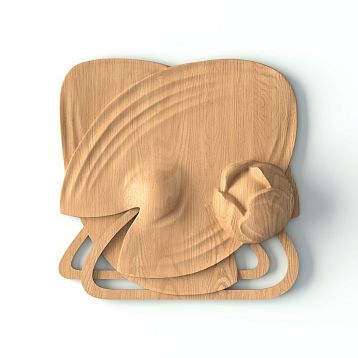
Low-relief carving forms an image by removing the background around ornamental elements to a depth of 5–15 millimeters. Two types are distinguished: relief with rounded contours, where the edges of elements are rounded, and relief with matched background, where the background is removed to the same depth. The first variant creates soft, painterly transitions, the second — a clear, graphic silhouette. Low-relief carving is a universal technique for decorating furniture, panels, architectural details.
High-relief carving creates a high relief of 20–40 millimeters with detailed treatment of volumes. This is the most complex technique, requiring sculptural skill. Acanthus leaves with curled tips, veins, and serrated edges are carved with botanical precision. Figures of people and animals receive anatomical refinement. High-relief carving creates dramatic chiaroscuro, especially effective under side lighting.
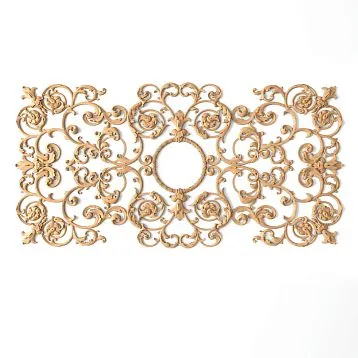
Openwork carving completely removes the background, creating a through ornament. This is the most spectacular and complex technique. Elements must be strong despite visual lightness, and the connections between openings must be thin but not fragile. Masters created incredibly complex wooden lace — window casings, balustrades, screens, chair backs transformed into openwork carving, especially expressive against contrasting backgrounds.
Turning Processing
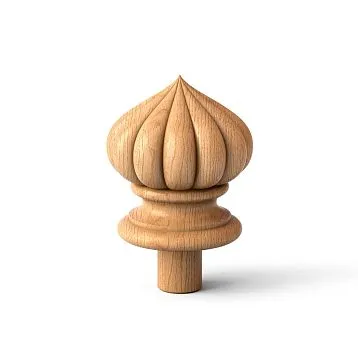
Turning wood creates items with axial symmetry — balusters, columns, vases, tableware, toys. The blank rotates on a lathe, and the chisel removes layers of wood, forming the item’s profile. The turner works intuitively — the hand with the chisel follows an imaginary contour, creating smooth transitions of form. An experienced master turns without preliminary marking, relying on a sense of form, proportions, and rhythm.
Artistic turning allows creating items of astonishing thinness. Vases with wall thickness of 2–3 millimeters are translucent, demonstrating the master’s virtuosity. For thin-walled items, wood with uniform density — linden, birch, apple — is used. Non-uniform oak or ash wood chips when attempting to create thin walls.
Artistic turning uses natural wood defects as decorative elements. Knots, swirls, and burls create unique patterns on the surface of turned items. Masters deliberately select blanks with expressive texture, orienting them on the lathe so that the pattern appears most effectively. After turning and polishing, the texture reveals itself in all its glory.
Combined processing combines turning with carving. The main form is created by turning, then decorative elements — grooves, bands, ornaments — are carved on the surface. Or vice versa — volumetric elements are carved on the turned blank, disrupting axial symmetry — handles, spouts, decorative protrusions. Combining techniques expands formal possibilities.
Marquetry and inlay
Marquetry — a mosaic of thin wooden veneers of different species, creating multi-colored images, ornaments, geometric patterns. Veneers of 0.5–2 millimeters thickness are cut along the contour, fitted together, and glued onto the base. Using woods of various natural colors — from white birch to black ebony — creates a palette of tones without painting.
The marquetry technique requires virtuoso skill in fitting elements with precision to fractions of a millimeter. The slightest gap between veneers destroys the integrity of the image. Traditionally, fitting was done manually with a knife or fret saw, constantly checking the alignment of contours. Modern laser cutting ensures ideal precision, but requires prior creation of a vector drawing.
Inlay — wood inlay into wood, where decorative elements are embedded flush with the surface of the base. The technique is labor-intensive — it requires cutting recesses in the base, precisely matching the shape of the inlaid elements. Inlay creates an impression of monolithism despite rich decoration. Traditionally adorned elite furniture, musical instruments, boxes.
Modern masters combine marquetry with metal, mother-of-pearl, bone inlay, creating refined multi-material compositions. Contrasts of textures, colors, and sheen of different materials enrich expressiveness. Such works require universal craftsmanship — the ability to work with wood, metal, and organic materials.
Polyurethane products — industrial technologies, precision, and scale
Industrial productiondecorative moldingPolyurethane embodies a new paradigm of artisanal craft, where a unique handmade piece becomes a prototype for mass production. The casting technology ensures perfect reproducibility — all items in the batch are identical to the original down to the micron, which is impossible with manual production.
Casting Technology
Master model creation is the key creative stage, where the sculptor creates a reference sample from clay, plaster, or rigid polyurethane. The master model is refined with consideration for the specifics of casting technology — casting reproduces details as small as fractions of a millimeter, so the refinement must be maximally detailed. At the same time, technological limitations are considered — it is impossible to create complex recesses requiring disassemblable molds.
Silicone mold manufacturing ensures precise fixation of all surface nuances of the master model. Two-component silicone is poured around the model, after polymerization, the mold is cut open, and the model is removed. The elasticity of silicone allows extracting finished casts with complex relief without damage. The lifespan of a silicone mold is 500–1000 casts, after which a new one must be manufactured.
Casting with a two-component polyurethane system fills the mold with a foaming mass. Components are mixed immediately before pouring, initiating a chemical reaction that releases carbon dioxide, foaming the mass. The foam fills all spaces within the mold, penetrating the finest relief details. Inside, a porous, lightweight structure forms, while the surface develops a dense skin 2–3 millimeters thick with perfectly refined details.
Post-processing includes removal of technological elements — gates, flash. The surface is inspected for defects — voids, underfills. Quality items are packaged for shipment, defective ones are discarded. Modern production ensures a yield of more than 95 percent of good items due to refined technology.
Mass Production Scaling
Industrial production allows replicating items in any quantity while maintaining consistent quality. One silicone mold yields 500–1000 identical casts. For high-volume production, several molds are made from a single master model, enabling parallel casting. Output reaches hundreds of items per day — unattainable with manual production.
Standardization of dimensions ensures interchangeability of elements. Cornices, moldings, and outlets from various collections have coordinated dimensions, profiles, and jointing systems. Elements from different manufacturers can be combined when standards match. This creates design flexibility — the designer assembles decor from standard elements like a constructor.
Logistics of mass production ensures nationwide accessibility of items. Regional warehouses hold stock of popular items, enabling immediate shipment. Rare items are produced to order with delivery within 1–2 weeks. Developed distribution makes polyurethane decor accessible even in remote regions.
Price accessibility is the result of economies of scale. High initial costs for creating the master model and molds are distributed across thousands of items, reducing the unit cost to a minimum. A polyurethane cornice costs 5–10 times less than a gypsum equivalent, and 10–20 times less than wooden alternatives with comparable aesthetics after painting.
Ecological aspects
Polyurethane is a synthetic polymer based on petroleum products, which raises ecological concerns. However, modern polyurethane systems are safe after full polymerization — the material is chemically inert and does not emit volatile substances at normal temperatures. Certification confirms compliance with sanitary norms for residential spaces.
The longevity of polyurethane items compensates for the ecological footprint of production. A service life of 30–50 years without loss of properties means no need for replacement or production of new items. Gypsum moldings require replacement every 10–15 years due to deterioration, wooden ones require regular maintenance. Polyurethane serves for decades without intervention.
Polyurethane recycling is technically possible, but economically unfeasible at current raw material prices. Production waste is disposed of at landfills. Advancements in polymer recycling technology may, in the future, make polyurethane a fully circular material, closing the production-use-recycling-reuse cycle.
Reimagining craftsmanship in the 21st century: digital methods, 3D modeling
The digital revolution radically transformed the practice of artisanal craft, introducing tools unimaginable for previous generations of masters. Computer 3D modeling, CNC machines, laser cutting opened possibilities for creating the most complex forms with mathematical precision, unattainable by hand.
3D Modeling
Digital sculpting in programs like ZBrush, Blender allows creating virtual sculptures with millions of polygons, detail surpassing physical modeling capabilities. The artist works with a digital stylus on a graphics tablet, mimicking sculptor movements. Virtual clay is infinite, errors are easily undone, variations are created by copying and modifying.
Parametric modeling in programs like Rhino, Fusion 360 creates forms through mathematical dependencies. Changing one parameter automatically recalculates the entire model. This is a powerful tool for creating series of items with size variations while preserving proportions. Parametric modeling ensures mathematical accuracy of classical proportions.
Scanning existing objects creates digital copies for modification, replication, and scaling. Museum exhibits are scanned, creating digital archives of historical forms. These archives become the basis for creating reproductions, variations, and modern interpretations of historical samples. Cultural heritage is digitized, becoming accessible for study and reproduction.
CNC Machines
CNC milling machines cut parts from wood, plastic, composites according to 3D models with precision down to tenths of a millimeter. Multi-axis machines process blanks from various sides without repositioning, creating complex three-dimensional forms. Machine productivity vastly exceeds manual carving with perfect repeatability.
Laser machines cut and engrave flat materials — plywood, MDF, acrylic — along vector contours with cut thickness less than a millimeter. This is the ideal tool for creating delicate elements, marquetry, decorative panels. Laser ensures clean cuts, unattainable with manual sawing.
CNC turning machines turn parts of axially symmetric forms according to a specified profile. Balusters, columns, vases are produced with perfect repeatability — all items in a series are identical. This is critical for architectural elements, where dozens of identical balusters are required for a balustrade.
Hybrid Technologies
Combining digital and manual methods creates an optimal balance of efficiency and quality. The machine performs rough material removal, forming basic volumes according to the 3D model. The artisan manually refines details, smooths transitions, and adds surface vitality. The result — time savings while preserving handmade value.
Digital design with traditional execution allows precise planning of the item, calculation of proportions, and visualization before work begins. The client sees a 3D model of the future item and approves details. After approval, the artisan produces the item using traditional methods based on the digital project. This reduces the risk of errors, rework, and misunderstandings.
Digital archives of works preserve 3D models of all created items. When needed, the item can be reproduced exactly or with modifications. The archive becomes the artisan’s creative capital, a library of forms for future projects. Digital heritage does not vanish with the artisan’s departure, passing to future generations.
Examples of Modern Decorative Plastics
Modern decorative plastic demonstrates boundless possibilities for combining traditional and innovative materials, techniques, and aesthetic approaches.decorative elementsModern production reproduces historical forms with archaeological precision, simultaneously creating entirely new forms unimaginable for traditional craftsmanship.
Neoclassicism
Modern neoclassicism adapts classical forms to current proportions, scales, and technologies. Polyurethane cornices reproduce profiles of ancient orders with mathematical precision, but are produced in a wide range of sizes — from miniature versions for apartments with low ceilings to monumental ones for mansions. Carved wooden panels follow classical compositional canons, but are scaled to fit specific spaces.
Neoclassical colors lean toward muted tones—grays, beige, cream instead of bright historical hues. Gilding is applied sparingly—only on key elements for accent, not universally. Patination creates an effect of noble antiquity without excessive theatricality. Overall impression— restrained elegance instead of baroque opulence.
Materials are combined pragmatically—wood for tactilely important elements, polyurethane for architectural decoration. Unified coloring unifies different materials. This approach creates the impression of a classic interior at a reasonable budget, modern practicality, and alignment with current tastes.
Modern Interpretation
Designers reinterpret historical forms, creating modern interpretations with recognizable references. Classic rosettes are simplified to their geometric essence, preserving central symmetry but losing ornamental complexity. Cornices are reduced to simple profiles, hinting at classical fragments. Moldings become graphic lines, structuring planes without excessive ornamentation.
Colors are monochromatic—white on white in various shades, gray on gray, black on black. Differences in materials and textures are revealed through chiaroscuro, reflections, tonal nuances. Absence of color contrasts creates visual calm, refined restraint, refined elegance.
Element scales are reduced—narrow cornices 50-80 mm instead of classical 150-300, miniature rosettes 100-150 mm instead of 300-500. Decoration is present but does not dominate, creating spatial structure without overload. Philosophy—less means more, quality matters more than quantity.
Avant-garde experiments
Radical designers experiment with deconstructing classical forms. The cornice is cut into fragments, placed asymmetrically. The rosette is divided into sectors, spaced across the wall. Moldings curve, creating organic lines instead of geometric rigidity. Deconstruction creates dynamism, intrigue, disruption of expectations.
Materials are combined contrastively—rough untreated wood with smooth painted polyurethane, rusty metal with snowy stucco. Contrasts in texture, color, and finish create visual tension, emotional richness, expressiveness. Such interiors require boldness from the client and confidence from the designer.
Digital technologies allow creating organic forms unthinkable for traditional craftsmanship. Parametric algorithms generate complex interweavings, fractal structures, biomorphic compositions. CNC machines realize these forms in material. Result—decoration appearing grown, not manufactured, natural in origin despite digital creation.
Practical possibilities of combining
Skillful combination of wooden and polyurethane decoration creates optimal balance of aesthetics, practicality, budget, eco-friendliness, durability. Each material is applied where its properties are most needed.
Zoning strategies
Vertical zoning by room height rationally distributes materials. Lower third—wall panels, sills, door casings—wooden decoration. This zone is accessible for close inspection and tactile contact, where the value of natural wood is maximized. Middle third—window casings, furniture facades—combination depending on budget. Upper third—cornices, friezes, ceiling rosettes—polyurethane, where lightness is critical.
Functional zoning considers usage conditions. Dry heated rooms—living rooms, offices, bedrooms—allow wooden decoration. Humid zones—kitchens, bathrooms, laundries, pools—exclusively polyurethane, resistant to moisture. Facades in harsh climate regions—polyurethane ensures longevity without maintenance.
Budget zoning determines investment priorities. Grand spaces—hallways, living rooms—receive rich wooden decoration, emphasizing status. Private rooms—bedrooms, children’s rooms—more economical polyurethane decoration. Technical zones—corridors, utility rooms—minimal decoration from most affordable materials.
Technical implementation
Mounting different materials requires different approaches. Wooden elements are mounted with carpentry glue plus additional fixation with self-tapping screws through back parts. Polyurethane elements—on special glue or liquid nails; lightness allows omitting mechanical fastening. Transitions between materials are covered with moldings, visually separating zones.
Painting can unify or separate materials. Unified coloring in one color neutralizes material differences—distantly indistinguishable whether wood or polyurethane. Contrastive coloring highlights differences—natural wood with transparent lacquer contrasts with painted polyurethane. Intermediate option—patination of both materials using the same technique.
Joints require care. Wood and polyurethane have different thermal expansion—joints must allow micro-movement. Rigid bonding of dissimilar materials may lead to cracking under temperature fluctuations. Elastic sealants in joints compensate for expansion, preventing damage.
Economic Optimization
Full carved wood decoration costs 5-10 times more than combined solutions. Rational distribution—wood for key accents, polyurethane for the rest—creates the impression of a luxurious interior at reasonable investment. Savings are reallocated to other items—quality furniture, lighting, textiles.
Phased implementation stretches investments over time. First stage—installing polyurethane decoration, creating basic spatial structure. Second stage—adding wooden accents as funds accumulate. Third stage—finishing, patination, gilding. Project is implemented at a comfortable pace without loans.
Long-term savings consider maintenance costs. Wooden decoration requires periodic coating renewal—every 5-7 years for facades, every 10-15 for interiors. Polyurethane requires no maintenance for 30-50 years. Initial savings on wood may result in higher maintenance costs later.
Conclusion—craft as a source of inspiration
Artisanal craft in the 21st century is experiencing a renaissance, adopting new forms, materials, and technologies while preserving eternal principles of beauty, harmony, and craftsmanship.Artistic WoodworkingIt continues traditions passed down for millennia, embodies the dialogue between man and nature, the unique value of handmade objects, the tactile appeal of living material.
Modern masters use tools of their ancestors, follow time-tested techniques, create forms recognizable as continuations of great tradition. Simultaneously, they embrace innovation—digital design, CNC machines, new finishing materials expand possibilities, increase efficiency, making craft economically viable in the modern world.
Artistic Processing of PolyurethaneIt embodies a new paradigm, where classical forms are reproduced by industrial methods, becoming mass-accessible while preserving quality. Casting technology does not oppose tradition but continues it in a new material. Polyurethane stucco, after quality finishing, visually indistinguishable from gypsum, offers multiple advantages in operational characteristics.
Continuity is manifested in preserving aesthetic principles amid revolutionary technological changes. Ancient proportions, embedded in the order system thousands of years ago, are reproduced with perfect accuracy via digital modeling and precision casting. Baroque opulence is achieved by CNC machines carving complex reliefs from 3D models. Classicist rigor is embodied in any material—wood, polyurethane, composite.
Inspiration is drawn from inexhaustible heritage of the past—museum collections are digitized, historical form libraries are created, accessible for study, reproduction, reinterpretation. Simultaneously, new creations are made—parametric algorithms generate forms unthinkable for traditional craftsmanship, digital sculptors create virtual worlds realized by modern technologies.
Company STAVROS embodies the synthesis of tradition and innovation, offering a full spectrum of decorative elements in natural wood and polyurethane. Hand-carved items based on historical models preserve a connection with ancestral heritage. European-quality polyurethane systems reproduce classical forms with modern practicality. Professional consultations will help create a harmonious composition where each material occupies its proper place.
Create spaces where craftsmanship becomes a source of inspiration, where traditions meet innovations, where beauty is embodied in material regardless of the method of creation. Value handcrafted wood carving, recognize the practicality of polyurethane moldings, find balance between them. Transform interiors into works of art, fill them with symbolic meaning, embody dreams of beauty. Choose STAVROS — choose quality proven by time, craftsmanship embodied in any material, beauty designed for eternity.