Article Contents:
- Philosophy of Systematizing Architectural Decoration
- Principles of Effective Cataloging
- Classification of Elements by Functional Purpose
- Structural Elements
- Trim Elements
- Finishing Elements
- Material Aspects of Cataloging
- Polyurethane — Universal Solution
- Wood in Modern Interpretation
- Composite materials of new generation
- Stylistic Systematization of Decoration
- Historical Styles in Modern Catalogs
- Medieval Traditions
- Renaissance and Its Interpretations
- Baroque and Rococo
- Technical Aspects of Cataloging
- Dimensional Standards and Modularity
- Strength characteristics
- Installation Characteristics
- Innovative Approaches to Cataloging
- Digital technologies
- Intelligent Selection Systems
- Catalog Personalization
- Regional Adaptation of Catalogs
- Climate characteristics
- Architectural traditions
- Economic Factors
- Frequently Asked Questions About Facade Decoration Catalogs
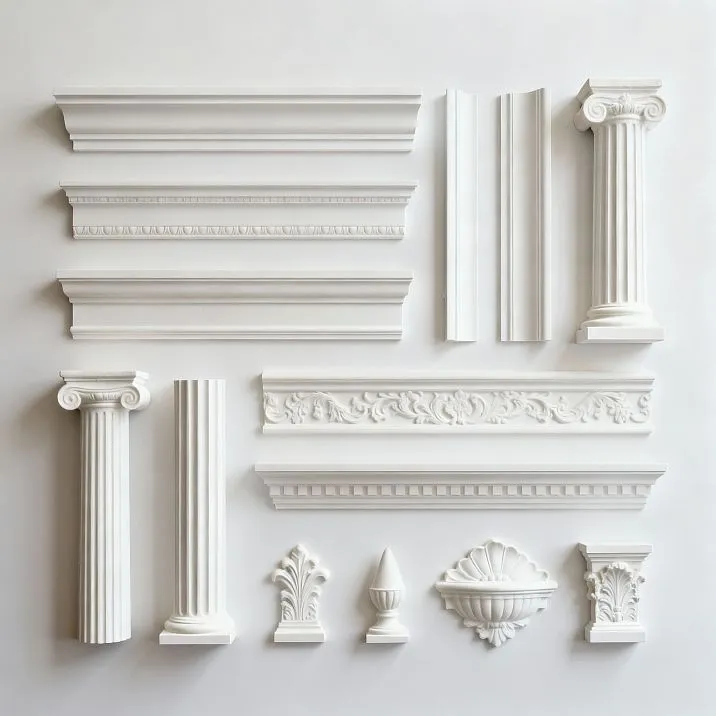
How to turn an ordinary building into an architectural masterpiece? The answer lies in the proper selection of decorative elements, which can radically transform any facade. Moderncatalog of facade decorationrepresents an encyclopedia of possibilities for creating a unique building appearance, where each element plays its unique role in the overall architectural symphony.
A thoughtful selection of decorative elements requires understanding not only aesthetic principles but also technical characteristics of materials, installation specifics, and climatic conditions of operation. Cataloging facade decoration helps systematize knowledge and make an informed choice for a specific project.


Philosophy of Systematizing Architectural Decoration
Why is structured presentation of information about decorative elements needed? Cataloging solves numerous practical tasks: simplifies searching for required elements, allows comparing characteristics, helps calculate project costs, ensures technical support at all implementation stages.
Professional cataloging takes into account the needs of various user categories. Architects seek elements to realize creative concepts. Builders require precise technical specifications and installation recommendations. Private clients want clear solutions for their homes. Restorers require accurate reproduction of historical forms.
Modern cataloging goes beyond simple listing of products. It includes an educational function, helping users understand principles of decoration application, characteristics of different styles, rules of element combination. Interactive tools allow visualizing results even before purchase.
Evolution of catalogs reflects technological development and changing market needs. From printed brochures to online catalogs, from static images to 3D models, from simple listing to intelligent selection systems — each stage brought catalogs closer to the ideal of ease of use.




Principles of effective cataloging
Logical structuring of information facilitates navigation and search for required elements.Facade decoration elementsGrouped by functional purpose, stylistic affiliation, material of manufacture, and dimensional characteristics. A multi-level category system allows quickly narrowing the search scope.
Standardization of descriptions ensures consistent presentation of information. Each element is described using a single scheme: purpose, dimensions, material, color, installation features, compatibility with other elements. Technical specifications are provided in standard units of measurement.
The visual component plays a critical role in catalog perception. High-quality photographs show elements from various angles, demonstrating surface details and color nuances. 3D models allow viewing elements from all sides. Installation schematics simplify understanding of technical aspects.
Search capabilities must be both intuitive and powerful. Filtering by key parameters, text search, image search — all of these help quickly find the required information. Recommendation systems suggest additional elements based on already selected items.
Our factory also produces:


Classification of elements by functional purpose
Get Consultation
Structural elements
Columns and pilasters form the vertical structure of the facade, creating a sense of height and grandeur. These elements require precise adherence to classical orders or modern design solutions.Facade DecorationColumns can be load-bearing or purely decorative.
Bases of columns provide a visual transition from the vertical element to the horizontal plane of the foundation or plinth. Their shape is determined by the architectural style: from simple rectangular forms in modern architecture to complex multi-level forms in classical orders. The material of bases must withstand increased loads and moisture exposure.
Capitals complete columns, demonstrating craftsmanship and belonging to a specific style. Doric capitals are characterized by strict lines. Ionic capitals feature elegant volutes. Corinthian capitals impress with rich vegetal ornamentation. Modern capitals may reinterpret classical forms or create entirely new solutions.
Antabments unite columns into a single system, creating a horizontal finish to the facade composition. Architrave, frieze, and cornice must correspond to the proportions of the selected order. The modularity of elements allows creating antabments of any length from standard fragments.
Trim elements
Window and door casings create decorative frames for openings, emphasizing their significance in the overall facade composition. Simple linear casings suit modern architecture. Profiled elements with cornices and sills correspond to classical traditions.Outdoor decoration elementsCasing elements for openings must harmonize with the overall style of the building.
Archivolts of arched openings require special craftsmanship in manufacturing and installation. Radiused elements must precisely match the curvature of the arch. Wedge-shaped construction imitates traditional masonry. Decorative keystones become accent elements of the composition.
Imposts horizontally divide tall openings, creating additional divisions. They are especially important in Gothic architecture and its modern interpretations. The profile of imposts must correspond to the stylistic features of casings and other framing elements.
Sill elements not only decorate but also perform a protective function, diverting water from the wall. Their shape must ensure effective water drainage while maintaining aesthetic appeal. The material must be resistant to atmospheric exposure and temperature deformation.
Finishing elements
Cornices of various levels create horizontal structure of the facade and provide protection from atmospheric precipitation. The crowning cornice forms the silhouette of the building and must be proportionate to its height and scale. Floor-level cornices divide the facade into tiers, creating a rhythmic structure.
Modillions and dentils decorate the lower surface of cornices, creating rich play of light and shadow. These small elements require precise manufacturing and careful installation. Their spacing and dimensions must correspond to overall facade proportions.
Pediments complete central parts of facades, creating compositional accents. Triangular pediments correspond to classical traditions. Semi-circular pediments — to Baroque. Broken pediments allow placing additional decorative elements. Pediment tympanums may contain relief compositions or heraldic elements.
Parapets conceal the roof and create the facade finish. Their height and shape must correspond to the architectural style of the building. Parapet balustrades add elegance to classical facades. Modern parapets may have simple geometric forms or complex curved outlines.
Material-related aspects of cataloging
Polyurethane — a universal solution
Facade decoration made of polyurethanePolyurethane occupies a special place in modern catalogs due to its unique combination of properties. The material's lightness simplifies installation and reduces load on load-bearing structures. Precision in reproducing details allows creating elements of any complexity. Resistance to atmospheric exposure ensures longevity.
Polyurethane's technological capabilities are virtually limitless. Casting into molds allows reproducing the finest details of historical samples or creating complex original forms. Different material densities suit elements of various purposes. The possibility of reinforcement increases the strength of large elements.
Polyurethane decoration color solutions include a standard white palette and a wide range of ready-made colors. Mass coloring ensures color stability under mechanical damage. Surface coloring allows achieving any shades and special effects.
Polyurethane's operational characteristics surpass many traditional materials. Temperature range from -50°C to +80°C covers all climate zones in Russia. UV resistance prevents material degradation. Moisture resistance excludes damage from atmospheric precipitation.
Wood in modern interpretation
Natural wood retains popularity in facade decoration catalogs due to its natural beauty and eco-friendliness. Modern processing technologies have significantly extended the service life of wooden elements under external exposure. Thermal modification, deep impregnation with protective compounds, use of stable species — all of these enhance the longevity of wooden decoration.
Wood species are selected based on operational requirements and aesthetic preferences. Oak provides maximum strength and an elegant appearance. Beech features a uniform texture and good workability. Coniferous species have natural resistance to moisture due to resin content.
Wood processing technologies include drying to optimal moisture content, relieving internal stresses, protective impregnation, and final finishing. Each stage affects the quality of the finished product and must be controlled according to technical requirements.
The stylistic possibilities of wooden decoration cover a wide range — from Russian wooden architecture to modern Scandinavian minimalism. Processing capabilities allow creating both simple geometric forms and complex carved compositions.
New-generation composite materials
Fiberglass composites combine the strength of glass fiber with the processability of polymer binders.Where to buy facade decorationComposite materials — an important issue, since these materials require special manufacturing technologies. High strength at low weight makes composites ideal for large-scale elements.
Mineral composites imitate natural stone with significantly less weight and cost. Cement-based binders provide resistance to atmospheric effects. Mineral fillers create authentic texture. Fiber reinforcement increases crack resistance.
Ceramic composites combine the decorative properties of ceramics with improved operational characteristics. High-temperature firing creates a strong structure. Colored glazes provide a rich palette of shades. Frost resistance allows use in harsh climatic conditions.
Metal composites include aluminum and steel elements with polymer coatings. The lightness of aluminum combines with the corrosion resistance of coatings. The strength of steel is complemented by the decorative potential of powder coatings. Perforated elements create interesting lighting effects.
Stylistic systematization of decoration
Historical styles in the modern catalog
Ancient heritage forms the basis for cataloging classical decorative elements. The order system creates a clear structure, where each element has a defined place and proportions.Facade molding decorationIn the ancient style, precise adherence to canonical proportions and detailing is required.
The Doric order is characterized by elements of maximum strictness and simplicity. Columns without bases, simple capitals without volutes, strict entablatures — all this creates a sense of monumentality. The modular system allows creating compositions of any scale using standard elements.
The Ionic order adds elegance through characteristic volutes on capitals and more slender proportions of columns. Bases acquire complex profiling. The entablature is enriched with decorative elements. This order is popular in residential architecture due to its human scale.
The Corinthian order demonstrates the rich decorative potential of ancient traditions. Capitals with acanthus leaves require virtuoso craftsmanship in production. Complex cornices with modillions and dentils create rich chiaroscuro effects. This order suits representative buildings.
Medieval traditions
Romanesque style is characterized by massive forms and simple decoration. Semi-circular arches, thick walls, small windows — all this is reflected in the catalogs of elements of this style. Decoration is limited to simple geometric ornaments and stylized plant motifs.
Gothic style introduces verticality and delicacy. Pointed arches, ribbed vaults, large windows with tracery — characteristic elements of the Gothic catalog. Decoration becomes more refined, including crockets, fleurs-de-lis, gargoyles. Stone carving reaches virtuoso mastery.
Byzantine tradition influences Russian architecture, creating a special section in catalogs. Domes, drums, and kокошники — specific elements of this tradition. Decoration includes Christian symbolism, plant ornaments, and geometric patterns.
Ancient Russian architecture develops Byzantine traditions with local characteristics. Shingled roofs, kokoshniks, and plant-carved lintels — unique elements of the Russian catalog. Wooden architecture creates a separate direction with its own forms and decoration.
Renaissance and its interpretations
Italian Renaissance returns ancient principles in a new interpretation. Palazzo Florence and Rome become models for cataloging Renaissance elements. Rusticated plinths, order compositions of facades, rich cornices — characteristic features of the style.
Northern Renaissance adapts Italian forms to local traditions. German and Dutch Renaissance create special decorative variants. Stepped gables, cartouches, rollwerk — specific elements of Northern tradition.
Russian Renaissance of the 17th century synthesizes Western influences with local traditions. Naryshkin Baroque, Moscow churches, boyar palaces — sources of inspiration for the catalog of elements of this period. Decoration combines classical forms with Russian ornamentation.
19th-century Neoclassicism revives Renaissance forms in new materials and technologies. Eclecticism allows freely combining elements from different periods. Industrial technologies make complex decoration accessible for mass application.
Baroque and Rococo
Italian Baroque of the 17th century creates a new language of architectural decoration. Dynamic forms, complex curves, rich plasticity — characteristic features of the style.Facade Decoration MoldingsBaroque-style elements include complex profiles with numerous breaks and curves.
Versailles Baroque of Louis XIV demonstrates imperial luxury. Garlands, trophies, allegorical figures — decorative elements emphasize the grandeur of royal power. Gilding and polychromy add solemnity.
Russian Baroque of the 18th century reaches its peak under Elizabeth Petrovna. Rastrelli creates a unique synthesis of Western forms and Russian traditions. Winter Palace, Catherine Palace — sources for cataloging Russian Baroque.
Rococo introduces intimacy and elegance. Asymmetrical compositions, pastel tones, plant motifs — characteristic features of the style. Decoration becomes more delicate, suitable for intimate interiors and small buildings.
Technical Aspects of Cataloging
Dimensional Standards and Modularity
Standardization of dimensions simplifies design and reduces production costs. A modular system allows creating compositions of any complexity using a limited set of basic elements.Facade decoration manufacturermust ensure compatibility between elements.
Primary dimensional series are defined by architectural traditions and modern construction standards. Floor height of 2.7–3.3 meters determines the dimensions of vertical elements. Window opening width of 1.2–2.4 meters affects the dimensions of framing elements.
Tolerance for dimensions must consider manufacturing capabilities and installation requirements. Too tight tolerances increase production costs. Too loose tolerances create installation problems. Optimal tolerances are ±2–3 mm for most elements.
Transportation dimensions limit the maximum element sizes. Standard trucks have a cargo length of 13.6 meters. Height is limited to 4 meters, considering road restrictions. Larger elements require special transport or disassemblable structures.
Strength characteristics
Mechanical loads on facade elements include self-weight, wind loads, thermal deformations, seismic impacts. Cataloging should include information on allowable loads for each element type.
Wind loads depend on building height, prevailing wind direction in the region, and element resistance coefficient. Protruding elements experience higher loads. Calculations must account for dynamic effects during gusty winds.
Thermal deformations cause significant stresses in facade decoration elements. Differences in expansion coefficients between decoration and wall may lead to destruction. Expansion joints and flexible fasteners reduce thermal stresses.
Seismic loads are especially important for regions with high seismic activity. Decorative elements must maintain stability during earthquakes. Special fasteners provide damping of vibrations.
Installation characteristics
Fastening systems determine the reliability and longevity of decorative elements. Mechanical fastening provides maximum reliability for heavy elements. Chemical fastening suits light elements and ensures invisible fastening points.
Foundation preparation affects installation quality. Wall irregularities must be corrected. Foundation strength must match the loads from decorative elements. Wall moisture must be within acceptable limits.
Sequencing of installation affects the quality of the result. Large elements are installed first. Small details are added last. Adhering to technological sequence prevents damage.
Assembly sequence affects the quality of the result. Large components are assembled first. Small details are added last. Adhering to the technological sequence prevents damage.
Innovative Approaches to Cataloging
Digital technologies
3D catalogs revolutionize the presentation of decorative elements. Three-dimensional models allow viewing elements from all sides, assessing surface details, and understanding installation principles. Interactive features include scaling, rotation, and sectioning.
Virtual reality creates an immersive experience when selecting decor. VR headsets allow users to "enter" a virtual building and evaluate the impact of various elements on the facade's overall appearance. This is especially important for large projects with high cost of errors.
Augmented reality via mobile devices allows users to "try on" decor on real buildings. The smartphone camera shows the actual facade, while the app overlays virtual decorative elements. The technology simplifies decision-making and increases confidence in choices.
Artificial intelligence analyzes user preferences and suggests optimal solutions. Machine learning based on successful projects helps avoid design errors. Automatic recommendations accelerate the selection process.
Intelligent Selection Systems
Expert systems codify knowledge of experienced architects and designers. Knowledge base includes style combination rules, proportioning principles, material limitations. The system asks questions to the user and suggests optimal solutions.
Parametric design allows creating decorative elements tailored to specific conditions. The user sets project parameters, and the system generates a 3D model of a suitable element. The technology is especially useful for non-standard projects.
Optimization algorithms minimize project cost while maintaining aesthetic requirements. The system suggests alternatives to expensive elements with more affordable equivalents. Analysis includes material, production, and installation costs.
Integration with CAD systems allows importing project drawings and automatically selecting suitable decorative elements. Compatibility with popular design programs accelerates architects' work.
Catalog Personalization
User profiles save preferences and selection history. Personalized catalogs display elements primarily matching the user's interests. The system studies behavior and adjusts recommendations.
Favorite collections allow saving interesting elements for future projects. Users can create thematic collections by style, material, or project. Collections can be shared with colleagues and clients.
Comparison tables simplify choosing between similar elements. The system automatically highlights key differences in characteristics. Users can add their own comparison criteria.
Project history retains information about previously selected elements. This simplifies repeat orders and creating variations of successful projects. Usage statistics help manufacturers plan their product range.
Regional catalog adaptation
Climate Characteristics
Arctic regions impose special requirements for frost resistance of decorative elements. Temperatures down to -50°C and lower require special materials and technologies. Catalogs for northern regions emphasize temperature stability.
Tropical zones face problems of high humidity, intense ultraviolet radiation, biological damage. Elements must resist fungi, insects, corrosion. Special coatings ensure longevity in aggressive environments.
Seismically active regions require special solutions for mounting decorative elements. Flexible connections, damping devices, reinforced fasteners — all of this is reflected in specialized sections of catalogs.
Coastal zones experience the effects of salty fogs and storm winds. Corrosion resistance becomes a critically important characteristic. Special alloys and coatings ensure longevity in marine climates.
Architectural traditions
Regional styles reflect local culture and construction traditions.facade decoration storeMust consider these features in their assortment. Siberian terem, Caucasian towers, Central Asian architecture — each region has its own specificity.
Wooden architecture of the Russian North creates a unique category of decorative elements. Chandeliers, panels, carved moldings require special manufacturing technologies. Modern materials allow reproducing traditional forms with improved characteristics.
Mountainous region stone architecture uses local stone varieties. Basalt, granite, sandstone create a unique aesthetic. Modern composite materials allow mimicking natural stone texture at lower weight and cost.
Southern regions tend toward light, openwork decorative forms. Open galleries, pergolas, decorative screens provide sun protection while maintaining air exchange. Modern materials expand the possibilities for creating openwork structures.
Economic factors
Population income levels affect catalog price categories. Premium regions focus on exclusive materials and complex forms. Economical solutions suit mass construction. Catalogs should offer options for different budgets.
Logistical features affect the availability of various materials. Remote regions prefer lightweight materials to reduce transportation costs. Developed transportation infrastructure expands selection options.
Local material production creates competitive advantages. Catalogs should consider the availability of local raw materials and production capacities. Supporting local manufacturers may be an important selection factor.
Government construction support programs affect demand for various decorative categories. Subsidies for energy efficiency stimulate demand for insulated facade systems. Renovation programs create demand for reconstruction elements.
Frequently Asked Questions about facade decoration catalogs
How to properly use a facade decoration catalog?
Effective use ofa facade decoration catalogBegins with a clear definition of the project's objectives. Define the architectural style, budget, implementation timeline, and climatic conditions. Use filters to narrow your search by required parameters. Study not only the appearance of elements but also their technical characteristics, installation methods, and compatibility with other elements.
Which decorative elements are the most universal?
Elements considered universal are simple moldings, classical cornices, rectangular pilasters, standard casings. These elements suit most architectural styles and combine easily with each other.Buy outdoor decorationUsing universal-type elements is a sensible solution for first-time facade decoration projects.
How to determine the required quantity of elements?
Element quantity calculation is based on facade drawings. Measure the total length of cornices, number of windows and doors for casings, wall area for moldings. Add 5-10% for trimming and possible defects. For complex elements, it is better to consult specialists for calculations.
Can elements from different materials be combined?
Combining materials is possible, but requires consideration of their compatibility. Coefficients of expansion should be close to avoid stresses at joints. Color palette should harmonize. Mounting methods should suit all used materials. It is better to consult specialists when planning mixed compositions.
How to check the quality of elements in the catalog?
A quality catalog contains detailed technical information: material of manufacture, dimensions with tolerances, strength characteristics, resistance to atmospheric effects. Look for information on quality certificates and warranty obligations. Customer reviews and portfolios of completed projects help assess the actual product quality.
Does order size affect the price of elements?
Order volume significantly affects the cost of elements. Large orders receive discounts due to savings on preparatory operations and logistics optimization. Small orders have a high proportion of fixed costs. Group orders from multiple customers may receive preferential terms.
Are material samples provided?
Most manufacturers provide material and finish samples for quality and color evaluation. Samples help make a final decision before placing a large order. Some samples are provided free of charge, while complex samples may incur a fee, which is applied to the order.
How quickly are catalogs updated with new items?
Modern electronic catalogs are updated in real time. New items appear immediately after development and testing. Printed catalogs are updated less frequently — usually 1-2 times per year. Subscribing to the manufacturer’s news helps you receive information about new items first.
A modern approach to cataloging facade decoration combines traditional knowledge with innovative technologies, creating a powerful tool for architects, builders, and private clients. Properly structuredcatalog of facade decorationbecomes not just a product list, but an educational system that helps make informed decisions and bring creative visions to life.
The evolution of cataloging reflects the development of the construction industry — from simple lists to interactive systems with artificial intelligence, from static images to virtual reality, from universal solutions to personalized recommendations. This development continues, opening new opportunities for creativity and improving the efficiency of construction processes.
STAVROS is at the forefront of this development, offering modern solutions in facade decoration cataloging and sales. The combination of deep architectural expertise, innovative production technologies, and a client-oriented approach makes STAVROS a reliable partner for implementing projects of any complexity. Investments in quality cataloging pay off through increased work efficiency, reduced design errors, and higher client satisfaction.