Article Contents:
- Importance of quality baluster fastening
- Safety and reliability
- Aesthetics and Functionality
- Cost and time savings
- 1. Screws
- 2. Metal angles and fastening brackets
- 3. Anchors
- 4. Construction adhesive
- 1. Marking mounting locations
- 2. Surface preparation
- 3. Pre-drilling
- Step 1. Positioning balusters on steps
- Step 2. Attaching balusters with screws
- 2.1. Using screws
- 2.2. Strengthening connections
- Step 3. Attaching railings to balusters and steps
- 3.1. Marking railing mounting locations
- 3.2. Installing railings
- Step 4. Final inspection and finishing
- 4.1. Strength check
- 4.2. Finishing and maintenance
- Preparation — key to success
- Choosing quality fasteners
- Installation Technologies
- Frequently Asked Questions
- Question 1: Why is pre-drilling important when attaching balusters to steps?
- Question 2: Which fastening methods are the most reliable?
- Question 3: Can balusters be installed on steps by oneself?
- Error 1: Inaccurate marking and measurements
- Error 2: Absence of pilot drilling
- Error 3: Use of low-quality fasteners
- Error 4: Incorrect combination of fastening methods
- Error 5: Ignoring material specifications
- Regular inspection and maintenance
- Technical Maintenance
- Main Conclusions
- Final Thoughts
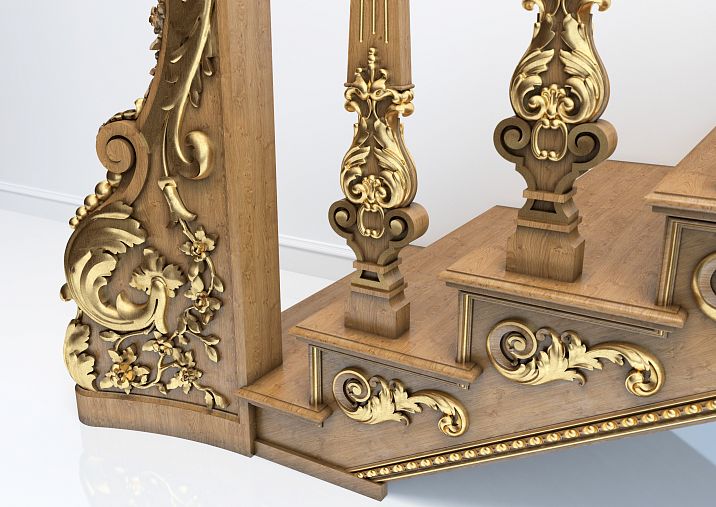
A staircase is not just a means of moving between floors, but a true focal point of interior design, setting its style, comfort, and safety. Balusters play a key role in staircase construction: they provide fall protection, create a visual accent, and complement the overall design. However, even the most beautiful and high-quality Balusters for staircase lose their functional properties if the fastening is done poorly. The longevity, aesthetics, and, most importantly, the safety of the structure depend on the correct method of fastening.
In this article, we will examine the nuances of attaching balusters to wooden staircase treads, discuss the selection of fasteners and fastening methods, and share practical tips from professionals. Our step-by-step guide is intended for those who want to installbuy balusters, Wooden balusters on their own, ensuring the longevity and reliability of the staircase railing.
We will discuss the following questions:
● Why proper baluster fastening is crucial
● Main types of fasteners for wooden balusters
● Surface preparation and accurate marking for fastening
● Step-by-step process of attaching balusters to treads
● Nuances of connecting balusters to treads to create a safe staircase
● Professional tips and common mistakes during installation
● Recommendations for maintaining fastener connections to ensure the longevity of the structure
Let’s start by studying the importance of proper fastening for the longevity of a wooden staircase.


Importance of proper baluster fastening




Safety and reliability
Proper baluster fastening is the foundation of staircase safety. The reliability of the connection determines how stable the staircase is during daily use, especially in homes with children or elderly people. If the fastening is done poorly, balusters may loosen, leading to play, deformation, and in the worst case, hazardous situations.
● The reliability of the connection directly depends on the type of fasteners used and the correctness of their installation.
● The longevity of the structure is guaranteed by using high-qualitystaircase componentsthat can withstand heavy loads.
Our factory also produces:


Aesthetics and Functionality
Proper baluster fastening ensures not only safety but also the aesthetic completeness of the staircase structure. When fastening is done neatly and discreetly, the railing appears unified, without visible defects or unnecessary elements. This is especially important for modern interiors, where style and clean lines play a primary role.
● Concealed installation helps hide fasteners, improving the appearance.
● Accurate fastening ensures even load distribution, positively affecting the product’s longevity.
Get Consultation
Cost and time savings
Errors during baluster installation may lead to the need for repeated repairs, replacement of parts, and significant additional costs. Proper and correct fastening from the start allows avoiding expensive corrections in the future, saving both time and money.
Main types of fasteners for wooden balusters
When installing wooden balusters, various types of fasteners are used. Let's consider the main ones:
1. Screws
Screws are one of the most common and reliable ways to fasten wooden balusters.
● Advantages:
○ Ease and speed of installation
○ High strength of connection when using stainless steel screws
○ Ability to precisely adjust the fastening
● Features:
○ Pre-drilling holes is mandatory to prevent wood splitting
○ Use screws with wide heads for even load distribution
If you wantbuy balustersHigh-quality screws – guarantee reliable fastening.
2. Metal angles and fastening clips
Metal angles are used to strengthen connections between balusters and steps, as well as to fasten to the main staircase structure.
● Advantages:
○ Additional reinforcement of connections
○ Even load distribution
○ Protection against baluster displacement
● Features:
○ Angles must be selected with anti-corrosion coating
○ Clips help additionally secure connections, especially when installingwooden balusters for staircases to buy
3. Anchors
Anchors are effective for fastening balusters to concrete or brick surfaces, evenly distributing the load.
● Advantages:
○ High reliability of fastening on solid bases
○ Even load distribution
● Features:
○ Select anchors by hole diameter and length
○ Pre-drilling is a mandatory step for proper installation
4. Construction adhesive
Construction adhesive is often used as an additional means to increase the strength of the connection.
● Advantages:
○ Provides additional adhesion
○ Allows hiding fasteners, preserving an aesthetic appearance
● Features:
○ Use adhesives designed for bonding wood and metal
○ Observe the adhesive drying time to achieve maximum strength
Preparation for installing wooden balusters
1. Marking mounting locations
Accurate marking is the foundation of successful installation. Mark the locations on each stair where the railings will be installedBalusters for staircase.
● Use a level and tape measure. Check that the distance between balusters complies with safety standards.
● Use templates. To ensure identical holes and precise fastening, use templates or patterns.
2. Surface preparation
Before beginning installation, ensure that the stair and railing surfaces are clean, flat, and treated with protective coatings.
● Surface cleaning. Remove old finishes, dust, and dirt.
● Sanding. Sand wooden surfaces to remove irregularities.
● Treat with protective coatings. Apply antiseptics and varnishes to prevent deformation and moisture damage.
Tip: If you plan toBuy wooden balustersensure they are already treated or treat them yourself after installation.
3. Pre-drilling
Pre-drilling holes is necessary to avoid splitting and ensure accurate placement of fasteners.
● Drill holes at marked locations. Select a drill bit of appropriate diameter for the screws and anchors you will use.
● Control drilling depth. Holes must be of equal depth and diameter on all balusters.
Tip: Careful pre-drilling ensures even and secure fastening, especially forwooden balusters for staircase.
Step-by-step process for attaching balusters to stairs
Step 1. Positioning balusters on stairs
Begin by placing balusters on the pre-marked locations on the stairs. This will allow you to visualize the overall layout and make adjustments before starting the fastening work.
● Installation in place. Position eachbaluster for staircase purchase according to the marking.
● Check vertical alignment. Use a level to verify the vertical position of balusters to avoid misalignment.
● Temporary clamping. Use clamps as needed to temporarily secure balusters before beginning fastening work.
Step 2. Attaching balusters with screws
At this stage, the main focus is on securely fastening balusters to the stairs.
2.1. Using screws
● Pre-drill holes. If this was not done earlier, drill holes at the previously marked locations. This prevents wood splitting and ensures even fastening.
● Screw tightening. Use a drill to secure balusters, evenly distributing the load.
Tip: Use stainless steel screws for longevity, especially if you plan tobalusters to buy in Moscow.
2.2. Strengthening Connections
● Use metal brackets. After the primary fastening, add metal brackets to reinforce the connection between balusters and steps.
Tip: If you want to buy wooden balusters, metal brackets will help ensure even load distribution.
● Mounting brackets. Additional mounting brackets can be used, especially if balusters are subjected to significant loads.
Step 3. Attaching Handrails to Balusters and Steps
Handrails are an essential part of the stair railing and must be securely fastened together with balusters.
3.1. Marking Locations for Handrail Attachment
● Accurate marking. Mark the locations for attaching the handrail and baluster on the steps and support posts.
● Checking levelness. Ensure that the handrails are installed strictly horizontally to ensure safety.
3.2. Installing Handrails
● Securing handrails. Use screws and mounting adhesive to install the handrails, connecting them to the balusters.
Tip: If you plan to buy balusters for the staircase from Leroy Merlin, make sure the handrails and balusters form a single, sturdy structure.
● Hidden mounting. For an ideal appearance, use a hidden mounting method where fasteners remain invisible.
Step 4. Final Inspection and Finishing
After completing the installation of all elements, perform a final inspection of the structure.
4.1. Strength Check
● Check that all staircase balusters are securely fastened.
● Gently rock each element to ensure there are no gaps or misalignments.
● Check that connections between balusters, steps, and handrails are strong and stable.
4.2. Finishing and Maintenance
● Surface treatment. After installation, treat wooden surfaces with protective finishes: apply varnish or oil to protect against moisture and mechanical damage.
Tip: If you plan to make wooden balusters yourself, proper finishing will extend the lifespan of the structure.
● Final cleaning. Clean all installed elements of dust and installation marks to ensure your staircase looks perfect.
Professional Tips
Preparation – Key to Success
Professionals always emphasize that success in installation begins with careful preparation:
● Plan the work in advance. Create a detailed plan outlining all installation stages, required materials, and tools.
● Accurate marking. Pay special attention to marking attachment locations – use a laser level to avoid errors.
● Material preparation. Treat wood with protective finishes and pre-drill holes to avoid deformation.
Choosing Quality Fasteners
Using high-quality fasteners is one of the key factors in the longevity of the structure:
● Stainless steel screws. They provide secure fastening and resistance to corrosion.
Tip: When installing balusters for stairs, always use high-quality screws.
● Metal brackets. Provide additional reinforcement of joints, especially for wooden balusters for stairs.
● Construction adhesive. Use special adhesive compounds to increase joint strength, especially if a combined fastening method is used.
Mounting Technologies
Professionals recommend combining several fastening methods to ensure maximum strength:
● Combined fastening. Use screws, brackets, and construction adhesive simultaneously — this allows for even load distribution and increased joint reliability.
● Hidden mounting. Use hidden fastening methods when necessary to avoid compromising the aesthetic appearance of the structure.
● Regular inspection. After installation, regularly inspect fastener connections, tighten loose elements, and promptly renew protective coatings.
Frequently Asked Questions
Question 1: Why is pre-drilling important when fastening balusters to steps?
Answer: Pre-drilling prevents wood splitting and ensures accurate placement of fasteners. This is especially important for wooden balusters, where wood may be sensitive to mechanical damage.
Question 2: Which fastening methods are the most reliable?
Answer: The most reliable method is combined fastening, which includes using screws, metal brackets, and construction adhesive. This approach ensures strong and even connections, which is especially important for safety of the handrail and baluster.
Question 3: Can I install balusters to steps myself?
Answer: Yes, installing balusters and handrails yourself is possible even for beginners, provided you follow all technological stages, carefully prepare the work area, and use quality materials and fasteners.
Common mistakes when fastening balusters and how to avoid them
Error 1: Inaccurate Marking and Measurements
● Problem: Incorrect marking leads to misalignment and uneven load distribution, which may negatively affect the safety of the staircase.
● Solution: Use a laser level, drilling templates, and double-check all measurements several times before starting work.
Error 2: Lack of Pre-drilling
● Problem: Without pre-drilling, wood may split, and fasteners may be installed unevenly.
● Solution: Always pre-drill at marked locations, especially when installing wooden balusters for stairs.
Error 3: Use of Low-Quality Fasteners
● Problem: Low-quality fasteners wear out quickly, leading to weakened connections.
● Solution: Use only proven components for staircases, such as stainless steel screws, reliable brackets, and anchors.
Error 4: Incorrect Combination of Fastening Methods
● Problem: Using only one fastening method may be insufficient to ensure a secure connection.
● Solution: Combine fastening methods (screws, brackets, construction adhesive) to achieve maximum structural strength.
Error 5: Ignoring Material Specifics
● Problem: Wood is a material requiring special attention, and improper fastening may lead to deformation and damage.
● Solution: Use quality wood treated with antiseptics and protective compounds, and follow all mounting technological stages.
Maintenance Recommendations for Fastener Connections
Regular Inspection and Maintenance
After installation, regularly inspect fastener connections:
● Check screws and brackets: Regularly tighten fasteners to prevent loosening of connections.
● Wooden element treatment: Periodically renew protective coating on wooden balusters to prevent moisture and sun exposure.
● Update adhesive joints: If construction adhesives are used, monitor their condition and renew fasteners as needed.
Technical Maintenance
Regular maintenance of fastener connections is the key to the long-term durability of the entire structure:
● Inspect staircase components and promptly replace worn elements.
● Keep track of all completed work to plan timely repairs and fastener updates.
Conclusion
Main Conclusions
Attaching balusters to treads is a key stage in installing a staircase structure, determining not only its appearance but also its safety, reliability, and longevity. Proper attachment ensures:
● Safety: A secure connection prevents baluster displacement and ensures structural stability.
● Longevity: Quality fasteners and fixation methods allow balusters to serve for many years without deformation or damage.
● Aesthetics: Neat attachment without visible defects creates a harmonious and finished look for the staircase.
If you want to create a safe, reliable, and beautiful wooden staircase, pay special attention to properly attaching balusters to treads. Use only high-quality balusters for staircases, handrails, and posts. Carefully plan the work, follow the installation technology, and regularly inspect the condition of fasteners. This will allow you to create a staircase that is not only functional but also becomes a true hallmark of your home.Final Thoughts
Attaching balusters to treads is not just a technical process, but a true art requiring attention to detail and a professional approach. Precise measurements, correct marking, use of quality fasteners, and combined fixation methods ensure the longevity and safety of the wooden staircase. Do not be afraid to experiment, learn from your own experience, and refine your skills, because a properly installed staircase is the guarantee of comfort and confidence in the safety of your home.
We hope this guide has helped you understand the nuances of attaching balusters to treads and given you confidence to perform the installation yourself. Use the knowledge gained, seek out quality staircase components, and let every baluster become a reflection of your impeccable taste and pursuit of perfection.
Invest in quality, follow professional recommendations, and create a reliable, beautiful, and long-lasting staircase that will delight you and your loved ones every day. Because quality fastening is the foundation of safety, and safety is the guarantee of your peace and comfort at home.