Article Contents:
- Why choose moldings and cornices?
- What are moldings and cornices?
- Advantages of using moldings and cornices
- 1. Universality
- 2. Aesthetics
- 3. Concealing defects
- How to choose moldings and cornices correctly?
- Consider the room's dimensions
- Select the material
- Define the functionality
- Practical tips for using moldings
- STAVROS products for creating a unique design
- Advantages of decorating walls with moldings
- 1. Creating a unique design
- 2. Improving room proportions
- 3. Space Zoning
- How to choose moldings for walls?
- 1. Consider the interior style
- 2. Consider the room's dimensions
- 3. Select the material
- How to decorate walls using moldings?
- Step 1. Prepare the surface
- Step 2. Marking
- Step 3. Mounting
- Step 4. Final finishing
- Practical Tips
- STAVROS products
- Advantages of using cornices
- 1. Interior completeness
- 2. Visual alteration of room proportions
- 3. Ability to hide defects
- 4. Use as a base for lighting
- How to choose a cornice for the living room?
- Select the material
- Consider the Interior Style
- Consider the room's dimensions
- How to use cornices in interior design?
- 1. Creating backlighting
- 2. Highlighting zones
- 3. Combining with other decorative elements
- How to install a cornice?
- Step 1. Surface preparation
- Step 2. Marking
- Step 3. Mounting
- Step 4. Finishing
- Practical Tips
- STAVROS Products
- Why is it important to decorate corners?
- 1. Concealing irregularities
- 2. Protection against damage
- 3. Aesthetics
- How to use corner decorative elements?
- 1. Protection and decoration of exterior corners
- 2. Decorating junctions between walls and ceilings
- 3. Decorative accents on corners
- Practical tips for decorating corners
- How to install corner moldings?
- Step 1. Surface preparation
- Step 2. Mounting
- Step 3. Final finishing
- STAVROS Products for corner decoration
- Advantages of using cornices
- 1. Aesthetic appeal
- 2. Versatility
- 3. Easy installation
- Ideas for living room decoration with moldings
- 1. Mirror framing
- 2. Wall panels
- 3. TV zone framing
- 4. Decorative zoning
- How to install moldings?
- Step 1. Surface preparation
- Step 2. Marking
- Step 3. Mounting
- Step 4. Final finishing
- Practical Tips
- STAVROS Products
- Advantages of using wooden planks
- 1. Multifunctionality
- 2. Ecological safety
- 3. Ease of maintenance
- 4. Style versatility
- Ideas for using wooden planks in the living room
- 1. Space zoning
- 2. Accent wall decoration
- 3. Creating texture
- 4. Framing and borders
- How to install wooden planks?
- Step 1. Surface preparation
- Step 2. Marking
- Step 3. Installation
- Step 4. Final finishing
- Practical Tips
- STAVROS products for wooden planks
- Why choose STAVROS products?
- Delivery and personalized approach
- How to start?
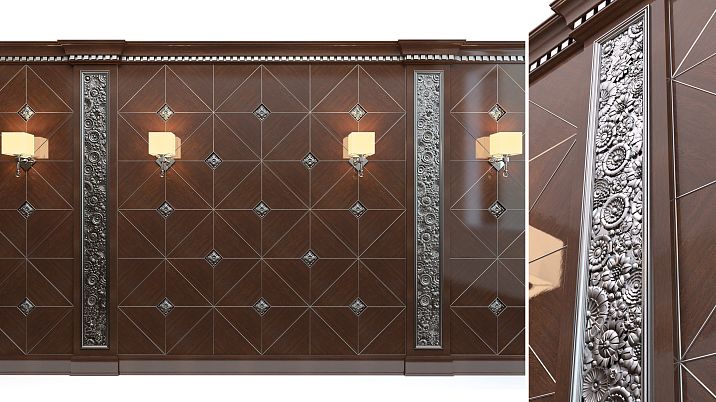
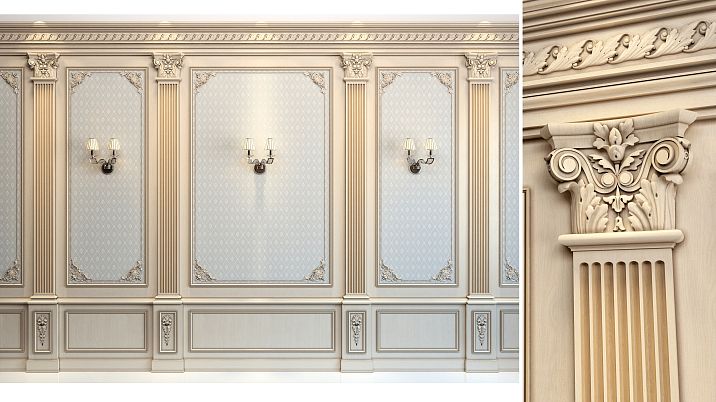
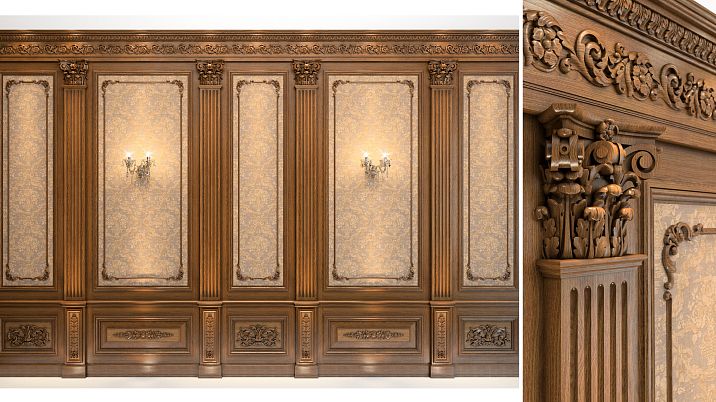
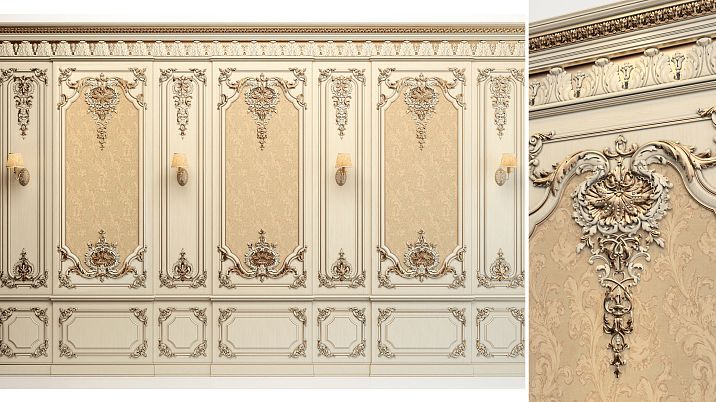
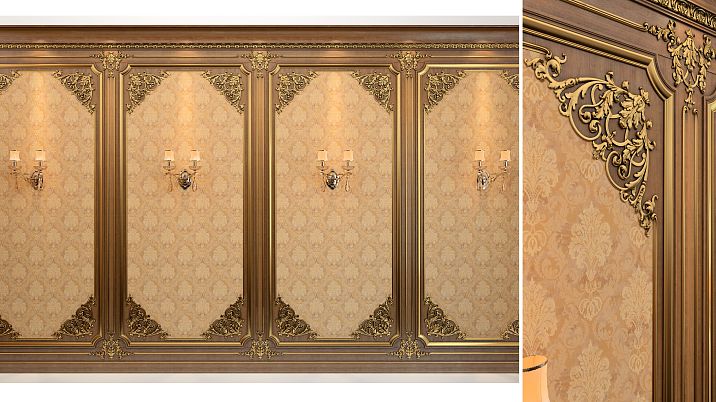
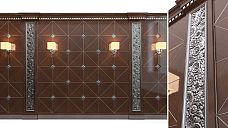
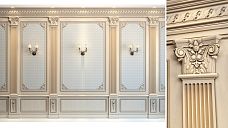
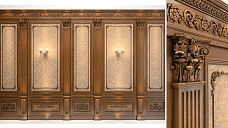
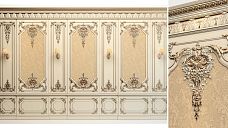
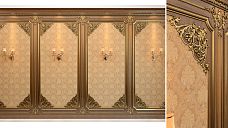
The living room is a place where the atmosphere of comfort, style, and hospitality is created. Decorative wall finishing using moldings and cornices allows adding elegance and completeness to the room. STAVROS company products, includingMoldings, wooden cornices and decorative planks, enable you to realize the most daring design ideas.


Why choose moldings and cornices?




Moldings are decorative strips mounted on walls, creating visual accents, structuring space, and emphasizing interior style. Cornices are elements installed at the junction of wall and ceiling, adding completeness and elegance to the interior. Together, these details can completely transform the appearance of the living room.
Moldings are decorative strips mounted on walls, creating visual accents, structuring space, and emphasizing interior style. Cornices are elements installed at the junction of wall and ceiling, adding finishing elegance to the interior. Together, these details can completely transform the appearance of the living room.
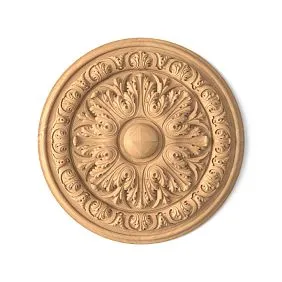
Our factory also produces:



Advantages of using moldings and cornices
1. Universality
Moldings and cornices are suitable for interiors in any style:
curved shapes and carved details, such aswooden veneer with a decorative profileperfectly highlight the aristocratic appearance.
modern lines andflat wooden moldings create a minimalist yet stylish accent.
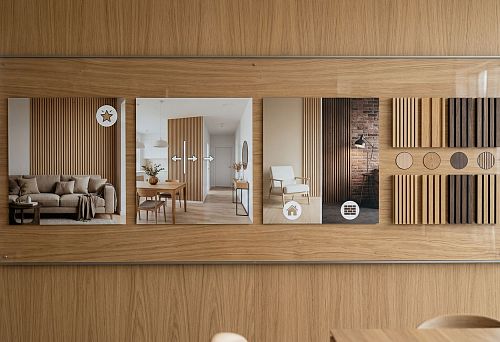
natural materials, such asWooden planksallow you to maintain harmony with nature.
2. Aesthetics
Moldings and cornices help create decorative accents, add depth to walls, and emphasize architectural features of the room. For example, zoning walls with moldings allows you to designate areas for paintings or mirrors.
3. Concealing defects
With their help, you can hide unevenness, joints, or cables, making walls visually smooth and neat.Wooden cornices They also cover joints between walls and ceilings.
Get Consultation
How to choose moldings and cornices correctly?
Consider room dimensions
● For spacious living rooms, use large moldings and cornices. For example,Oak moldings will add grandeur.
● For smaller rooms, thinWooden planksare suitable, as they won’t overwhelm the space.
Choose the material
Wood remains a classic choice due to its durability, eco-friendliness, and aesthetics. You canbuy wooden moldings made of beech, oak, or pine.
Define functionality
● If you need to conceal wiring, choose cornices with internal cavities.
● To visually increase room height, use vertical moldings.
Practical tips for using moldings
- Define accent zones
Moldings look best when they highlight specific zones: the space behind the TV, the area above the sofa, or walls with paintings. - Observe proportions
Do not use overly bulky cornices and moldings in small rooms to avoid overwhelming the interior. - Add lighting
Crown mouldings can be used to create hidden lighting, adding soft light and accents.
STAVROS products for creating a unique design
STAVROS company offers a wide range of:
● molding for zoning and accents.
● Wooden crown mouldings for elegant ceiling decoration.
● Wooden planks for creating stylish panels.
1. Wall decoration with mouldings
Mouldings are an indispensable tool for wall decoration, allowing you to create a stylish and harmonious interior. They not only add decorative elements but also help visually structure the space, giving walls depth and expressiveness.
Advantages of wall decoration with mouldings
1. Creating a unique design
With mouldings you can:
● Divide walls into panels: This technique adds formality and elegance to the interior.Wooden plank for wall perfectly suitable for creating decorative frames.
● Create decorative accents: Useflat wooden plank for minimalist solutions orcurved wooden plank for classic interiors.
● Frame mirrors, paintings or niches: Mouldings give decorative interior elements a finished look.
2. Improving room proportions
Mouldings can be used to visually alter the proportions of a room.
● Vertical lines make walls appear taller.
● Horizontal mouldings visually increase the room's width.
3. Space Zoning
If your living room is combined with a kitchen or dining room, mouldings will help define zones. For example, add mouldings around the sofa area to emphasize the relaxation zone.
How to choose mouldings for walls?
1. Consider the interior style
● Classic style: Usecurved wooden plank orWooden Mouldingsto add elegance.
Modern style: Suitable forflat moldings with simple geometric shapes.
Eco-design: Choose naturalWooden planksthat will harmoniously blend into the interior.
2. Consider the room's size
For spacious living rooms, use large moldings and massive panels.
● For smaller rooms, thinWooden railsthat do not weigh down the interior.
3. Choose the material
STAVROS wooden moldings are distinguished by strength and aesthetics. You canbuy wooden moldings made from beech, oak, or pine, which will harmoniously blend into any interior.
How to decorate walls with moldings?
Step 1. Prepare the surface
Clean walls of dust and old coatings. Ensure they are flat, as moldings will not adhere tightly to uneven surfaces.
Step 2. Marking
Using a level and pencil, mark the lines where moldings will be placed. For panel creation, measure equal distances between elements.
Step 3. Mounting
- Use adhesive for mounting on flat surfaces.
- For large moldings, such asWooden blockadd mounting with small nails.
Step 4. Final finishing
After installation, sand the joints and paint or varnish the moldings in wall color or create a contrasting accent.
Practical tips
- Choose a color that harmonizes with the interior
Moldings can blend with wall color or be painted in a contrasting shade to create accents. - Use combinations of materials
CombineWooden planks with textile inserts, mirrors, or stone panels for complex designs. - Add lighting
Lighting around moldings creates additional accents and adds depth to the interior.
from STAVROS
● Wooden moldings for stylish zoning.
● decorative panels for creating accents.
● Wooden Mouldings for elegant panel decoration.
2. Using cornices for living room decoration
Cornices are one of the most elegant decorative elements that emphasize the completeness of the interior, create a smooth transition between ceiling and walls, and add depth to the space. In the living room, cornices help create a harmonious and aesthetic look, enhancing the overall room design impression.
Advantages of using cornices
1. Interior completeness
Cornices help softly connect walls and ceiling, eliminating sharp transitions. This makes the interior more cohesive and complete. Especially effective inwooden cornices classical living rooms.
2. Visual alteration of room proportions
● Narrow cornices are suitable for small rooms, without overloading the interior.
● Wide carved cornices look perfect in spacious living rooms with high ceilings.
3. Ability to hide defects
Cornices effectively cover joints between ceiling and walls, hide cables, wiring, or small cracks.
4. Use as a base for lighting
Adding backlighting behind cornices creates soft, diffused lighting, making the living room atmosphere cozy.
How to choose a cornice for the living room?
Choose the material
STAVROS wooden cornices are distinguished by durability and aesthetics. You canbuy a wooden cornice made from solid beech, oak, or pine, which will naturally fit any style.
Consider the interior style
● Classic: Use carved and substantial cornices with ornaments.
● Modern: Choose smooth and minimalist cornices that emphasize simplicity of lines.
Consider room dimensions
● In spacious living rooms with high ceilings, wider cornices are better, as they create a sense of richness and grandeur.
● For rooms with low ceilings, narrow cornices are suitable, as they do not overload the interior.
How to use cornices in interior design?
1. Creating backlighting
Install the cornice at a small distance from the ceiling and add LED strips. This technique is especially relevant for modern interiors, where creating an atmospheric lighting is important.
2. Highlighting zones
Cornices can be used to highlight specific zones in the room. For example, separate a relaxation zone by installing carved cornices above the sofa.
Combining with
moldings orCrown Molding for creating complex decorative compositions.wooden planks for creating complex decorative compositions.
How to install a cornice?
Step 1. Surface preparation
Before installing the cornice, clean the wall and ceiling from dust. Ensure the surface is flat.
Step 2. Marking
Using a level, mark the line where the cornice will be installed. If you plan to add backlighting, mark the location for mounting LED strips.
Step 3. Mounting
- Apply mounting adhesive to the back of the cornice.
- Attach the cornice to the marked line and press firmly.
- For heavy cornices, additionally use nails or screws.
Step 4. Finishing
After installation, sand the joints and paint or varnish the cornice.
Practical tips
- Observe proportion harmony
The cornice width should be proportional to the ceiling height and room dimensions. - Experiment with lighting
Adding an LED strip behind the cornice not only decorates the living room but also creates soft lighting for evening hours. - Combine materials
CombineWooden cornices with other decorative elements, such as picture rails and moldings.
STAVROS Products
STAVROS Company offers:
● wooden cornices for creating refined interiors.
● Corner and shaped tiles for completing decorative finishes.
● Wooden moldings for combined solutions.
3. Decorating corners and junctions with decorative elements
An important aspect of decorating a living room is decorating corners and wall junctions. Often these areas remain unnoticed, although they can become an accent, emphasizing the interior style. STAVROS products, includingcorner wooden decorative planksallow corners and junctions to have a finished, elegant look.
Why is it important to finish corners?
1. Covering unevenness
Corners are often places where material joints or finishing defects are visible.Wooden corner pieces hide unevenness and make the interior more neat.
2. Protection from damage
Baseboards and corner pieces protect corners from mechanical damage, which is especially relevant for living rooms with active use.
3. Aesthetics
Using decorative corner elements allows you to complement the overall room style, create smooth transitions, and highlight accents.
How to use decorative corner elements?
1. Protection and decoration of exterior corners
● InstallWooden angles on the exterior corners of walls to prevent damage and give the room an elegant look.
● Emphasize the corner with contrasting paint or highlight the natural wood texture.
2. Decorating wall-ceiling junctions
Usedecorative panels for a smooth transition between walls and ceilings. They hide joint irregularities and make the interior more harmonious.
3. Decorative accents on corners
● For classic interiors, choosecurved wooden plank.
● In minimalist living rooms, flat baseboardswith simple geometry. with metallic or glass elements for a complex and original design.
Practical tips for decorating corners
- Choose color and texture
Decorative corner pieces can be painted to match wall color or highlighted with a contrasting shade to create an accent. - Combine materials
CombineWooden angles with metallic or glass elements for a complex and original design. - Use identical elements for interior cohesion
For a harmonious living room look, choose identical materials and design for all corner and junction elements.
How to install corner baseboards?
Step 1. Surface preparation
Clean the surface of dust and ensure corners are even. If there are significant irregularities, level them beforehand.
Step 2. Mounting
● Apply adhesive to the inner side of the corner piece and press firmly against the corner.
For heavy-duty corner brackets, use small nails additionally.
Step 3. Final finishing
Paint or varnish the corners to protect them from damage and highlight the wood texture.
STAVROS products for corner decoration
● corner wooden decorative planks for protection and decoration.
● Decorative shaped panels for elegant accents.
● Flat wooden strips for minimalist solutions.
4. Creating accents with picture frames
Picture frames are a universal decorative element that allows you to add elegance and artistic styling to the living room walls. They are perfect for creating frames, bordering mirrors or paintings, and decorative zoning. With STAVROS products, includingWooden Mouldingsyou can easily transform your interior, highlighting its individuality.
Advantages of using picture frames
1. Aesthetic appeal
Picture frames add decorative accents, making the living room interior more elegant. They suit any style:
● Classic style:carved moldings with ornaments emphasizing richness and elegance.
● Modern style: Minimalist picture frames create accents without excessive ornamentation.
2. Universality
Picture frames can be used for various purposes:
● Framing paintings, mirrors, or photographs.
● Creating decorative wall panels.
● Decorating the TV zone.
3. Easy installation
Picture frame strip easily attaches to the surface, making it an ideal choice for quickly updating the interior.
Ideas for decorating the living room with picture frames
1. Framing mirrors
Usewooden picture frames for paintings to create a decorative frame around the mirror. This will add elegance to the interior and visually enlarge the space.
2. Wall Panels
Create symmetrical decorative panels usingflat wooden moldingThis approach will add structure and elegance to the walls.
3. TV Zone Framing
Use molding to frame the area around the TV. This will help highlight it against the wall and create an elegant accent.
4. Decorative Zoning
Using molding, you can define zones in the room, for example, the space behind the sofa or around the dining group.
How to Install Molding?
Step 1. Surface preparation
Clean the walls of dust and old finish. If the surface is uneven, prime it beforehand.
Step 2. Marking
Use a level and ruler to mark the installation locations. Ensure all lines are straight and symmetrical.
Step 3. Mounting
● Apply adhesive to the back of the molding and attach it to the wall.
● For heavy molding, use additional fasteners with nails or screws.
Step 4. Final finishing
Sand the joints between the moldings, paint or varnish them for protection and to achieve a unified style.
Practical tips
- Choose the molding color to match the overall interior style
Contrasting moldings suit accent zones, while wall-colored moldings help create a soft and harmonious look. - Combine moldings with other elements
to create complex decorative compositions.moldings orcornices to create complex decorative compositions. - Use lighting
Add LED backlighting behind the moldings to highlight their shape and create cozy lighting in the living room.
STAVROS Products
STAVROS Company offers:
● wooden picture frames for paintings for stylish decoration.
● Molding strips to create panels.
● Moldings and layouts for comprehensive decoration.
5. Zoning and Wall Decoration with Wooden Strips
Wooden strips are a stylish and functional decorative element that can be used to decorate walls and create zoning in the living room. They are ideal for modern, eco-, or Scandinavian-style interiors. Thanks to STAVROS products, including Wooden planksyou can add depth and texture to the room.
Advantages of Using Wooden Strips
1. Multi-functionality
Wooden planks can perform several tasks at once:
● Create decorative accents.
● Visually divide space.
● Improve room acoustics.
2. Ecological safety
Wooden planks are safe for health, which is especially important for living spaces.
3. Ease of maintenance
Wooden planks are easily cleaned from dust and retain their appearance for many years.
4. Style versatility
Planks suit both modern and classic interior solutions.
Ideas for using wooden planks in the living room
1. Space zoning
● Usewooden planks on the wall to divide the living room and dining area.
● Create a decorative partition that simultaneously adds privacy while preserving the sense of space.
2. Accent wall decoration
Mount planks vertically or horizontally on one of the living room walls. This will give the room a modern and stylish look.
3. Creating texture
Use planks to decorate the niche behind the TV or behind the sofa. The contrasting wood color will add expressiveness and depth.
4. Framing and borders
Wooden planks can be used to create frames around mirrors, pictures, or doors, highlighting important interior elements.
How to install wooden planks?
Step 1. Surface preparation
Clean the wall of old coating. If installing planks on an uneven surface, level it first.
Step 2. Marking
Mark the mounting locations. Use a level and measuring tape for even spacing.
Step 3. Installation
- Apply adhesive to the back of the plank.
- Attach the plank to the wall, starting from the bottom and moving upward.
- If the plank is heavy, use additional nails or screws for greater stability.
Step 4. Final finishing
Sand the corners to make joints less noticeable, and coat the planks with varnish for protection and enhanced wood texture.
Practical tips
- Experiment with orientation
Vertical placement of rails increases room height, while horizontal placement makes the room wider. - Add backlighting
Install LED strips between rails to create soft lighting. - Combine materials
CombineWooden planks with mirrors, fabrics, or metal for complex design.
STAVROS products for wooden rails
STAVROS Company offers:
● Wooden rails for walls and partitions.
● decorative panels for creating complex patterns.
● Wooden Mouldings for accent decoration.
Conclusion
Decorating a living room using moldings, cornices, picture frames, and wooden rails is a stylish and affordable solution for creating an elegant interior. These decorative elements not only enhance walls but also solve functional tasks such as zoning, hiding imperfections, or improving acoustics.
Why choose STAVROS products?
STAVROS offers high-quality decorative elements suitable for interior design in any style:
● Moldings and patterns: For zoning and creating decorative accents.
● Wooden cornices: For completing the ceiling zone and concealing technical elements.
● Wooden picture frames: For framing mirrors, paintings, and decorating panels.
● Wooden rails: For accent walls, partitions, and textured solutions.
Delivery and personalized approach
STAVROS products are available for delivery throughout Russia. Whether you are in a major city such as Moscow or St. Petersburg, or in a remote region, your orders will be delivered in the shortest possible time.
STAVROS also offers:
● Custom production: The ability to manufacture moldings, cornices, and rails according to unique sketches.
● Support at all stages: Consultations on material selection, calculation of required quantities, and installation recommendations.
How to start?
- Browse the product range:
○ Picture frames and decorative moldings
- Determine the style and functionality you wish to achieve.
- Order STAVROS products with delivery to your region.
Decorate your living room to inspire and delight the eye! STAVROS products combine quality, aesthetics, and convenience to help you create a unique interior.