Article Contents:
- Philosophy of Homemade Furniture Production
- Materials: The Foundation of Future Masterpieces
- Wood Materials
- Alternative materials
- Master's toolset
- Basic Tools
- Specialized fixtures
- Design: From Idea to Blueprint
- Concept development
- Creating Drawings
- Material Calculation
- Manufacturing technology
- Material Cutting
- Edge Treatment
- Drilling Holes
- Assembly: Bringing the Project to Life
- Work area preparation
- Operation sequence
- Installing hardware
- Finishing and Surface Treatment
- Surface Preparation
- Choosing finishing materials
- Secrets of professional quality
- Measurement Accuracy
- Working with Texture
- Invisible Details
- Specifics of different types of furniture
- Cabinet Furniture
- Tables and chairs
- Soft furniture
- Safety in a Cabinetmaking Workshop
- Protective equipment
- Rules for Working with Power Tools
- Workplace organization
- Typical mistakes of beginners
- Planning mistakes
- Technological mistakes
- Economy Is Not in the Right Place
- Modern Trends in DIY Furniture
- Ecological safety
- Minimalism
- Technological Innovations
- Conclusion
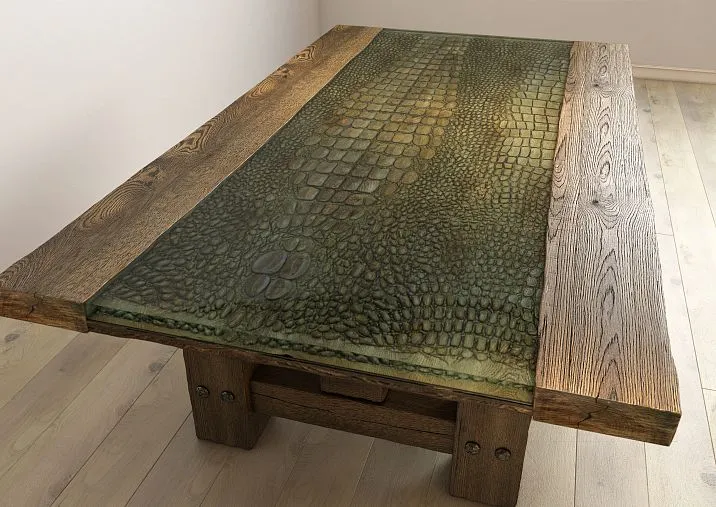
Imagine that every piece of furniture in your home tells a story. Not just a soulless story from a factory conveyor belt, but a real one — a story of creativity, skill, patience, and love for quality. Isn't this what every person who has ever thought about creating something with their own hands dreams of? In today's world of mass production how to make furniture Making it yourself is not just an economic necessity, but a true act of creative self-expression.
Furniture craftsmanship is an ancient art that is experiencing a second rebirth today. People are tired of standardized solutions and want to surround themselves with unique items that reflect their personality and lifestyle. In the age of digital technology, the possibility of making furniture by hand has become more accessible than ever before.


Philosophy of Homemade Furniture Production
Why should you take on making furniture? This question sounds especially relevant in an era when any furniture store can offer ready-made solutions to any taste and budget. However, those who have decided to make interior items themselves understand: it's not only about saving money or practicality.
Making furniture is a meditative process that allows you to fully immerse yourself in creativity. Every saw movement, every screwdriver turn, every sanded surface — all of this becomes part of your story. Moreover, handmade furniture always fits perfectly to specific needs and room dimensions, which is impossible to achieve when buying ready-made items.
The economic aspect also plays an important role. High-quality materials for making furniture yourself cost significantly less than ready-made items of similar quality. At the same time, you have full control over the process — from choosing the wood to the final finishing.




Materials: The Foundation of Future Masterpieces
Choosing materials is the foundation of a successful project. Modern furniture production offers a wide range of options, each with its own advantages and application specifics.
Our factory also produces:


Wood Materials
Solid wood remains a classic choice for those who appreciate natural beauty and durability. Pine is suitable for beginners — it is easy to work with and has a pleasant texture. Oak is considered an elite material, but requires serious skills in processing. Birch is the golden middle ground between accessibility and quality.
Laminated particle board (MDF) is the most popular material of modern times. It is practical, affordable, and allows creating furniture of any shape and size. When choosing MDF, pay attention to the formaldehyde emission class — E1 or E0 is preferable.
MDF occupies an intermediate position between solid wood and MDF. This material is more eco-friendly than particle boards and allows creating elegant milled elements. MDF is ideal for making fronts and decorative details.
Get Consultation
Alternative Materials
Modern trends in furniture design open new horizons for creativity. Plywood is making a comeback due to its strength and interesting end-grain texture. Plastic panels allow creating ultra-modern furniture for bathrooms and kitchens.
Metal elements add rigidity and a modern look to structures. Combining different materials — wood with metal, glass with plastic — opens up endless possibilities for design experiments.
Master's toolset
Quality tools are half the success in furniture making. It is not necessary to buy professional equipment immediately, but a basic set should be reliable and precise.
Basic Tools
Measuring tools are the foundation of precision. Tape measure, square, ruler, caliper — without them, it is impossible to create quality furniture. A laser level significantly simplifies marking and assembly.
Cutting tools range from a simple hacksaw to a jigsaw and circular saw. For beginners, a quality jigsaw with a set of blades for wood and metal is sufficient.
Drilling equipment — drill or impact driver with a set of drill bits of various diameters. Pay special attention to wood drill bits — the quality of these bits determines the neatness of the holes.
Specialized Tools
A router opens up new possibilities for decorative processing. With its help, you can create grooves, chamfers, decorative profiles.
A sander is an indispensable assistant in finishing. An orbital sander is suitable for flat surfaces, while a plunge sander is better for hard-to-reach areas.
Don't forget about clamping devices — clamps of various sizes that ensure secure fixation of parts during processing and assembly.
Designing: from idea to drawing
Any serious work begins with planning. In furniture making, this stage is especially important, since design errors can lead to significant losses of time and materials.
Concept development
Start with a clear understanding of exactly what you want to create. Study existing samples, think about the functionality of the future item. Ergonomics should be a priority — furniture should not only be beautiful but also comfortable to use.
Determine the room dimensions and installation locations. Measure the passages through which the furniture will be moved. Take into account the placement of outlets, switches, and radiators.
Creating drawings
Modern furniture design programs significantly simplify this task. Free solutions like SketchUp or specialized programs such as 'Dinalog' from Blum allow you to create an accurate 3D model of the future item.
The drawing must include all necessary dimensions, material specifications, and placement of fasteners. Don't forget about detailing — a detailed list of all parts with exact dimensions.
Material calculation
Based on the completed drawings, prepare a material specification. Consider not only the main parts, but also fasteners, hardware, and finishing materials. Add a 10-15% reserve for possible errors and rework.
Manufacturing technology
The process of creating furniture can be divided into several key stages, each requiring attention and care.
Material cutting
Accuracy of cutting is the key to quality assembly. If you don't have professional equipment, it's better to order cutting in a specialized workshop. Modern CNC machines ensure perfect accuracy and clean cuts.
When cutting manually, use guide rails for the saw. First, mark with a pencil, and check the dimensions several times.
Edge Processing
Edge banding — an important stage that affects the appearance and durability of the item. Melamine edge banding is glued with a regular iron, but for a quality result, it's better to use PVC edge banding with a hot-melt adhesive.
The ends of solid wood are sanded with gradually decreasing grit of sandpaper. Final finishing with oil or varnish will highlight the natural beauty of the wood.
Drilling holes
Drilling pilot holes — a professional term for drilling fastener holes. Use guides and stops to ensure accuracy. The drilling depth must strictly match the fastener length.
For furniture screws (conformers), use special drill bits that form the hole of the required diameter for both the head and the threaded part simultaneously.
Assembly: bringing the project to life
Assembly is the most critical stage, when all previous efforts materialize into a finished product.
Workplace Preparation
Organize a spacious work area with good lighting. Prepare all necessary tools and fasteners. Dry assembly — preliminary assembly without final tightening — will help identify potential problems.
Sequence of operations
Start assembly with the main structural elements — frame or body. Gradually add parts, monitoring the item's geometry. Diagonals of rectangular elements must be equal.
Use clamps to fix parts during assembly. Don't rush — it's better to spend more time on precise installation than to redo it later.
Hardware installation
Furniture hardware must be installed strictly according to the manufacturer's instructions. Hinges, drawer guides, handles — each component has its own installation specifics.
Quality hardware significantly affects the convenience of furniture use. Don't skimp on these components — they must withstand repeated loads.
Finishing and final processing
Final finishing — the concluding touch in furniture making. It determines the final appearance of the item and its durability.
Surface preparation
Sanding should be gradual — from coarse to fine grit. Remove all dust before applying finishing materials. Use a vacuum cleaner and a sticky cloth.
Wood defects can be corrected with special putties. After drying, the putty is sanded to achieve a perfect smoothness.
Choosing finishing materials
Lacquers provide a durable protective film, but may alter the wood's color. Polyurethane lacquers are the most durable, but acrylics are easier to apply.
Oils and waxes preserve the natural wood texture but require periodic reapplication. They are eco-friendly and pleasant to the touch.
Stains and paints allow for a complete change in the appearance of the item. Modern water-based formulations dry quickly and have no strong odor.
Secrets of Professional Quality
Turning a hobby project into a professional one is aided by knowledge of nuances and attention to detail.
Accuracy of measurements
Measure seven times, cut once — this rule is especially relevant in furniture making. Use only high-quality measuring tools. Check dimensions at every stage of work.
Maintain a work journal with records of all dimensions and features. This will help when making similar items in the future.
Working with wood grain
The direction of wood grain should be considered during cutting and assembly. Elements placed next to each other should have the same grain direction.
When gluing parts, pay attention to the alignment of veneer patterns or laminate textures. This creates the impression of a seamless piece.
Hidden details
The quality of internal surfaces is no less important than external ones. Carefully finished hidden areas speak to the craftsman's high professionalism.
All internal edges must be sanded and finished. This prevents splinters and makes cleaning easier.
Specifics of different types of furniture
Each type of furniture has its own structural features and manufacturing requirements.
Cabinet Furniture
Cabinets and shelves are the foundation of furniture craftsmanship. Start with simple constructions without complex elements. Basic principles: rigid frame, precise geometry, quality hardware.
Kitchen sets require special attention to material moisture resistance and dimensional accuracy. All elements must fit perfectly to the dimensions of kitchen appliances.
Tables and chairs
Dining tables experience significant loads, so the construction must be especially strong. "Dovetail" joints provide maximum reliability.
Chairs are among the most complex items to manufacture. They must be simultaneously strong, lightweight, and ergonomic. Pay special attention to the angles where legs connect to the seat.
Soft furniture
Sofas and chairs require skills in working with upholstery materials. The frame must be especially strong, and the filling must be high-quality and long-lasting.
Modern furniture springs and various-density polyurethane foam allow creating comfortable seats with long service life.
Safety in the furniture workshop
Working with tools and materials requires strict adherence to safety rules.
Protective equipment
Safety goggles are mandatory when using power tools. Dust and sawdust can seriously damage eyes. A respirator is necessary when sanding and working with lacquer and paint materials.
Safety gloves will protect hands from cuts and splinters, but remember — gloves can be dangerous when working with rotating tools.
Rules for working with power tools
Check the tool's condition before each use. Damaged cords or defective guards pose a direct safety hazard.
Secure workpiece positioning is the foundation of safe work. Use clamps and supports; never hold parts by hand during processing.
Work area organization
Good lighting prevents errors and injuries. The workspace must be well-lit, without shadows or glare.
Order in the workshop is not only convenience, but also safety. Tools should have their designated places, and aisles should remain clear.
Typical mistakes of beginners
Studying other people's mistakes will help avoid your own problems.
Planning errors
Underestimating the complexity of a project is a common mistake among beginners. Start with simple items and gradually increase the difficulty.
Inaccurate measurements lead to problems during assembly and installation. Always check the dimensions of the room and passageways.
Technological errors
Incorrect material selection can ruin the entire project. Study the properties of materials before starting work.
Hastiness in work is the enemy of quality. It is better to spend more time and achieve an excellent result.
Saving money is not in the right place
Cheap fasteners quickly fail and may damage expensive materials. Quality hardware is a long-term investment.
Poor-quality tools make work difficult and may be dangerous. It is better to buy one good tool than several cheap ones.
Modern trends in DIY furniture
Furniture trends are constantly evolving, and home craftsmen are not falling behind professional designers.
Ecological safety
Using recycled materials is becoming increasingly popular. Old boards, pallets, even cardboard — everything can become the basis for interesting projects.
Natural finishing materials — oils, waxes, water-based varnishes — replace aggressive chemical compounds.
Minimalism
Simple shapes and clean lines dominate modern design. This simplifies manufacturing and highlights the quality of materials.
Functionality is paramount — every element must have a practical purpose.
Technological Innovations
3D printing of hardware details opens new possibilities for unique design.
Laser cutting allows creating complex decorative elements at home.
Conclusion
Creating furniture by hand is a journey from idea to finished product, full of discoveries and creative solutions. In this process, everyone finds something personal: some find savings on their family budget, others find a means of self-expression, and others find a meditative immersion into the world of craftsmanship.
The path of a hobbyist furniture maker is not always easy, but it is always fascinating. Every mistake becomes a lesson, and every successful project becomes a source of pride and inspiration for new achievements. Modern materials and tools make this path more accessible than ever before.
Start small, learn continuously, do not fear experimenting. Remember: the most expensive designer furniture cannot compare to what you create with your own hands, with love and attention to detail. Every item born in a home workshop carries a piece of its creator's soul and becomes a true decoration of the home.
In today's world, where everything strives for standardization, the ability to create unique furniture by your own hands becomes especially valuable. This is not just a hobby — it is an opportunity to surround yourself with items that perfectly reflect your lifestyle and needs.
STAVROS Company has helped home craftsmen bring their ideas to life for many years, providing high-quality materials and professional consultations. Our experience shows: there is nothing impossible for those who are willing to learn and create.