Article Contents:
- Sales atmosphere: creating the right mood
- First impression determines everything
- Zoning of sales space
- Professional expertise of a sales consultant
- Deep knowledge of the product range
- The art of product demonstration
- Personalized approach to each customer
- Technologies of a modern furniture showroom
- Digital tools for the salesperson
- CRM systems and customer database management
- Handling Objections and Doubts
- Typical buyer objections in furniture sales
- Techniques for overcoming resistance
- Presentation of additional services and products
- Delivery and assembly as a competitive advantage
- Complementary products and accessories
- Seasonality in furniture sales
- Understanding buyer activity cycles
- Seasonal promotions and special offers
- Managing conflict situations
- Preventing problematic situations
- Algorithm for handling complaints
- Teamwork in a furniture store
- Roles and functions of staff
- Staff motivation system
- Analytics and sales optimization
- Key performance indicators
- Using data to improve results
- Modern trends in furniture retail
- Customers' ecological awareness
- Personalization and customization
- Digital transformation of offline sales
- Integration of online and offline channels
- Use of big data
- Working with specific customer categories
- Corporate clients
- Customers with special needs
- Frequently Asked Questions
- Conclusion: the art of turning a showroom into a dream space

Furniture retail today is a special world where every interaction with a customer can become a decisive factor of success. The question of how tosell in a furniture storeeffectively concerns showroom owners, managers, and sales consultants across the country. In the era of digital technologies and omnichannel commerce, physical furniture sales points remain indispensable — it is here that customers can touch, test, and evaluate the quality of their future purchase.
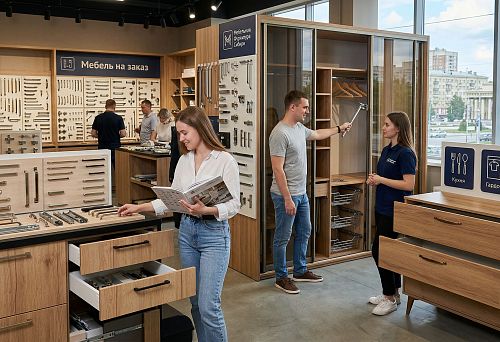
Successful furniture retail in a retail space requires a deep understanding of consumer psychology, knowledge of products, and the ability to create an emotional connection between the customer and the goods. A modern furniture showroom is not just a trading area, but a space for inspiration, where every visitor can imagine how their home will transform with new furniture.


Sales atmosphere: creating the right mood




First impression determines everything
Customers form an opinion of the store within the first 30 seconds after entering. Cleanliness, order, pleasant lighting, logical navigation — all these elements contribute to building trust even before beginning communication with a consultant. Proper layout of the trading space allows naturally guiding the visitor flow through key display zones.
Sound accompaniment plays an important role in creating the atmosphere. Non-intrusive background music helps relax, reduces anxiety about upcoming expenses, and creates a sense of comfort. Aromatherapy design is another tool for influencing the customer's subconscious. A light scent of natural wood or freshness is especially appropriate in a furniture showroom.
Visual accents must be thoughtfully and strategically placed. Bright installations attract attention to new arrivals or promotional items, but should not create a sense of chaos. Each display zone tells its own story, showcasing not just furniture, but ready-made interior solutions.
Our factory also produces:


Trade space zoning
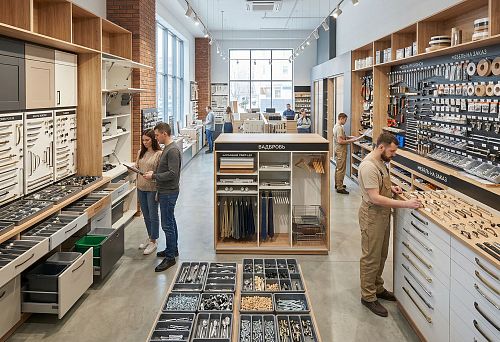
Effective layout of a furniture showroom implies creating thematic zones, each serving specific purposes. The entrance zone should impress and engage — here, the most striking new arrivals or bestsellers are displayed. The consultation zone ensures comfortable communication with customers, including comfortable seating and demonstration materials.
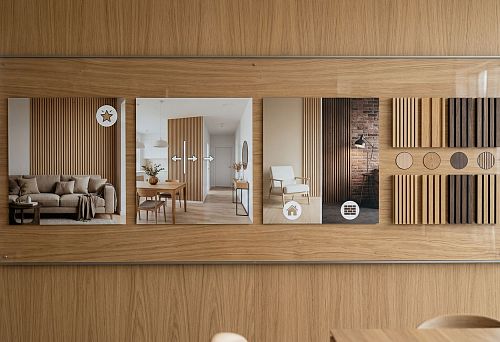
Demonstration interiors create emotional engagement, allowing customers to visualize furniture in the context of real use. Understanding how toWhat new-generation furniture is made of — a question customers must receive comprehensive answers to. Eco-friendliness, durability, ease of care — specific advantages speak louder than abstract 'innovation'.different categories helps create exemplary displays showcasing the quality and variety of materials.
The children's zone requires a special approach to safety and interactivity. Here, bright colors, play elements, and opportunities for children to touch and try out furniture in action are appropriate. Parents feel more confident when they see their children happy and engaged.
Get Consultation
Sales consultant's professional expertise
Deep knowledge of the product range
A furniture showroom consultant must be an expert on the products. This includes understanding the structural features of each model, properties of materials, production technologies, care and usage rules.How to sell furniture properlyin a showroom? The key lies in the ability to professionally and thoroughly answer any customer question.
Understanding the competitive advantages of each item allows effective product presentation. The consultant must understand how a specific model differs from its analogs, what unique features it has, and which interiors it suits best. Information about whatkitchen furniture is made ofis especially important when working with customers in this segment.
Understanding pricing policy and discount systems helps flexibly work with the customer's budget. The consultant must know what alternatives can be offered with a limited budget, how to form an optimal set, and which accessories and additional services will increase the value of the offer.
The art of product demonstration
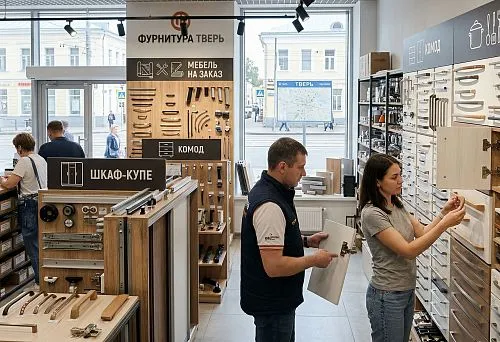
Furniture demonstration in a showroom is an art form. Each item must be presented in the best light, emphasizing its unique advantages. Tactile interaction is critically important in furniture sales — the client must touch the upholstery, test the mechanisms, and evaluate ergonomics.
Interactive demonstration is especially effective for complex furniture. Showing the transformation of a sofa, the operation of lift mechanisms, and storage systems creates a "wow" effect and increases the perceived value of the product. Clients appreciate the opportunity to personally verify the functionality of their purchase.
Comparative demonstration helps clients make informed decisions. By showcasing differences between models, the consultant not only informs but also guides the client toward the right choice. It is important to demonstrate not only the advantages of expensive models but also to explain the value of budget-friendly solutions.
Personalized approach to each client
A successful consultant knows how to quickly identify the type of client and adapt their communication style. Young families with children require an emphasis on safety and practicality. Middle-aged, financially stable clients value status and quality. Older buyers focus on comfort and ease of maintenance.
Identifying true needs requires the skill to ask the right questions. Instead of the standard "what interests you?", it is more effective to find out: for which room is the furniture being purchased, who will use it, what lifestyle the family leads, and whether there are any special requirements or limitations.
Emotional engagement of the client in the selection process increases the likelihood of purchase. The consultant should help the client envision how the new furniture will change their life, what positive emotions it will bring, and how it will solve existing problems.
Modern technology in a furniture showroom
Digital tools for the salesperson
Modern technologies fundamentally change the sales process in furniture showrooms. Tablets with catalogs allow demonstrating the entire assortment, including items not physically present in the showroom. 3D visualization helps clients see how selected furniture will look in their interiors.
Furniture configurators allow real-time selection of colors, materials, and sizes, creating personalized solutions. Clients especially value the opportunity to participate in creating their unique interior using modern visualization tools.
Mobile augmented reality applications open new possibilities for product presentation. The client can point their smartphone camera at an empty space and see how the selected furniture will look there. Such technologies are especially relevant when purchasing large items.
CRM systems and customer database management
An effective CRM system becomes an indispensable tool for a modern furniture showroom. It allows tracking the interaction history with each client, their preferences, budget, and decision-making stage. Automated reminders help not to miss potential buyers.
Segmenting the customer base allows creating personalized offers. VIP clients receive information about new arrivals earlier than others, regular buyers get special discounts, new clients receive welcome bonuses. This approach increases loyalty and stimulates repeat purchases.
Sales analytics help optimize showroom operations. Data on popular models, peak visit hours, and effectiveness of various promotions allow making informed management decisions.
Working with objections and doubts
Typical objections from furniture buyers
"Too expensive" is the most common objection in furniture sales. Behind it often lies a lack of understanding of the product's value or unwillingness to spend the planned amount. An effective strategy includes demonstrating long-term economic benefits, breaking down the price into components, offering installment plans, or alternative options.
"I need to think" usually means unresolved doubts or the need to consult with family members. It is important to identify the true reasons for doubts and offer specific solutions. The option to reserve the item for a certain period often helps overcome this objection.
"I’m not sure about the quality" — a signal of lack of trust in the manufacturer or seller. Extended warranties, quality certificates, reviews from satisfied customers, and the possibility of returns in case of dissatisfaction — all these tools help increase the buyer’s confidence.
Techniques for Overcoming Resistance
Active listening is the foundation of successful objection handling. The consultant should allow the client to express their concerns, understand the true reasons for doubt, and only then offer solutions. Empathy and understanding of the buyer’s problems create an atmosphere of trust.
The "yes, and..." technique allows agreeing with the client while simultaneously offering an alternative solution. "Yes, this model is indeed expensive, and we do have more budget-friendly options with a similar design" — such an approach avoids confrontation and opens new sales opportunities.
Using success stories of other clients helps reduce anxiety and increase trust. Stories about how similar buyers were satisfied with their choices create social validation of the decision.
Presentation of additional services and products
Delivery and assembly as a competitive advantage
High-quality delivery and assembly service can become a decisive factor in choosing a store. Clients value convenience and are willing to pay extra for professional execution of these services. The consultant should thoroughly explain the delivery process, options for lifting items to higher floors, and specific assembly features of particular models.
Insurance for delivery and assembly gives clients additional confidence. The possibility of receiving compensation in case of damage or incorrect assembly reduces perceived purchase risks. Transparency of insurance terms increases trust in the store.
Flexible delivery options expand the potential customer base. Express delivery attracts clients who urgently need the item. Weekend delivery is convenient for working individuals. The option for self-pickup appeals to budget-conscious buyers.
Complementary Products and Accessories
where to buy furniture decor— a question often raised by customers striving to create a complete interior look. Offering decorative elements, hardware, and space organization systems increases the average order value and enhances customer satisfaction.
Furniture textiles — cushions, blankets, covers — allow easily refreshing the interior without significant expenses. The consultant must be able to select textile accessories that harmonize with the chosen furniture and the overall style of the room.
Furniture care products are a practical addition to the main purchase. Special formulations for leather, wood, and textiles help maintain the original appearance of furniture and extend its service life. Training the client in proper care increases their satisfaction with the purchase.
Seasonality in furniture sales
Understanding buyer activity cycles
The furniture market exhibits pronounced seasonality, which must be considered when planning sales and marketing activities. The spring-summer period is characterized by increased demand linked to renovations, moves, and interior updates. The autumn-winter season is more subdued but opens opportunities for gift sales.
New Year holidays create additional motivation for purchases.What to give a carpenteror a furniture craftsman — such requests open a niche for professional gifts, including quality tools, furniture-related books, and training certificates.
The school season stimulates sales of children's furniture. Parents update study workspaces, purchase ergonomic chairs, and functional desks. Understanding these cycles helps timely prepare relevant offers.
Seasonal promotions and special offers
Well-planned seasonal promotions can significantly increase sales volume. Spring sales of winter collections free up space for new arrivals and attract customers with affordable prices. Summer promotions on children's furniture leverage parents' activity in preparing for the school year.
Holiday promotions require a special approach to presentation and display. New Year discounts should create a festive and exclusive feel. Defender of the Fatherland Day and International Women's Day open opportunities for themed promotions.
Loyalty programs for regular customers help maintain long-term relationships. Special prices on birthdays, discounts for repeat purchases, priority notification of new arrivals — such programs increase customer attachment to the store.
Conflict management
Prevention of problematic situations
Most conflicts with customers can be prevented during the sales stage by clearly informing customers about product features, delivery timelines, and warranty terms. Detailed descriptions of material properties help avoid misunderstandings regarding the appearance and operational characteristics of furniture.
All agreements must be documented in writing to protect the interests of both parties. Clear descriptions of configuration, dimensions, colors, and delivery timelines eliminate future misunderstandings. The customer must clearly understand exactly what they are purchasing and what to expect.
Quality control at all stages — from product acceptance to delivery to the customer — minimizes the risk of delivering defective products. Pre-sale furniture preparation, checking completeness, and inspecting appearance must be mandatory procedures.
Complaint handling algorithm
An effective complaint handling algorithm includes several key stages. The first — attentive listening to the complaint without interruptions or excuses. The customer must feel that their problem is taken seriously and understood.
Apologizing for any inconvenience caused is a mandatory part of handling complaints, even if the store's fault is not obvious. This demonstrates respect for the customer and willingness to resolve the issue. It is important to avoid shifting responsibility onto suppliers or other process participants.
Offering specific solutions should immediately follow clarifying the nature of the problem. Replacement, repair, partial compensation — the set of options depends on the nature of the complaint. The customer should feel that the store is ready to take responsibility for its own mistakes.
Teamwork in a furniture store
Employee roles and functions
Effective operation of a furniture store requires clear role distribution among staff. The administrator greets customers, conducts initial qualification, and directs them to the appropriate specialist. Generalist consultants work with a broad range of products, while specialized consultants have in-depth knowledge of specific categories.
The delivery coordinator is responsible for logistics and interaction with the delivery service. The complaints manager specializes in resolving problematic situations. Such division of functions enhances service professionalism and team efficiency.
The shift supervisor coordinates the work of the entire team, makes complex decisions, and monitors sales plan execution. They must be prepared to engage with any customer and ensure a high level of service in all situations.
Staff motivation system
An effective furniture sales staff motivation system must account for industry specifics — long sales cycles, high product cost, and importance of service quality. Base salary ensures stability, commissions stimulate activity, and bonuses for quality maintain high service standards.
Non-financial motivation is equally important for creating an effective team. Opportunities for professional development, training, participation in exhibitions and seminars increase qualifications and motivate growth. Achievement recognition systems — honor boards, awards for top sellers — foster healthy competition within the team.
Team goals unite the efforts of all employees. Shared bonuses for achieving targets encourage mutual support and cooperation. Corporate events strengthen team spirit and create a friendly atmosphere in the workplace.
Analytics and sales optimization
Key performance indicators
Visitor conversion to buyers is the main indicator of showroom effectiveness. The average furniture store has a conversion rate of 15–25%, but top showrooms achieve 40% and higher. Analyzing factors affecting conversion helps identify growth opportunities.
Average check shows the team's ability to increase customer purchase volume. Effective work with additional products and services, smart upselling, can significantly boost this metric. It's important to track the average check by product categories and consultants.
Time from first contact to deal reflects sales process efficiency. In furniture retail, this metric can range from several hours to several weeks. Understanding factors influencing decision speed helps optimize processes.
Using data to improve results
Analyzing customer behavior reveals patterns and trends that can be used to optimize operations. Which days of the week and hours are most productive? Which product categories are often purchased together? What factors influence check size?
Segmenting customers by various criteria — age, income, lifestyle — allows for personalized offers and increases their effectiveness. Young families are interested in practical solutions, while older individuals value comfort and quality.
A/B testing different approaches helps find optimal solutions. You can test various product presentation methods, promotional offers, and objection-handling techniques. A systematic approach to testing ensures continuous process improvement.
Modern trends in furniture retail
Customer ecological awareness
Modern consumers are increasingly paying attention to the ecological aspects of purchases. Certified wood, formaldehyde-free materials, recycled components — these characteristics are becoming important selection factors. Consultants must be able to explain the ecological advantages of products.
The carbon footprint of production and delivery is also beginning to influence purchasing decisions. Local production, use of renewable energy, logistics optimization — all of this can become competitive advantages for ecologically conscious customers.
Programs for recycling old furniture when purchasing new items are gaining popularity. Such initiatives not only address ecological issues but also create additional motivation for purchase, lowering decision barriers.
Personalization and Customization
The desire for individuality stimulates demand for customized solutions. The ability to choose sizes, colors, materials, and configurations allows creatingUnique Interiorswithout significant price increases. Consultants must be proficient in configuration tools and able to present customization options.
Designer services are becoming an essential part of furniture showroom offerings. Professional assistance in planning and selecting furniture increases customer satisfaction and boosts average check size. Integrating designer services into the sales process opens new growth opportunities.
Loyalty programs are becoming more personalized. Individual offers based on purchase history, personalized discounts on birthdays, invitations to exclusive events — such programs enhance emotional connection with the brand.
Digital transformation of offline sales
Integration of online and offline channels
Omnichannel is becoming the standard in modern retail. Customers can research products online, visit the showroom for personal inspection, and place orders via a mobile app. Consultants must be prepared for this 'customer journey' and ensure a seamless experience at every stage.
QR codes on products provide access to additional information — detailed specifications, customer reviews, video reviews, assembly instructions. This integration of digital and physical elements enriches the customer experience.
Showroom mobile apps allow customers to create wishlists, track order status, and receive personalized offers. Push notifications about discounts and new arrivals help maintain contact with customers between visits to the showroom.
Using big data
Visitor analytics systems help understand customer behavior in the showroom. Heat maps show which zones are most visited, where customers spend more time, and which routes they take. This information helps optimize layout and product placement.
Integration with social networks allows better understanding of customer preferences. Analyzing their activity on Instagram, Pinterest helps offer products matching their style and interests. Social activity can become the basis for personalized recommendations.
Predictive analytics helps forecast demand for various products, optimize inventory, and plan promotions. Machine learning reveals hidden patterns in sales data that can be used to improve efficiency.
Working with specific customer segments
Corporate Clients
Working with corporate clients requires a special approach and competencies. Office furniture must meet ergonomic standards, have necessary certifications, and have an attractive appearance. Consultants must understand the specifics of different office types and be able to offer appropriate solutions.
Procurement procedures in large companies are often formalized and require adherence to certain protocols. The ability to work with technical specifications, participate in tenders, and provide required documentation — are critical skills for working with the B2B segment.
The HoReCa sector (hotels, restaurants, cafes) imposes special requirements on furniture: increased durability, compliance with sanitary norms, ease of cleaning. Consultants must understand the specifics of this segment and offer suitable solutions.
Customers with special needs
People with limited physical abilities require specially adapted furniture tailored to their needs. Adjustable height, additional handrails, lightweight construction — these features must be considered when selecting furniture.
Senior customers value ease of use above all else. Simplicity of mechanisms, absence of sharp corners, convenient height — all these factors are important when working with this customer segment. Consultants should demonstrate special patience and attention to their needs.
Families with young children require heightened attention to furniture safety. Eco-friendly materials, rounded edges, durable construction — these are mandatory requirements for children's and family furniture.
Frequently asked questions
How quickly can a new salesperson be trained to work in a furniture store?
Training a new employee should include studying the product range, basics of materials, sales techniques, and handling objections. The optimal program lasts 2-3 weeks with practical sessions under the guidance of an experienced mentor.How to Learn to Sell FurnitureEffective? Constant practice and feedback from colleagues are critically important.
What methods are most effective for increasing average order value?
how to sell furniture quicklyAnd how to increase order value simultaneously? Effective methods include offering additional services, accessories, extended warranties. The 'upsell' technique involves showcasing more expensive models with superior features. Bundled sales help address multiple customer needs at once.
How to work with customers who come 'just to look around'?
Such customers require a gentle approach without pressure. It's important to offer assistance but not insist. Providing useful information, showcasing new arrivals, inviting them to future promotions — these are ways to maintain contact without forcing a purchase. Many 'visitors' eventually become buyers.
Should discounts be offered to close a deal?
Discounts should be justified and not devalue the product. It's better to offer additional value: free delivery, extended warranty, gift certificates for accessories. If a discount is necessary, it should be tied to specific conditions: purchasing a set, paying in cash, participating in a loyalty program.
How to effectively present expensive furniture?
Presenting premium furniture should emphasize exclusivity, quality of materials, craftsmanship, and durability. It's important to highlight unique details, tell the brand's story, explain manufacturing technologies. The focus should be on value, not price.
What to do if a customer compares prices with competitors?
It's important not to engage in price wars, but to highlight the unique advantages of your offering: product quality, service level, warranty terms, company reputation. You can suggest comparing total ownership cost, including delivery, assembly, and warranty service.
How to motivate a customer to make a purchase decision?
Creating a moderate sense of time or quantity scarcity can stimulate a decision. Time-limited promotions, last available units, reservation options — these tools should be used ethically and justifiably. The key is to demonstrate the value of the offer and the consequences of declining it.
How to work with customers during peak hours with high load?
A queue system and pre-registration help manage customer flow. It's important to inform visitors of waiting times and offer alternatives: browsing catalogs, self-guided showroom tours. The administrator should coordinate consultant work and distribute workload.
Conclusion: the art of transforming a showroom into a dream space
A modern furniture store is much more than a simple place to sell products. It is a space where home design ideas are born, where customers find inspiration and realize their dreams of an ideal interior. The art of furniture retail sales lies in the ability to act as a bridge between customer needs and the possibilities of the modern furniture industry.
Success in furniture sales is built on a foundation of deep product knowledge, understanding of buyer psychology, and mastery of modern presentation technologies.sell in a furniture storeHow to maximize effectiveness? The answer lies in the ability to create a unique customer experience that exceeds expectations and turns customers into loyal brand advocates.
Digital transformation opens new opportunities for personalized service, but the human factor remains key. Empathy, professionalism, willingness to help — these qualities will never lose relevance in the sales of high-value, long-term-use products.
The furniture industry continues to evolve, offering increasingly innovative and high-quality solutions. Understanding thatwhere to buy moldings for decorationwalls orUnique interior itemsbecomes an important competitive advantage for consultants aiming to offer clients comprehensive solutions for home furnishing.
For many years, STAVROS has been a reliable partner for furniture stores and manufacturers, offering a wide range of high-quality materials, hardware, and decorative elements. Partnering with STAVROS provides access to innovative solutions, technical project support, and the ability to offer clients products meeting the highest standards of quality and design. STAVROS professionals understand the specifics of furniture retail and are ready to share their experience to achieve maximum sales results.