Article Contents:
- Historical Development of Decorative Trim in Architecture
- From Antiquity to Modernity: Evolution of Forms and Styles
- Symbolic Meaning of Trim in Various Cultures
- Types and Kinds of Decorative Trim
- Moldings: Variety of Profiles and Applications
- Crown Molding: Functionality and Aesthetics
- Baseboards: Protection and Decoration
- Specialized Types of Trim
- Materials for Manufacturing Decorative Trim
- Wood: Classicism and Naturalness
- Polyurethane: Lightness and Durability
- Gypsum: Traditions and Refinement
- Innovative Materials in Trim Production
- Choosing Trim for Various Interior Styles
- Classic Style: Elegance and Symmetry
- Modern Style: Minimalism and Functionality
- Eclecticism: Mixing Styles and Eras
- Ethnic Styles: National Character
- Technical Aspects of Choosing and Installing Trim
- Measurements and Calculations: How to Avoid Size Mistakes
- Tools and Materials for Installation
- Installation Process: Step by Step
- Common Mistakes When Choosing and Installing Trim
- Care and Maintenance of Decorative Trim
- Regular Care for Different Materials
- Repair and Restoration of Damaged Trim
- Updating Appearance: Painting and Decorating
- Economic Aspects of Choosing Trim
- Price-to-Quality Ratio: Where You Can Save
- Long-Term Investments: What Is More Profitable in the Long Run
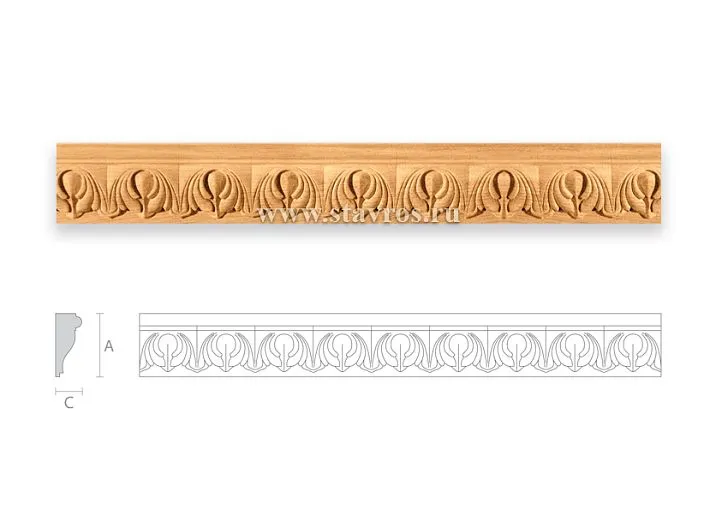
In interior design, there are many elements capable of transforming space, giving it completeness and individuality. One such element is decorative molding. The possibility to buy molding of high quality is now available to anyone who strives to create a harmonious and stylish space. But how to avoid getting lost in the variety of options and choose exactly what will perfectly fit your interior?
Decorative molding is not just a decorative element; it is an important architectural detail that can radically change the perception of a room. From classical moldings to modern minimalist solutions — each type of molding has its own features, advantages, and areas of application.
In this article, we will thoroughly examine all aspects of choosing and applying decorative molding: from historical roots to modern trends, from materials used to installation technologies. You will learn how to properly to buy molding for different types of rooms, how to combine it with other interior elements, and how to care for it to maintain its original appearance for many years.


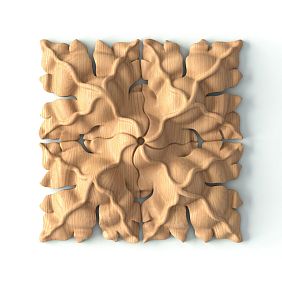


Historical development of decorative molding in architecture




From antiquity to modernity: evolution of forms and styles
The history of decorative molding spans thousands of years. Even in ancient Greece and Rome, architects used various types of cornices, moldings, and other elements to decorate buildings and emphasize their structure. Columns, pilasters, cornices — all these elements not only served a structural function but also had decorative purposes.
During the Renaissance, interest in ancient heritage led to the revival of classical molding forms. Masters of that time created exquisite cornices, moldings, and other decorative elements, which became an indispensable part of the architectural style of the era.
Baroque and Rococo brought opulence, abundance, and complexity of forms into the world of decorative molding. Cornices and moldings of this period were distinguished by rich decoration, complex profiles, and were often complemented by gilding and other elements of luxury.
Neoclassicism returned to more strict and restrained forms, inspired by antiquity. During this period, molding became more laconic, but no less refined.
The 19th century, with its eclecticism and historicism, brought diversity of molding styles — from neo-Gothic to neo-Renaissance. Masters of that time freely combined elements of various historical styles, creating unique decorative solutions.
Modernism of the early 20th century brought new, organic forms into the world of decorative molding. Smooth lines, plant motifs, and asymmetry became characteristic features of this style.
Modern interior design offers a vast variety of molding styles — from neoclassicism to minimalism. Today, deciding to buy moldingto choose, you can select both traditional and innovative solutions that will perfectly fit your interior.
Our factory also produces:
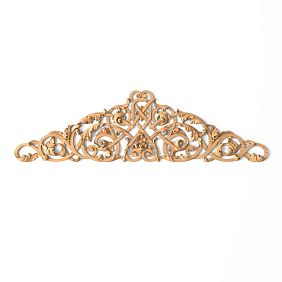


Symbolic meaning of molding in various cultures
In different cultures, decorative molding had not only aesthetic but also symbolic meaning. In ancient Egypt, cornices and other molding elements were often decorated with hieroglyphs and symbols having religious and magical significance.
In Christian architecture, decorative molding often contained religious symbols and scenes from the Bible. The portals of cathedrals, surrounded by complex molding, told believers biblical stories and served as a means of religious education.
In Islamic architecture, where depicting living beings was forbidden, molding was often decorated with complex geometric patterns and calligraphy. These elements served not only decorative purposes but also had deep spiritual meaning.
In Eastern cultures, such as China and Japan, molding often reflected philosophical concepts of harmony and balance. Simple, laconic molding forms in Japanese architecture reflected the aesthetics of wabi-sabi — the beauty of imperfection and transience.
Today, when you decide to buy molding for your interior, you can choose elements that not only decorate your space but also reflect your cultural preferences and values.
Get Consultation
Types and varieties of decorative molding
Moldings: variety of profiles and applications
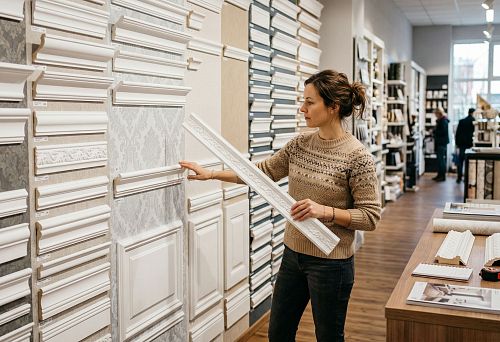
Moldings are decorative strips used to frame walls, ceilings, doors, and windows. They can have various profiles — from simple and laconic to complex and refined.
Ceiling moldings (cornices) are used to decorate the junction between the wall and ceiling. They can vary in width and complexity — from simple baseboards to richly decorated cornices with ornaments and patterns.
Wall moldings are used to create decorative panels on walls. They can form geometric shapes — squares, rectangles, rhombuses — or more complex compositions.
Door and window moldings are used to frame door and window openings. They not only serve a decorative function but also conceal joints between the wall and door or window frame.
Baseboards are moldings installed at the bottom of walls, at the junction with the floor. They protect walls from damage and conceal uneven joints.
When you decide to buy molding As molding, it is important to consider not only their aesthetic qualities but also their functionality. For example, wide ceiling cornices can visually reduce the height of a room, while too narrow ones may look disproportionate in large rooms.
Cornices: Functionality and Aesthetics
Cornices are decorative elements installed at the junction of the wall and ceiling. They serve both decorative and practical functions, concealing irregularities at the junction and creating a smooth transition between vertical and horizontal surfaces.
Straight cornices are the most common type, suitable for most interiors. They can have various widths and profiles — from simple and minimalist to complex and ornate.
Flexible cornices are made from elastic materials, allowing them to be used for decorating curved surfaces — arches, columns, round rooms.
Corner cornices are specially designed for decorating interior and exterior corners of a room. They provide a smooth transition between two walls and the ceiling.
Cornices with lighting — a modern solution that allows creating dramatic lighting in a room. These cornices have a special niche for installing LED strips, which produce soft, diffused light.
Decided to buy molding As cornices, you not only decorate your interior but also solve practical problems — conceal junction irregularities, wiring, and create additional lighting.
Baseboards: Protection and Decoration
Baseboards are decorative elements installed at the lower part of the wall, at the junction with the floor. They serve both decorative and practical functions, protecting walls from damage and concealing junction irregularities.
Floor baseboards are installed at the junction of the wall and floor. They protect walls from damage during cleaning, conceal junction irregularities and wires, and also give the interior a finished look.
Ceiling baseboards (cornices) are installed at the junction of the wall and ceiling. They conceal junction irregularities and create a smooth transition between vertical and horizontal surfaces.
Baseboards with cable channels have a special niche for running wires. This allows concealing wires and creating a neat, aesthetic appearance.
Flexible baseboards are made from elastic materials, allowing them to be used for decorating curved surfaces — arches, columns, round rooms.
When you decide to buy molding As baseboards, it is important to consider not only their aesthetic qualities but also practical aspects — moisture resistance, ease of installation and maintenance, durability.
Specialized Types of Trim
In addition to basic types of decorative trim, there are specialized types used to solve specific design tasks.
Arch trim is used for decorating arched openings. It emphasizes the shape of the arch and gives it a finished look.
Columns and pilasters are vertical trim elements that can be either structural or decorative. They are used for zoning space, highlighting architectural features of a room, and creating a classic, grand interior.
Recessed lights and medallions are decorative elements installed on the ceiling, usually around chandeliers. They draw attention to the light source and create a striking accent in the interior.
Panels and boiserie are decorative elements that cover walls completely or partially. They create texture, add depth and volume to the interior, and may also serve a practical function — protecting walls from damage.
Decided to buy molding of a specialized type, you can create a unique, individual interior that reflects your taste and style.
Materials for Making Decorative Trim
Wood: Classic and Natural
Wood is one of the most traditional and popular materials for making decorative trim. It has natural beauty, warmth, and a unique texture that makes each item one-of-a-kind.
Solid wood is the most expensive and prestigious option. Trim made of solid wood is characterized by high strength, durability, and eco-friendliness. It can be made from various types of wood — oak, beech, ash, pine — each with its own features and characteristics.
MDF (Medium Density Fiberboard) — a more affordable alternative. MDF is made from wood fibers pressed under high pressure with binding agents. MDF trim is characterized by dimensional stability, moisture resistance, and ease of processing.
Veneered trim is a base made of MDF or another material, covered with a thin layer of natural wood (veneer). Such trim combines the beauty of natural wood with the practicality of artificial materials.
When you decide to buy molding When using wood, it is important to consider the conditions of use. Wood is sensitive to moisture and temperature changes, so for rooms with high humidity (bathrooms, kitchens) it is better to choose other materials or specially treated wood.
Polyurethane: Lightness and Durability
Polyurethane is a modern synthetic material increasingly used for manufacturing decorative moldings. It has several advantages that make it an attractive choice for many consumers.
Lightness – polyurethane moldings are significantly lighter than wooden or gypsum ones, simplifying transportation and installation. This is especially important for ceiling elements, where weight is critical.
Water resistance – polyurethane does not fear moisture, does not swell, and does not deform under its influence. This makes it an ideal choice for rooms with high humidity – bathrooms, kitchens, and swimming pools.
Strength and durability – polyurethane is resistant to mechanical damage, does not crack or crumble. It retains its original appearance for many years without requiring special maintenance.
Variety of shapes and designs – polyurethane is easily molded, allowing the creation of moldings in the most complex and refined forms. From simple baseboards to ornately decorated cornices with patterns and ornaments – all of this is available in polyurethane form.
When you decide to buy molding When choosing polyurethane products, it is important to select those from reliable manufacturers who use quality materials and modern production technologies.
Gypsum: Traditions and Elegance
Gypsum is a traditional material for manufacturing decorative moldings, used since ancient times. It has several unique properties that make it an attractive choice for creating elegant, classical interiors.
Plasticity – gypsum is easily molded, allowing the creation of moldings in the most complex and refined forms. From simple cornices to richly decorated rosettes and medallions – all of this is available in gypsum form.
Ecological safety – gypsum is a natural, eco-friendly material that does not emit harmful substances and does not cause allergic reactions.
Fire resistance – gypsum does not burn and does not support combustion, making it a safe choice for any room.
Ability to regulate humidity – gypsum has the ability to absorb excess moisture from the air and release it when drying, contributing to creating a comfortable microclimate in the room.
However, gypsum has several drawbacks – it is brittle, heavy, and sensitive to moisture. Therefore, when deciding to buy molding to use gypsum, it is important to consider the operating conditions and be prepared for more complex installation and maintenance.
Innovative materials in molding production
The modern industry offers an increasing number of innovative materials for manufacturing decorative moldings, combining the best qualities of traditional materials with new, unique properties.
Polystyrene – a lightweight, strong, and affordable material often used for manufacturing budget moldings. It is resistant to moisture, does not deform, and is easy to install. However, polystyrene is less durable than polyurethane and may yellow over time under ultraviolet exposure.
Duropolymer – a high-density polymer whose properties are close to wood. Duropolymer moldings are characterized by high strength, moisture and UV resistance, as well as eco-friendliness.
Composite materials – combinations of different materials that complement and enhance each other’s properties. For example, moldings can be made of polyurethane with added fiberglass to increase strength or with a metal coating to create a special decorative effect.
Eco-friendly materials – materials made from recycled raw materials or renewable resources are gaining increasing popularity. Such moldings are not only beautiful and functional but also meet modern ecological standards.
When you decide to buy molding When choosing moldings made from innovative materials, it is important to study their characteristics and operating features to select the optimal option for your conditions.
Choosing moldings for different interior styles
Classic style: Elegance and Symmetry
The classic interior style is characterized by elegance, symmetry, and harmony. It is inspired by the architecture and design of antiquity, the Renaissance, and classicism. Decorative moldings play a key role in creating a classic interior, emphasizing its structure and giving it completeness.
Moldings and cornices in the classic style usually have complex profiles with various decorative elements – ovals, acanthus leaves, meanders. They can be made of wood, gypsum, or polyurethane, painted in white or pastel tones, and may also have gold leaf or patina finishes.
Baseboards in the classic style are usually tall and have profiles matching cornices and other molding elements. They create a visual frame for walls and floors, emphasizing the geometry of the room.
Pilasters and columns are often used in classic interiors to zone space and create architectural accents. They can be both structural and decorative elements.
Rosettes and medallions are installed on the ceiling around chandeliers or in the center of decorative panels. They draw attention to the light source and create a striking accent in the interior.
When you decide to buy molding For a classic interior, it is important to choose elements that match each other in style, proportions, and decorative motifs. This will create a harmonious, cohesive look.
Modern style: minimalism and functionality
Modern interior style is characterized by minimalism, functionality, and clean lines. It rejects excessive decoration in favor of simplicity and practicality. However, this does not mean that decorative trim is absent in modern interiors—it simply takes on new forms and functions.
Moldings and cornices in modern style usually have a simple, minimalist profile without unnecessary decorative elements. They can be made from various materials—from traditional wood to innovative composites—and painted in white or neutral tones, or retain the natural color of the material.
Baseboards in modern style are usually low and have a simple profile. They can be installed flush with the wall, creating an "invisible" baseboard effect, or, conversely, contrast with the wall in color and texture.
Hidden trim is an innovative solution often used in modern interiors. It creates an effect of "floating" walls, ceilings, and doors, adding lightness and airiness to the space.
Functional trim are elements that not only serve a decorative function but also solve practical tasks. For example, cornices with lighting provide additional illumination, and baseboards with cable channels conceal wires.
When you decide to buy molding For a modern interior, it is important to choose elements that align with the overall concept of minimalism and functionality, yet still add individuality and character to your space.
Eclecticism: mixing styles and eras
Eclecticism is an interior style that combines elements from various styles and eras. It allows you to create a unique, individual space that reflects the tastes and preferences of its owner. Decorative trim plays a key role in creating an eclectic interior, enabling the mixing and combining of different stylistic elements.
Contrasting trim is a technique often used in eclectic interiors. For example, classical moldings and cornices can be combined with modern furniture and finishes, creating an interesting contrast between tradition and innovation.
Accent trim are elements that draw attention and create focal points in the interior. For example, an ornately decorated cornice or a decorative outlet can become a striking accent in a minimalist space.
Mixing materials—in an eclectic interior, you can confidently combine different trim materials—wood, plaster, polyurethane, metal—to create interesting textural and surface contrasts.
Playing with color—eclecticism allows experimenting with trim color, moving away from traditional white and neutral tones. Bold, saturated colors can become an interesting accent in the interior.
When you decide to buy molding For an eclectic interior, it is important to find a balance between different stylistic elements to create a harmonious, cohesive space, rather than a chaotic accumulation of details.
Ethnic styles: national character
Ethnic interior styles are inspired by the cultural traditions of various nations and regions. They allow you to create an atmosphere of exoticism and authenticity in your home. Decorative trim plays an important role in creating an ethnic interior, emphasizing its national character.
Mediterranean style is characterized by the use of natural materials, light tones, and nautical motifs. Trim in Mediterranean style is usually simple and minimalist, made of wood or stone, painted in white or pastel tones.
Eastern style is distinguished by rich decoration, use of bright colors, and complex ornaments. Trim in Eastern style may be richly decorated with carving, inlay, gilding, and other elements of luxury.
Scandinavian style is characterized by minimalism, functionality, and use of natural materials. Trim in Scandinavian style is usually simple and minimalist, made of light-colored wood, painted in white or pastel tones.
Russian style is distinguished by the use of traditional motifs and ornaments, bright colors, and natural materials. Trim in Russian style may be richly decorated with carving, painting, and other elements of folk art.
When you decide to buy molding For an ethnic interior, it is important to study the traditions and characteristics of the chosen culture to create an authentic, harmonious space.
Technical aspects of trim selection and installation
Measurements and calculations: how to avoid mistakes with dimensions
Correct measurements and calculations are the foundation of successful decorative trim installation. Errors at this stage can lead to unnecessary expenses, wasted time, and unsatisfactory results.
Measuring perimeter—the first step in choosing trim. It is necessary to measure the perimeter of the room, taking into account all protrusions, niches, door and window openings. For ceiling cornices and baseboards, this will be the perimeter of the ceiling or floor; for wall moldings, it will be the perimeter of the walls at the required height.
Accounting for angles—an important aspect of calculation. It is necessary to count the number of internal and external angles in the room, as special corner elements or angled cuts will be required for them.
Material allowance—it is always recommended to purchase trim with a reserve (usually 10-15% of the calculated amount). This will compensate for possible errors during cutting and provide material for replacement in case of damage.
Accounting for material characteristics—different materials have their own characteristics that must be considered during calculation. For example, wood may expand or contract depending on humidity, so compensatory gaps must be left.
When you decide to buy moldingIt is important to provide the seller with accurate measurements and obtain consultation on calculating the required amount of material.
Tools and materials for installation
Correct selection of tools and materials is the key to quality and efficient installation of decorative trim. Depending on the type of trim and the material it is made from, different tools and materials may be required.
Cutting tools – for cutting the frame at the required angle, various tools are used: a miter saw and hand saw for wood and polyurethane, an electric jigsaw or circular saw for harder materials.
Measuring tools – a tape measure, square, level, and plumb bob will help ensure accurate measurements and correct installation.
Fastening materials – depending on the type of frame and wall material, various fasteners may be used: nails, screws, anchors, special adhesives and sealants.
Finishing materials – after installing the frame, materials for final finishing may be required: spackling compound to fill joints and nail holes, paint or varnish for coloring or protecting the surface.
Protective materials – when working with certain materials and tools, protective gear must be used: gloves, safety glasses, respirator.
When you decide to buy moldingIt is important to ask the seller what tools and materials are required for its installation and purchase them in advance.
Installation process: step by step
Installing decorative molding – this is a process that requires attention to detail, precision, and patience. Depending on the type of molding and the material it is made from, the installation process may vary, but general principles remain unchanged.
Surface preparation – the first and most important step. The surface on which the molding will be installed must be clean, dry, and level. All irregularities and defects must be corrected before beginning installation.
Marking – before installation, marking must be done on the wall or ceiling to indicate where the molding will be placed. This will help avoid mistakes and ensure a level installation.
Cutting – the molding must be cut into pieces of the required length, taking into account angles and joints. For inside corners, a 45-degree bevel is usually made, and for outside corners, a 135-degree bevel.
Fastening – the method of fastening depends on the type of molding and the surface material. This may involve adhesive, nails, screws, or a combination of these methods. It is important to follow the manufacturer’s recommendations for fastening a specific type of molding.
Final finishing – after installation, joints, nail holes, and other defects must be filled with spackling compound or special compounds. Then the molding can be painted or coated with a protective finish.
When you decide to buy moldingIt is important to ask the seller about the specifics of its installation and possibly obtain a detailed instruction or video tutorial.
Typical mistakes when selecting and installing
When selecting and installing decorative molding, common mistakes are often made, which can spoil the interior’s appearance and require additional costs to fix. Knowing these mistakes will help you avoid them and achieve a perfect result.
Incorrect style selection – one of the most common mistakes. The molding must match the overall interior style and other decorative elements. For example, ornate baroque moldings will look out of place in a minimalist modern interior.
Incorrect size selection – overly bulky molding can visually reduce space, while too small molding may disappear into the interior. It is important to choose molding proportional to the room’s size.
Ignoring material characteristics – different materials have their own properties that must be considered when selecting and installing. For example, wood may expand or contract depending on humidity, while plaster is sensitive to moisture.
Incorrect surface preparation – installing molding on an uneven or dirty surface will result in poor adhesion and possible future peeling.
Incorrect cutting and joining – inaccurate cutting and joining of molding elements will result in visible gaps and unevenness, which will spoil the appearance.
When you decide to buy moldingIt is important to consult a specialist who will help you avoid typical mistakes and achieve a perfect result.
Decorative Trim Care and Maintenance
Regular care for different materials
Proper care of decorative molding will help maintain its attractive appearance and extend its service life. Depending on the material the molding is made from, care methods may vary.
Wooden molding requires regular dust cleaning with a soft cloth or brush. For more thorough cleaning, a slightly damp cloth can be used, but the surface must be thoroughly dried afterward. It is recommended to renew the protective coating – varnish, oil, or wax – every few years.
Polyurethane molding is easily cleaned with a soft cloth soaked in soapy water. Abrasive cleaning agents are not recommended, as they may damage the surface. After cleaning, the surface should be wiped dry with a cloth.
Plaster molding is sensitive to moisture, so it is recommended to clean it dry – using a soft brush or vacuum cleaner with a soft attachment. If wet cleaning is necessary, use minimal water and thoroughly dry the surface afterward.
Metallic molding requires special care depending on the type of metal and coating. Usually, regular dust cleaning and periodic polishing with specialized metal care products are sufficient.
When you decide to buy moldingIt is important to ask the seller about recommended care methods and purchase the necessary products.
Repair and restoration of damaged molding
Even with the most careful handling, decorative molding may become damaged over time—scratches, cracks, and peeling may appear. In most cases, these damages can be repaired without the need to replace the entire molding.
Small chips and cracks can be filled using putty or special repair compounds suitable for the specific material. After drying, the repaired area is sanded and painted to match the molding's color.
Peeling—If the molding has peeled off the surface, it can be re-adhered using an appropriate adhesive. Before this, the surface must be cleaned of old adhesive and other contaminants.
Loss of color or gloss—If the molding has lost its original color or gloss, it can be refreshed using paint or polishing. It is important to choose paint or polish suitable for the specific material.
Severe damage—In cases of severe damage, replacement of part or all of the molding may be required. In this case, it is important to correctly select new molding that matches the old one in style, size, and color.
When you decide to buy molding, it is recommended to purchase slightly more material than required, to have a reserve for possible future repairs.
Updating the appearance: painting and decorating
Over time, tastes and preferences may change, and what was once appealing may no longer match your vision of the ideal interior. In this case, it is not necessary to completely replace the molding—it can be refreshed using painting or decorating.
Painting—The simplest and most effective way to refresh the appearance of molding. It is important to choose paint suitable for the specific material and properly prepare the surface before painting—cleaning from dust and dirt, degreasing, and sanding if necessary.
Patina—A technique that allows creating an aged effect on the molding. Special compounds called patinas are applied to the surface and then partially rubbed off, creating an effect of wear and age.
Gilding—A technique that allows creating a gilded effect on the molding. Special compounds such as gold leaf or mercury gilding are applied to the prepared surface.
Decoupage—A technique that allows decorating the molding with various images. Special decoupage papers or napkins are applied to the surface and then sealed with varnish.
When you decide to buy molding, it is important to choose a material that can be easily updated in the future if your preferences change.
Economic aspects of choosing molding
Price-to-quality ratio: where you can save
When choosing decorative molding, it is important to find the optimal price-to-quality ratio. Some aspects should be considered particularly carefully to make a sensible investment.
Material—One of the key factors affecting the price of molding. Natural materials such as wood and plaster are usually more expensive than synthetic ones such as polyurethane and polystyrene. However, synthetic materials may have their own advantages—they are lighter, more resistant to moisture, and easier to install.
Design complexity—The more complex and detailed the molding design, the higher its price. Simple, minimalist profiles are usually more affordable, but may be no less effective in interior design.
Brand and manufacturer—Well-known brands usually offer products at higher prices but guarantee quality and compliance with stated specifications. Less-known manufacturers may offer more affordable options, but quality may be unpredictable.
Additional services—Some sellers offer additional services such as delivery, measurements, and installation, which can significantly increase the total cost. If you have the necessary skills and tools, you can save money by performing these tasks yourself.
When you decide to buy molding, it is important to determine which aspects are most important to you and where you can save without compromising quality or appearance.
Long-term investments: what is more profitable in the long run
When choosing decorative molding, it is important to consider not only the initial cost but also long-term prospects. Some options may be more expensive initially but turn out to be more profitable in the long run.
Durability—Quality molding made from durable materials can serve for decades without needing replacement. This is especially important for elements that are difficult to replace without major renovation.
Resistance to fashion changes—Classic, neutral molding designs remain relevant for many years, while trendy, extravagant options may quickly go out of style.
Upgradability—Molding that can be easily updated using painting or decorating allows changing the interior’s appearance without needing full replacement.
Impact on property value—Quality, stylish molding can increase property value, which is especially important if you plan to sell in the future.
When you decide to buy molding, it is important to consider it not as a consumable material, but as an investment in your interior and property as a whole.