Article Contents:
- Preparation stage: foundation for successful installation
- Analysis of Construction and Selection of Fastening Method
- Tool Preparation and Materials
- Marking: precision as the basis of quality
- Mathematical Calculation of Element Placement
- Practical Marking Methods
- Fastening Technologies: From Tradition to Innovation
- Classic Method Using Wooden Shanks
- Modern Metal Fasteners
- Innovative fastening systems
- Features of Installation on Different Types of Staircases
- Installation on Stringer Structures
- Specifics of Working with Stringer Staircases
- Quality control and final finishing
- Checking Geometry and Eliminating Defects
- Preparation for final finishing
- Professional Secrets and Tricks
- Working with Problem Areas
- Optimizing the Work Process
- Typical Errors and Ways to Prevent Them
- Planning and marking errors
- Technological violations
- Modern Trends and Innovations
- New materials and technologies
- Ecological Aspects
- Conclusion
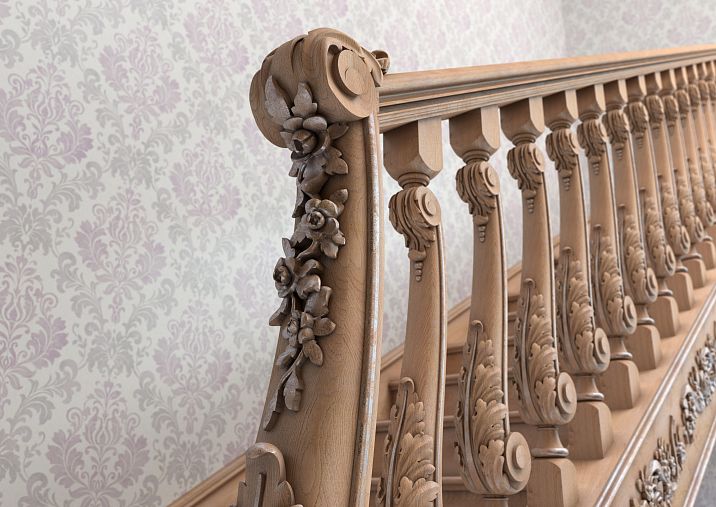
Creating a Staircase Railing is not just assembly work, it is an art where every detail matters. The question of how to install balusters on a staircase, how to install balusters on a staircaseconcerns many home craftsmen, as the correctness of installation affects not only safety but also the aesthetic appeal of the entire structure. Each element must be perfectly level, each connection must be secure, and the overall appearance must delight the eye for decades.
Modern installation technologies allow even beginners to achieve a professional result. However, success depends on understanding the nuances of the process, proper selection of tools and materials, and adherence to time-tested methods. In this detailed guide, we will reveal all the secrets of craftsmanship, share professional tricks, and help avoid typical mistakes.


Preparation stage: foundation for successful installation




Analysis of Construction and Selection of Fastening Method
Before beginning practical work, it is necessary to carefully study the features of your staircase. The type of construction — stringer or stringer — determines the method of fastening balusters. Stringer staircases offer more installation options, as balusters can be mounted directly on the treads. Stringer constructions require fastening to the inclined side beam, which complicates the process and requires additional preparation.
The material of the staircase also plays a key role in selecting fastening elements. Solid hardwood allows the use of almost any type of fastener, from traditional wooden shanks to modern metal spikes. Softwood requires a more delicate approach — here it is important to avoid cracking and ensure secure fixation without damaging the material structure.
Load-bearing characteristics of the structure determine requirements for connection strength. Staircases in private homes experience less load compared to public buildings, but even here it is necessary to ensure a safety margin. Dynamic loads from human movement, especially children, can significantly exceed static loads, so fasteners must withstand not only weight but also lateral forces.
Our factory also produces:


Tool Preparation and Materials
Quality tools are the guarantee of a professional result. Installing balusters requires a precision drill with a set of drill bits of various diameters, a miter saw for trimming elements at the required angle, a drill with torque adjustment. Measuring tools — level, tape measure, square, plumb bob — ensure accurate marking and control of vertical installation.
Specialized fixtures significantly simplify the work. A drill guide ensures strictly perpendicular holes, which is critically important for quality connections. Clamps of various sizes allow securely fixing parts during processing and assembly. Templates for marking speed up the process and eliminate errors in determining installation locations.
Selection of fastening elements depends on the chosen installation method. Wooden shanks with a diameter of 10-12 mm provide traditional and reliable connections, especially when combined with quality wood glue. Metal screws with M8-M10 threads are suitable for creating high-strength detachable connections. Structural self-tapping screws 80-100 mm long allow quickly and securely fixing elements without pre-drilling.
Get Consultation
Marking: accuracy as the foundation of quality
Mathematical Calculation of Element Placement
Correct marking begins with accurate calculation of the number and placement of balusters. Building codes require that the distance between vertical elements does not exceed 150 mm center-to-center, ensuring safety for children. However, aesthetic considerations often dictate a denser arrangement — 100-120 mm between baluster axes creates a more visually appealing appearance.
Calculation begins with determining the total length of the section where balusters will be installed. For straight runs, this is the distance between support posts; for curved sections — the arc length along the inner radius. Dividing the total length by the desired distance between balusters gives the number of balusters. It is important to remember that the end balusters should be placed 50-70 mm from the support posts.
Distance adjustment is required to achieve even distribution of elements. If the calculated number of balusters does not match the step interval, adjust distances downward. It is better to install balusters slightly closer together than to violate safety requirements or create uneven distribution.
Practical marking methods
Marking begins with setting the end points — locations of support posts. A string or line is stretched between them, serving as the baseline for determining the position of all other elements. It is important to ensure strict horizontal alignment of this line, using a water or laser level.
Intersection points with the baseline are marked on each step or on the stringer. These points will become the centers of future balusters. A square is used for control — the line from the baseline to the mark must be strictly perpendicular to the step’s edge. Any deviations at this stage will result in visible defects after installation.
Template marking speeds up the process and increases accuracy. By making a template from thin plywood or cardboard with holes at the required locations, you can quickly transfer the marking to all steps. The template must include basic elements for precise positioning — cutouts for the step edge or guides for alignment with the stringer.
Fastening technologies: from tradition to innovation
Classic method using wooden dowels
Dowel connection remains the gold standard of carpentry craftsmanship. This method provides a strong, durable, and aesthetically pleasing connection without visible metal elements. Wooden dowels with a diameter of 10–12 mm and length of 50–60 mm create sufficient gluing surface area for secure fixation.
The technology begins with precisely drilling holes at the end of the baluster and at the installation location. The hole depth in the baluster is 30–35 mm, and in the base — 25–30 mm. The drill bit diameter must exactly match the dowel size — even a 0.1 mm deviation may weaken the connection or cause wood cracking.
The quality of the glued joint determines the entire structure’s longevity. Modern PVA wood glues provide joint strength exceeding the strength of the wood itself. Glue is applied both into the hole and onto the dowel surface. It is important to avoid excess glue, which may squeeze out and spoil the appearance of the finished product.
Assembly is performed in a specific sequence: first, the dowel is inserted into the base hole, then the baluster is mounted on it. Light taps with a mallet through a wooden pad ensure tight fitting. The glue sets in 15–20 minutes, and full curing takes 24 hours.
Modern metal fasteners
Threaded rods provide maximum joint strength and allow for subsequent adjustment. This method is especially relevant for staircases with high loads or when elements need to be removed for maintenance or replacement.
M8 or M10 threaded rods, 80–100 mm long, are screwed into pre-drilled threaded holes. Special taps or self-tapping rods are used to create threads in the wood. It is important to ensure strict coaxial alignment of holes in the baluster and base — any deviation will cause misalignment of the element.
Nuts and washers ensure even load distribution and prevent wood damage. A wide washer must be placed under each nut, and preferably a metal plate measuring 30×30 mm. This is especially important for softwood, where point loading may cause the fastener to sink in.
Tightening is performed with controlled torque — excessive tightening may damage the wood or strip the threads. Modern torque wrenches allow optimal tightening force — typically 15–20 Nm for M8 rods and 25–30 Nm for M10 rods.
Innovative fastening systems
The modern industry offers specialized fastening systems designed specifically for installing balusters. These systems combine ease of installation with high reliability and aesthetic appeal.
Hidden fasteners allow complete concealment of connection points. Special sleeves with internal threads are glued into the base, and balusters are fitted with corresponding elements. This connection provides the strength of metal fasteners while completely hiding the fastening elements.
Magnetic fastening systems represent an innovative solution for temporary or removable structures. Powerful neodymium magnets embedded in baluster bases and installation points provide secure fixation without mechanical fasteners. Such systems are especially relevant for exhibition structures or when frequent disassembly is required.
Installation specifics for different types of staircases
Installation on stringer-type staircases
Stringer staircases offer the greatest flexibility for baluster installation. Open treads allow various fastening methods, from traditional to the most modern. The main advantage is the ability to install hidden fasteners with access to the underside of the tread.
Through-fastening through the tread provides maximum joint reliability. Long rods or bolts pass through the entire tread thickness and are secured with nuts from the underside. This method requires precise drilling of strictly vertical holes, achieved using a drill guide or drill press.
End-fastening of the tread is used when through-fastening is not possible. In this case, anchor bolts or deep rods are screwed into the tread end to a depth of 40–50 mm. This connection is less reliable than through-fastening, but when properly executed, provides sufficient strength for household use.
Combined methods combine different types of fastening to achieve optimal results. For example, the lower part of the baluster may be fastened with a rod to the tread, while the upper part is secured with a dowel to the handrail support. This approach ensures reliability and ease of installation.
Specifics of working with stringer staircases
Stringer staircases require a special approach to baluster installation. Fastening is performed to the inclined surface of the stringer, which complicates ensuring vertical alignment of elements. Balusters must be beveled at an angle corresponding to the staircase’s slope.
The bevel angle is determined using a protractor or template. The standard staircase slope is 30–45 degrees, but each structure is unique. Precision in beveling is critical — even a small deviation will result in visible misalignment of the baluster after installation.
A baluster support plate is often used to simplify installation on stringer staircases. A 40×20 mm plate is mounted to the stringer, and balusters are installed on it. This method allows pre-assembling the entire railing section and installing it as a single unit, significantly simplifying installation and improving accuracy.
Fastening to the stringer can be done in various ways: rods, self-tapping screws, bolts. It is important to consider the direction of the stringer’s wood grain — fastening across the grain is less reliable and requires stronger fasteners or additional reinforcement measures.
Quality control and finishing
After installing all balusters, a thorough check of the structure's geometry must be performed. The verticality of each element is checked using a plumb bob or laser level. The allowable deviation from verticality must not exceed 2 mm per meter of baluster height.
The uniformity of distances between elements is checked with a tape measure. All gaps must be identical to within 2-3 mm. Significant deviations spoil the appearance of the structure and may indicate errors in marking or installation.
The strength of connections is tested by gently rocking each baluster. Any play or movement is unacceptable and must be immediately corrected. Weakened connections will only deteriorate over time, so they must be reworked during installation.
Visual inspection includes checking the surface quality, absence of chips, cracks, glue marks, or other defects. All visible defects must be corrected before applying the final finish.
Sanding is a mandatory step in preparing wooden balusters for final finishing. Start with coarse grit sandpaper (120-150) to remove large defects and processing marks. Gradually move to finer abrasives — 220, 320, and finally 400 grit — to achieve a perfectly smooth surface.
Preparation for final finishing
Sanding is performed along the grain of the wood. Sanding across the grain leaves scratches that will become visible after applying a transparent finish. Special attention is paid to joint areas — there must be no steps, glue buildup, or other irregularities.
Sanding is performed along the grain of the wood. Movements across the grain leave scratches that will be visible after applying a transparent finish. Special attention is paid to joint areas — there should be no steps, glue buildup, or other irregularities here.
Dust removal after sanding is critically important for the quality of the final finish. Dust is first removed with a vacuum cleaner, then with a sticky cloth or cloth slightly dampened with white spirit. The surface must be absolutely clean — any dust particles will create defects in the finish.
Professional tips and tricks
Professional tips and tricks
Working with problem areas
Installing balusters on curved sections of staircases requires special skill. Turning steps have complex geometry, and standard marking methods do not apply here. Each baluster must be individually fitted to the location, taking into account the radius of the turn and the angle of the step.
For spiral staircases, special calculation and marking methods are used. Balusters are installed not at the center of the step, but shifted toward the inner radius to ensure even visual perception. The distance between balusters is measured along the inner edge of the handrail, not along the steps.
Compensating for unevenness of the base is a common task when working with existing staircases. Minor deviations from horizontal can be compensated by adjusting the length of the balusters. This is done using shims or, conversely, by additional trimming of the lower part of the elements.
Working with different types of wood requires an individual approach. Hardwoods (oak, beech, ash) require pre-drilling all holes for fasteners. Softwoods (pine, spruce) allow self-tapping screws without pre-drilling, but require caution to prevent cracking.
Optimizing the work process
Proper organization of the work area significantly speeds up the installation process and improves the quality of the result. All tools must be within reach, materials must be sorted and prepared for use. Especially important is to prepare all fasteners in advance — sort by size, check thread quality.
Batch processing of similar operations saves time and ensures uniform results. For example, all mortise holes are best drilled in one pass using the same dowel jig setting. All balusters are cut at the same angle using the same miter saw setting.
Control templates help maintain quality throughout the entire installation process. A verticality check template, a distance check template, a height check template — all these simple tools significantly simplify work and eliminate errors.
Documenting the process is especially important when working with large objects. Photos of intermediate stages, records of materials used and tool settings will help reproduce the result or address possible issues in the future.
Typical errors and ways to prevent them
Planning and marking errors
Incorrect calculation of the number of balusters is one of the most common mistakes among novice craftsmen. The desire to save money leads to excessive distances between elements beyond allowable norms. This not only violates safety requirements but also spoils the appearance of the structure.
Ignoring the specific features of the staircase construction leads to problems during installation. For example, attempting to use through-fastening on a staircase with closed-under steps is doomed to failure. It is necessary to study the construction in advance and choose the appropriate fastening method.
Inaccurate marking is the source of many problems. Accumulation of small errors leads to significant deviations at the end of the baluster row. Using poor-quality measuring tools or neglecting control measurements will inevitably result in defective work.
Failure to account for temperature and humidity changes in wood may lead to problems during operation. Wood is a living material that changes its dimensions depending on air humidity. Too tight fitting of elements may cause deformation when humidity changes.
Technological violations
Using inappropriate fasteners is a common cause of weakened connections. Metal screws are not suitable for wood, short screws do not provide secure fastening, and overly thick fasteners may split the baluster. Each type of connection requires specially selected fasteners.
Violation of gluing technology leads to weakened connections on dowels. Using expired glue, applying it to a wet or dirty surface, insufficient holding time under load — all these factors reduce the strength of the connection.
Incorrect sequence of operations may require redoing already completed work. For example, installing the handrail before final height adjustment of the balusters makes it impossible to adjust them. It is necessary to clearly plan the sequence of all operations.
Neglecting quality control at intermediate stages leads to accumulation of defects. An error not corrected in time may require redoing a significant amount of work. Regular control of geometry and connection quality is a mandatory condition for successful installation.
Modern trends and innovations
New materials and technologies
Composite balusters made from wood-polymer materials are gaining popularity due to their durability and dimensional stability. These materials are resistant to rot, require no regular maintenance, and retain their original appearance for decades. The installation technology for these materials is practically no different from working with natural wood.
Metal fastening systems are becoming increasingly sophisticated. Modern manufacturers offer comprehensive solutions including all necessary elements for quick and reliable installation. Such systems are especially relevant for professional builders working with large volumes.
Integration of lighting into baluster structures — a new trend in staircase design. LED strips embedded in baluster grooves or handrails create striking illumination and enhance safety during nighttime use. Such solutions require preliminary planning and electrical wiring.
Smart monitoring systems for structural condition are beginning to find application in critical facilities. Load and vibration sensors embedded in fastening elements allow monitoring of joint conditions and alerting about the need for maintenance.
Ecological aspects
Use of certified wood from sustainably managed forests is becoming standard in modern construction. FSC or PEFC certificates guarantee that the wood was obtained without environmental harm and in compliance with social standards.
Safe adhesives and formaldehyde-free coatings ensure a healthy microclimate in the home. Modern water-based varnishes and adhesives based on natural resins do not emit harmful substances and are suitable for use in children's rooms.
Waste recycling from production is becoming a mandatory element of responsible construction approaches. Sawdust and shavings are used to produce pellets or particleboard, while board offcuts are used to manufacture small components.
Energy-efficient production technologies reduce the carbon footprint of products. Using renewable energy sources in production, optimizing logistics chains, minimizing packaging — all these measures contribute to creating a more eco-friendly product.
Conclusion
The art of How to properly install balusters on a staircaseBaluster installation combines technical skill, artistic sense, and deep understanding of material properties. Each stage of the process — from initial planning to final finishing — requires attention to detail and a professional approach. Properly installed balusters not only ensure staircase safety but also become an important interior element, highlighting the style and status of the home.
Modern technologies have significantly simplified the installation process, making it accessible to DIY enthusiasts. However, this does not mean that one can disregard fundamental principles and proven methods. A quality result is achieved only by adhering to all technical requirements and using appropriate materials and tools.
Investments in quality materials and professional tools pay off through the longevity and reliability of the structure. Saving on fasteners or using unsuitable tools may lead to serious problems in the future, the resolution of which will cost significantly more than initial expenses.
Technological advancements continue to open new opportunities for improving baluster installation processes. Composite materials, intelligent fastening systems, integration of modern technologies — all this makes staircase structures more functional, durable, and aesthetically appealing.
Environmental considerations are becoming increasingly important when selecting materials and technologies. Responsible use of natural resources, application of health-safe materials, minimization of waste — these principles must be considered at all stages of design and construction.
The future of the industry lies in further development of eco-friendly technologies, increased energy efficiency in production, and creation of even more advanced materials. Integration of digital technologies into design and installation processes will enable achieving new levels of precision and quality.
Baluster Installation Mastery Balusters for staircase structures Requires continuous improvement and study of new methods. Each project is unique and presents new challenges, the resolution of which enriches professional experience and expands the master’s capabilities.
STAVROS Company, with its long-standing experience in producing wooden items, continues to set quality standards in the industry. The combination of traditional wood processing methods with modern technologies allows creating products meeting the highest customer requirements. Every STAVROS product is the result of meticulous work by skilled craftsmen, embodying the best wood processing traditions and a commitment to perfection in every detail.