Article Contents:
- Modern Alternative to Major Furniture Repair
- Revolution in Decorative Coatings
- Economic Justification of the Method
- Classification of Materials for Covering
- Self-Adhesive Vinyl Films
- Paintable Wallpaper and Decorative Coatings
- Special Films for Complex Surfaces
- Preparation Work: Foundation for Quality Result
- Diagnosis of Furniture Condition
- Cleaning and Degreasing Surfaces
- Repairing Surface Defects
- Application Technology: Secrets of Professional Quality
- Material Cutting
- Gradual Application Technique
- Edge and Corner Finishing
- Working with Complex Surfaces
- Curved Elements
- Milled Surfaces and Threads
- Special Techniques for Different Types of Furniture
- Cabinet Furniture
- Soft furniture
- Tables and Work Surfaces
- Innovative Materials and Techniques
- 3D Films and Holographic Coatings
- Magnetic and Marker Coatings
- Repairing Defects and Repair
- Typical Problems During Covering
- Local Repair of Coatings
- Ecological Aspects and Safety
- Choosing Safe Materials
- Waste disposal and recycling
- Economic Calculations and Budget Planning
- Cost Calculation
- Labor Cost Assessment
- Modern Trends in Designing Covered Furniture
- Imitating Premium Materials
- Combined Techniques
- Professional Secrets of Masters
- Tools for Perfect Results
- Tricks of Experienced Masters
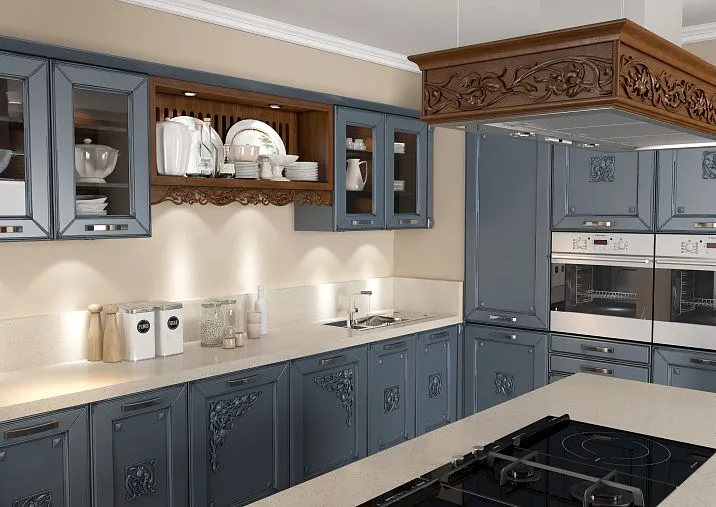
An old wardrobe in the corner of the room has lost its former attractiveness? A dresser has become hopelessly outdated, but it's too sturdy to throw away? It's time to reveal a professional secret: the ability to properly cover furniture with modern materials transforms any interior item into a designer masterpiece in a matter of hours.
Imagine the moment when your hands touch the smooth surface of a newly covered chest, imitating noble wenge or exquisite marble. Your eyes don't believe the metamorphosis: yesterday's junk now looks like an exclusive item from a luxury salon. It is precisely such miracles that the correct covering technology creates — an art accessible to anyone willing to spend a few hours studying the nuances.


Modern Alternative to Major Furniture Repair




Revolution in Decorative Coatings
Technological progress has gifted the world materials our ancestors could not even dream of. Self-adhesive films of the new generation possess fantastic capabilities: they accurately reproduce the texture of valuable wood, imitate stone, metal, fabric with such authenticity that you can distinguish them from the original only by touch.
Modern vinyl coatings withstand temperature fluctuations from -40 to +80 degrees, do not fade under direct sunlight for decades, are easily washed with any cleaning agents without losing surface quality. Innovative Technologies for Decorating Furniture open up boundless opportunities for creative interior transformation.
Our factory also produces:


Economic Justification of the Method
The mathematics is simple and convincing: quality film for full covering of a wardrobe costs 800-1500 rubles, a new similar wardrobe — from 25,000 rubles. The savings are obvious, but the main advantage is not in money, but in the ability to obtain a unique interior item that exactly matches your vision of beauty.
Professional designers often use covering to create luxurious interiors: the client receives the visual effect of furniture made from exotic materials at a symbolic cost. The secret lies in the execution skill — correctly covered surface is indistinguishable from natural material.
Get Consultation
Classification of Materials for Covering
Self-Adhesive Vinyl Films
The king among finishing materials — vinyl film on adhesive base. The thickness of quality samples reaches 0.15-0.2 mm, ensuring the strength and durability of the coating. Protective layer protects decorative pattern from mechanical damage, ultraviolet radiation, chemical exposure.
Textured films create not only visual, but also tactile imitation of materials. Surface imitating oak has characteristic roughness of wood fibers. Leather texture reproduces the finest pores of natural leather. Stone surface conveys the coldness and graininess of granite or marble.
Paintable Wallpaper and Decorative Coatings
Fлизеин wallpaper under paint opens up opportunities for creating unique textures. Relief patterns after painting create the effect of expensive decorative plaster. Vinyl wallpaper with deep embossing imitates brickwork, stone wall, wooden cladding.
Liquid wallpaper — innovative solution for covering vertical surfaces of furniture. Cellulose fibers with decorative additives create seamless coating with unique texture. Material is eco-friendly, has sound insulation properties, easily repairable in case of local damage.
Special Films for Complex Surfaces
Thermoflexible films are designed for covering curved surfaces. Under heating, the material becomes plastic, accurately replicating the contours of the base. After cooling, the film retains the given shape, creating a monolithic coating without wrinkles or tension.
Perforated films solve the problem of furniture ventilation. Microscopic holes ensure air circulation, preventing moisture accumulation under the coating. Such materials are indispensable for covering furniture in bathrooms and kitchens.
Preparation Work: Foundation for Quality Result
Diagnosis of Furniture Condition
Success of covering depends on 70% on the quality of preparatory work. Carefully inspect every centimeter of the surface: chips, cracks, dents will show through any coating. Check the strength of all joints — loose furniture may deform during work.
Measure each detail with precision to the millimeter. Prepare a cutting pattern for the film, taking into account the direction of the pattern and necessary allowances. Planning Furniture Update requires mathematical precision and artistic vision simultaneously.
Cleaning and Degreasing Surfaces
Any contamination under the film will become visible defects. Remove all traces of grease, dust, and remnants of old coatings. For degreasing, use isopropyl alcohol or special cleaners — they leave no residue and evaporate quickly.
Laminated surfaces require special preparation. A glossy surface does not hold adhesive well — create a microtexture using fine sandpaper P400-P600. Movements should be light, without heavy pressure — the goal is to achieve a matte finish, not to damage the base.
Surface Defect Repair
Fill minor chips and scratches with automotive putty — it dries quickly, sands well, and has high adhesion to various materials. Deep damages require a two-stage repair: first, rough putty, then finishing putty.
Dents in wood are often corrected without putty. Place a damp cloth over the damaged area and iron it with a hot iron through parchment paper. Steam will cause compressed wood fibers to regain volume. This method works only on natural wood without lacquer coating.
Application Technology: Secrets of Professional Quality
Material Cutting
Precise cutting — half the success. Mark the reverse side of the film with a soft pencil or marker. Consider the pattern direction: wood fibers should run along the long side of the part. For stone surface imitation, direction is less critical.
Leave 10-15 mm margins on each side for folding edges. Increase the margin to 25-30 mm at external corners — material will be needed for neat corner finishing. Correct Adhesive Application Technique requires material reserve for correcting possible errors.
Gradual Application Technique
Never remove the protective paper completely — work in 15-20 cm sections. Start from the center of the part, gradually moving toward the edges. Movements of the squeegee or rubber spatula should be smooth with even pressure.
Air bubbles are the main enemy of quality coating. Expel them by moving from center to edges using a wool squeegee. Pierce large bubbles with a fine needle, then squeeze out air through the hole. Micro-perforation of some films prevents bubble formation.
Edge and Corner Finishing
External corners are the most difficult areas to laminate. Professional technique: make diagonal cuts in the corner allowance at a 45-degree angle, leaving 2-3 mm from the base edge. This prevents material overlap and ensures a neat corner appearance.
Internal corners are finished differently: the film is folded into the corner without tension, and excess material is neatly trimmed with a utility knife. Use new blades for each project — a dull knife tears the film and leaves uneven edges.
Working with Complex Surfaces
Curved Elements
Curved surfaces require special handling. Heat thermoformable films with a construction hair dryer to 60-80 degrees, after which the material easily conforms to the base shape. Do not overheat — excessive temperature may damage the decorative layer.
For deep profiles, use a cutting technique. Make multiple radial cuts at bend points, ensuring each cut stops 1-2 mm short of the base surface. This technique allows the film to accurately replicate complex profiles without wrinkles.
Milled Surfaces and Carvings
MDF facades with milling create a three-dimensional relief that is difficult to laminate properly. The secret lies in selecting the right material — use thin, flexible films 0.08-0.1 mm thick. They adhere better to recesses and do not form air pockets.
Carved elements are practically impossible to laminate — the film cannot replicate the complex geometry of carvings. In such cases, combine techniques: laminate flat surfaces, and paint carved elements to match the base coating color.
Special Techniques for Different Types of Furniture
Cabinet Furniture
Cabinets, chests, and drawers have large flat surfaces that are relatively easy to laminate. The main task is to ensure precise film alignment on adjacent surfaces. Start with less visible parts, practicing the technique.
Internal surfaces can be left un-laminated or use cheaper materials. If doors are removable, work on them separately — horizontal positioning simplifies the laminating process. Updating Cabinet Furniture requires a systematic approach and precise planning.
Soft furniture
Hard elements of soft furniture — armrests, backs, bases — can be covered using standard technology. Choose materials that imitate leather or textile — they harmonize well with soft upholstery.
Combining materials creates interesting design effects. Wooden inserts covered with leather-like film transform a simple sofa into a stylish interior piece. Contrasting colors highlight the furniture's structural elements.
Tables and work surfaces
Tabletops experience increased loads — choose the thickest and strongest films. Always cover the edges — an exposed edge will quickly peel off due to mechanical impacts. Use a transparent protective film over decorative film to extend service life.
Desks with drawers require special attention to movable parts. Do not cover the contacting surfaces of guides — additional thickness will disrupt mechanism operation. Limit decoration to visible parts only.
Innovative materials and techniques
3D films and holographic coatings
Revolutionary materials create 3D images on flat surfaces. Holographic films change their pattern depending on viewing angle, creating dynamic effects. Carbon films imitate the weave of carbon fibers with a characteristic gloss.
Film printing allows applying any image: from family photos to works of art. Modern printer resolutions reach 1440 dpi, ensuring photographic-quality images on furniture.
Magnetic and marker coatings
Special films turn furniture into functional surfaces. Magnetic film allows attaching notes and photos without glue or nails. Marker film creates a surface for writing with markers that can be erased.
Chalkboard films imitate school chalkboards — you can write on them with chalk. Such coatings are especially popular in children's furniture, turning an ordinary cabinet into an interactive play area.
Defect removal and repair
Typical problems during covering
Air bubbles — the most common defect. Small bubbles often disappear on their own within a few days under temperature and pressure. Large bubbles require intervention — puncture with a needle, squeeze out air, seal the hole with a drop of transparent lacquer.
Edge peeling occurs due to insufficient surface preparation or low-quality adhesive layer. Heat the peeled area with a hairdryer, press firmly for several minutes. If the problem recurs, apply additional adhesive along the edges.
Local repair of coatings
Scratches on film can often be removed by polishing with special pastes. Deep damage requires local replacement. Carefully cut out the damaged area, select a film piece with matching pattern, apply with minimal gaps.
Fading of decorative layer occurs due to prolonged exposure to ultraviolet light. Quality films resist fading for 5–7 years, cheap ones may change color within months. Use UV-protective coatings for furniture exposed to direct sunlight.
Ecological aspects and safety
Choosing safe materials
Modern vinyl films meet strict ecological standards. Look for GREENGUARD certificates confirming low emission of volatile organic compounds. This is especially important for children's furniture and sleeping rooms.
Adhesive layer should not contain formaldehyde and heavy metals. Quality manufacturers list the full composition on packaging. Avoid materials with sharp chemical odors — it indicates low quality and potential danger.
Disposal and recycling
Vinyl films are classified as hard-to-recycle materials. When replacing coatings, try to remove film in large pieces — they can be used to cover small items. Return scraps to plastic recycling centers.
Some manufacturers produce biodegradable films based on plant components. They are more expensive than standard films but fully decompose in natural conditions within 2–3 years. Such materials are a choice for environmentally conscious consumers.
Economic calculations and budget planning
Cost calculation
The cost of covering includes material, tool, and labor costs. Quality film costs 150–500 rubles per square meter depending on type and manufacturer. A basic tool set costs 1000–1500 rubles but will serve many projects.
Compare costs with alternatives: painting, replacing furniture, professional restoration. Economical methods for interior updating show the advantages of covering in most cases.
Labor cost assessment
A simple wardrobe can be covered over the weekend, while complex furniture with routing will require a week of meticulous work. Plan your time with a buffer — rushing leads to defects, which cost more to fix than to prevent.
The first project will take more time due to inexperience. Each subsequent task will be completed faster and better. Skills in covering furniture are an investment in future projects and an opportunity for additional income.
Modern trends in covered furniture design
Imitation of premium materials
Popular are films imitating exotic wood species: zebrawood, wenge, palisander. High-quality imitation is indistinguishable from natural material, but costs dozens of times less. Stone textures reproduce marble, granite, onyx with photographic accuracy.
Metallic surfaces create an industrial interior style. Films under steel, aluminum, copper, brass allow experimenting with colors and textures without risking the budget. Patinated metals add vintage charm to modern furniture.
Combined techniques
Combining wrapping with other decoration methods creates unique effects. Partial wrapping highlights individual furniture elements, creating accents. Combining matte and glossy surfaces adds dynamism to the design.
Contrasting colors emphasize the structural features of furniture. A dark frame with light facades visually lightens heavy furniture. Bright details on a neutral background create a modern style.
Professional secrets of masters
Tools for perfect results
Professional rollers made from various materials — wool, rubber, Teflon — are used for different types of film. Wool rollers do not scratch delicate surfaces, rubber rollers provide maximum pressure, and Teflon rollers do not stick to the adhesive layer.
Thermo-fans with temperature adjustment are indispensable when working with thermoformable films. Infrared lamps provide even heating of large surfaces. Vacuum tables hold parts in place during wrapping.
Tricks of experienced masters
A talc-coated surface of the hands prevents the film from sticking to fingers. A soap solution on the surface allows adjusting the film's position in the first minutes after application. Using primers increases adhesion on problematic surfaces.
Pre-acclimatizing materials to room temperature prevents deformation. Film rolls must be stored vertically for at least one day before use.
The art of how to properly wrap furniturelies in combining technical knowledge with creative vision. Each project is unique and requires an individual approach, taking into account the characteristics of materials, furniture construction, and desired result.
Modern wrapping technologies open up boundless opportunities to transform interiors without significant financial investment. A well-executed job lasts for years, pleasing the eye and confirming the correctness of choosing an economical way to refresh furniture.
Mastering furniture wrapping techniques is acquiring a valuable skill useful not only for personal needs but also potentially as a source of additional income. In an era of saving and rational consumption, the ability to give a second life to old items is especially relevant.
Each successfully completed project adds confidence in one's abilities, expands understanding of decoration possibilities, and stimulates new experiments. Starting with simple projects, one can gradually move on to more complex tasks, developing skill and artistic taste.
For many years, the STAVROS company has created furniture of the highest quality, which becomes an ideal base for creative decoration experiments. The sturdy construction, high-quality materials, and thoughtful ergonomics of STAVROS products allow confidently experimenting with various wrapping techniques, knowing that the base will withstand any creative impulses and maintain functionality for many years.