Article Contents:
- Why confusion arises in the names of wooden panels
- Household names vs professional terms
- What are wooden wall panels correctly called
- Wall panels and wall panels — are they the same?
- What types of wooden panels exist by material
- Panels made of solid wood
- Veneered wall panels
- MDF Panels with Wood Finish
- Combined Solutions
- What types of panels exist by construction and appearance
- Slatted panels
- Smooth wall panels
- Relief panels
- 3D wood panels
- Acoustic slat panels
- How slatted, veneered, and solid panels differ
- By appearance
- By tactile sensation
- By visual effect
- Where each option is appropriate
- How to determine which type of panels you need
- living room
- for the bedroom
- For the hallway
- For Office
- For an accent wall
- For interiors in a modern style
- For neoclassical style
- What names sellers and manufacturers most commonly use
- What to look for when choosing panels, not just when reading names
- Base material
- Coating and shade
- Texture and pattern character
- Format and proportions
- Depth of Relief
- Compatibility with style and other materials
- Common mistakes when choosing wooden panels for walls
- What wooden wall panels are currently the most versatile
- Slat panels for accent zones
- Veneered panels for modern interiors
- Solid wood panels for premium projects
- Acoustic panels for offices and TV zones
- How to search for wooden panels in the catalog and search: a practical guide
- Complete dictionary: what wooden panels on walls are called
- Selection algorithm: from the question 'what is it called' to the correct order
- Frequently asked questions about wooden wall panels
- About the Company STAVROS
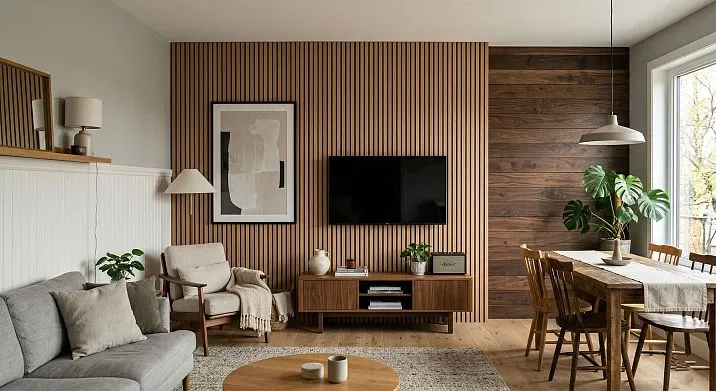
Admit it: you see a beautiful wall in an interior—with vertical slats, the live texture of wood, or strict geometric planes—and you don't know what it's called. 'Wooden panels,' 'slats,' 'laths,' 'cladding,' 'veneer on the wall'? All these words pop up in searches, but none of them give you confidence. That's why one of the most frequent queries on this topic isn't 'buy,' but 'what are wooden panels on walls called.'
It's an honest question—and it deserves an honest, complete answer. The confusion in names doesn't come from ignorance, but from real diversity: the same product can have five different commercial names. This article provides a detailed breakdown: what wooden wall panels are correctly called, what types exist, how they differ in material and construction, and how not to get confused when choosing.
Why there is confusion in the names of wooden panels
The question 'what are wooden panels on walls called' is asked not only by people far from design. It's asked by experienced clients, designers early in their careers, and even managers at construction stores. The reason is simple: there is no single naming standard in this category.
Different manufacturers call the same product differently. 'Slatted panels,' 'lath panels,' 'wall slats,' 'interior slats'—all refer to the same product. 'Wall panels,' 'wall panels,' 'decorative wall panels'—are also the same thing, just in different descriptive variants.
Another layer of confusion is added: the material. 'Wooden'—does that mean solid wood? Or is veneer also wooden? What about MDF with a wood-like texture? Technically, MDF is also a wood-based material (pressed chips), but it's conditionally called 'wooden panels.'
As a result, a person who wantswooden wall panelsfor an interior doesn't always know what exactly to type into the search. And this article is written precisely for such people.




Common names vs professional terms
In everyday life, people more often say: 'wood wall cladding,' 'slats on the wall,' 'wooden planks,' 'little boards on the wall.' In the professional environment, they use: 'wooden wall panels,' 'veneered panels,' 'slatted panels on an MDF substrate,' 'acoustic lath systems,' 'solid wood panels.'
All these formulations describe real product categories—but each has its own specifics. Let's break them down in order.
Our factory also produces:


What are wooden wall panels correctly called?
Officially and according to industry logic, wooden products for cladding interior surfaces of rooms are called wooden wall panels or wooden wall panels. Both terms are correct and widely used by manufacturers, sellers, and designers.
In addition, depending on the context, the following names are used:
-
Decorative wooden panels—emphasis on aesthetic function, not structural
-
Wooden panels for walls—the most neutral and broad description of the category
-
Wooden wall cladding—a term emphasizing the architectural function
-
Panels for interior finishing—a broad concept including wood, MDF, and veneer
-
Interior wooden panels—a commercial term with an emphasis on application
None of these names are incorrect. All of them describe products that are mounted on interior wall surfaces and serve a decorative or decorative-functional role.
Get Consultation
Wall panels and wall-mounted panels — are they the same thing?
Practically yes. 'Wall panels' emphasizes the purpose (for walls, as opposed to ceiling or floor panels). 'Wall-mounted panels' refers to the installation method (on the wall). Both terms are used interchangeably in most catalogs and articles. If you come across one or the other name, they refer to the same product category.
What types of wooden panels are there by material?
Once you've decided that you're looking specifically for wooden wall panels, the next question is what they are made of. The material determines the appearance, tactile feel, durability, and cost.
Solid wood panels
Solid natural wood without gluing or synthetic base.Solid wood productsMade from oak, beech, ash, walnut, cherry, pine. Each panel is unique — natural grain pattern, natural shade transitions, lively tactile surface.
Solid wood is maximum authenticity. The surface can be sanded and restored, coated with oil, varnish, or wax, tinted to any color without losing the natural pattern. Solid wood panels last for decades and only gain character over time.
Correct names: solid wood panels, massive wall panels, natural wood panels.
When to choose: for studies, country houses, premium living rooms, classic and neoclassical projects where natural authenticity is needed.
Typical species: oak, ash, walnut, beech, cherry, pine, larch.
Veneered wall panels
Veneer is a thin slice of natural wood glued onto an MDF or plywood backing. Veneered panels are visually indistinguishable from solid wood: the same natural texture, the same grain pattern, the same reaction to light. At the same time, they are significantly more stable with changes in temperature and humidity, lighter in weight, and more affordable in price.
The range of wood species for veneer is wider than for solid wood: exotic types of wood are available — wenge, zebrano, merbau, wavona — which would be prohibitively expensive in solid form. Veneer makes them accessible.
An interesting technique is the 'book' match of veneer: two adjacent sheets are laid mirror-image, creating a symmetrical natural pattern. This is not just finishing, it is decorative art.
Correct names: veneered panels, veneered wall panels, panels made of natural veneer, panels under natural wood.
When to choose: when you need the visual effect of solid wood with better stability and lower cost.
Wood-look MDF panels
MDF is a board made of pressed fine wood fraction. Strictly speaking, MDF is also a wood product, but unlike solid wood and veneer, it does not carry a natural grain pattern. Its advantage lies elsewhere: perfect stable geometry, uniform density, ease of processing.
MDF wall panels can have a wood-like finish (decorative film, veneer, painted surface) or a clean surface for final painting. This is the most flexible format: MDF panels are milled into any profile and accept enamel of any shade.
An important nuance: when they say 'MDF panels under wood' — these are not wooden panels in the strict sense. These are MDF panels with a decorative coating that imitates wood. The difference is significant, and it needs to be understood when choosing.
Correct names: MDF panels under wood, decorative panels under wood, wall panels made of MDF, panels for painting.
When to choose: for boiserie wall systems, painting in any color, precise geometry, and replicable commercial projects.
Combined Solutions
Wooden slat panels— this is already a combined solution: solid oak or MDF slats mounted on an MDF backing or fabric base. Here, the material of the slats and the base material can differ. That's why, when choosing slatted panels, it's important to clarify: what are the slats made of? Solid oak is one thing. MDF with a wood-like texture is another.
Combined solutions offer maximum flexibility: the natural texture of wood on the slats + the stable geometry of the MDF base. This is the optimal balance for most modern residential interiors.
What types of panels exist by construction and appearance
If panels are divided into four groups by material, then by construction and shape — into five. And it's here that confusion in names is especially common.
Rack panels
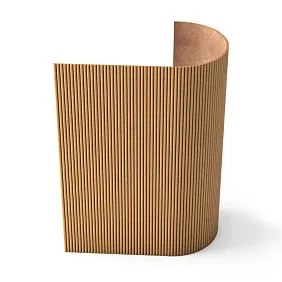
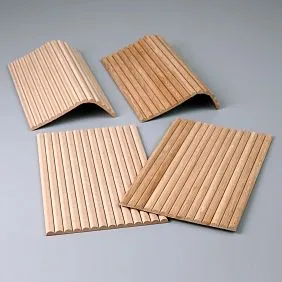
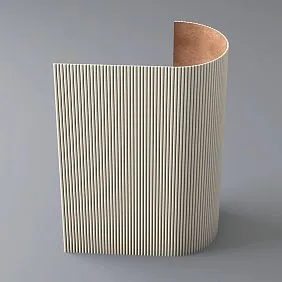
The most in-demand format today. A system of parallel slats of identical cross-section and equal spacing, fixed to a backing. Creates a linear vertical or horizontal rhythm that actively interacts with light.
Wooden slat panelsare produced in two structural versions:
-
Rigid on MDF backing — for flat walls and even surfaces
-
Flexible on fabric base — for columns, arches, radius partitions
Vertical slats visually stretch the room upward — an indispensable technique in apartments with low ceilings. Horizontal slats widen the space sideways, working well in narrow corridors.
What are the correct names: slatted panels, lamella panels, wall slats, interior slats, wall slat system, slats for interior finishing.
Typical parameters: slat width — from 20 to 60 mm, spacing — from 20 to 80 mm, panel length — from 2400 to 3000 mm.
Smooth wall panels
A flat surface without relief or linear rhythm. Creates a monolithic, solid plane — a calm background for interiors with accent furniture or rich decor. Smooth wooden panels can be made of solid wood, veneer, or paintable MDF.
In classic boiserie wall systems, smooth panels alternate with moldings and decorative overlays, forming a rhythmic structure without relief on the plane itself.
What are the correct names: smooth wall panels, smooth wooden panels, flat wall panels, paintable panels.
Relief panels
Volumetric decorative pattern on the surface: geometric patterns, coffers, rhombuses, waves, abstract shapes. With side lighting, the relief creates expressive chiaroscuro — the wall turns into a three-dimensional decorative object.
Relief panels are suitable for classic and neoclassical interiors, in areas with intentional decorative emphasis. They require precise dosing: one relief wall is enough.
What are the correct names: relief panels, relief wall panels, 3D panels, decorative relief panels for walls.
3D wooden panels
A standalone format with a pronounced three-dimensional geometric pattern. Often confused with relief panels—but 3D panels have deeper relief and more complex geometry. Used as an artistic accent in custom, Art Deco, and unconventional interiors.
Correct names: 3D panels, volumetric wooden panels, three-dimensional wall panels.
Acoustic slatted panels
Technically, this is a subtype of slatted panels, but with added acoustic filler—usually sound-absorbing felt or mineral wool behind the slats. Such panels simultaneously decorate the wall and improve the room's acoustics.
Acoustic panels are especially in demand in home theaters, studies, meeting rooms, and open-space offices. Externally, they are indistinguishable from ordinary slatted panels—the difference is only in the backing construction.
Correct names: acoustic wooden panels, acoustic slatted panels, acoustic lamellar panels, sound-absorbing wooden panels.
How slatted, veneered, and solid wood panels differ
Having sorted out the names, let's move on to the most practical question: what is the difference between the three main categories of wooden wall panels?
By appearance
Slatted panels create a linear rhythm—parallel stripes with or without gaps, vertically or horizontally. This is the most 'modern' and dynamic visual.
Veneered panels provide a monolithic or jointed surface with the natural wood grain. It is a solid plane, calm or rich—depending on the wood species.
Solid wood panels are the same as veneered ones, but with greater depth and tactility. Solid wood 'lives' differently: its surface is slightly less uniform, warmer, more material. The difference is noticeable not in photos, but in person.
By tactile sensation
Solid wood — maximum tactility. The hand feels a living surface, thermally neutral, slightly porous, completely natural. Veneer — close to solid wood, but thinner and smoother. MDF — smooth and stable, but without natural irregularity.
By visual effect
Slatted panels provide the strongest architectural effect: they change the perception of a room's height and width, create a play of light and shadow, and turn a flat wall into a sculptural object. Veneered — a calm, noble background. Textured — a decorative accent with volume.
Where each option is appropriate
| Panel type | Best application | Style |
|---|---|---|
| Solid oak slatted panels | Accent wall, TV area | Modern, Japandi, Scandinavian |
| Smooth veneered | Bedroom, study, living room | Modern, neoclassical |
| MDF for painting | Boiserie systems, hallway | Neoclassical, classic |
| Solid wood panels | Study, country house | Classic, warm natural |
| Acoustic slatted panels | Cinema, study, meeting room | Any |
How to understand which type of panels you need
This is not a rhetorical question. The answer depends on three parameters: room, task, interior style. Let's break it down with specific scenarios.
For the living room
The living room is the main arena for wooden wall panels. The most popular solutions:
-
Slatted panels behind the sofa or around the TV — a modern accent with linear rhythm
-
Veneered smooth panels — a calm natural backdrop for expensive furniture
-
MDF relief panels — for a neoclassical interior
Rule for the living room: one accent wall, neutral others. Wooden panels should be the center, not the background everywhere.
For the bedroom
In the bedroom, wooden wall panels primarily work behind the headboard of the bed. The goal is to create a warm, enveloping atmosphere, not decorative noise.
Best choice: slatted panels in a light or natural shade, smooth veneered with a natural pattern. Dark walnut or wenge — only with good lighting. For the bedroom, the shade is more important than the format: it should calm, not activate.
For the hallway
The hallway — the place of first impression. A lower belt of wooden panels 90–120 cm high is a classic and practical technique. Full-height vertical slats in a narrow corridor — a technique for visually expanding the space.
Decorative overlays and moldingspaired with the lower panel belt form a full architectural system in the hallway — without large-scale expenses.
For an office
The study requires an atmosphere of concentration and weight. Here, solid walnut, dark oak, or richly toned veneered wooden wall panels create exactly the feeling needed: a space with character and history.
Wooden wall systemswith library cabinets — a timeless classic for the study.
For an accent wall
One wall in the room, clad with wooden panels against neutral surfaces — the most universal and safe technique. Suitable for slatted, smooth veneered, and relief solutions. One format, one shade, one wall — that's enough.
For a modern style interior
Vertical slatted panels with a uniform rhythm, neutral oak or ash shade, matte finish without gloss. No decorative overlays—only geometry and natural texture. This is the language of modern interior.
For neoclassical style
wall panels boiseriemade of MDF with moldings and enamel in cream, white, or dusty green tones. Structured rhythm, architectural detailing, no visible wood grain—only geometry and color.
What names are most commonly used by sellers and manufacturers
Now—a practically important section for those planning to search for wooden wall panels in catalogs and search engines. Here are the actual category names under which these products are presented on the market:
"Wooden wall panels"—the broadest and most universal name. Under this heading, all formats are usually gathered: solid wood, veneer, MDF, slatted and smooth.
"MDF wall panels"—a commercial name for MDF panels for painting or with a wood-like finish. Often found in the mass market segment.
"Slatted panels"—a specific format with a linear rhythm. In catalogs, they are usually highlighted as a separate category.
"Acoustic slatted panels"—a format with acoustic filling. Slat is a synonym for strip, often used in professional environments.
"Decorative wood-look panels"—panels with imitation wood grain, not necessarily made of natural material. Important: 'wood-look' does not mean 'made of wood'.
"Veneered Wall Panels" – smooth or slatted panels with natural veneer.
What to look for when choosing panels, not just when reading names
The name is only a starting point. The real choice of wooden wall panels is based on several parameters that are more important than any commercial headline.
Base Material
What is the panel's core: solid wood, veneer on MDF, paintable MDF, or MDF with film? This determines the appearance, tactile feel, durability, and restoration possibilities. Always request samples.
Finish and shade
Matte oil, wax finish, lacquer, tinting, enamel – each finish changes the character of the surface. Matte oil gives the most natural, living effect. Lacquer is more durable and hygienic. Tinting allows you to achieve the desired shade while preserving the wood grain.
The same sample under warm and cold lighting yields two different results. Check it under the actual lighting of the room.
Texture and character of the grain
Calm, uniform grain or active figuring? Fine grain or large texture? For small rooms – a calm, uniform texture. For an accent zone in a large space – you can opt for a more active pattern.
Format and proportions
The width of the slats, the height of the panel, the spacing between slats – all of this should correspond to the scale of the room. A rhythm that is too fine gets lost in a large hall. A format that is too large feels oppressive in a small room.
Relief Depth
For slatted panels: how far does the slat protrude above the substrate? Deep relief (25–40 mm) creates strong light and shadow play. Shallow (10–15 mm) gives a calmer, more restrained effect. The choice depends on the desired surface character.
Compatibility with style and other materials
wooden wall panelsshould work in a system with the floor, doors, furniture, and ceiling. Warm wood goes with warm flooring. Light ash goes with neutral or white surfaces. Dark walnut goes with restrained furniture and good lighting.
Common mistakes when choosing wooden wall panels
These mistakes are made not only by beginners. They are also made by experienced clients—especially when they rush.
Relying only on the name. 'Wooden wall panels' is a category, not a specific product. The name says nothing about the material or quality. Samples and technical specifications are important.
Confusing solid wood and veneer. They look similar externally. But solid wood is solid timber, veneer is a thin slice on a substrate. Different costs, different thicknesses, different restoration possibilities. Clarify when ordering.
Assuming all slats are wooden. Slats can be made of solid oak, MDF with a wood-like finish, PVC with imitation texture. The difference is fundamental. Ask: what are the slats made of?
Choosing panels without considering the room's style. Slatted panels in a modern style don't work in an interior with Baroque furniture. Classic MDF panels with moldings are out of place in minimalism. The format must match the style.
Not looking at the substrate and finish. The substrate and finish determine durability, hygiene, and restoration potential. A cheap 'wood-like' finish on a PVC substrate is not a wooden panel, despite all marketing wording.
Choosing only by photo without in-person evaluation. Wood is a tactile and light-reactive material. In a catalog photo and under the actual lighting of your space, these are two different results.
Ignore proportions. Wide smooth panels in a small room create a feeling of pressure. Small slats in a large hall are an inexpressive, fine rhythm.
What wooden wall panels are currently the most versatile?
If you need one reference point — here it is. In terms of the combination of application versatility, visual effect, and practicality, several formats lead.
Slatted panels for accent zones
Wooden slat panelsmade of solid oak on an MDF backing — the most versatile solution for a modern interior. Suitable for the living room, bedroom, hallway, office. Work in modern, Scandinavian, Japandi styles. Provide a strong visual effect with a moderate finishing area.
Veneered panels for a modern interior
Smooth or slatted veneered wooden panels — for those who want a natural visual without an active rhythm. Especially expressive in bedrooms and studies. Paired with warm side lighting — one of the best interior results you can get from wall finishing.
Solid wood panels for status projects
A study with full wooden paneling made of solid walnut is not just a finish, it's an environment. An atmosphere that cannot be created with any other material. For clients who value authenticity and the longevity of the investment — there is no better choice.
Acoustic panels for studies and TV zones
Sound-absorbing slatted panels solve two problems at once: they improve acoustics and decorate the wall. For a home theater, studio, or meeting room, they are the optimal choice. Externally, they look like ordinary slats. Inside, there is an acoustic layer that changes the sound environment of the room.
How to search for wooden panels in the catalog and search: a practical guide
Now, the practical part. You know what you want. How to find it correctly?
If you need slatted panels made of natural wood: search for 'solid oak slatted panels', 'oak slats on MDF backing', 'wooden slatted wall panels'. Specify: material of the slats (solid or MDF), slat spacing, profile depth.
If you need veneered panels: search for 'veneered wall panels', 'oak veneer panels', 'smooth veneered wall panels'. Specify: veneer species, repeat pattern type, backing type.
If you need panels for painting: search for 'MDF panels for painting', 'smooth MDF wall panels', 'boiserie MDF wall panels'.
If you need classic wall systems with moldings: search for 'boiserie wall panels', 'MDF boiserie systems', 'wall moldings and neoclassical panels'.
Key advice: always specify the material of the base and coating. The category name is only a direction. The real quality and nature of the product are in the technical details.
Complete dictionary: what wooden wall panels are called
Comprehensive glossary of key terms encountered when choosing wooden wall panels:
Wood wall panels – a general term for all wooden cladding products installed on interior walls.
Wooden wall panels – a synonym for wood wall panels, emphasizing the installation method.
Slat panels – a system of parallel slats on a backing, creating a linear rhythm on the wall surface.
Lamella panels – a synonym for slat panels; lamella = slat in professional terminology.
Veneered panels – panels with a surface of natural veneer on an MDF or plywood base.
Solid wood panels – panels made from solid natural wood without gluing.
Decorative wood-look panels – panels with a finish that imitates wood; not necessarily made from natural material.
Acoustic slat panels – slat panels with sound-absorbing filler.
Relief panels – panels with a three-dimensional decorative pattern.
3D panels – panels with deep relief and complex geometry.
Boiserie is a classic wall paneling system made of panels and moldings, historically crafted from wood, but today more commonly from MDF for painting.
Smooth panels are panels without relief, featuring a flat, monolithic surface.
Selection algorithm: from the question 'what is it called' to the correct order
When you understand what wooden wall panels are called and what types exist, the selection becomes systematic. A simple sequence:
-
Define the room — living room, bedroom, hallway, study, commercial space
-
Define the task — accent, background, zoning, acoustics, full cladding
-
Choose the material — solid wood, veneer, MDF — based on the task and budget
-
Choose the construction — slatted, smooth, relief, acoustic
-
Select the shade and finish — to match the style, lighting, and adjacent materials
-
Request samples — evaluate them in person under real lighting
-
Proceed to order — with full understanding of what you're getting
Frequently asked questions about wooden wall panels
What are wooden panels on walls correctly called?
Wall wooden panels or wooden wall panels — both terms are correct. The specific type is clarified by material (solid wood, veneer, MDF) and construction (slatted, smooth, textured).
Are wall panels and wall-mounted panels the same thing?
Practically yes. 'Wall' indicates purpose, 'wall-mounted' indicates installation method. The terms are interchangeable in most contexts.
Are slatted panels a separate type of wooden panels?
Yes.Wooden slat panels— a format with a linear rhythm of slats. Can be made of solid oak or MDF. This is a structural, not a material classification.
How do veneered panels differ from solid wood?
Solid wood — solid natural timber. Veneer — a thin slice of wood on an MDF backing. Visually similar, but veneer is more stable and affordable. Solid wood can be restored multiple times.
Are all wood-look panels actually wooden?
No. Wood-look panels can be made of PVC, laminated MDF, or decorative film. 'Wood-look' describes the appearance, not the material.
What are panels with vertical slats called?
Slatted panels with vertical slat orientation. Also known as: lamella panels, wall slats, interior slats.
Which panels are better for a living room?
Oak slatted for a modern accent, smooth veneered for a natural background, textured MDF for neoclassical. Depends on the style and purpose.
What names to use when searching in the catalog?
For slatted: 'solid oak slatted panels'. For veneered: 'veneered wall panels'. For paintable MDF: 'MDF panels for painting'. For classic: 'boiserie wall panels'.
Do acoustic panels fall under wooden ones?
Yes, if the slats are solid wood or MDF. Acoustic slatted panels are wooden (or MDF) slats with a sound-absorbing layer inside.
What to choose: solid wood, veneer, or MDF?
Solid wood — for natural authenticity. Veneer — for the visual appeal of wood with better stability. MDF — for painting in any color and precise geometry. The right choice is the one that matches your task.
About the company STAVROS
If you've figured out the names and now want to move on to a specific choice — contact STAVROS.
STAVROS is a Russian manufacturer with years of experience creating wooden interior products. The range includesslatted wooden panels made of MDF and solid oak, veneered and smooth wall panels, classical boiserie wall systems, moldings, baseboards, cornices, architraves, and decorative overlays.
Production is carried out to custom sizes in a wide range of species — oak, beech, ash, walnut, cherry — and finishes: from bleached to dark wenge. Full cycle: consultation, production, delivery, installation. Showrooms in Moscow and St. Petersburg. Samples for evaluation before ordering.
STAVROS works with private clients, designers, architects, and developers in any style — from contemporary minimalism to premium classic boiserie.