Article Contents:
- Anatomy of the Connection: Understanding Load Mechanics
- Traditional Fastening Methods: Time-Tested Solutions
- Connection using wooden dowels
- Attachment using metal bolts
- Shank-and-Slot System: Woodworking Classic
- Modern fastening technologies
- Zip Bolts: Innovative Fastening
- Hidden Metal Connectors
- Preparation Operations: Foundation of Quality Installation
- Marking and Planning
- Material preparation
- Step-by-step installation technology
- Installing Support Posts
- Installation of intermediate balusters
- Preparing Handrails for Installation
- Fastening Characteristics for Different Types of Staircases
- Straight staircases
- Spiral and rotating staircases
- Staircases with Turning Steps
- Quality Control and Testing
- Connection Strength Testing
- Defect Removal
- Final Connection Finishing
- Sanding and Surface Preparation
- Protective Coatings
- Maintenance and repair
- Regular Inspections
- Preventive Maintenance
- Innovative solutions and development prospects
- Composite materials
- Smart technologies
- Conclusion
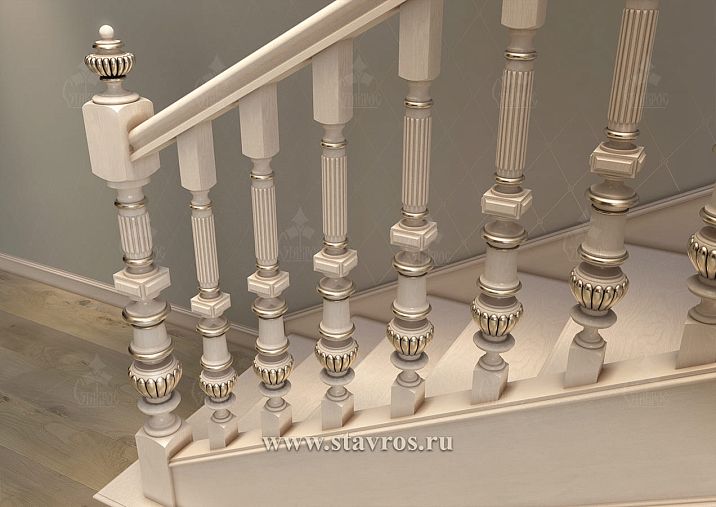
Staircase safety depends on many factors, but the key role is played by the quality of connection of its elements. The question how handrails are attached to balusters concerns everyone who strives to create not just a functional structure, but a reliable and aesthetically perfect railing. Proper connection of handrails to balusters is an art requiring deep understanding of load mechanics, material properties, and nuances of woodworking craftsmanship.
Handrails must withstand significant lateral loads, ensuring safety for people of all ages. An adult weighing 80-100 kilograms may lean on the railing with their entire body weight, creating a load of up to 150 kilograms per linear meter of the structure. That is why attaching handrails to balusters requires special attention to details and use of proven technologies.


Anatomy of the Connection: Understanding Load Mechanics
Connecting handrails to balusters represents a complex engineering task, where each element plays its role in the overall safety system. Handrails receive horizontal loads from a person's hands and transfer them to balusters. Balusters act as vertical posts, distributing the load to the staircase base. The connection joint becomes a critical point where all stresses concentrate.
Modern building codes require stair railings to withstand a horizontal load of at least 100 kilograms per linear meter without failure or residual deformation. This means that each baluster, at a standard installation spacing of 150 millimeters, must withstand a load of about 15 kilograms transmitted through the handrail connection joint.
Dynamic loads create additional requirements for connection strength. A person ascending the stairs and leaning on the handrails creates variable loads that may be 2-3 times greater than static loads. A quality connection must withstand millions of load cycles without weakening.




Traditional fastening methods: time-tested solutions
Our factory also produces:


Connection using wooden dowels
Shank connection — a classic method used by carpenters for centuries. Wooden cylindrical rods with a diameter of 8-12 millimeters create a strong and aesthetically inconspicuous connection. Shanks are made from hardwoods — oak, beech, ash — and ensure reliable load transfer.
Installation technology requires high precision. A hole 40-50 millimeters deep is drilled at the top of the baluster, with a diameter precisely matching the shank size. A similar hole is created at the bottom of the handrail. The shank is installed using PVA carpenter’s glue, which provides additional connection strength.
Advantages of the method include eco-friendliness, the ability to disassemble the connection, and absence of visible fasteners. Disadvantages — require high precision when drilling, long glue setting time, limited strength under heavy loads.
Get Consultation
Fastening with Metal Screws
Threaded rods with a diameter of 8-10 millimeters provide maximum strength for connecting handrails to balusters. This method is especially effective for heavy-duty structures and heavily used staircases.
Installation technology begins with preparing holes. A hole is drilled at the top of the baluster with a diameter 1 millimeter smaller than the rod diameter. The rod is screwed into the baluster to a depth of 40-50 millimeters, leaving the free end protruding 60-80 millimeters. A hole matching the rod diameter is created in the handrail.
Reinforced variants involve using rods with nuts and washers. Such a connection allows adjusting tension and tightening the fastening during operation. This is especially important for wooden structures, which may change dimensions due to humidity fluctuations.
Shank-and-Slot System: Woodworking Classic
Shank-and-slot connection is a traditional woodworking method providing high strength and aesthetic appeal. A protruding shank is formed at the top of the baluster, and a corresponding slot is created at the bottom of the handrail.
Shank dimensions are typically 25×15 millimeters in size with a length of 30-40 millimeters. These proportions ensure optimal strength-to-manufacturing ease ratio. The shank shape may be rectangular, trapezoidal, or “swallowtail” to prevent pulling out.
Manufacturing accuracy is a critical factor for success. The clearance between the shank and slot should not exceed 0.1-0.2 millimeters. Too tight a fit may cause wood cracking, while too loose a fit may weaken the connection.
Modern Fastening Technologies
Zip Bolts: Innovative Fastening
Zip bolts represent a modern solution for connecting wooden elements at various angles. The construction consists of two threaded rods connected by a hinge mechanism, allowing compensation for angular deviations.
Installing zip bolts does not require high precision in drilling holes. The hinge mechanism compensates for minor misalignments. This is especially important when working with inclined stair sections, where handrails are installed at an angle to vertical balusters.
Adjustability of the connection is the main advantage of zip bolts. During operation, the fastening can be tightened to compensate for wood shrinkage and connection wear. This significantly extends the service life of the railing.
Modern hardware offers a wide range of hidden connectors for attaching handrails to balusters. These devices provide high strength while keeping fastening elements completely invisible.
Angle connectors allow handrails to be mounted at any angle to balusters. This is especially relevant for spiral and turn staircases, where the handrail angle constantly changes. Telescopic connectors compensate for temperature-induced wood deformation.
Quick-release connectors simplify the disassembly of handrails for repair or replacement of individual elements. This is particularly important for commercial facilities, where regular maintenance of railings is required.
Quality handrail mounting begins with careful marking. The height of handrails should be 900–1200 millimeters from the stair surface, ensuring comfortable use for people of different heights. The handrail slope must exactly match the staircase slope.
Preparation operations: foundation of quality installation
Marking and Planning
Marking mounting points is done using a laser level or a taut string. All balusters must be aligned in a single plane to ensure even load distribution on the handrails. Deviation from verticality must not exceed 2 millimeters per meter of height.
Drilling templates help ensure precise positioning of holes. This is especially important in mass production of identical connectors. Using guides eliminates errors and speeds up the installation process.
Drilling templates help ensure the accuracy of hole placement. This is especially important in mass production of similar connections. Using fixtures eliminates errors and speeds up the assembly process.
Material Preparation
Wood for handrails and balusters must be carefully prepared. The material moisture content should not exceed 12% for indoor staircases and 15% for outdoor ones. Exceeding these values may cause deformation of elements after installation.
Wood acclimatization in the installation room should last at least 7–10 days. This allows the material to reach equilibrium moisture and minimizes subsequent deformations. Sorting elements by density and grain direction ensures uniform behavior of the structure.
Preparation includes sanding all surfaces with P180–P220 grit abrasive. Special attention is paid to future connection points — they must be perfectly smooth to ensure tight fitting of elements.
Step-by-step installation technology
Installation of Support Posts
Handrail installation begins with mounting support posts at the start and end of the staircase. These elements bear the main load and must be secured especially securely.
Mounting to the floor is done using anchor bolts with a diameter of at least 12 millimeters. The anchor depth in a concrete base must be at least 80 millimeters. Mounting to wooden floors is done with through bolts and lock nuts under the floor slab.
Verticality of installation is controlled using a construction level and plumb bob. Deviation of support posts from verticality is unacceptable, as it will lead to uneven load distribution across the entire railing system.
Installation of intermediate balusters
After installing support posts, a marking string is stretched between them, along which intermediate balusters are positioned. Handrail mounting to balusters requires strict adherence to operational sequence.
Baluster installation begins with central elements and proceeds toward the edges. This approach allows even distribution of possible errors and avoids accumulation of mistakes. Each baluster is installed strictly vertically with level control.
Temporary fixation of balusters is done using clamps or special clamps. This allows adjusting the position of elements before final securing. Control of distances between balusters must be constant — deviations are not permitted.
Handrail preparation for installation
Handrails require preliminary preparation to ensure precise mating with balusters. Marking mounting points is performed on installed balusters using a plumb bob or laser level.
Drilling holes in handrails must be done with high precision. Deviation from verticality may cause the entire structure to become misaligned. The hole diameter must exactly match the selected fastener type.
Trial installation of handrails allows identifying and eliminating possible discrepancies before final mounting. At this stage, the position of individual elements can be adjusted without damaging the overall structure.
Features of mounting for different types of staircases
Straight stair railings
Straight staircases represent the simplest case for handrail mounting. The constant slope angle allows using standard technologies without additional complications.
The angle of the top cut of balusters must exactly match the staircase slope angle. Typically, this angle is 30–45 degrees depending on the steepness of the incline. A cutting template ensures the same angle for all balusters.
A handrail support plate can be used to simplify installation. It is mounted to the top ends of balusters and serves as a base for handrail installation. This approach provides additional structural rigidity.
Helical and spiral staircases
Spiral staircases create special difficulties for handrail mounting due to the constantly changing radius of curvature. Flexible handrails must precisely follow the staircase’s trajectory.
Segmented handrails consist of short straight sections connected at angles. Each segment is mounted to several balusters, ensuring smooth transitions. Radial marking of balusters requires special precision.
Special connectors for spiral staircases allow compensation for angular deviations. These devices provide secure mounting while maintaining the ability to adjust position.
Landing stairs with turning steps
Landing steps have variable width, which affects the placement of balusters and handrail mounting. Trapezoidal steps require individual calculation of each baluster's position.
Variable spacing between balusters must ensure even space filling. On the narrow part of the step, balusters are placed closer together, while on the wide part, they are spaced farther apart. Angle compensation is achieved using special connectors.
Quality control and testing
Checking connection strength
Each connection between handrails and balusters must undergo control tests. A static load of 100 kilograms is applied horizontally to the handrails for 5 minutes. The connection is considered quality if no residual deformations are observed.
Dynamic tests simulate real operating conditions. A variable load of 50–70 kilograms at a frequency of 1 Hz is applied to the handrails for 1000 cycles. Visual inspection after testing must not reveal any weakening of connections.
Geometric control includes checking the verticality of balusters, horizontal alignment of handrails, and uniformity of spacing between elements. Deviations must not exceed established tolerances.
Defect Removal
Weakened connections are tightened or reinstalled using stronger fasteners. Cracks in wood are filled with special compounds or require replacement of the damaged element.
Geometric inaccuracies are corrected by adjusting the position of elements or replacing defective parts. Gaps in connections are filled with wooden inserts or wood-colored putty.
Final connection treatment
Polishing and surface preparation
After completion of installation, all connections require final finishing. Sanding begins with P120 grit abrasive to remove installation marks. Subsequent stages are performed with P180 and P240 grit abrasives to achieve ideal smoothness.
Dust removal is performed using compressed air or adhesive cloth. Residual wood dust may negatively affect the quality of subsequent coatings. Surface degreasing with solvent removes glue residues and other contaminants.
Protective coatings
Selection of protective coating affects not only appearance but also durability of connections. Penetrating compounds strengthen the wood surface layer and increase connection strength.
Elastic coatings compensate for wood’s thermal deformation, preventing cracking at connection points. Water-repellent properties protect against moisture, which may weaken adhesive joints.
Maintenance and repair
Regular inspections
Connections between handrails and balusters require periodic condition checks. Monthly visual inspections allow timely detection of loose fasteners, cracks, or other defects.
Reliability checks include gently rocking handrails in various directions. Quality connections must not exhibit play or movement. Geometric control reveals possible structural deformations.
Preventive maintenance
Threaded connections should be retightened at least once every six months. Wood may change dimensions with humidity fluctuations, leading to loosening of fasteners.
Adhesive connections require updating if gaps appear or fixation weakens. Replacing worn elements prevents serious defects and ensures safe operation.
Innovative solutions and development prospects
Composite materials
Modern composite materials open new possibilities for creating handrail-to-baluster connections. Carbon fiber inserts provide exceptional strength at minimal weight.
Fiberglass elements are corrosion-resistant and do not change dimensions with humidity fluctuations. Hybrid constructions combine advantages of various materials.
Smart Technologies
Load sensors embedded in connections allow real-time monitoring of structural condition. Monitoring systems warn of critical loads or weakened connections.
Self-diagnosis of structures becomes possible due to the development of the Internet of Things and wireless technologies.
Conclusion
Handrail-to-baluster mounting is a combination of traditional carpentry skills and modern technologies. Each connection must be executed with understanding of load mechanics, material properties, and safety requirements. how handrails are attached to balusters — a question requiring a comprehensive approach and deep knowledge.
Properly executed connections ensure not only safe use of the staircase but also its longevity. Quality installation is an investment in the future, paying off through years of flawless service. Modern materials and technologies expand the capabilities of craftsmen, but the fundamentals of quality remain unchanged: precision, neatness, and understanding of structural principles.
Each handrail-to-baluster connection is a small engineering project requiring attention to detail and professional approach. In the hands of an experienced craftsman, simple materials transform into a reliable and beautiful structure that will serve many generations. Handrail mounting to balusters is correctly executed — this is a guarantee of safety and longevity of the staircase railing.
The future of the industry is linked to the development of new materials, improvement of technologies, and implementation of structural condition monitoring systems. However, no matter how advanced the technologies become, the foundation of quality will always remain the craftsmanship of the human being, his knowledge, and experience.
For many years, STAVROS has specialized in producing high-quality solid wood products and developing innovative solutions for staircase structures. Rich experience, deep engineering knowledge, and understanding of client needs enable STAVROS to offer not only quality products but also expert consultations on all aspects of staircase railing installation and operation. STAVROS specialists continuously improve handrail-to-baluster mounting technologies, develop new types of connectors, and share their knowledge with the professional community, contributing to enhanced quality and safety of staircase structures.