Article Contents:
- Main Parameters for Choosing Molding
- Material density
- Relief Clarity and Detailing
- Dimensional Accuracy
- Surface Quality
- Color and Material Uniformity
- Geometry and Profile: How to Choose Molding Shape
- Classification by Cross-Section Shape
- Ornamental Solutions
- Corner and Connecting Elements
- Special Shapes
- Price Comparison: How to Assess Cost Reasonableness
- Factors Affecting Cost
- Market Price Categories
- Hidden Costs
- Comparing Offers from Different Sellers
- Checking Quality and Certificates When Purchasing
- Required Documentation
- Marking and Packaging
- Warranty Obligations
- Inspection Upon Receipt
- Fasteners and Adhesives: What You Need for Installation
- Adhesives for Styrofoam
- Finishing Materials
- Installation Tools
- Calculating Material Quantity
- Online Order and Delivery: Convenience of Buying Online
- Advantages of online shopping
- How to Choose a Reliable Online Store
- Ordering Details
- Molding Delivery: What to Pay Attention To
- Storage and Transportation Conditions for Molding
- Requirements for Storage Conditions
- Transportation Rules
- Preparation for Installation
- Long-Term Storage
- Popular Molding Styles and Their Applications
- Classic Interiors
- Neoclassicism
- Minimalism and Modern Style
- Scandinavian Style
- Provence and Country Style
- FAQ: Answers to Buyer Questions
- Where to Buy Molding - In Store or Online?
- How to Calculate the Required Amount of Molding?
- Can Molding Be Returned If It Doesn't Fit?
- Which Molding Is Better - Styrofoam or Polyurethane?
- Is It Necessary to Prime Molding Before Painting?
- How Much Does Molding Delivery Cost?
- How to Check Molding Quality When Purchasing?
- Can Molding Be Purchased Individually or Only in Packs?
- Conclusion

Buying Styrofoam Molding is the First Step Toward Transforming Your Interior. But how to avoid getting overwhelmed by the variety of offers, properly assess the material quality, and make a purchase that will last for decades? The modern market of decorative profiles is saturated with offers from various manufacturers, and selecting the optimal option requires knowledge and attention to detail.
Molding price varies widely - from budget options to premium collections with exclusive designs. However, higher price does not always mean better quality. A thoughtful approach to selecting molding will help find the ideal balance of quality, aesthetics, and cost, creating your dream interior without unnecessary expenses.
In this guide, we will thoroughly examine all aspects of purchasing: from technical parameters to nuances of molding delivery. You will learn what to pay attention to when inspecting the product, what documents to request from the seller, how to correctly calculate material quantity, and avoid typical buyer mistakes.


Main Parameters for Choosing Molding
Before buying molding, it is necessary to clearly define which material characteristics are critical for your project. Styrofoam decorative profiles differ by dozens of parameters, and understanding these differences is the key to a successful purchase.




Material Density
The density of styrofoam directly affects the strength, durability, and appearance of the molding. Quality products have a density ranging from 25 to 35 kg/m³. A denser material better retains its shape, does not deform during transportation and installation, and ensures clear relief.
How to check density when purchasing? Pick up the molding in your hands - it should be elastic but not brittle. Gently press on the surface with your thumb - quality material will spring back to its original position. Loose, easily deformable styrofoam indicates low production quality.
Pay attention to the material structure when cut. A fine-grained, uniform texture without large air bubbles indicates quality raw material and proper production technology. Large pores make the molding brittle and prone to chipping.
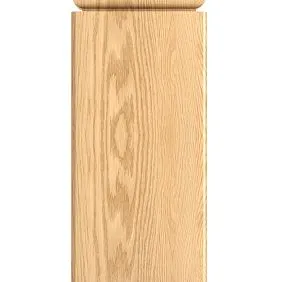
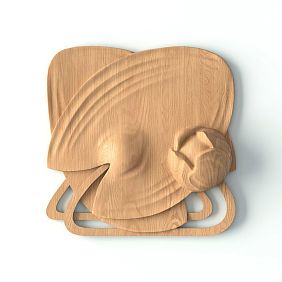
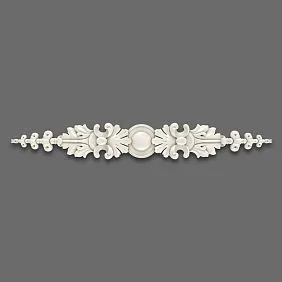
Our factory also produces:

Relief Clarity and Detailing
If you plan to buy a decorative profile with ornamentation, pay special attention to the quality of the relief. All pattern elements must be clearly defined, without blurred areas or underformed details. The depth of relief determines the expressiveness of shadows and the overall aesthetics of the product.
Inspect several samples from the same batch. If the relief significantly differs - this is a sign of worn-out molds for casting or an unstable production process. A quality manufacturer ensures identical elements across the entire collection.
Check the ornament's symmetry. Botanical motifs and geometric patterns must be mirrored on both sides of the profile. Asymmetry indicates low quality control during production.
Get Consultation
Dimensional Accuracy
When buying styrofoam molding, you must consider the accuracy of geometric dimensions. Even deviations of several millimeters create problems during installation, especially if you are creating a symmetrical composition or joining elements from different packages.
Check the profile's straightness - place the molding on a flat surface and look along its length. A quality product is absolutely straight, without bends or waves. Even minor curvature will complicate installation and create noticeable gaps when joining.
Measure the profile width at several points - beginning, middle, end. The difference should not exceed 1-2 mm. A larger variation indicates equipment issues or cooling technology failure after molding.
Surface Quality
The molding surface should be smooth, without roughness, scratches, dents, or other defects. Run your hand over the front side - you should not feel any unevenness or graininess. High-quality polystyrene has a slightly glossy, pleasant-to-touch surface.
Pay special attention to the ends. They should be cleanly cut, without jagged edges, burrs, or chips. A clean cut facilitates fitting elements during installation and ensures neat joints.
Inspect the back of the molding. There should be no material buildup, large bubbles, or mold marks. A flat back surface ensures tight wall fitting and secure fixation.
Color and Material Uniformity
High-quality polystyrene has a uniform white color throughout the mass. Yellowing, gray spots, or uneven tone indicate the use of recycled material or improper storage conditions. Such material is harder to paint and may change color over time.
If purchasing in bulk, check several packages for color uniformity. All elements must match in tone. Even a slight shade difference will become noticeable after installation, especially under side lighting.
Illuminate the molding - place it against a bright light source. High-quality polystyrene has a uniform structure without foreign inclusions. Dark spots, streaks, or uneven transparency indicate impurities and material defects.
Geometry and Profile: How to Choose Molding Shape
The variety of decorative profile shapes is impressive, ranging from simple rectangular strips to complex multi-level compositions with plant ornaments - molding selection depends on interior style and architectural tasks.
Classification by Cross-Section Shape
Flat moldings with minimal relief are ideal for modern minimalist interiors. Their width is usually 3-7 cm, and the protrusion height above the wall is 5-10 mm. Such profiles create subtle spatial divisions without overloading the interior with decoration.
Convex profiles with rounded cross-section resemble classical architectural moldings. Width varies from 5 to 15 cm, relief height reaches 2-3 cm. These moldings are ideal for creating wall panels and framing door and window openings.
Complex multi-level profiles combine several elements - straight strips, rounded bulges, decorative grooves. SuchMoldings and cornicesbecome independent interior ornaments, attracting attention through play of light and shadow.
Ornamental Solutions
Smooth moldings without decoration are a universal solution for any style. They do not attract excessive attention, functioning as architectural elements organizing space. The price of smooth moldings is usually lower than ornamental counterparts.
Plant ornament - classic decorative profiles. Acanthus leaves, grapevines, floral garlands create an atmosphere of luxury and historical continuity. Such decoration requires careful painting to reveal the full beauty of the relief.
Geometric patterns - bead rows, meanders, Ionic motifs - refer to ancient architecture. These ornaments are more strict and restrained compared to plant motifs, ideal for neoclassical interiors.
Author collections with exclusive design offer unique ornamental solutions. Here you can find abstract compositions, stylized historical motifs, modern interpretations of classical forms.
Corner and Connecting Elements
When purchasing molding, do not forget about accessories. Ready-made corner elements significantly simplify installation, ensuring perfect profile connections at room corners. Internal and external corners differ in configuration - make sure you purchase the correct type.
Central decorative elements, rosettes, brackets complement molding compositions, creating a complete ensemble. Check compatibility of accessories with the selected profile - they must match in style, width, and relief.
Connecting elements for straight sections help conceal joints on long walls. This is especially relevant if the wall length exceeds the standard molding length (usually 2 meters).
Special Shapes
Flexible moldings are designed for curved surfaces - arches, columns, bay windows. Although classic polystyrene is inflexible, there are special compositions with increased elasticity. Confirm with the seller the availability of such items if planning to decorate complex architectural forms.
Corner profiles for external and internal wall corners save installation time. These elements already have the required bend and are ready for installation without trimming. Especially convenient for novice craftsmen.
Panel systems - sets of moldings of different widths designed for creating wall panels. The set includes wide perimeter profiles and narrower internal ones, harmoniously matching each other.
Price Comparison: How to Assess Cost Reasonableness
The price of polystyrene molding varies depending on dozens of factors. Understanding pricing helps avoid overpayment and select the optimal price-to-quality ratio option.
Factors Affecting Cost
Profile complexity directly determines the price. A simple, smooth molding costs less than an item with complex multi-level relief. The richer the ornament and deeper the relief, the more expensive production is, as more complex molds and stringent quality control are required.
Profile dimensions affect material consumption and, consequently, cost. Wide moldings over 12 cm are more expensive than narrow ones. However, per linear meter, the difference may not be significant.
Manufacturer brand is a significant pricing factor. Well-known European brands set premium prices, guaranteeing flawless quality and exclusive design. Domestic manufacturers offer more affordable prices with decent execution quality.
The quantity of purchased material affects the final cost. Bulk purchases are cheaper per linear meter. Many stores offer discounts for purchases above a certain volume.
Market Price Categories
Budget segment - moldings priced at 50-150 rubles per linear meter. These are simple profiles without ornament or minimal relief. Quality may vary - some are decent, others are outright defective. Careful inspection is required before purchase.
Mid-range segment - 150-400 rubles per meter. This segment offers the greatest variety of shapes and styles. Quality is usually stable, relief is clear, dimensions are accurate. Optimal choice for most renovation and decoration projects.
Premium segment - from 400 rubles per meter and above. Exclusive collections with original design, complex multi-level relief, perfect geometry. Such moldings often imitate antique moldings or are created based on individual sketches.
Hidden Costs
When planning your budget, consider not only the cost of the molding itself. Delivery may constitute a significant portion of expenses, especially if ordering from another region. Confirm transportation cost before placing the order.
Accessories - glue, corner elements, primer, paint - add 20-30% to the final cost of moldings. Do not forget to include these items in your project budget calculation.
Installation tools, if you don't have them - saw, level, putty knives. Purchasing a basic tool set will cost 2000-3000 rubles, but they will be useful for future projects.
Possible defects and allowance for trimming require purchasing material with a 10-15% excess. Consider this when calculating quantity and budget.
Comparison of Offers from Different Sellers
Before purchasing decorative profile, study offers from several sellers. Prices for identical items may differ by 30-50%. Create a table indicating model, price, delivery conditions, and additional services.
Pay attention to promotions and special offers. Many online molding stores regularly hold sales and offer discounts on specific collections. Subscribing to newsletters will help you not miss advantageous offers.
Do not chase exclusively low prices. Too cheap moldings often have hidden defects - inaccurate geometry, loose material, unclear relief. It is wiser to choose products from the mid-price segment with quality guarantees.
Consider the seller's reputation. Study customer reviews, evaluate service level, return conditions. A reliable supplier is more valuable than a one-time profitable purchase.
Quality Check and Certificates at Purchase
Documentary confirmation of quality is an important aspect often underestimated by buyers. Certificates and technical documents guarantee compliance with safety standards and declared characteristics.
Mandatory Documentation
Certificate of Conformity confirms that the molding has passed checks for compliance with technical regulations. This document guarantees material safety for residential use, absence of toxic emissions, and compliance with fire safety norms.
Request a copy of the certificate from the seller. Check that the document is valid (not expired), relates specifically to the molding model you are purchasing. The certificate lists the manufacturer, product name, and key characteristics.
Technical passport of the product contains detailed characteristics - dimensions, material density, composition, operating conditions. This information will help you correctly select glue, paint, and storage conditions.
Hygienic certificate confirms the ecological safety of the product. Especially important if planning to use moldings in children's rooms, bedrooms, or areas with higher ecological requirements.
Marking and Packaging
A quality manufacturer marks each package with model, article, profile length, and quantity. Absence of marking or unclear printing is a reason to doubt the product's authenticity.
Packaging must protect moldings from damage during transport. Usually, shrink wrap, cardboard boxes, or special profiled packaging are used. Products in simple polyethylene without additional protection are easily damaged.
Check the integrity of packaging upon receiving the goods. Tears, dents, moisture stains indicate transport condition violations. Such goods must be carefully inspected for hidden damage.
Presence of a label with information about the manufacturer, production date, storage conditions - a sign of responsible attitude toward product quality.
Warranty obligations
Serious sellers provide warranties on moldings. Standard warranty period is from 6 months to 2 years. During this period, defective items can be returned or exchanged upon discovering manufacturing defects.
Study warranty conditions before purchase. What constitutes a warranty case? What actions by the buyer void the warranty? Is packaging and receipt retention required? Clarity on these issues will prevent unpleasant surprises.
Possibility of returning goods of proper quality - additional insurance. By consumer rights law, you can return goods within 14 days if they do not suit you. Confirm whether this rule applies to moldings in your store.
Inspection Upon Receipt
Unpack in the presence of the courier or store representative. This will allow you to register complaints about quality or completeness immediately, without waiting for warranty disputes.
Inspect each element for chips, scratches, deformations. Check quantity - does it match the order? Ensure all elements are the same shade, without color variation.
Measure several samples - length, width, relief height must match declared characteristics. Significant deviations are grounds for returning the batch.
Prepare an acceptance act detailing all detected defects. This document will serve as the basis for a complaint if exchange or return is needed.
Fittings and adhesive: what you need for installation
Buying molding is half the job. For quality installation, you will need a complete set of materials and fittings. Proper selection of consumables ensures long-lasting decor and an aesthetically pleasing result.
Adhesives for polystyrene
Specialized adhesives for polystyrene - optimal choice. They are developed taking into account the material's characteristics, ensuring reliable adhesion and quick setting. Popular brands - "Moment Mounting for Polystyrene", "Titan", "Eco-Naset".
Solvent-free liquid nails - a universal option suitable for most surfaces. Choose water-based or acrylic-based compositions without aggressive components that damage polystyrene. Setting time - 10-30 minutes, allowing for adjustment of molding position.
Acrylic spackling compound as adhesive - an unconventional but effective solution. It simultaneously secures the molding and fills minor wall imperfections, ensuring perfect fit. The method requires some skill but delivers excellent results.
Polyurethane adhesive-sealant combines fixation and joint sealing functions. The compound's elasticity compensates for thermal deformation, preventing crack formation. Suitable for rooms with fluctuating humidity and temperature.
Finishing materials
Acrylic spackling compound is necessary for filling joints, gaps, and minor defects. Choose fine-grained finishing-grade compounds - they provide a smooth surface and are easy to sand. White spackling compound is universal, but you can select a shade to match future paint color.
Acrylic sealant - an alternative to spackling compound for filling joints. The elastic compound does not crack during building settlement, is easy to apply, and does not require sanding. There are sealants suitable for painting, which become invisible under a layer of paint after drying.
Primer enhances paint adhesion, equalizes the surface's absorbency, and saves paint. Use acrylic deep-penetration primer - it is suitable for both polystyrene and walls.
Paint - the finishing touch of decor. Water-dispersible acrylic paints are ideal for polystyrene. They are safe, odorless, and create a durable coating. Latex paints provide a light silk-like sheen and are resistant to abrasion.
Tools for installation
Miter box - essential tool for precise angled cutting of moldings. Professional metal miter boxes provide an ideal cut, but for home use, a plastic model with angle adjustment is sufficient.
Metal hacksaw with fine teeth provides a clean cut without chipping or tearing the material. Alternative - circular saw for precise angular cuts. Installation knife with a sharp blade is useful for trimming small sections.
Level - essential tool for checking horizontal alignment. Laser level simplifies marking, but a standard bubble level 60-100 cm long is sufficient.
Tape measure, pencil, and square - basic measuring tools. Spatulas of various widths for applying adhesive and filling joints. Brushes for painting - flat synthetic brushes of various widths.
Calculating material quantities
To correctly purchase molding and fittings, precise calculation is required. Measure the room's perimeter or the length of areas you plan to decorate. Add 10-15% for trimming and potential defects.
Approximately 300-400 ml of adhesive is needed per 10 linear meters of molding when applied in a thin layer. For wide, heavy profiles, consumption increases to 500 ml per 10 meters.
Spackling compounds or sealant: 0.5-1 kg per medium-sized room is sufficient to fill all joints and gaps. Primers required: 100-150 ml per 10 linear meters of molding for one layer.
Calculate paint quantities based on the coverage rate (indicated on the packaging) and the surface area of the molding to be painted. Typically, 2-3 coats are needed for an ideal result.
Online ordering and delivery: convenience of purchasing through the internet
Online store for moldings - a modern purchasing method combining wide selection, convenience, and time savings. However, the online format has its own features that need to be considered.
Advantages of online purchase
Extensive assortment - the main advantage of purchasing online. You can browse catalogs from dozens of manufacturers, compare hundreds of models, without leaving home. Professional photos, detailed descriptions, and technical specifications help form a complete understanding of the product.
Convenience of comparing prices and features. Within minutes, you can analyze offers from different sellers, find the optimal price-to-quality ratio. Specialized services aggregate offers, simplifying the search.
Time-saving - no need to visit stores, stand in queues, or spend weekends shopping. Order is placed in 10-15 minutes, and the product is delivered to your specified address at a convenient time.
Availability of information - customer reviews, product ratings, video reviews help make an informed decision. In a physical store, it is difficult to obtain such a volume of information.
How to choose a reliable online store
Reputation is the first thing to consider. Review customer reviews on independent platforms. Pay attention not only to ratings but also to the content of reviews — how the store handles problems, how quickly it responds to questions.
Presence of a physical office or showroom is a sign of a serious company. The ability to see the product in person and talk to a manager directly adds confidence in the purchase.
Completeness of product information on the website. High-quality photos from different angles, detailed descriptions, technical specifications, manufacturer information — all this indicates the seller's professionalism.
Transparency of terms — clearly stated prices, delivery times, return conditions, contact details. Hidden fees, ambiguous wording, lack of contact information — reasons to be cautious.
Order placement specifics
Detailed product study — carefully read the description, examine the photos, check the dimensions. Ensure that the selected model meets your requirements in style and specifications.
Correct quantity calculation — use the store's calculators or consult with a manager. It's better to order with a small surplus than to later purchase additional items and pay for repeat delivery.
Delivery method selection — courier delivery is more convenient but more expensive. Pickup from a delivery point saves money but requires time to receive. Delivery by a freight company is optimal for large orders to other cities.
Payment method — cash on delivery provides additional protection (you can inspect the item before paying), but is usually more expensive due to fees. Online prepayment often comes with discounts.
Molding delivery: what to pay attention to
Transport packaging must protect fragile materials from damage. Ask the seller how moldings are packaged. Reliable packaging is multi-layered, using cardboard, bubble wrap, and securing elements.
Delivery times depend on distance, transportation method, and logistics service load. Actual delivery times often differ from stated ones — allow extra time, especially if renovation is scheduled.
Delivery cost may constitute a significant portion of the purchase budget. Compare offers from different stores, taking into account delivery cost in your region. Sometimes it's more cost-effective to buy slightly more from a local seller, saving on transportation.
Cargo tracking — a convenient option allowing you to monitor order movement. Most delivery services provide a tracking number to monitor shipment status.
Goods acceptance — carefully inspect the cargo upon receipt. Check packaging integrity, quantity, and delivery note accuracy. Do not hesitate to open packaging and inspect moldings — this is your right as a buyer.
Storage and transportation conditions for moldings
Proper storage and transportation are critical for maintaining the quality of polystyrene moldings. Violating recommendations leads to deformation, damage, and loss of appearance.
Storage condition requirements
Temperature regime — polystyrene is sensitive to temperature fluctuations. Optimal storage range: +5...+25°C. At higher temperatures, the material softens, loses rigidity, and may deform under its own weight. In cold, polystyrene becomes brittle and easily cracks.
Air humidity also affects molding condition. Although polystyrene itself does not absorb moisture, high humidity may damage packaging, cause cardboard to soften, and damage products during storage. Optimal humidity: 40-60%.
Horizontal positioning — the only correct way to store moldings. Vertical installation or angled storage causes bending of long profiles, especially if they are thin or wide. Use a flat base and distribute load evenly.
Sunlight protection — ultraviolet light destroys polystyrene, causing yellowing and loss of strength. Store moldings in shaded areas or opaque packaging. This is especially important for long-term storage.
Transportation rules
Packaging for transport must prevent breakage, protect against impacts and pressure. Long moldings are laid horizontally; short ones can be transported vertically, secured against falling.
Personal transport — optimal for small batches. Moldings up to 2 meters long fit in a passenger car with folded rear seats. For longer profiles, a van or roof-mounted cargo box is required.
Cargo securing prevents shifting and damage during transit. Use soft padding between moldings and rigid car surfaces. Do not place heavy items on top of molding packaging.
Careful handling — avoid sudden jolts, impacts, or drops. Polystyrene is a fragile material, especially on textured surfaces. Scratches and cracks cannot be repaired; damaged elements must be replaced.
Preparation for Installation
Acclimatization after transport — mandatory step. Moldings brought from cold or hot vehicles must adapt to room temperature. Leave them in room conditions for 24-48 hours before installation.
Unpacking and inspection — remove moldings from packaging, lay them out on a flat surface, inspect each element. Identify defects before starting work to promptly request replacements.
Layout in the room — place moldings in the room where installation will occur. This ensures thermal and humidity balance between the material and environment, preventing deformation after installation.
Mock-up - attach moldings to walls without adhesive, evaluate the composition, adjust plans if necessary. This will prevent errors during installation and allow precise calculation of element cuts.
Long-term storage
If installation is postponed, ensure proper storage of moldings. Keep them in their original packaging - it protects against dust, light, and mechanical damage.
The storage area must be dry, with constant temperature, and without direct sunlight. Suitable options include a storage room, garage (in warm seasons), or heated shed.
Do not place other items on moldings - even a small weight may cause deformation over time. Ensure easy access to packages for periodic condition checks.
Periodically check the condition of stored moldings. Appearance of condensation, mold, or unusual odors signals improper storage conditions. Immediately move the product to a suitable location.
Popular molding styles and their applications
Molding selection is determined not only by technical parameters but also by interior style. Each design direction has its characteristic decorative forms, and understanding these features will help create a harmonious space.
Classic Interiors
Classic style features wide moldings with rich relief. Floral ornaments, symmetrical compositions, multi-level profiles create a palace-like opulence. When you decide tobuy molding for a classic interiorpay attention to models with high relief - they provide expressive play of light and shadow.
Wall panel framing - a typical feature of classic decor. Wide perimeter profiles combined with narrower inner ones create a bouillonnage effect. Color solution - white or cream moldings on pastel walls.
Vertical wall division using moldings visually raises ceilings, which is important for rooms of standard height. Symmetry is a key principle for placing decor in classic interiors.
Neoclassicism
Neoclassical style requires a more restrained approach to decor. Moldings here are simpler in shape, with more delicate relief and minimalist ornamentation. Straight lines, clear geometry, symmetrical compositions without excessive ornamentation.
Neoclassical color palette tends toward monochrome. Moldings are often painted to match wall color, creating a relief surface effect. Contrasting solutions are also appropriate - white profiles on gray or beige walls.
Combination with modern materials is a characteristic feature of neoclassicism. Moldings coexist with matte glass, metallic accents, and modern furniture, creating a balance between tradition and contemporary relevance.
Minimalism and modern style
Minimalist interiors use moldings very delicately. Narrow, smooth profiles without ornamentation, creating barely noticeable spatial divisions. The task of moldings here is not to decorate, but to organize wall surfaces and create visual structure.
Geometric compositions from thin profiles - a popular technique. Rectangular sections of different sizes form an abstract composition, adding dynamism to a monochromatic wall.
Monochromatic coloring - wall and molding in one color. The effect is achieved through relief and shadow play, not color contrast. This creates a calm, balanced interior without visual noise.
Scandinavian style
Scandinavian interiors value simplicity and functionality. Moldings here are used moderately - to highlight functional zones, frame niches, and create focal points. Forms are simple, relief is minimal.
White moldings on white or light-gray walls - a classic Scandinavian solution. Decor does not attract excessive attention, functioning as an architectural element that structures space.
Ecological materials are important for Scandinavian style. Polystyrene moldings painted with safe water-based paints meet ecological requirements.
Provence and country
Romantic interiors in the Provence style use moldings to create a cozy atmosphere of a country home. Medium-width profiles with delicate relief, painted in pastel tones or antiqued to look aged.
Horizontal wall division using moldings at one-third height - a typical technique. The lower part may be painted in a darker shade or covered with wooden panels, while the upper part features light wallpaper with floral patterns.
Antiquing and aged effect give moldings a vintage look matching the spirit of Provence. Use dry brush technique, applying contrasting paint to raised relief parts.
FAQ: Answers to buyer questions
Where is it better to buy molding - in a store or online?
Both options have advantages. A physical store allows you to see and touch the product, evaluate color and texture. An online molding store offers a wider selection and often lower prices. The optimal approach is to explore the online assortment, visit a showroom to inspect samples, and place an order with delivery.
How to calculate the required amount of molding?
Measure the perimeter of the room or the length of areas to be decorated. For complex compositions, draw a diagram indicating dimensions. Add 10-15% for trimming, joints, and possible defects. Moldings are sold in fixed-length segments (usually 2 m); round up your calculation to the nearest whole element.
Can a molding be returned if it doesn't fit?
According to the Consumer Rights Protection Law, goods of proper quality can be returned within 14 days if they have not been used and retain their original condition. However, some sellers classify moldings as items not eligible for return. Check the return conditions before purchasing.
Which moldings are better - polystyrene or polyurethane?
Polystyrene moldings are lighter and cheaper, suitable for most projects. Polyurethane moldings are stronger, more flexible, have a sharper relief, but are more expensive. For standard interiors, polystyrene is sufficient; for high-traffic areas or curved surfaces, polyurethane is preferable.
Is it necessary to prime molding before painting?
Priming improves paint adhesion, equalizes surface absorption, and saves paint. Use water-based acrylic primer. Although polystyrene can be painted without priming, pre-treatment ensures a higher quality and longer-lasting result.
How much does molding delivery cost?
The cost of molding delivery depends on weight, dimensions, distance, and transportation method. Courier delivery within the city usually costs 300-500 rubles. Delivery to other regions via a transport company ranges from 500 to 3000 rubles depending on distance. Many stores offer free delivery for orders above a certain amount.
How to check molding quality when purchasing?
Inspect the surface for chips, scratches, or deformations. Check the clarity of the relief - all ornament elements should be well-defined. Measure the width at several points - the difference should not exceed 1-2 mm. Gently bend the profile - quality material should be elastic and not break. Check the color - it should be uniform, without spots or discoloration.
Can molding be purchased individually or only in packs?
Most stores sell moldings individually, allowing you to purchase the exact quantity needed. However, bulk purchases are usually cheaper. Check the minimum order quantity and pricing conditions for bulk purchases.
Conclusion
Choosing and purchasing polystyrene molding is a balance between aesthetic preferences, technical requirements, and budget constraints. We have thoroughly covered all aspects: from quality parameters to delivery nuances, from price comparisons to storage conditions.
Buying molding today is easier than ever. Wide selection in online stores, availability of professional consultations, and convenient delivery make the purchasing process comfortable and predictable. The key is to follow selection recommendations, avoid cutting corners on quality, and carefully inspect the product upon receipt.
Remember, molding is not just a decorative element. It is an architectural tool capable of transforming space, creating a unique atmosphere, and highlighting interior style. Choosing the right molding is the first step toward creating an interior that will delight you for years.
Pay attention to quality certificates, study customer reviews, compare offers from different sellers. Don't hesitate to ask managers questions, request additional photos, and clarify technical specifications. An informed buyer is a protected buyer.
STAVROS company offers professional assistance in selecting decorative profiles for any interior projects. Wide selection of polystyrene and polyurethane moldings, qualified consultations, convenient purchasing and delivery conditions — all to make your interior a dream come true.
Create beauty with intelligence. Choose quality. Trust professionals. Let the properly selected molding become the accent that transforms ordinary housing into a space worthy of admiration!