Article Contents:
- 1. Why the Quality of Furniture Materials Matters
- 2. Main Categories of Furniture Materials
- 2.1. Wood Panels (MDF, HDF, Plywood)
- 2.2. Solid Wood
- 2.3. Finishes and Coatings (Veneer, Films, Enamels, Acrylic)
- 2.4. Upholstery Materials (for Soft Furniture)
- 3.1. Raw Materials and Initial Components
- 3.2. Pressing and Drying Technology
- 3.3. Formaldehyde Emission Class
- 3.4. Finish (Coating) and Edge Banding
- 3.5. Elastic Structure of Soft Furniture
- 3.6. Adherence to Assembly Technology
The modern furniture market offers an enormous variety of solutions, varying in price, style, and, most importantly, material quality. For an average buyer or even for a professional not specializing in raw materials, determining the quality of furniture materials may prove to be a challenging task. Ultimately, it is the raw materials used and the manufacturing technologies that determine the durability, comfort, and appearance of furniture items. In this article, we will examine which criteria affect the quality of main furniture materials, what to pay attention to when purchasing, and how to choose an option that combines optimal reliability and aesthetics.


1. Why the Quality of Furniture Materials Matters
- Durability and reliability
Good materials withstand long-term loads, prolonged use, and do not lose their properties. Poor materials quickly wear out, deform, crack — the result is creaking, drying out, and premature failure of furniture. - Safety
Some wood panels (MDF, HDF) may emit formaldehyde or other toxic substances. Quality companies adhere to European or national standards (E0/E1), ensuring minimal harm to health. - Appearance
High-grade wood, quality films, neat finishes, and hardware determine how "expensive" furniture appears. Sometimes, the same "wood grain" pattern can look different depending on the level of finishing. - Production Technologies
Different materials have varying resistance to moisture, temperature, and mechanical damage. Without knowing the quality, one might purchase, for example, a kitchen that peels and swells within half a year. - Functionality
Solid wood is easy to repair, Laminated particle board with weak edges — not; MDF allows creating beautiful routed patterns, while plywood holds the frame well. Quality here depends on proper use in specific tasks.




2. Main categories of furniture materials
Our factory also produces:


2.1. Wood panels (Laminated particle board, MDF, Plywood)
- Laminated particle board (Laminated particle board)
- Inexpensive and widely available; however, with low-quality resins (adhesive joints), it may emit elevated formaldehyde, edges may delaminate, and it may crumble under load.
- High-quality Laminated particle board from leading brands (Egger, Kronospan, SwissKrono) provides smooth lamination, multi-layer protective film, and flexible edges. - MDF
- Fine wood particles compressed under pressure. For facades, doors, decorative panels, it is denser and smoother than Laminated particle board.
- High density and machinability, but monitor emission class (E1/E0). Quality panels do not crumble when cut and hold screws more securely. - Plywood
- Layers of veneer bonded together. With quality production (Grade E, I, or II), plywood has minimal voids, smooth layers, no delamination or cracks. A good manufacturer ensures water resistance (waterproof plywood).
- Ideal material for frames, seating, eco-style, Scandinavian design.
Get Consultation
2.2. Solid wood
● What it is: solid boards or beams made of oak, beech, ash, pine, birch, etc.
● Quality criteria:
1. Wood grade (no large knots, smooth texture).
2. Proper drying: under-dried wood leads to cracking, over-dried — brittle.
3. Good finish: high-quality lacquer, oil, or wax protects against external influences.
2.3. Finishes and coatings (veneer, films, enamels, acrylic)
● Veneer: selected by species, thickness (optimum — at least 0.3–0.6 mm), uniform texture. Important that no bubbles or scratches appear during application, and the lacquer finish is smooth.
● PVC film: during vacuum pressing on MDF facades, ensure no delamination or bubbles, especially around routed elements.
● Enamel (paint) on MDF: smooth sanding, multi-layer application, absence of dust particles, clean edges without streaks.
● Acrylic: high-quality acrylic panels provide deep gloss or matte finish without cloudy areas or micro-bubbles.
● Plastic (HPL/CPL): look for smooth lamination, no bumps or scratches on edges, and edges must be securely bonded to prevent moisture ingress.
2.4. Upholstery materials (for soft furniture)
● Natural leather: quality tanning (Italian, German) provides even color without sharp chemical odor. No cracks appear under tension.
● Eco-leather/leather substitute: check thickness, texture, elasticity — cheap eco-leather may crack quickly.
● Fabrics (fleece, shenille, jacquard, rush): assess quality by weave density, abrasion resistance (Martindale indicator), and dye fastness.
● Fillers (PU foam, latex, springs): higher density/quality means longer service life without sagging.
3. Criteria determining quality
3.1. Raw materials and initial components
- Type of wood (for solid wood) or veneer species.
- Plywood grades: the higher the grade, the fewer knots and voids.
- Panel manufacturers: well-known brands adhere to technologies that guarantee stable characteristics.
3.2. Pressing and drying technology
● For solid wood: if the wood is poorly dried, moisture may remain inside, causing warping.
● For panels (MDF, HDF): too low pressure/temperature — weak structure, possible voids.
3.3. Formaldehyde emission class
● E0/E1: safe for living spaces (lower harmful emissions).
● E2: may not comply with standards for children's rooms and bedrooms, better to avoid.
3.4. Finish (coating) and edge banding
● Veneer: thickness, smoothness, lacquer.
● PVC film: quality of vacuum stretching, absence of bubbles or peeling corners.
● Enamel: absence of streaks, even color.
● Edge banding: for panels (MDF, HDF) requires neat PVC/ABS edge banding to protect ends from moisture.
3.5. Elastic structure of soft furniture
● High-quality polyurethane foam: density not less than 25–30 kg/m³ for seats, 18–22 kg/m³ for backs. Too low density => rapid loss of shape.
● Spring blocks: "proper" assembly, no squeaks or uneven support.
3.6. Adherence to assembly technology
● Flush joints: parts must fit together without gaps, especially if it's a carcass part.
● Fasteners: metal corner brackets, euro screws, confirmers. Poor fastening may cause the frame to loosen.
4. Signs of low quality
- Strong chemical odor: may indicate high formaldehyde levels or poor-quality lacquers.
- Uneven surface: bulges, bubbles, scratches on film, poorly finished edges.
- Squeaks and play under slight pressure.
- Thin details: fronts made of 12 mm instead of standard 16–19 mm, overly fragile shelves prone to bending.
- Lack of manufacturer information: if material is "no name" and un-certified, likelihood of raw material cost-cutting is high.
5. How to check quality before purchase
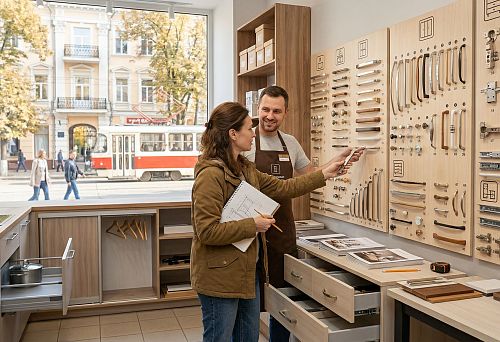
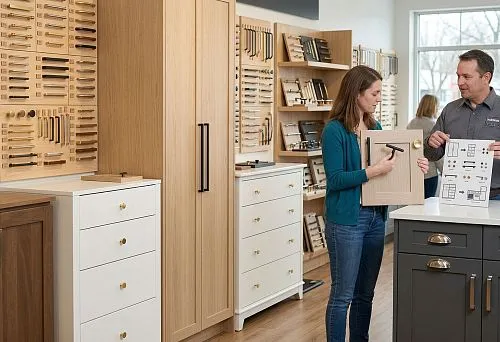
- Inspect samples: in showrooms, there are often stands with panels and fronts. Feel the surface, check edges and corners for scratches or peeling.
- Smell: sharp odor may indicate high formaldehyde content or poor-quality dyes.
- Require certificates: emission class (E0/E1), compliance with GOST or EN, presence of ISO9001 (for manufacturing quality).
- Clarify brand: well-known brands (Egger, Kronospan, Blum, Hettich, etc., for hardware) value their reputation and rarely have defects.
6. Material and hardware compatibility
Without reliable hinges, guides, and handles, even the most quality base will suffer in use. Poor-quality hardware may quickly "loosen up," causing squeaks or sagging doors. For heavy facades (solid wood or 22 mm MDF), reinforced hinges with soft-close mechanisms are required.
7. Recommendations for choosing the "best" material
Question: "What material is best for furniture?" — "It depends on the task."
- Kitchen: moisture and heat resistance — MDF with coating (PVC film, HPL plastic, acrylic), quality edges, emission class E1.
- Living room: aesthetics come first. Veneer, solid wood, or enamel on MDF suits premium look. For budget-friendly cabinets — good brand particleboard.
- Bedroom and children's room: eco-friendliness, absence of toxic odors. Solid wood (if budget allows), plywood, quality MDF with E0/E1.
- Office: durability — easiest to use medium-grade particleboard/MDF, focus on reliable hardware.
8. Price and quality: balance or compromise?
Expensive does not always mean "better" if there is no proper manufacturing. On the contrary, branded MDF with good film may last longer than improperly dried solid wood. Ideally, you should:
● Compare: somewhere premium-grade plywood may be slightly more expensive than cheap particleboard, but its service life and reliability are higher.
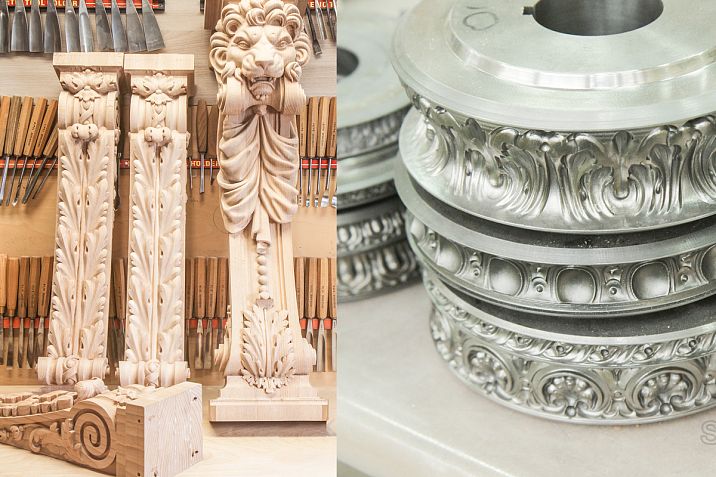
● Consider design: minimalism allows saving (straight facades, no carving), classic style requires milling, which is more expensive.
● Consider hardware: high-quality mechanisms like Blum, Hettich increase price, but extend comfortable usage time.
9. Care for materials of different quality
- Particleboard: wipe with a damp cloth, avoid prolonged water contact on edges, do not scratch with abrasive materials.
- MDF with PVC: monitor film integrity, do not place near oven (may delaminate).
- Veneer: protect from scratches, do not pour boiling water, avoid aggressive cleaning agents.
- Solid wood: stabilize humidity (40–60%), avoid over-moisture, periodically apply polish or oil.
- Plywood: if left "visible" (eco-style), cover with varnish, protect from temperature fluctuations.
10. Examples of "quality" for different scenarios
- Budget kitchen: particleboard carcass + MDF film facades. Good quality: known brand panels (Egger, Kronospan), emission class E1, smooth laminate finish. 2 mm thick PVC edge. Medium-grade hinges and handles — suitable for 5–7 years without issues.
- Classic living room: ash, oak, or birch solid wood, exotic veneer on MDF, milling, patination. High price, but durability and luxurious look. Monitor humidity levels, especially in some areas. Hardware — premium with soft-close mechanisms.
- Sliding wardrobe for hallway: 16–18 mm particleboard (E1), mirrored doors, aluminum profiles. Mainly — quality edge, smooth laminate, reliable sliding system (rollers, top/bottom guides).
- Soft sofa: frame from plywood or solid wood beams, medium-density polyurethane foam or spring block filling, durable fabric upholstery (jacquard, microfiber, flock). Check for absence of squeaks, even filling distribution.
11. Quality check during DIY (self-made) furniture
● Panel cutting: use a precise saw with appropriate number of teeth to avoid chipping.
● Edge banding: use quality adhesive, even edge feed under press — ensures airtight seal.
● Solid wood sanding: smooth surface without scratches, good corner processing.
Correct hardware: appropriate length of euro screws, reliable hinges.
An error at one stage can ruin the entire result, even if the original material was good.
12. Trends and Innovations
● Materials with low formaldehyde content (E0) or completely formaldehyde-free binders (Green MDF). Used in children's rooms, premium interiors, eco-projects.
● Composite panels (aluminum + MDF, plastic + wood) with unique decorative finishes (concrete, metal, 3D patterns).
● Self-cleaning coatings: antibacterial, hydrophobic, used in kitchens and bathrooms.
13. Conclusion
When it comes to the quality of furniture materials, it is important to consider several factors at once: from the raw material base (wood species, emission class of panels) to the final finish (veneer, PVC film, enamel, acrylic) and proper hardware installation. Even the most expensive solid wood may crack if improperly dried, and the strongest panel may 'fall apart' at the edges if poorly glued.
Approach to quality is a balance between expected durability, budget, and stylistic preferences. Some solutions may be ideal in one context but excessive or inappropriate in another. A successful choice implies that you:
- Are interested in the manufacturer: ask for certificates, emission class, brand reputation.
- Analyze the purpose: kitchen, living room, office, children's room — each option has its own load and usage conditions.
- Look at the manufacturing technology: how sheets are edge-banded, how lacquer/paint is applied, how hardware is installed.
- Check the assortment: well-known panel brands (Egger, Kronospan, SwissKrono), reliable hardware (Blum, Hettich), fabrics with proven durability tests (Martindale).
Only a comprehensive approach to material selection — from base to final finish — will ensure furniture that can delight and serve for many years, remaining safe, comfortable, and beautiful.