Article Contents:


Aesthetics and functionality: diversity of wood applications
Wood in interior design is not only a manifestation of beauty, but also of practicality. It brings warmth and comfort, and also serves as a reliable support for daily life. In this section, we explore how wooden elements can be used not only for decoration, but also as functional components of the interior, enriching it both aesthetically and practically.
Innovative use of wood in furniture
Modern technologies allow wood to take on the most diverse forms and structures. Wooden furniture can be light and ergonomic, yet at the same time strong and durable. Let’s consider, for example, tables with integrated wireless charging devices, wooden chairs with hidden storage compartments, or shelves that transform into workstations.
Wood in finishing: combination of functionality and style
Wooden wall or floor finishes can be not only beautiful but also functional. They may have soundproofing properties, help regulate humidity in the room, or even possess thermal insulation characteristics. Such solutions make wood an indispensable part of modern smart homes.
Wooden accessories: practicality in every detail
Wooden accessories can add completeness and convenience to the interior. For example, wooden stands for books or electronics, organizers for ornaments or keys, as well as decorative elements that conceal functional devices such as routers or security sensors.
Wood in interior design is the harmony of beauty and functionality, which gives space liveliness and warmth. Using wood in furniture, finishes, and accessories allows creating an interior that will delight the eye, satisfy needs for comfort, and remain relevant for many years.




Prospects and possibilities: the future of wooden textures in interior design
Imagine a world where wooden textures in interior design come alive before your eyes, where each pattern tells its own story, and every surface opens up new horizons of possibilities. In this final section, we will delve into the future of wooden textures, which promises to be not only delightful but revolutionary.
Interactive wooden surfaces
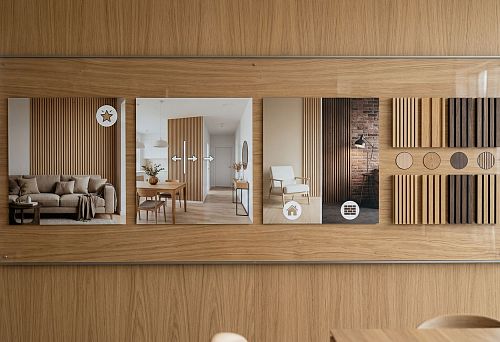
Take, for example, interactive wooden walls capable of responding to touch. Illuminated patterns and informational panels embedded directly into wooden panels can display not only works of art but also important information — from weather to news.
Ecologically clean production
The future of wooden textures also includes innovative processing methods that not only improve material quality but also reduce ecological footprint. Technologies allowing wood to grow with predetermined patterns and textures may radically change the approach to interior design.
Multifunctionality and modularity
Wooden elements of the future will combine multifunctionality and modularity. Furniture that transforms and adapts to your needs will become the norm. Tables turning into beds, or bookshelves becoming staircases — all this is merely the tip of the iceberg of possibilities.
The future of wooden textures in interior design is a symbiosis of innovation and natural beauty. It is not just a new trend, but a new chapter in design history, where every interior element becomes living, breathing, and interactive with us. We stand at the threshold of an era where wooden textures not only decorate our homes but also make them smarter, more convenient, and closer to nature.