Article Contents:
- Historical and cultural heritage of craftsmanship
- Roots of craftsmanship: from antiquity to modernity
- Significance of natural material in daily life and culture
- Blending manual labor and modern technologies
- Ecological responsibility and sustainable production
- Individual approach to each detail
- Traditional carving and decorative techniques
- Final finishing as the culmination of the creative process
- Role of wooden items in creating coziness and harmony
- Examples of successful application of items in residential and commercial interiors
- Aesthetic value and functionality in one item
- New horizons of technology and design
- Influence of cultural and economic factors
- Challenges and issues of modern craftsmanship
Making wooden items is a multifaceted process where ancient craftsmanship traditions meet modern technologies. It is precisely this synthesis that gives rise to unique objects capable of transforming any interior and becoming a true reflection of their owner's individuality. Masters who master the subtleties of natural material processing proudly declare:I will make wooden itemsfor it is precisely in this process that the skill of working with wood, respect for nature, and pursuit of perfection lie.


Historical and cultural heritage of craftsmanship




Roots of craftsmanship: from antiquity to modernity
Wood has always played an important role in human life. Since ancient times, craftsmen have used wood not only to create utilitarian objects but also symbolic ones reflecting the spiritual and cultural values of the people. Already in antiquity, the first masters were able to transform raw blanks into functional and aesthetically pleasing items, making natural wood a carrier of history and traditions.
These knowledge were passed down from generation to generation, and despite technological progress, modern craftsmanship maintains its connection to its roots. Masters, possessing a deep understanding of wood properties, continue to create, asserting:I will make wooden itemsThey do not merely use traditional methods, but also introduce new approaches, combining centuries-old experience with modern innovations.
Our factory also produces:


The value of natural material in daily life and culture
Wood is not only a beautiful but also a strong material, possessing a unique ability to create an atmosphere of coziness and warmth. Handcrafted items become the center of the family hearth, symbolizing stability, reliability, and harmony. Every detail, crafted with great attention to the smallest details, tells its own story: from the earliest attempts of prehistoric man to the most intricate carved compositions of modern masters.
Thus, wooden items acquire not only aesthetic but also emotional value, allowing interior owners to feel connected to the past while being confident about the future. That is why artisans confidently state:I will make wooden items, understanding that every item created with soul becomes a true work of art.
Get Consultation
Technology and innovation in modern craftsmanship
The fusion of manual labor and modern technologies
Modern wood processing methods allow significantly expanding the possibilities of traditional craftsmanship. Using CNC machines, laser cutters, and computer modeling helps artisans achieve unparalleled precision and quality. However, despite automation, manual labor remains the foundational element, giving each item a unique character.
Artisans use modern tools for preparing and processing materials, but the final touches remain with them — it is their artistic vision and experience that allow them to highlight the natural beauty of wood. Modern production enables harmoniously combining traditional techniques with innovative solutions, making each item not merely a result of a technological process, but a realization of a creative concept. That is why artisans say:I will make wooden items, confident that their works can withstand the test of time.
Ecological responsibility and sustainable production
In today's world, where ecological issues are becoming priorities, artisans pay special attention to sustainable development and conservation of natural resources. Using wood from certified, sustainable sources and applying environmentally friendly processing technologies allows creating items that not only please the eye but also have minimal impact on the environment.
Such an approach helps build trust among consumers, who increasingly prefer natural and eco-friendly materials. That is why artisans, aware of the importance of careful treatment of nature, confidently state:I will make wooden items, demonstrating a high standard of ecological responsibility in their craft.
The artistic aspect of manufacturing items
Individual approach to every detail
Each item made from natural wood is the result of meticulous work by the artisan, for whom every line, every curve has special significance. It is the individual approach and attention to details that allow creating unique compositions that cannot be mechanically reproduced. Each order becomes a new creative project, taking into account all client wishes and interior characteristics.
When creating items, artisans carefully select blanks, paying attention to the texture, color, and uniformity of the wood. This allows not only to achieve a high-quality result but also to preserve the natural aesthetics of the material. That is why artisans confidently state:I will make wooden items, because their works reflect the individuality and talent of each artisan.
Traditional carving and decorative techniques
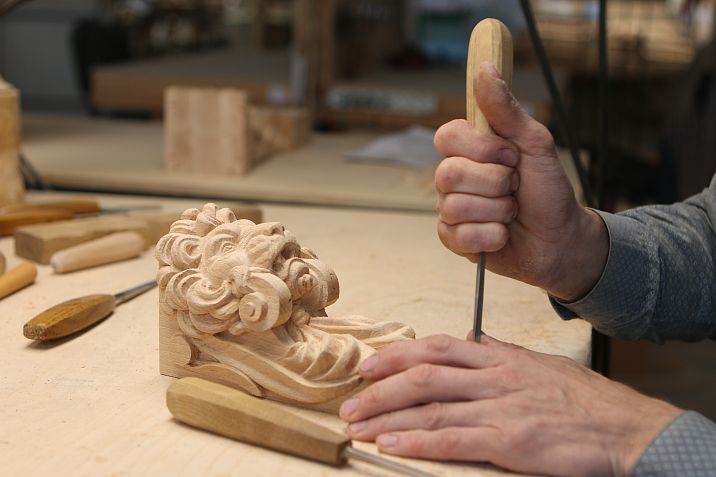
One of the oldest woodworking techniques — carving — remains in demand and is valued for its refinement. Artisans, using traditional methods, create complex ornaments and patterns that transform an ordinary item into a true work of art. Wood carving requires not only technical skill from the artisan but also a deep understanding of symbolism and cultural heritage.
These decorative elements add special elegance and charm to items, highlighting their uniqueness and high artistic value. As a result, each detail becomes not just a functional object, but a carrier of history, transmitting traditions and the spirit of the time. That is why artisans confidently assert:I will make wooden items, preserving a connection with past eras and bringing it into contemporary art.
Final finishing as the culmination of the creative process
The final stage in creating items is finishing, which allows highlighting the natural beauty of wood and protecting it from external influences. Using natural oils, waxes, and varnishes not only enhances the aesthetic appeal of items but also significantly extends their service life.
Artisans pay special attention to each stage of processing, striving for flawless smoothness and even coverage. This approach ensures not only the longevity of items but also preserves their natural luster and texture, turning each detail into a work of art. That is why specialists confidently say:I will make wooden items, because each such item is the result of careful and painstaking work.
Application of items in interior and daily life
The role of wooden items in creating coziness and harmony
Natural wood is capable of bringing warmth, coziness, and natural harmony into an interior. Handmade items become the focal point of composition, bringing a unique character and individuality to the space. Regardless of whether we are talking about furniture, decorative elements, or accessories, each wooden item possesses a special soulful energy.
These items become not only functional elements but also striking accents capable of highlighting the interior style. They harmoniously combine with other materials — metal, glass, fabric — creating a balanced space where every detail matters. That is why interior designers often recommend using items made with soul, and artisans proudly state:I will make wooden items, to highlight the individuality of each space.
Examples of successful application of items in residential and commercial interiors
In modern homes, wooden items occupy an important place, becoming central elements in both classic and contemporary interiors. Tables, chairs, chests, bookcases, and even small accessories made from solid wood can create an atmosphere of warmth and elegance. Such furniture pieces often become objects of family pride, passed down from generation to generation.
In addition to residential spaces, wooden items find wide application in commercial areas: restaurants, cafes, hotels, offices. Here, they create a unique atmosphere, help form a distinctive image of the establishment, and make it memorable for visitors. Every detail, crafted with a high level of skill, helps emphasize the brand's individuality, while the exclusive design of items becomes part of the brand's style.
Aesthetic value and functionality in one item
One of the key features of wooden items is their ability to combine aesthetic appeal and practicality. Craftsmen working with natural materials strive to create objects that not only please the eye but also perform important utilitarian functions. For example, carved tables, chests, or shelves can become not just decorative elements, but functional items capable of storing family heirlooms and household items.
This balance between aesthetics and functionality is achieved through careful attention to every stage of production. From selecting the raw material to the final finishing, each stage is accompanied by strict quality control and attention to detail. The result is an item that not only looks beautiful but also serves for many years, remaining reliable and convenient to use. That is why many specialists confidently state:I will make wooden items, understanding that true craftsmanship lies in the harmonious combination of external beauty and practicality.
Prospects for the development of craftsmanship
New horizons of technology and design
The modern market demands exclusivity and uniqueness, which motivates craftsmen to constantly seek new solutions. Technological progress opens new possibilities for wood processing, allowing the creation of items that were previously considered impossible. Digital modeling, automated systems, and innovative materials are integrated with traditional craftsmanship techniques, creating new standards of quality and aesthetics.
This dynamism contributes not only to improving the quality of items but also expands their range of applications. Now, one can speak not only of classic furniture but also of modern design solutions that combine minimalism with complex decorative motifs. Craftsmen, adapting to new challenges, confidently state:I will make wooden items, confident that traditional craftsmanship can successfully compete with mass production due to its uniqueness and individual approach.
Influence of cultural and economic factors
The development of craftsmanship is significantly influenced not only by technological achievements but also by cultural, economic, and social processes. Under globalization, demand for unique items, crafted with love and attention to detail, continues to grow. Modern consumers value the quality, durability, and aesthetics inherent in natural material items and are willing to pay for exclusivity.
Economic instability and the desire to preserve cultural heritage contribute to the development of niche directions, where each piece becomes not just an interior item, but a symbol of national identity and traditions. Craftsmen working in this segment actively collaborate with designers, architects, and consumers, creating items that reflect current trends and meet high quality standards. That is why craftsmen confidently state:I will make wooden items, understanding that their creativity can not only decorate interiors but also make a significant contribution to the cultural development of society.
Problems and challenges of modern craftsmanship
Despite numerous successes, the production of wooden items faces several serious challenges. One of the main problems remains preserving traditional methods in the context of mass production, where cost-saving and standardization often prevail over individuality. High requirements for raw material quality, ecological responsibility, and the need for constant technological updates require craftsmen to continuously refine their skills and methods.
However, overcoming these challenges allows craftsmen to grow and create true masterpieces. Each new project becomes a test, an opportunity for experimentation and creative exploration, which contributes to the overall development of craftsmanship. Under such conditions, craftsmen confidently state:I will make wooden items, proving that true craftsmanship can withstand any test of time and technological changes.
Conclusion: Eternal Pursuit of Perfection
The production of wooden items is not just craftsmanship, but a living art capable of conveying history, culture, and soul through every stroke and line. Craftsmen, possessing a deep understanding of natural materials and respect for centuries-old traditions, create items that become an indispensable part of the interior, symbolizing warmth, comfort, and individuality.
Modern technologies integrated into traditional craftsmanship allow achieving unprecedented heights in quality and design. Ecological responsibility, careful care for nature, and a drive for innovation make each item not only beautiful but also environmentally safe. That is why specialists confidently state:I will make wooden items, showing that their creativity can unite the past and future, traditions and modern trends.
Every detail created with soul and skill becomes a reflection of the eternal pursuit of perfection, and each new collection is proof that true art is not subject to time. Amid constant changes in the world, craftsmanship remains an island of stability, where quality, aesthetics, and individuality will always be valued appropriately.
Thus, the production of wooden items continues to develop, inspiring new generations of craftsmen and bringing joy to those who appreciate true quality and authentic art. In each item, one feels not only technical perfection but also a deep emotional connection to nature, cultural heritage, and individuality that can transform any interior and make it truly unique.
May this tradition, combining centuries-old knowledge and modern innovations, continue to live, inspiring and bringing warmth, comfort, and beauty for many years. Craftsmen, constantly refining their skills, continue to create with soul, and their voice resonates loudly and confidently:I will make wooden items, for in each item lies a whole world capable of telling its own story and bringing joy to anyone who touches this beauty.