Article Contents:
- Oak as a material: a scientific view of perfection
- Unique anatomy of oak wood
- Mechanical properties of oak wood
- Diversity of applications of oak products
- Furniture production: the classic of the genre
- Architectural elements and decor
- Floor coverings and construction materials
- Specialized products
- Technological aspects of oak product manufacturing
- Drying process: the foundation of quality
- Modern processing methods
- Protective coatings and final processing
- Ecological advantages of oak products
- Carbon footprint and climate benefits
- Healthy microclimate and biological compatibility
- Biodegradation and secondary use
- Stylistic universality of oak solutions
- Classic Interiors
- Modern directions
- Eclectic solutions
- Psychological aspects of perceiving oak interiors
- Biophilic connection with nature
- Symbolism of status and stability
- Impact on productivity and creativity
- Economic attractiveness of oak products
- Factors Driving Value Growth
- Antique Perspective
- Modern investment market
- Innovative technologies in oak product manufacturing
- Digitalization of Production Processes
- Ecological Innovations in Production
- Nanotechnology in wood processing
- Regional characteristics of oak traditions
- European Schools of Craftsmanship
- Scandinavian Traditions
- Russian Traditions
- The Future of the Oak Industry
- Smart oak products
- Biotechnology in wood processing
- Sustainable Industry Development
The world of natural materials knows many worthy representatives, but oak wood products Oak wood products occupy a special place in the hierarchy of nobility and functionality. This wood, celebrated for centuries in human history, is currently experiencing a true renaissance, becoming synonymous with impeccable quality, durability, and aristocratic beauty.


Oak as a material: a scientific view of perfection
Understanding the uniqueness of oak products begins with a deep analysis of the wood itself. Oak belongs to the hardwood family of beeches, and its physical and chemical properties impress even experienced specialists. The density of the wood varies from 650 to 800 kilograms per cubic meter, making it one of the densest among European species.




The unique anatomy of oak wood
The structure of oak wood is a complex architectural system created by nature. Wide springwood pores alternate with dense latewood zones, forming a unique pattern of growth rings. It is precisely this feature that makes each oak product unique and irreplaceable.
The microstructure of oak wood is astonishing in its complexity. Each fiber is a miniature tube filled with cellulose and lignin. Lignin imparts stiffness to the wood, while cellulose provides elasticity. It is precisely the balance of these components that makes oak an ideal material for creating strong and durable products.
Mechanical properties of oak wood
Our factory also produces:


Oak wood has mechanical properties
The hardness of oak on the Brinell scale is 3.7–4.0 units, exceeding the values of most other species by 1.5–2 times. The modulus of elasticity reaches 13,000 MPa, providing exceptional resistance to deformation under load. The compressive strength is about 60 MPa, and the bending strength reaches up to 100 MPa.
Oak wood’s resistance to abrasion is three times higher than that of pine and twice that of birch. These characteristics make oak ideal for manufacturing flooring, stair treads, and other elements subjected to intensive use.
The shrinkage coefficient of oak is only 0.4 percent radially and 0.8 percent tangentially. This dimensional stability allows for the creation of oak wood productswhich practically do not deform when air humidity changes.
Get Consultation
The diversity of applications of oak products
The range of applications of oak products in modern life is astonishing in its breadth and variety. From classic furniture to innovative architectural solutions — oak wood finds use in virtually all areas where quality and durability are valued.
Furniture production: the classic genre
The furniture industry remains the primary consumer of high-quality oak wood. Oak solid wood tables can withstand enormous loads while maintaining the elegance of lines and flawless appearance. Chairs and armchairs are not only strong but also remarkably comfortable due to oak’s ability to 'breathe,' regulating room humidity.
Oak countertops 40–50 millimeters thick can withstand a load of up to 300 kilograms per square meter without any signs of deformation. These characteristics make oak tables an ideal choice for kitchens, where special durability of working surfaces is required.
Oak solid wood beds create an atmosphere of safety and comfort. Phytoncides emitted by the wood positively affect sleep quality and overall well-being. Heavy oak beds can withstand a load of up to 500 kilograms, ensuring absolute structural reliability.
Cabinets and chests become family heirlooms capable of serving several generations, acquiring a special noble patina with age. Oak facades do not lose their geometry even with humidity fluctuations from 30 to 70 percent, which is a unique property among natural materials.
Oak bookcases can withstand a load of up to 100 kilograms per shelf without sagging. This makes them an ideal choice for libraries and offices where heavy volumes and documents are stored.
Architectural elements and decor
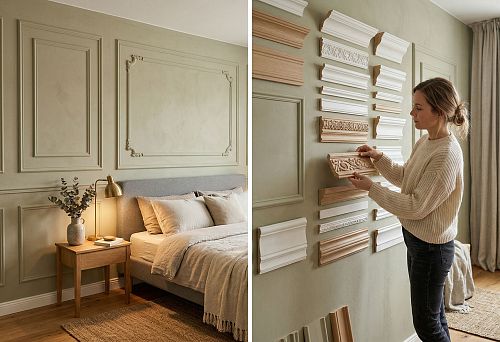
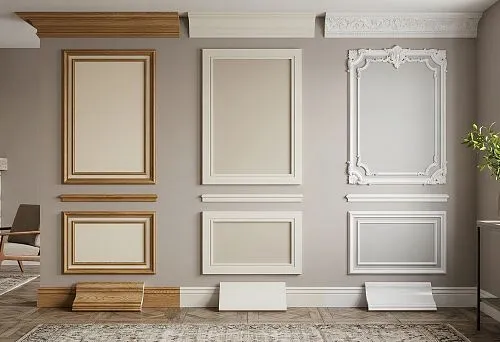
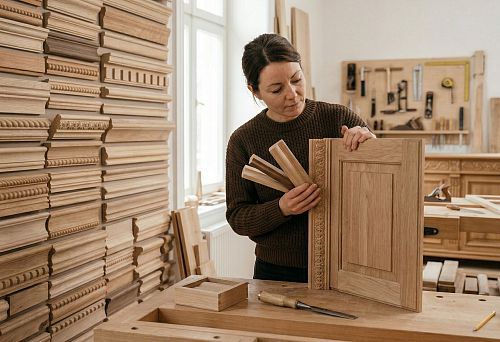
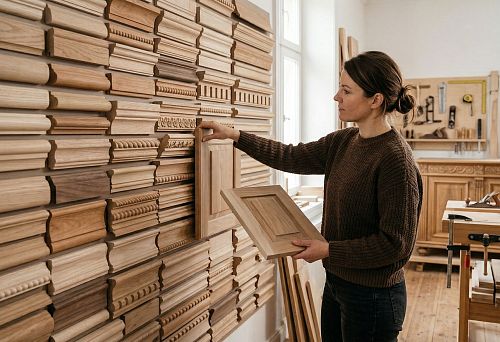
Moldings, baseboards, and cornices made of oak serve as elegant punctuation in the architectural text of interiors. These elements not only complete the designer’s composition but also create a sense of completion, harmony, and impeccable taste. Oak casings and moldings transform ordinary openings into portals of elegance, while stair balusters create a majestic atmosphere.
Oak baseboards 80 to 200 millimeters high can visually increase ceiling height and create a sense of monumentality in the room. Complex profiles with multiple facets and curves are possible only with high-quality oak wood.
Oak cornices can support the weight of heavy drapes without deformation. The maximum length of an oak cornice without joints can reach 6 meters, allowing large window openings to be framed without visible joints.
Oak moldings create complex decorative compositions on walls, transforming ordinary surfaces into works of art. The thickness of moldings varies from 8 to 40 millimeters, and the width can reach 150 millimeters to create especially expressive elements.
Parquet and solid oak planks are traditionally considered the standard of quality for flooring. High wear resistance allows oak floors to be used in heavily trafficked areas. A room with oak parquet visually becomes more spacious and brighter, especially when using light oak tones.
Solid oak parquet 15–22 millimeters thick can withstand up to 10 sanding cycles, ensuring a service life of up to 100 years. Solid oak planks 20–25 millimeters thick can withstand a load of up to 500 kilograms per square meter.
Oak stair treads are made from solid wood 40–60 millimeters thick. Such treads can withstand a load of up to 800 kilograms per square meter and are practically immune to abrasion even with intensive use.
Oak stair treads are made from solid blocks 40-60 mm thick. Such treads can withstand a load of up to 800 kilograms per square meter and are practically resistant to wear even with intensive use.
Oak construction materials — beams, planks, stair treads — provide exceptional structural strength. Oak beams can carry enormous loads, making them indispensable for constructing large spans without intermediate supports.
Glued oak beams can reach a length of 20 meters with a cross-section of 200x400 millimeters. Such structures can withstand a distributed load of up to 2000 kilograms per linear meter, surpassing the performance of reinforced concrete structures of similar cross-section.
Specialized products
Oak window sills are distinguished by exceptional strength and moisture resistance. The thickness of an oak window sill is usually 30–40 millimeters, ensuring resistance to deformation under temperature fluctuations near windows.
Oak kitchen countertops 40-50 mm thick withstand temperatures up to 150 degrees Celsius without damage. Special oil treatment makes them resistant to moisture and food acids.
Oak doors made of solid wood, 40-60 mm thick, have excellent sound insulation properties. The sound absorption coefficient is 35-40 decibels, exceeding the performance of most modern materials.
Technological aspects of oak product manufacturing
Creating high-quality oak wood products requires a deep understanding of wood properties and mastery of specialized technologies. Each stage of production—from roughing to final finishing—affects the quality of the final product.
Drying process: the foundation of quality
Proper drying of oak wood is both a science and an art. Natural drying may take several months to several years depending on material thickness. Kiln drying allows precise control of the process down to tenths of a percent humidity.
Initial moisture content of freshly cut oak is 50-80 percent. During natural drying, moisture drops to 15-20 percent in the first year. Subsequent reduction to working moisture level of 8-12 percent occurs in specialized kilns.
Kiln drying temperature regime is strictly regulated. Initial temperature is 40-45 degrees Celsius at 85-90 percent air humidity. Gradual increase to 60-65 degrees Celsius while reducing humidity to 20-25 percent prevents cracking and internal stresses.
Optimal moisture content for oak wood used in furniture manufacturing is 8-12 percent. At this moisture level, oak achieves dimensional stability and readiness for further processing. Properly dried wood becomes the foundation for oak wood products that will last decades without deformation.
Moisture control is performed using electronic hygrometers with accuracy to 0.1 percent. Samples are taken from each batch of wood no less than every 10 cubic meters of material.
Modern processing methods
High-precision CNC machines allow creating complex profiles and ornaments with incredible accuracy. Laser cutting opens new possibilities for creating delicate elements previously accessible only to highly skilled craftsmen.
Accuracy of processing on modern machines reaches 0.05 millimeters, ten times exceeding manual processing capabilities. This enables creating "dovetail" joints with minimal gaps, ensuring maximum structural strength.
Brushing—a technique of artificial aging—allows highlighting the natural beauty of oak grain. During processing with special brushes, soft fibers are removed, making the surface more textured and attractive. Brushing depth varies from 0.5 to 2 millimeters depending on desired effect.
Milling of complex profiles is performed on multi-spindle machines, allowing simultaneous processing of several surfaces. Cutting tool speeds reach 18,000 rpm, ensuring perfectly smooth surfaces without processing marks.
Turning of oak blanks for making balusters and posts is performed on CNC machines capable of reproducing complex profiles with mathematical precision. Maximum length of processed parts can reach 3 meters with diameter up to 300 millimeters.
Protective coatings and final finishing
Modern protective coatings not only protect wood from damage but also enhance its natural beauty. Polyurethane varnishes create a super-hard coating that protects against mechanical impacts and UV radiation. Oils and waxes nourish wood, preserving its elasticity and natural beauty.
Oak surface is primed with special compounds that block tannin release. This prevents dark spots on light finishes and ensures uniformity of the final layer.
Sanding is performed using abrasives from 80 to 400 grit in several stages. Final sanding with 320-400 grit abrasive ensures perfectly smooth surface without any scratches.
Nanotechnological coatings create an invisible protective film on the surface, several molecules thick. Such compounds do not alter the appearance of wood but provide protection at the molecular level.
Polyurethane varnishes with aluminum oxide provide coating hardness up to 9 on Mohs scale, comparable to sapphire hardness. Coating thickness is 120-150 microns depending on number of layers.
Wax coatings deeply penetrate wood pores, creating a breathable finish that highlights oak’s natural grain. Such coatings are easily restorable and allow wood to "live," changing tone over time.
Ecological advantages of oak products
In the era of growing ecological awareness oak wood products oak products gain special relevance as an example of sustainable consumption and ecological responsibility.
Carbon footprint and climate benefit
Oak wood is a natural carbon sink. One cubic meter of oak wood contains about 250-300 kilograms of bound carbon dioxide. Using oak products in interiors continues to combat the greenhouse effect for decades after the tree is felled.
Growing oak absorbs approximately 20 kilograms of carbon dioxide from the atmosphere per year. Over a century of life, one tree can bind up to 2 tons of CO2, equivalent to annual emissions of a passenger car traveling 15,000 kilometers.
The life cycle of oak products significantly exceeds that of synthetic material analogs. Furniture serving for centuries does not require frequent replacement, reducing pressure on natural resources and minimizing waste.
Manufacturing oak products requires 10 times less energy compared to producing similar items from plastic or metal. Energy consumption for drying and processing one cubic meter of oak wood is approximately 200 kilowatt-hours.
Transportation of oak products is also more environmentally friendly. One truck can carry 3-4 times more wooden products by volume compared to metal or stone analogs due to lower weight.
Healthy microclimate and biological compatibility
Oak wood possesses natural antibacterial properties due to its high tannin content. These substances suppress the growth of pathogenic microorganisms, creating a healthier atmosphere indoors.
Studies show that rooms with oak finishes have 40-60 percent fewer harmful bacteria compared to rooms finished with synthetic materials. This is especially important for children's rooms and medical facilities.
Oak's ability to regulate humidity is especially important in living spaces. The wood absorbs excess moisture when humidity is high and releases it when humidity is low, maintaining an optimal microclimate. This property makes oak wood products an ideal choice for children's rooms and bedrooms.
Oak surfaces are capable of absorbing and neutralizing harmful volatile compounds from the air. Formaldehyde, toluene, xylene, and other toxic substances are actively absorbed by the wood pores and broken down under the action of tannins.
Air ionization in rooms with oak finishes occurs naturally. The amount of negative ions, beneficial to human health, increases by 15-20 percent compared to rooms without wooden finishes.
Biodegradation and secondary use
Unlike synthetic materials, oak products are fully biodegradable. At the end of their service life, they can be composted or used as fuel without harming the environment.
Old oak products are especially valuable to restorers and collectors. Wood that has been in building structures for 100-200 years acquires unique properties and is highly valued in the antique market.
Wood shavings and sawdust from the production of oak products are used as biofuel with high calorific value. One kilogram of oak sawdust releases approximately 4500 kilocalories of energy when burned.
Stylistic versatility of oak solutions
One of the main advantages of oak products is their remarkable ability to adapt to any stylistic direction. From classic interiors to ultra-modern minimalism, oak finds its place in any concept.
Classic Interiors
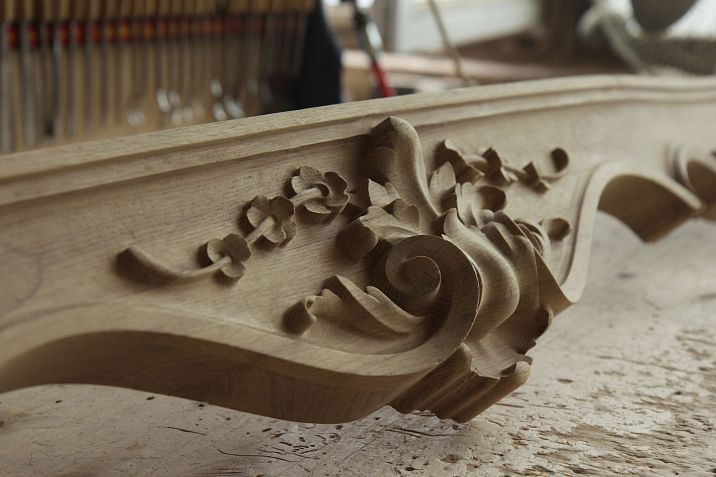
In classic interiors, oak reigns supreme. Carved panels, solid doors, coffered ceilings create an atmosphere of grandeur and majesty. Oak products in the classic style are characterized by rich decoration, complex forms, and meticulous detailing.
The English style prefers dark oak tones with pronounced texture. Stained oak creates a sense of antiquity and solidity. Carving in the English style is characterized by strict geometric forms and restrained decoration.
The French style uses light oak tones with rich gold leafing and inlays. Elegant curves, floral motifs, and complex profiles transform furniture into works of art.
Patina and artificial aging give classic oak products a special charm. The effect of aging creates a sense of connection with history, transforming a modern interior into something resembling an old castle or noble estate.
Oak coffered ceilings with a depth of 50-80 millimeters create a sense of monumentality and luxury. Such ceilings visually increase the height of the room and give it a majestic character.
Modern interior styles also use oak skirting boards, but in a different interpretation. Minimalism prefers simple rectangular profiles without decorative elements. Smooth surfaces with matte finish create a sense of strictness and elegance.
Scandinavian minimalism has opened a new dimension of oak beauty. Simple forms, natural tones, and absence of excessive decoration allow one to focus on the main thing — the natural beauty of the material. Light oak tones create a sense of lightness and space.
Oak treated with special compounds acquires a nearly white color while retaining its natural texture. This treatment is popular in Scandinavian interiors and helps create a sense of light and space.
The industrial style successfully uses oak elements in combination with metal and glass. Such combinations create interesting visual contrasts, where the warmth of wood softens the coldness of modern materials.
Loft style prefers rough oak surfaces with retained saw and axe marks. The effect of incompleteness creates a sense of authenticity and closeness to nature.
High-tech style uses oak elements as a counterpoint to high-tech materials. Smooth oak surfaces with glossy finish harmoniously combine with glass and chrome metal.
Eclectic Solutions
Modern designers increasingly use oak elements in eclectic interiors, combining different styles and eras. Oak beams in country style harmonize beautifully with modern technology and furniture.
Ethnic styles actively use oak elements to create an authentic atmosphere. The Russian style prefers carved oak elements with floral ornamentation. The German style leans toward strict forms and functionality.
Psychological aspects of perceiving oak interiors
The presence of oak wood products in an interior exerts a deep psychological effect on a person. Scientific research confirms the beneficial influence of natural wood on emotional state and productivity.
Biophilic connection with nature
Humans are genetically linked to nature, and the presence of natural materials activates ancient mechanisms of calming and concentration. Oak surfaces reduce stress levels, improve attention focus, and promote relaxation.
Neuropsychological studies show that observing oak textures activates alpha rhythms in the brain, characteristic of a state of calm alertness. This contributes to increased creativity and improved cognitive functions.
Tactile contact with wood activates the parasympathetic nervous system, responsible for relaxation and recovery. This is especially important in today's world of constant stress and information overload.
The scent of oak wood contains more than 50 volatile compounds, many of which have calming and anti-stress effects. Vanillin, released from oak wood, lowers blood pressure and heart rate.
The color palette of oak wood falls within the range of warm tones, which psychologists consider most comfortable for prolonged perception. These colors do not strain the eyes and contribute to maintaining a good mood.
Symbolism of status and stability
Oak products are traditionally associated with success, stability, and impeccable taste. This symbolic load has been formed over centuries and remains relevant in modern society.
An oak office emphasizes the seriousness and competence of the owner, while an oak dining room creates an atmosphere of family traditions and hospitality. These associations work on a subconscious level, forming the desired impression.
Sociological studies show that people working in rooms with oak finishes are perceived by others as more reliable and professional. This is especially important for business and legal professionals.
Family psychology notes that oak furniture helps strengthen family bonds. A solid oak table becomes the center of family communication, while oak furniture creates a sense of stability and generational continuity.
Impact on productivity and creativity
Workspaces with oak finishes contribute to improved concentration and productivity. Natural wood does not create visual strain, allowing the brain to focus on important tasks.
Creative individuals especially value oak interiors for their ability to inspire. The rich texture of the wood stimulates imagination, while natural forms help find unconventional solutions.
Students studying in rooms with oak furniture show 15-20 percent better results in memory and attention tests compared to those studying in rooms with synthetic finishes.
Economic attractiveness of oak products
Purchasing quality oak products is not only acquiring interior items, but also a full investment. Quality oak furniture does not lose value over time and often becomes more expensive.
Factors of value growth
The age and origin of the wood play a key role in forming investment attractiveness. Oak from old-growth forests is especially valued for its density and beauty of texture. European oak is traditionally considered the standard of quality.
Slavonian oak from Croatia is considered the best in the world for making elite furniture. Its price is 2-3 times higher than that of ordinary European oak. American white oak is valued for its uniform texture and light tone.
Craftsmanship adds artistic value to the product. Hand-carving, exclusive design, flawless execution turn furniture into collectible items.
Works by renowned master woodworkers are especially highly valued. The signature of the master on an item can increase its value by 5-10 times. Some modern masters already sell their works at antique prices during their lifetime.
Limited editions and exclusive models also represent investment value. Furniture produced in small quantities to special order becomes rare and increases in price over time.
Antique perspective
Oak items from the 18th-19th centuries achieve astronomical sums at international auctions. This is not a coincidence, but a trend caused by the unique properties of oak, which improve with age, acquiring a noble patina and a special depth of color.
French furniture from the Louis XIV era made of oak sells at auctions for prices ranging from 50,000 to 500,000 euros per piece. Georgian oak furniture from England is slightly cheaper but also represents a significant investment.
Russian oak furniture from the 19th century is still undervalued on the global market, but experts predict significant price growth in the coming decades. This is due to growing interest in Russian culture and art.
Restoration of antique oak items is a separate business direction. Well-restored furniture can cost 2-3 times more than unrestored furniture, while retaining its authenticity and historical value.
Modern investment market
Modern quality oak products also have investment attractiveness. The annual growth rate of quality oak furniture is 5-10 percent, comparable to the return on many financial instruments.
Oak furniture from well-known brands practically does not lose value even with active use. The secondary market for such furniture is quite active, ensuring good liquidity for investments.
Regional characteristics also affect investment attractiveness. In major cities, high-quality oak furniture appreciates faster due to high demand and limited supply.
Innovative technologies in the production of oak products
Modern Production oak wood products actively implements innovative technologies that allow to fully unleash the potential of this unique material.
Digitalization of Production Processes
3D scanning allows creating accurate digital models of each blank, optimizing cutting and minimizing waste. Artificial intelligence analyzes the wood structure and suggests optimal usage options for each piece.
Laser scanners with an accuracy of 0.01 millimeters detect wood defects, allowing the most efficient use of high-quality sections of raw material. Software automatically calculates the optimal cutting layout.
CAD/CAM automated design systems ensure the highest processing accuracy while preserving the unique character of each item. Robotic production lines operate with precision unattainable through manual processing.
Virtual reality allows customers to see the future product in their interior even before production begins. This significantly reduces the number of revisions and increases customer satisfaction.
The Internet of Things enables continuous monitoring of drying and storage conditions for wood. Temperature and humidity sensors transmit data in real time, allowing timely adjustments to technological processes.
Ecological innovations in production
The closed production cycle has become a standard in modern industry. Sawdust and shavings are used to produce biofuel, and turning waste is used to create composite materials. Not a single gram of valuable oak wood goes to waste.
Biofuel boilers using wood waste provide up to 80 percent of the energy consumption of modern woodworking enterprises. This significantly reduces the carbon footprint of production and makes it more environmentally friendly.
Air capture and purification systems completely eliminate the emission of wood dust into the atmosphere. Captured dust is pressed into briquettes for use as fuel.
Water treatment facilities enable multiple uses of water in technological processes. A closed water cycle allows reducing fresh water consumption by 90 percent.
Nanotechnology in wood processing
Nanostructured coatings create a protective layer on oak surfaces only a few molecules thick. Such coatings are invisible to the eye but provide protection against moisture, ultraviolet radiation, and mechanical damage.
Silver nanoparticles embedded in the coating provide additional antibacterial protection. This is especially important for items used in children's rooms and medical facilities.
Self-healing coatings contain microcapsules with repair compounds. When a scratch appears, the capsules break, and the coating automatically repairs itself.
Photocatalytic coatings break down organic contaminants under light, providing self-cleaning surfaces. Such technologies are especially relevant for facade elements.
Regional characteristics of oak craftsmanship traditions
Different regions of the world have developed their own traditions of working with oak, leading to the formation of unique styles and techniques. Each school of craftsmanship has its own secrets and characteristics.
European Schools of Craftsmanship
The French school of furniture making is renowned for its elegant forms and luxurious decoration. Marquetry — the technique of inlaying with different types of wood — reached incredible perfection in France. Oak bases are adorned with inlays of padauk, ebony, and maple.
The Versailles technique of gilding oak creates an effect of luxury and grandeur. Leaf gold is applied to a specially prepared surface through intermediate layers of primer and polymer.
The English tradition leans toward monumentality and functionality. Oak furniture in the English style is characterized by massive forms and restrained decoration. Special attention is paid to the quality of joints and the durability of the structure.
The Yorkshire school of oak carving specializes in heraldic motifs and Gothic ornamentation. Deep relief carving creates a play of light and shadow, giving the items a distinctive expressiveness.
The German school prefers strict geometric forms and functionality. German masters were the first to use "dovetail" joints in mass-produced furniture manufacturing.
The Italian school is known for its marquetry and inlay techniques. Florentine masters create complex compositions on oak surfaces using various types of wood, bone, and metal.
Scandinavian traditions
The Norwegian school of oak carving specializes in floral ornamentation and mythological scenes. Viking motifs remain popular in modern Scandinavian design.
The Swedish school prefers light oak tones and minimalist forms. Whitening oak techniques allow preserving the natural texture while lightening the wood to nearly white.
The Danish school is known for its techniques of bending oak elements. Steaming and gradual bending allow creating elegant curved forms without losing strength.
Russian traditions
The Russian school of woodworking has a thousand-year history. Oak carving in the Russian style is characterized by rich floral ornamentation and complex compositions. Typical elements include images of oak leaves and acorns.
Abramtsvo-Kudrin carving creates relief compositions with floral motifs on oak surfaces. This technique was revived at the end of the 19th century and gained international recognition.
Bogorodskaya oak toys represent a unique folk craft tradition. Carved figurines of animals and people are distinguished by lively imagery and high craftsmanship.
Khokhloma painting on oak creates unique decorative effects. The combination of gold backgrounds with floral ornamentation transforms ordinary oak tableware into works of art.
The Future of the Oak Industry
Advancements in technology and changing consumer preferences open new horizons for the application of oak products. The industry is preparing for significant changes in the coming decades.
Smart oak products
Integrating electronics into oak products opens new possibilities for functionality. Tables with built-in wireless charging, cabinets with automatic lighting, and heated chairs have become reality.
Humidity sensors embedded in oak furniture can warn of the need for additional treatment or adjustment of the room's microclimate. Such systems extend the lifespan of products and maintain them in ideal condition.
Augmented reality technologies allow creating interactive oak surfaces. A table can become a touch screen, and a cabinet can display information about its contents.
Biotechnology in wood processing
Genetic modification of oaks enables growing trees with improved wood characteristics. Increased density, uniform texture, and accelerated growth open new possibilities for production.
Biological methods of wood protection use beneficial microorganisms to combat pests and fungi. Such methods are ecologically safe and effective.
Enzymatic treatment allows changing the properties of oak wood at the molecular level. Enhanced moisture resistance, color modification, and improved workability become possible without using chemicals.
Sustainable Industry Development
Forest regeneration programs provide raw material for future generations. Science-based forestry methods allow growing high-quality oak in shorter timeframes without harming the ecosystem.
Selection of fast-growing oak varieties can reduce the growth cycle from 80-100 years to 40-50 years while maintaining wood quality. This significantly improves the industry's economics.
Precision agriculture technologies are applied in forestry to optimize oak growth conditions. Drones monitor forest health, and artificial intelligence analyzes data to make management decisions.
Global forest certification ensures the legality and ecological soundness of oak wood harvesting. Consumers increasingly choose certified wood products, stimulating the development of sustainable forestry.
Oak wood products represent a unique combination of natural beauty, functionality, and durability. In today’s world, where eco-friendliness and quality are valued, oak products hold a special place, embodying the finest traditions of craftsmanship and innovative production technologies.
Choosing oak products means investing not only in the beauty and comfort of our homes, but also in the health of our families, the ecology of our planet, and the cultural heritage of humanity. Each oak product is a piece of nature, preserved and transformed by human craftsmanship into an item capable of serving generations.
STAVROS understands the special mission of oak products in the modern world. By combining advanced technologies with centuries-old craftsmanship traditions, STAVROS creates oak wood productswhich will become a pride of any interior and be passed down to future generations as a testament to impeccable taste and high