












































































Article Contents:
- Era of uniqueness in the mass world
- Technological breakthrough in traditional craftsmanship
- Materials science of the future: choosing wood for custom projects
- Exotic species: when the ordinary is not enough
- Fine woods: an investment in eternity
- Local species: eco-friendliness and accessibility
- Creation process: from idea to masterpiece
- Conceptual stage: birth of the idea
- Technical design: precision down to the millimeter
- Production cycle: symphony of craftsmanship
- Variety of possibilities: what can be ordered from wood
- Variety of possibilities: what can be ordered from wood
- Furniture: functionality in custom execution
- Decorative elements: accents of individuality
- Exclusive projects: realization of bold ideas
- Neoclassicism: return to origins
- Neoclassicism: Traditions in Modern Interpretation
- Scandinavian Minimalism: Beauty of Simplicity
- Loft and industrial style: contrast of materials
- Ergonomics and Functionality: Science of Comfort
- Anthropometric data in design
- Innovative solutions in traditional forms
- Ecological aspects: responsible production
- Certified wood and sustainable forestry
- Zero-waste technologies and secondary recycling
- Local production and reduction of transportation emissions
- Technological innovations: the future of wood processing
- Digital twins and virtual reality
- Additive technologies in wood processing
- Nanotechnologies in wood protection
- Economic aspects: investment in quality of life
- Ownership cost and long-term benefits
- Impact on property value
- Support for artisans and local economy
- Psychology of space: influence of natural materials on well-being
- Biophilic design and connection with nature
- Sensory perception and tactile comfort
- Acoustic comfort and sound environment
- Conclusion: The Art of Living Beautifully
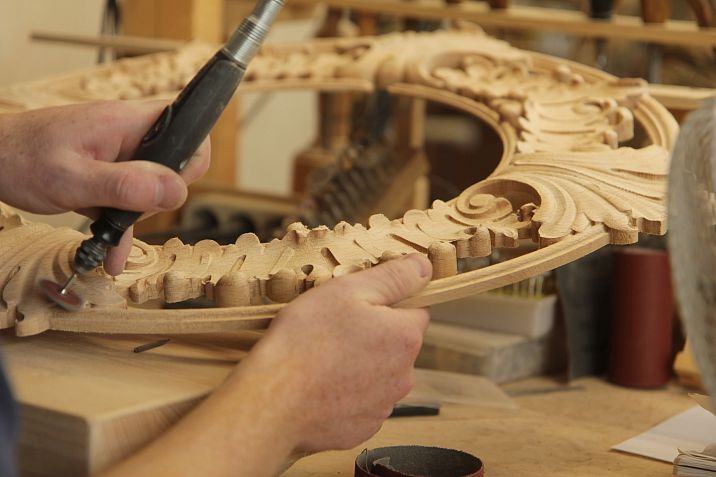
Close your eyes and imagine: you enter your home, where every piece of furniture is created specifically for you, where every interior detail reflects your individuality. It is precisely this feeling that the products offer made of natural wood to order — unique works of art born from the union of natural beauty and human craftsmanship.
In the modern world of mass production, ordering custom wooden items is no longer just a purchase — it is a philosophical choice. It is a manifesto of individuality that values authenticity, rejects standardization, and seeks to surround itself with objects imbued with soul and meaning. Each item crafted by a master according to a custom project bears the imprint of a human hand and the warmth of living wood.


Revolution of personalization: why custom orders change the game rules




The era of uniqueness in the age of mass production
We live in an amazing time when technology allows us to create unique items without astronomical costs. Digital design, CNC machines, laser processing — all these innovations make possible what was once accessible only to the aristocracy. The modern consumer can order furniture or decor, fully tailored to his needs, tastes, and the specifics of his living space.
Psychologists assert: surrounding oneself with unique items forms a special self-awareness. A person living among things created specifically for him feels more confident, creatively fulfilled, and emotionally stable. This is not merely consumption — it is a form of self-expression through material objects.
Our factory also produces:


Technological breakthrough in traditional craftsmanship
Modern custom furniture production differs fundamentally from the artisan workshops of the past. 3D modeling allows one to see the finished product before work begins, make adjustments, evaluate ergonomics and aesthetics. Automated design systems calculate optimal material usage, minimizing waste and reducing cost.
CNC machines provide precision in processing that manual labor cannot achieve. At the same time, creative approaches remain possible: the craftsman can combine machine precision with artistic techniques, creating items that cannot be reproduced in mass production.
Get Consultation
Materials science of the future: choosing wood for custom projects
Fine woods: an investment in eternity
Oak remains the king of the furniture industry due to its unique combination of strength, beauty, and durability. Its density of 700 kg/m³ ensures exceptional resistance to loads, while its high tannin content provides natural protection against biological influences. The color palette of oak ranges from golden to rich brown tones, allowing one to choose the perfect solution for any interior.
Walnut is valued for its decorative qualities and stability. Its characteristic grain with dark veins creates visual depth, making each item a work of art. Walnut wood is well-suited to various finishing techniques — from delicate carving to modern patination methods.
Exotic woods: when the ordinary is not enough
Mahogany, ebony, rosewood — these names sound like spells for connoisseurs of true luxury. Each species possesses unique characteristics: mahogany is renowned for its dimensional stability and resistance to moisture, ebony for its exceptional hardness and noble black color, rosewood for its unique aroma and refined texture.
Working with exotic woods requires special skill and understanding of the material’s specific properties. Each piece of wood is unique, and an experienced craftsman knows how to reveal its potential, creating items that become family heirlooms.
Local woods: ecological and accessible
Ash, maple, birch — Russian species that do not fall short of foreign analogs in quality and beauty. Ash possesses high strength and attractive grain, maple — uniform structure and light tone, birch — ease of processing and ability to be stained.
Choosing local species is not only cost-effective, but also an ecological responsibility. Short transport distances reduce carbon footprint, while supporting domestic timber suppliers contributes to regional economic development.
Creation process: from idea to masterpiece
Conceptual stage: birth of the idea
Creating items made of natural wood to order Begins with a deep understanding of the client’s needs. This is not merely discussing dimensions and color — it is a psychological portrait of the future owner, an analysis of his lifestyle, aesthetic preferences, and functional requirements.
A professional designer studies the space where the item will be placed, takes into account lighting conditions, interior color palette, and stylistic preferences. Modern technologies allow creating an accurate 3D model of the room and 'trying on' various design options.
Technical design: precision down to the millimeter
After the concept is approved, detailed technical aspects are worked out. Engineers calculate loads, select optimal structural solutions, determine the sequence of technological operations. Each element is refined down to the smallest details — from types of connections to methods of surface treatment.
Modern CAD systems allow simulating the behavior of the item under various operating conditions, identifying potential problems even during the design stage. This guarantees not only aesthetic perfection, but also functional reliability of the finished item.
Production cycle: symphony of craftsmanship
Manufacturing begins with careful selection of material. Each blank is checked for compliance with project requirements: moisture content, density, absence of defects. An experienced craftsman can "read" wood, understand its character, and use its natural properties to enhance decorative effects.
Modern processing technologies allow achieving fantastic precision. CNC milling ensures ideal geometry of parts, laser engraving — delicacy of decorative elements, robotic painting systems — uniform coating. At the same time, room is left for creativity: final finishing, assembly, adjustment — all of this requires human craftsmanship and intuition.
Variety of possibilities: what can be ordered from wood
Furniture: functionality in custom design
Custom furniture allows obtaining items ideally adapted to a specific space and needs. A kitchen set can be designed considering the height of the homeowner, layout specifics, and family’s culinary preferences. A wardrobe can efficiently utilize every centimeter of a niche, while a work desk can provide optimal ergonomics for a specific user.
Solid wood bedroom furniture creates a unique atmosphere of coziness and tranquility. Natural wood regulates air humidity, creates a healthy microclimate, and promotes quality sleep. The ability to choose wood species, finish type, and configuration allows creating the perfect bedroom for each client.
Decorative elements: accents of individuality
Carved panels, decorative appliqués, wooden ornamental moldings — these elements can radically change the character of an interior. Hand-carved woodwork is an ancient art that acquires a new sound in the skilled hands of modern masters. Traditional motifs intertwine with contemporary forms, creating a unique style.
Wooden rosettes, moldings, cornices allow creating a cohesive stylistic composition. These elements are manufactured according to individual drawings, taking into account the architectural features of the room and the designer’s concept.
Exclusive projects: realization of bold ideas
Modern technologies allow realizing the most daring design concepts. Wooden letters and words have become a popular element of interior design. They can be flat or three-dimensional, painted or retaining the natural wood texture, supplemented with lighting or decorative elements.
Solid wood staircases are not just functional structures, but architectural dominants of space. Each step, each baluster can be unique, creating an irreplaceable artistic image. Modern processing capabilities allow creating staircases of the most complex forms — spiral, console, floating.
Stylistic directions: from classicism to futurism
Neoclassicism: traditions in modern interpretation
Neoclassical style in modern furniture combines time-tested proportions with innovative materials and technologies. Items made of natural wood to order in neoclassical style are distinguished by noble restraint, ideal proportions, and refined detailing.
Modern technologies allow recreating complex decorative elements with the highest precision. Carved cornices, pilasters, rosettes are manufactured on CNC machines according to digital models, ensuring perfect repeatability of elements and high-quality execution.
Scandinavian minimalism: beauty of simplicity
Scandinavian approach to furniture design is based on functionality, ecological safety, and aesthetics of simplicity. Light wood species — birch, pine, beech — are processed minimally, preserving natural texture and color. Forms are maximally simplified, decoration is reduced to a minimum, emphasis is placed on material quality and craftsmanship perfection.
Such an approach allows creating items that harmoniously fit into modern interiors, not overloading space, but adding warmth and coziness. Scandinavian furniture is universal — it suits both city apartments and country houses.
Loft and industrial style: contrast of materials
Combining natural wood with metal, glass, and concrete creates striking contrasts characteristic of the loft style. Roughly processed wooden surfaces retaining tool marks, use of untrimmed boards, showcasing natural wood defects — all this creates a unique authenticity aesthetic.
Modern technologies allow controlled creation of aged, artificially weathered, or imitation effects. At the same time, structural integrity and functionality of items remain at the highest level.
Ergonomics and functionality: the science of comfort
Anthropometric data in design
Creating truly comfortable furniture requires deep understanding of human anatomy and specifics of interaction with objects. Working surface height, seat depth, backrest angle — each parameter affects user comfort and health.
Modern ergonomic research allows creating furniture adapted to a specific individual. A programmer’s workstation will differ significantly from an artist’s desk, and a reading chair — from a dining chair. Individual approach ensures maximum comfort and care for health.
Innovative solutions in traditional forms
Modern wooden items made to order can include the most advanced technologies, seamlessly integrated into classic forms. Wireless charging built into the countertop, LED lighting in bookshelves, automatic drawer-opening systems — all this expands functionality without compromising the aesthetics of natural wood.
Smart furniture can adapt to user needs: adjust table height during the day, change lighting color temperature, remind to take a break. At the same time, all technologies remain invisible, preserving the natural beauty of wood.
Ecological aspects: responsible production
Certified wood and sustainable forestry
Modern custom furniture production is impossible without considering ecological factors. Use of wood from FSC-certified forests guarantees that the material was obtained through responsible forestry practices. This approach supports biodiversity, rights of local communities, and economic viability of forestry.
Traceability of wood origin allows excluding materials from illegal logging zones. Modern marking systems ensure full documentation of the supply chain from forest to finished product.
Waste-free technologies and recycling
The principles of circular economy are actively implemented in solid wood furniture production. Waste from main production becomes raw material for decorative elements, souvenirs, fuel pellets. Sawdust is used for producing composite materials, shavings — for packaging and mulching.
Old solid wood furniture can be fully recycled or restored. Unlike composite materials, solid wood is biodegradable and does not produce toxic waste during disposal.
Local production and reduction of transportation emissions
Developing local custom furniture production reduces transportation costs and greenhouse gas emissions. Using regional wood species supports the local economy and reduces the ecological impact of logistics.
Proximity of production to the consumer allows more efficient organization of the design, manufacturing, and delivery process. The client can personally oversee the quality of work, make changes during production, and receive the finished product in the shortest time.
Technological innovations: the future of woodworking
Digital twins and virtual reality
Modern technologies allow creating accurate digital copies of future products even before production begins. Virtual and augmented reality enable users to "try on" furniture in real interiors, evaluate proportions, color combinations, and functionality.
Artificial intelligence analyzes client preferences and suggests optimal design solutions. Machine learning allows systems to improve by incorporating accumulated experience and user feedback.
Additive technologies in woodworking
3D printing with wooden composites opens new possibilities for creating complex geometric forms. Although the technology cannot yet fully replace traditional solid wood processing, it enables the creation of unique decorative elements, prototypes, and complex joints.
A hybrid approach combining traditional processing with additive technologies expands the creative possibilities of designers and craftsmen.
Nanotechnology in wood protection
The development of nanotechnology revolutionizes methods of protecting wooden surfaces. Nanoparticles in coatings create ultra-thin protective films with unique properties: self-cleaning, antibacterial effect, increased wear resistance.
Such coatings allow preserving the natural appearance and tactile properties of wood while providing maximum protection against external influences.
Economic aspects: investment in quality of life
Ownership cost and long-term benefits
Custom solid wood items require significant initial investments but demonstrate excellent long-term profitability. High-quality solid wood furniture can serve for decades without losing functionality or appeal. The possibility of repair and restoration extends the product's lifespan.
Unique custom works are not subject to moral obsolescence and often increase in value over time. Antique furniture made from valuable wood species demonstrates steady price growth at auctions.
Impact on property value
Quality solid wood furniture enhances the prestige of interior design and overall property value. Potential buyers highly value unique design solutions, natural materials, and high-quality craftsmanship.
Built-in furniture designed specifically for a particular space maximally utilizes space and adds additional value for property buyers.
Support for artisans and local economy
Ordering furniture from local craftsmen supports traditional crafts and contributes to regional economic development. This is especially important in the context of globalization, when unique skills and traditions may be lost.
Direct interaction with craftsmen allows obtaining truly individualized items that consider all client preferences. This approach ensures maximum customization and high-quality execution.
Psychology of space: influence of natural materials on well-being
Biophilic design and connection with nature
Humans are evolutionarily linked to natural materials, and their presence in living spaces positively affects mental and physical health. Wooden surfaces activate ancient instincts, creating a sense of safety, comfort, and harmony.
Scientific research confirms: people working and living in environments with natural materials demonstrate higher productivity, creativity, and stress resistance. Custom wooden items allow for maximum integration of natural elements into modern interiors.
Sensory perception and tactile comfort
Touching natural wooden surfaces triggers a cascade of positive neurological reactions. The warmth of wood, its natural texture, and subtle aroma create a multisensory experience unavailable with synthetic materials.
Different wood species possess unique tactile characteristics: the smoothness of maple, the pronounced texture of oak, the silkiness of walnut. Choosing a specific species allows you to create desired sensory impressions.
Acoustic comfort and sound environment
Natural wood possesses unique acoustic properties. It absorbs excess sound, creating a more comfortable acoustic environment, yet does not completely mute, preserving the liveliness of the space. The resonant properties of wood are used in crafting musical instruments, demonstrating its ability to enhance sound.
Wooden furniture creates a unique acoustics in a room, making sounds softer and more pleasant. This is especially important in bedrooms, offices, and children's rooms, where acoustic comfort is critically important.
Conclusion: the art of living beautifully
Custom-made wooden items are not just furniture or decor. They are a philosophy of life based on respect for nature, the value of authenticity, and the pursuit of perfection. In a world of mass production and fleeting trends, such items become islands of stability, beauty, and individuality.
Each tree is unique, like a fingerprint. Growth rings tell the story of decades, wood texture is shaped by natural forces, and color is formed under the influence of soil, climate, and time. A master woodworker becomes a translator of this natural poetry into the language of human comfort and beauty.
Modern technologies do not replace traditional craftsmanship but complement it, expanding creative possibilities. Digital design, high-precision processing, and innovative finishes serve one goal — to fully realize the potential of natural materials.
Ordering wooden items — is an investment in quality of life that pays off every day. Touching a warm wooden surface, inhaling the subtle aroma of natural material, admiring unique natural patterns — all this creates a special atmosphere that cannot be purchased in a store of ready-made furniture.
The ecological advantages of natural wood are becoming increasingly relevant. By choosing renewable materials, supporting responsible forestry, and investing in durable items, we contribute to preserving the planet for future generations.
STAVROS combines the best traditions of woodworking with modern technologies and a personalized approach to each project. Experienced masters understand the characteristics of different wood species, master traditional techniques and modern processing methods.
STAVROS philosophy is based on deep respect for natural materials and understanding that each item should serve not only functional purposes but also enrich the emotional life of the owner. Each project is considered an opportunity to create something unique that will delight and inspire for many years.
Choosing STAVROS means choosing quality proven by time, craftsmanship passed down from generation to generation, and innovations that open new creative possibilities. This partnership in creating a space that reflects your individuality and serves as a daily source of inspiration.





