Article Contents:
- Main requirements for kitchen furniture materials
- Moisture resistance — primary requirement
- Heat resistance — withstand culinary tests
- Chemical resistance — resist aggressive substances
- Solid wood — noble kitchen classic
- Advantages of natural wood in kitchen furniture
- Features of wood processing for kitchen use
- MDF — a technological solution for modern kitchens
- Advantages of MDF in kitchen conditions
- MDF decoration technologies
- Chipboard — economical solution with high potential
- Modern chipboard for kitchens
- Laminated chipboard in kitchen furniture
- Plastic materials — peak practicality
- Acrylic facades — shine and durability
- High-pressure laminate HPL
- Glass in kitchen furniture — transparent elegance
- Tempered glass — safety above all
- Decorative possibilities of glass
- Metallic elements — strength and style
- Stainless steel — hygiene and durability
- Aluminum profiles — lightness and functionality
- Composite materials of the future
- Wood-polymer composites
- Quartz composites — stone strength
- Innovative coatings and technologies
- Antibacterial coatings
- Self-healing materials
- Hardware and functional elements
- Hinges and guides for kitchens
- Storage and organization systems
- Material selection by kitchen zones
- Work zone — maximum durability
- Dining zone — comfort and aesthetics
- Storage zone — functionality first
- Decorative elements of kitchen furniture
- Moldings and profiles
- Decorative inserts and elements
- Modern trends in kitchen furniture materials
- Ecology — priority of modernity
- Personalization and uniqueness
- Smart materials
- Technological innovations in production
- Digital production
- Automated quality control
- Regional specifics of material selection
- Climate factors
- Adaptation to local conditions
- Economic aspects of selection
- Initial costs vs long-term savings
- Impact on property value
- Specialized solutions
- Kitchens for professional use
- Kitchens for people with special needs
- Compact kitchens
- Future of kitchen furniture materials
- Biomaterials
- Recycling and circular economy
- Technology integration
- Practical Recommendations for Selection
- Needs Analysis
- Consultations with Professionals
- Testing and samples
- Care and maintenance of various materials
- Solid wood — delicate care
- Composite materials — ease of maintenance
- Plastic surfaces — maximum practicality
- Frequently Asked Questions
- Conclusion

The kitchen is the heart of any home, the place where culinary masterpieces are created and families gather for heartfelt conversations. That is why the question of,what materials kitchen furniture is made of, becomes critically important for anyone who strives to create an ideal space for food preparation and family interaction.
Kitchen furniture is subjected to tests that no other furniture in the house encounters. Constant temperature fluctuations from hot pots and ovens, increased humidity from boiling water, grease and liquid splashes, intensive use of cabinet doors and drawers — all this requires a special approach to material selection. Incorrect choice may lead to rapid wear, deformation, and loss of attractive appearance within just a few years of use.
The modern industry offers a wide range of materials for kitchen furniture — from traditional solid wood to innovative composite solutions. Each material has unique characteristics, advantages, and limitations. Understanding these features is key to creating a kitchen that will delight with its beauty and functionality for many years.


Main requirements for kitchen furniture materials




Moisture resistance — primary requirement
Humidity in the kitchen can reach critical levels, especially during cooking. Steam from boiling pots, moisture from washing dishes, condensation from the refrigerator — all this creates an aggressive environment for furniture materials. Ordinary materials quickly deform, swell, and lose strength under such conditions.
Quality kitchen furniture materials must have low water absorption coefficient. Especially critical is protection of edges — the most vulnerable areas of any laminated material. Even micro-cracks in the edge can become entry points for moisture, leading to gradual material degradation from within.
Our factory also produces:


Heat resistance — withstand culinary tests
Kitchen furniture is constantly exposed to high temperatures. Hot dishes, open ovens, cooktops — all this creates extreme operating conditions. Materials must maintain dimensional stability and not deform under temperature fluctuations.
Heat resistance is especially important for countertops and cabinet facades located near the stove. Poor-quality materials may develop stains, lose luster, or even crack under high-temperature exposure.
Get Consultation
Chemical resistance — resistance to aggressive substances
Various cleaning agents are used in the kitchen, from mild dishwashing liquids to aggressive degreasers. Materials must withstand exposure to alkalis, acids, and other chemical compounds without losing color or structure.
Particularly important is resistance to fats and oils, which have the tendency to penetrate porous materials and create persistent stains. Quality kitchen materials must have a dense, non-porous surface that easily cleans off any contaminants.
Solid wood — noble classic for the kitchen
Advantages of natural wood in kitchen furniture
Natural wood remains the benchmark of quality and beauty in kitchen furniture. Its natural texture and warmth create a cozy atmosphere, transforming the kitchen into a place where one wants to spend time.what materials are used to make wooden furniturefor the kitchen — an issue requiring special attention to wood species and their processing methods.
Oak is the absolute leader among wood species for kitchen furniture. Its high density and natural resistance to moisture make it the ideal choice for kitchen conditions. Oak facades withstand decades of intensive use, while gaining an even more noble appearance with age.
Ash is attracted by its contrasting texture and high strength. Its light tones visually expand the kitchen space, while its natural resistance to mechanical impacts ensures the longevity of the furniture.
Features of wood processing for the kitchen
Using solid wood in the kitchen requires special processing. The wood must be maximally protected from moisture and temperature effects. Modern lacquer systems create a reliable barrier that not only protects the wood but also highlights its natural beauty.
Multi-layer lacquering with intermediate sanding creates an ideally smooth surface that is easy to clean and resistant to stains. Modern polyurethane lacquers provide exceptional resistance to chemical exposure and mechanical damage.
End-grain treatment requires special attention. Unprotected ends are the weakest link in any wooden structure. Special end-grain sealants and wax-based compounds create reliable protection against moisture penetration.
MDF — a technological solution for modern kitchens
Advantages of MDF in kitchen conditions
MDF (Medium Density Fiberboard) has become a true breakthrough in kitchen furniture production. This material combines the ecological properties of natural wood with excellent dimensional stability and uniform structure.
The density of quality MDF is 720-870 kg/m³, providing high mechanical strength and excellent workability. The uniform structure allows for creating complex decorative profiles without chips or delamination.
Moisture-resistant MDF for the kitchen contains special additives that minimize water absorption. Such panels are easily identified by their characteristic greenish hue at the cut. The swelling coefficient of moisture-resistant MDF is dozens of times lower than that of standard MDF, which is critically important for kitchen conditions.
Decorating technologies for MDF
MDF offers unlimited possibilities for decoration. Enamel coatings create perfectly smooth surfaces with deep, saturated colors. Modern polyurethane enamels withstand thousands of wash cycles without losing gloss or color.
Vacuum pressing technology allows applying PVC film even to complex milled surfaces. The film precisely replicates all curves and recesses of the decorative profile, creating a monolithic surface without wrinkles or bubbles.
Decorating MDF with natural veneer of valuable wood species allows achieving the beauty of solid wood at significantly lower cost. A thin wood slice, 0.6–1.5 mm thick, is bonded to the base under high pressure, creating a strong and beautiful finish.
Particleboard — an economical solution with high potential
Modern particleboard for the kitchen
Particleboard has undergone a long evolution, and modern manufacturing technologies have significantly improved its properties. Quality particleboard is made from calibrated wood chips using environmentally safe binders.
Moisture-resistant particleboard contains special resins that provide high resistance to humidity. The ends of such panels are painted green or blue for easy identification. The swelling coefficient of moisture-resistant particleboard does not exceed 10% after 24 hours of immersion in water.
Laminated particleboard in kitchen furniture
Laminated particleboard (Laminated Particleboard) offers the widest range of decorative options at an affordable price. Modern decorative finishes impress with their realism — from precise imitation of valuable wood species to contemporary abstract patterns.
Direct lamination technology ensures strong adhesion of the decorative layer to the base. Melamine film creates a durable, wear-resistant coating that easily removes any kitchen contaminants.
Antibacterial additives in laminate composition prevent microbial proliferation, which is especially important for kitchen furniture. Such coatings meet the strictest hygiene requirements.
Plastic materials — the pinnacle of practicality
Acrylic facades — shine and durability
Acrylic occupies a special place among materials for kitchen facades. Its perfectly smooth surface, deep color, and mirror-like gloss create an effect of luxury and modernity. Acrylic facades do not fade in the sun, do not lose their gloss from repeated washing, and retain their original appearance for decades.
Thermoformented acrylic facades allow creating complex three-dimensional shapes without seams or joints. The technology of deep drawing enables manufacturing facades with rounded corners, which is not only aesthetically pleasing but also hygienic — the absence of sharp angles simplifies cleaning.
High-pressure plastic HPL
HPL (High Pressure Laminate) — material for the most demanding operating conditions. It consists of multiple layers of kraft paper impregnated with phenolic resins, and a decorative layer impregnated with melamine resin. All this is pressed under a pressure of 9 MPa at a temperature of 150°C.
The result — a material of exceptional strength that is not afraid of impacts, scratches, high temperatures, and aggressive chemicals. HPL withstands direct contact with hot pans and does not leave knife marks.
HPL's anti-static properties prevent dust and dirt accumulation, which is especially important in the kitchen. The surface is easily cleaned, even from the most stubborn grease and soot stains.
Glass in kitchen furniture — transparent elegance
Tempered glass — safety above all
Glass facades in the kitchen — this is not only beauty, but also practicality. Tempered glass is 5-7 times stronger than ordinary glass and, when broken, shatters into small, safe fragments with blunt edges. This is critically important for the kitchen, where there is always a risk of mechanical damage.
The standard thickness of glass for kitchen facades is 4-6 mm, providing sufficient rigidity and strength. For large doors, glass 8-10 mm thick with additional stiffening ribs is used.
Decorative possibilities of glass
Matte glass creates an effect of lightness and airiness, while partially concealing the contents of cabinets. Sandblasting or chemical etching allows creating various degrees of matting — from light haze to complete opacity.
Colored glass retains its color saturation for decades without fading in the sun. The palette of modern glass includes hundreds of shades — from delicate pastels to vibrant, saturated tones.
Triplex — multi-layered glass with a polymer film between layers — ensures maximum safety. Even in case of serious damage, fragments remain on the film, preventing injuries.
Metallic elements — strength and style
Stainless steel — hygiene and durability
Stainless steel is ideally suited for kitchen environments. It is not afraid of moisture, does not corrode, and possesses natural antibacterial properties. This makes it an ideal material for work surfaces and decorative elements.
Various surface treatments create diverse aesthetic effects. Mirror polishing gives a modern gloss, while matte finishing creates a softer, more subdued appearance. Structured surfaces hide minor scratches and fingerprints.
Aluminum profiles — lightness and functionality
Aluminum in kitchen furniture is used to create frames, handles, and decorative elements. Its corrosion resistance and lightness make it ideal for sliding systems and suspended constructions.
Anodized aluminum offers a wide range of colors and textures. The anodizing process creates a durable oxide coating that protects the metal from external influences and imparts the desired color.
Composite materials of the future
Wood-Plastic Composites
WPC (Wood-Plastic Composite) — a material combining the naturalness of wood fibers with the practicality of polymers. It does not absorb moisture, does not rot, and requires no special maintenance, while retaining the tactile feel and appearance of wood.
The ability to color in mass allows achieving any color without additional coating. WPC is easily processed with standard woodworking tools, simplifying furniture manufacturing and assembly.
Quartz composites — stone strength
Quartz aggregate consists of 90-95% quartz particles bound with polymer resins. The result — a material of exceptional strength and beauty, which does not fall short of natural stone in aesthetic qualities, but surpasses it in performance characteristics.
The non-porous structure of quartz composites prevents liquid absorption and bacterial growth. The surface remains hygienic without special treatment, which is critically important for the kitchen.
Innovative coatings and technologies
Antibacterial coatings
Modern antibacterial coatings contain silver or zinc ions that suppress bacterial and fungal growth. This is especially important for kitchen furniture, where high humidity and food residues create a favorable environment for microorganisms.
Photocatalytic coatings with titanium dioxide break down organic contaminants under light. Such surfaces literally self-clean, significantly simplifying kitchen furniture maintenance.
Self-healing materials
Innovative polymer coatings with shape memory can restore their original appearance after minor damage. Microcracks and scratches close under heat, returning surfaces to a perfect appearance.
Nanostuctured coatings create a microrelief that repels water and contaminants. The lotus effect allows water droplets to roll off the surface, carrying away dirt particles.
Hardware and functional elements
Hinges and guides for the kitchen
Kitchen hardware must withstand intensive use in an aggressive environment. Quality hinges endure tens of thousands of opening-closing cycles without losing functionality. Anti-corrosion coatings protect metal parts from moisture and steam.
Full-extension guides allow using the entire drawer volume, which is especially important in kitchens with limited space. Soft-close systems prevent impact loads and extend furniture lifespan.
Storage and organization systems
Modern storage systems maximize the internal space of kitchen cabinets. Pull-out baskets, rotating mechanisms, and lifting systems all make the kitchen more functional and convenient.
Storage system materials must be resistant to food product exposure and easy to clean. Chrome steel, anodized aluminum, and special plastics meet all hygiene requirements.
Material selection by kitchen zones
Work zone — maximum durability
The kitchen work zone is subjected to the most intense impacts. Cabinet facades near the stove must withstand high temperatures and grease splashes. Water-resistant materials with dense, non-porous surfaces are the optimal choice for this zone.
where to buy furniture decor— resistant to kitchen impacts — is an important question for those who want to decorate the work zone. Decorative elements must be easy to clean and not accumulate dirt.
Dining zone — comfort and aesthetics
The kitchen dining zone may be less resistant to aggressive impacts, but it must create a comfortable atmosphere for dining. Natural materials with a warm texture are ideal for this zone.
Unique kitchen interiorsOften combine different materials depending on functional zones. This allows optimizing both practical and aesthetic aspects of the kitchen space.
Storage zone — functionality first
Cabinets for dishware and food storage must provide maximum functionality with minimal maintenance costs. Materials must be resistant to moisture and not absorb odors.
Internal cabinet surfaces can be made from simpler materials without sacrificing functionality. The key is moisture resistance and ease of cleaning.
Decorative elements of kitchen furniture
Moldings and profiles
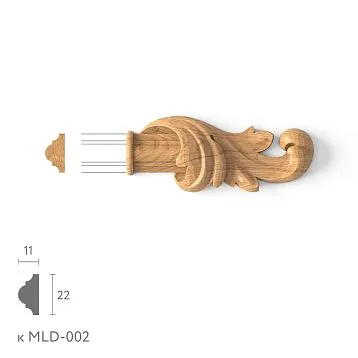
where to buy moldings for decoration— important when creating classic interiors. Decorative profiles must not only decorate furniture but also withstand kitchen operating conditions.
Polyurethane moldings are ideal for kitchens due to their moisture resistance and ease of maintenance. They easily take on any color and retain their shape under moisture.
Where to Buy Moldings for Wall Decoration— kitchen conditions are also important to consider. Wall moldings are exposed to steam and splashes, so they must be moisture-resistant.
Decorative appliqués and elements
Decorative appliqués allow transforming simple furniture into unique and stylish pieces. The appliqué material must harmonize with the main furniture material and withstand kitchen conditions.
Carved elements made from dense wood or polyurethane create the look of expensive furniture at relatively low cost. It is important to ensure secure mounting and protection from moisture.
Modern trends in kitchen furniture materials
Ecological safety — a priority of modernity
Modern consumers are increasingly paying attention to the ecological properties of materials. Preference is given to natural, renewable resources and materials with minimal content of harmful substances.
GREENGUARD, E0, FSC certification is becoming the standard for quality kitchen materials. Manufacturers invest in the development of eco-friendly technologies and materials.
Personalization and uniqueness
Standard solutions are giving way to customized projects. Modern technologies allow creating unique textures, colors, and shapes tailored to a specific client.
3D printing, laser cutting, digital printing — all these technologies open up limitless possibilities for creating unique kitchen interiors.
Smart Materials
Integration of technologies into materials — a trend of the future. Materials with changeable properties, embedded sensors, and self-diagnostic capabilities are no longer science fiction.
Chromogenic materials change color depending on temperature, humidity, or lighting. Piezoelectric materials can generate electricity from mechanical impacts.
Technological innovations in production
Digital production
Modern kitchen furniture production increasingly relies on digital technologies. CAD/CAM systems allow creating precise models and optimizing material usage.
CNC machines ensure the highest precision of processing and perfect repeatability. This is especially important for complex decorative elements and precise fitting of parts.
Automated quality control
Machine vision systems control product quality at all production stages. Automatic defect detection eliminates defective items reaching the consumer.
Laser measurement systems ensure control of geometric parameters with accuracy down to hundredths of a millimeter. This guarantees perfect fitting of all kitchen furniture elements.
Regional characteristics of material selection
Climate factors
Material selection for kitchen furniture should consider regional climatic characteristics. In Russia’s continental climate, material dimensional stability under temperature and humidity fluctuations is especially important.
The heating season, with its low air humidity, creates special conditions for wooden materials. Solid wood may shrink, forming gaps and cracks.
Adaptation to local conditions
Manufacturers adapt their materials and technologies to local climatic conditions. Special adhesives, stabilizers, and coatings designed for Russian conditions are used.
Logistical characteristics also influence material selection. Preference is given to materials that can be produced or obtained with minimal transportation costs.
Economic aspects of selection
Initial costs vs long-term savings
When selecting materials for kitchen furniture, it is important to consider not only the initial cost but also long-term operational expenses. Expensive quality materials often prove more economical in the long run.
The cost of repairing or replacing low-quality materials may be many times higher than the savings from their purchase. Quality materials serve for decades with minimal maintenance investment.
Impact on property value
Quality kitchens significantly increase property value. Investments in premium materials pay off when selling property, and often even generate profit.
Potential buyers especially carefully evaluate the condition of the kitchen, and quality materials create a positive first impression.
Specialized solutions
Kitchens for professional use
Commercial kitchens impose special requirements on materials. The intensity of use is hundreds of times greater than in residential settings, requiring exceptional material strength and durability.
Stainless steel is the standard for professional kitchens. It meets all sanitary requirements and withstands intensive use and frequent disinfection.
Kitchens for people with special needs
Materials for kitchens adapted for people with disabilities must ensure safety and ease of use. Rounded edges, non-slip surfaces, contrasting colors — all are important selection factors.
Antibacterial properties of materials are especially important for people with weakened immunity. Ease of cleaning and maintenance is also critically important.
Compact kitchens
In limited space, every centimeter counts. Materials must provide maximum functionality within minimal dimensions.
Light glossy surfaces visually enlarge the space. Mirrored elements create an effect of depth and airiness.
Future materials for kitchen furniture
Biomaterials
The development of biotechnology opens new possibilities for creating eco-friendly materials. Composites based on plant fibers, bioplastics, materials from recycled waste — all of this is becoming reality.
Mycelium, algae, bacterial cellulose — these and other biomaterials may become the basis of kitchen furniture of the future.
Recycling and circular economy
The concept of circular economy requires creating materials that can be fully recycled at the end of their service life. Design for disassembly and recycling is becoming an industry standard.
Modular systems allow replacing individual elements without fully replacing the entire kitchen. This is not only environmentally friendly but also economically advantageous.
Integration of technologies
Future materials will integrate various technologies. Built-in displays, wireless charging, climate control systems — all of this can be integrated into kitchen furniture materials.
The Internet of Things will allow materials to "communicate" with each other and with the user, optimizing the operation of the kitchen space.
Practical Recommendations for Selection
Analysis of needs
Before selecting materials, it is necessary to carefully analyze individual needs and operating conditions. Family size, cooking intensity, lifestyle — all of this affects material requirements.
Professional chefs have different requirements than families who cook occasionally. Families with young children need particularly safe and easy-to-clean materials.
Consultations with professionals
Choosing materials for kitchen furniture is a complex task requiring professional knowledge. Consultations with designers, technologists, and manufacturers will help avoid mistakes and make the optimal choice.
Visiting factories and trade shows allows you to see materials firsthand, assess their quality, and receive professional consultations.
Testing and samples
Before making a final decision, it is recommended to order material samples for testing. This allows you to evaluate their appearance, tactile sensations, and behavior under real conditions.
Some manufacturers offer trial periods during which you can install test elements and evaluate them during operation.
Care and maintenance of different materials
Solid wood — delicate care
Wooden surfaces require special care to maintain their beauty and longevity. Regular cleaning with mild cleaners, periodic application of special waxes and polishes, protection from direct sunlight — all of this is necessary to maintain ideal condition.
Avoid using abrasive cleaners and stiff brushes that may damage the protective coating. In case of serious damage, consult restoration specialists.
Composite materials — ease of maintenance
MDF and particleboard with quality coatings require minimal maintenance. Regular cleaning with non-abrasive wet cleaning is sufficient to maintain cleanliness. It is important to avoid moisture getting into joints and edges.
In case of coating damage, immediate repair is necessary to prevent moisture from penetrating the material base.
Plastic surfaces — maximum practicality
Acrylic and other plastic surfaces are easiest to maintain. They withstand use of various cleaning agents and do not require special protection.
Minor scratches on acrylic can be polished with special agents, restoring the original surface gloss.
Frequently asked questions
Which material is best for kitchen facades?
The choice of optimal material depends on operating conditions, budget, and aesthetic preferences. For intensive use, MDF with enamel coating or acrylic facades are recommended. For creating a cozy atmosphere, solid wood with quality protective coating is suitable.
Can ordinary particleboard be used for kitchen furniture?
Ordinary particleboard is not recommended for kitchens due to low moisture resistance. Only moisture-resistant particleboard varieties with appropriate labeling should be used. Special attention should be paid to protecting edges with quality edge banding.
How long do different kitchen furniture materials last?
The service life depends on the quality of the material and the intensity of use. High-quality solid wood can last for decades, MDF with good coating — 15-20 years, quality water-resistant particleboard — 10-15 years. Plastic materials last 20-25 years without losing their appearance.
Are modern materials safe for health?
Modern certified materials E1 or E0 are absolutely safe for health. It is important to choose products from reputable manufacturers and require documentation confirming compliance with environmental standards.
How to choose a countertop material?
The countertop is subjected to the most intense impacts in the kitchen. Quartz composites, natural stone, or quality artificial stone are recommended. These materials withstand high temperatures, do not absorb moisture, and are easy to clean.
Can damaged facades be repaired?
The possibility of repair depends on the material and the nature of the damage. Enamel coatings can be repainted, acrylics — polished, film coatings — reinstalled. Wooden facades can be restored to their original appearance.
Conclusion
Question aboutwhat materials kitchen furniture is made ofThere is no universal answer. The modern industry offers many solutions, each with its own advantages and areas of application. Choosing the optimal material requires a deep understanding of kitchen operating conditions, analysis of individual needs, and a thoughtful combination of aesthetic and functional requirements.
The kitchen is a special space where materials are subjected to tests of moisture, temperature, chemicals, and intensive use. Only materials specifically designed for such conditions can ensure longevity and maintain an attractive appearance for many years.
The future of kitchen materials lies in the smart combination of tradition and innovation. Natural materials will continue to improve thanks to new processing and protection technologies, while synthetic materials will become more eco-friendly and functional. Integration of digital technologies will open new possibilities for personalization and optimization of kitchen space.
Choosing the right materials is an investment in comfort, beauty, and functionality of the kitchen. Quality materials not only last longer but also create a special atmosphere, making the kitchen a place where it is pleasant to cook and spend time with family.
The expertise of professionals is especially valuable in a world of diverse materials and technologies. STAVROS has accumulated extensive experience in creating high-quality materials and components for the furniture industry. Long-term collaboration with leading kitchen furniture manufacturers, deep understanding of kitchen-specific conditions, and continuous technological development enable STAVROS to offer optimal solutions for the most demanding projects. By consulting STAVROS specialists, you receive not only high-quality products but also professional expertise in selecting materials that will perfectly match your needs and exceed expectations in terms of longevity and beauty.