Article Contents:
- Roots of craftsmanship: the historical legacy of woodworking
- Palette of nature: classification of wood species for furniture production
- Aristocrats of the wooden world: hardwoods
- Coniferous elegance: softwoods in furniture making
- Exotic treasures: rare species in luxury furniture
- Technological revolution: modern methods of wood processing
- Engineered wood: revolution in materials science
- Functional approach: material selection based on purpose
- Ecological dimension: sustainable forestry and "green" technologies
- Durability as philosophy: factors determining the lifespan of wooden furniture
- Modern trends: digitization and personalization
- Regional specificity: characteristics of wood from different climatic zones
- Economics of choice: price-to-quality ratio
- Technologies of the future: prospects for the development of woodworking
- Frequently Asked Questions
- Conclusion: the art of choice in a world of possibilities
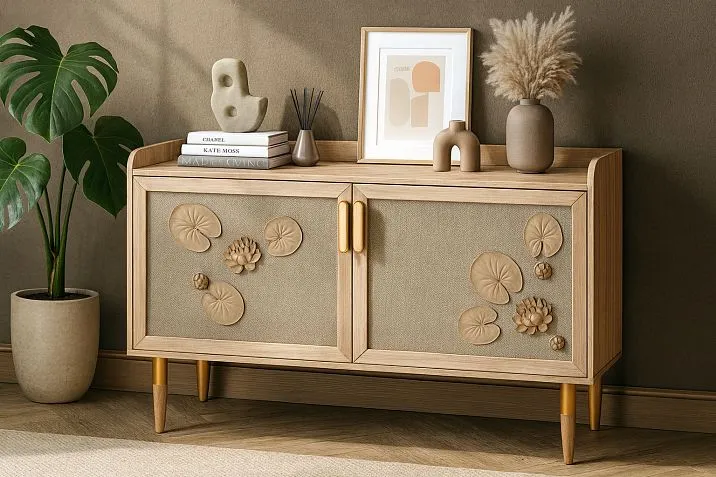
What makes us pause before an antique chest or an exquisite carved table? Why does wooden furniture remain a symbol of status and good taste in the age of synthetic materials? The answer lies in understanding that what wood is furniture made of and what secrets this amazing natural material hides.
The furniture industry is a symphony of traditions and innovations, where each wood species plays its unique part. From majestic oak to elegant walnut, from practical pine to exotic wenge — each material possesses its own character, determining not only the appearance but also the functionality of the finished product.


Roots of craftsmanship: the historical legacy of woodworking
The art of creating furniture from wood traces its roots back to the depths of millennia. Ancient Egyptians already knew the secrets of processing cedar and ebony, creating artworks that have survived to this day. Medieval masters in Europe elevated woodworking to the rank of high art, developing techniques that formed the basis of modern furniture production.
. Each era contributed its own adjustments to the understanding that What is better for making furnitureRenaissance masters discovered the beauty of Italian walnut, 18th-century cabinetmakers celebrated the elegance of mahogany, and the Industrial Revolution spurred the mass use of local species — oak, beech, birch.
Traditional methods of wood processing were formed over centuries. Masters learned to "read" the structure of wood, understand the direction of fibers, predict the behavior of the material under various climatic conditions. These knowledge, passed down from generation to generation, are today supplemented by modern technologies, but the foundation remains unchanged — a deep understanding of the nature of wood.
Traditional joining techniques — dovetail, tongue-and-groove, dowel — are still considered the standard for strength and durability. These methods did not require glue or metal fasteners, relying exclusively on the precision of the craftsman's work and the natural properties of wood.




Palette of nature: classification of wood species for furniture production
Our factory also produces:


Aristocrats of the wooden world: hardwoods
Hardwood is the foundation of classic furniture, a material from which creations that last for centuries are made. Oak, a symbol of strength and reliability, rightfully occupies the first place in this hierarchy. Its dense structure, pronounced texture, and resistance to mechanical impacts make it ideal for crafting solid furniture, tables, and chairs.
Beech, the "workhorse" of the furniture industry, combines strength with relative accessibility. Its light wood takes staining beautifully, allowing it to imitate more expensive species. Beech is especially prized in bentwood furniture production due to its ability to take on complex shapes under steam.
Ash attracts craftsmen with its elasticity and expressive texture. This species is indispensable for manufacturing sports equipment and furniture subjected to dynamic loads. Maple wood, with its almost snowy color and fine grain, becomes the basis for exclusive interior solutions.
Walnut is the aristocrat among wood species. Its noble chocolate hue and refined texture have attracted furniture makers and designers for centuries. Walnut furniture is an investment in beauty and status, a material that only improves with time.
Cherry possesses a unique property — its wood darkens over time, acquiring a rich reddish-brown hue. This makes cherry furniture "alive," changing before the owner's eyes.
Get Consultation
Coniferous elegance: softwoods in furniture making
Despite its "softness," pine remains one of the most popular materials in the furniture industry. Its accessibility, ease of processing, and distinctive resinous texture make pine indispensable for producing budget-friendly yet quality furniture. Scandinavian manufacturers elevated pine furniture to the level of art, proving that simplicity can be refined.
Spruce, with its uniform structure and light tone, is widely used in solid furniture production. Spruce wood holds fasteners well, which is especially important when assembling cabinets and shelves.
Cedar brings not only beauty but also functionality to interiors — its natural antiseptic properties make cedar furniture an ideal choice for bedrooms and children's rooms. The scent of cedar creates a unique atmosphere of coziness and comfort.
Larch, technically a coniferous species, approaches hardwoods in hardness. Its resistance to moisture makes larch an excellent choice for furniture in high-humidity rooms.
Exotic treasures: rare species in luxury furniture
The world of exotic wood is a territory of exclusive solutions and boundless beauty. Each species tells its own story, bearing the imprint of the climate and soil of distant continents.
Teak, king of shipbuilding wood, entered the furniture industry, bringing exceptional resistance to moisture and temperature fluctuations. Teak furniture is a choice for those who value not only beauty but also practicality.
Wenge, with its almost black color and contrasting grain, has become a symbol of modern minimalism. This African species requires special skills in processing, but the result justifies all the effort.
Padauk, or rosewood, enchants with its play of hues — from light pink to dark purple. Its density and hardness make padauk furniture practically eternal.
Zebrawood attracts attention with its striped texture, reminiscent of the coat of an African zebra. This species requires special craftsmanship in selecting and joining boards to create a harmonious pattern.
Technological revolution: modern wood processing methods
Modern wooden furniture production is a synthesis of centuries-old traditions and advanced technologies. Computer modeling allows optimizing raw material usage, minimizing waste and maximizing the quality of finished products.
Kiln drying of wood revolutionized material preparation. A controlled process of moisture removal allows achieving optimal moisture levels (6-8% for furniture production), eliminating deformations and cracking in finished products.
Vacuum impregnation with protective compounds ensures deep penetration of antiseptics and fire retardants, creating a reliable barrier against pests and fire. This technology is especially important when working with softwood species.
CNC machines have raised processing accuracy to a new level. Milling complex profiles, drilling holes for fasteners, creating grooves and joints — all this is performed with millimeter precision, unattainable by hand.
Laser cutting and engraving have opened new possibilities for decorating furniture. Delicate ornaments, complex geometric patterns, personalized monograms — laser technologies allow realizing the most daring design ideas.
Thermo-modification technology alters the wood structure without using chemicals. Exposure to high temperatures in an oxygen-free environment increases dimensional stability, moisture resistance, and resistance to biological effects.
Engineered wood: a revolution in materials science
The modern furniture industry does not limit itself to solid wood. Composite materials based on wood open new horizons in design and functionality. Understanding that what can be used to make furniturehas expanded thanks to innovative developments in wood composites.
Plywood, one of the first composite materials, remains indispensable in furniture production. Its layered structure with perpendicular fiber orientation ensures exceptional strength and dimensional stability. Birch plywood is especially valued for its strength and beautiful texture.
Particleboard (PB) and medium-density fiberboard (MDF) have revolutionized mass furniture production. These materials combine economy with high performance, enabling the creation of affordable yet quality furniture.
Laminated panels have expanded design possibilities. Modern technologies allow creating finishes that imitate any wood species with photographic accuracy. Deep embossing even conveys the tactile sensation of natural wood.
Solid wood furniture panels combine the beauty of natural wood with the technological advantages of composite materials. Glued from narrow strips, these panels have high stability and minimal internal stresses.
Glued lumber has opened new possibilities for creating large-scale furniture. The technology allows obtaining blanks of practically any size, exceeding the natural limitations of solid wood.
Functional approach: material selection based on purpose
The question of What quality furniture is made ofThere is no universal answer. Each type of furniture has its own requirements for material, and wise choice depends on understanding these features.
Countertops require maximum hardness and resistance to mechanical impacts. Oak, ash, hard maple are ideal for these purposes. For kitchen countertops, resistance to moisture and food acids is also important, making teak and other tropical species a preferred choice.
Cabinets and chests must provide structural stability with relatively low weight. Coniferous species, plywood, and high-quality panel materials excel at this task. Using combined solutions allows optimizing the price-to-quality ratio.
Furniture facades — the face of the product, determining its aesthetic value. Here, the most beautiful species are appropriate: walnut, cherry, exotic woods. Modern technologies allow creating thin facades based on MDF, veneered with natural veneer of valuable species.
Frames of soft furniture require a special combination of strength and ease of processing. Beech, birch, high-quality coniferous wood provide the necessary structural reliability. It is important to consider the material's ability to hold fasteners and resist dynamic loads.
Children's furniture imposes higher requirements for ecological safety. Preference should be given to materials with minimal formaldehyde and other volatile compound content. Natural wood, especially coniferous species with their natural antiseptic properties, remains the best choice for children's rooms.
Ecological dimension: sustainable forestry and 'green' technologies
Modern understanding of what furniture is made of is inseparably linked to ecological responsibility. Sustainable forestry has become not just a fashionable trend, but a necessity for preserving global forest resources.
FSC (Forest Stewardship Council) and PEFC (Programme for the Endorsement of Forest Certification) certification systems ensure the transparency of wood origin. Furniture made from certified wood guarantees that the raw material comes from forests managed according to the principles of sustainable development.
The 'cradle to grave' concept considers the entire life cycle of furniture — from raw material processing to disposal of the finished product. Wooden furniture has a significant advantage: at the end of its service life, it can be recycled or biodegraded without harming the environment.
Local wood species are gaining new significance in the context of reducing carbon footprint. Using local materials reduces transportation costs and supports regional economies. Russian birch, oak, and pine do not fall short of imported analogs in quality, and often surpass them in ecological indicators.
Waste-free production technologies transform wood waste into valuable raw material. Sawdust and shavings are used to produce panel materials, bark is used in landscape design, and wood dust can serve as biomass fuel.
Secondary processing of wooden furniture is gaining popularity. Restoration, remodeling, and using elements of old furniture in new projects — these approaches extend the life of materials and reduce the need for new resources.
Longevity as a philosophy: factors determining the service life of wooden furniture
The secret of wooden furniture longevity lies not only in species selection, but also in understanding factors affecting material preservation over decades. Proper care, optimal operating conditions, and manufacturing quality determine whether the furniture becomes a family heirloom or requires replacement within a few years.
Air humidity is a critical factor for wooden furniture. An optimal range of 40-60% ensures dimensional stability and prevents cracking. Modern climate control systems allow maintaining ideal conditions, but even simple measures — avoiding placement near heating appliances, using humidifiers — significantly extend furniture lifespan.
Temperature fluctuations cause stress in wood, leading to deformation and cracking. Gradual seasonal changes are less harmful than sudden shifts. Quality furniture should withstand normal room temperature fluctuations without visible changes.
Ultraviolet radiation — an invisible enemy of wood. Direct sunlight causes fading and destruction of surface layers. Using UV filters on windows, proper furniture placement, and protective coatings help preserve the original appearance of items.
Mechanical impacts accumulate material fatigue. Quality hardware, proper construction, and adherence to load regimes — all of these affect longevity. Good furniture should 'age gracefully,' acquiring a noble patina, rather than breaking down from normal use.
Biological factors — pests, fungi, mold — can cause serious damage to wooden furniture. Proper wood preparation, protective treatment, and maintaining optimal microclimate create unfavorable conditions for pest development.
Modern trends: digitization and personalization
The furniture industry is undergoing deep changes linked to the adoption of digital technologies and growing demand for personalized solutions. Understanding modern trends helps recognize how perceptions of what materials are used to make wooden furniture in the 21st century.
3D printing of wooden composites opens new horizons in design. The technology allows creating complex shapes impossible with traditional processing. Fillers based on wood fibers impart printed items with texture and properties close to natural wood.
Parametric design uses algorithms to create unique forms and structures. Each item becomes individual, tailored to specific customer needs and room characteristics.
Virtual and augmented reality revolutionize furniture selection and design. Customers can 'try on' furniture in their interiors, evaluate size, color, style before making a purchase.
The Internet of Things (IoT) is entering the furniture industry. 'Smart' furniture with built-in sensors can monitor humidity, temperature, load, and alert users to the need for preventive maintenance.
Biomimetics is a field inspired by natural forms and structures. Studying tree growth, load distribution in trunks, and material optimization helps create more efficient furniture constructions.
Nanotechnology in wood processing creates coatings with unique properties: self-cleaning surfaces, antibacterial coatings, coatings that change color depending on temperature.
Regional specificity: characteristics of wood from different climatic zones
The origin geography of wood leaves an imprint on the material's properties. Climatic conditions, soils, and length of the vegetation period affect the density, texture, and color of wood.
Northern species, growing under conditions of short summers and long winters, are characterized by high density and fine structure. Slow growth creates dense annual rings, providing exceptional strength. Scandinavian pine, Siberian larch, Karelian birch — examples of materials whose properties were shaped over millennia by harsh climates.
Tropical species develop under constant heat and humidity. Rapid growth, nutrient richness, and lack of distinct seasonality create wood with unique characteristics. High density, vibrant colors, resistance to biological factors — results of adaptation to tropical climates.
Steppe and desert regions form wood with high hardness and drought resistance. Slow growth under water scarcity creates an exceptionally dense structure. Such wood requires special processing technologies but ensures unparalleled durability.
Mountain species combine characteristics of different climatic zones depending on their altitude. Vertical zonation creates unique conditions for forming wood with a gradient of properties.
Economics of choice: price-to-quality ratio
A rational approach to selecting materials for furniture requires understanding economic aspects. Initial cost is only part of the total expenses associated with owning furniture. Durability, repairability, residual value — factors determining the economic efficiency of the choice.
Mass species — pine, spruce, birch — provide an optimal price-to-quality ratio for most applications. Their availability, ease of processing, and acceptable performance characteristics make these materials the foundation of affordable furniture.
Mid-priced segment is represented by beech, ash, maple — species combining good mechanical properties with reasonable cost. These materials are suitable for creating mid- to high-end furniture.
Premium species — oak, walnut, exotic types — require significant investments but provide exceptional durability and aesthetic value. Such furniture often becomes a family heirloom, passed down from generation to generation.
Composite materials based on wood allow obtaining properties of expensive species using affordable raw materials. Modern finishing technologies create products visually indistinguishable from solid wood furniture.
Technologies of the future: prospects for wood processing development
The furniture industry stands at the threshold of revolutionary changes. Genetic modification of trees may create species with desired properties — increased hardness, pest resistance, accelerated growth. However, ethical and ecological questions require a cautious approach to such technologies.
Laboratory cultivation of wood from cell cultures may revolutionize the acquisition of valuable species. The technology will allow obtaining material with controlled properties without deforestation.
Computer modeling of wood structure at the molecular level opens opportunities for creating synthetic analogs with superior properties compared to natural wood.
Robotics in wood processing increases production accuracy and speed, reduces human factor influence. Automated lines can operate 24/7, ensuring consistent product quality.
Blockchain technologies for tracking wood origin create full supply chain transparency, guaranteeing material legality and eco-friendliness.
Frequently asked questions
Which wood is best suited for furniture making?
Wood selection depends on furniture purpose and budget. For carcass furniture, oak, beech, and ash are ideal. For decorative elements — walnut, cherry, exotic species. Coniferous species are perfect for budget-friendly yet quality furniture.
What distinguishes solid wood from veneered materials?
Solid wood is whole wood retaining all natural material properties. Veneered materials have an MDF or plywood base covered with a thin layer of valuable wood. Veneer is cheaper than solid wood but less durable.
How to determine wood quality when buying furniture?
Pay attention to color uniformity, absence of cracks, knots, pest marks. Quality wood has a characteristic pleasant aroma, smooth surface after sanding. Check the tightness of joints.
Can coniferous species be used for kitchen furniture?
Coniferous species are suitable for kitchen furniture frames, but for countertops and facades, harder hardwoods are preferable. Resin in conifers may cause issues when in contact with hot objects.
How to care for wooden furniture?
Regularly wipe furniture with dry or slightly damp cloth. Use special wood care products. Avoid direct sunlight, sharp temperature and humidity fluctuations. Immediately clean up liquid spills.
Is it worth buying furniture made from exotic wood species?
Exotic species possess unique beauty and often excellent performance characteristics. However, it is important to ensure the legality of the material's origin and the presence of appropriate certificates.
What modern materials can replace natural wood?
High-quality laminated materials with natural veneer finish, engineered wood, and modern composites allow achieving properties close to solid wood at a lower cost.
Does the origin of the wood affect the quality of furniture?
The region of growth significantly affects the properties of wood. Northern species are usually denser and stronger, while tropical species are more stable to humidity. It is important to choose a material adapted to the climatic conditions of use.
Conclusion: The art of choice in a world of possibilities
The world of wooden furniture is a universe of possibilities, where each wood species tells its unique story. From a humble pine bench to a luxurious walnut cabinet — every piece bears the imprint of nature and human craftsmanship.
Modern understanding of what constitutes quality furniture goes far beyond simply choosing a wood species. It is a comprehensive approach that considers ecological aspects, technological capabilities, aesthetic preferences, and practical needs.
The future of the furniture industry appears as a harmonious blend of tradition and innovation. Centuries of experience of master carpenters is complemented by the possibilities of digital technologies, creating the foundation for the development of next-generation furniture — beautiful, functional, and eco-friendly.
In this pursuit of perfection, companies that combine deep understanding of materials with modern manufacturing technologies play a special role. STAVROS has remained faithful to the principles of quality and innovation for many years, offering solutions that meet the most demanding requirements. Our approach to material selection, processing technologies, and design creates furniture that does not merely serve, but inspires, transforming the home into a work of art.