Article Contents:
- Solid wood — a classic solution with modern capabilities
- Technological specifics of working with solid wood
- MDF — a universal solution for modern furniture
- Water-resistant MDF for special conditions
- Decorative possibilities of MDF
- Particleboard — a time-tested solution
- Water-resistant particleboard for humid rooms
- Plastic materials — practicality and durability
- Postforming technology
- PVC film — affordable decoration
- Glass facades — lightness and functionality
- Decorative types of glass
- Composite materials and modern technologies
- Veneered facades
- Composite materials
- Manufacturing and processing technologies for facades
- Material Cutting
- Edge banding
- Carving decorative elements
- Coating and final finishing
- Material selection depending on usage conditions
- Kitchen facades — durability test
- Furniture for living spaces
- Children's furniture — safety first
- Furniture for humid rooms
- Modern trends in facade design
- Minimalism and clean lines
- Natural materials and textures
- Color solutions
- Combining materials
- Ecological aspects of production
- Formaldehyde emissions
- Forest certification
- Secondary recycling
- Innovations and technologies of the future
- Smart materials
- Digital technologies
- Biomaterials
- Care and maintenance of different types of facades
- Care for wooden facades
- Care for MDF and particleboard
- Care for plastic facades
- Glass Facade Care
- Economic Aspects of Material Selection
- Cost of Various Materials
- Long-Term Expenses
- Regional Characteristics and Climatic Factors
- Climate Impact on Materials
- Adaptation to local conditions
- Frequently Asked Questions about Furniture Facades
- Conclusion

Question aboutWhat furniture fronts are made ofFacades are the face of any piece of furniture, defining not only its appearance but also its functionality and durability. In the modern world, there is an enormous variety of materials and technologies, each with its own characteristics and applications.
Choosing a material for furniture facades is an art that requires a deep understanding of the properties of different materials, operating conditions, and design objectives. The right choice affects not only the beauty of the finished product but also its practicality, lifespan, and budget compatibility.

Solid Wood — a classic solution with modern capabilities
Natural wood remains the benchmark of quality and beauty in furniture manufacturing. When we ask ourselves,what materials are used to make wooden furniture, the first thing that comes to mind is solid wood of various species.
Oak is rightfully considered the king among wood species for furniture facades. Its dense structure, expressive texture, and high strength make it the ideal choice for creating prestigious furniture. Oak facades can last for decades, maintaining their beauty and functionality. Oak is especially valued for its ability to patina — natural aging that gives furniture a noble antique appearance.
Ash attracts furniture makers with its contrasting texture and relatively affordable price. The light tones of ash are perfect for modern interiors, and its high strength ensures the longevity of the products. Ash facades are especially popular in Scandinavian interior design styles.
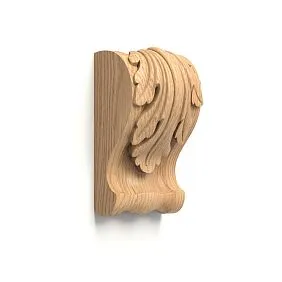
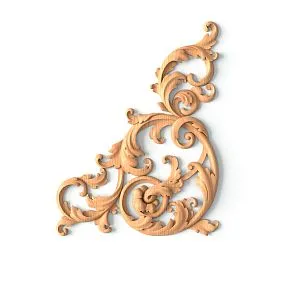
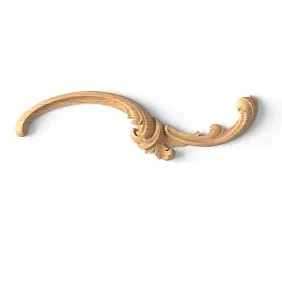
Beech has a uniform structure and warm honey-colored tones. This species is highly workable, allowing for the creation of complex decorative elements.where to buy furniture decor— an important question for those who wish to adorn their furniture with natural elements.
Walnut is valued for its deep chocolate color and complex texture. Walnut facades are always exclusive; they highlight the owner's status and create an atmosphere of luxury. However, working with walnut requires highly skilled craftsmen due to the peculiarities of the wood structure.
Coniferous species — pine, spruce, larch — offer a more budget-friendly solution for those who want to obtain furniture from natural wood. With proper processing and quality coating, coniferous facades can serve long and reliably.




Technological Features of Working with Solid Wood
Manufacturing facades from solid wood is a complex technological process requiring attention to many details. The first and most important stage is proper wood drying. The moisture content of the finished material should not exceed 8-10%, otherwise facades may deform during use.
Modern wood drying chambers allow precise control of the process. Drying occurs gradually in several stages, minimizing internal stresses in the wood. Properly dried material is the guarantee of facade geometry stability for many years.
The next stage is selecting boards by quality and appearance. Masters select material free of knots, cracks, resin pockets, and other defects. Special attention is paid to matching boards by color and grain pattern — this ensures a harmonious appearance of the finished product.
Gluing boards into panels requires using special water-resistant adhesives and following pressing technology. A properly glued panel is as strong as a solid board, and sometimes even stronger.
Our factory also produces:




MDF — a universal solution for modern furniture
MDF (Medium Density Fiberboard) has brought a true revolution to the furniture industry. This material combines the advantages of natural wood and modern technologies. When we examine,What new-generation furniture is made of — a question customers must receive comprehensive answers to. Eco-friendliness, durability, ease of care — specific advantages speak louder than abstract 'innovation'., MDF deserves special attention as one of the most popular materials.
MDF is made from the finest wood fibers, which are bonded under high pressure and temperature with environmentally friendly binders. The resulting material has a uniform structure and, in many ways, surpasses natural wood in dimensional stability.
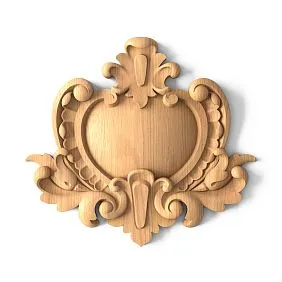
The density of quality MDF is 720-870 kg/m³, ensuring excellent workability of the material. MDF is easily machined, allowing for the creation of complex decorative profiles with sharp edges and smooth transitions.where to buy moldings for decoration— a popular request among furniture makers.
Get Consultation
Water-resistant MDF for special conditions
Standard MDF can be used in living areas with normal humidity, but for kitchens and bathrooms, water-resistant varieties are recommended. Water-resistant MDF contains special additives that significantly increase its resistance to moisture.
These panels are easily recognizable by their characteristic greenish tint at the edges. Water-resistant MDF can withstand brief exposure to water without losing structural integrity, making it ideal for kitchen facades.
Decorative possibilities of MDF
One of the main advantages of MDF is its ability to accept any type of decorative finish. PVC film, enamel paints, natural veneer, plastic overlays — all these materials adhere excellently to an MDF base.
The membrane-vacuum pressing technology allows applying PVC film even to complex milled surfaces. Under the influence of vacuum and temperature, the film precisely replicates all the contours and recesses of the relief, creating a perfectly smooth finish.
MDF — a time-tested solution
Particleboard (MDF) is a material with a rich history in the furniture industry. Modern manufacturing technologies have significantly improved the quality of MDF, transforming it into a reliable and affordable material for furniture facades.
Modern MDF is made from calibrated wood particles arranged in multiple layers. The outer layers consist of fine particles, providing a smooth surface, while the inner layers are made of coarser particles, giving the board the necessary strength.
Laminated MDF (Laminated Particleboard) opens up wide decorative possibilities. Modern decorative finishes impress with their realism — wood, stone, fabric, abstract patterns. Direct lamination technology ensures strong adhesion of the decorative layer to the base.
Water-resistant MDF for humid areas
Special water-resistant MDF is produced for use in humid conditions. It contains melamine-formaldehyde resins with enhanced water resistance. The ends of such boards are painted green or blue for easy identification.
Water-resistant MDF can be used to manufacture kitchen facades and bathroom furniture. However, it is important to remember that the ends of the boards must be reliably protected with edge banding or special sealants.
Plastic materials — practicality and durability
Plastic in the furniture industry is a high-tech solution for special operating conditions. Modern plastic materials for facades significantly surpass those used several decades ago in quality.
Acrylic occupies the leading position among plastics for furniture facades. Acrylic surfaces are characterized by perfect smoothness, deep color, and mirror gloss. They do not fade in sunlight, easily clean any dirt, and retain their original appearance for decades.
The thickness of acrylic plastic for facades is usually 2-3 mm. This is sufficient to create a strong and beautiful finish. Acrylic can be glossy, matte, or have various textured effects.
Postforming technology
Postforming is an innovative technology that allows creating seamless facades with rounded edges. Plastic, under pressure and temperature, conforms to the base made of MDF or particleboard, creating a perfectly smooth surface without seams or gaps.
Postforming facades are especially popular for kitchen furniture, as the absence of seams prevents moisture and dirt from entering the structure. Such facades are easy to clean and last long even under harsh operating conditions.
PVC film — affordable decoration
PVC film is one of the most affordable ways to decorate furniture facades. Modern films can imitate any materials: various types of wood, natural stone, metallic surfaces, textiles.
Vacuum pressing technology allows applying film even to milled surfaces of complex configuration. High-quality film with a thickness of 0.35–0.45 mm lasts long and reliably protects the base from external influences.
Glass facades — lightness and functionality
Glass in furniture is not only beauty, but also practicality. Glass facades visually expand space, add light to the room, and create a sense of airiness.Where to Buy Moldings for Wall DecorationThose who are often interested in framing glass inserts in furniture.
Tempered glass is the main material for furniture facades. The tempering process makes glass 5–7 times stronger than ordinary glass. Even if tempered glass breaks, it shatters into small, safe fragments with blunt edges.
The standard thickness of glass for furniture facades is 4–6 mm. For large doors, glass 8–10 mm thick is used, ensuring the necessary structural rigidity.
Decorative glass types
Matte glass is obtained by sandblasting or chemical etching. Such facades partially conceal the contents of cabinets, creating an intriguing play of light and shadow. Matte glass can have varying degrees of transparency — from slightly frosted to completely opaque.
Tinted glass in various shades — bronze, gray, blue, green — allows creating interesting color accents in interior design. Such facades look especially striking in modern interiors.
Stained glass transforms ordinary furniture into a work of art. Modern technologies allow creating stained glass of any complexity — from simple geometric patterns to complex artistic compositions.
Composite materials and modern technologies
Modern furniture is rarely made from a single material. Combining different materials allows achieving an optimal balance of aesthetic, functional, and economic characteristics.
Veneered facades
Natural veneer — a thin slice of valuable wood species, 0.5–1.5 mm thick — allows achieving the beauty of solid wood at significantly lower cost. Veneer is glued onto an MDF or particleboard base, creating a facade with natural wood texture.
There are several types of veneer: planed, peeled, and fine-line. Planed veneer preserves the natural wood grain, peeled veneer has a more uniform texture, and fine-line veneer is artificially created with specified characteristics.
Composite materials
The development of technologies has led to the emergence of new composite materials that combine the advantages of various components. Wood-polymer composites (WPC) combine the naturalness of wood and the practicality of polymers.
HPL (High Pressure Laminate) — high-pressure laminate — possesses exceptional strength and resistance to various influences. Such facades can be used in the most demanding conditions.
Furniture facade manufacturing and processing technologies
Modern furniture facade production is a high-tech process involving numerous operations. Each stage affects the final product's quality and requires strict adherence to technological parameters.
Material cutting
Cutting accuracy — the foundation of quality facades. Modern format-cutting machines allow cutting material with precision down to tenths of a millimeter. Software calculates the optimal cutting layout, minimizing material waste.
Special saw blades are used for cutting various materials. Variable-tooth blades are used for laminated materials, ensuring clean cuts without chipping. Aggressive-toothed blades are used for solid wood.
Edge banding
Edge banding is a critically important operation for panel materials. A quality edge not only protects the end from moisture but also gives the product a finished look. Edge band thickness varies from 0.4 to 3 mm depending on the product's purpose.
Modern edge banding machines apply the band using a melt adhesive, ensuring strong and water-resistant bonding. The process includes several stages: adhesive application, pressing the band, trimming overhangs, and profiling.
Milling decorative elements
Milling transforms a flat blank into a work of art. Modern CNC machining centers can create profiles of any complexity with perfect repeatability. Milling operations are performed using special tools of various configurations.
Classic profiles — dados, grooves, and moldings — are created using profile milling cutters. Each profile requires a specific cutter with a defined geometry. 3D milling allows creating three-dimensional images, complex geometric patterns, and wood carving imitations.
Coating and final finishing
Coating application is the final and one of the most important stages of facade manufacturing. The quality of the coating affects not only the appearance but also the durability of the product.
Solid wood lacquering is performed in several stages. First, a primer is applied to level the surface and improve the adhesion of the final coating. Then comes sanding and application of multiple lacquer layers with intermediate sanding.
Enamel coatings are applied by spraying in special chambers. Each layer must be uniform and free of defects. Modern polyurethane enamels provide high coating strength and durability.
Material selection depending on operating conditions
Choosing the right material for furniture facades is impossible without considering the conditions of use. Each room imposes specific requirements on furniture, and understanding these requirements will help make the optimal choice.
Kitchen facades — a test of durability
The kitchen is a place of maximum stress on furniture. High temperatures from stoves and ovens, steam from cooking, splashes of grease and water, frequent door opening — all this requires special material durability. The question of whetherkitchen furniture is made ofis especially relevant for those planning a durable and practical kitchen.
MDF with enamel coating is one of the best options for kitchens. Enamel is easy to clean, resistant to moisture and high temperatures. Minor scratches can be polished, and serious damage can be repaired by repainting.
Plastic facades are also ideal for kitchens. They do not absorb odors, are easily cleaned even with aggressive cleaning agents, and do not fade from sunlight. Acrylic surfaces are especially popular in modern kitchens.
Solid wood in kitchens requires special attention to species selection and coating type. Dense species — oak, ash, beech — are best suited. The coating must be highly resistant to moisture and temperature.
Furniture for living spaces
In bedrooms and living rooms, aesthetic qualities of materials take precedence. Here, more delicate and refined solutions are possible.What is better for making furniturefor living rooms — a question requiring consideration of multiple factors.
Solid wood is ideal for bedrooms. Natural material creates a healthy microclimate, regulating air humidity. Natural wood tones soothe and promote relaxation.
Veneered facades allow achieving the beauty of natural wood at a more affordable price. Quality veneer is visually indistinguishable from solid wood but significantly cheaper.
Children's furniture — safety comes first
Furniture for children's rooms must meet the strictest safety requirements. All materials must have environmental safety certificates and minimal emission of harmful substances.
E1 grade MDF is the optimal choice for children's furniture. Formaldehyde emission in such panels is at the minimum level and is absolutely safe for a child's health.
Finishes must be resistant to mechanical impacts and easy to clean. Children are not always careful, so facades must withstand toy impacts and easily remove various stains.
Furniture for wet areas
Bathrooms and other wet areas require a special approach to material selection. Ordinary materials quickly deteriorate under such conditions.
Water-resistant MDF is the best choice for bathrooms. Special additives make it practically immune to moisture. Such panels are easily recognizable by their characteristic green tint.
Plastic facades are ideal for wet areas. They do not deform from moisture, do not rot, and do not develop mold. The surface is easily cleaned with any cleaning agents.
Modern trends in facade design
The design of furniture facades constantly evolves, reflecting changes in lifestyle and aesthetic preferences. Understanding modern trends will help create timely and stylish furniture.
Minimalism and clean lines
Modern design tends toward simplicity and minimalism. Clean geometric shapes, absence of unnecessary details, emphasis on material quality — these are the main features of a minimalist approach.
Flat facades without decorative routing are becoming increasingly popular. Their beauty lies in perfect proportions, high-quality materials, and flawless execution.
Hidden opening systems — another trend of minimalism. Facades open with a simple press or have integrated handles, creating a monolithic surface effect.
Natural materials and textures
Despite the trend toward minimalism, people seek naturalness and authenticity. Wood with clearly visible grain — oak, beech, walnut — is once again in fashion.
Species with contrasting wood grain patterns are especially valued. Brushing — a technique for artificially emphasizing wood texture — allows making the pattern more expressive.
Live edges — boards with preserved natural tree trunk shape — are used to create unique facades in loft or eco-design styles.
Color Solutions
The color palette of furniture facades is becoming increasingly diverse. Gray in all shades — from light gray to anthracite — remains one of the most popular. It is versatile and harmonizes beautifully with any accents.
Deep, saturated colors — emerald, sapphire, terracotta — are used to create striking accents. Such facades become the focal point of the entire interior composition.
Two-tone and multi-tone solutions allow creating complex visual effects. Contrast between light and dark, matte and glossy, creates dynamism and depth.
Combining materials
Modern furniture often combines different materials in one piece. Wood and metal create an industrial aesthetic, wood and glass — a sense of lightness and airiness.
Matte and glossy surfaces in one piece create an interesting play of light and shadow. This approach makes furniture more dynamic and expressive.
Ecological Aspects of Production
The ecological nature of materials is becoming an increasingly important factor when choosing furniture. Consumers pay attention not only to beauty and functionality, but also to safety for health and the environment.
Formaldehyde emission
Formaldehyde is the main ecological problem of some panel materials. Modern standards strictly regulate the permissible level of emission of this substance.
E1 emission class — standard level for furniture in residential spaces. E0 class materials emit virtually no formaldehyde and are recommended for children's rooms.
Modern technologies allow producing panels entirely without formaldehyde, using alternative binders based on natural components.
Forest Certification
Responsible manufacturers use wood from certified forests. FSC and PEFC certificates guarantee that the wood is sourced from properly managed forests in accordance with sustainable forestry principles.
Recycling
Questions of furniture recycling are becoming increasingly relevant. Manufacturers strive to use materials that can be recycled after the furniture's service life ends.
Solid wood is a fully renewable resource that can be recycled or used as biofuel. MDF and particleboard can also be recycled into new panels.
Innovations and technologies of the future
The furniture industry is constantly evolving. New materials and technologies are emerging that can fundamentally change approaches to facade manufacturing.
Smart Materials
Nanotechnology opens new possibilities for creating materials with unique properties. Self-cleaning coatings with titanium dioxide nanoparticles break down contaminants under light exposure.
Antibacterial coatings with silver ions prevent bacterial and microorganism proliferation. Such materials are especially relevant for kitchen furniture.
Digital technologies
3D printing allows creating complex decorative elements that cannot be manufactured using traditional methods. Digital printing on facades opens limitless possibilities for personalizing furniture.
Laser engraving allows applying delicate patterns and images onto facade surfaces. The engraving depth can be controlled with micrometer precision.
Biomaterials
Research in biomaterials opens new prospects. Bioplastics from plant-based raw materials can replace traditional polymers. Composites based on natural fibers provide high strength with less weight.
Care and maintenance of different types of facades
Proper care significantly extends the service life of furniture facades and preserves their original appearance. Each material type has its own care requirements.
Care for wooden facades
Solid wood requires special attention. Regular cleaning with a soft, slightly damp cloth removes dust and surface dirt. Abrasive agents and stiff brushes must not be used.
Special wood polishes nourish the wood and restore the finish's luster. It is important to avoid direct sunlight, which may cause fading and cracking.
Care for MDF and particleboard
Panel materials require less maintenance. Wet cleaning should be moderate — excess moisture may cause material swelling, especially at edges.
When the finish is damaged, repair should be done immediately to prevent moisture from penetrating the material's base.
Care for plastic facades
Plastic finishes are easiest to maintain. Any non-abrasive cleaning agents can be used. Acrylic surfaces can be polished with special agents to restore their shine.
Care for glass facades
Glass requires regular cleaning to maintain transparency and shine. Special glass cleaners are used, which do not leave streaks.
Economic aspects of material selection
When selecting material for facades, it is important to consider not only the initial cost but also long-term expenses for operation and maintenance.
Cost of various materials
Solid wood is the most expensive option but also the most durable. High initial cost is offset by long service life and the possibility of restoration.
MDF offers optimal price-to-quality ratio. Cost is lower than solid wood, but functional characteristics often exceed natural wood.
Particleboard is the most budget-friendly option, suitable for economy-class furniture. With proper use, it can last a long time.
Long-term expenses
When calculating total ownership cost, it is important to consider expenses for maintenance, possible repairs, and replacement of components. High-quality materials usually require lower maintenance costs.
Adaptation to Russian climate
Material selection for furniture facades should consider regional climate conditions. In Russia, with its continental climate, material resistance to temperature and humidity fluctuations is especially important.
Influence of climate on materials
Solid wood is particularly sensitive to air humidity changes. During the heating season, when indoor humidity decreases, wooden facades may shrink and develop gaps.
MDF and chipboard are more dimensionally stable, but also require certain operating conditions to be met. Moisture-resistant varieties are better suited for Russian conditions.
Adaptation to local conditions
Furniture manufacturers adapt their technologies to local climatic conditions. Special adhesives and coatings designed for operation in continental climates are used.
Frequently Asked Questions about furniture facades
Which material is best for kitchen facades?
For kitchens, MDF with enamel coating or plastic facades are optimal. They are easy to clean, resistant to moisture and high temperatures. Solid wood is also suitable but requires more careful maintenance.
Can a damaged facade be repaired?
Repairability depends on the material and nature of damage. Enamel coatings can be repainted, wooden facades can be restored, and film coatings can be replaced.
How long do different types of facades last?
Solid wood, with proper care, can last for decades. MDF with quality finish — 15–20 years. Particleboard — 10–15 years. Service life largely depends on usage conditions and manufacturing quality.
Are modern furniture materials environmentally safe?
Modern E1 and E0 class materials are absolutely safe for health. It is important to choose products from certified manufacturers and request documentation confirming compliance with environmental standards.
Which facades are best for a child's room?
For children's furniture, MDF class E0 or solid wood with eco-friendly finishes is recommended. It is important to avoid sharp corners and choose durable, mechanically resistant finishes.
Conclusion
Selecting material for furniture facades is a complex task requiring consideration of multiple factors. The right choice affects not only the furniture's appearance but also its functionality, durability, and safety of use.
The modern market offers a wide range of materials — from traditional solid wood to innovative composite materials. Each material has its advantages and optimal application areas.
Understanding the characteristics of various materials, technologies for their processing, and operating conditions will help make an informed choice and create furniture that will delight with its beauty and functionality for many years.
Expertise and a professional approach are crucial in this area. STAVROS has been specializing in the production of high-quality decorative elements and components for the furniture industry for many years. Deep knowledge of materials, modern manufacturing technologies, and strict quality control enable STAVROS to offer solutions for the most demanding projects. By turning to professionals, you are guaranteed to receive a quality product that meets all modern requirements for furniture materials.