Article Contents:
- The Soul of Wood: Characteristics That Determine the Choice
- Density of Wood — Foundation of Strength
- Hardness — Resistance to Wear
- Dimensional Stability — Guarantee of Longevity
- Deciduous Hardwoods — Aristocrats of the Wooden World
- Oak — King of Furniture Woods
- Ash — Dynamic Beauty of Contrasts
- Walnut — Embodiment of Refinement
- Beech — Universal with a Warm Character
- Maple — Light Elegance
- Coniferous Woods — Accessible Practicality
- Spruce — Popular Favorite
- Fir — Gentle Beauty of the North
- Larch — Coniferous Aristocrat
- Cedar — Aromatic Luxury
- Exotic Woods — Exoticism of the Tropics
- Redwood — Classic Luxury
- Wenge — African Exotic
- Teak — Maritime Legend
- Ebony — Black Pearl
- Wood Preparation Technology — Path from Forest to Furniture
- Log Preparation and Primary Processing
- Drying — Foundation of Stability
- Stabilization and Seasoning
- Methods of Wood Treatment and Decoration
- Mechanical Processing — Creating Shape
- Joints — the foundation of strength
- Surface Finishing — Protection and Beauty
- Decorative Elements and Hardware
- Carved Elements — Traditional Art
- Inlay and Marquetry — Jewelry Work
- Hardware — functional beauty
- Specialized furniture and applications
- Furniture for children's rooms — safety first
- Kitchen furniture — resistance to extreme conditions
- Garden furniture — harmony with nature
- Office furniture — prestige and functionality
- Restoration and repair of wooden furniture
- Damage diagnosis
- Restoration technologies
- Prevention and Maintenance
- Modern Trends and Innovations
- Sustainable forestry
- Technological Innovations
- Personalization and customization
- Economic aspects of wood selection
- Pricing factors
- Cost Optimization
- Investment attractiveness
- Cultural and historical aspects
- Traditions of various regions
- Symbolic meaning of wood species
- Myths and legends
- Frequently Asked Questions
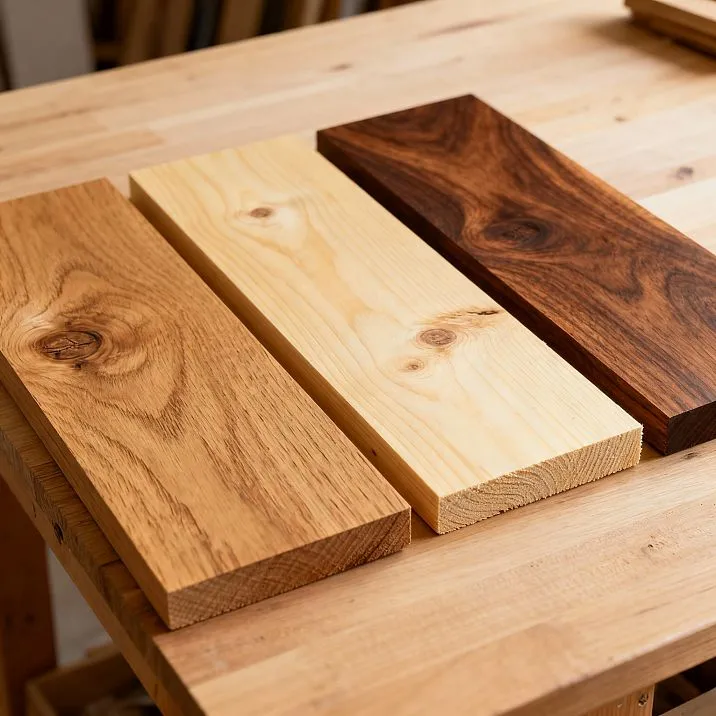
What could be more beautiful than the scent of freshly planed wood in a master carpenter's workshop? This aroma is a symbol of craftsmanship, traditions, and the endless human desire to create beauty with one's own hands. The question ofwhat materials are used to make wooden furniture, does not have a simple answer. Behind each piece of furniture lies centuries of accumulated experience, careful material selection, and a deep understanding of the characteristics of various wood species.
Wood is not just a material — it is a living substance with its own history, character, and soul. Each ring on the cross-section of a tree trunk tells the story of the tree’s years, of droughts and rainy seasons, of freezing winters and scorching summers. And when a craftsman takes up work with wood, he becomes a co-author of this story, continuing the life of the tree in a new form.
The modern furniture industry offers a rich palette of wood species — from traditional European to exotic tropical varieties. Each species possesses unique properties: strength, texture, color, aroma. Knowledge of these characteristics is the key to creating furniture that will not only be beautiful but also durable, functional, and harmoniously integrated into the interior.


The soul of wood: characteristics determining selection




Wood density — the basis of strength
Wood density — the first and most important parameter determining suitability of a species for furniture making. This indicator is measured in kilograms per cubic meter and varies over an enormous range — from 300 kg/m³ for the lightest species to 1300 kg/m³ for ultra-dense tropical varieties.
Dense wood possesses high mechanical strength, holds fasteners well, and allows for the creation of thin, elegant details without the risk of breakage. However, high density complicates processing — such wood requires powerful equipment and sharp tools, yet the result exceeds all expectations in terms of longevity and beauty.
Light species, on the contrary, are easy to process, but require larger cross-sections to ensure the necessary strength. They are ideal for making large furniture, where the weight of the structure is important.
Our factory also produces:


Hardness — resistance to wear
Wood hardness determines its resistance to mechanical impacts — blows, scratches, dents. This parameter is especially important for furniture subjected to intensive use — tables, chairs, cabinets in children's rooms.
Hard species retain their flawless appearance for decades, even with active use. Their surfaces do not show marks from accidental impacts, scratches from pets' claws, or dents from fallen objects.
Soft species are more susceptible to mechanical damage, but this is compensated by their special warmth and coziness. Moreover, minor damage on soft wood is often easily remedied by simple sanding and reapplying a finish.
Get Consultation
Dimensional stability — guarantee of longevity
Dimensional stability — the ability of wood to maintain its geometry under changes in humidity and temperature. This parameter is critically important for quality furniture, especially in the Russian continental climate with its sharp fluctuations in humidity.
Stable species practically do not change dimensions with air humidity fluctuations. Furniture made from such wood does not warp, crack, or develop gaps at joints. Unstable species require special preparation and assembly technologies, but with the right approach, they also yield excellent results.
Noble hardwoods — the aristocrats of the forest world
Oak — the king of furniture woods
Oak is rightfully considered the king among furniture woods. Its exceptional characteristics — high density of 700-800 kg/m³, superior hardness, and excellent dimensional stability — make it the ideal material for the most demanding furniture. Oak furniture can serve for centuries, passing from generation to generation as a family heirloom.
Oak's texture impresses with its expressiveness and variety. Radial cutting reveals the characteristic "tiger stripe" pattern — the result of medullary rays. Tangential cutting shows a wavy pattern of annual rings. Each board is unique and irreplaceable.
Oak's color palette varies from light straw to dark brown depending on growing conditions and drying method. Especially prized is the stained oak — wood that has lain for centuries in water and acquired a noble dark gray, almost black hue.
Ash — dynamic beauty of contrasts
Ash attracts furniture makers with its contrasting texture and high mechanical properties. Density of 650-750 kg/m³ and exceptional impact resistance make it ideal for furniture subjected to heavy loads — sports equipment, children's furniture, staircases.
Ash's texture features clearly defined annual rings, creating a dynamic, energetic pattern. The light sapwood contrasts with the darker heartwood, creating a natural play of tones. This feature allows creating striking furniture even without additional staining.
Ash is exceptionally suitable for all types of processing — bending, turning, carving. It holds its shape perfectly after steaming and is flexible, making it indispensable for creating curved furniture elements.
Walnut — embodiment of elegance
Walnut — material for true connoisseurs of beauty and quality. Its density of 600-700 kg/m³ ensures strength, while its unique texture and color make each item a work of art. Walnut wood features a complex pattern with interwoven fibers, creating unique patterns.
Walnut's color palette impresses with its variety — from light brown to nearly black with purple hues. Especially prized is Caucasian walnut with its deep chocolate color and complex texture. American black walnut features a more uniform structure and noble dark tone.
Walnut is exceptionally suitable for polishing, achieving a mirror-like gloss. It is ideal for creating prestigious furniture — offices of executives, libraries, bedrooms in classic style.What to give a carpenterOften interested are those who wish to delight the craftsman with high-quality walnut blanks.
Beech — universal with a warm character
Beech is rightfully considered one of the best species for furniture production. Its density of 650-720 kg/m³ and uniform structure ensure stability and strength, while warm honey tones create a cozy atmosphere in any interior.
Beech's special feature is its exceptional uniformity of structure. Unlike other species, beech has almost no discernible difference between early and late wood, ensuring even coloring and excellent workability. This feature makes beech ideal for turning and creating small details.
Beech is exceptionally suitable for staining and can imitate more expensive species. Steaming gives it a beautiful pinkish hue, while special treatment allows achieving a rich reddish-brown color indistinguishable from redwood.
Maple — light elegance
Maple — species for those who appreciate light, refined beauty. Its density of 530-650 kg/m³ and fine-grained structure ensure excellent workability and the ability to create the thinnest details. Maple's light, almost white color makes it ideal for modern interiors.
Particularly valuable is the figured maple ("bird's eye") with its distinctive shimmering pattern. Such wood is used to create exclusive furniture and decorative elements.where to buy furniture decorFigured maple — frequent request from collectors and lovers of unique interiors.
Maple is ideal for children's furniture due to its eco-friendliness and hypoallergenic properties. Its light color visually expands space and creates a sense of cleanliness and freshness.
Coniferous species — affordable practicality
Spruce — popular favorite
Spruce is the most common and affordable species for furniture production. Its density of 400-500 kg/m³ ensures easy workability with sufficient strength for most furniture types. Characteristic resinousness gives spruce furniture a unique aroma and natural antiseptic protection.
Spruce's texture features clearly defined annual rings and contrast between light sapwood and darker heartwood. This feature creates an expressive pattern, especially beautiful in radial cutting. Spruce is exceptionally suitable for staining and can imitate more expensive species.
Particularly valuable is Karelian spruce with its fine-layered structure and high density. Such wood is comparable in quality to hardwoods, while retaining its characteristic coniferous aroma and affordable price.
Fir — delicate beauty of the north
Fir differs from spruce with a lighter, almost white color and less pronounced resinousness. Its density of 350-450 kg/m³ makes it one of the lightest construction species, valued for manufacturing large furniture.
Spruce wood has a special 'musicality' — resonant properties that make it suitable for making musical instruments. These same properties make spruce furniture especially comfortable in living spaces.
Spruce requires more careful drying and moisture protection than pine, but with proper treatment, it yields excellent results. Especially beautiful is spruce with small, evenly distributed knots — such wood creates a unique rustic charm.
Larch — coniferous aristocrat
Larch stands out among coniferous species due to its exceptional density (600-700 kg/m³) and resistance to decay. In terms of mechanical properties, it does not fall short of many hardwoods, surpassing them in durability.
Larch wood features a beautiful pattern with clearly defined annual rings and a rich color palette — from light yellow to reddish-brown. Siberian larch, especially, is prized for its dense, fine-grained structure.
Larch is ideal for furniture used in demanding conditions — garden, bathrooms, kitchens. Its natural resistance to moisture and pests makes additional protective treatment unnecessary.
Cedar — aromatic luxury
Siberian cedar (cedar pine) — a unique species combining beauty, aroma, and medicinal properties. Its density of 400-450 kg/m³ ensures easy workability, while its distinctive aroma creates a special atmosphere in rooms.
Cedar wood possesses natural antiseptic properties, suppressing bacterial and fungal growth. Cedar furniture is especially recommended for bedrooms and children's rooms. The essential oils released by the wood positively affect the respiratory and nervous systems.
Cedar color ranges from light rose to reddish-brown, and its texture features soft transitions without sharp contrasts. Cedar polishes exceptionally well and retains its aroma for decades.
Exotic species — the elegance of the tropics
Redwood — classic luxury
Redwood (mahogany) — symbol of luxury and prestige in the furniture world. Its density of 500-600 kg/m³ and exceptional dimensional stability make it ideal for high-end furniture. Its characteristic reddish-brown color and silky texture create a unique effect of nobility.
Mahogany is exceptionally suitable for all types of processing — carving, turning, polishing. It practically does not crack or warp, maintaining perfect geometry for decades. Cuban mahogany is especially prized for its deep color and complex texture.
Modern plantation-grown mahogany varieties do not fall short in quality compared to wild species, but are more affordable. They are ideal for creating prestigious furniture — offices, libraries, dining rooms in classic style.
Wenge — African exotic
Wenge — one of the densest (800-900 kg/m³) and hardest woods in the world. Its dark brown, almost black color with characteristic light streaks creates a dramatic effect in interiors. Wenge is ideal for creating contrasting compositions in modern furniture.
Processing wenge requires professional equipment and experience, but the result exceeds all expectations. Its surface acquires a mirror-like gloss, and its texture becomes especially expressive. Wenge does not require staining — its natural color is already an ornament.
The peculiarity of wenge is its ability to change shade depending on lighting. Under artificial light, it appears almost black, while under daylight, brown and purple tones become apparent.
Teak — maritime legend
Teak — legendary species, used for centuries in shipbuilding due to its exceptional resistance to moisture and seawater. Its density of 600-700 kg/m³ and high oil content provide natural protection against moisture, fungi, and insects.
Teak color ranges from golden-brown to dark brown, and its texture features a beautiful wavy pattern. Over time, teak develops a noble silver-gray patina, especially prized by designers.
Teak is ideal for garden furniture and items used in humid conditions. It does not require protective treatment and retains its properties for decades even under open skies.
Ebony wood — black pearl
Ebony wood (ebony) — one of the most expensive and rare species in the world. Its density can reach 1200 kg/m³, and its color ranges from dark brown to charcoal black. Ebony is traditionally used for creating exclusive furniture and decorative elements.
Processing ebony requires special craftsmanship — its hardness is comparable to metals. But the result is stunning in beauty — the surface acquires a mirror-like gloss without additional polishing. Ebony practically does not absorb moisture and is resistant to decay.
Modern ebony furniture is mostly made as individual pieces for collectors. Ebony is more commonly used as decorative inlays and inlays combined with other species.
Wood preparation technology — the path from forest to furniture
Log preparation and primary processing
The quality of future furniture is established already at the stage of log preparation. The timing of felling is critical — winter logging yields the best results, as sap movement in the wood is slowed. Such wood is less prone to cracking and dries better.
Primary processing includes debarking, trimming, and sawing logs into blanks of required dimensions. At this stage, it is important to correctly determine the sawing direction — radial, tangential, or mixed — depending on the desired grain pattern and properties of future parts.
Sorting timber by quality allows for the most rational use of each blank. Higher grades are used for face parts, medium grades for internal elements, and lower grades for hidden structural components.
Drying — the foundation of stability
Drying wood is a critically important stage that determines the quality and longevity of furniture. Freshly sawn wood contains 50–100% moisture, while furniture production requires material with a moisture content of 6–12%. Improper drying may lead to cracking, warping, and other defects.
There are two main drying methods — natural and artificial. Natural drying outdoors takes several months to several years but yields the best results. Wood dries gradually without internal stresses.
Artificial drying in specialized chambers allows control over the process and reduces time to several weeks. Modern chambers maintain optimal temperature and humidity regimes for each species, minimizing drying defects.
Stabilization and aging
After drying, wood must undergo a stabilization period — adaptation to the conditions of the production facility. This process takes several weeks, during which the material equilibrates its moisture with the surrounding environment.
Quality aging allows hidden defects — cracks, warping, internal stresses — to be revealed. Defective blanks are rejected, while quality ones proceed to production.Where to buy wooden wall decor planksThose who value properly prepared wood are often interested.
Some species require additional treatment — steaming to relieve internal stresses, chemical protection against pests, stabilization with polymer compounds.
Ways of treating and decorating wood
Mechanical processing — creating shape
The modern furniture industry has a wide range of equipment for mechanical wood processing. Format-cutting machines provide precise material cutting without chipping, four-sided planer-milling machines create perfectly flat surfaces and accurate dimensions.
CNC milling machines allow creating the most complex profiles and decorative elements with perfect repeatability. Laser cutting opens new possibilities for creating intricate patterns and complex contours.
Turning is used to create round parts — legs, balusters, handles. Modern CNC turning machines can reproduce the most complex profiles with micron-level accuracy.
Joints — the Foundation of Strength
Traditional joinery — dovetail, butterfly, hidden tenon — remains the benchmark for strength and beauty. They create not only mechanical connections but also decorative effects, highlighting the craftsman’s skill.
Modern adhesive joints are not inferior in strength to traditional ones, and often surpass them. Polyurethane and epoxy adhesives create waterproof joints capable of withstanding extreme loads.
Mechanical fasteners — dowels, eccentric bolts, mini-fixtures — ensure quick assembly and allow for multiple disassemblies. They are especially popular in the production of case furniture.
Surface finishing — protection and beauty
Surface finishing serves two functions — protective and decorative. Protective coatings protect wood from moisture, contamination, mechanical damage, and UV exposure. Decorative coatings highlight the natural beauty of wood or radically alter its appearance.
Oils and waxes are the most natural types of finish. They penetrate deeply into the wood structure without forming a surface film. Such finishing highlights the natural wood texture and preserves its tactile qualities.
Lacquers create a strong protective film on the wood surface. Polyurethane lacquers provide exceptional resistance to wear and chemical exposure. Nitrocellulose lacquers offer a beautiful deep gloss and are easy to repair.
Stains and impregnations allow changing the color of wood while preserving its texture. They can lighten, darken, or radically alter the shade, enabling inexpensive species to imitate expensive ones.
Decorative elements and hardware
Carved elements — traditional art
Wood carving is the oldest form of furniture decoration, still relevant today. Modern technologies have automated many operations, but hand carving remains valued for its uniqueness and artistic expressiveness.
CNC milling machines can reproduce the most complex ornaments with perfect accuracy, but they lack the living energy infused by the master carver. Therefore, hand carving remains indispensable in exclusive furniture.
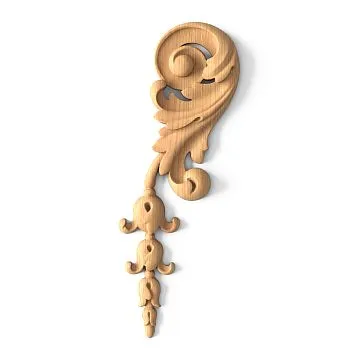
where to buy moldings for decorationManufacturers of furniture who wish to adorn their products with classic elements are often interested. High-quality moldings can transform even simple furniture.
Inlay and marquetry — jewelery work
Inlay is a technique of decorating furniture with inserts made of various materials: valuable wood species, metals, mother-of-pearl, ivory. This technique requires the highest level of craftsmanship and turns furniture into a work of art.
Marquetry is a type of inlay using only different types of wood. The contrast of colors and textures allows creating complex ornaments and even realistic images. Each element is hand-cut and fitted with micron-level precision.
Modern laser technologies have opened new possibilities for inlay. Laser cutting allows creating the most complex contours with perfect accuracy, while laser engraving enables applying delicate patterns directly onto the wood surface.
Hardware — functional beauty
Quality hardware is the foundation of furniture functionality and longevity. Modern hinges withstand hundreds of thousands of opening-closing cycles, while drawer guides ensure smooth movement even under heavy loads.
Handles for Basis Furniture DesignerAre popular among manufacturers of quality furniture. Wooden handles create a harmonious composition with solid wood and emphasize the naturalness of the piece.
Hidden hardware — a trend in modern design. It provides maximum functionality with minimal visual presence, allowing focus to remain on the beauty of the wood itself.
Specialized furniture and areas of application
Furniture for children's rooms — safety first
Children's furniture imposes special requirements on materials. The wood must be ecologically clean, free of harmful substances, and possess natural antibacterial properties. Lighter species — birch, beech, maple — are preferred.
All sharp edges must be rounded, surfaces must be perfectly smooth. Finishes must be safe even in accidental contact with food. Natural-based oils and waxes are the best choice.
The construction of children's furniture must be especially strong — children often use furniture improperly. All joints must withstand extreme loads without risk of breakage.
Kitchen furniture — resistance to extreme conditions
Kitchen furniture is used under conditions of high humidity, temperature fluctuations, and exposure to aggressive substances. Not all wood species can withstand such tests without special protection.
The best woods for kitchens are dense, moisture-resistant species — oak, ash, teak. They must be coated with durable varnishes or oils providing reliable protection against moisture and stains.
Special attention is paid to ends — the most vulnerable areas of wooden furniture. They must be carefully sealed with special compounds preventing moisture penetration into the wood structure.
Garden furniture — harmony with nature
Garden furniture must withstand all weather conditions — rain, snow, temperature fluctuations, ultraviolet radiation. Special durable woods — teak, larch, thermally treated wood — are used for its manufacture.
Thermal treatment of wood at 180-230°C fundamentally changes its properties. The material becomes more stable, less hygroscopic, and acquires natural resistance to rot and insects.
The construction of garden furniture must ensure free water drainage and ventilation. All joints are made with stainless steel fasteners, preventing rust stains.
Office furniture — elegance and functionality
Office furniture must combine elegance with high functionality and ergonomics. Prestigious woods — oak, walnut, mahogany — are used in executive offices, highlighting the owner's status.
Employee workspaces require a more practical approach. Durability, ease of maintenance, and ergonomics are key. Often, combinations of solid wood with modern materials — metal, plastic, glass — are used.
Unique Interior DesignsAre created through skillful combination of different wood species and materials. Contrasting textures and colors allow creating dynamic, modern compositions.
Restoration and repair of wooden furniture
Damage diagnosis
Restoration of antique furniture is a special art requiring deep knowledge of traditional technologies and materials. The first stage is thorough diagnosis of the item's condition, identification of all damages, and determination of the required work volume.
Typical damages to wooden furniture include cracks, chips, scratches, stains, weakened joints, and insect infestation. Each type of damage requires specific remediation methods.
Special attention is paid to preserving the original finish. If restorable, conservation is preferred over complete replacement. This preserves historical value and the patina of time.
Restoration technologies
Modern restoration technologies allow even serious damages to be repaired without compromising the item's historical authenticity. Cracks are filled with special compounds that precisely match the original wood's color and texture.
Weakened joints are restored using traditional adhesives — animal, casein, bone. These materials are reversible — they can be softened and reapplied as needed.
Lost elements are recreated from wood of the same species and age. Sometimes, material from furniture of the same period, not subject to restoration, must be used.
Prevention and Care
Proper care is the best guarantee of the longevity of wooden furniture. Regular cleaning with a soft cloth removes dust and surface dirt, preventing penetration into the wood structure.
Maintaining stable air humidity (40-60%) is critically important for preserving wooden furniture. Dry air causes cracking, while excessive humidity leads to swelling and deformation.
Protection from direct sunlight prevents fading and cracking of finishes. UV filters on windows or protective coatings on furniture help preserve the original appearance for many years.
Modern trends and innovations
Sustainable Forestry
The modern furniture industry increasingly focuses on ecological aspects of production. FSC (Forest Stewardship Council) certification guarantees that wood comes from forests managed according to sustainable development principles.
Using fast-growing species — bamboo, poinciana, rubberwood — helps reduce pressure on natural forests. These materials match or even surpass traditional species in properties.
Wood recycling is another important trend. Old wooden structures, furniture, and railway sleepers are given a new life as unique items with a history and patina of time.
Technological Innovations
Thermal modification of wood allows to fundamentally change its properties without using chemicals. Processing at 160-230°C makes wood more stable, resistant to moisture and biological effects.
Impregnating with polymer compositions allows creating composite materials with specified properties. Stabilized wood does not change dimensions with humidity fluctuations and can be used in extreme conditions.
Laser technologies open new possibilities for wood decoration. Laser engraving allows applying delicate patterns and texts with photographic quality. Laser cutting creates intricate patterns of any complexity.
Personalization and Customization
Modern consumers increasingly value uniqueness and personalization. Digital production technologies allow creating furniture according to individual sketches and dimensions without significant cost increase.
3D modeling and virtual reality allow seeing the future product before production begins. The client can adjust the design, choose optimal materials and finishes.
Modular systems allow adapting furniture to changing needs. Individual elements can be replaced, added, or rearranged, extending the lifespan of the entire set.
Economic aspects of wood selection
Pricing Factors
The cost of wood for furniture production is determined by many factors. Rarity of the species is the main one. Exotic tropical species cost dozens of times more than local species due to limited reserves and complex harvesting.
Material quality also critically affects price. High-grade wood without defects costs significantly more than material with allowable flaws. Especially valued is wood with beautiful grain — wavy, rippled, or figured patterns.
Logistical costs constitute a significant part of the final price, especially for exotic species. Transporting heavy wood over long distances requires special conditions and substantial expenses.
Cost Optimization
Rational material use is key to reducing product cost. Computer cutting programs allow minimizing waste and maximizing efficiency of every board.
Combining species in one item is an effective way to optimize costs. Expensive species are used for visible parts, while hidden parts are made from more affordable materials.
Local species often do not fall short of imported ones in quality, but cost significantly less. Russian oak, ash, and birch meet international standards and are accessible without logistical surcharges.
Investment Appeal
Quality wooden furniture is not only interior decor, but also a long-term investment. Items made from valuable species do not lose value over time, and often even appreciate, especially antique pieces.
Handmade furniture by renowned masters is becoming a collectible item. Such items combine functionality with artistic value and may significantly increase in price.
Ecological trends increase demand for natural materials, positively affecting the cost of quality wooden furniture. This makes investments in such items especially attractive.
Cultural and historical aspects
Regional traditions
Each culture has developed its own traditions of working with wood, linked to local species and climatic conditions. Scandinavian masters prefer light coniferous species and simple, functional forms that highlight the natural beauty of the material.
Russian woodworking traditions lean toward massive, sturdy forms made from oak, birch, and pine. Carved elements, rich decoration, and use of natural dyes are characteristic features of Russian furniture.
Asian masters skillfully work with tropical species — teak, rosewood, ebony. Their works are distinguished by refined proportions, delicate craftsmanship, and philosophical depth of artistic conception.
Symbolic meaning of wood species
Different tree species were endowed with symbolic meanings in various cultures. Oak symbolized strength, longevity, and wisdom. Oak furniture was considered especially suitable for offices and libraries.
Walnut was associated with abundance and fertility, often used for furniture in dining rooms and bedrooms. Redwood became a symbol of luxury and prestige, highlighting the owner's high status.
Modern designers use these cultural associations to create a specific atmosphere in interiors. The right choice of wood species can subconsciously influence the perception of space.
Myths and legends
Trees have always occupied a special place in the mythology of various peoples. It was believed that items made from certain species possessed magical properties — protecting against evil, bringing luck, and promoting health.
Modern science has confirmed some of these beliefs. Essential oils from coniferous species indeed possess antiseptic properties, and negative ions released by some species positively affect well-being.
What to give a cabinetmakerPeople who want to highlight a specialist's skill often ask this question. A carved leg made from a valuable wood species is an excellent way to show respect for the profession.
Frequently asked questions
Which wood species is best for making furniture?
The choice of the optimal species depends on the furniture's purpose, usage conditions, and budget. For prestigious furniture, oak, walnut, and redwood are ideal. For everyday use, beech, ash, and birch are suitable. For children's furniture, environmentally friendly species — birch, maple, cedar — are recommended.
Can coniferous species be used to make furniture?
Coniferous species are excellent for furniture, especially in rooms with variable humidity. Pine, spruce, and larch have natural antiseptic properties and create a healthy microclimate. It is important to properly prepare the material and choose the right finish.
How long does wooden furniture last?
The lifespan of wooden furniture depends on the wood species, manufacturing quality, and usage conditions. Furniture made from hardwoods can last for centuries with proper care. Coniferous species last 50-70 years, which is also an excellent indicator of durability.
Does wooden furniture require special care?
Wooden furniture requires regular but simple care. Basic rules: regular cleaning with soft cloth, maintaining stable air humidity, protection from direct sunlight, periodic renewal of protective coating. Under these conditions, furniture will retain its beauty for decades.
Which species are suitable for humid rooms?
For bathrooms and kitchens, moisture-resistant species — teak, larch, thermally treated wood — are best. High-quality protective finishing with oils or polyurethane-based varnishes is essential. Special attention should be paid to end grain protection.
Is wooden furniture eco-friendly?
Wooden furniture made from certified wood is one of the most eco-friendly options. Wood is a renewable resource, and its processing requires minimal chemical treatment.