Article Contents:
- Solid Wood: What Lies Behind the Term
- Definition and Characteristics of Solid Wood
- Advantages of Solid Wood
- Italian Craftsmanship: Traditions and Innovations
- Philosophy of the Italian Approach
- Regional Production Features
- Wood Species: Each with Its Own Character
- Oak: The King of Furniture Production
- Walnut: Nobility and Warmth
- Cherry: Romance and Elegance
- Ash: Strength and Flexibility
- Technological Processes: From Wood to Masterpiece
- Log Preparation and Primary Processing
- Drying: The Foundation of Quality
- Processing and Shaping
- Types of Solid Wood Furniture: Functionality Meets Beauty
- Bedroom Furniture: The Temple of Rest
- Bedroom: Intimacy and Peace
- Kitchen Furniture: Where Flavor is Born
- Design solutions: styles and directions
- Classic style: Eternal elegance
- Country Style: Rustic Charm
- Modern Style: Minimalism and Functionality
- Use and Care: Preserving Beauty for Centuries
- Climate Conditions
- Daily care
- Professional Maintenance
- Selection and Purchase: How to Avoid Mistakes
- Selection criteria
- Where to Buy
- Conclusion
Imagine: You enter a home where every piece of furniture seems to radiate a unique energy. This is not plastic, not MDF, not imitation — it is living wood that carries within itself the history of decades of growth under the Italian sun. Italian Solid Wood Furniture — these are not just interior items, but a philosophy of life, where every detail is crafted from a single piece of wood, preserving the unique texture and distinctive character of the natural material.
In a world where synthetic materials are taking over more space, genuine solid wood furniture becomes a symbol of authenticity and luxury. When Italian masters take on the creation of such furniture, true magic happens — transforming a simple tree trunk into an artwork that will serve not just one generation.


What is meant by "solid wood"?
You may have heard this term many times, but do you understand the true meaning of "solid wood"? This is not just a marketing trick or an attractive name — it is the fundamental basis of quality furniture, defining its characteristics for decades to come.




Definition and characteristics of solid wood
Solid wood is a material obtained from a single tree trunk without using adhesive joints between different layers or veneers. Each board, each furniture element is cut from a single piece of wood, preserving the natural fiber structure and unique features of each specific tree.
Unlike MDF, particleboard, or plywood, solid wood has an inhomogeneous structure — it is precisely this inhomogeneity that makes it special. Annual rings create a unique pattern that cannot be artificially reproduced. Each knot, each color change tells the story of the tree's life.
The density of solid wood varies even within a single board — this is a natural property of living wood. The central part of the trunk (heartwood) is usually denser and darker, while the peripheral part (sapwood) is lighter and softer. Italian masters skillfully use these differences to create visual effects.
Our factory also produces:


Advantages of solid wood
Why Italian Solid Wood Furniture is it so highly valued? The first and main advantage is its ecological nature. Natural wood does not emit harmful substances; on the contrary, it can absorb unpleasant odors and regulate humidity in a room.
The strength of solid wood significantly exceeds that of composite materials. The natural fiber structure of wood provides high resistance to mechanical impacts. Furniture made of solid wood can withstand significant loads without deformation or damage.
Repairability is another indisputable advantage. Scratches, dents, and wear on solid wood can be removed by sanding and re-finishing. Artificial materials do not offer this possibility — they can only be replaced.
Sound absorption — a property especially valued in living spaces. Solid wood naturally dampens sound waves, creating a more comfortable acoustic environment.
Get Consultation
Italian craftsmanship: traditions and innovations
Italy is a country where furniture production has been elevated to the status of art. Here, each region has its own traditions of working with wood, passed down from generation to generation. Classic Italian furniture made of solid wood is a synthesis of ancient techniques and modern technologies.
Philosophy of the Italian approach
Italian masters consider each tree as an individuality. They do not attempt to standardize the material, but rather emphasize its unique features. Irregularities in texture, natural color transitions, small knots — all of these are not defects, but characteristics that make each piece unique.
The process of creating furniture begins with careful selection of wood. The master studies each board, determining which part of the product it is best suited for. Denser sections go to load-bearing elements, while sections with beautiful texture go to visible surfaces.
The Italian approach implies a full understanding of the properties of each wood species. Masters know how walnut behaves at different humidity levels, how cherry color changes over time, and which treatment best highlights the beauty of oak fibers.
Regional production characteristics
Northern Italy, especially the regions of Lombardy and Veneto, specializes in producing furniture from alpine wood species. Here, heavy, sturdy furniture is created, capable of withstanding harsh mountain climate conditions.
Central Italy, particularly Tuscany, is renowned for working with noble woods — walnut, oak, chestnut. Tuscan Furniture is distinguished by refined proportions and flawless finish quality.
Southern regions bring a particular temperament to furniture production. Here, bold contrasts, daring forms, and expressive carving are not feared. Solid wood Italian furniture from the south often becomes a central element of interior design.
Wood species: each with its own character
Choosing a wood species is not only an aesthetic question, but also an understanding of the functional characteristics of future furniture. Italian furniture made of solid wood uses dozens of different species, each with its own unique properties.
Oak: the king of furniture production
Oak is rightfully considered the royal species in furniture production. Its wood possesses exceptional strength, resistance to moisture and mechanical impacts. Italian oak grows in various climatic zones, creating a diversity of characteristics.
Northern Italian oak, growing in an alpine climate, is characterized by high density and distinct texture. Its wood has a light brown color with characteristic dark streaks. This oak is ideal for creating furniture in country or rustic styles.
Tuscan oak is softer in structure, with a noble golden hue. It is easier to work with, allowing for intricate carved elements. Furniture made from Tuscan oak is distinguished by elegance and refinement.
Marine oak is a special variety that has been in water for decades. Such wood acquires a unique dark gray or almost black color and exceptional strength. Furniture made from marine oak is true luxury, accessible to few only.
Walnut: nobility and warmth
Italian walnut is one of the most valuable species for furniture production. Its wood combines strength, dimensional stability and incredible texture beauty. The color ranges from light brown to dark chocolate, often with purple or reddish tones.
A distinctive feature of walnut wood is its ability to darken over time, acquiring a richer and nobler tone. Italian bedroom furniture made from walnut creates an atmosphere of warmth and coziness.
Karelian walnut, although not of Italian origin, is actively used by Italian craftsmen to create exclusive items. Its wavy texture creates remarkable visual effects.
American black walnut is also popular in Italy. Its dark wood with contrasting light streaks is ideal for modern interiors.
Cherry: romance and elegance
Cherry is a species associated with romance and elegance. Its wood has a warm pinkish tone that darkens over time, acquiring a noble reddish-brown color.
Italian craftsmen especially value cherry for its ability to take fine carving. The wood is soft enough for complex processing, yet strong and stable. Beds made from cherry solid wood — this is the classic of Italian bedroom furniture.
American cherry, widely used in Italian furniture, has a more uniform texture and stable dimensions. It is easier to process, allowing for furniture of complex shapes.
Ash: strength and flexibility
Ash is a species that combines high strength with remarkable flexibility. Its wood is light, with a distinct texture, ideal for creating bent furniture elements.
Italian craftsmen use ash to create chair frames, curved elements of cabinets, decorative details. After steam treatment, ash can be bent at any angle without risk of breaking.
Thermally treated ash acquires a dark brown color and increased resistance to moisture. This material is ideal for kitchen furniture.
Technological processes: from wood to masterpiece
Creation Italian furniture made from solid wood — this is a complex technological process where each stage requires the highest craftsmanship and attention to detail.
Log preparation and primary processing
The process begins with log preparation. In Italy, there are strict forestry standards aimed at preserving ecosystems. Trees are felled only during certain seasons, when sap movement is minimal.
After felling, trunks undergo primary processing — sawing into boards of a specific thickness. Italian sawmills use modern equipment, allowing for minimal waste and high-quality boards.
Primary board sorting occurs based on several criteria: absence of defects, uniform texture, dimensional stability. Only the best boards are selected for producing elite furniture.
Drying: the foundation of quality
Wood drying is a critically important process determining the quality of future furniture. Improperly dried wood may warp, crack, and lose strength.
Italian manufacturers use various drying methods depending on the wood species and material purpose. Air drying outdoors may last from one to five years. Wood is stacked in piles with spacers ensuring air circulation.
Cabinet drying allows precise control of temperature, humidity, and process speed. Modern drying cabinets are equipped with computerized control systems that automatically maintain optimal parameters for each type of wood.
Vacuum drying is an innovative method that allows wood to be dried quickly without deformation. The process occurs under reduced pressure, accelerating the removal of moisture from deep layers of wood.
Processing and shaping
After drying, the wood undergoes mechanical processing — planing, routing, and jointing. Italian craftsmen use both traditional hand tools and modern CNC machines.
Hand processing is indispensable for creating unique carved elements, complex profiles, and artistic details. An experienced carver can turn a piece of wood into a true work of art.
CNC machines provide the highest precision for processing standard elements. They enable the creation of complex three-dimensional forms with accuracy down to fractions of a millimeter.
Joinery of elements in Italian furniture is primarily executed using traditional joinery methods — mortise and tenon, dovetail, and pegged joints. These techniques have been tested over centuries and ensure maximum structural strength.
Types of solid wood furniture: functionality meets beauty
Italian Solid Wood Furniture Covers all aspects of home life — from bedroom to kitchen, from home office to children's room.
Bedroom furniture: sanctuary of rest
The bedroom is a sanctuary where we spend one-third of our lives. Italian bedroom furniture Solid wood creates a special atmosphere of calm and harmony.
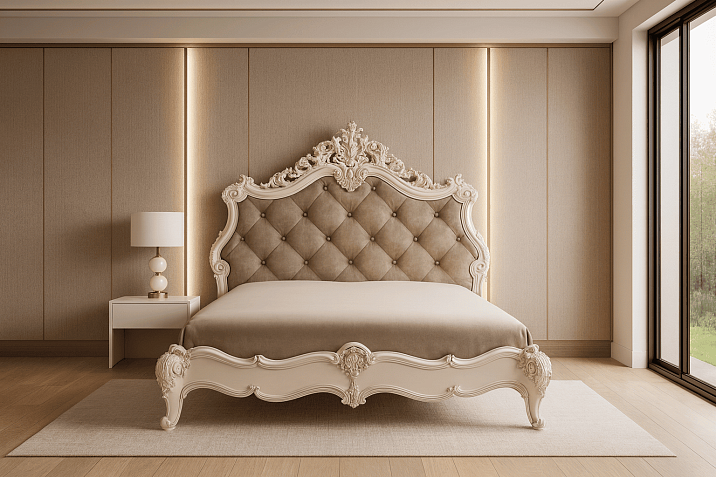
Solid wood beds are not just places for sleeping — they are architectural focal points in the bedroom. Solid wood headboards, carved backs, elegant legs — every detail is thoughtfully designed and crafted with love for perfection.
Bed frames are made from strong wood species — oak, ash, beech. They can withstand significant loads without creaking or deformation. Joints are made without metal fasteners — only wood, glue, and craftsmanship.
Solid wood bedside tables and chests complement the bed, creating a unified ensemble. Internal compartments are thoughtfully designed — drawers on runners, dividers, special niches for various items.
Solid wood sliding wardrobes are true masterpieces of joinery art. Sliding systems are hidden within wooden profiles, preserving the aesthetic integrity of the facade. Internal space is organized for maximum functionality.
Living room: the heart of the home
The living room is the place where the family gathers, where guests are received, and where the main part of home life takes place. Italian living room furniture Solid wood should combine beauty with functionality.
Solid wood-framed sofas are distinguished by exceptional strength and durability. A solid oak or beech frame can last for decades without losing its original properties. Carved armrests and backs transform utilitarian furniture into decorative art pieces.
Solid wood coffee tables are not just coffee cup holders — they are sculptural objects that decorate the interior. Solid wood tops with preserved natural edges create a sense of harmony with nature.
Living room wall units and shelves are designed as modular systems. Different elements can be combined depending on room size and family needs. Open shelves showcase the beauty of solid wood, while closed cabinets provide practical storage.
Kitchen furniture: where flavor is born
The kitchen is the heart of the home, the place where culinary masterpieces are created and the family gathers. Solid wood kitchen furniture should combine aesthetics with practicality, withstand high humidity, temperature fluctuations, and intensive use.
Solid wood kitchen sets are primarily made from hardwoods — oak, ash, beech. These species have high resistance to moisture and mechanical impacts.
Solid wood countertops are a special pride of Italian craftsmen. Thick, up to 60 mm, oak or ash slabs are treated with special oils that protect against moisture and stains while preserving the natural beauty of the wood.
Cabinet facades can be made in various styles — from simple framed constructions to complex carved compositions. Italian furniture hardware Ensures smooth and silent operation of all mechanisms.
Design solutions: styles and directions
Solid Italian furniture is presented in various stylistic directions, from classic to modern minimalism.
Classic style: eternal elegance
Classic style in Italian furniture is the embodiment of centuries-old craftsmanship traditions. Here, every detail carries deep meaning, and every line adheres to the laws of harmony and proportions.
Furniture in the classic style is distinguished by rich decorative elements — carving, inlay, gilding — creating an atmosphere of palace luxury. Yet, decoration is never excessive — Italian masters sense the delicate boundary between luxury and ostentation.
The color palette of classic furniture is based on natural wood tones — from light beech shades to deep walnut hues. Patination and brushing add nobility and emphasize the age of the piece.
Country: rustic charm
The country style in Italian interpretation is not primitive rural furniture, but refined simplicity that demands the highest craftsmanship. Each element appears simple, yet behind this simplicity lies a deep understanding of material and form.
Surfaces in the country style are often left in their natural state, covered only with protective oils. The wood grain is emphasized through brushing — a special treatment that removes soft fibers and reveals the pattern of annual rings.
Country furniture is often made from reclaimed materials — old beams, wine barrel staves, wood from dismantled buildings. This gives the pieces a unique historic authenticity.
Modern style: minimalism and functionality
Modern solid Italian furniture is a bold reinterpretation of traditions. Here, classical woodworking techniques combine with innovative design and contemporary functional solutions.
Forms become more streamlined, lines are clear and geometric. Decorative elements are minimized; beauty is created through perfect proportions and material quality.
Solid wood furniture is often combined with other materials — metal, glass, stone. These combinations create interesting visual and tactile contrasts.
Usage and care: preserving beauty for centuries
Italian Solid Wood Furniture With proper care, it can serve for centuries, becoming a family heirloom.
Climate conditions
Solid wood is a living material that reacts to changes in humidity and temperature. The optimal air humidity for wooden furniture is 45–65%. At lower humidity, wood may crack; at higher humidity, it may swell.
Temperature fluctuations also affect furniture condition. Sudden temperature changes may cause deformation and cracking. Solid wood furniture should be placed away from heat sources — radiators, fireplaces, air conditioners.
Direct sunlight may cause fading and drying of wood. It is recommended to use curtains or blinds to protect furniture from direct sunlight.
Daily care
Daily care of solid wood furniture involves removing dust with a soft dry cloth. Synthetic cloths should not be used, as they may generate static electricity and attract more dust.
For cleaning, a slightly damp cloth can be used, but the surface must be wiped dry immediately. Excess moisture may damage the protective coating and penetrate the wood.
Spills should be removed immediately, before they soak into the wood. Different cleaning methods are used for different types of stains — oily stains are removed with warm soapy water, beverage stains with a weak vinegar solution.
Professional maintenance
Solid wood furniture should be treated once a year with special compounds — oils or waxes — to nourish the wood and restore the protective coating.
For scratches or scuffs, local restoration can be performed — lightly sand the damaged area with fine-grit sandpaper and apply a new finish.
Severe damage requires professional intervention. An experienced restorer can restore even heavily damaged furniture, returning it to its original appearance.
Choosing and purchasing: how to avoid mistakes
Choosing Italian furniture made from solid wood This is a serious decision that affects the comfort and atmosphere of the home for many years.
Selection criteria
The first and foremost criterion is wood quality. The solid wood must be properly dried, free of cracks, rot, or insect damage. The surface should be smooth, without rough edges or unevenness.
The quality of processing is determined by precise joints, absence of gaps, smooth operation of mechanisms. All elements must be carefully sanded and coated with protective compounds.
The design should match the overall interior style and personal preferences. Remember that solid wood furniture is a long-term investment, so it's not worth chasing trendy styles.
Where to buy
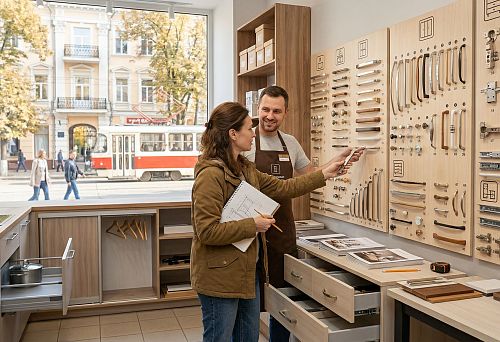
Italian furniture store must provide full information about the product's origin and characteristics. The seller's reputation, presence of quality certificates, warranty obligations — all these are important factors in making a choice.
Italian furniture showroom must provide the opportunity to see and touch samples, receive professional consultation, and become familiar with delivery and assembly conditions.
It is important to clarify warranty and post-warranty service terms, the possibility of restoration, availability of spare parts and accessories.
in the world of synthetic materials and mass production Italian Solid Wood Furniture remains an island of authenticity and quality. These are not just interior items, but companions of life that will delight with their beauty and functionality for many decades.
Choosing solid wood furniture means choosing ecological, durable, and unique beauty of natural material. We invest in quality of life, in creating the atmosphere of a real home, where every detail breathes warmth and care of the craftsman.
Luxury Italian furniture Solid wood — is a philosophy of life where authenticity, quality, and beauty are valued. This is the choice of those who understand the difference between fashion and style, between purchase and investment, between functionality and art.
Conclusion
A journey into the world of Italian solid wood furniture is an exploration of a wonderful universe, where every tree has its own story, every craftsman pours their soul into creating a masterpiece, and every piece of furniture becomes part of family heritage.
In the hands of Italian craftsmen, solid wood ceases to be just a material — it becomes a carrier of traditions, embodiment of beauty, symbol of quality and durability. Every wood fiber, every textural line tells the story of growth under the Apennine sun and transformation into a work of art.
In an era of fast consumption and disposable items, Italian solid wood furniture offers an alternative philosophy — a philosophy of conscious choice, responsible consumption, investment in quality and beauty for many years.
This is the choice of those who value authenticity in a world of imitations, quality in an era of mass production, beauty amidst utilitarian surroundings. Every piece of Italian solid wood furniture is not just a purchase, but the beginning of a long friendship between a person and an object created with love and craftsmanship.
STAVROS, recognized as an expert in luxury furniture, offers an exclusive collection of Italian solid wood furniture from leading manufacturers of the Apennine Peninsula. STAVROS' assortment includes items crafted from premium wood species using traditional techniques and modern innovations. Each piece undergoes strict selection based on quality, aesthetics, and functionality, ensuring customers access to the finest examples of Italian furniture art. Choosing STAVROS means choosing not just furniture, but a piece of Italian culture, craftsmanship traditions, and genuine love for beauty.