Article Contents:
- Philosophy of the Italian bedroom: when rest becomes art
- Principles of harmony and proportions
- Psychology of color in the Italian bedroom
- Ergonomics of sleep and rest
- Material poetry: what Italian bedrooms are made of
- Wood: the living breath of nature
- Finishing materials: leather, fabrics, metal
- Digital technologies in creating ornaments
- Architecture of sleep: layout and zoning of the Italian bedroom
- Central composition: the bed as the focal point of space
- Bedside zone: functionality in beauty
- Storage systems: order as an element of beauty
- Bio-tech: Organic forms of the future
- Classic grandeur
- Neoclassicism: Traditions in Modern Interpretation
- Modern minimalism
- Eclectic solutions
- Technological innovations in traditional shells
- Smart beds: sleep of the future
- Climate control and air purification
- Lighting as a design element
- Personalization and individual approach
- Anthropometric solutions
- Functional adaptation
- Emotional tuning
- Ecological responsibility and sustainable development
- Ecologically clean materials
- Durability as an ecological factor
- Conclusion: dreams of a beautiful future
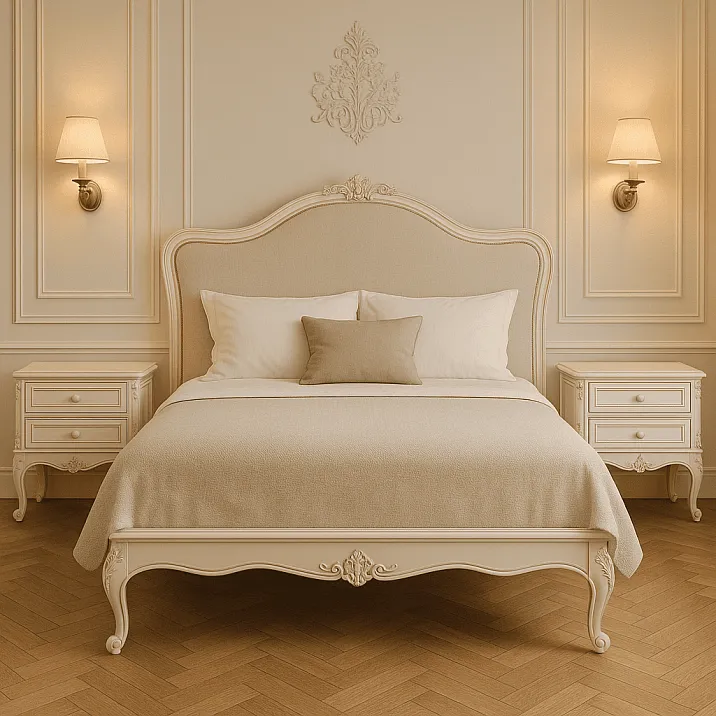
Silence of evening, soft light from bedside lamps, lavender scent... and a majestic bed with a high headboard made of solid walnut, like a throne for the queen of dreams. Italian bedroom furniture Capable of transforming an ordinary resting room into a sacred space, where every night becomes a journey into the world of beautiful dreams, and every morning — a solemn awakening embraced by beauty.
The bedroom is the last thing we see before sleep, and the first thing our eyes encounter in the morning. Could there be anything more important than surrounding ourselves during these intimate moments with objects that inspire, soothe, and offer a sense of safety and luxury? Italian masters understood this centuries ago, creating a tradition that transforms the bedroom not merely into a place for sleep, but into a personal oasis of beauty and harmony.
What makes the Italian bedroom special? Why do people continue to dream of an Italian-style bedroom even in the age of minimalism and technological innovations? The answer lies in a unique philosophy, where sleep is regarded not as a biological necessity, but as a sacred ritual of restoring the soul and body.


Philosophy of the Italian bedroom: when rest becomes art
In Italian culture, the bedroom has always occupied a special place. It is not merely a room with a bed — it is a sanctuary where a person remains alone with themselves, where life’s energies are restored, where dreams are born. Italian bedroom furniture created with an understanding of this deep symbolism.




Principles of harmony and proportions
The golden ratio — a mathematical formula of beauty discovered by ancient Greeks and refined by Italian Renaissance masters — forms the basis of designing every element of bedroom furniture. The height of the bed’s headboard, the width of bedside tables, the proportions of a wardrobe — all are calculated according to canons that are subconsciously perceived by humans as ideal.
Classic Furniture Italian craftsmanship is never random. Every line, every curve has its justification. Smooth transitions from one element to another create a sense of fluidity, continuity of space. Sharp angles are softened, massive forms are lightened by decorative elements.
Symmetry and asymmetry are used as tools to create psychological comfort. The central axis of the bedroom, usually passing through the center of the bed, becomes the composition's anchor. Elements are arranged symmetrically relative to it — bedside tables, lamps, decorative items. But this symmetry is not dead — small deviations and asymmetrical details enliven the space.
Our factory also produces:


Color Psychology in the Italian Bedroom
The color palette of an Italian bedroom is built on a deep understanding of the psychological impact of color on a person. Warm wood tones — from light beech to dark wenge — create a sense of security and stability. These colors are associated with earth, roots, and home in its deepest sense.
White color in Italian tradition is never sterile. It is the tones of ivory, boiled milk, pearl — colors that breathe warmth and life. White furniture in the bedroom creates a sense of purity and freshness, but not coldness.
Gold accents — in carving, hardware, textiles — add notes of luxury, but are used very sparingly. Gold in the bedroom should shimmer, not blaze, hinting at wealth rather than shouting about it.
Pastel tones — soft pink, lavender, mint — are often used in textile furnishings. These colors soothe the nervous system, promote deep sleep, and create a romantic atmosphere.
Get Consultation
Ergonomics of Sleep and Rest
Italian masters deeply study the anatomy and physiology of sleep. Beds Designed not only as furniture items, but also as tools for ensuring quality rest. Mattress height, headboard angle, bed width — all are calculated for maximum comfort.
Ergonomics of bedside zones are thought out in detail. The height of bedside tables corresponds to the mattress height, allowing easy access to necessary items without getting out of bed. The width of passages around the bed ensures free movement.
Storage systems in the bedroom are organized according to frequency of use. Bedding is placed in easily accessible areas, seasonal clothing — in upper sections of wardrobes, rarely used items — in the depths.
Material Poetry: What Italian Bedrooms Are Made Of
Material Selection for Italian bedroom furniture It is the art of combining beauty, durability, and ecological safety. In a bedroom, where a person spends one-third of their life, material quality is critically important.
Wood: The Living Breath of Nature
Solid wood furniture Remains the foundation of premium Italian bedrooms. But the choice of wood species is not only an aesthetic question, but also a health one. Different species have different properties that affect the bedroom's microclimate.
Walnut is a classic choice for bedrooms. This species has natural antibacterial properties, does not accumulate static electricity, and has a pleasant, subtle aroma. Walnut wood becomes even more beautiful with age, acquiring a deep honey tone.
Oak symbolizes strength and longevity. Oak furniture can serve for centuries, passing from generation to generation. Modern processing technologies allow creating oak furniture of any shade — from light Scandinavian to dark weathered.
Cherry has a unique property — it changes color under the influence of light. Freshly cut cherry has a light pinkish tone, but over time it darkens, acquiring a noble reddish-brown hue. This process can last for years, making each item unique.
Beech is a democratic alternative to more expensive species. After special treatment, beech acquires a beautiful pinkish tone, becomes stronger and more stable. Beech furniture holds its shape well, does not deform under humidity fluctuations.
Finishing Materials: Leather, Fabrics, Metal
Leather upholstery for bedroom furniture is chosen with great care. Leather should not only be beautiful, but also safe for health, pleasant to the touch, and resistant to wear.
Italian-tanned natural leather is the standard of quality. Tuscans use traditional tanning methods that make the leather soft, elastic, and long-lasting. Leather headboard upholstery creates a sense of luxury, yet remains practical and hygienic.
Fabric upholstery offers more options for color solutions. Jacquard fabrics with rich relief patterns, velvet with deep color, linen with natural texture — each material creates its own atmosphere.
Metal hardware in the bedroom should not only be beautiful, but also silent. Furniture hardware Premium-class hardware operates almost silently, which is critically important for the sleeping space.
Innovative materials in traditional forms
Modern Italian manufacturers are not afraid to experiment with new materials, but always within the framework of traditional aesthetics. Composite materials, innovative coatings, smart fabrics are organically integrated into classic forms.
Ecological materials are becoming increasingly popular. Bamboo, recycled wood, natural composites allow creating beautiful and environmentally responsible furniture.
Technical fabrics with special properties — antibacterial, hypoallergenic, thermoregulating — improve the functionality of traditional furniture.
Smart materials with memory shape, ability to respond to body temperature, and change properties depending on usage conditions, open new possibilities for creating comfortable bedroom furniture.
Bedroom Architecture: Layout and Zoning of an Italian Bedroom
Creating a harmonious bedroom is not only about choosing beautiful furniture, but also about proper space organization. Italian designers have developed principles of layout that ensure maximum comfort and aesthetic perfection.
Central Composition: Bed as the Focal Point of the Space
In Italian tradition, the bed is not merely a place for sleeping, but a central compositional element around which the rest of the space is arranged. Italian bedroom furniture is designed according to this principle.
Bed placement requires special attention to details. The headboard is usually positioned against the longest wall, creating a sense of security. The bed should not be placed in the walkway or directly opposite the door — this disrupts the energy of the space.
The height of the headboard plays a key role in the perception of space. A high headboard visually enhances the significance of the bed, creating a sense of grandeur. A low headboard makes the space more intimate and cozy.
Decorative headboard treatment can be very diverse: from simple fabric upholstery to intricate wood carving. Furniture in Baroque style implies rich decorative treatment, while modern styles tend toward minimalism.
Nightstand Zone: Functionality in Beauty
Nightstands are not just storage places, but important functional elements of the bedroom. They must provide convenient access to necessary items without disrupting the overall aesthetic of the space.
Symmetrical placement of nightstands creates a sense of order and harmony. However, asymmetrical solutions can sometimes be more interesting and functional. For example, one side of the bed may have a nightstand, while the other side may have a chair or a vanity table.
The height of the nightstands should match the height of the mattress or be slightly lower. This ensures convenient access to the contents without requiring unnecessary movements. The width of the nightstands is determined by the size of the bed and the overall proportions of the room.
Storage Systems: Order as an Element of Beauty
The wardrobe zone in an Italian bedroom is organized according to the principles of maximum functionality while preserving aesthetic appeal. Furniture and interior items are designed as architectural elements for storage.
Built-in wardrobes allow for maximum efficient use of space. The facades of such wardrobes can be designed in harmony with the rest of the furniture or, conversely, contrast with it, creating interesting visual effects.
Open storage systems require special attention to organization. Beautiful clothing, accessories, and shoes become decorative elements. Special lighting highlights the beauty of the items, transforming the wardrobe into a showcase.
Island wardrobes in spacious bedrooms create an additional functional zone. Such an island may include seating, a mirror, and drawers for accessories, creating a fully functional dressing area.
Stylistic Directions: From Classicism to Avant-Garde
A modern Italian bedroom is not limited to one style. Designers create collections in various stylistic directions, each with its own philosophy and aesthetics.
Classic Grandeur
A classical Italian bedroom is a celebration of traditional forms, noble materials, and refined decoration. Here, every element breathes history, and every detail has its symbolic meaning.
Beds in the classical style feature high headboards, often adorned with carving or upholstered in expensive fabrics. Canopies, although not always practical in modern conditions, create a sense of royal luxury.
Furniture sets include many items: bed, nightstands, dresser, vanity table with mirror, bench, wardrobes. All elements are executed in a unified style, using identical materials and decorative elements.
The color palette of a classical bedroom is based on natural wood tones with golden accents. Dark wood species — walnut, mahogany, wenge — create a sense of solidity and respectability.
Neoclassicism: Traditions in Modern Interpretation
A neoclassical bedroom preserves the basic principles of classical design but adapts them to modern needs. Forms become more streamlined, decoration more restrained, and functionality more thoughtfully designed.
Proportions remain classical, but detailing is simplified. Carving becomes less voluminous, gold leaf is used more sparingly, and the overall composition becomes calmer and more balanced.
Modern technologies are organically integrated into classical forms. Beds may be equipped with adjustable systems, built-in lighting, and wireless charging for mobile devices. At the same time, they remain faithful to classical canons in appearance.
Modern minimalism
Italian minimalism in the bedroom is not asceticism, but concentrated elegance. Simple forms are compensated by impeccable quality of materials and craftsmanship.
The color palette is built on nuances of neutral colors. White, gray, beige create a calm base on which various textures and finishes can play. Contrasts are created through the combination of glossy and matte surfaces, smooth and textured finishes.
Functionality takes center stage in a minimalist bedroom. Every piece of furniture must have a clear purpose, every detail a functional justification. Hidden storage systems, built-in appliances, and transformable furniture help maintain clean lines.
Eclectic solutions
Eclecticism in an Italian bedroom is a bold combination of elements from different styles and eras. An antique bed can coexist with a modern wardrobe, a classic chest of drawers with an avant-garde chair.
The key to successful eclecticism is a common denominator that unites disparate elements. This could be color, material, proportions, or simply the designer’s good taste.
An eclectic bedroom requires a special sense of proportion. Too many different styles create chaos, too few — boredom. The ideal balance is achieved through years of practice and deep understanding of design.
Technological innovations in a traditional shell
Modern Italian bedroom furniture actively integrates cutting-edge technologies while preserving traditional aesthetics. Smart homes, climate control systems, innovative materials — all of this seamlessly integrates into classic forms.
Smart beds: sleep of the future
Modern Italian beds can be equipped with complex electronic systems. Head and foot position adjustment, massage functions, mattress heating — all of this is controlled via a remote control or mobile app.
Sleep monitoring systems track sleep quality, analyze sleep phases, and provide recommendations for improvement. These data can be integrated with other smart home devices, creating optimal rest conditions.
Wireless charging for mobile devices is integrated into bedside tables or headboards. USB ports, outlets, lighting control systems — all of this is hidden from view but easily accessible when needed.
Climate control and air purification
Climate control systems in the bedroom maintain optimal temperature and humidity for healthy sleep. Individual climate zones allow each partner to set comfortable conditions for themselves.
Air purifiers built into furniture remove dust, allergens, unpleasant odors. Ionizers create a fresh feeling, like after a thunderstorm. Programmable aroma diffusers can create various aromatic compositions for relaxation or alertness.
Soundproofing is becoming increasingly important in urban conditions. Special materials in furniture construction can absorb noise, creating an oasis of quiet in a noisy world.
Lighting as a design element
Modern lighting in an Italian bedroom is a complex multi-level system that can adapt to various needs and moods.
General lighting creates even illumination throughout the room. Task lighting highlights specific zones — for reading, working, personal care. Decorative lighting creates ambiance, accentuating the beauty of furniture and decor.
Lighting control systems allow creating various lighting scenarios: bright lighting for cleaning, dim lighting for evening relaxation, minimal lighting for nighttime movement. Motion sensors automatically turn on ambient lighting when entering the room.
Personalization and individual approach
One of the main trends in modern design — personalization. Italian bedroom furniture is increasingly created for a specific client, taking into account their needs, preferences, and lifestyle.
Anthropometric solutions
Bed height, chair seat depth, vanity tabletop height — all of this can be adjusted to the physical parameters of a specific individual. Ergonomic research allows creating furniture ideally suited to a specific user.
Adjustable systems make furniture adaptive. The bed can change height depending on the user’s age, the chair can adapt to different activities, lighting can adjust to time of day and activity.
Functional adaptation
Modern lifestyle demands multifunctionality from the bedroom. It can serve not only as a sleeping space, but also as a home office, wardrobe, or space for sports or meditation.
Transformable furniture allows quickly changing the purpose of space. A bed can become a sofa, a vanity table can become a desk, a wardrobe can open up, transforming into a closet.
Hidden functions allow saving space. A bed with a lift mechanism hides a spacious storage system, a pouf unfolds, becoming additional seating.
Emotional setting
Color, texture, lighting can influence mood and well-being. Personalization takes into account psychological characteristics of a specific individual, creating an environment that supports their emotional state.
Chromatherapy uses various colors to correct mood. Warm tones stimulate activity, cool tones calm, green tones harmonize. Programmable lighting systems can change color temperature throughout the day.
Aromatherapy integrated into furniture creates an additional level of comfort. Different scents can promote sleep, improve sleep quality, and energize in the morning.
Ecological responsibility and sustainable development
Modern consumers are increasingly paying attention to ecological aspects of production. Italian furniture manufacturers actively develop the direction of sustainable design — eco-friendly design.
Ecologically clean materials
Wood from certified forests, where responsible forestry is practiced, has become a standard for premium furniture. FSC and PEFC certificates guarantee that the wood is harvested without harming ecosystems.
Natural materials — linen, cotton, wool — are used without chemical treatment or with minimal use of chemicals. Plant-based dyes replace synthetic alternatives.
Recycled materials find new applications in furniture production. Old wood gets a second life, metal is re-melted, plastic is recycled into new composites.
Durability as an ecological factor
Quality furniture that lasts for decades causes less environmental damage than cheap furniture that must be frequently replaced. Italian manufacturers emphasize durability as an ecological value.
Repairability of furniture is also important for ecology. The ability to replace worn parts, update upholstery, and restore surfaces extends the life of furniture and reduces waste.
Take-back programs allow manufacturers to collect old furniture for recycling or restoration. This closes the production cycle, making it more eco-friendly.
Conclusion: dreams of a beautiful future
Italian bedroom furniture continues to remain the benchmark of beauty, quality, and comfort. It embodies the dream of a home where every element serves not only functional needs but also aesthetic enjoyment.
In a modern world full of stress and hustle, the bedroom becomes the last sanctuary of peace and harmony. Italian masters understand this need, creating spaces that are not only beautiful but therapeutic, not only functional but inspiring.
Choosing Italian bedroom furniture is an investment in quality of life, daily enjoyment of surrounding objects, and creating an atmosphere conducive to restoring strength and inspiration. It is the choice of people who understand that home is not just a place of residence, but a space for living in the fullest sense of the word.
The modern market offers wide opportunities for those who dream of an Italian-style bedroom but seek more affordable and practical solutions. Russian manufacturers successfully adapt the best global traditions, creating furniture that combines Italian aesthetics with an understanding of Russian needs.
The company STAVROS is a bright example of how Russian masters can embody Italian furniture art traditions, creating world-class bedrooms. STAVROS understands that a bedroom is not just a room, but a personal space of beauty and tranquility, where every detail must contribute to creating an atmosphere of harmony.
STAVROS does not copy Italian samples but creatively develops traditions, taking into account the specifics of the Russian climate, room sizes, and cultural preferences. Every STAVROS bedroom is an individual project, created with an understanding of the specific family's needs.
STAVROS masters use the best materials and modern technologies, but most importantly, they infuse each piece with a piece of soul, understanding how important beauty is in everyday life. Choosing STAVROS means choosing not just furniture, but a philosophy of life where beauty and comfort go hand in hand.
STAVROS proves that the dream of an ideal bedroom can become reality without compromising on quality. This is the choice for those who value craftsmanship, understand beauty, and strive to create a home where each new day begins with joy and inspiration.