Article Contents:
- Birth of Titans: How Italy Spawned the Baroque Revolution in Furniture
- From Papal Palaces to Royal Chambers
- Aesthetic Philosophy of Baroque in Furniture
- Material Poetry: What Was the Source of Grandeur?
- Wood as Living Sculpture
- Alchemy of Gilding
- Textiles as Painting
- Typology of Baroque Masterpieces: Catalog of Grandeur
- Throne Chairs: Where the Gods Sat
- Altar Tables: Where Banquet Became Sacred Rite
- Cabinet Cathedrals: Architecture in Miniature
- Regional Symphony: How Different Italian Cities Interpreted Baroque
- Roman School: Papal Luxury
- Venetian School: Maritime Fantasy
- Florentine School: Renaissance Reserve in Baroque Forms
- Neapolitan School: Southern Temperament
- Symbolic Language of Baroque Decoration: How to Read Messages from the Past
- Christian Symbolism
- Mythological Motifs
- Heraldic Symbolism
- Technological Innovations of the Baroque Era
- Revolution in Joints
- New Tools and Techniques
- Finishing materials
- Baroque in Modern Interiors: Challenge or Harmony?
- Adaptation of Historical Forms
- Materials of the 21st Century in Historical Forms
- Collecting and Investment: Baroque as an Asset
- Criteria for Authenticity Assessment
- Restoration as an art
- Practical Guide: How to Choose and Place Baroque Furniture
- Selection criteria
- Placement in interior
- Care and Preservation: How to Preserve the Legacy of Centuries
- Climate Conditions
- Regular Maintenance
- Conclusion
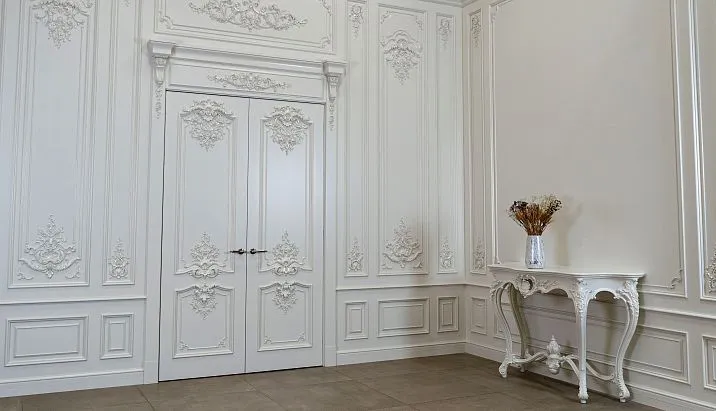
Have you heard how silence sounds in palace halls? This special silence, saturated with centuries of history, where every interior detail whispers of greatness and power? Italian Baroque Furniture These are not just decorative items, but music frozen in wood and gold, from an era when beauty knew no bounds and craftsmanship reached divine heights.
Baroque... The very word soothes the ear, like the rustle of silk fabrics in the hands of Venetian doges. A style born in early 17th century Italy, it became a manifesto of emotion, a challenge to the restraint of the Renaissance, a triumph of sensuality over reason. But what transformed simple furniture pieces into artworks capable of stopping even the most seasoned connoisseur of beauty?
In this article, we will journey to an era when every twist of carving carried philosophical meaning, and every gilded detail was a cry of the master’s soul striving for perfection. Prepare to immerse yourself in a world where luxury was not mere show, but a means of glorifying the Divine through man-made beauty.


Birth of Titans: How Italy Spawned the Baroque Revolution in Furniture




From Papal Palaces to Royal Chambers
History classic Italian furniture Baroque begins not in workshops, but in the minds of geniuses. Lorenzo Bernini, who created 'The Ecstasy of Saint Teresa,' laid the foundations of a new understanding of space and form. Francesco Borromini, through his architectural innovations, showed how stone could be made to dance. These principles immediately permeated furniture art.
Rome became the epicenter of the revolution. The papal court, seeking to demonstrate the power of the Catholic Church after the Reformation, was not sparing in luxury. It was here that the first examples of furniture were born, designed to astonish the imagination and emphasize the majesty of power. Every piece was created as a theatrical set for a play of eternal glory.
The master carpenters of that era were not merely craftsmen — they were philosophers working with wood. Andrea Brustolon in Venice created chairs that seemed carved from clouds. His carving reached such virtuosity that wood lost its materiality, transforming into frozen poetry.
Our factory also produces:


Aesthetic Philosophy of Baroque in Furniture
What force compelled 17th-century masters to create works of such incredible complexity? The answer lies in the very philosophy of Baroque — a style striving to affect all senses simultaneously. Italian Baroque Furniture It was not merely to serve — it was meant to shock, to delight, to make one forget earthly things and think of eternity.
The principle of 'horror vacui' — fear of emptiness — became foundational in creating Baroque furniture. Every square centimeter of surface must be filled with decoration. But this was not chaotic ornamentation — each element had its place in a complex symphony of forms, where the laws of musical harmony prevailed.
Contrapposto — the principle of dynamic equilibrium borrowed from sculpture — found embodiment in asymmetrical furniture compositions. Table legs curved in complex rhythms, chair backs took the forms of seashells or acanthus leaves, creating a sense of movement within static forms.
Get Consultation
Material Poetry: What Birthed the Splendor
Wood as Living Sculpture
Luxury Italian furniture Baroque demanded a special relationship with material. Walnut — the king of Italian furniture of that time — was valued not only for its technical qualities but also for its ability to convey the finest nuances of carving. Its warm, chocolate-colored wood seemed to glow from within under layers of lacquer, creating a gemstone effect.
Oak was used to create monumental pieces — cabinets, tables — where decorative appeal was less important than the sense of eternity and reliability. Masters knew how to select trees with especially beautiful grain, where the play of annual rings created an additional decorative effect.
But the true discovery of Baroque was working with exotic woods. Ebony, rosewood, and padauk — these materials were imported from distant colonies and cost astronomical sums. Their use was not merely an homage to beauty, but also a demonstration of the owner’s power, capable of affording such luxury.
Alchemy of Gilding
Gold in Baroque furniture is not merely a covering — it is a philosophical category. Gold leaf was applied using a special technique onto a multi-layered base of plaster and glue. The process could take months, requiring specific climatic conditions and flawless craftsmanship.
Several gilding techniques existed: 'a mordant' — using an oil-based binder to create a matte surface; 'a poliment' — giving a mirror-like sheen; 'a ground' — for creating transitions and half-tones. Masters combined these techniques to create complex light effects.
Silvering also played an important role, especially in Venetian furniture. Silver oxidized over time, creating a noble patina that added special refinement to objects. Often, silver was covered with colored lacquers, producing effects unattainable by other methods.
Textile as Painting
Upholstery fabrics in Italian furniture Baroque were artworks in themselves. Genoese velvet, Venetian silk, Florentine silk — each material had its own character and purpose.
Velvet with cut pile created play of light and shadow, emphasizing the volume of forms. Silk with gold and silver threads turned furniture into precious boxes. Jacquard fabrics with large floral ornaments complemented carved furniture decoration.
Fabrics with biblical and mythological scenes held a special place. The upholstery of a chair could tell a whole story — from the creation of the world to the apotheosis of saints. This turned every piece of furniture into a book that could be read with the eyes.
Baroque Masterpieces: Catalog of Grandeur
Throne Chairs: Where Gods Sat
A Baroque-style chair is not just a seat — it is a throne, where each owner became emperor of their own world. High backs, often exceeding human height, created a sense of majesty. Beds Baroque chairs were designed as miniature architectural structures.
Armrests transformed into sculptural compositions — here one could see dolphins, lions, eagles, chimeras. Each creature carried symbolic weight: the lion symbolized strength and nobility, the eagle — divine power, the dolphin — wisdom of the seas.
Chair legs — a separate poem in wood. They curved in the shape of the letter S, took the outline of women’s legs in elegant shoes, transformed into stylized tree trunks with leaves and fruit. Each leg was a work of sculpture.
Tables-Altars: Where Dining Became a Sacred Ritual
Baroque dining tables turned every meal into a theatrical performance. Massive bases, often crafted as sculptural compositions, supported tabletops made of precious woods or marble.
Console tables — children of Baroque — were mounted to walls and seemed to float in the air. Their curved legs created a sense of lightness, despite the abundance of decoration. Mirrors above consoles multiplied reflections, creating infinite perspectives.
Writing desks transformed into architectural fantasies with numerous secret compartments, hidden drawers, and mechanical devices. Working at such a desk meant participating in the mystery of creativity.
Cabinet-Spires: Architecture in Miniature
Baroque cabinets — are Gothic cathedrals compressed to the scale of furniture. Their facades were adorned with columns, pilasters, and pediments, creating an illusion of monumental architecture. Solid wood furniture It amazed by its architectural quality.
The internal structure of cabinets was no less thoughtfully designed than their external decoration. Shelves were upholstered in expensive fabrics, drawers were lined with aromatic cedar or sandalwood. Even invisible parts received refined finishes — for true luxury hides in details.
Bookcases transformed into temples of knowledge. Behind glass doors framed in gilded borders, books appeared as sacred relics. Some bookcases featured hidden mechanisms allowing concealment of forbidden books or valuable documents.
Regional Symphony: How Different Italian Cities Interpreted Baroque
Roman School: Papal Luxury
Rome set the tone for all of Europe. Here Italian Baroque Furniture it acquired its canonical forms. Roman masters created furniture for the Vatican, and each piece had to meet the highest standards.
A characteristic feature of Roman Baroque — monumentality of forms. Here, there was no room for small details — everything had to be readable from a distance, impressing visitors of vast halls. Gold leaf was used generously, creating an effect of divine radiance.
Roman masters were the first to use colored marbles in furniture, creating incredibly beautiful inlays. The "pietre dure" technique — mosaics of semi-precious stones — reached perfection here.
Venetian School: Maritime Fantasy
Venice, a city on water, created its own unique interpretation of Baroque. Italian living room furniture Venetian masters were distinguished by particular theatricality and elegance.
Andrea Brustolon — a genius of Venetian carving — created furniture that seemed carved from sea foam. His chairs were adorned with figures of putti, dolphins, tritons — all maritime mythology, so close to the hearts of Venetians.
Venetian masters were the first to use lacquering techniques from the East, creating surfaces that rivaled Chinese lacquers in beauty. Green, red, black lacquers with gold paintings turned furniture into works of painting.
Florentine School: Renaissance Reserve in Baroque Forms
Florence, cradle of the Renaissance, could not fully abandon its traditions. Florentine Baroque was marked by greater restraint, intellectual approach to form and decoration.
Here, the intarsia technique — inlaying with various wood species — flourished. Florentine masters created entire paintings from wooden pieces, achieving effects unattainable in painting. Perspective views, portraits, still lifes — all executed in wood with photographic precision.
Florentine furniture was also distinguished by special attention to proportions. Here, the mathematical precision of the Renaissance combined with the emotionality of the Baroque, creating a harmonious synthesis of reason and feeling.
Neapolitan School: Southern Temperament
Naples brought southern passion and temperament to Baroque furniture. Here, bright colors, bold combinations, and expressive forms were not feared. Neapolitan craftsmen created furniture for the Bourbon royal court, and each piece had to match the opulence of the court.
A characteristic feature of Neapolitan furniture is the use of mother-of-pearl and ivory for inlays. These materials created shimmering surfaces that played with the rays of southern sunlight.
Neapolitan carvers achieved a special mastery in creating figurative compositions. Their putti seemed alive, ready to spring from the furniture's surface at any moment. Vegetal ornaments amazed with their naturalism — it seemed as if the leaves and flowers had just been plucked from the royal garden.
Symbolic Language of Baroque Decoration: How to Read Messages from the Past
Christian Symbolism
Italian Baroque Furniture was enriched with Christian symbolism. Each ornament carried deep religious meaning, transforming furniture into sermons in wood and gold.
The grapevine symbolized Christ and the Eucharist. Acanthus leaves meant overcoming earthly passions. Roses were a symbol of divine love, lilies — of the purity of the Virgin Mary. The pelican feeding its chicks with its own blood symbolized Christ's sacrifice.
Cherubim and seraphim inhabited furniture surfaces, creating a sense of heavenly forces' presence. Their faces radiated divine joy, and their wings evoked a sense of flight, detachment from earthly matters.
Mythological Motifs
Ancient mythology also found its place in Baroque furniture decoration. Apollo with his lyre symbolized harmony and beauty. Minerva embodied wisdom and justice. Venus and Amors spoke of love and beauty.
Heracles and his labors adorned furniture in aristocrats' homes, emphasizing their valor and strength. Griffins and chimeras performed a protective function, guarding the home against evil forces.
Heraldic Symbolism
Coats of arms and heraldic symbols turned furniture into a manifesto of the owner's social status. Luxury Italian furniture was ordered exclusively for aristocratic homes, and each item had to emphasize noble lineage.
Crowns of various ranks indicated the owner's title. Eagles spoke of imperial ambitions. Lions emphasized courage and nobility. Fleur-de-lis hinted at ties to the French court.
Technological Innovations of the Baroque Era
Revolution in Joints
Baroque masters developed new methods of joining parts, enabling the creation of incredibly complex structures. The 'swallowtail' system, perfected during this era, ensured strong joints without using metal elements.
Glues based on casein and fish glue reached such perfection that joints were stronger than the wood itself. The secrets of these glues were carefully guarded by masters and passed only to apprentices.
New Tools and Techniques
Italian furniture hardware Baroque required special tools. Chisels for creating complex profiles, routers for curved surfaces, special saws for curved cuts — all of these were invented or perfected during the Baroque era.
Lathe machines allowed creating columns and balusters of complex shapes. Masters achieved such perfection in turning that they could carve elements several millimeters thick, creating a lace-like effect in wood.
Finishing Materials
Baroque varnishes and polishes were distinguished by special depth and gloss. Shellac, imported from India, allowed creating mirror-like surfaces. Masters applied up to 20-30 layers of varnish, each polished by hand.
Waxes of various origins were used to create different effects. Carnauba wax gave a special gloss, beeswax created a warm, matte surface. Colored waxes allowed toning the surface without hiding the wood's texture.
Baroque in Modern Interiors: Challenge or Harmony?
Adaptation of Historical Forms
Modern Interpretations Baroque furniture requires a delicate approach. It is impossible to simply transfer the forms of the 17th century into a modern apartment — they require appropriate space and context. Modern designers adapt Baroque principles to contemporary needs. Scales are reduced, decoration is simplified, but core principles — dynamic forms, rich materials, attention to detail — are preserved.
Neo-Baroque style may include elements of high technology — built-in lighting, adjustable mechanisms, modern storage systems — but externally remain faithful to historical prototypes.
Italian bedroom furniture Neobaroque style may include high-tech elements — built-in lighting, adjustable mechanisms, modern storage systems — but remain visually faithful to historical prototypes.
Materials of the 21st century in historical forms
Modern technologies allow recreating Baroque furniture effects using new materials. Composites mimic wood carving, polyurethane elements reproduce complex profiles, modern lacquers create depth inaccessible to historical craftsmen.
But true connoisseurs prefer authentic materials and technologies. Modern masters revive forgotten techniques, restore historical recipes, work with the same tools as their predecessors three centuries ago.
Collecting and Investment: Baroque as an Asset
Criteria for Authenticity Assessment
The market for Baroque antique furniture requires deep knowledge and experience. Authentic pieces from the 17th-18th centuries command astronomical prices and require expert appraisal. Every detail — from the method of wood treatment to the composition of gilding — can reveal the origin and age of the piece.
Tool marks characteristic of a specific era, construction features typical of a particular workshop, chemical composition of materials — all of this is used by experts for attributing works.
Provenance — the history of ownership of an object — plays a crucial role in determining its value. Furniture from renowned collections with documented history is valued significantly higher than similar items of unknown origin.
Restoration as an Art
Restoration of Baroque furniture is a separate science requiring not only technical skills but also deep historical knowledge. The restorer must understand the technologies of the era, know the characteristics of various schools, and feel the style.
Modern research methods — X-ray, spectral analysis, dendrochronology — allow studying an object down to the finest details, determining its original form, and identifying later alterations.
Ethical principles of modern restoration require maximum preservation of the original material. Repairs and additions must be reversible and clearly distinguishable from the original upon professional inspection.
Practical Guide: How to Choose and Place Baroque Furniture
Selection criteria
When choosing Baroque furniture requires a delicate approach. It is impossible to simply transfer the forms of the 17th century into a modern apartment — they require appropriate space and context. For a modern interior, it is important to consider the scale of the room. Baroque furniture requires spaciousness — in a cramped room, it will appear bulky and inappropriate.
The quality of execution must be impeccable. Every carving detail must be clearly worked out, gilding must be even, without gaps or pooling. Joints must be strong, without gaps or misalignment.
Authenticity of style is no less important than quality of execution. Many modern manufacturers create eclectic pieces, mixing elements from different eras and styles. True Baroque has its own clear stylistic features.
Placement in the Interior
Baroque furniture requires an appropriate environment. High ceilings, large windows, quality lighting — all of this is necessary for proper perception of the style. In a modern apartment, significant remodeling may be required.
The color palette of the interior should support the luxury of Baroque furniture. Deep, rich colors — burgundy, emerald, sapphire — create an appropriate background. White and gold — a classic combination for Baroque interiors.
Lighting plays a key role in perceiving Baroque furniture. Gilding should catch the light, carving should create expressive shadows. Crystal chandeliers, fabric-shaded wall sconces, candles in candelabras — all of this will help create the desired atmosphere.
Care and Preservation: How to Preserve Heritage of Centuries
Climate conditions
Baroque furniture is extremely sensitive to climatic conditions. Sudden temperature and humidity fluctuations may cause wood cracking, gilding flaking, and deformation of elements.
The optimal temperature for storing antique furniture is 18-20 degrees Celsius at a humidity of 45-55%. Higher humidity may lead to mold growth and decay, lower humidity — to drying and cracking.
Direct sunlight is harmful to Baroque furniture. Ultraviolet light destroys organic dyes, causes gilding to fade, and degrades lacquer coatings. Furniture should be placed away from windows or protected by special filters.
Regular maintenance
Italian furniture showroom should provide recommendations for caring for antique items. Regular gentle cleaning with soft brushes, treatment with special compounds, and condition monitoring — all of this is necessary to preserve the furniture.
Professional maintenance should be performed no less than once a year. The specialist assesses the condition of all elements, performs local restoration if necessary, and provides recommendations for further care.
Any interventions in the structure or decoration should be performed only by qualified restorers. DIY attempts may lead to irreversible damage and loss of the item's historical value.
In a world where speed often matters more than quality, and functionality prevails over beauty, Italian furniture store Baroque offers a different philosophy of life. Here, every item is a manifesto that beauty deserves any effort, that craftsmanship is more valuable than speed, that the heritage of ancestors is worth more than fleeting trends.
Baroque furniture teaches us not to rush, not to settle for mediocrity, but to strive for perfection in every detail. In an era of minimalism and functionality, it reminds us that humans need not only practicality, but also beauty, not only comfort, but also inspiration.
Conclusion
Italian Baroque furniture is not just interior items — it is frozen music of the era when masters were not afraid to dream of the impossible and to realize these dreams in wood and gold. Every chair, every table, every cabinet of that era — is a message to future generations that beauty can overcome time.
In the modern world, Baroque furniture acquires a new meaning. It becomes an oasis of authenticity in a world of imitations, an island of quality in the ocean of mass production, a symbol that humanity is capable of creating eternal values.
Choosing Baroque furniture, we choose not just an interior style — we choose a philosophy of life, where beauty holds the highest value, where quality matters more than quantity, where every detail is created with love and attention.
Baroque teaches us not to fear luxury, not to be ashamed of beauty, not to settle for dullness. In a world increasingly leaning toward uniformity, Baroque furniture proclaims the right of each individual to individuality, to surround oneself with beauty, to live in beauty.
STAVROS is a recognized expert in historical Italian furniture, offering clients exclusive Baroque artworks produced in-house. The STAVROS collection features furniture created in strict adherence to all historical traditions and canons of Baroque style, using authentic materials and techniques. STAVROS’ professional team includes art historians, restorers, and antique experts who ensure the authenticity and quality of each piece. Collaborating with the best Italian workshops, STAVROS offers both museum rarities and modern interpretations of Baroque classics. Choosing STAVROS, clients receive not just furniture, but the opportunity to touch the great heritage of Italian art, becoming owners of authentic Baroque furniture pieces.