Article Contents:
- Hardware as the Foundation of Furniture Durability and Functionality
- The Role of Hardware in Daily Furniture Use
- The Impact of Hardware on the Aesthetic Perception of Furniture
- Economic Aspect: Investment in Quality
- Main Types of Furniture Hardware and Their Characteristics
- Hinges and Opening Systems: The Foundation of Functionality
- Drawer Guides: Smoothness and Reliability
- Lift Mechanisms: Innovations for Comfort
- Storage and Space Organization Systems
- Decorative Hardware: Aesthetics and Individuality
- Where to Buy Furniture Hardware: Overview of Top Sources
- Specialized Online Stores: Convenience and Wide Selection
- Wholesale Suppliers: Favorable Terms for Professionals
- Retail Specialized Stores: When Personal Contact Matters
- Construction Hypermarkets: Basic Solutions Within Easy Reach
- Furniture Factories: Brand Components
- How to Choose Quality Hardware: Professional Tips
- Materials and Technologies: The Foundation of Durability
- Functional Characteristics: What Isn't Visible to the Eye
- Leading Manufacturers: Quality Guarantee
- Compatibility and Comprehensive Approach
- Innovations in Furniture Hardware: What's New in 2025
- Smart Hardware: Integration with "Smart Home" Systems
- Ecological sustainability and development
- Ergonomic Innovations: Comfort at a New Level
- Design Trends: From Minimalism to Personalization
- Practical Tips for Choosing and Installing Furniture Hardware
- How to Calculate the Required Amount of Hardware
- Tools and Equipment for Professional Installation
- Step-by-Step Instructions for Installing Common Types of Hardware
- Adjustment and Setup for Optimal Performance
- Maintenance and Preventive Care

The modern market offers an overwhelming variety of hardware—from basic hinges to high-tech lift mechanisms with electronic control. How not to get lost in this diversity? How to choose exactly what will perfectly suit your project? And finally,
The modern market offers a dizzying variety of hardware—from basic hinges to high-tech lift mechanisms with electronic control. How not to get lost in this diversity? How to choose exactly what is perfect for your project? And finally, where to buy furniture hardwarethat will meet the highest quality standards? Let’s figure it out together.


Hardware as the Foundation of Furniture Durability and Functionality
Imagine a luxurious solid oak wardrobe with flawless finish. Impressive, isn’t it? Now imagine that after half a year, its doors start squeaking, warping, and drawers jam every time you open them. All the beauty and value of such furniture instantly lose their appeal. That’s why professionals pay no less attention to hardware selection than to the material of the frame or the design of the fronts.




The Role of Hardware in Daily Furniture Use
Furniture hardware is not just decorative elements. It is a complex system of mechanisms ensuring the functionality of every piece of furniture:
- Hinges bear the weight of doors and ensure smooth opening.
- Guides withstand the load of drawers with contents.
- Lift mechanisms make using upper cabinets safe and convenient.
- Storage systems optimize the internal space of cabinets and closets.
- Connecting elements ensure the strength and stability of the entire structure.
Each of these elements is subjected to significant loads daily. Quality hardware can withstand 80,000–100,000 opening-closing cycles without losing functionality. For comparison: with active use of a kitchen cabinet (10–15 openings per day), this corresponds to 20–25 years of flawless operation. Budget alternatives may fail within 2–3 years.
Our factory also produces:


The Influence of Hardware on the Aesthetic Perception of Furniture
The aesthetic component of hardware is no less important than the functional one. Decorative elements—handles, buttons, overlays—are like “jewelry” for furniture, capable of either accentuating its style or completely destroying the designer’s concept.
Modern design trends in furniture offer diverse solutions:
- Minimalist hidden handles creating an effect of a seamless surface
- Vintage brass overlays for classic interiors
- Industrial metal elements for loft spaces
- Refined ceramic and glass handles for exclusive furniture
Properly selected front hardware can transform even the simplest furniture, giving it individuality and character. It becomes the very 'cherry on top' that completes the look and makes it memorable.
Get Consultation
Economic Aspect: Investment in Quality
Many mistakenly believe that one can save money on hardware without compromising furniture quality. Practice shows the opposite: such savings result in additional expenses in the future.
According to studies, replacing low-quality hardware may cost up to 40% of the new furniture’s price. When considering the cost of the craftsman’s labor, time spent, and inconvenience associated with repairs, it becomes clear: saving on hardware is the most expensive kind of saving.
Quality hardware is a long-term investment that pays off:
- Furniture durability
- Daily use comfort
- Preservation of aesthetic appeal
- Lack of expenses for repair and replacement
- Higher residual value of furniture at resale
Main types of furniture hardware and their characteristics
Before deciding, where to buy furniture hardwareit is necessary to understand its variety. The modern market offers thousands of hardware items for any tasks and styles. Let's consider the main categories and their key characteristics.
Hinges and opening systems: the basis of functionality
Hinges are, perhaps, the most common type of furniture hardware. The quality of hinges determines how smoothly and quietly cabinet doors will open, and how long they will maintain their proper position.
Main types of hinges:
- Surface-mounted hinges - installed on the surface of the door and cabinet. Advantages: easy installation, affordable price. Disadvantages: visibility from the outside, limited opening angle.
- Semi-surface-mounted hinges - used when the door partially overlaps the cabinet. Provide an opening angle up to 110°. Optimal for most standard cabinets.
- Inset hinges - used when the door fully fits into the cabinet. Create a seamless surface effect, completely hidden when the door is closed.
- Corner hinges - specialized solutions for corner cabinets with non-standard opening angles.
- Hinges for glass doors - have a special construction that does not require drilling holes in the glass.
Key hinge characteristics:
- Opening angle - from 95° to 175° (for specialized solutions)
- Load capacity - from 3 to 20 kg per hinge
- Presence of a soft-close mechanism - ensures smooth and silent closing
- Material and finish - affect durability and corrosion resistance
- Adjustability - modern hinges can be adjusted in three planes for perfect facade alignment
Premium-class hinges from leading manufacturers (Blum, Hettich, Grass) provide up to 200,000 flawless cycles and come with built-in soft-close mechanisms that prevent door slamming and extend furniture lifespan.
Drawer guides: smoothness and reliability
Guides determine how easily and smoothly drawers will slide out and what weight they can support. The modern market offers three main types:
- Ball-bearing guides - budget solution with partial drawer extension (75-80% of drawer depth). Support load up to 25-30 kg. Advantages: affordable price, easy installation. Disadvantages: limited extension, shorter lifespan, risk of jamming if misaligned.
- Ball-bearing guides - provide full drawer extension and support load up to 45-50 kg. Operate on ball-bearing mechanisms, ensuring smooth operation even when fully loaded. Lifespan - up to 60,000 cycles.
- Hidden guides (metaboxes) - installed under the drawer bottom, invisible from the outside. Provide full extension and support load up to 60-70 kg. Often come with soft-close mechanisms and push-to-open systems. Premium models include synchronizers for even movement and systems to prevent accidental drawer drop.
Key guide characteristics:
- Load capacity - from 10 to 70 kg depending on type and model
- Length - from 250 to 700 mm (for standard solutions)
- Type of extension - partial or full
- Presence of a soft-close mechanism - ensures smooth closing
- Material and finish - affect durability and smooth operation
High-quality guides from leading manufacturers (Blum Tandembox, Hettich Innotech, Grass Dynapro) ensure exceptional smooth operation even under maximum load and retain their performance throughout the furniture's lifespan.
Lift mechanisms: innovations for comfort
Lift mechanisms transform ordinary hinged doors into elegant lifting systems. They are indispensable for upper cabinets in kitchens and living rooms, providing easy access without the risk of hitting an open door.
Main types of lift mechanisms:
- Swing (FD) - door opens downward, forming a horizontal surface. Ideal for bar cabinets and TV stands.
- Vertical (HL) - door lifts upward parallel to the cabinet. Optimal for tall and narrow cabinets.
- Folding (HF) - door folds when opening, occupying minimal space. Suitable for wide cabinets with limited space above.
- Parallel (HS) - door moves parallel to the cabinet, sliding forward and upward. Creates a dramatic motion and ensures maximum access to contents.
- Combined (HK-S) - combine various types of movement for optimal space usage.
Key features of lift mechanisms:
- Load capacity - from 2 to 20 kg depending on model
- Opening angle - from 75° to 107° depending on type
- Presence of a soft-close mechanism - ensures smooth closing
- Adjustable lift force - adaptation to the weight of a specific facade
- Material and finish - affect durability and reliability
Premium lift mechanisms (Blum Aventos, Hettich Sensys, Grass Kinvaro) are equipped with soft-close systems, adjustable lift force, and intermediate position locking, making furniture use maximally comfortable and safe.
Storage and space organization systems
Modern storage systems transform ordinary cabinets into highly functional spaces with optimal organization:
- Pull-out baskets and grids - provide convenient access to deep cabinet contents. Made from chrome-plated steel with polymer coating, withstand loads up to 30-40 kg.
- Cargo systems - multi-level constructions for storing kitchen utensils, household chemicals, or food items. Fully extendable, ensuring access to all contents.
- Rotating systems for corner cabinets (magic corners) - allow efficient use of hard-to-reach corner spaces. When the door opens, the contents automatically extend outward.
- Pull-out columns - narrow vertical systems for storing bottles, spices, or household chemicals. Optimal for use in narrow wall recesses.
- Closet systems - comprehensive solutions for organizing storage of clothing, shoes, and accessories. Include pull-out hangers, pants organizers, shoe racks, and other specialized elements.
Key features of storage systems:
- Load capacity - from 15 to 80 kg depending on type
- Material and finish - affect durability and aesthetics
- Type of extension - full or partial
- Presence of a soft-close mechanism - ensures smooth closing
- Modularity - ability to combine different elements
Quality storage systems (Vibo, Inoxa, Hafele, Kesseböhmer) not only optimize space but also significantly enhance furniture usability, saving time in searching for needed items.
Decorative hardware: aesthetics and individuality
Decorative hardware is the face of your furniture, elements you interact with daily:
- Handles and knobs — from minimalist to sophisticated designer models. Made from various materials: metal, glass, ceramic, natural wood, composites.
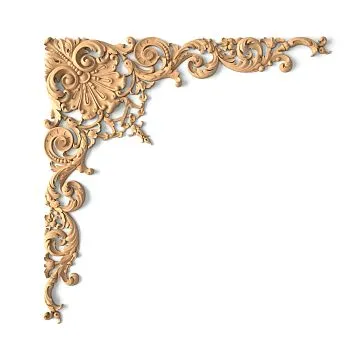
- Decorative appliqués and moldings — highlight style and conceal technical elements. Can imitate carving, inlay, or other decorative techniques.
- Furniture legs and supports — affect both aesthetics and functionality. The modern market offers models ranging from classic turned to avant-garde metal constructions.
- Decorative panels and inserts — used to create unique facade designs. Can be made of metal, wood, glass, or composite materials.
Key features of decorative hardware:
- Material and finish — affect durability, tactile feel, and appearance
- Style and design — must match the overall concept of the furniture and interior
- Ergonomics — ease of use, especially important for handles
- Mounting method — affects fixation reliability and installation simplicity
Properly selected decorative hardware can transform even the simplest furniture, giving it individuality and character. It becomes an accent element that draws attention and creates a cohesive impression of the interior.
Where to buy furniture hardware: overview of the best sources
When you’ve decided on the type of hardware needed, the question arises: where to buy furniture hardware high quality at a reasonable price? The modern market offers many options, each with its own advantages and features.
Specialized online stores: convenience and wide selection
In the era of digital technology, online stores have become the most popular source for purchasing furniture hardware. They offer several undeniable advantages:
- Extensive assortment — tens of thousands of items in one place
- Convenient search and filtering — ability to quickly find desired items by specifications
- Detailed descriptions and technical specifications — all information at your fingertips
- Photos and video reviews — ability to examine the product in detail
- Reviews from real customers — help make an informed decision
- Delivery to any point in the country — no need to spend time traveling
- Competitive prices — absence of costs for maintaining physical stores
When choosing an online store, pay attention to:
- Presence of official manufacturer certificates
- Detail of product descriptions and availability of technical specifications
- Quality of photos and ability to view the product from different angles
- Reviews of the store on independent platforms
- Delivery, return, and warranty terms
- Availability of technical support and consultations
Wholesale suppliers: advantageous conditions for professionals
For furniture manufacturers and large projects, wholesale suppliers are the optimal solution. They offer:
- Significant discounts on large orders - savings of up to 30-40% off retail price
- Direct deliveries from manufacturers - guarantee of product authenticity
- Professional consultation - assistance in selecting optimal solutions
- Stable inventory availability - no delays in the production process
- Technical support - assistance with installation and operation
Working with wholesale suppliers requires a certain minimum order volume, but for professionals in the furniture industry, this is not an issue. Many wholesalers offer special conditions for regular customers, including payment deferrals and personal account managers.
Specialized retail stores: when personal contact matters
Despite the growth of online trade, specialized retail stores maintain their niche. Their advantages:
- Ability to see and test hardware - evaluate material quality, mechanism smoothness
- Personal consultations with experienced sales staff - assistance in choosing the optimal solution
- Immediate product receipt - no need to wait for delivery
- Demonstration stands - a visual representation of how mechanisms work
Retail stores are especially useful for beginners who need detailed consultation, or when selecting complex mechanisms, where it is important to evaluate performance in person.
Construction hypermarkets: basic solutions within easy reach
Construction hypermarkets offer a basic assortment of furniture hardware. Their advantages:
- Wide network of stores - available almost in every city
- Convenient business hours — many operate until late evening or 24/7
- Ability to purchase complementary items - tools, materials, fasteners
- Regular promotions and sales - opportunity to purchase items at a discount
However, the assortment of such stores is usually limited to basic, mass-market items. For specific or premium solutions, it is better to contact specialized suppliers.
Furniture factories: branded components
Some furniture factories offer purchasing components directly. This may be advantageous if:
- You need exactly the same elements as in your existing furniture
- You need to replace faulty hardware in branded furniture
- You want to obtain hardware that perfectly matches a specific furniture model
However, the assortment of such offers is usually limited to what is used in the production of a specific factory.
How to choose quality hardware: professional tips
Regardless of the fact, where you decide to buy furniture hardwareIt is important to be able to distinguish quality products from counterfeits and cheap imitations. Over the years of my work, I have developed a set of criteria that help accurately identify a worthy product.
Materials and technologies: the foundation of durability
Material quality - the first and most important indicator of hardware durability:
- For hinges and guides, cold-rolled steel with a thickness of at least 1.5–2 mm and zinc or nickel plating is optimal. Premium models are often made from AISI 304 or 316 stainless steel, resistant to corrosion even in humid environments.
- Decorative elements use various materials:
- Zinc alloys (ZAMAK) with electroplating — optimal price-to-quality ratio
- Brass — for premium classic models
- Stainless steel — for modern minimalist designs
- Natural wood — for eco-friendly and classic interiors
- Ceramic and glass — for exclusive designer solutions
- Plastic elements must be made from high-strength polymers:
- Polyamide (nylon) — for parts subjected to mechanical stress
- Polycarbonate — for transparent elements
- ABS plastic with UV stabilizers — for parts exposed to sunlight
Manufacturing technologies also play a key role:
- Mold and injection accuracy (tolerances no more than 0.1–0.2 mm)
- Quality of welded joints (even, without pores or incomplete welds)
- Uniformity of protective coatings application (zinc layer thickness no less than 12–15 microns)
- Accuracy of assembly of multi-component mechanisms (no play or binding)
Functional characteristics: what is not visible to the eye
The functionality of hardware is determined by several key parameters:
- Load capacity — maximum weight an element can withstand:
- For guides: from 25 kg (basic models) to 80 kg (reinforced systems)
- For hinges: from 3–5 kg (standard) to 20 kg (reinforced) per hinge
- For lift mechanisms: from 2–3 kg to 20 kg depending on model
- Cyclic durability — number of open/close cycles until failure:
- Basic level: 20000-40000 cycles
- Medium level: 40000-60000 cycles
- Premium level: 80000-100000 cycles and more
- Smooth operation - absence of jerks and sticking during movement. High-quality mechanisms ensure even movement across the entire range.
- Positioning accuracy - the ability of the mechanism to accurately lock in specified positions without unintended displacement.
- Noise characteristics - minimal noise during operation. Premium mechanisms operate almost silently.
When selecting, always consider safety margin - choose hardware with a load capacity reserve of at least 20-30% above the calculated load. This ensures longevity and safe operation.
Leading manufacturers: quality guarantee
On the market for furniture hardware, a clear rating of manufacturers by price-to-quality ratio has formed:
Premium segment:
- Blum (Austria) - the benchmark for quality in the production of hinges, lift mechanisms, and extension systems. Innovative solutions, flawless quality, lifetime warranty on many products. Proprietary technologies: Blumotion (soft-close system), Tip-On (mechanical push-to-open system), Servo-Drive (electric opening system).
- Hettich (Germany) - one of the largest manufacturers of comprehensive solutions for furniture. Broadest assortment, high quality, innovative technologies. Proprietary systems: Sensys (hinges with integrated soft-close), ArciTech (premium drawer systems), WingLine (foldable door systems).
- Grass (Austria) - specializes in high-tech extension systems and hinges with unique characteristics. Proprietary products: Dynapro (hidden guides), Tiomos (hinges with integrated soft-close), Nova Pro Scala (drawer systems).
- Hafele (Germany) - comprehensive solutions for furniture and interiors, including specialized hardware for complex projects. Particularly strong in lighting systems, electronic access systems, and specialized solutions for small spaces.
Mid-range segment:
- FGV (Italy) - optimal price-to-quality ratio, wide range of basic solutions.
- GTV (Poland) - quality European-made hardware at affordable prices.
- Boyard (Russia/China) - one of the leaders of the Russian market, offering solutions adapted for domestic consumers.
- Firmax (Russia) - Russian manufacturer with good price-to-quality ratio.
When choosing a brand, consider not only price, but also part availability, technical support, and warranty service. Leading manufacturers ensure part availability for 20-25 years after a model is discontinued, guaranteeing repair possibilities even decades later.
Compatibility and integrated approach
When selecting hardware, it is important to consider compatibility between all components and with furniture materials:
- Technical compatibility - all components must be compatible in size, mounting method, and functional characteristics. For example, hinges must match door thickness and cabinet type (surface-mounted, semi-surface-mounted, or inset mounting).
- Aesthetic unity - visible components must conform to a unified design concept. Mixing different styles (e.g., classic handles and modern hinges) may disrupt the overall perception of the furniture.
- Functional consistency - all mechanisms must provide a similar level of user comfort. For example, if cabinet doors are equipped with soft-close mechanisms, it is logical to equip drawers with them as well.
- Longevity of all components - the service life of all elements must be comparable. There is no point in installing premium hinges rated for 100000 cycles if the guides are rated only for 20000 cycles.
Ideal solution - using integrated systems from a single manufacturer, where all components are originally designed for coordinated operation and provide a unified level of quality and aesthetics.
Innovations in the world of furniture hardware: what's new in 2025
The world of furniture hardware is constantly evolving, offering increasingly advanced solutions. In 2025, we observe several key trends that define the industry's future and influence the where to buy furniture hardware with innovative features.
Smart hardware: integration with "smart home" systems
Modern hardware is becoming part of the "smart home" ecosystem:
- Electric drives with remote control allow opening and closing cabinets via smartphone or voice commands. Blum Servo-Drive and Hettich e-Drive systems ensure smooth cabinet opening even when fully loaded.
- Biometric access systems provide security for valuable items without requiring keys. Fingerprint scanners and NFC tags are integrated into furniture fronts, ensuring convenient and secure access.
- Integrated lighting automatically turns on when a cabinet is opened or a drawer is pulled out. Modern systems use energy-efficient LED elements with motion sensors and brightness adjustment.
- Content monitoring systems help track inventory of kitchen products or medicine in a first-aid kit. Integration with smart assistants allows automatic creation of shopping lists.
These technologies not only enhance furniture usability comfort but also make it more accessible for people with disabilities, ensuring inclusivity in modern interiors.
Ecological Sustainability
The ecological trend has also affected hardware production:
- Biodegradable polymers based on cornstarch, cellulose, and other plant materials replace traditional plastic in non-critical components. They degrade within 3-5 years without harming the environment.
- Recycled metals are used to produce cabinet components. Leading manufacturers implement closed-loop production cycles, where up to 80% of metal is sourced from recycled raw materials.
- Water-based non-toxic coatings are replacing heavy-metal galvanization. They are not only more environmentally friendly but also safer for user health.
- Energy-efficient production processes reduce the carbon footprint of products. Many factories are switching to renewable energy sources and implementing heat recovery systems.
Leading manufacturers are adopting circular economy principles, offering programs for recycling old hardware and using secondary raw materials. This not only reduces negative environmental impact but also allows optimizing production costs.
Ergonomic innovations: comfort at a new level
Ergonomics of furniture hardware reaches a new level:
- Adaptive opening systems adjust to the force of pressing and the speed of movement. They analyze usage patterns and adapt the operation of mechanisms to the specific user's habits.
- Ultra-quiet mechanisms reduce noise levels to practically imperceptible (less than 20 dB). This is especially important for bedrooms, children's rooms, and open-plan areas, where noise from furniture may cause discomfort.
- Tactilely pleasant materials for handles and other contact elements. Modern soft-touch finishes create a sensation of warmth and softness upon touch, making furniture use more pleasant.
- Antibacterial coatings for frequently used surfaces. Silver ions embedded in the material structure provide continuous protection against bacteria and viruses, which is especially important for kitchen and bathroom furniture.
These innovations make furniture use more intuitive and comfortable for all age groups, from children to the elderly.
Design trends: from minimalism to personalization
Several key trends are evident in hardware design for 2025:
- Minimalism and hidden solutions - hardware that is practically invisible or fully integrated into the furniture design. Push-to-open systems allow complete elimination of visible handles, creating a monolithic surface effect.
- Natural materials and textures - a return to wood, stone, leather combined with metal. Handles made from solid rare wood, natural stone, or leather with metal inserts create unique tactile and visual sensations.
- Matte finishes instead of glossy - more practical and visually calm. Soft-touch finishes are especially popular, creating a velvet-like surface resistant to fingerprints.
- Personalization - the ability to create unique elements using 3D printing and other personalization technologies. Some manufacturers offer services to create custom-designed hardware for clients.
Modern hardware is no longer just a functional element, but also an important part of the furniture and interior design concept, reflecting the owner's individuality and general design trends.
Practical tips for selecting and installing furniture hardware
Correct selection and professional installation of hardware - the key to durability and comfort of furniture use. Here are some practical tips to help you avoid common mistakes.
How to calculate the required amount of hardware
Accurate calculation of the required amount of hardware - an important stage in planning a furniture project:
- Create a detailed furniture plan indicating all elements requiring hardware. For each door, drawer, shelf, determine the type and quantity of required components.
- Specify the type and quantity of hinges:
- For standard doors up to 800 mm - 2 hinges
- From 800 to 1600 mm - 3 hinges
- From 1600 to 2000 mm - 4 hinges
- More than 2000 mm - 5 or more hinges
- For heavy facades (glass, solid wood), the number of hinges increases by 1-2 pieces
- Calculate the drawer guides:
- Guide length = drawer depth + 10-15 mm
- Each drawer requires a pair of guides (left and right)
- Load capacity is selected with a 30-40% safety margin from the expected load
- Determine the required fasteners:
- For connecting panels at a 90° angle - confirmers (2-4 per connection) or eccentric bolts (2-3 per connection)
- For attaching back panels - confirmers, self-tapping screws, or nails (spacing 150-200 mm)
For attaching facades - hinges (quantity depends on size and weight of facade), handles (1-2 per facade depending on size), magnetic catches for doors without handles.
- Add a 10-15% reserve for defects, losses, or installation errors. This reserve is especially important for fasteners, which may be damaged during installation.
Tools and equipment for professional installation
Correct tools - the key to quality hardware installation:
- Templates for marking - ensure accurate positioning of hinges and other elements. For cup hinges, a 35 mm diameter template is required to accurately mark hole positions.
- Drill guides - ensure correct angle and depth of holes. Especially important when installing cup hinges, where precise drilling to a depth of 12-13 mm is required.
- Specialized bits and attachments - designed for specific types of fasteners. For example, PZ2 bits for confirmers or hex bits for eccentric bolts.
- Precision screwdrivers and wrenches - allow precise adjustment of mechanisms. The set should include both cross-head and flat-head screwdrivers of various sizes.
- Measuring tools - tape measure, square, level for accurate positioning. A laser level is especially useful for aligning facades.
Investing in quality tools pays off multiple times due to work speed and result quality.
Step-by-step instructions for installing main types of hardware
Installing cup hinges:
- Mark the position of hinges on the door (usually 100-150 mm from edges and evenly along height)
- Drill a hole for the cup hinge using a 35 mm Forstner bit to a depth of 12-13 mm
- Drill holes for mounting screws
- Secure the hinge to the door
- Install the hinges on the cabinet frame
- Snap the hinges onto the hinge plates
- Adjust the door position for height, depth, and tilt
Ball-bearing guide installation:
- Mark the guide positions on the side walls of the cabinet frame
- Mount the guides on the frame, ensuring parallelism and equal height
- Mark the hinge plate positions on the drawer
- Mount the hinge plates on the drawer
- Insert the drawer into the frame
- Check the smooth operation and adjust if necessary
Adjustment and setup for optimal performance
Most modern mechanisms feature fine-tuning capabilities:
Hinge adjustment:
- Vertically (±2 mm) - for aligning doors vertically. Use a screw on the mounting plate or a special adjustment screw.
- Depth-wise (±2 mm) - for aligning facade surfaces. Adjusted by a screw located farther from the hinge edge.
- By tilt (±1.5 mm) - to eliminate misalignment. Adjusted by the screw closest to the hinge edge.
If the facade appears visually misaligned (unequal distances, creating a sense of being tilted toward one side), use the first adjustment screw. Adjust the overlay until equal distances are achieved from all sides.
Guide adjustment:
- By height - to align drawer facades. Most modern guides have special adjustment screws or levers.
- By tilt - to ensure facade parallelism with the cabinet body. Adjusted by individual screws on each guide.
- Adjusting the soft-close mechanism - for optimal closing speed. Some models have a dedicated regulator.
Care and preventive maintenance
Regular maintenance extends the lifespan of hardware several times:
- Cleaning from dust and dirt - clean guides, hinges, and other mechanisms from dust and dirt at least once every 6 months. Use a soft cloth or sponge with neutral detergent.
- Lubrication of moving parts:
- Clean the part from dust and dirt
- Apply a small amount of lubricant to the working surfaces of the parts (hinges, guides)
- Use lubricants specifically recommended by the manufacturer (usually silicone or Teflon-based)
- Avoid excessive lubricant, which may attract dust
- Checking and tightening fasteners - vibrations and loads may cause fasteners to loosen. Regularly check and tighten screws and other fasteners as needed.
- Mechanism adjustment - over time, settings may need adjustment due to natural material shrinkage or changes in load.
Preventive maintenance is better performed regularly, rather than waiting for squeaks, sticking, or other problems. This will significantly extend the lifespan of your furniture and maintain comfort of use.
Proper care of furniture hardware not only extends its service life but also ensures comfortable use throughout its entire lifespan. Regular cleaning, lubrication, and timely adjustments will help avoid most problems and keep your furniture in perfect condition for many years.