Article Contents:
- Traditions of wood processing: wisdom of centuries
- Modern technologies: new life for an ancient craft
- Ecological aspect: returning to nature
- Types of wooden semi-finished products: variety of possibilities
- Cabinet panels: foundation of functionality and beauty
- Slabs: natural beauty in its purest form
- Re-surfaced wide boards: scale and reliability
- Turned blanks: art in motion
- Decorative elements: accents that set the mood
- Wood species: character and soul of the future product
- Hardwood species: nobility and durability
- Softwood species: lightness and flexibility
- Processing technologies: from blank to masterpiece
- Coniferous Species: Practicality and Accessibility
- Exotic Species: Uniqueness and Character
- Wood drying: foundation of stability
- Cutting and primary processing: forming the base
- Gluing and joining: creating complex structures
- Application of wooden semi-finished products in modern interior design
- Final Finishing: Perfection in Details
- Furniture: functionality and aesthetics
- Stairs: functional accent in interior design
- Doors and windows: boundary between worlds
- Wall and ceiling finishing: creating atmosphere
- Care for wooden items: preserving beauty for years
- Decorative Elements: Accents That Define Character
- Regular cleaning: simplicity and effectiveness
- Protection from moisture and temperature fluctuations
- Updating protective coatings: periodic necessity
- Choosing and ordering wooden semi-finished products: what to pay attention to
- Restoration: Returning to Life
- Manufacturer's reputation: guarantee of quality
- Material quality: foundation of longevity
- Material quality: foundation of longevity
- Individual approach: solution for specific tasks
- Delivery terms and conditions: planning work
- Conclusion: investment in quality and beauty
Have you ever wondered why some interiors literally 'breathe' warmth and coziness, while others, despite expensive finishes and branded furniture, seem lifeless and cold? The secret lies in the details — those very elements that give a space its character and individuality. And among these elements, wooden items hold a special place. It is precisely they that can bring a note of natural harmony into any interior, offer a sense of connection with nature, and create an atmosphere of genuine comfort.
In the era of mass production and synthetic materials wooden semi-finished products become a true treasure for those who value the individuality and eco-friendliness of their homes. These are not just construction elements or raw materials for furniture — they are the foundation for creating unique items that will delight the eye and serve for many years.
Let's together dive into the wonderful world of wooden semi-finished products and find out how they can transform your home, making it not only beautiful but truly alive.


Evolution of wooden semi-finished products: from antiquity to modernity
The history of using wood in construction and manufacturing household items spans millennia. Our ancestors intuitively felt the special energy of this material, its ability to create a comfortable living environment.




Woodworking traditions: wisdom of centuries
Unique woodworking traditions have formed in different cultures. Russian masters were renowned for their exquisite carving, Japanese for elegant joints without a single nail, Scandinavian for minimalist yet functional solutions. Each culture contributed its own unique elements, enriching the global heritage of woodworking.
It is interesting that many technologies we consider modern have deep historical roots. For example, joining wooden elements was practiced in ancient Egypt, and the technique of edge-to-edge joining (dovetailing) was known in the Middle Ages.
Our factory also produces:


Modern technologies: new life for an ancient craft
Today, the production wooden semi-finished products of items has reached a fundamentally new level thanks to modern technologies. Computerized CNC machines allow creating parts with millimeter precision, special drying chambers ensure optimal wood moisture, and innovative adhesives and impregnations increase material durability and resistance to external influences.
But despite all technological achievements, the best manufacturers do not forget about traditional handcrafting. Final finishing, quality control, texture selection — all of this still requires the experienced eye and sensitive hands of a true master.
Get Consultation
Ecological aspect: returning to nature
In the era of growing ecological awareness, wooden items are experiencing a true renaissance. People increasingly prefer natural materials, striving to create a healthy living environment in their homes.
Modern wooden semi-finished products Items are produced in accordance with strict ecological standards. Wood is harvested within responsible forestry programs, and non-toxic materials are used in processing. This allows creating items that are not only beautiful but also completely safe for health.
Types of wooden semi-finished products: variety of possibilities
The modern market offers a vast variety of wooden semi-finished products, suitable for various purposes — from construction and finishing to furniture and decorative elements.
Furniture panels: foundation of functionality and beauty
A furniture panel is a glued laminated wood assembly consisting of laminated (wooden strips) elements. It is a universal material used for making countertops, shelves, stair treads, and other furniture and interior elements.
There are several types of furniture panels:
- Butted furniture panels — consist of laminates joined not only by width but also by length (on mini-ships). Such a construction ensures high strength and stability, making the panel resistant to deformation.
- Solid-laminate furniture panels — are made from laminates glued only by width. They have a more uniform texture and color palette, making them especially attractive for visible interior elements.
Furniture panels can be made from various wood species — oak, beech, ash, pine, birch, and others — allowing to select a material ideally suited to a specific project.
Slabs: natural beauty in its purest form
Slabs are longitudinal cross-sections of wood, preserving the natural shape of the trunk and unique wood grain. Each slab is unique, like a fingerprint, making items crafted from it truly exclusive.
Working with slabs requires special craftsmanship and a creative approach. The artisan must highlight the natural beauty of the wood while maintaining the functionality of the item. For this, various processing techniques are used — from traditional sanding to filling cracks and voids with colored epoxy resin.
Slabs are most often used to create designer tables, bar counters, shelves, and other items that become the central element of interior design.
Reinforced wide boards: scale and reliability
For creating large-scale items, reinforced wide boards are used. They are joined using a tongue-and-groove connection — a reliable joint where parts are secured with grooves and tenons, then glued under pressure.
This technology allows creating large-scale items of extraordinary shape and beauty, which are also highly strong and resistant to deformation. Additional structural stability is provided by tenons and reinforcements, which are attached to the reverse side of the item perpendicular to the grain direction.
Turning blanks: art in motion
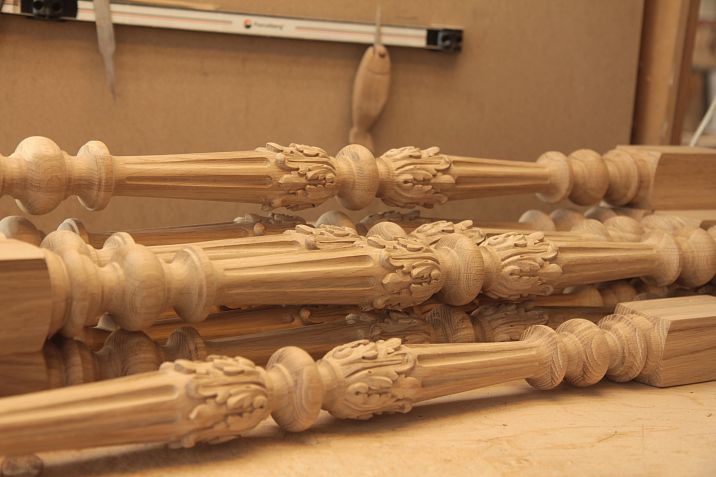
Turning blanks are the basis for creating three-dimensional items with round cross-sections: balusters for staircases, legs for furniture, decorative elements, tableware, and much more.
Turning is a special kind of art that requires not only technical skill but also artistic vision. A master turner works with a rotating blank, gradually shaping it into the desired form using special cutting tools.
Modern manufacturers offer a wide variety of turning blanks made from different wood species, allowing artisans and hobbyists to create unique items without spending time on preparatory work.
Decorative elements: accents that set the mood
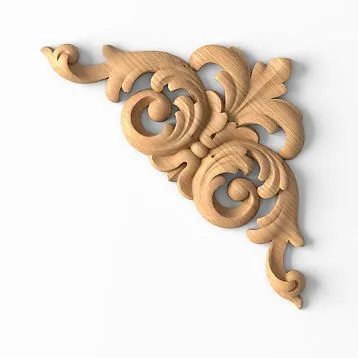
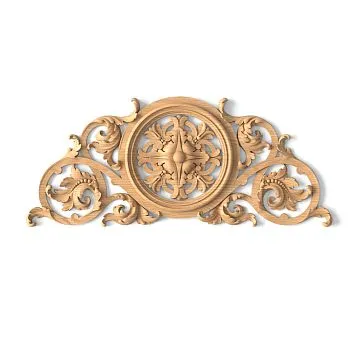
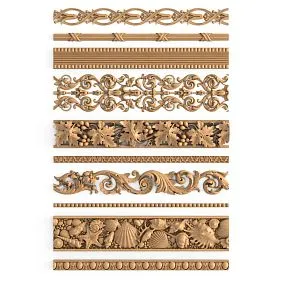
Decorative wooden elements are those very details that give interiors completeness and individuality. These can be carved panels, inlays, rosettes, cornices, moldings, and other elements used to decorate furniture, walls, and ceilings.
These elements can be simple geometric shapes or complex artistic designs with floral or animal motifs. They allow creating a specific mood in the interior, emphasizing its style or, conversely, introducing an unexpected contrast.
Wood species: character and soul of the future item
Choosing a wood species for manufacturing semi-finished products is not only an aesthetic but also a technical question. Different species have different properties that determine their suitability for specific purposes.
Hardwood species: nobility and durability
Oak, beech, ash, maple, walnut — these species are characterized by high density, strength, and wear resistance. They are ideal for manufacturing furniture, staircases, flooring, and other elements subjected to intensive use.
Oak, with its expressive texture and warm golden hue, is traditionally associated with luxury and solidity. Oak items can serve several generations, acquiring an even more noble appearance over time.
Beech is distinguished by its uniform structure and light, slightly pinkish tone. It is easy to process and finish, making it a popular choice for furniture and decorative elements.
Ash is valued for its beautiful texture with distinct annual rings and high strength. It is often used for manufacturing sports equipment, tool handles, as well as furniture and staircase components.
Softwood species: lightness and flexibility
Linden, alder, aspen — these species are characterized by softness and ease of processing. They are ideal for carving, turning, and other forms of artistic woodwork.
Linden is especially popular among woodcarvers due to its uniform structure and lack of prominent grain. It allows creating complex, detailed compositions without the risk of cracking or splitting.
Alder has a beautiful pinkish tone that develops into a noble reddish-brown color over time. It is easy to process and finish, making it a popular choice for furniture and decorative elements.
Coniferous species: practicality and accessibility
Spruce, fir, larch — these species are widely used in construction and furniture manufacturing due to their accessibility and good technical properties.
Spruce is characterized by a beautiful texture with distinct annual rings and resin pockets. It is easy to process, but requires careful finishing due to its softness and tendency to absorb moisture.
Larch is one of the strongest and most durable coniferous species. It is resistant to rot and moisture, making it an ideal choice for manufacturing outdoor elements — decking, garden furniture, pergolas.
Exotic species: uniqueness and character
Wenge, merbau, teak, padauk — these and other exotic species attract with their unusual color and texture. They are used to create exclusive, designer items that become the central element of interior design.
Teak, with its golden-brown hue and high content of natural oils, is ideal for manufacturing bathroom and sauna furniture, as well as for outdoor applications.
Wenge, with its dark brown, almost black color and contrasting veins, creates a dramatic effect in interior design and is often used in combination with lighter woods to create striking contrasts.
Wood Processing Technologies: From Raw Material to Masterpiece
The path from raw wood to finished semi-finished product includes several important stages, each requiring specific knowledge, skills, and equipment.
Wood Drying: The Foundation of Stability
Proper drying is the first and, perhaps, the most important stage of wood processing. It allows achieving optimal material moisture (8-12%), at which wood retains its best qualities and reacts minimally to environmental changes.
Modern manufacturers use specialized drying chambers where optimal temperature and humidity conditions are maintained. The drying process is controlled by computer systems, which helps avoid cracking and deformation of wood.
Cutting and Primary Processing: Forming the Foundation
At this stage, logs are sawn into boards or beams of the required size. The material then undergoes primary processing — planing, milling, sanding — which gives it a smooth surface and precise dimensions.
Modern equipment allows performing these operations with high precision and efficiency. However, the human factor still plays an important role — the experience and intuition of the craftsman, who can determine the optimal cutting method to maximize the use of valuable wood.
Gluing and Joining: Creating Complex Structures
Technologies of gluing and joining are used to create furniture panels, glued boards, and other large-scale items. They allow obtaining materials of the required size and shape, as well as enhancing their strength and stability.
Modern adhesives provide a bond that is stronger than the wood itself. At the same time, they are environmentally safe and do not emit harmful substances during use.
Final Processing: Perfection in Details
Final processing includes final sanding, edge milling, creating bevels and other elements that give the item a finished look and enhance its functionality.
At this stage, meticulousness and attention to detail are especially important. Even minor imperfections can spoil the impression of the finished product or complicate its further processing.
Application of Wooden Semi-Finished Products in Modern Interior Design
Wooden semi-finished products are used in various fields — from construction and finishing to furniture making and decorative elements.
Furniture: Functionality and Aesthetics
Furniture made of natural wood has always been and remains a symbol of quality and good taste. Modern technologies allow creating furniture of any style — from classic to ultra-modern — using wooden semi-finished products.
Tables and tabletops, chairs and armchairs, cabinets and chests, beds and nightstands — all these items can be made from various types of wooden semi-finished products. Each item will have a unique character determined by the choice of wood species, processing method, and design solution.
Stairs: Functional Interior Accent
A staircase is not just a functional element connecting floors. In modern interiors, it often becomes a central element defining the style and character of the entire space.
Wooden semi-finished products allow creating staircases of any configuration — from classic straight to complex spiral. Each element of the staircase — steps, risers, balusters, handrails — can be made of wood that emphasizes the overall interior style.
Doors and Windows: Boundary Between Worlds
Doors and windows are not just functional elements separating rooms or interior from exterior. They are important design accents that can either support the overall interior style or create interesting contrasts.
Wooden semi-finished products allow creating doors and windows of any style — from simple modern to complex historical designs with carved elements. Natural wood not only provides aesthetic appeal but also excellent performance characteristics — thermal insulation, sound insulation, durability.
Wall and Ceiling Finishing: Creating Atmosphere
Wooden wall and ceiling finishing can dramatically change the atmosphere of a room, making it warmer, cozier, and more natural. Depending on the choice of wood species, processing method, and design solution, such finishing can create various moods — from rustic simplicity to refined luxury.
Panels, planks, block house, decorative beams — all these elements can be made from wooden semi-finished products of various types and species. Modern processing and finishing technologies allow creating surfaces resistant to moisture, temperature fluctuations, and other adverse influences.
Decorative Elements: Accents Creating Character
Wooden decorative elements are those very details that give interiors completion and individuality. Carved panels, cornices, moldings, rosettes, consoles — all these elements can be made from wooden semi-finished products of various types and species.
Such elements allow you to create a certain mood in the interior, highlight its style, or, conversely, introduce an unexpected contrast. At the same time, natural wood provides not only aesthetic appeal but also tactile comfort, which cannot be achieved with synthetic materials.
Care for wooden items: preserving beauty for years
Wooden items can serve for decades, preserving their beauty and functionality, if properly cared for.
Protection from moisture and temperature fluctuations
Wood is a living material that reacts to changes in the surrounding environment. To avoid deformation and cracking, it is necessary to protect wooden items from sharp temperature and humidity fluctuations.
Optimal conditions for wooden items are a temperature of 18-22°C and relative air humidity of 40-60%. If necessary, you can use humidifiers or dehumidifiers to maintain these parameters.
Regular cleaning: simplicity and effectiveness
For regular cleaning of wooden items, a soft dry or slightly damp cloth is sufficient. Avoid abrasive cleaning agents that may damage the surface, and excessive wetting, which may lead to deformation.
To remove dust, you can use a soft brush or a vacuum cleaner with a furniture attachment. For more thorough cleaning, you can use special wooden furniture care products that not only clean but also nourish the wood.
Updating protective coatings: periodic necessity
Over time, protective coatings on wooden items may wear down or dull. To preserve beauty and protective properties, it is necessary to periodically renew these coatings.
The frequency of renewal depends on the type of coating, intensity of use, and environmental conditions. On average, oil and wax coatings should be renewed every 1-2 years, while lacquered coatings every 3-5 years.
Restoration: returning to life
Even with the most careful care, wooden items may lose their appeal over time due to scratches, wear, or fading. In such cases, restoration — a more thorough treatment that restores the item to its original appearance — may be required.
Restoration may include sanding, toning, and applying a new protective coating. These tasks are better entrusted to professionals, especially if dealing with valuable or antique items.
Choosing and ordering wooden semi-finished products: what to pay attention to
Choosing and ordering wooden semi-finished products is a responsible process that determines the quality and longevity of future items.
Manufacturer's reputation: guarantee of quality
When selecting a supplier of wooden semi-finished products, pay attention to their reputation and experience. Reliable manufacturers usually have their own production, use modern equipment, and control quality at every stage.
A good indicator is the presence of positive reviews from clients, especially from professionals in woodworking, construction, or interior design.
Material quality: the foundation of longevity
The quality of wooden semi-finished products is determined by several factors:
- Proper drying — the wood should have optimal moisture content (8-12%), which ensures dimensional and shape stability.
- Absence of defects — cracks, chips, loose knots, rot, which may weaken the structure or spoil the appearance.
- Precision of processing — smooth surfaces, accurate dimensions, quality joints, which ensure ease of further work with the material.
Individual approach: solution for specific tasks
A good manufacturer should offer not only standard solutions but also the possibility of manufacturing semi-finished products to individual orders. This is especially important for non-standard projects where special dimensions, shapes, or technical specifications are required.
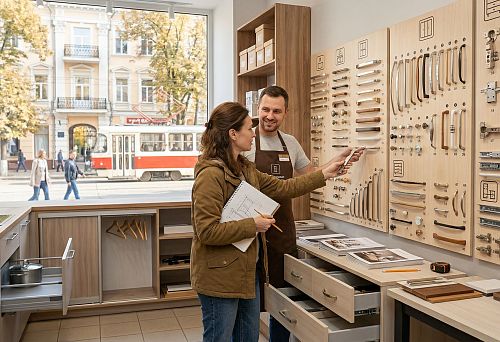
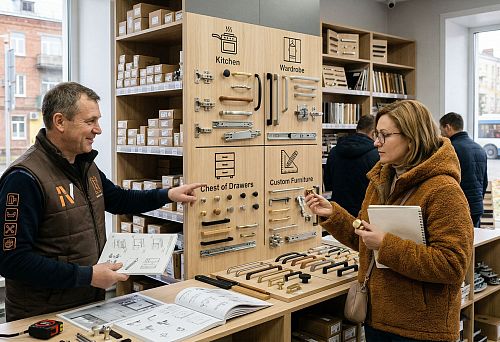
An individual approach also includes consultations on selecting the optimal material and technology for a specific task, which is especially valuable for those who are not specialists in woodworking.
Delivery terms and conditions: planning work
When ordering wooden semi-finished products, it is important to consider manufacturing timelines and delivery conditions. This information must be clearly stated in the contract or commercial offer.
Reliable manufacturers usually offer various delivery options, including self-pickup, delivery via their own transport, or through logistics companies. In doing so, they ensure secure packaging that protects the material from damage during transportation.
Conclusion: Investment in quality and beauty
Wooden semi-finished products are not just construction materials or furniture blanks. They are the foundation for creating unique, durable, and eco-friendly items that will delight the eye and serve for many years.
Choosing quality wooden semi-finished products By selecting quality items, you invest not only in the beauty and functionality of your home, but also in the health and well-being of your family. Natural wood creates a unique atmosphere of warmth and coziness that cannot be achieved with synthetic materials.
In a world where individuality and eco-friendliness are increasingly valued, wooden items become not just interior decor, but symbols of a particular lifestyle — conscious, harmonious, and connected to nature.
Let your home be filled with the warmth and beauty of natural wood, and let every item within it be not just functional, but truly cherished, creating that unique atmosphere we call home coziness.