Article Contents:
- Origins of the Craft and Cultural Heritage
- Roots of Traditions in Ancient Masters
- Cultural Heritage in Every Detail
- Synthesis of Traditions and Modern Methods
- Ecological responsibility and sustainable development
- Subtleties of Working with Natural Material
- Role of Handcraft and Individual Approach
- Example of High Craftsmanship: Making Wooden Details
- Harmonious Combination of Functionality and Aesthetics
- Symbolism and Emotional Impact of Natural Material
- Universality of Application and Individual Style
- Technological Innovations and Preservation of Traditions
- Economic Efficiency and Individual Production
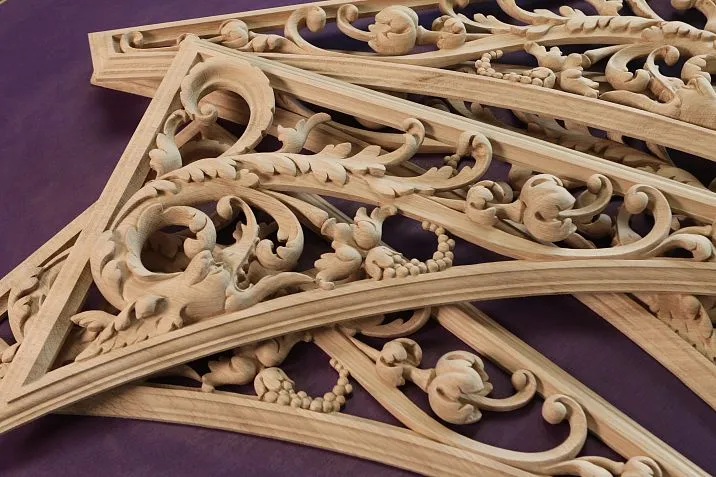
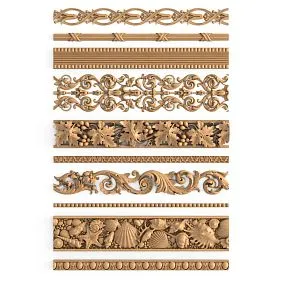
Wood has been not only a material for construction and daily use, but also a source of inspiration for creators seeking harmony between natural beauty and human craftsmanship. The production of wooden details is a process in which deep artisan traditions, high craftsmanship, and modern technologies converge, enabling the creation of unique interior and exterior elements. Every stroke, every line, meticulously crafted with love and respect for nature, becomes a reflection of the eternal value of natural material.


Origins of the Craft and Cultural Heritage




Roots of Traditions in Ancient Masters
The history of working with wood traces back to ancient times, when primitive tribes used natural materials not only to create utilitarian objects but also works of art. In those times, every wooden detail carried the magic of nature and was imbued with the spirit of ancestors. Ancient masters, possessing a refined sense of rhythm and form, created items capable of telling the stories of entire nations and cultures.
Knowledge and skills passed down from generation to generation became the foundation of crafts, allowing the preservation of unique woodworking techniques. Carving, planing, sanding, and polishing transformed into true rituals, in which the master not only created but also communicated with nature, feeling its energy and wisdom. It is precisely this close connection to roots that inspires modern masters, enabling them to create details that harmoniously combine ancient tradition with contemporary trends.
Our factory also produces:


Cultural Heritage in Every Detail
Every wooden detail, crafted with attention to fine details, becomes not just an interior element, but a living artifact reflecting history, traditions, and the soul of a people. The aesthetics embedded in carved patterns and smooth curves are passed down through centuries, uniting the past and the present. Masters, continuing the traditions of their ancestors, strive to preserve in each item the sincerity and warmth characteristic of natural material.
In the era of mass production, items created with love and respect for traditions have become a true rarity. They carry not only practical function but also deep symbolic meaning, becoming a source of inspiration for those who value true handmade art. That is why modern masters pay special attention to every stage of creating wooden elements, as only in this way can the unique aura be preserved, capable of transforming any space.
Get Consultation
Technologies and Innovations in Modern Production
Synthesis of Traditions and Modern Methods
Modern woodworking technologies open new horizons in creating items that rival traditional crafts in beauty and quality. Innovative tools such as CNC machines, laser cutters, and high-precision sanders allow craftsmen to achieve unprecedented accuracy in creating even the most complex decorative elements.
However, true craftsmanship lies not only in using advanced technologies but also in the ability to combine them with ancient traditions. Masters possessing deep knowledge and experience always seek a balance between handcraft and modern production methods. As a result, items are created that retain the natural texture and soulful warmth of real wood, while remaining highly technological and durable.
Modern manufacturing processes allow effective quality control at every stage of production, from raw material selection to final processing. This comprehensive system ensures product characteristics stability, enabling the creation of products capable of meeting even the most demanding requirements of modern consumers.
Environmental responsibility and sustainable development
In the context of global ecological challenges, special attention is given to issues of sustainable development and careful stewardship of natural resources. Woodworkers understand that every detail they create must meet high ecological safety standards. This means using wood sourced from sustainable sources and applying technologies that minimize environmental impact.
Eco-friendly processing methods not only help preserve natural wealth but also create products capable of lasting for many years without losing their original beauty. Such responsibility toward nature has become an indispensable part of modern craftsmanship, making the products truly valuable for those who strive to live in harmony with the surrounding world.
The Art of Making Wooden Details
Subtleties of Working with Natural Materials
Making wooden details is not merely a technological process, but a true art requiring deep understanding of the material. Woodworkers study its structure, texture characteristics, and even distinctive curves to extract maximum aesthetic and functional value from each log. Such meticulous approach allows creating items where every detail has its own significance and harmoniously integrates into the overall concept.
The process begins with selecting the blank, where the craftsman evaluates the wood's quality, density, uniformity, and color nuances. Following this, the stage of planing and processing begins, during which every line and curve is refined with incredible precision. Such labor requires not only technical skills but also an artistic eye, the ability to sense the material and reveal its potential.
The Role of Handcraft and Individual Approach
Despite the widespread use of modern technologies, handcraft remains the foundational element in creating true wooden masterpieces. Craftsmen, infusing each detail with a part of their soul, create items that cannot be reproduced mechanically. It is precisely in the unique combination of individual approach and deep understanding of the material that true works of art are born.
Each item, whether decorative carving or functional interior element, tells its own story, reflecting the craftsman's creative path and experience. Attention to fine details, meticulous refinement of each element, and pursuit of perfection allow creating items that not only delight the eye but also convey a sense of warmth, coziness, and eternal harmony.
Example of High Craftsmanship: Make Wooden Details
Modern masters demonstrate the highest level of professionalism, capable of bringing even the boldest ideas to life. In their workshops, items are created that become true works of art, capable of transforming any interior. Thanks to the combination of ancient crafts and modern technologies, they canmake wooden detailsthat meet the highest quality standards.
These items are distinguished not only by flawless quality but also by a unique aesthetic, where each detail plays an important role. Craftsmen carefully select shapes, sizes, carved patterns, and finishing to make each wooden detail a unique accent in the interior, highlighting its individuality and elegance. Such a creative approach allows creating collections capable of satisfying even the most discerning admirers of natural materials.
Application of Wooden Details in Interior Design
Harmonious Combination of Functionality and Aesthetics
Wooden details play an important role in interior design, transforming space into a cozy and harmonious environment. They can serve as independent decorative elements or as accents that unify different parts of the room into a cohesive whole. Each detail, whether carved element, cornice, skirting board, or router work, adds warmth, naturalness, and elegance to the interior.
In interiors where natural wood dominates, a special atmosphere is created, capable of inspiring and energizing positively. Such spaces are often associated with eco-friendliness, nobility, and attention to detail. Items made from natural wood become focal points, combining both functional and decorative qualities.
Symbolism and Emotional Impact of Natural Materials
Wood has always been associated with warmth, reliability, and stability. Its natural texture, unique patterns, and warm tones are capable of creating an incomparable atmosphere of coziness and tranquility. Each interior element made from natural material tells its own story, filled with sensuality and deep meaning.
The emotional impact of wooden details is not only in their visual appeal but also in tactile perception. The softness of finished surfaces, natural luster, and warmth of natural wood can awaken associations with home, family, and cozy evenings spent with loved ones. Such a connection with nature is an essential component in creating interiors capable of bringing joy and a sense of well-being.
Universality of Application and Individual Style
One of the main advantages of wooden details is their universality. They can be used in various interior styles — from classic to modern, from minimalism to eclecticism. Craftsmen, possessing deep understanding of aesthetics and technical capabilities of the material, are able to create items that perfectly fit any interior and highlight its individual character.
Custom-made items allow realizing the boldest design ideas, creating unique interiors where each detail has its own significance. Such an approach not only satisfies functional needs but also imparts a special emotional tone to the space, which will delight the eye and inspire new achievements.
The Future of Craft: Perspectives and Challenges
Technological Innovations and Preservation of Traditions
Current trends in wood processing indicate that the future of craftsmanship will be defined by a skillful combination of traditional methods and innovative technologies. Craftsmen, striving to preserve the spirit of the past, actively implement modern solutions that improve the quality and precision of item production. Such synthesis of traditions and technologies opens new horizons for creativity, enabling the creation of items capable of meeting even the most demanding clients' requests.
Modern research in wood processing, development of new protective coatings, and improvement of processing methods contribute to items becoming more durable, eco-friendly, and aesthetically pleasing. This process not only preserves cultural heritage but also lays the foundation for further development of craftsmanship in a rapidly changing world.
Economic Efficiency and Individual Production
In the era of mass production, individual production is gaining increasing popularity, where each item is created according to the customer's wishes and unique project features. This approach not only satisfies the needs of the modern market but also preserves a high level of quality characteristic of items created with love and attention to detail.
Economic efficiency of individual production lies in the ability to create exclusive collections that reflect not only style and taste, but also the unique vision of the master. This production format promotes the development of niche markets where quality, durability, and individuality of each item are valued.
Conclusion: Eternal pursuit of perfection and creative exploration
The production of wooden details is not merely a technological process, but a whole art, where ancient traditions meet modern innovations, creating items capable of transforming any space. Masters, possessing deep knowledge and high skill, transform natural wood into unique interior elements that serve as a source of inspiration and a symbol of eternal beauty.
These items not only fulfill functional tasks, but also become reflections of cultural heritage passed down from generation to generation. Every detail, created with love for the material and respect for traditions, is capable of bringing warmth, comfort, and a unique atmosphere, uniting the past, present, and future.
Thus, the art of crafting wooden details continues to live, evolve, and inspire all who strive for perfection and value true craftsmanship. Masters, preserving ancient traditions while incorporating modern technologies, create items that are not only practical interior elements, but also true works of art capable of bringing joy and inspiration for many years.
Due to the high ecological purity, durability, and unique aesthetics of natural materials, such items have become popular worldwide, becoming symbols of quality and individual style. Modern technologies allow not only to preserve, but also to enhance the value of craftsmanship, creating conditions for further development of this ancient and ever-relevant form of art.
Each person who seeks to transform their space can find inspiration in the work of masters who are able tomake wooden details with soul and responsibility for every detail. This art, based on love for nature and respect for traditions, continues to inspire new generations of creators, allowing them to produce unique, durable, and incredibly beautiful items.
Thus, the production of wooden details remains a vital part of cultural heritage, embodying the eternal pursuit of perfection, creative exploration, and harmonious blending of traditions with modern technologies. Masters who have dedicated their lives to craftsmanship continue to create with soul, transforming natural wood into unique works capable of enhancing any interior and bringing warmth, comfort, and inspiration.