Article Contents:
- History of balusters: from antiquity to the present day
- Evolution of forms and styles
- From Handcraft to Industrial Production
- Materials for Making Balusters: Traditions and Innovations
- Wood: Eternal Classicism
- Metal: strength and elegance
- Stone and concrete: monumentality and durability
- Modern Materials: Innovations in Design
- Technology of Making Wooden Balusters: From Rough Stock to Masterpiece
- Material preparation
- Creating the Shape
- Sanding and Final Finishing
- Baluster Design: From Classicism to Avant-Garde
- Classic Forms
- Modern trends
- Individual approach
- Functional Features and Technical Specifications of Balusters
- Sizes and proportions
- Strength characteristics
- Fastening methods
- Installation and Mounting of Balusters: Professional Approach
- Preparatory work
- Installation process
- Features of mounting different types of balusters
- Care and Maintenance of Balusters: Preserving Beauty for Years
- Care for Wooden Balusters
- Care for Metal Balusters
- Care for Glass Balusters
- Care for Stone and Concrete Balusters
- Economic Aspects: Investment in Beauty and Functionality
- Price-to-Quality Ratio
- Factors Affecting Cost
- Cost Optimization
- Trends and Innovations in Baluster Manufacturing
- Modern Design Trends
- Technological Innovations
- Personalization and individual approach
- Conclusion: Choosing the Perfect Balusters for Your Project
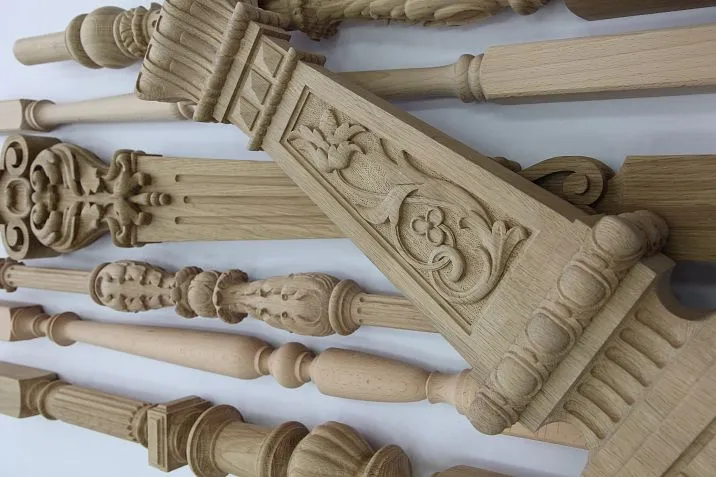
Architectural elements that we see every day often remain unnoticed, although it is precisely they that give buildings and interiors their completeness and character. Among such elements, balusters occupy a special place — elegant pillars supporting stair railings and balustrades. These small details can transform a space, adding elegance and style. But how are these architectural masterpieces created? What materials and technologies are used in their production? And why making balusters — is a true art requiring skill and inspiration? Let's dive into this fascinating world, where the traditions of past masters blend with innovative technologies of the present.


History of balusters: from antiquity to the present day
Balusters as an architectural element have a rich history dating back to ancient times. Already in ancient Greece and Rome, stone pillars were used to fence balconies and terraces. However, the true flourishing of baluster art came during the Renaissance, when Italian masters began actively using them in the architecture of palaces and villas.




Evolution of Forms and Styles
Each historical era brought its own characteristics to baluster design:
- The Renaissance gifted the world with classic forms featuring a characteristic expansion in the middle, resembling a vase or flower bud.
- Baroque was distinguished by opulence and refinement of forms; balusters of this period were often adorned with intricate carving and gilding.
- Classicism returned strictness and symmetry, preferring more restrained and geometrically correct forms.
- Modernism experimented with smooth, flowing lines, creating balusters resembling plant stems or ocean waves.
- Modern style is characterized by minimalism and functionality, often using simple geometric forms or non-traditional materials.
Our factory also produces:


From Handcraft to Industrial Production
Initially making balusters was entirely a manual process. Master carvers created unique works of art using simple tools and their talent. With the development of technology, lathes appeared, significantly simplifying and speeding up the process. Today, baluster production is a combination of traditional craftsmanship and modern technologies, including computer modeling and CNC machines.
Get Consultation
Materials for Making Balusters: Traditions and Innovations
Choosing material for balusters is not only an aesthetic issue but also a matter of functionality. Each material has its unique properties, advantages, and limitations.
Wood: Eternal Classic
Wood remains the most popular material for making balusters, and there are good reasons for this. Natural wood has an unmatched texture and warmth that cannot be imitated by artificial materials. Moreover, wood is easy to work with, allowing the creation of balusters of the most diverse shapes.
Various types of wood are used to produce wooden balusters:
- Oak - symbol of strength and durability. Oak balusters are characterized by high density, resistance to mechanical damage and moisture. The beautiful texture and noble color make oak balusters an ideal choice for classic interiors.
- Beech - characterized by uniform structure and pleasant light shade. Beech balusters are easily painted and tinted, allowing them to be adapted to any interior.
- Ash - valued for its beautiful wood grain pattern and high strength. Ash balusters have a characteristic light-yellow hue, which may acquire a deeper tone over time.
- Walnut - wood of dark noble shades, which gives balusters a luxurious and dignified appearance. Walnut balusters become a true decoration of the interior, bringing an atmosphere of aristocracy and elegance.
- Larch - a unique material distinguished by exceptional resistance to moisture and decay. This feature makes larch an ideal choice for balusters in rooms with high humidity or for outdoor structures.
Metal: Strength and Elegance
Metallic balusters are becoming increasingly popular due to their strength, durability, and variety of design solutions. They can be made from various metals and alloys:
- Wrought iron - a traditional material for making balusters with a rich history. Wrought iron balusters can have the most diverse shapes, from simple geometric to intricate ornamental patterns.
- Stainless steel - a modern material distinguished by high strength, corrosion resistance, and minimal maintenance requirements. Stainless steel balusters are ideal for modern interiors in high-tech or minimalist styles.
- Brass and bronze - materials that impart a special luxury and nobility to balusters. They are often used in classical and neoclassical interiors, where every detail matters.
Stone and concrete: monumentality and durability
Stone balusters - a symbol of status and durability. They can be made from various types of stone:
- Marble - a classic material for making balusters, used since ancient times. Marble balusters are distinguished by refined beauty and a variety of shades.
- Granite - one of the strongest and most durable materials. Granite balusters are resistant to mechanical damage, moisture, and temperature fluctuations, making them an ideal choice for outdoor structures.
- Limestone and sandstone - softer types of stone that are easier to process, allowing the creation of balusters with complex relief and decorative elements.
Concrete balusters represent a more affordable alternative to natural stone. Modern technologies allow creating concrete items that are virtually indistinguishable from stone in appearance, yet significantly cheaper.
Modern materials: innovations in design
The development of technology has led to the emergence of new materials for making balusters:
- Polyurethane - a lightweight and strong material that allows creating balusters of complex shapes with delicate decorative elements. Polyurethane balusters are resistant to moisture, decay, and insects, making them an ideal choice for rooms with high humidity.
- Glass - a modern material that creates an effect of lightness and airiness. Glass balusters are especially popular in minimalist and high-tech interiors, where space and light are valued.
- Composite materials - combine the advantages of various materials, creating balusters with unique properties. For example, wood-polymer composites have the texture and warmth of wood, but are more resistant to moisture and decay.
Technology of making wooden balusters: from rough material to masterpiece
making balusters From wood - this is a complex multi-stage process requiring not only special equipment but also the skill of the craftsman. Let's consider the main stages of this fascinating process.
Material Preparation
The first and, perhaps, most important stage is the selection and preparation of wood. The quality of the finished product directly depends on the quality of the raw material. The wood must be well-dried (optimal moisture content is 8-12%), free of defects such as cracks, knots, or rot.
The preparation process includes:
- Selection of lumber - choosing boards of appropriate size and quality.
- Drying - natural or kiln drying of wood to optimal moisture content.
- Cutting - sawing boards into blanks of the required size, taking into account allowances for processing.
- Sanding - leveling the surfaces of blanks to obtain perfectly flat edges.
Creating the shape
After preparing the blanks, the process of giving them the required shape begins. Depending on the complexity of the design and the technical capabilities of production, this can be done in various ways:
- Turning - a classic method of manufacturing balusters, in which the blank rotates on a lathe, and the craftsman, using special cutters, gives it the desired shape. This method allows creating balusters with round or oval cross-sections and various decorative elements.
- Milling - a modern method in which the baluster's shape is created using a milling machine. This method is especially effective for creating balusters with square or rectangular cross-sections, as well as with flat decorative elements.
- Combined method - a combination of turning and milling, which allows creating balusters of complex shapes with various decorative elements.
- Hand carving - a traditional method in which the craftsman manually carves the baluster from a wooden blank. This method requires high skill and significant time investment, but allows creating unique works of art.
Polishing and finishing
After creating the main shape of the baluster, the polishing and finishing process begins. This stage includes:
- Coarse polishing - removal of tool marks and surface leveling using coarse sandpaper.
- Fine polishing - achieving perfect smoothness of the surface using fine sandpaper.
- Treatment with protective compounds - applying primers, antiseptics, and other protective compounds to prevent rot, insect damage, and moisture effects.
- Staining or tinting - imparting the desired color or shade to the baluster using paints, stains, or tinting compounds.
- Lacquering or waxing - applying a finishing coat to protect the wood and achieve the desired gloss or matte finish.
Baluster design: from classic to avant-garde
Baluster design can vary from simple geometric forms to complex artistic compositions. The choice of a specific design depends on the overall interior style, the client's personal preferences, and functional requirements.
Classic Forms
Classic balusters have a characteristic shape with expansion in the middle, resembling a vase or flower bud. They are often adorned with carved elements such as flutes (vertical grooves), acanthus leaves, or floral motifs.
Main types of classic balusters:
- Tuscan - simple and elegant, with smooth lines and minimal decoration.
- Ionic - more complex, with characteristic volutes (spiral curls) at the top.
- Corinthian - the most decorative, with abundant plant motifs and intricate carving.
Modern trends
Modern baluster design features a wide variety of forms and materials. Popular trends include:
- Minimalism - simple geometric forms, clean lines, and absence of unnecessary decoration.
- Biomorphism - forms inspired by nature: plant stems, ocean waves, organic structures.
- Industrial style - use of metal, glass, and other modern materials creating an industrial aesthetic effect.
- Eclecticism - mixing various styles and materials to create unique and one-of-a-kind compositions.
Individual Approach
Modern technologies baluster manufacturing allow creating items according to individual projects, taking into account all the client's wishes. This may involve adapting classic forms to a specific interior or developing a completely unique design.
Individual approach includes:
- Sketch development - creating a preliminary drawing or 3D model of the future baluster, taking into account all the client's wishes.
- Material selection - choosing the optimal material that meets both aesthetic and functional requirements.
- Prototype creation - manufacturing a sample baluster for client approval before starting mass production.
- Production and installation - manufacturing the required number of balusters and their mounting at the customer's site.
Functional features and technical characteristics of balusters
In addition to their decorative function, balusters play an important role in ensuring the safety and strength of stair and balcony railings. Therefore, when designing and manufacturing them, a number of technical requirements must be taken into account.
Dimensions and Proportions
The dimensions of balusters may vary depending on the specific staircase construction, but there are certain standards that ensure safety and functionality:
- Height - the standard height of balusters is 90-100 cm from the level of the step. In private homes, this dimension may reach 110-120 cm to ensure increased safety.
- Cross-section - for support posts, a cross-section of 100x100 mm or more is usually used, while intermediate balusters may have a cross-section from 40x40 mm to 60x60 mm for square ones and a diameter of 40-60 mm for round ones.
- Distance between balusters - according to construction standards, the distance between adjacent balusters should not exceed 10-12 cm to prevent the possibility of children falling between them.
Strength characteristics
Balusters must have sufficient strength to withstand various loads:
- Vertical loads - weight of railings and possible pressure from above.
- Horizontal loads - lateral pressure that may occur when leaning on railings.
- Dynamic loads - impacts arising from movement on the stairs or accidental impacts.
To ensure the required strength, it is important to properly select the material and method of fixing balusters. For example, wooden balusters should be made from hardwoods and securely fastened both to the steps and to the railings.
Mounting methods
There are various ways to fix balusters, the choice of which depends on the material of the balusters and the staircase construction:
- Insertion - the baluster is partially embedded into the step and railing, ensuring secure fastening. This method is often used for wooden balusters in classic staircases.
- Fixing with dowels - the baluster is connected to the step and railing using wooden or metal dowels (dowels). This method ensures a strong connection and is often used in modern wooden staircases.
- Metal fasteners - special metal elements that allow securely fixing balusters made of various materials. This method is especially popular for fixing metal and glass balusters.
- Chemical anchors - used for fixing balusters to concrete or stone bases. This method ensures high connection strength and resistance to vibrations.
Installation and mounting of balusters: professional approach
Correct installation of balusters is no less important than their manufacturing. The quality of installation affects not only the appearance of the staircase or railing, but also their safety and durability.
Preparation Work
Before beginning installation, a series of preparatory works must be carried out:
- Marking - determining the exact position of each baluster, taking into account the required distance between them and the overall composition of the staircase.
- Surface preparation - cleaning and leveling surfaces to which the balusters will be attached.
- Tool and material preparation - gathering all necessary tools, fasteners, and auxiliary materials.
Installation process
The process of installing balusters may vary depending on their material and staircase construction, but general principles remain unchanged:
- Installation of support posts - mounting the main support elements that will bear the main load and determine the overall structure of the railing.
- Installation of railings - mounting the upper horizontal element to which the upper ends of the balusters will be attached.
- Installation of balusters - mounting intermediate vertical elements while maintaining even spacing between them.
- Final finishing - sealing mounting points, sanding, painting, or varnishing (if necessary) to give the structure a finished appearance.
Features of installing different types of balusters
Each type of baluster has its own installation features:
- Wooden balusters are often fixed using the insertion method or with dowels. It is important to consider possible changes in wood dimensions due to fluctuations in humidity and temperature.
- Metal balusters are usually attached using special metal fittings or welding. It is necessary to protect the connection areas from corrosion.
- Glass balusters require special care during installation and the use of special fittings that ensure secure fixation without risking damage to the glass.
- Stone and concrete balusters, due to their weight, often require reinforced foundations and the use of chemical anchors for secure mounting.
Care and maintenance of balusters: preserving beauty for many years
Proper care of balusters allows maintaining their attractive appearance and functional qualities for many years. Care methods depend on the material from which the balusters are made.
Care for wooden balusters
Wooden balusters require regular care to protect against moisture, ultraviolet radiation, and mechanical damage:
- Regular cleaning - removing dust with a soft cloth or brush. For more thorough cleaning, a mild soap solution can be used, avoiding excessive wetting.
- Updating protective coating - depending on the type of coating (varnish, oil, wax), the protective layer must be periodically renewed. The frequency of renewal depends on the intensity of use and operating conditions.
- Repairing minor damage - scratches, chips, and other minor defects can be repaired using special wax pencils or wood putty, followed by applying a protective finish.
- Pest prevention - periodic treatment with special compositions to protect against insects and fungi, especially if balusters are located in high-humidity conditions.
Care for metal balusters
Metal balusters usually require minimal care, but to maintain their attractive appearance, it is recommended:
- Regular cleaning - removing dust and dirt with a soft cloth. For more stubborn stains, specialized metal cleaning agents can be used.
- Protection against corrosion - periodic inspection for signs of corrosion and timely treatment of problem areas with anti-corrosion compounds.
- Coating renewal - if metal balusters have decorative coatings (paint, powder coating), their condition must be periodically checked and renewed if necessary.
Care for glass balusters
Glass balusters require special attention to maintain their transparency and shine:
- Regular cleaning - removing dust and fingerprints using specialized glass cleaning agents or a water-vinegar solution.
- Checking fasteners - periodic inspection of the reliability of glass element fasteners to prevent loosening or damage.
- Repairing scratches - minor scratches on glass can be removed using specialized polishing pastes, or consult professionals for more serious damage.
Maintenance of stone and concrete balusters
Stone and concrete balusters are characterized by high strength and durability, but also require certain care:
- Regular cleaning - removing dust and dirt with a soft brush or cloth. For more stubborn stains, specialized stone or concrete cleaning agents can be used.
- Protection against moisture - periodic treatment with hydrophobic compounds to prevent moisture penetration and efflorescence formation.
- Repairing cracks and chips - minor damage can be repaired using specialized stone or concrete repair compounds.
- Protection against moss and lichen - for outdoor balusters, it is important to periodically treat the surface with special compounds that prevent the growth of moss, lichen, and other microorganisms.
Economic aspects: Investment in beauty and functionality
making balusters This is not only an aesthetic issue, but also an economic solution that can significantly affect the cost and attractiveness of real estate.
Price-to-quality ratio
The cost of balusters can vary significantly depending on the material, design complexity, and manufacturing method. It is important to understand that saving on quality may lead to additional expenses in the future:
- Cheap materials may quickly lose their attractive appearance, require frequent repairs, or complete replacement.
- Poor installation may lead to structural loosening, which not only damages the appearance but also poses a safety hazard.
- Standard solutions may not match the overall interior style and reduce the overall impression of the room.
On the other hand, investing in quality balusters has several advantages:
- Durability - quality items made from good materials will last for decades without needing replacement.
- Aesthetic appeal - beautiful and well-crafted balusters become a true decoration of the interior, attracting attention and evoking admiration.
- Increase in property value - quality architectural details, including balusters, can significantly increase the market value of a house or apartment.
Factors Affecting Cost
When planning the budget for making balusters The following factors must be considered:
- Material - natural materials (wood of valuable species, natural stone) usually cost more than their artificial counterparts.
- Design complexity - the more complex the shape and the more decorative elements, the higher the manufacturing cost.
- Manufacturing method - handcrafted items usually cost more than machine-made ones, but allow for unique creations.
- Quantity - ordering a large number of identical balusters often comes with discounts, reducing the cost per unit.
- Additional services - delivery, installation, finishing, and other additional services also affect the total project cost.
Cost Optimization
There are ways to optimize costs for making balusters without compromising quality:
- Combining materials - for example, using more expensive materials for visible elements and more affordable ones for hidden parts.
- Choosing the optimal design - sometimes simple but elegant forms can look no less attractive than complex and expensive ones.
- Planning in advance - ordering balusters in advance allows avoiding urgent additional payments and provides the opportunity to choose the optimal production time.
- Working with professionals - experienced craftsmen can offer optimal solutions that combine quality, aesthetics, and reasonable cost.
Trends and innovations in baluster manufacturing
The world of design and architecture is constantly evolving, and making balusters balusters are no exception. Modern trends and innovations open up new opportunities for creating unique and functional items.
Modern design trends
In baluster design, several current directions can be identified:
- Minimalism and functionality - simple geometric shapes, clean lines, and absence of unnecessary decoration. This trend is especially popular in modern interiors, where space and light are valued.
- Ecological and natural materials - use of natural materials with minimal processing, preserving natural texture and color. This trend reflects the general trend towards ecological and sustainable development.
- Style mixing - combining elements from different styles and eras to create unique and personalized solutions. For example, classic forms can be made using modern materials or with non-traditional colors.
- Technology integration - incorporating modern technological elements into baluster design, such as built-in lighting, motion sensors, or "smart home" components.
Technological Innovations
The development of technology opens up new opportunities for baluster manufacturing:
- 3D modeling and printing - allows creating prototypes and even finished items of complex shapes with high precision and minimal waste.
- Computer numerical control (CNC) - modern CNC machines ensure high precision and repeatability in baluster manufacturing, as well as enable implementation of complex design solutions.
- New materials and coatings - development of innovative materials and protective coatings that provide increased strength, durability, and resistance to various influences.
- Production automation - introduction of robotic systems and automated lines that increase production efficiency and reduce the influence of human factors.
Personalization and Individual Approach
One of the most important trends in modern baluster manufacturing It is the desire for personalization and an individual approach. Customers increasingly want not just a functional element, but a unique work of art that reflects their personality and taste.
This is manifested in:
- Individual design - development of unique forms and decorative elements that do not repeat in other projects.
- Personalized details - inclusion in the design of balusters of elements of special significance to the client, such as family crests, initials, or symbolic images.
- Adaptation to a specific space - creation of balusters that perfectly fit into a specific interior, taking into account its features, color scheme, and style.
- Collaboration with the client - active involvement of the client in the design and manufacturing process, allowing to create an item fully matching their expectations and needs.
Conclusion: Choosing the ideal balusters for your project
Choosing balusters for a staircase or railing is an important decision that affects not only the appearance of the interior but also the functionality and safety of the structure. When choosing, it is necessary to consider many factors:
- Interior style - balusters must harmoniously fit into the overall design of the room, supporting its style and atmosphere.
- Material - the choice of material depends on operating conditions, budget, and aesthetic preferences. Natural wood remains unmatched for its aesthetic and ecological qualities, but requires more careful maintenance.
- Functionality - the staircase should not only be beautiful but also convenient and safe. It is important to comply with all technical requirements and standards during design and installation.
- Durability - quality items made from good materials will serve for decades, preserving their beauty and functionality. Cutting corners on quality may lead to the need for premature replacement.
- Individuality - the staircase can and should reflect the individuality of the home's owner. Do not be afraid to experiment and create unique solutions that will delight you every day.
Company STAVROS specializes in baluster manufacturing creating balusters from solid wood and other materials. Since 2002, STAVROS masters have been creating unique items combining traditional craftsmanship with modern technologies. Each baluster produced by STAVROS is not just a functional element, but a true work of art that will become a decoration for any interior.
Choosing balusters from STAVROS means choosing quality, reliability, and an individual approach. Experienced masters will help you choose the optimal solution, taking into account all your preferences and project specifics. Modern equipment and innovative technologies will allow you to bring even the boldest design ideas to life.
Let your staircase become not just a functional element, but a true decoration of the house, inspiring admiration and creating a special atmosphere of coziness and elegance. With STAVROS, this is possible!