Article Contents:
- Historical Journey: From Antiquity to Modernity
- Ancient Origins
- Middle Ages and Renaissance
- Baroque and Rococo: Triumph of Decoration
- Classicism and Historicism
- 20th Century: From Rejection to Revival
- Molding Anatomy: Types and Classification
- Classification by Purpose
- Classification by Profile Shape
- Classification by Size
- Molding Materials: From Traditions to Innovations
- Wood: Classic Beyond Time
- Polyurethane: Modern Alternative
- Gypsum: Traditions and Plasticity
- MDF: practicality and accessibility
- Polystyrene: Budget Solution
- Metal: Modern Aesthetics
- Functions of Molding Framing in Interior Design
- Space structuring
- Correcting Room Proportions
- Creating Stylistic Unity
- Masking Defects and Technical Elements
- Protective function
- Molding Framing in Various Interior Styles
- Classic Style: Harmony and Proportion
- Neoclassicism: A Modern Interpretation of Traditions
- Modern style: minimalism and functionality
- Minimalism: Focus on Details
- Scandinavian Style: Naturalness and Coziness
- Art Deco: luxury and geometry
- Practical Guide to Choosing and Installing Moldings
- Choosing Moldings: Key Criteria
- Planning Molding Placement
- Installing Moldings: Step-by-Step Instructions
- Common Mistakes and How to Avoid Them
- Care and Maintenance of Moldings
- Regular maintenance
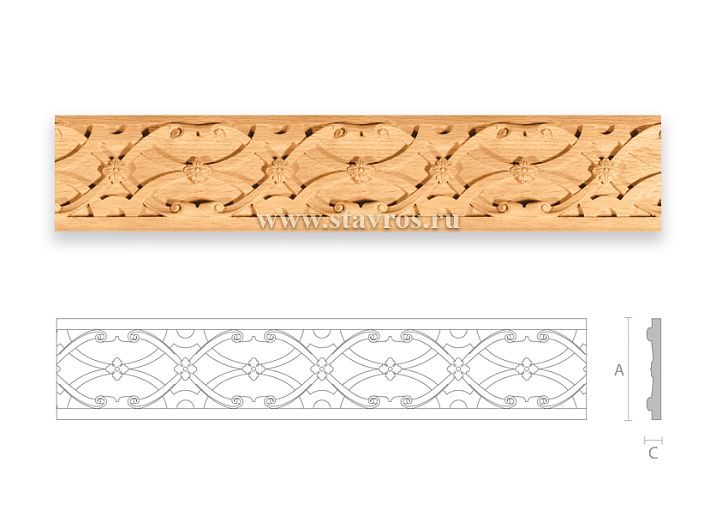
In the world of interior design, there are elements capable of radically changing the perception of space, giving it completeness and stylistic unity. Molding Framing — one such element that, when used properly, transforms an ordinary room into a work of art. This architectural technique, rooted in antiquity, is experiencing a true revival today, finding application in various styles—from classicism to minimalism.
What makes Molding Framing so universal and in demand? Why do designers and architects around the world turn to this technique again and again? How to choose and install moldings correctly so that they harmoniously fit into the interior and highlight its merits?
In this article, we will delve into the fascinating world of architectural decoration, examine the history of the emergence and evolution of moldings, their varieties and materials, and also share practical tips on their selection and installation. Whether you are a professional designer or simply wish to transform your home, this information will help you harness the full potential of molding framing to the maximum.



Historical Journey: from Antiquity to the Present
History of molding framing It spans millennia and is closely linked to the development of architectural styles. Understanding the historical context will help us better appreciate the significance and potential of this decorative element in modern interiors.




Ancient Origins
The first moldings appeared in the architecture of ancient Greece and Rome. Greek architects used profiled elements in the order system to emphasize the structure of buildings and create harmonious proportions. Each element had not only a decorative but also a symbolic meaning, reflecting the ancient concepts of beauty and harmony.
In Roman homes Molding Framing they were used to highlight door and window openings, niches, and also for zoning walls. Particularly elegant, moldings appeared in patrician homes, where they were often gilded or painted with bright colors.
Our factory also produces:


Middle Ages and Renaissance
In medieval architecture, moldings acquired a new meaning. In the Romanesque style, they became more massive and simple, emphasizing the strength and solidity of buildings. The Gothic period brought elegance and verticality — moldings became thinner, and complex profiles with deep shadows appeared.
The Renaissance revived interest in ancient forms. Molding Framing It became a key element of architectural composition, adhering to strict mathematical proportions. Renaissance architects created an entire system of profiles, many of which are still used today. During this period, moldings were actively used not only in architecture but also in interior decoration — to frame doors, windows, fireplaces, and also to create decorative wall panels.
Get Consultation
Baroque and Rococo: Triumph of Decoration
The Baroque and Rococo styles brought a true flourishing of decorative arts. Molding Framing It became more ornate and dynamic, complex curved forms and rich ornamentation appeared. Moldings were used everywhere — from framing ceiling medallions to creating exquisite wall panels.
Moldings were especially expressive in palace and mansion interiors, where they were often combined with stucco, gilding, mirrors, and painting. Baroque and Rococo masters skillfully used the interplay of light and shadow, creating with profiled elements the illusion of movement and depth.
Classicism and Historicism
Classicism returned architecture to the strictness and rationality of classical forms. Molding Framing It became more restrained, but no less significant in interior composition. Moldings were used to create a clear geometric structure of space, emphasizing its proportions and scale.
The 19th century, with its fascination for historical styles, brought a new wave of interest in decorative elements of the past. Architects and decorators of this period freely combined motifs from different eras, creating eclectic but expressive interiors. Molding Framing It became an important tool for stylization, allowing to recreate the atmosphere of a chosen historical era.
20th Century: From Rejection to Revival
The beginning of the 20th century marked the emergence of modernism, which brought a new aesthetic with smooth, flowing lines. Moldings of this period featured organic forms, often inspired by natural motifs.
Mid-20th century modernism, with its focus on functionality and rejection of 'extravagance,' temporarily pushed Molding Framing to the background. However, by the postmodern period of the 1970s–80s, decorative elements returned, often in ironic, playful forms.
Today we observe a true revival of interest in classical architectural elements, including moldings. Modern designers value their ability to structure space, create expressive accents, and give interiors individuality. Molding Framing It is successfully applied in various styles — from neoclassicism to minimalism, proving its timeless relevance.
Anatomy of a Molding: Types and Classification
For proper use of molding framing it is necessary to understand the varieties of these decorative elements. There are many types of moldings, each with its own purpose, shape, and place in architectural composition.
Classification by Purpose
Ceiling Moldings
These elements are used to decorate the junction between the wall and the ceiling. They include:
- Cornices — large profiled elements creating an expressive transition from wall to ceiling. They may have complex shapes with multiple profile levels.
- Graffs — simpler and more compact moldings for smoothing the angle between wall and ceiling. They have a concave profile and create a smooth transition.
- Ceiling skirting — performs the same function as the graffs, but may have more varied profiles.
Wall moldings
Used for decorative wall treatment:
- Panel moldings – used to create decorative wall panels. They can divide walls into sections, create a boiserie effect, or highlight specific areas.
- Borders – narrow decorative strips used to separate different finishing materials or create horizontal accents on walls.
- Pilasters – vertical elements imitating columns. Often used to frame doorways or create vertical accents.
Floor moldings
Used for finishing the junction between wall and floor:
- Baseboards – cover the gap between wall and floor, protecting walls from dirt and damage. Can have a simple or profiled design.
- Floor borders – decorative elements used to separate different floor coverings or create decorative accents.
Moldings for openings
Used for decorating door and window openings:
- Casing – frames door and window openings, concealing the junction between the frame and the wall.
- Sashings – decorative elements placed above a door or window. Can have the shape of a cornice, pediment, or more complex configuration.
- Architraves – decorative elements placed at the top of an arch or above a rectangular opening.
Classification by profile shape
The molding profile is its cross-section, determining the appearance and nature of the created light and shadow effects. There are many types of profiles, here are some of the main ones:
- Straight profile – the simplest variant, rectangular cross-section. Creates clear, graphic lines.
- Beveled profile – has one or more beveled edges. Creates an interesting play of light and shadow.
- Concave profile – has a curved shape. Often used for moldings and ceiling baseboards.
- S-shaped profile – combines concave and convex elements. Creates complex, dynamic light and shadow effects.
- Ornamental profile – enhanced with carved ornamentation – plant, geometric, or figurative.
Molding Framing Different profiles create different impressions: simple profiles appear more modern and minimalist, complex ones – more classical and luxurious. The choice of profile depends on the interior style and desired effect.
Classification by size
The size of the molding plays an important role in its perception and impact on the space:
- Miniature moldings (up to 3 cm wide) – create delicate, subtle accents. Suitable for small rooms and modern interiors.
- Medium moldings (3–7 cm wide) – the most versatile option, suitable for most interiors.
- Large moldings (more than 7 cm wide) – create expressive, noticeable accents. Suitable for spacious rooms with high ceilings and classical interiors.
The correct choice of molding size is critically important for harmonious of molding framing. Too small moldings in a large room will look insignificant, while too large ones in a small room will appear bulky and inappropriate.
Materials for moldings: from tradition to innovation
Choice of material for of molding framing Affects not only the appearance, but also the durability, cost, and complexity of installation. Let's consider the main materials, their advantages, and characteristics.
Wood: classic beyond time
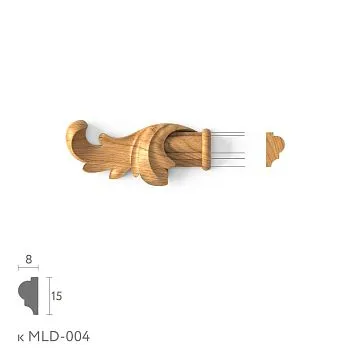
Wood is a traditional material for making moldings, used since ancient times. Wooden moldings have natural beauty, warmth, and eco-friendliness. They can be made from various types of wood, each with its own characteristics:
- Oak – strong, durable wood with a distinctive texture. Oak moldings have an elegant appearance and high resistance to mechanical impacts.
- Pine – softer and more affordable wood. Pine moldings are easy to process but less resistant to damage.
- Beech – hard wood with a uniform structure. Beech moldings are well-suited for staining and tinting.
- Ash – strong wood with an attractive grain. Ash moldings are often used in high-end interiors.
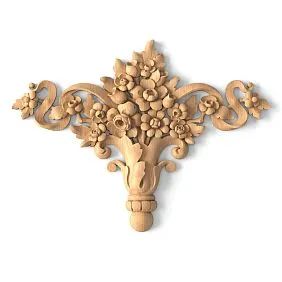
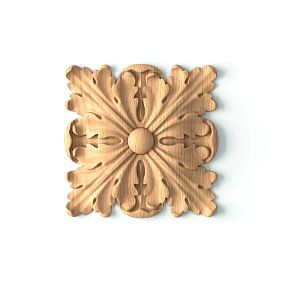
Wooden moldings can be painted, stained, or varnished, allowing them to be adapted to any interior. They can also be carved, creating unique, expressive decorative elements.
However, wood has its limitations: it is susceptible to moisture, may deform with changes in temperature and humidity, requires regular maintenance. Wooden moldings are also relatively heavy, which may complicate their installation.
Polyurethane: modern alternative
Polyurethane moldings – a popular modern solution for of molding framing. They are made from high-density foamed polyurethane, which provides them with several advantages:
- Lightweight – polyurethane moldings are significantly lighter than wooden ones, simplifying their transportation and installation.
- Moisture resistance – they do not fear moisture, do not swell, and do not deform, making them ideal for bathrooms and kitchens.
- Durability – resistant to mechanical damage, do not crack or chip.
- Precision in reproducing details – the manufacturing technology allows creating complex, detailed profiles.
- Easy installation – easily cut with a regular knife and attached with special adhesive.
Polyurethane moldings are delivered pre-primed and ready for painting. They can imitate various materials – from wood to stone, making them a universal solution for different interior styles.
However, polyurethane has its drawbacks: it may yellow over time under UV exposure, lacks the natural warmth and texture of natural materials, and may release harmful substances when burned.
Gypsum: traditions and plasticity
Gypsum moldings have a long history and are still widely used in classical interiors. Gypsum as a material has several advantages:
- Plasticity – allows creating complex, detailed shapes.
- Ecological safety – natural material, does not emit harmful substances.
- Fire resistance – does not burn and does not support combustion.
- Ability to regulate humidity – gypsum 'breathes', absorbing excess moisture and releasing it when the air is dry.
Gypsum moldings can be both solid and intricate, with finely detailed elements. They are traditionally used to create luxurious, detailed interiors in the classical style.
However, gypsum has significant drawbacks: it is brittle, afraid of moisture, heavy, which complicates installation. Gypsum moldings also require professional installation and subsequent finishing.
MDF: practicality and accessibility
MDF (medium-density fiberboard) – a modern material often used for making moldings. MDF moldings have several advantages:
- Dimensional stability – does not deform with changes in temperature and humidity.
- Smooth surface – ideal for painting.
- Easy to process – easily cut, milled, and sanded.
- Affordable price – cheaper than natural wood while retaining many of its advantages.
MDF moldings are often used to create modern interiors where clean lines and uniform surfaces are important. They can be painted in any color or covered with a film mimicking various materials.
Disadvantages of MDF include sensitivity to moisture, lower strength compared to natural wood, and possible presence of formaldehyde resins that may emit into the air.
Polystyrene: budget-friendly solution
Polystyrene moldings – the most affordable option for of molding framing. They are made from expanded polystyrene and have the following advantages:
- Extremely lightweight – the lightest of all moldings, making installation exceptionally simple.
- Low cost – the most economical option for decorative finishing.
- Easy to process – easily cut with ordinary scissors or a utility knife.
- Moisture resistance – not afraid of moisture, allowing their use in humid rooms.
Polystyrene moldings usually have simple profiles and are used for basic decorative finishing. They are suitable for temporary solutions or budget projects.
However, polystyrene has significant drawbacks: it is very brittle, easily damaged, looks less attractive than other materials, and may release harmful substances when burned.
Metal: modern aesthetics
Metal moldings – a relatively new phenomenon in interior design. They can be made from aluminum, brass, bronze, or stainless steel and have several unique advantages:
- Durability – resistant to mechanical damage, moisture, and temperature fluctuations.
- Modern appearance – create sharp, graphic lines, ideal for modern interiors.
- Variety of finishes – can be polished, matte, brushed, or patinated.
- Ability to create complex shapes – modern technologies allow manufacturing of metal moldings with various profiles.
Metal moldings are often used in interiors in high-tech, loft, and minimalist styles. They can create interesting contrasts with other materials – wood, glass, concrete.
Disadvantages of metal moldings include high cost, complex installation, and a cold appearance that may be inappropriate in some interiors.
Functions of molding in interior design
Molding Framing performs in interiors not only a decorative but also a number of practical functions. Understanding these functions will help you use moldings more consciously and effectively in design.
Space structuring
Moldings help visually structure space, making it more organized and harmonious. They can:
- Highlight architectural features – emphasize niches, bay windows, arches, highlighting unique characteristics of the room.
- Create proportional wall divisions – using panel moldings, a wall can be divided into sections, creating a rhythmic, harmonious composition.
- Mark functional zones – in open floor plans, moldings can help visually divide space into zones without using walls.
Correctly selected Molding Framing can make the space more logical and readable, emphasize its structure and proportions.
Room Proportion Adjustment
Moldings are a powerful tool for visually correcting the proportions of a room:
- Visual adjustment of ceiling height – horizontal moldings on walls can visually lower a too-high ceiling, while vertical panels can "raise" a low one.
- Correcting room proportions – in a narrow space, horizontal wall divisions can visually expand the area, while in a too-wide space, vertical divisions help balance proportions.
- Masking asymmetry – moldings can hide a room’s irregular geometry, creating an illusion of symmetry and proper proportions.
Skillful use of molding framing allows optically transforming the space, making it more harmonious and comfortable.
Creating stylistic unity
Moldings play an important role in forming the interior’s stylistic image:
- Emphasizing historical style – classical, baroque, and neoclassical interiors are unthinkable without appropriate of molding framing.
- Creating stylistic accents – even in a modern interior, moldings can evoke references to specific historical styles.
- Uniting disparate elements – moldings can serve as a connecting element between various decorative components, creating a cohesive composition.
The choice of molding profile, size, and finish should align with the overall interior stylistic concept, enhancing its character and expressiveness.
Masking flaws and technical elements
Practical function of molding framing – hiding various flaws and technical elements:
- Masking cracks and unevenness – moldings can conceal wall and ceiling defects, creating the impression of a perfectly smooth surface.
- Hiding joints and seams – moldings effectively mask joints between different materials or structural elements.
- Integrating technical elements – moldings can elegantly incorporate ventilation grilles, electrical outlets, switches, and other technical elements.
This function is especially important during renovations of old spaces, where full surface leveling may be too labor-intensive or costly.
Protective function
Some types of moldings perform a protective function:
- Protecting walls from damage – wall moldings can protect walls from furniture impacts, especially in high-traffic areas.
- Protecting corners – corner moldings protect vulnerable exterior corners from damage.
- Protecting against moisture – moldings in bathrooms and kitchens can serve as barriers preventing moisture from entering joints between different surfaces.
This function makes Molding Framing not only decorative but also practical solutions, extending the lifespan of finishes.
Molding framing in various interior styles
Molding Framing can be adapted to any interior style – from classic to minimalism. Let’s consider the specifics of molding use in various stylistic directions.
Classic style: harmony and proportion
Classic style is unthinkable without of molding framing. Here, moldings play a key role in creating a harmonious, proportionate composition:
- Rich decoration – moldings with complex profiles are used, often enhanced with carving, gilding, or patina.
- Symmetry and proportion – moldings are placed symmetrically, creating a balanced composition.
- Element hierarchy – larger and more decorative moldings are used to highlight main interior elements, while more modest ones are used for secondary elements.
- Comprehensive application – various types of moldings are used: cornices, baseboards, panel moldings, pilasters, creating a cohesive architectural composition.
In a Classic Interior Molding Framing Often combined with other decorative elements – stucco, rosettes, medallions, creating a rich, expressive image.
Neoclassicism: Modern Interpretation of Traditions
Neoclassicism – a style combining classical principles with modern trends. Molding Framing In a neoclassical interior, it is characterized by:
- Simplified forms – profiles are more restrained than in classical style, yet retain elegance and expressiveness.
- Subdued decoration – fewer ornamental elements, emphasis on proportions and clean lines.
- Modern materials – alongside traditional materials, modern ones such as polyurethane and MDF are used.
- Neutral color palette – white, light gray, beige dominate, creating an elegant, restrained look.
Neoclassical Molding Framing Creates a sense of respectability and timeless elegance, without overloading the space with excessive decoration.
Modern style: minimalism and functionality
In a modern interior, moldings are used more restrainedly, but no less effectively:
- Minimalist profiles – simple, geometric forms dominate, without excessive decoration.
- Functionality – moldings often serve practical purposes – hiding joints, integrating technical elements.
- Play with proportions – moldings can be unexpectedly large or, conversely, almost invisible, creating interesting proportional solutions.
- Contrasting color solutions – moldings can contrast with the main wall color, creating graphic, expressive compositions.
Modern Molding Framing Often used to create geometric compositions on walls – from simple frames to complex patterns.
Minimalism: focus on details
Contrary to common belief, minimalism does not exclude the use of moldings. However, here they acquire a special character:
- Extreme minimalism – moldings with the simplest profiles are used, often simply rectangular in cross-section.
- Monochromaticity – moldings are usually painted the same color as the walls, creating subtle play of light and shadow.
- Precision and accuracy – each element is carefully designed and placed with mathematical precision.
- Functionality – moldings are often integrated with functional elements – lighting, storage systems.
In a minimalist interior Molding Framing can create a subtle, almost imperceptible structure, perceived more at the level of sensation than visually.
Scandinavian style: naturalness and coziness
Scandinavian style, with its love for natural materials and light tones, may also include Molding Framing:
- Natural materials – wooden moldings are preferred, emphasizing the ecological and natural character of the interior.
- Light tones – moldings are usually painted white or light pastel shades, harmonizing with the overall palette.
- Simple forms – profiles are minimalist, without excessive decoration, but with characteristic Scandinavian elegance.
- Functionality – moldings often serve practical purposes, such as serving as a base for mounting shelves or pictures.
Scandinavian Molding Framing creates a sense of coziness and harmony, emphasizing the connection with nature and traditions of northern countries.
Art Deco: luxury and geometry
The Art Deco style, with its love for luxury and geometric forms, offers a unique approach to molding:
- Geometric patterns – moldings often form characteristic geometric compositions – zigzags, sun rays, stepped forms.
- Contrasting combinations – bright contrasts are used – black and white, gold and black, creating a dramatic effect.
- Exotic materials – in addition to traditional materials, exotic wood species, metals, and mirrors may be used.
- Emphasis on luxury – moldings are often complemented with gilding, silvering, or inlay.
Molding Framing In the Art Deco style, it creates an atmosphere of refined luxury and elegance, characteristic of the roaring twenties.
Practical guide to selecting and installing moldings
Correct selection and proper installation of moldings – the key to successful of molding framing. Let's consider the main stages of this process.
Choosing moldings: key criteria
When selecting moldings, several factors must be considered:
Style consistency
Moldings must harmonize with the overall stylistic solution of the interior:
- For classic interiors, moldings with complex profiles, possibly with decorative elements, are suitable.
- For modern interiors, it is better to choose minimalist, geometric profiles.
- For eclectic interiors, you can experiment by combining different styles and eras.
Proportionality
The size of moldings should correspond to the scale of the room:
- In small rooms with low ceilings, it is better to use compact, narrow moldings.
- In spacious rooms with high ceilings, larger, more expressive elements are appropriate.
- It is important to maintain proportions between different types of moldings – cornices, baseboards, panel moldings.
Material and quality
Material selection depends on usage conditions and budget:
- For humid rooms, it is better to choose moisture-resistant materials – polyurethane, PVC.
- For high-traffic areas, durable, damage-resistant materials are needed.
- Manufacturing quality is critically important – moldings must have a smooth surface, clear profile, and precise dimensions.
Practicality and durability
Consider practical aspects of operation:
- How easy it will be to maintain the moldings – cleaning, renewing the finish.
- Resistance to fading, deformation, and damage.
- Ability to repair or replace individual elements in case of damage.
Planning the placement of moldings
Before purchasing and installing, carefully plan the placement of moldings:
Create a sketch
Develop a detailed sketch of molding placement on each wall:
- Mark the location of all architectural elements – doors, windows, niches.
- Determine the height for horizontal moldings.
- Plan the size and proportions of panels or frames, if applicable.
Material quantity calculation
Based on the sketch, calculate the required quantity of moldings:
- Measure the total length of all moldings of each type.
- Add 10-15% for trimming, joints, and possible defects.
- Consider the specifics of molding joints in corners – some profiles require special trimming.
Tool and material preparation
For installing moldings, you will need:
- Cutting tools for moldings – miter saw and hacksaw for wooden and MDF moldings, knife for polyurethane and polystyrene.
- Adhesive or fasteners compatible with the selected material.
- Finishing tools – putty, sandpaper, primer, paint.
Installing moldings: step-by-step guide
The molding installation process includes several stages:
Surface preparation
The surface on which moldings will be mounted must be:
- Clean – free of dust, dirt, and grease stains.
- Even – significant irregularities must be corrected.
- Dry – especially important for wooden moldings.
- Primed – for better adhesive bond.
Marking
Accurate marking – guarantee of neat installation:
- Use a level for horizontal lines and a plumb bob for vertical ones.
- Mark the locations of all moldings according to the sketch.
- Check the accuracy of the marking by measuring distances between parallel lines at different points.
Molding Preparation
Before installation, moldings must be prepared:
- Cut to size, taking into account the specifics of corner joints.
- Wooden moldings may require sanding of the cut edges.
- For polyurethane and polystyrene – clean off dust after cutting.
Installation
The method of installation depends on the molding material:
- Wooden moldings are attached with adhesive and/or nails/screws.
- Polyurethane and polystyrene – with special molding adhesive.
- Gypsum – with gypsum adhesive or plaster.
The installation order is usually as follows:
- Start with corners and joints – they require the highest precision.
- Apply adhesive to the back of the molding according to the manufacturer's instructions.
- Place the molding against the marked line and press firmly.
- If necessary, secure the molding until the adhesive dries using painter's tape or temporary supports.
Joint Treatment and Final Finishing
After installation, it is necessary:
- Fill all joints, gaps, and screw/nail attachment points with putty.
- After the putty dries, sand the surface until smooth.
- Prime and paint the moldings in the chosen color or apply another finish.
Common Mistakes and How to Avoid Them
When molding trim Certain mistakes are often made. Knowing these mistakes will help avoid them:
Incorrect Size Selection
Too large moldings in a small room will look bulky, while too small ones in a large room will be unnoticed and unexpressive. Solution:
- Match the molding size to the room's scale.
- Consider ceiling height – the higher the ceilings, the larger the moldings can be.
- Maintain proportions between different elements – cornices, baseboards, panel moldings.
Failure to maintain stylistic unity
Moldings that do not match the overall interior style will look out of place. Solution:
- Choose moldings that match the interior style.
- Maintain stylistic unity among all decorative elements.
- If you experiment with styles, do so consciously and thoughtfully.
Poor installation
Careless installation can ruin the impression even of the highest-quality moldings. Solution:
- Carefully prepare the surface before installation.
- Use quality tools for cutting and installation.
- Pay special attention to corners and joints – they are most noticeable.
- Do not skimp on finishing – it determines the final result.
Ignoring practical aspects
Moldings must be not only beautiful but also practical. Solution:
- Consider the conditions of use when selecting material.
- Plan for maintenance and care.
- Ensure access to technical elements that may require servicing.
Maintenance and updating of moldings
Proper care of moldings will extend their lifespan and maintain their attractive appearance. Let's consider the main aspects of caring for different types of moldings.
Regular Maintenance
Regular care of moldings includes:
Dust removal
Dust is the main enemy of decorative elements; it accumulates on horizontal surfaces and in recesses of the profile:
- For smooth moldings, simply wipe with a soft dry or slightly damp cloth.
- For moldings with complex profiles, a soft brush or vacuum cleaner with a brush attachment may be required.
- Cleaning frequency depends on usage conditions, but generally once or twice a month is sufficient.
Wet cleaning
For more thorough cleaning, wet cleaning may be required:
- Use a soft cloth soaked in warm water with neutral detergent.
- Avoid excessive moisture, especially for wooden and plaster moldings.
- After wet cleaning, wipe moldings with a dry cloth.
Stain Removal
For removing local contamination:
- Use special cleaners appropriate for the molding material.
- Test the cleaner on an inconspicuous area.
- After treatment, thoroughly wipe %s