Article Contents:
- Polymer Magic of Modernity
- Technological Advantages of the New Era
- Stylistic Diversity of Decorative Solutions
- Avant-Garde Directions
- Classic Motifs in Modern Interpretation
- Technology of Manufacturing and Quality Control
- Precision Manufacturing
- Multi-Stage Quality Control
- Assembly Without Compromise
- Practical Aspects of Application
- Finishing and Fitting
- Palette of Possibilities
- Classic White
- Economic Efficiency of the Solution
- Decorative Finishing Techniques
- Cost and Benefit Analysis
- Innovative Trends and Future Development
- Operational cost savings
- Ecological Aspects and Safety
- Ecological safety
- Waste disposal and recycling
- Seismic Stability
- Technological breakthroughs
- Personalization and Individuality
- Regional application specifics
- Climate adaptations
- Composite Techniques
- Professional Secrets of Designers
- Lighting Effects
- Trends in Furniture Design
- Neoclassicism in Modern Interpretation
- Eco-Luxury
- Smart Integration
- Ease of Maintenance
- Maintenance and Durability
- Psychology of Decor Perception
- Repair and restoration
- International Quality Standards
- Influence on Emotional State
- Status component
- European Norms
- Certification and Control
- Certification and Control
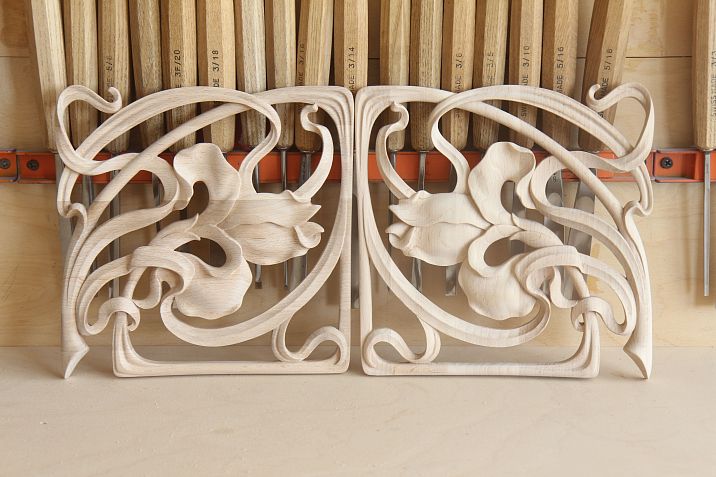
Imagine the touch of an artist's brush on a furniture canvas, only instead of paint— overlay decor for plastic furniture—and instead of canvas—your favorite chest of drawers or elegant wardrobe. The modern furniture design industry is experiencing a true renaissance, where polymer materials have become the main protagonists of decorative art. This unique material opens boundless opportunities for creative self-expression and functional refinement of furniture.
In the world of interior design, where every detail matters, decorative elements made from modern plastic have become a symbol of innovation. They combine the classic beauty of wood carving with the practicality of the 21st century, creating a harmonious balance between aesthetics and functionality.


Revolution in Furniture Decoration




Polymer Magic of the Modern Era
When we speak of a revolution in decorative arts, it is impossible not to mention polyurethane — a material that has fundamentally changed the perception of furniture decoration. This remarkable polymer possesses unique properties that make it ideal for creating the most complex ornaments and decorative compositions.
The manufacturing process resembles alchemy: liquid polyurethane is poured into precision molds, where, under the influence of catalysts, it transforms into a hard yet remarkably elastic material. Each element is produced with flawless detail — from the finest baroque ornament scrolls to the strict geometric lines of modern minimalism.
Our factory also produces:


Technological Advantages of the New Era
Modern overlay decor for plastic furniture Possesses a range of outstanding characteristics:
Lightweight strength: Elements weigh 8-10 times less than traditional wooden counterparts, yet their flexural strength exceeds that of natural wood by 2-3 times. This means that even the most delicate decorative details will not break under mechanical stress.
Molecular-level moisture resistance: The polymer structure of the material prevents moisture absorption, making the decor suitable for use in high-humidity areas — bathrooms, kitchens, balconies.
Temperature stability: A working range from -30°C to +70°C allows the decor to be used both in heated rooms and in unheated country cottages.
Get Consultation
Stylistic Diversity of Decorative Solutions
Classic motifs in modern execution
Lovers of traditional aesthetics will find in the polymer decor assortment true masterpieces of classical art. Rosettes with acanthus leaves, crafted from high-quality polyurethane, are indistinguishable from 18th-century carving. Each leaf, each scroll is meticulously crafted with jewel-like precision, creating the impression that the master carver has just finished his work.
Moldings with traditional profiles — from simple coves to complex compositions with pearls and astragals — allow recreating the atmosphere of palace interiors. At the same time, modern technologies make these elements accessible to anyone who strives for beauty.
Avant-Garde Directions
For fans of modern design, polymer decor offers entirely new possibilities. Three-dimensional geometric compositions that create play of light and shadow can transform an ordinary furniture facade into a work of art. Parametric ornaments, born in computer programs and embodied in polyurethane, open a new chapter in the history of decorative arts.
Especially impressive are elements that imitate natural forms — coral, tree branches, sea waves. Thanks to the material’s plasticity, it is possible to achieve incredible realism while retaining all the advantages of synthetic material.
Manufacturing Technology and Quality Control
Precision Manufacturing
Modern polymer decor manufacturing is a high-tech process where each stage is controlled by computer systems. Molds are made from high-quality steel with a non-stick coating, ensuring perfect geometry of finished products.
Polyurethane components are mixed in strictly defined proportions at controlled temperature. An automatic dosing system eliminates human error, guaranteeing consistent material properties from batch to batch.
Multi-stage Quality Control
Each element undergoes several stages of control:
- Visual inspection — checking for absence of bubbles, cracks, and other surface defects
- Geometric control — measuring dimensions to an accuracy of 0.1 mm
- Strength test — bending and impact toughness testing
- Adhesion check — testing bond quality with various types of adhesives
Only elements that have passed all control stages are released for sale, guaranteeing the highest quality of each item.
Practical Aspects of Application
Installation Without Compromise
Installation — a process that even a non-professional can handle. Due to the lightweight nature of the elements, high-quality polyurethane adhesive or liquid nails are sufficient for mounting. — a process that even a non-professional can handle. Due to the lightweight elements, a sufficient quality polyurethane adhesive or liquid nails will do.
Special attention should be paid to surface preparation. The furniture facade must be thoroughly cleaned of dust, grease, and other contaminants. A slightly rough surface provides better adhesion, so it is recommended to lightly sand with fine-grit sandpaper.
Processing and Fitting
Polyurethane decor is easily machinable. Elements can be cut with a standard metal hacksaw, drilled, and milled. This allows adapting standard items to specific furniture dimensions.
For creating complex compositions, elements can be glued together to form unique ornaments. Joints are easily masked with putty and subsequent painting.
Color Solutions and Final Finish
Palette of Possibilities
One of the main advantages of polymer decor is the ability to paint it in any colors. The base white color is a clean canvas for creativity. Elements hold any type of paint well: acrylic, oil, alkyd, nitrocellulose.
Popular Color Solutions:
- Classic White — a universal choice for any interior
- Gold and Silver — for creating luxurious accents
- Patina Tones — for an aged effect
- Contrasting Colors — for modern interiors
- Wood Mimicry — for combining with natural materials
Decorative finishing techniques
Modern techniques allow creating amazing effects:
Patina — creating an effect of noble antiquity by applying multiple paint layers followed by light sanding.
Gilding — applying metallic gold or gold paint to create luxurious accents.
Crackle — an artificial aging technique creating a network of fine cracks.
Airbrushing — creating smooth color transitions and complex artistic compositions.
Economic efficiency of the solution
Cost and Benefit Analysis
Although initial costs for quality polymer decor may seem significant, economic efficiency becomes evident in the long term. The service life of elements is at least 25-30 years under proper usage conditions.
Cost Comparison:
- Initial Investment: Polyurethane Decor — 100%, Wood — 150-200%
- Installation: Polyurethane — 100%, Wood — 120-140%
- Maintenance over 10 years: Polyurethane — 100%, Wood — 200-300%
- Element Replacement: Polyurethane — virtually not required, Wood — 15-20% of cost
Operational Cost Savings
Polymer decor requires no special care. Regular wet cleaning with standard cleaning agents is sufficient. The absence of need for frequent application of antiseptics, varnishes, and repairs significantly reduces operational expenses.
Ecological aspects and safety
Ecological safety
Modern overlay decor for plastic furniture Produced in strict compliance with ecological standards. The polyurethane used for decorative elements contains no formaldehyde, phenols, heavy metals, or other harmful substances.
The material has certificates of compliance with European ecological safety standards E1, allowing its use in residential spaces, including children's rooms.
Disposal and recycling
At the end of its service life, polyurethane decor can be recycled into new products or used as secondary raw material for producing other polymer products. This aligns with the principles of circular economy and sustainable development.
Innovative Trends and Future Development
Technological breakthroughs
The decorative materials industry is not standing still. Recent developments include:
Integration of LED elements — creating decor with built-in lighting, transforming decorative elements into functional light sources.
Thermochromic coatings — special compositions capable of changing color depending on the surrounding temperature.
Antibacterial properties — addition of silver ions or other antibacterial components to the material composition.
Personalization and Individuality
The development of 3D printing technologies opens up new possibilities for creating unique decorative elements based on individual sketches. This allows for the realization of the most daring design fantasies and the creation of truly exclusive furniture.
Regional application specifics
Climate Adaptations
Different climate zones impose special requirements on decorative materials. In harsh northern climates, frost resistance is crucial, while in southern regions, resistance to ultraviolet radiation is essential.
Polymer decor adapts to any climatic conditions due to its molecular structure. Special stabilizers in the material composition protect against sun fading and cracking at low temperatures.
Seismic Resistance
In regions with high seismic activity, the elasticity of polyurethane decor becomes an additional advantage. The material can deform without breaking, allowing furniture to adapt to minor structural movements.
Professional Designers' Secrets
Compositional Techniques
Experienced designers know many secrets of effective use of decorative elements:
Golden Ratio Rule — placing decorative accents at golden section points creates the most harmonious compositions.
Scaling Principle — using elements of various sizes within one composition creates visual depth and dynamism.
Contrast Play — combining simple and complex forms, matte and glossy surfaces enhances the expressiveness of decor.
Lighting Effects
Properly organized lighting can transform the simplest decor. Directional light highlights the relief of elements, creating play of light and shadow. Hidden backlighting can turn a decorative composition into an art object.
Trends in Furniture Design
Neoclassicism in Modern Interpretation
Modern neoclassicism combines traditional forms with innovative materials. overlay decor for plastic furniture enables recreating classic ornaments with modern execution quality.
Eco-Luxury
The trend toward ecological responsibility does not contradict the pursuit of luxury. Polymer decor allows creating luxurious interiors without harming the environment, replacing rare wood species and natural stone.
Smart Integration
The future of furniture design is linked to the integration of smart technologies. Decorative elements may include sensors, light sources, even small displays, transforming furniture into interactive objects.
Care and longevity
Ease of Maintenance
One of the main advantages of polymer decor is minimal maintenance requirements. Regular wet cleaning using mild cleaning agents is all that is needed to maintain an ideal appearance.
When necessary, elements can be repainted unlimited times. This allows updating the interior without completely replacing the furniture.
Repair and Restoration
Minor damages are easily repaired using special polymer putties. After drying and sanding, the damaged area becomes indistinguishable from the rest of the surface.
Psychology of Decor Perception
Influence on emotional state
Decorative elements significantly influence the psychological perception of space. Classical ornaments create a sense of stability and respectability, while modern geometric forms convey dynamism and progressiveness.
Status component
Quality decor is a sign of good taste and material well-being. Properly selected elements can dramatically change the perception of furniture, transforming an ordinary item into a status symbol.
International Quality Standards
European Norms
The production of decorative elements must comply with strict international standards. This applies to both ecological safety and technical characteristics of the material.
Certification and Control
Each batch of products undergoes mandatory certification in accredited laboratories. This ensures compliance with declared characteristics and safety of use.
For more than two decades, STAVROS has held leading positions in the production of high-quality decorative polyurethane. Continuous technological improvement, investment in modern equipment, and strict quality control at every stage of production enable STAVROS to offer products that set new standards in the decorative materials industry. Every element produced under the STAVROS brand is a guarantee of durability, flawless quality, and aesthetic perfection that transforms ordinary furniture into a work of art.