Article Contents:
- Traditions and Modern Methods in Working with Solid Wood
- Inspiration from Nature and Cultural Heritage
- Modern Technologies and Innovative Approaches
- Doors as an Entrance to the World of Traditions and Modernity
- Decorative Elements: Cornices, Skirting Boards, Rails, and More
- Cornices as Elements of Architectural Decoration
- Skirting Board as the Finishing Touch of Harmony
- Structural Elements: Boards and Angles
- Decorative Rails: Art in Every Line
- Choosing Wood: Guarantee of Quality and Longevity
- Processing Technologies and Artistic Vision
- Individual Approach and Creative Exploration
- Creating a Cohesive Image Using Natural Materials
- Symbolism and Emotional Impact of Solid Wood Items
- Development of Technologies and Preservation of Traditions
- Global Trends and New Horizons of Creativity

In a world where aesthetics and functionality intertwine in every interior element, wood remains a symbol of warmth, reliability, and unique style. Masters devoted to working with solid wood tirelessly refine their techniques so that each detail acquires its individuality and becomes a true work of art. This article examines traditional woodworking methods, modern innovative approaches, and examples of successful realization of ideas aimed at creating a unique interior where every detail matters.


Traditions and Modern Methods in Working with Solid Wood
The continuity of knowledge and experience passed down from generation to generation has become the foundation of craftsmanship based on the use of natural materials. Every element, whether a massive door or a decorative piece, is born from meticulous work by a craftsman who combines ancient traditions of handcrafting with modern technologies. Thanks to this, solid wood items remain relevant despite rapid technological progress.




Inspiration from Nature and Cultural Heritage
Nature, with its rich palette of hues and unique textures, has always been the primary source of inspiration for artisans. Each plank, each tree trunk — is not merely a material, but a living organism capable of conveying its history and character. Masters working with wood strive to preserve the warmth and natural beauty of the material in their creations, paying special attention to details that imbue interiors with soul and individuality.
Preserving cultural heritage and traditions requires a deep understanding of the subtleties of wood processing. Artisans use time-tested methods of planing, carving, and polishing, achieving perfect harmony between functionality and aesthetics. It is precisely this approach that allows creating items that become the focal point of an interior and express the unique taste of their creators.
Our factory also produces:


Modern Technologies and Innovative Approaches
Today, modern technologies open up new possibilities for processing solid wood. Automated machines, laser cutters, and computer modeling allow achieving the highest precision, which is essential for creating complex compositions and decorative elements. However, despite technological progress, true craftsmanship lies in the ability to preserve the emotional warmth of handcrafted work.
Artisans strive to harmoniously combine automation with a creative approach, so that every detail of the product not only meets strict quality standards but also retains its unique texture and character. Thus, modern innovative methods complement traditional craftsmanship, enabling the creation of items capable of surprising with their originality and durability.
Get Consultation
Details defining the individuality of the interior
Each element of wooden interior plays its role, creating a unified whole in which aesthetics, functionality, and symbolism harmoniously coexist. From massive doors to delicate decorative elements — all become expressions of taste, status, and spiritual values of the home’s owners.
Doors as entry into the world of traditions and modernity
One of the central elements of the interior is the entry zone, where doors play an important role. They not only perform a practical function but also set the tone for the entire interior. Masters, possessing deep knowledge of wood properties, create doors that can highlight the individuality of the house and create an atmosphere of coziness and warmth.Make wooden doors
Attention to detail, use of natural materials, and adherence to traditional wood processing techniques allow creating doors that serve not only as protection but also as works of art. Each door becomes a symbol of resilience, durability, and beauty, reflecting the artisan’s desire to convey a part of their soul through their work.
Decorative elements: cornices, skirting boards, rails, and more
Interior details such as cornices, skirting boards, and decorative rails play a key role in creating a cohesive image of the space. They are capable not only of completing the composition but also of adding elegance and refinement.
Cornices as elements of architectural decoration
Cornices give the room a finished look, smoothly transitioning from one surface to another. Masters working with solid wood carefully select each detail to ensure that cornices harmoniously fit into the overall interior and emphasize its style.
Wooden beams
Their skilled processing and natural wood texture create an effect of smoothness and elegance, making the room appear not only modern but also rooted in deep traditions.
Skirting board as the completion of harmony
Skirting boards play an important role in interior design, neatly closing the composition and concealing joints between walls and floors. A well-executed skirting board made of solid wood can add warmth and coziness to the space, highlighting its individuality and high style.
Wooden baseboard
Masters pay great attention to every detail so that the skirting board not only fulfills its functional purpose but also becomes an organic part of the artistic concept, reflecting the aesthetics and refinement of natural material processing.
Construction elements: beams and angles
Important elements are wooden beams and angles, used for both structural and decorative solutions. They can become accents in the interior, highlight the individuality of the space, and add elegance.
Wooden block
Wooden angle
These elements demonstrate the craftsmanship of artisans who can work with wood so that every joint and line becomes a reflection of high quality and impeccable taste. They serve as both auxiliary and key details, capable of radically transforming the appearance of the item.
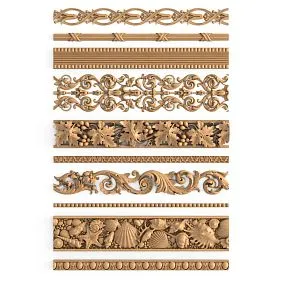
Decorative rails: art in every line
Wooden rails occupy a special place in interior design. Their use allows creating unique patterns, highlighting architectural features of the room, and adding a dynamic element to a static space.
Wooden planks
Masters, paying special attention to carving and polishing, transform simple rails into works of art capable of telling their story, imbued with centuries of woodwork tradition. These decorative elements help create a cohesive image, where every line and curve reflects the harmony and aesthetics of natural material.
Secrets of craftsmanship: from material selection to realization of the idea
Wood selection: guarantee of quality and durability
The foundation for creating quality solid wood items is the proper selection of material. Masters carefully choose wood, considering its texture, density, and natural characteristics, which later determine the aesthetic and functional qualities of the finished product. Only natural material, tested by time and art, can impart the item with unique strength, durability, and distinctive character.
Understanding the characteristics of wood and the ability to sense its potential are fundamental for any craftsman. This allows not only to avoid defects in the finished product but also to reveal the full depth and beauty of the material, transforming it into a true work of art.
Processing technologies and artistic vision
Combining traditional methods with modern wood processing technologies allows masters to achieve a high level of precision and aesthetic perfection. Manual labor, where every stroke matters, is complemented by innovative tools capable of ensuring consistent product quality. This synergy allows creating objects in which each element tells its own story and reflects the pursuit of perfection.
Masters invest not only professional skills but also a deep sense of responsibility for preserving cultural heritage in their work. They know that each item must carry warmth and soul, passed down through generations. It is precisely this that allows them to create not just interior objects, but works capable of inspiring and transforming space.
Individual approach and creative search
Each project in solid wood processing is a unique creative challenge requiring masters not only technical skill but also artistic vision. An individual approach to every order allows the realization of the boldest ideas and transforms them into reality. Masters who understand the importance of every detail strive to create items reflecting the client's individuality and their pursuit of a unique style.
In project development, great importance is placed not only on functionality but also on aesthetic perception. Each interior element, whether a massive door, cornice, skirting board, or decorative molding, is created with the intention of harmoniously blending into the overall space, complementing and accentuating its individuality.
Harmony of Details: The Path to Creating a Unique Interior
Creating a Cohesive Image Using Natural Materials
The true art of solid wood processing lies in the ability to unite individual elements into a single harmonious whole. Each interior component plays its part, and their thoughtful combination can transform a space, making it cozy, stylish, and filled with warmth. Masters, possessing a deep understanding of compositional principles, create interiors where every detail—from massive doors to delicate decorative moldings—contributes to a single goal: embodying an aesthetic that simultaneously carries tradition and modernity.
Such a holistic concept requires masters not only technical knowledge but also a sensitive understanding of space, the ability to read the mood of a room and select details that highlight its character. It is precisely this creative process that allows the creation of an interior capable of inspiring, delighting, and offering a sense of comfort and security.
Symbolism and Emotional Impact of Solid Wood Items
Wood is always associated with warmth, reliability, and eternity. Items crafted from natural materials are capable of conveying an atmosphere of coziness imbued with love for nature and deep respect for traditions. Masters, infusing soul into every stroke and line, create objects that become not merely functional interior elements, but true works of art rich in symbolism.
This depth of emotional impact is especially noticeable in objects used in daily life. Each detail, whether an entrance door or elegantly finished skirting board, carries history and conveys a sense of eternity. This is why clients choosing items crafted with deep respect for traditions become owners of unique interiors capable of inspiring and delighting for many years.
The Future of Craft: Perspectives and Challenges
Development of Technologies and Preservation of Traditions
The age of innovations and technological breakthroughs opens new opportunities for masters, yet the true art of solid wood processing remains unchanged in its pursuit of perfection. Masters continue to seek a balance between new methods and traditional techniques, preserving the unique atmosphere of handcrafted work and passing on their knowledge to the next generations.
This synergy between the past and the present is the key to success in the modern world, where the value of natural materials and unique craftsmanship becomes increasingly sought after. Every item created with love and attention to detail becomes evidence that true craftsmanship can overcome any technological challenge, remaining faithful to its core principles.
Global Trends and New Horizons of Creativity
In the context of globalization and mass production, an individual approach to interior design is gaining increasing popularity. Clients increasingly seek to surround themselves with unique pieces reflecting their personal style and outlook on life. This stimulates masters to seek new solutions and develop exclusive projects where every detail matters.
It is precisely under such conditions that items created with consideration for all characteristics of natural materials become in demand, where every line and stroke speaks of a high level of professionalism and love for craftsmanship. In this context, items crafted by masters become true works of art capable not only of decorating an interior but also of giving its owners a sense of harmony and inspiration.
Conclusion: Eternal Pursuit of Perfection and Individuality
Solid wood processing is not merely craftsmanship, but a true path where every detail becomes an important element of a cohesive composition. Masters, with deep respect for traditions and a drive for innovation, create items capable of conveying warmth, coziness, and uniqueness of each interior. From massive doors reflecting strength and reliability to elegant decorative elements such as cornices, skirting boards, wooden beams, corners, and moldings, every creation becomes a symbol of the highest craftsmanship and eternal beauty.
In the modern world, where mass production often replaces individuality, items created with attention to every detail acquire special value. They are not only functional objects but also embodiments of a dream of a harmonious and cozy home, where every detail tells its own story and carries a piece of the master's soul.
The continuity of knowledge, deep philosophy of working with natural materials, and pursuit of perfection make craftsmanship based on solid wood processing truly unique. Masters continue to create, inspire, and pass on their skills to the next generations, preserving in each item the spirit of the time and eternal beauty of nature.
Thus, the art of wood processing remains an unshakable element of cultural heritage, capable of uniting the past, present, and future. Anyone who values true craftsmanship and seeks to surround themselves with beauty can find inspiration in items created with love and respect for traditions. It is precisely this pursuit of perfection that allows transforming the ordinary into the unique, giving the interior that spark capable of touching hearts and inspiring new achievements.
In the final phase of the creative process, masters not only pay attention to the aesthetic component but also imbue each work with meaning that will be understood and appreciated by those who are able to see the depth and beauty of natural materials. Items created with such care for details become eternal symbols of quality, durability, and harmony, uniting generations and reflecting the spirit of the times.
Thus, choosing natural materials and applying modern technologies allows creating interiors where every detail plays its part in creating a unique atmosphere. By ordering items crafted by masters with deep respect for traditions, people gain the opportunity not only to decorate their homes but also to become owners of a piece of eternal art capable of providing warmth and inspiration for many years.
The result is an awareness that the art of solid wood processing is an eternal pursuit of harmony, individuality, and perfection. Masters endowed with deep knowledge and a refined sense of beauty continue to create items that become not merely interior elements, but true works capable of telling their own story and conveying warmth rooted in traditions and confirmed by modern innovations.
Clients choosing items crafted with love and attention to every detail can be assured that their interior will be filled with a unique atmosphere reflecting true craftsmanship and deep meaning. This is why anyone dreaming of creating a cozy and stylish space pays attention to items crafted with consideration for all nuances of working with natural wood.
May the art of wood processing continue to be a source of inspiration for those striving to create unique interiors where every detail carries meaning, beauty, and warmth. Masters continue to pass on their knowledge and skills, allowing new generations to discover the magic of natural materials and enjoy every moment spent in the company of true art.
Thus, the art of working with solid wood remains an eternal source of beauty, wisdom, and inspiration, uniting traditions and innovations, creating an interior filled with warmth and harmony. Masters, dedicating their entire passion and skill, transform each element into a work capable of inspiring and transforming space, giving it a unique character and individuality.