Article Contents:
- Customization Options in STAVROS
- From Concept to Realization: The Path of Custom Orders
- Technical Infrastructure for Implementing Unique Projects
- Digital Design: Precision and Visualization
- Custom Profiles and Dimensions
- Adaptation to Architectural Features
- Creating Unique Profiles
- Size Range: From Miniature to Monumental
- Wood Species and Tone Selection
- Classic Species: Oak and Beech
- Exotic Species: Uniqueness and Status
- Staining: From Natural to Artist's Finish
- Painting Options and Final Finishes
- Colored Staining: From Pastel to Vibrant Tones
- Special Decorative Finishing Techniques
- Protective Coatings: Durability and Aesthetics
- Custom Rails and Baseboards for Designers
- Realization of Original Concepts
- Serial Production of Exclusive Profiles
- Working with Designers: From Sketch to Realization
- Advantages of Cooperation with the Manufacturer
- Direct Contact: Elimination of Intermediaries
- Quality Guarantee: Control at Every Stage
- Technical Support: From Calculations to Installation

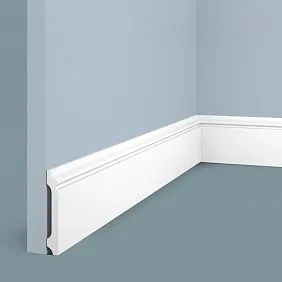
Mass production creates standardization, but true interior individuality arises from unique solutions.Wooden baseboardA custom profile embodies the architectural concept with precision down to the millimeter.Decorative RailNon-standard cross-section creates a unique rhythmic structure.— is a horizontal element that frames the room at the bottom of the walls where the wall meets the floor. Skirting boards perform several functions: they hide the technological gap between the wall and floor covering (necessary for thermal expansion), protect the lower part of the wall from mechanical damage, create visual completion, and may conceal wiring.Custom profiles realize design concepts impossible with standard products.Custom skirting boardsfrom STAVROS — this is the possibility to create architectural elements that precisely match the project's concept.STAVROS Productsof individual production combine 23 years of carpentry craftsmanship with modern digital design and precision processing technologies.


Customization Possibilities in STAVROS




From Concept to Realization: The Path of Individual Order
Each unique interior requires architectural elements that cannot be found in standard catalogs. Historic buildings with non-standard ceiling heights of 3.5–4.2 meters require skirting boards scaled to match the monumentality of the space. Modern conceptual interiors use non-standard profiles, creating a unique visual identity.Custom skirting boardssolves tasks that mass production cannot solve.
First stage — consultation with a STAVROS designer. The client presents the project concept — sketches, interior reference photos, profile samples from other projects. The designer analyzes the architectural features of the room — ceiling height, finishing materials, style, color palette. Technical requirements for future products are jointly defined — dimensions, profiles, materials, finishes.
Second stage — creation of a technical project. The designer develops profile drawings at 1:1 scale, allowing to assess visual perception. 3D modeling shows howWooden baseboardthe individual profile will look in a specific interior. Visualization programs create photorealistic images of the room with new architectural elements. The client sees the result before production begins and can make adjustments.
Fourth stage — mass production. After sample approval, the production department manufactures the required quantity of items. Production time depends on profile complexity and order volume — from 5–7 working days for simple profiles up to 100 linear meters to 15–20 working days for complex carved items. Each item undergoes multi-level quality control, guaranteeing identical characteristics to the sample for all elements.
Custom manufacturing ensures visual continuity of architectural lines in complex spatial geometry.
Our factory also produces:
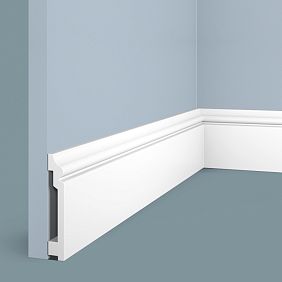
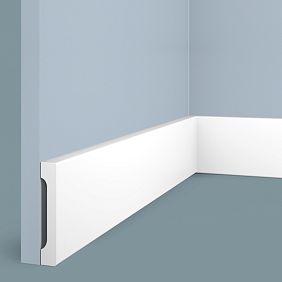
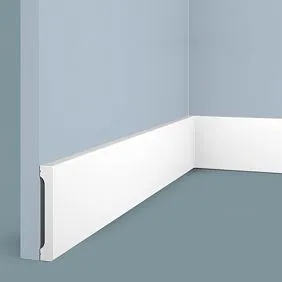
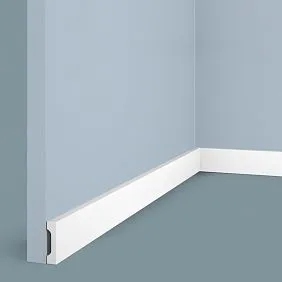
Technological Base for Implementing Unique Projects
Modern STAVROS production is equipped with machinery capable of implementing projects of any complexity. Four-sided longitudinal milling machines with CNC Weinig Profimat process blanks on all four sides in one pass with ±0.1 mm accuracy. The ability to quickly change tools allows retooling equipment from one profile to another in 15–20 minutes. This makes it economically viable to produce even small batchescustom skirting boards.
CNC milling machines for 3D processing create complex three-dimensional profiles, reliefs, carved elements. The CAD/CAM system converts the digital model into a machine control program. High-speed spindles with up to 24,000 rpm ensure clean processing, eliminating the need for additional grinding.Decorative Railwith complex relief is manufactured on this equipment.
CNC turning machines for producing turned elements — balusters, posts, decorative rose sockets — complement technological capabilities. Simultaneous processing with multiple tools reduces production time. Automatic tool change allows performing complex operations without operator involvement. Positioning accuracy ±0.05 mm guarantees identical characteristics for mass-produced items.
Wide-belt sanders create an ideally smooth surface ready for finishing. Automatic feed system ensures even pressure across the entire width of the blank. Gradual reduction of abrasive grit from P80 through P120, P150 to P180 creates a "polished" surface class.Wooden baseboardafter such processing, it is ready for lacquering or oil finishing.
Painting complex with pneumatic spray system ensures even application of lacquers, paints, stains. Ventilated painting chamber with air filtration system prevents dust from settling on freshly painted surfaces. Infrared drying reduces drying time for each layer to 30–40 minutes.— is a horizontal element that frames the room at the bottom of the walls where the wall meets the floor. Skirting boards perform several functions: they hide the technological gap between the wall and floor covering (necessary for thermal expansion), protect the lower part of the wall from mechanical damage, create visual completion, and may conceal wiring.it receives an ideally even coating without streaks or runs.
Get Consultation
Digital Design: Precision and Visualization
Modern CAD (Computer-Aided Design) programs allow creating accurate digital models of profiles. Each profile element — fillet, round, shelf, cove — is modeled with precision to tenths of a millimeter. Parametric modeling allows quickly changing dimensions, creating profile variations for different rooms in the project. Library of classic profiles accelerates design, providing ready-made elements for combining.
Visualization programs create photorealistic images of interiors with projected elements. Ray tracing technology simulates light propagation in the room, creating realistic shadows, reflections, and refractions. Wood textures taken from photographs of real samples convey the characteristic pattern of growth rings. The client sees howWooden baseboardit will look under various lighting conditions.
Virtual Reality (VR) allows "entering" the designed space, assessing element scale and visual perception from various viewpoints. VR headset creates a sense of presence — the client sees the space to scale. One can "approach" a wall, examine the skirting board profile up close, evaluate proportions. VR technology is especially valuable for large projects, where the cost of error is high.
Integration of CAD with CAM (Computer-Aided Manufacturing) ensures direct transmission of design data to production equipment. The machine control program is automatically generated from the 3D model. This eliminates manual programming errors and reduces production preparation time. From project approval to production start, it takes 1–2 days instead of a week using traditional methods.
Individual profiles and sizes
Adaptation to architectural features
Ceiling heights of 3.8–4.2 meters in pre-revolutionary townhouses require baseboards 120–150 millimeters high to maintain classical proportions of 1:30. Standard baseboards 80–100 millimeters high disappear in such rooms, failing to create sufficient visual weight.Custom skirting boardsA height of 140 millimeters with a classical profile corresponds to the scale of the space.
Non-standard room configurations require special elements. Columns with round or oval cross-sections require flexible baseboards that can be bent to the radius. Bay windows with radii of 800–1200 millimeters require pre-bent stock using steam methods. Niches of non-standard width require baseboards precisely cut to length, eliminating visible joints. Custom manufacturing solves these issues.
Complex corner connections in irregularly shaped rooms require special corner elements. Standard 45-degree angles are unsuitable if the room’s angle is 60, 75, or 120 degrees. Production manufactures corner elements precisely to the measured angle. This eliminates gaps in corners and creates an ideal perimeter geometry. For complex projects, a full specification is created indicating each element and its position.
Custom-made baseboards ensure visual continuity of architectural lines in complex spatial geometry.Wooden baseboardCustom manufacturing ensures visual continuity of architectural lines in complex spatial geometry.
Creating unique profiles
Classic profiles — base, body, and crown — are combined in infinite variations. The base may include a rectangular plinth, molding, or astragal. The body — a roundel, fluting, or shelves of varying widths. The crown — a cove, a cove molding, or quarter-round. By combining elements, the designer creates a profile unique to a specific project. The STAVROS library includes more than 200 classic profile elements.
Modern minimalist profiles use simple geometry with unexpected proportions. Asymmetric sections create dynamism. A profile with the upper part protruding 20–30 millimeters from the wall forms a ledge for mounting LED strips. A profile with a recess in the middle creates a light line when illuminated from below.— is a horizontal element that frames the room at the bottom of the walls where the wall meets the floor. Skirting boards perform several functions: they hide the technological gap between the wall and floor covering (necessary for thermal expansion), protect the lower part of the wall from mechanical damage, create visual completion, and may conceal wiring.Modern profile embodies the concept of light design.
Organic profiles are inspired by natural forms. Smooth curves without straight lines create biomorphic aesthetics. A profile resembling a wave, drop, or leaf adds sculptural qualities. Such profiles are complex to produce, require special tooling, but create a unique visual identity.Decorative RailOrganic profile becomes an art object.
Composite profiles combine different materials. A base of solid oak with inlays of dark walnut creates a color contrast. A wooden profile with a metal insert — brass or stainless steel — adds a modern touch. An MDF base with veneer of valuable wood species reduces cost while preserving visual expressiveness. Combining materials expands design possibilities.
Size range: from miniature to monumental
Miniature baseboards 40–50 millimeters high are used in modern minimalist interiors where architectural elements are minimized. A thin line at the base of the wall creates a delicate frame, almost imperceptible. A simple rectangular profile or a profile with one bevel forms a clear geometric line.Wooden baseboardMinimal height is suitable for rooms with low ceilings 2.4–2.5 meters.
Standard height range 70–120 millimeters covers most residential interiors. Height 70–80 millimeters is optimal for ceilings 2.5–2.7 meters. Height 100 millimeters for ceilings 2.8–3.0 meters. Height 120 millimeters for ceilings 3.0–3.2 meters. A baseboard-to-room height ratio of 1:30 creates a visually harmonious proportion, comfortable for perception.
Increased baseboards 140–180 millimeters high are used in high-ceilinged historic buildings. A classical profile with base, body, and crown creates complex shadow play. A multi-tiered profile structure corresponds to the monumentality of the space.Custom skirting boardsHeight of 160 millimeters embodies the grandeur aesthetic of classical interiors.
Monumental baseboards 200–250 millimeters high create a plinth zone in rooms of extreme height 4.0–5.0 meters — atriums, grand halls, churches. A two-tiered system — main baseboard plus plinth molding above — forms an elaborate wall base. A complex multi-element profile with modillions, dentils, and carved elements transforms the baseboard into an architectural artwork. Such items are custom-made and require a week of production.
Wood species and color selection
Classic species: oak and beech
Oak — the standard of strength, stability, and longevity. Density 650–750 kilograms per cubic meter creates a hard-wearing surface. Tannins — natural antiseptics — ensure biological resistance. Characteristic ring pattern with contrasting light and dark bands creates an expressive texture.Wooden baseboardOak lasts 30–50 years without loss of functionality.
Oak color ranges from light straw to medium brown. The bark — outer layers of the trunk — is 2–3 tones lighter than the core. Oak from northern regions of Russia — Kostroma, Vologda — has a lighter shade and denser texture due to slow growth in harsh climates. Oak from southern regions — Krasnodar Krai, Adygea — is darker with a coarser texture due to rapid growth.
Beech — European classic with a soft pink hue. Density 680–720 kilograms per cubic meter is comparable to oak. Fine-grained structure creates a smooth surface, pleasant to the touch. Uniform color from light cream to pinkish-brown without sharp contrasts forms a calm visual base.STAVROS ProductsBeech is suitable for light Scandinavian-style interiors.
Beech has higher hygroscopicity than oak — it reacts more actively to humidity changes. This requires more careful kiln drying to 8–10% moisture and quality protective coating. Steam treatment of beech changes the color to a more saturated pinkish-brown, reduces hygroscopicity. Steam-treated beech is more stable and suitable for rooms with variable humidity.
Exotic species: uniqueness and status
Oak - a noble species with chocolate-brown color and expressive texture. Density of 600-650 kilograms per cubic meter ensures strength. Characteristic dark streaks create a dramatic pattern. Oak is easy to work with, holds carving well, and polishes to a mirror finish.Wooden baseboardMade from oak creates an atmosphere of luxury and elegance.
Ash - a light species with cream-white color and contrasting texture. Density of 650-700 kilograms per cubic meter is comparable to oak. Characteristic wide annual rings with a sharp transition from light early wood to dark late wood create an expressive striped pattern. Ash is flexible and elastic, suitable for bent elements.Decorative RailMade from ash combines strength with visual lightness.
Teak - a tropical species with high oil content, providing natural water resistance. Density of 620-750 kilograms per cubic meter. Color ranges from golden-brown to dark chocolate with dark streaks. Teak requires no additional protection and maintains stability in humid conditions. Used in luxury interiors, yachts, bathrooms. Cost is 3-4 times higher than oak.
Wenge - an African species with nearly black color and contrasting light streaks. Density of 850-950 kilograms per cubic meter - one of the highest among wood species. Hardness by Brinell of 4.2 kgf/mm² exceeds oak by 1.5 times. Wenge is difficult to process and requires special tools.Custom skirting boardsMade from wenge - symbol of status and exclusivity.
Staining: from natural to custom
Natural wood color is preserved when using transparent finishes - varnishes, pigment-free oils. Clear varnish or oil highlights the natural texture without altering the color. Over time, wood naturally darkens by 1-2 tones due to light and oxidation. This process is called patination and adds nobility.Wooden baseboardNatural color demonstrates the authenticity of the material.
Light staining enhances texture contrast. Water-based stain penetrates unevenly - porous early wood absorbs more pigment, becoming darker. Dense late wood absorbs less, remaining lighter. Contrast between light and dark annual rings increases from natural 2-3 tones to 4-5 tones. Texture becomes more expressive and dramatic.
Deep staining changes wood color radically. Solvent-based or oil-based stains can color oak to resemble walnut, wenge, or mahogany. Color range from reddish-brown to nearly black. Texture is preserved, but contrast decreases - dark pigment equalizes differences between light and dark areas.— is a horizontal element that frames the room at the bottom of the walls where the wall meets the floor. Skirting boards perform several functions: they hide the technological gap between the wall and floor covering (necessary for thermal expansion), protect the lower part of the wall from mechanical damage, create visual completion, and may conceal wiring.Imitating expensive species is achieved through deep staining.
Custom staining creates unique color effects. Patination - applying dark stain followed by partial removal from raised profile areas - creates an aged effect. Grooves remain dark, raised areas light. Two-tone staining uses stains of different shades on different profile parts. Base dark, body medium, top light. Such effects create visual complexity and uniqueness.
Variants of painting and final finishing
Colored painting: from pastel to saturated tones
White painting - classic, never going out of fashion.— is a horizontal element that frames the room at the bottom of the walls where the wall meets the floor. Skirting boards perform several functions: they hide the technological gap between the wall and floor covering (necessary for thermal expansion), protect the lower part of the wall from mechanical damage, create visual completion, and may conceal wiring.Ground with two layers of acrylic primer, sanded with P220 abrasive, painted with three layers of acrylic enamel. Each layer is sanded between applications for perfect smoothness. Final finish with polyurethane varnish creates a durable surface. White color has shades - cool with bluish undertone, neutral, warm with cream undertone.
Pastel shades - light gray, beige, soft blue, mint - create a soft color palette. Pigmented primer provides the base tone. Semi-transparent enamel finish preserves color lightness. Matte or satin finish without gloss matches Scandinavian aesthetics.Wooden baseboardPastel shades harmonize with light interiors.
Saturated colors - dark blue, emerald green, burgundy, anthracite - create dramatic accents. Multi-layer painting ensures color depth. Dark base primer, two to three layers of colored enamel, protective top coat. Glossy finish enhances color saturation, creating a mirror sheen. Matte finish creates a velvet surface that absorbs light.
Metallic effects - gold, silver, bronze, copper - add luxury. Metallic paints contain finely dispersed metal particles or their imitating pigments. Base coat of corresponding shade, metallic layer, protective varnish. Gloss level is adjustable - from satin to mirror.Decorative RailWith gold finish creates a palace atmosphere.
Special decorative finishing techniques
Brushing - removal of soft early wood fibers with metal-bristle brushes. Hard late wood fibers remain, creating a relief texture. Relief depth of 0.5-1.0 mm highlights natural structure. Subsequent staining enhances contrast - grooves dark, raised areas light.Wooden baseboardWith brushing acquires a vintage character and tactile expressiveness.
Aging - a complex of techniques imitating natural wood aging. Artificial cracks are created with special tools. Woodworm traces are imitated with a knife. Scratches on corners and raised parts are created with sandpaper. Patination highlights created defects. Result - an item appearing 50-100 years older than its actual age. Technique popular for Provence, shabby chic, vintage interiors.
With texturing creates an industrial or rustic aesthetic.STAVROS ProductsTexturing creates a decorative surface with special tools. Rustic finish - rough processing with a drawknife, creating an uneven textured surface. Smoked finish - processing with a soldering lamp, creating a charred layer followed by removal of charcoal with brushes. Planed texture imitates saw marks on unprocessed boards.
Artistic painting transforms the skirting board into a work of art. Floral ornaments, geometric patterns, and narrative compositions are applied by hand by artists. Acrylic paints ensure color durability. Protective lacquer protects the painting from abrasion. This technique is used for exclusive interiors where each element is unique. The cost of a skirting board with artistic painting is 5-10 times higher than standard.
Protective coatings: durability and aesthetics
Lacquering creates a hard, transparent film protecting wood from moisture, dirt, and mechanical damage. Polyurethane lacquer applied in three to four layers forms a coating 100-120 micrometers thick. Hardness on the pencil scale 2H-3H ensures resistance to scratches. Water resistance allows for wet cleaning.Wooden baseboardWith a lacquer coating, it lasts 10-15 years without renewal.
Lacquer gloss varies from matte through satin, semi-gloss to glossy. Matte finish with 5-10 gloss units on the 60° scale creates a velvety surface that does not reflect light. Suitable for modern interiors. Satin finish with 20-30 gloss units creates a soft silk-like sheen. Universal solution. Glossy finish with 80-90 gloss units creates a mirror-like surface. Suitable for classic formal interiors.
Oil impregnation penetrates into the wood, protects from within, while preserving its ability to breathe. Linseed or tung oil polymerizes inside the pores over 7-14 days. The surface remains natural — light wood grain texture, tactile warmth. Oil enhances the texture and makes the color more saturated.Decorative RailWith oil impregnation, it preserves the authenticity of the natural material.
Oil-wax combines deep oil penetration with surface wax protection. Beeswax or carnauba wax creates a thin water-repellent layer. The coating is resistant to water splashes and light dirt. Annual renewal with a thin layer of oil-wax maintains protection. Ease of maintenance — the main advantage.Custom skirting boardsWith oil-wax coating, it is suitable for eco-friendly interiors.
Custom rails and skirting boards for designers
Realization of original concepts
Interior designers create unique concepts requiring architectural elements not found in standard catalogs. Wall panels with variable rail spacing create a dynamic rhythmic structure. Rails with a 40x40 mm cross-section are placed at intervals decreasing from 80 mm at the wall edges to 30 mm at the center. Visual densification at the center creates a focal point.Decorative RailCustom manufacturing embodies the designer's concept.
Three-dimensional rail structures create a textured wall surface. Rails of varying lengths protrude from the base plane by 50, 100, or 150 mm, creating a wavy or stepped surface. The interplay of light and shadow on the three-dimensional structure changes throughout the day, animating the static surface. Production of such structures requires precise calculations, installation system fabrication, and individual fitting of each element.
Integrated systems combine architectural elements with functional equipment. A skirting board with an integrated ventilation system has a perforated front panel behind which ventilation channels are concealed. Air from the air conditioning system is delivered through the skirting board, evenly distributed throughout the room.Custom skirting boardsWith functional integrations, it creates a smart space.
Light installations transform architectural elements into light sources. Rails made of semi-transparent composite material with integrated LED lighting create glowing vertical lines. RGB controller manages the lighting color, creating dynamic lighting effects. Synchronization with music transforms the wall into a light show.STAVROS ProductsWith integrated lighting, they embody the concept of light design.
Serial production of exclusive profiles
The designer develops a unique profile for a single object — a restaurant, hotel, boutique. The project requires 200-300 linear meters of skirting board. Special tooling — precision-profiled router bits — is manufactured. Tooling cost 30,000–50,000 rubles is amortized by order volume. Production run takes 7-10 working days. The client receives a unique profile at a price comparable to standard.
For large projects — restaurant chains, shopping centers — tooling for serial production is manufactured. An order of 1000–2000 linear meters justifies investment in specialized tools. The profile becomes a branded element used across all locations in the network.Wooden baseboardA unique profile forms the visual identity of the brand.
Cataloging successful individual profiles expands the standard range. A profile developed for a private order is added to the general catalog. Other clients can order it without manufacturing new tooling. Over time, the collection of individual profiles forms an extended catalog of 150–200 options instead of the standard 30–40. Variety satisfies a wide spectrum of design concepts.
Working with designers: from sketch to realization
First meeting — discussion of the project concept. The designer presents the overall interior style, color palette, materials, and references. STAVROS specialist analyzes the technical feasibility of the concept, suggests materials and technologies. Together, directions for development — profiles, dimensions, finishes — are defined. Result of the meeting — technical specification with key parameters of future products.
Design stage — creation of detailed drawings and 3D models. The designer provides profile sketches at 1:1 scale. STAVROS engineer develops technical drawings considering technological capabilities. 3D visualization shows how the products will appear in the interior. Iterative process — designer makes adjustments, engineer adapts technical solutions — continues until optimal result is achieved.
Sample production — physical realization of the concept. 1–3 samples, 500–1000 mm long, in various finish variants, are produced. The designer evaluates samples under real conditions — attaches them to the wall, illuminates with various light sources, assesses tactile qualities. Adjustments to the profile or finish are made if necessary. Approved sample becomes the standard for mass production.
Mass production — manufacturing the required quantity of items with control over conformity to the sample. Each item is checked for geometry, surface quality, and color match. Packaging ensures protection during transport. Delivery to the site is performed by STAVROS transport, maintaining temperature and humidity conditions.Custom skirting boardsDelivered to the customer with full documentation.
Advantages of cooperation with the manufacturer
Direct contact: no intermediaries
Working directly with the manufacturer eliminates intermediary markup. A typical chain - manufacturer → regional distributor → wholesaler → retail store - adds 30-50 percent to the final price. Each link takes a 10-15 percent margin. Direct work with STAVROS saves these markups.Wooden baseboardWhen purchased directly, it costs 30-40 percent less than retail prices in stores.
Direct communication with the production team speeds up issue resolution. Changing dimensions, adjusting profiles, clarifying shades are coordinated directly with the designer and technologist within a few hours. When working through intermediaries, each adjustment passes through several levels, taking days. Speed is critical for projects with tight deadlines.
Access to the full assortment, including items not available in retail stores. Stores keep 20-30 popular profiles in stock, others are ordered. The manufacturer has equipment to produce 150-200 profiles.Decorative RailRare profiles are available upon direct order without additional waiting time.
Flexibility in order volumes. Stores require minimum orders in multiples of packaging - usually 10-20 linear meters. The manufacturer produces the exact required amount - from 3-5 meters for small repairs to several thousand meters for large projects. This eliminates overpayment for excess or the need to purchase additional items.
Quality guarantee: control at all stages
Raw material control begins with checking suppliers' wood certification. Each batch is checked for moisture using a moisture meter - wood must have 8-12 percent moisture. Visual inspection identifies defects - knots, cracks, rot, insect damage. Only material meeting standards is allowed into production.Wooden baseboardControl begins with quality raw material.
Control during production is conducted at each operation. After milling, profile conformity to the drawing is checked using special templates. Deviation exceeding 0.2 millimeters is considered defective. After sanding, surface roughness is checked - must not exceed Ra 6.3 micrometers. After coating, lacquer layer thickness, absence of drips, foreign inclusions are checked. Multi-level control ensures quality.
Final acceptance of finished products checks a complex set of parameters. Geometry - straightness, absence of curvature exceeding 1 millimeter per 2 meters of length. Surface - smoothness, uniformity of coating, absence of defects. Color - conformity to standard sample, uniformity of batch. Marking - each item is marked with batch number for traceability.STAVROS ProductsUndergo strict control.
Warranty obligations confirm confidence in quality. STAVROS provides a 24-month warranty on solid wood items and 18 months on MDF items under proper usage conditions. Warranty covers material and manufacturing defects - warping, cracking, coating delamination. Warranty cases account for less than 0.5 percent of production volume, confirming consistently high quality.
Technical support: from calculation to installation
Professional consultation helps choose optimal solutions. Specialist analyzes the object's features - area, ceiling height, style, usage conditions. Recommends wood species, profile, height, coating type. For humid areas - oak with polyurethane lacquer. For classic interiors with high ceilings - 120-140 mm complex profile baseboards. For modern minimalist interiors - simple 70-80 mm profile.
Accurate calculation of required quantities eliminates shortages or excesses. Room perimeter is measured at floor level. An additional 5-7 percent is added for trimming and possible defects during installation. For complex rooms with many angles and openings, reserve increases to 10 percent. Quantity of corner elements, connectors, fasteners is calculated. Client receives an exact specification listing each item.
Installation recommendations ensure correct installation. Instructions include step-by-step process description - surface preparation, marking, fastening, corner joints, finishing. Video instructions show critical operations - trimming corners, clip fastening, fastener concealment. STAVROS technology provides phone consultation, answers questions arising during installation.
Post-purchase service continues after project completion