Article Contents:
- Normative Basis: Foundation of Design Solutions
- Building Standards and Their Practical Application
- International Standards and Their Adaptation
- Calculation Methods: From Theory to Practice
- Basic Algorithm for Determining Installation Spacing
- Accounting for Structural Features
- Influence of Materials on Calculated Parameters
- Wooden Balusters: Classic and Modern
- Metal Elements: Strength and Durability
- Aesthetic Aspects of Layout
- Visual Perception of Rhythm
- Stylistic Features of Various Approaches
- Technological Features of Installation
- Marking and Accuracy Control
- Compensation for manufacturing tolerances
- Special Cases and Non-Standard Solutions
- Stairs with Variable Step Width
- Combined railings
- Load Calculations and Strength Characteristics
- Static and Dynamic Loads
- Influence of Mounting Method on Load-Bearing Capacity
- Economic Optimization of Design Solutions
- Cost Analysis of Various Options
- Standardization and Unification of Elements
- Quality Control and Work Acceptance
- Measurement Methods and Tolerances
- Strength Testing
- Modern Trends and Innovations
- Integration of Smart Home Technologies
- Ecological Aspects of Design
- Conclusion
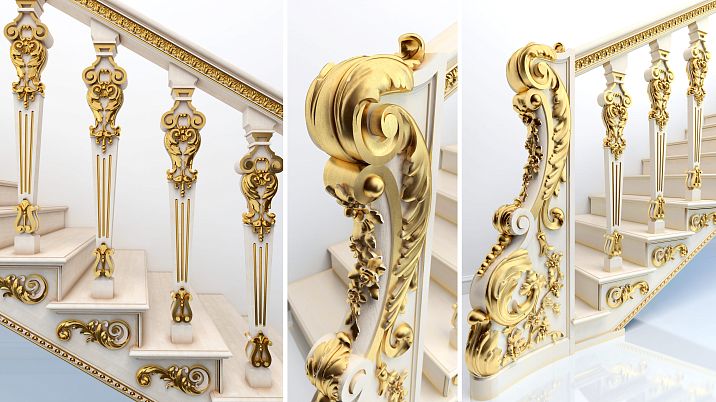
The architectural harmony of a staircase arises not only from the beauty of materials and elegance of forms, but primarily from the mathematical precision of its elements' placement. The question on what distance balusters should be placed from each other, determines not merely the aesthetic perception of the structure, but the fundamental foundations of safety and functionality of the entire staircase complex.
Every millimeter in this calculation matters. Too large gaps pose a risk to children, too small ones disrupt the visual lightness of the structure and unnecessarily increase material costs. The skill of the designer lies in finding that golden middle ground where safety combines with beauty, and regulatory requirements align with the client's individual needs.


Normative Basis: Foundation of Design Solutions




Building Standards and Their Practical Application
Russian construction norms establish clear parameters for the distance between vertical elements of stair railings. The maximum allowable gap is 100 millimeters in clear space — this distance is measured between the nearest surfaces of adjacent balusters. This restriction is dictated by child safety considerations: a child's head should not pass through the railing.
For residential buildings up to three stories, a gap up to 120 millimeters is permitted provided that no children under seven years old reside in the house. However, practice shows: it is wiser to initially adhere to stricter norms, as family composition may change, and retrofitting stairs is a labor-intensive and costly procedure.
Public buildings require stricter limitations. Here, the maximum gap must not exceed 100 millimeters without exceptions. Escalators and moving staircases are subject to even stricter requirements — the gap must not exceed 50 millimeters.
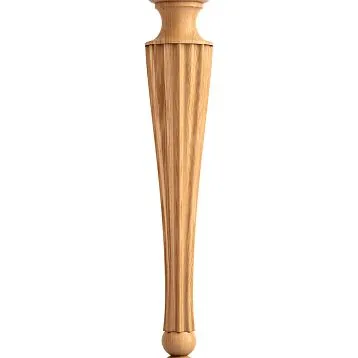
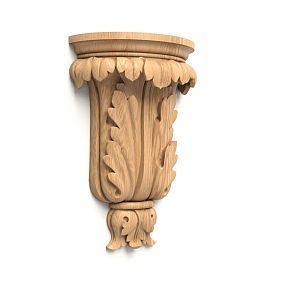
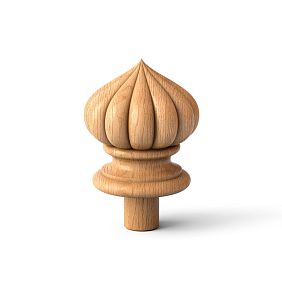
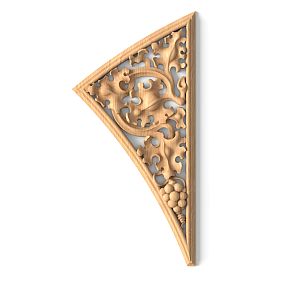
Our factory also produces:


International standards and their adaptation
European standards EN 1991-1-1 establish similar requirements for gaps in railings, but with some distinctions. The maximum gap is 100 millimeters, but measurement is performed taking into account possible deformation of elements under load. This means the calculated gap must be smaller by the amount of possible deflection of balusters.
American standards IRC (International Residential Code) prescribe a maximum gap of 4 inches (101.6 mm), which practically matches Russian norms. However, American standards more thoroughly regulate testing methods and quality control of installation.
Canadian building codes are particularly strict regarding staircases in childcare facilities, where the maximum gap is limited to 90 millimeters. This practice is gradually being adopted in Russian construction, especially in the design of luxury housing.
Get Consultation
Calculation methodologies: from theory to practice
Basic algorithm for determining baluster spacing
Calculation begins with determining the total length of the section where balusters will be installed. For a straight run, this is the distance between support posts; for a curved section, it is the arc length along the inner radius of the handrail. Accuracy at this stage is critically important: an error of several millimeters will result in uneven spacing throughout the entire railing length.
The width of the baluster at its maximum cross-section is subtracted from the total section length. The resulting value is divided by the number of gaps, which is one more than the number of balusters. For example, installing five balusters requires calculating four gaps between them plus two half-gaps at the ends.
Calculation correction is performed iteratively. If the calculated gap exceeds 100 millimeters, the number of balusters is increased. If the gap is too small (less than 80 millimeters), the number of balusters can be reduced, but only provided that regulatory requirements are met.
Accounting for structural features
Landing steps require a special approach to calculation. Balusters are installed perpendicular to the direction of movement, meaning they are angled relative to the horizontal. The distance between balusters is measured along the handrail line, not the horizontal projection.
Helical staircases present the greatest complexity for calculation. Here, it is necessary to account for changes in the curvature radius of the handrail and different step widths at the inner and outer edges. The optimal solution is uniform angular distribution of balusters with adjustment of their inclination.
Staircases with landings require separate calculation for each section. Balusters on landings are installed vertically, while on runs they are installed at an angle corresponding to the staircase’s incline. Transition zones require a gradual change in baluster inclination.
Influence of materials on calculated parameters
Wooden balusters: classic and modern
Wood remains the most popular material for manufacturing balusters due to its workability, aesthetic qualities, and relative accessibility. However, different wood species have varying strength characteristics, which affects allowable cross-section dimensions and, consequently, distance calculations.
Coniferous species — pine, spruce, larch — have sufficient strength at a cross-section of 50×50 millimeters. This allows installing them with maximum allowable gaps without compromising structural rigidity. Larch, due to its high density, can be used in 40×40 millimeter sections while maintaining required strength.
Hardwood species — oak, ash, beech — allow creating more elegant constructions with smaller baluster cross-sections. Oak balusters with a 40×40 millimeter cross-section provide the same strength as pine 50×50 millimeter balusters. This opens opportunities for more frequent baluster installation without increasing the visual massiveness of the railing.
Metallic elements: strength and durability
Steel balusters allow creating constructions with minimal cross-section support elements. Round steel posts with a diameter of 20–25 millimeters provide sufficient strength at maximum allowable gaps. This is especially relevant for modern interiors, where visual lightness of structures is valued.
Stainless steel, in addition to strength, provides corrosion resistance, which is important for staircases in high-humidity rooms. Polished surfaces of stainless steel balusters create a visual expansion effect, allowing for more frequent installation without a sense of clutter.
Aluminum alloys combine lightness with sufficient strength. Anodized coating ensures durability and variety of color options. Aluminum balusters are especially popular in modern architecture due to the possibility of creating complex geometric forms.
Aesthetic aspects of planning
Visual perception of rhythm
The human eye perceives rhythmic repetition of elements as harmonious and calming. Uniform spacing between balusters creates a sense of order and stability. However, overly frequent placement may create a "picket fence" effect, visually weighing down the structure.
The golden ratio, applied to calculating gaps between balusters, creates the most harmonious perception. If the baluster width relates to the gap as 1:1.618, the construction is perceived as perfectly balanced. In practice, this means that for a 50-millimeter-wide baluster, the optimal gap is approximately 80 millimeters.
The contrast between the massiveness of balusters and the lightness of gaps creates a dynamic visual perception of the staircase. Thin balusters with large gaps create a sense of lightness, while heavy balusters with small gaps convey reliability and solidity.
The classical style assumes the use of balusters with complex shapes and decorative elements. In this case, the gaps should be sufficient to perceive each baluster as an independent artistic element. The optimal distance is 1.5–2 times the width of the baluster at its widest part.
The minimalist style requires the simplest forms and clean lines. Balusters with rectangular or circular cross-sections are installed with uniform gaps equal to 1–1.5 times the width of the baluster. This solution creates a sense of strictness and modernity.
The Scandinavian style is characterized by the use of light wood species and maximum functionality. Balusters with simple shapes are installed with gaps ensuring maximum safety while minimizing material consumption. The typical ratio is a gap equal to the width of the baluster.
Marking and accuracy control
Technological features of installation
The accuracy of marking determines the quality of all subsequent work. Modern laser levels allow creating reference lines with accuracy down to fractions of a millimeter. Marking begins with installing the outer reference posts, between which a control string or laser line is stretched.
The calculated distance between balusters is transferred to the steps using a tape measure and a square. Each mark is checked twice — from the start of marking and from the previous mark. Accumulation of measurement errors may result in significant deviation of the last baluster from its calculated position.
Templates and guides simplify the marking process and ensure repeatability of results. The simplest template is a strip with holes positioned at the calculated distance. More complex guides allow marking multiple steps simultaneously while accounting for their geometry.
Compensation for manufacturing tolerances
Actual dimensions of balusters always differ from nominal dimensions within manufacturing tolerances. The standard tolerance for wooden items is ±2 millimeters, which may lead to accumulated error when installing a large number of elements.
Sorting balusters by actual dimensions allows minimizing the impact of tolerances on the overall geometry of the railing. Balusters with maximum dimensions are installed in locations where the gap can be reduced without violating regulatory requirements.
Adjustable fasteners allow compensating for minor dimensional deviations during installation. Eccentric washers, threaded connections with adjustable capability, and elastic gaskets — all these elements help achieve ideal geometry when using standard components.
Adjustable fasteners allow compensating for minor dimensional deviations during installation. Eccentric washers, threaded connections with adjustable options, and elastic gaskets—all these elements help achieve ideal geometry when using standard components.
Special cases and non-standard solutions
Stairs with variable step widths
Landing steps create special conditions for placing balusters. The inner edge of the step is significantly narrower than the outer edge, requiring a special approach to calculation. The most common solution is placing one baluster on each landing step at the point where its width is 200–250 millimeters.
An alternative approach involves placing balusters along the movement line, located 400–500 millimeters from the inner edge of the step. In this case, the distance between balusters remains constant, but their number on landing steps may differ from that on straight sections.
Helical staircases require radial placement of balusters with a constant angular step. Calculation is performed based on the radius of the movement line and requirements for maximum clearance. The typical angular step is 15–20 degrees, depending on the staircase radius.
Combined railings
Modern design solutions often involve combining different materials and forms within a single railing. Alternating wooden and metal balusters, using glass inserts, integrating lighting — all these elements affect distance calculations.
When alternating balusters of different widths, calculation is performed separately for each type of element, followed by optimizing the overall rhythm. It is important to ensure visual balance of the composition while complying with safety requirements.
Glass panels between balusters allow increasing the distance between support elements to 1500–2000 millimeters while maintaining railing safety. The glass must be tempered or triple-glazed with a thickness of at least 8 millimeters.
Load calculation and strength characteristics
Static and dynamic loads
Balusters withstand not only vertical loads from the handrail's weight but also horizontal forces from people leaning on the railing. The regulatory horizontal load is 0.8 kN/m for residential buildings and 1.5 kN/m for public buildings. This load is distributed among balusters proportionally to their stiffness.
Dynamic loads arise from sudden movements of people, impacts, and vibrations from operating equipment. The dynamic coefficient for stair railings is taken as 1.4, meaning that calculated loads are increased by 40% compared to static loads.
Fatigue phenomena in baluster material occur under repeated load applications. This is especially relevant for public buildings with high pedestrian traffic. Fatigue calculation requires reducing allowable stresses by 20–30% compared to single-load applications.
Influence of fastening method on load-bearing capacity
Rigidly fixing the baluster in the base and handrail ensures maximum load-bearing capacity. In this case, the baluster acts as a column with fixed ends, allowing increased spacing between elements while maintaining overall railing stiffness.
Hinged fastening reduces the load-bearing capacity of the baluster by 4 times compared to rigid fixation. This type of fastening requires reducing the spacing between balusters or increasing their cross-section to ensure the required railing stiffness.
Combined fastening — rigid in the base and hinged in the handrail — provides intermediate characteristics. The reduction coefficient for load-bearing capacity is 2.25, requiring appropriate adjustment of distance calculations.
Economic optimization of design solutions
Analysis of the cost of various options
The cost of the stair railing consists of material costs, labor costs for manufacturing and installation, as well as operational expenses. Increasing the number of balusters increases material costs but may reduce labor costs due to the use of standard elements with simple shapes.
Optimization based on the criterion of minimum cost often leads to solutions with maximum allowable distances between balusters. However, such an approach may negatively affect the aesthetic qualities of the staircase and its durability.
Comprehensive analysis should consider not only initial costs but also maintenance expenses throughout the entire service life. High-quality materials and correct calculation of distances ensure the longevity of the structure and minimal operational expenses.
Standardization and unification of elements
Using standard baluster sizes and unified distances between them allows reducing manufacturing costs through serial production. Standard gaps of 80, 90, and 100 millimeters cover most practical needs.
Modular design system implies using a base module — for example, 50 millimeters — for all railing element dimensions. Baluster width, distances between them, and handrail height are multiples of the base module, simplifying calculations and manufacturing.
Parametric design using computer programs allows quickly calculating multiple options and selecting the optimal one based on specified criteria. Modern CAD systems include libraries of standard elements and automated calculation procedures.
Quality control and acceptance of work
Measurement methods and tolerances
Control of distances between balusters is performed using a caliper or special templates. Measurement accuracy should be no less than 0.5 millimeters. Measurements are taken at three points along the baluster height — at the base, at mid-height, and at the handrail level.
Permissible deviations from design dimensions are ±3 millimeters for distances up to 100 millimeters and ±5 millimeters for larger distances. Systematic deviations in one direction are not allowed, as they may violate regulatory requirements.
Control of baluster verticality is performed using a plumb bob or laser level. Deviation from verticality must not exceed 2 millimeters per meter of height. For inclined sections of the staircase, balusters must be perpendicular to the tread line.
Strength tests
Acceptance tests for railings include checking for static load and impact strength. Static load is applied to the handrail at the most unfavorable point — typically at the midpoint between support posts. The load magnitude is 1.5 times the normative value.
Fatigue tests are conducted for railings in public buildings by repeatedly applying a load equal to 0.6 of the normative value. The number of loading cycles is determined by the calculated service life of the structure and usage intensity.
Fatigue tests for railings in public buildings are conducted by repeatedly applying a load equal to 0.6 of the normative value. The number of loading cycles is determined by the calculated service life of the structure and the intensity of use.
Modern trends and innovations
Integration of smart home technologies
Modern stair railings are increasingly equipped with smart home elements — built-in lighting, motion sensors, access control systems. Integration of these systems affects spacing between balusters, as it requires placement of additional equipment.
LED lighting can be integrated into balusters or the handrail. When placed in balusters, channels for wiring must be provided, which may require increasing the cross-section of the elements. Handrail lighting requires even distribution of light sources, which affects the baluster spacing.
Ecological aspects of design
Ecological design aspects
Modern requirements for construction ecology influence the choice of materials and manufacturing technologies for balusters. Preference is given to renewable materials — wood from sustainably managed forests, recycled metal, composites based on natural fibers.
Optimization of material consumption has become not only an economic but also an ecological task. Precise calculation of distances between balusters allows minimizing production waste and reducing the carbon footprint of the structure.
The possibility of disassembly and reuse of railing elements is considered during the design stage. Standardization of dimensions and connections simplifies dismantling and material recycling at the end of the staircase’s service life.
Conclusion
Determining the optimal distance between balusters is a complex task requiring consideration of multiple factors — from regulatory requirements to the client’s aesthetic preferences. Each project is unique and requires an individual approach, but knowledge of basic principles and calculation methods allows finding the optimal solution for any situation.
Modern design and manufacturing technologies open new possibilities for creating safe, beautiful, and functional stair railings. Parametric modeling, precise calculation methods, innovative materials — all serve one goal: creating staircases that will serve people for many years, ensuring safety and comfort.
STAVROS Company has many years of experience in designing and manufacturing staircases of any complexity. Our specialists are proficient in the most modern calculation methods and use only proven technologies. We guarantee compliance of all products with current regulations and individual client requirements, ensuring optimal combinations of safety, functionality, and aesthetics in every project.
STAVROS Company has many years of experience in designing and manufacturing stair structures of any complexity. Our specialists are proficient in the most modern calculation methods and use only time-tested technologies. We guarantee that all products comply with current regulations and individual client requirements, ensuring optimal combinations of safety, functionality, and aesthetics in every project.