Article Contents:
- The magnetism of natural wood: why solid wood conquers hearts
- The energy of live wood in interior spaces
- Psychophysical impact of wooden surfaces
- Wood species: character and individuality of each tree
- Oak — the aristocrat of the furniture kingdom
- Ash — symphony of strength and elegance
- Walnut — embodiment of luxury and nobility
- Exotic species: exclusivity in every detail
- Stylistic directions: from timeless classicism to daring avant-garde
- Timeless classic luxury
- Scandinavian philosophy of naturalness
- Modern eclecticism: boldness and experimentation
- Functional organization: maximum utility from every square centimeter
- Space zoning using wooden furniture
- Hidden storage systems: order without compromise
- Integration of modern technologies
- Ergonomics and comfort: science of creating the ideal space
- Anthropometric foundations of planning
- Psychology of color and texture in wooden furniture
- Technological aspects of production: from forest to living room
- Wood selection and preparation
- Modern processing and finishing methods
- Quality control at every stage
- Ecological aspects: Responsibility to nature
- Certified wood and sustainable forestry
- Durability as an ecological value
- Care and maintenance: preserving beauty for generations
- Daily care for wooden surfaces
- Protection against adverse influences
- Periodic coating renewal
- Economic aspects: investment in quality of life
- Long-term investment profitability
- Impact on property value
- Modern trends: looking ahead to the future of wooden furniture
- Personalization and individual approach
- Integration of "smart" technologies
- Ecological innovations
- Conclusion: symphony of beauty, quality, and natural harmony
There is something magical in the moment when you step into the living room and feel yourself enveloped by the warmth of living wood. Living rooms made of natural wood It is not just an interior solution, but a whole philosophy of life, where each piece of furniture tells the story of century-old trees, where every texture of the solid wood breathes natural energy. In an age of soulless mass production and synthetic imitations, natural wood remains the last bastion of true beauty and authentic quality.
The modern living room is the heart of the home, the place where family traditions are born, where honored guests are received, where the most significant moments of life are celebrated. And precisely for this reason, choosing furniture made of natural solid wood becomes a decision not for one day, but for entire generations. Each piece made of noble wood carries not only functionality, but also the soul of the craftsman, the warmth of nature, the energy of growth and time.


The magnetism of natural wood: why solid wood captivates hearts




The energy of living wood in interior space
Amazingly, but true: wood continues to live even after processing. Scientific research confirms the ability of natural wood to regulate air humidity, absorb excess moisture on rainy days, and release it back during dry periods. This natural "breathing" system creates a unique microclimate in the living room, positively affecting the health and well-being of all inhabitants of the house.
Each tree is unique — like human fingerprints. Oak, slowly gaining strength over centuries, has preserved in its annual rings a memory of droughts and rainy years. Walnut, absorbing the sap of fertile soil, radiates nobility and warmth. Ash, reaching for the sun through the crowns of other trees, demonstrates elegance and aspiration upward.
Our factory also produces:


Psychophysical effect of wooden surfaces
Touching a natural wooden surface triggers a cascade of positive reactions in the human body. Tactile receptors transmit signals to the brain, activating the production of serotonin — the hormone of happiness and pleasure. That is why people instinctively reach to stroke a wooden countertop or armrest of a chair.
Natural wood tones — from delicate honey-colored birch to deep chocolate walnut — create visual calm. These colors do not strain the eyes, do not irritate the nervous system, but rather promote relaxation and concentration. This quality is especially important in the living room, where the family spends a significant portion of their time.
Get Consultation
Wood species: character and individuality of each tree
Oak — the aristocrat of the furniture kingdom
Oak living rooms embody the power and grandeur of nature. The density of this wood reaches 700 kilograms per cubic meter, ensuring incredible strength and longevity of furniture. High concentration of tannins creates a natural protection against moisture, pests, and fungal damage.
The color palette of oak is strikingly diverse: from light golden-yellow tones of young trees to rich brown hues of ancient giants. Thermal treatment allows obtaining deep chocolate and even black tones, while preserving the characteristic coarse texture with expressive annual rings.
Ash — symphony of strength and elegance
Ash wood demonstrates an amazing combination of technical and aesthetic qualities. Light base tones with contrasting dark veins create a dynamic, lively texture capable of revitalizing even the most rigid interiors. Exceptional impact toughness makes ash an ideal material for creating elegant, slender furniture elements without sacrificing functional strength.
Ash — a true chameleon in the world of wood. It easily accepts various types of staining: from natural light shades to deep, saturated colors. At the same time, the characteristic striped structure remains visible, creating a unique decorative effect.
Walnut — embodiment of luxury and nobility
Walnut wood — choice of true connoisseurs of refinement. Rich color palette ranging from light brown to deep chocolate tones, wavy fiber structure creating unique patterns — all this makes walnut furniture true works of art.
The special value of walnut lies in its stability. This wood practically does not deform under changes in humidity and temperature, which is critically important for quality furniture. Excellent workability allows craftsmen to create intricate carved elements, refined profiles, and decorative details.
Exotic Species: Exclusivity in Every Detail
Mahogany, teak, wenge, zebrawood — these names sound like magical incantations for admirers of unique interiors. Each exotic species possesses exceptional characteristics and an unmistakable appearance.
Mahogany impresses with dimensional stability and rich reddish-brown color with golden undertones. Wenge surprises with contrasting black-brown texture and exceptional hardness. Teak demonstrates the highest resistance to moisture and natural oily sheen. Using such species transforms an ordinary living room into an art gallery.
Stylistic directions: from timeless classicism to daring avant-garde
Timeless luxury beyond time
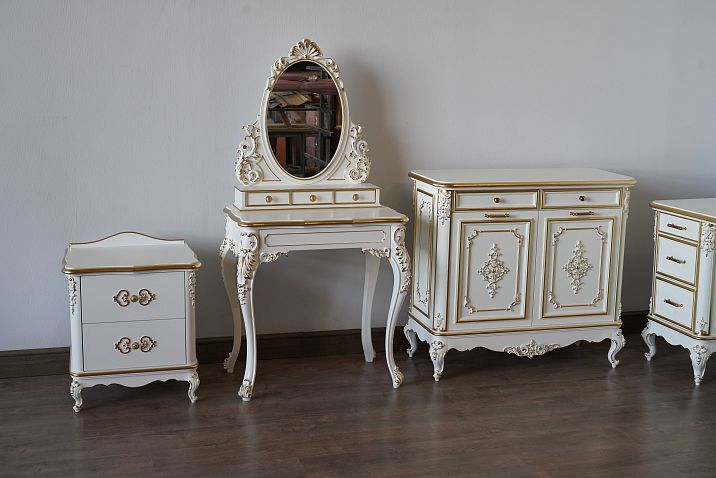
Classical Living rooms made of natural solid wood It is the embodiment of centuries-old traditions of furniture art. Strict proportions based on the golden ratio, symmetrical compositions, refined decorative elements create an atmosphere of aristocratic dignity and respectability.
Carved cornices with meticulous detailing, turned legs of tables and chairs, three-dimensional panels of cabinets — every element of a classic living room is thought out down to the smallest detail. Gilding or silver patina highlights the relief of carving, creating a sense of noble antiquity and centuries-old history.
The color palette of classic living rooms leans toward dark, saturated tones: deep walnut, noble mahogany, majestic wenge. These colors create a sense of stability, reliability, fundamentality — qualities especially valued in turbulent times.
Scandinavian philosophy of naturalness
Northern aesthetics brought revolutionary principles to the world of design: functionality above decoration, naturalness more important than artificiality, quality of materials more valuable than quantity of details. Scandinavian living rooms made of natural wood embody this philosophy in every element.
Light wood species — birch with its silky surface, pine with its characteristic resinous veins, beech with its expressive striped texture — are minimally processed to preserve the maximum natural beauty. Matte finishes highlight the material's naturalness and create tactile comfort.
Furniture forms are extremely minimalist: clear geometric lines, absence of unnecessary ornamentation, emphasis on perfect proportions. This aesthetic creates a sense of calm, spaciousness, and connection to nature — exactly what is so lacking in today's urban hustle.
Modern eclecticism: boldness and experimentation
Modern design trends open up boundless opportunities for creativity. Wooden furniture can be combined with metallic elements, creating interesting texture contrasts. Glass inserts add lightness to bulky forms. Integrated LED lighting turns an ordinary cabinet into a striking light object.
Asymmetric compositions, non-standard proportions, play of scales — modern style allows experimenting with forms without losing functionality. Wood in such interiors often serves as a base material, upon which current design solutions are layered.
Functional organization: maximum utility from every square centimeter
Zoning space with wooden furniture
A well-planned living room made of natural wood easily transforms into a multifunctional space. A tall display cabinet can serve as a partition, visually separating the relaxation zone from the work area. A low, long chest creates a horizontal line, visually expanding the room.
Modular systems allow creating individual configurations precisely matching the needs of a specific family. Today, a large library is needed — add bookcases. Tomorrow, space for a collection is required — install illuminated display cases. In a year, a home theater is planned — rearrange the furniture for new tasks.
Hidden storage systems: order without compromise
Modern Wooden furniture sets for the living room Include numerous hidden storage systems. Coffee tables with drawers conceal remote controls and small items. Sofa-transformers convert into additional guest sleeping spaces. Walls with rotating sections allow hiding equipment when not in use.
Special attention deserves soft-close systems — dampers ensuring smooth and silent closing of doors and drawers. This seemingly minor detail significantly affects furniture usability, especially during evening and nighttime hours.
Integration of Modern Technologies
Natural wood harmonizes beautifully with modern technologies. Concealed wiring allows integrating charging stations for mobile devices directly into tabletops and armrests. Built-in speakers provide high-quality sound without visible wires or bulky devices.
Smart home systems seamlessly integrate into wooden furniture. Touch panels for controlling lighting, climate, and security can be embedded into any surface. Meanwhile, technologies remain practically invisible, not disrupting the aesthetics of natural material.
Ergonomics and comfort: science of creating the ideal space
Anthropometric planning foundations
Creating a comfortable living room requires precise understanding of human anatomy and psychology of space perception. The sofa seat height should be 42-45 centimeters for optimal comfort for most people. A seat depth of 55-60 centimeters ensures proper back support.
The distance between the sofa and coffee table should be at least 40 centimeters for free passage, but no more than 50 centimeters for convenient access to items. A table height 5-10 centimeters lower than the sofa seat creates optimal usage conditions.
Psychology of color and texture in wooden furniture
Different wood species affect human psycho-emotional state differently. Light species — birch, maple, beech — create a sense of freshness, purity, and spaciousness. They are especially suitable for small rooms where visually expanding space is important.
Dark species — walnut, mahogany, wenge — promote focus, create a sense of stability and security. Such furniture is ideal for spacious living rooms where a cozy, intimate atmosphere is needed.
Wood texture also plays an important role. Smooth, polished surfaces create a sense of luxury and grandeur. Matte, slightly rough texture encourages relaxation and informal interaction.
Technological aspects of production: from forest to living room
Wood selection and preparation
The quality of finished furniture is established already at the raw material stage. Each log undergoes careful evaluation: density of wood, absence of defects, correct sawing. Experienced specialists can determine the quality of the entire material batch based on external characteristics.
The process of kiln drying is a true art, requiring deep knowledge and precise adherence to technological regimes. Wood must be dried to a moisture content of 8-10%, eliminating subsequent deformations. It is important to avoid cracking and other defects that may arise from improper drying.
Modern processing and finishing methods
High-precision CNC machines with computer control allow creating parts of the most complex shapes with accuracy down to tenths of a millimeter. This is especially important for creating perfectly matched joints, ensuring furniture longevity.
Finishing treatment not only determines the appearance but also the operational characteristics of the product. Natural oils and waxes highlight the natural beauty of wood, creating a pleasant-to-touch surface. Lacquer coatings provide maximum protection against damage and contamination.
Quality control at every stage
The multi-level quality control system permeates the entire production process. Incoming material inspection, operational control at each processing stage, and final inspection of finished products — all of this ensures consistently high product quality.
Modern measuring instruments allow for controlling geometric parameters with the highest accuracy. Moisture meters determine the residual moisture in wood, thickness gauges check coating uniformity, and profilometers assess surface quality.
Ecological aspects: responsibility toward nature
Certified wood and sustainable forestry
Modern furniture production is unthinkable without adhering to ecological standards. The FSC certification system guarantees that the wood is sourced from forests managed according to sustainable development principles. This means that harvesting volumes do not exceed natural growth, biodiversity is preserved, and the rights of local communities are respected.
Preferring local wood species not only reduces transportation costs and the product's carbon footprint but also supports the regional economy. Russian oak, beech, and birch do not fall short of foreign equivalents in quality and often surpass them due to climatic and soil conditions.
Durability as an ecological value
Quality solid wood furniture can serve for decades, and with proper care — even for centuries. This fundamentally distinguishes it from composite material products, which require replacement every 5-7 years. Durability is not only an economic advantage but also an ecological responsibility.
The ability to repair and restore wooden furniture extends its lifespan. Scratches and wear can be removed by sanding and applying a new finish. Even serious damage is often restorable with the help of skilled restorers.
Care and maintenance: preserving beauty for generations
Daily care for wooden surfaces
Natural wood responds gratefully to care, preserving its beauty and functionality for many years. Daily cleaning with a soft dry cloth removes dust and prevents its accumulation in wood pores. Microfiber is especially effective — it leaves no fibers behind and does not scratch the surface.
For wet cleaning, use specialized wood furniture cleaners or simply a slightly damp cloth, immediately wiping the surface dry. It is extremely important to avoid water getting into joints and connections — this may cause wood swelling and structural deformation.
Protection from adverse influences
Proper placement of furniture in a room significantly extends its service life. Direct sunlight can cause fading and drying of wood, therefore wooden furniture for the living room it is better to place it away from windows or use protective curtains and blinds.
Heating appliances and air conditioners create temperature and humidity fluctuations harmful to natural wood. The minimum distance from radiators should be at least 60 centimeters. The optimal air humidity for wooden furniture is 45-55%.
Periodic renewal of finishes
Even the highest-quality finishes require renewal over time. Oil finishes should be renewed every 2-3 years, applying a thin layer of oil and carefully rubbing it into the surface. Lacquer finishes are more durable, but when scratches or wear appear, they require professional restoration.
Wax is the ideal care product for wooden furniture. It not only protects the surface but also enhances the natural beauty of the wood, creating a pleasant silky sheen. Applying wax becomes a meditative process, during which one can fully enjoy the tactile qualities of natural material.
Economic aspects: investment in quality of life
Long-term return on investment
Living room made of natural wood is not an expense, but a long-term investment. With proper care, quality wooden furniture can last 25-50 years, and often longer. If the cost of a set is divided by its years of use, the annual cost becomes quite reasonable.
Moreover, quality furniture made from valuable wood species tends to increase in value over time. Antique wooden sets often sell at auctions for amounts many times their original cost. This makes the purchase not only practical but also profitable from an investment standpoint.
Impact on property value
Quality wooden furniture significantly enhances the attractiveness of interior design and the overall value of real estate. Potential buyers are willing to pay extra for apartments and homes with thoughtful finishes and quality furniture. The price difference may be 15-20% compared to standard options.
For commercial real estate, this factor is even more significant. Offices and public spaces with wooden finishes are perceived as more prestigious, allowing for higher rental rates.
Modern trends: looking ahead to the future of wooden furniture
Personalization and Individual Approach
Modern consumers increasingly value uniqueness and the ability to customize furniture to their needs. Mass customization systems allow creating personalized solutions without significant increases in production costs.
The client can choose the wood species, finish type, dimensions, configuration, and additional options. Modern visualization programs allow seeing the result even before production begins, making necessary adjustments to achieve perfect alignment with expectations.
Integration of 'smart' technologies
The future of wooden furniture lies in the harmonious combination of natural materials and advanced technologies. Built-in lighting, climate control, and multimedia systems integrate seamlessly into wooden structures, remaining practically invisible.
Augmented reality technologies can turn an ordinary coffee table into an interactive surface. Wireless device charging built into chair armrests makes relaxation even more comfortable. All technologies are hidden within natural wood, preserving its aesthetics.
Ecological Innovations
The development of "green" technologies also affects the furniture industry. New wood processing methods allow improving its properties without using harmful chemicals. Plant-based biodegradable coatings replace traditional varnishes and paints.
Closed production cycles minimize waste. Sawdust and shavings are processed into fuel pellets, and offcuts are used for small items. This approach makes furniture production not only eco-friendly but also economically efficient.
Conclusion: symphony of beauty, quality, and natural harmony
Choosing a living room made of natural wood is a decision in favor of true values: material quality, craftsmanship, connection with nature, care for future generations. In a world of rapidly changing trends and synthetic materials, natural wood remains an island of stability and genuine beauty.
Each solid wood item is unique, like a fingerprint. Nature does not create identical wood grain patterns — each piece of furniture has its own character, unique texture, individual energy. This makes a wooden living room not just a set of items, but a harmonious ensemble, where each element complements and enhances the beauty of the others.
Modern production technologies allow fully realizing the potential of natural materials. Precise processing, high-quality finishes, thoughtful ergonomics transform ancient woodworking craftsmanship into high-tech production, while preserving the soul and warmth of handcrafted work.
The ecological advantages of wooden furniture are becoming increasingly relevant in the context of global climate change. Choosing natural wood supports sustainable forestry, contributes to carbon dioxide absorption, and invests in a healthy planet’s future.
The psychological impact of natural wood on humans is confirmed by numerous scientific studies. Wooden surfaces reduce stress levels, improve concentration, promote relaxation and recovery. In today’s urban world, where people desperately lack contact with nature, wooden furniture becomes a bridge connecting us to the natural environment.
Solid wood furniture It is not only beauty and comfort, but also a wise economic strategy. High initial investments are many times recouped through longevity, restoration potential, and value appreciation over time. This is furniture not for one day, but for generations.
STAVROS embodies the best traditions of furniture art in every creation. The combination of centuries-old craftsmanship of master woodworkers with innovative 21st-century technologies allows creating items that meet the most demanding requirements of modern clients.
STAVROS philosophy is based on deep respect for natural materials and understanding that wooden furniture is not just functional items, but carriers of culture, traditions, and family history. Each item is created with love for the craft, with awareness of responsibility toward the client and future generations.
STAVROS masters work exclusively with carefully selected wood, subjected to strict quality control. The use of modern equipment combined with traditional woodworking techniques allows achieving an ideal result. An individual approach to each project guarantees the creation of unique interior solutions.
Choosing STAVROS means choosing not just furniture, but a lifestyle philosophy based on the values of quality, beauty, and harmony. It is a partnership with professionals who turn dreams of an ideal home into beautiful reality, creating spaces where happiness is born and memories live.