Article Contents:
- Why does the price of flexible panels vary so much?
- Different tasks — different construction — different price
- Material changes the cost drastically
- Decorative finish and surface texture
- What determines the price of flexible panels: eight key factors
- 1. Material of the slat base
- 2. Type of fabric base
- 3. Slat width and spacing
- 4. Slat end profile
- 5. Length and format of the panel
- 6. Readiness for finishing
- 7. Accuracy of end geometry
- 8. Batch consistency and tone stability
- Price of flexible panels per m² and actual project cost
- Why price per m² is not the full cost
- How to calculate the actual project cost
- What flexible panels exist by cost segments
- Basic segment
- Mid-range segment
- Upper segment
- Project segment
- How much do flexible panels cost for different tasks
- For a regular straight wall
- For an accent wall
- For a column
- For an arch
- For a radius wall
- For a niche
- How much do flexible panels cost by type and texture
- Wood-look panels: MDF with film vs solid oak
- Stone-look panels
- Plaster and concrete-look panels
- Slatted panels with semi-round molding
- Smooth panels for painting
- What affects finishing costs besides the panel itself
- Foundation Preparation
- Construction Adhesive
- Complexity of joints
- Surface geometry
- Sample
- How to choose flexible panels on a budget
- If the budget is limited
- If expressive results matter
- If complex geometry matters
- If durability and natural aesthetics matter
- If it's a commercial project
- When you shouldn't focus only on price
- A cheap panel for the wrong task is overpaying
- A mistake in panel type means extra costs
- Choosing by photo without a sample is risky
- The cheapest solution is rarely the most cost-effective
- Flexible panels or regular wall panels: which is more cost-effective
- How to understand the real cost of a project
- Mistakes when choosing flexible panels based on price
- Only looking at the price per m²
- Comparing different types of panels as if they were the same
- Choosing a cheap panel for a complex surface
- Not taking lighting into account
- Not ordering a sample
- Not calculating material reserve
- FAQ: Answers to Popular Questions
- Conclusion
- About the Company STAVROS

The question 'how much do flexible panels cost' sounds simple. But once you start looking into it, it turns out there are dozens of variables behind this question. Two people buy flexible wall panels. One spent three times more than the other. And both are satisfied — because their tasks were fundamentally different.
That's exactly how this market works.Flexible panel price— it's not a single number, but a logic that needs to be understood before making a purchase decision. Material, construction, task, surface geometry, texture — all of this forms the cost. And all of this can be analyzed systematically, without fluff and without marketing slogans.
This article is an honest conversation about price. About what you're paying for when you pay more. About where you can avoid overpaying. And about how to choose a solution that will cost exactly as much as needed for your task.

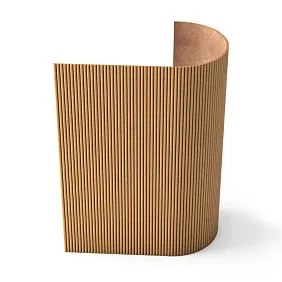
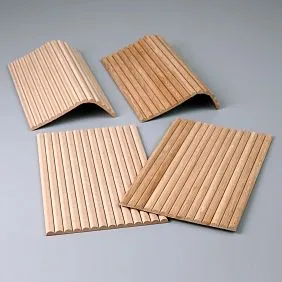

Why flexible panel prices vary so much
Ask this question in a search engine — and you'll see a range that will surprise you. The numbers differ by multiples. And this isn't seller deception or coincidence. It's a reflection of reality: behind the words 'flexible panels' lie fundamentally different products.




Different tasks — different construction — different price
A flexible panel for a straight accent wall in a living room and a flexible panel for cladding a column with a complex radius are different engineering objects. They share the word 'flexible' and a fabric base. That's where the similarity ends.
A panel for a straight wall can have a basic base, standard slat spacing, and simple cutting. A panel that wraps around a column with a complex profile requires a stronger fabric base, more precisely calibrated edge geometry, and strict control of slat spacing along the entire length of the fabric.
Our factory also produces:




Material changes the cost dramatically
MDF and solid oak are not just two versions of the same thing. They are two different materials with different characteristics, different lifespans, and different prices.
MDF is a homogeneous, stable, and technologically advanced board. It holds paint excellently, is predictable in geometry, and is affordable. But it is an engineered material, not a natural one.
Solid oak is living wood with a unique texture on each slat. Warm to the touch, durable, developing a patina over time. It can be renewed without replacement by applying a new layer of oil or varnish. It costs more — and this price gap is justified.
When you see the price of flexible wall panels made of solid oak — you are paying not for the beautiful word 'oak', but for a specific density of 700–750 kg/m³, wear resistance, a unique natural pattern, and the ability to restore the surface after 10 years without dismantling.
Get Consultation
Decorative finish and surface texture
A smooth slat for painting and a slat with a profiled edge, creating pronounced light and shadow, are different levels of production processing. A semi-round molding with a lively play of shadows under directed light requires more complex mechanical processing than a simple rectangular slat. This naturally affects the cost.
What determines the price of flexible panels: eight key factors
Let's examine each one honestly and substantively.
1. Slat core material
This is the main price differentiator. MDF with a density of 750–850 kg/m³ is the basic and affordable material. Solid oak is natural wood with long-term value. The price difference between MDF and oak in slat panels is significant, and it is fully justified by the difference in properties.
2. Type of fabric backing
The fabric backing is an engineering element that determines the quality of the panel's performance on curved surfaces. A dense, strong, uniform fabric that does not tear when bent and does not deform the slats when wrapping around a radius is more expensive than a loose backing that can only handle minimal bending.
A cheap backing works on a straight wall. A quality one works on a column with a complex profile. You pay the difference in the backing cost for the ability to work with architecture.
3. Slat width and spacing
A wide slat consumes more material—this directly affects the price. But the spacing is more important: wide spacing creates an airy rhythm with an 'open' fabric backing between the slats. Tight spacing creates a solid surface. Tight spacing with the same panel width requires more slats, more material, and more production time.
4. Slat end profile
A rectangular slat is the basic profile. A slat with rounded ends, with a bevel, with a semicircular cross-section—more complex processing. It is the semicircular molding that creates that very 'living' play of light and shadow seen in beautiful interiors: the shadows are deep, soft, and variable. This requires an additional pass through the profiler. The higher price—the result is immediately noticeable.
5. Panel length and format
Standard or custom project-specific formats — different costs for cutting and production. Standard formats are produced in large batches, custom ones — individually or in small series. This always affects the final price.
6. Readiness for finishing
Some panels are supplied without finishing — ready for painting by the customer. Others have factory primer. Still others — factory oil or varnish coating on solid oak slats. Each level of readiness is an additional production stage. A panel with factory oil coating on oak slats is a decorative product ready for installation, with no need for additional on-site processing.
7. Accuracy of end geometry
Это параметр, который нельзя увидеть на картинке, но который полностью определяет качество монтажа. Если торец модуля геометрически точный — стык рейка к рейке получается бесшовным. Если торец неровный или скошенный — стык будет виден при любой аккуратности монтажника.
Precise end geometry requires well-established production control. This isn't free. But this is exactly what you pay for when choosing a quality panel.
8. Batch consistency and color stability
Natural oak can have color variations between batches. A supplier who controls batch consistency and guarantees color stability within a single order bears production costs for this control. This is reflected in the price — and it's a fully justified premium for project orders.
Price of flexible panels per m² and the real project cost
This is where the main trap lies. The user looks at the price per m² — and thinks they already know how much they'll spend. This is an illusion.
Why price per m² is not the full cost
A real project includes several items that are not part of the price per m² of material:
Cutting with waste. On a straight wall of standard format, waste is minimal — 5–8%. On curved surfaces, with complex junctions, with non-standard height — waste can reach 15–25%. Calculate not the minimum volume, but the real one with a correction factor.
Surface geometry. A column with a closed perimeter, an arch with an inner arc, a niche with rounded corners — all require additional fitting and additional material compared to a straight wall of the same footage.
Base preparation. Putty, primer, leveling — these are separate costs that are not included in the panel price. On an unprepared base, installation will give a poor result regardless of the material quality.
Installation. If you hire a specialist — this is a separate budget line. On a simple straight wall, installation takes minimal time. On a column, arch, niche with curves — significantly more.Cost of flexible panels with installationfor complex surfaces is summed from material and labor costs, which are higher on curved surfaces.
Corner and transition profiles. External and internal corners, transitions to other materials, junctions to ceiling and floor — these are additional elements that need to be budgeted separately.
How to calculate the real project cost
The correct formula looks like this:
Material cost × (1 + waste factor) + base preparation + installation + transition elements = actual budget
For a straight accent wall, the waste factor is 1.08–1.10.
For a column — 1.15–1.20.
For an arch — 1.15–1.20.
For a complex niche with radii — up to 1.25.
Those who only budget 'price per m² × area' inevitably exceed the budget during the installation phase.
What types of flexible panels exist by cost segment
Let's talk honestly: without citing specific, changing numbers, but describing the logic of price segments.
Basic segment
MDF without painting, standard spacing, simple rectangular slat. Well-suited for straight walls where quick decorative finishing is needed for subsequent painting.
This is the choice for those who want to create a slatted rhythm on a wall with a limited budget. Important condition: the surface must be straight. On curved surfaces, the basic segment may not always cope — the cheap fabric backing can tear or deform the slats when bent.
Mid-Range Segment
MDF with primer for painting, high-quality fabric backing, precise end geometry. Or profiled slats (half-round beading) made of MDF without painting.
This is the working segment for most residential projects. The panel works on straight and curved surfaces, joins seamlessly, and creates an expressive slatted pattern.
Decorative flexible panels pricein the mid-range segment — this is the optimal balance between decorative result and material cost for a residential interior.
Upper segment
Solid oak for tinting, oil or varnish coating. Dense fabric backing with guaranteed performance on any radius. Precise geometry, stable batch consistency.
This is the choice for projects where natural aesthetics, durability, and the ability to refresh the material years later without replacement are important.Slatted flexible panels priceThe oak array reflects the investment logic: pay once, get a decorative solution for 15–20 years.
Project segment
Non-standard formats, custom sizes, specific slat profiles for an author's project. 'Task-oriented' work — a column of non-standard radius, an arch with variable curvature, a furniture facade of complex shape.
Cost in this segment is determined by the complexity of the task, not just the material. Commercial projects — restaurants, hotels, boutiques — most often operate in this segment.
How much do flexible panels cost for different tasks
Cost is always tied to the task. This is the most important principle.
For a regular straight wall
A straight wall is the simplest task for a flexible panel. You can use either the basic or the mid-range segment on it. The price difference will be determined by texture and finish. MDF for painting is an economical solution. Oak with oil finish is long-term.
Here, the flexible panel competes with the rigid one on equal terms. If the wall is straight — there is no reason to pay extra for flexibility, which is not needed here. Choose the material and texture, not the construction.
For an accent wall
An accent wall is a matter of texture and scale of the pattern. Here it is important to choose the correct slat profile (a semi-circular bead will give deep chiaroscuro), the right pitch, and the appropriate tone.
Accent wall panel priceIn the mid and high-end segments, this is an investment in the main decorative plane of the room. Saving here means losing the main visual effect.
For a column
A column is a complex task. It requires: a flexible panel with a high-quality fabric base capable of wrapping the full perimeter without deformation. A properly planned joint. A 15–20% material allowance for fitting.
Finalprice of flexible panels for columnsis comprised of the material cost (above average, accounting for the allowance) and labor costs for installation—which are higher on a closed surface than on a straight wall.
For arch
The inner curve of an arch is another scenario where only the flexible format works.Price of flexible panels for archesincludes the cost of mid or high-segment material plus an allowance for fitting to the arch width.
Arch installation is meticulous work, requiring dry fitting and the correct sequence of fixation. This is also part of the project's real cost.
For a radius wall
Radius wall — the most time-consuming task in terms of volume for a flexible panel. Material of the upper or middle segment with guaranteed bending performance. Margin — 15%.
If the wall has a variable radius (wave, S-shape) — this is a separate task, best solved by consulting the manufacturer on selecting the correct type of panel and planning the layout.
For niche
Rounded niches — a typical task for the flexible format. Material cost is similar to a column or arch. Plus, accounting for three planes: niche side walls, back wall, niche ceiling. Each plane — a separate calculation.
How much do flexible panels cost by type and texture
Wood-look panels: MDF with film vs. solid oak
It's important not to confuse two fundamentally different products here.
MDF with an applied wood-grain pattern (film, printing, veneer) — an affordable option with a uniform tone. Price is noticeably lower.
Solid oak — living texture, unique pattern of each slat, durability, possibility of renewal. Price is higher.Flexible wood-look panels pricemade from natural oak — this is not an overpayment for the name, but a real difference in material and its properties.
Upon closer inspection, the difference is visible to the naked eye. An array is a material. A film is an image.
Stone-look panels
Imitation of slate, limestone, travertine on a flexible base. Mid to high price range. Especially valuable for curved surfaces: cladding a column with natural stone will require manual fitting of each element and a significantly larger budget. A flexible panel with a stone texture is an economical way to achieve a similar visual effect.
Flexible stone-look panels pricelooks reasonable precisely in comparison to the alternative — hand-laid natural stone on a curved surface.
Plaster and concrete-look panels
Relief modules with plaster or concrete texture. Basic and mid-range segment. Suitable for loft and industrial interiors. On curved surfaces — significantly easier to install than manual application of a decorative compound.
Batten panels with a semi-circular bead
This is one of the most visually striking options — and one of the most in-demand.Slatted flexible panels pricewith a semi-circular profile is somewhat higher than with a rectangular batten. The difference lies in the production processing and the visual result: the soft, lively play of light and shadow created by the rounded profile is incomparable to a rectangle under the same lighting.
Smooth panels for painting
Basic segment. MDF with factory primer, any color according to RAL or NCS. Minimum material cost — maximum flexibility in color choice.Smooth flexible panel price— the most affordable option in the category.
What affects the cost of finishing besides the panel itself
This is a block that is often ignored when planning the budget.
Foundation Preparation
Putty under panels, primer, dust removal — these are expenses that are not included in the panel cost, but without which adhesive installation will not be durable. On an unprepared base, the panel will peel off after a few months regardless of the material price.
Mounting adhesive
Quality mounting adhesive with high initial adhesion — this is not pennies. Especially for radius surfaces, where the panel needs to be held until the adhesive sets. Include adhesive costs in the budget separately.
Complexity of joints
External and internal corners, non-standard abutments, transitions to other materials — all of this either requires additional profiles or increases labor costs for fitting.
Surface geometry
The more complex the geometry — the more cutting, the more waste, the higher the labor costs for installation. This directly affects the real project cost.
Sample
Order a panel sampleBefore the main order — these are small costs that insure against significant losses due to color mismatch, texture, or bending behavior.
How to choose flexible panels on a budget
If the budget is limited
Unpainted MDF, standard spacing, basic batten profile. Straight wall — minimal waste during cutting. Do the painting yourself — this significantly reduces the final cost.
Important: do not skimp on base preparation. This is an expense item where saving costs more in the long run.
If an expressive result is important
Mid-range: profiled batten (half-round molding) made of MDF for painting or with factory tinting. High-quality fabric backing. Precise edges. Investing in texture and batten profile yields a visual result disproportionately greater compared to the price difference.
If complex geometry is important
Mid-range or high-end segment with guaranteed performance on curves. Here, it is not worth saving on the quality of the fabric backing: cheap backing on a column or arch means redoing the entire job.
If durability and natural aesthetics matter
Solid oak is the top tier. It's an investment, not an expense. Expect 15–20 years of use without material replacement. Oil finish is renewed locally, without dismantling.
If it's a commercial project
Consider the total cost of ownership, not just the purchase price. Cheap material in a restaurant that needs replacing in three years costs more than quality material that lasts ten years.Panels for commercial interior pricemade of solid oak — that's investment logic.
When you shouldn't focus on price alone
This is an honest conversation. Price is an important parameter, but not the only one and not the main one.
A cheap panel for the wrong task is an overpayment
Buying a cheap panel with a thin fabric backing for cladding a column means getting slat deformation or backing rupture on a bend. You'll have to redo it. The final costs will exceed the price of the correct panel from the start.
Panel type error — additional costs
Rigid panel instead of flexible on an arch — manual fitting of each element, visible seams, and loss of decorative effect. Redoing or accepting a compromise — both options are more expensive than the correct initial choice.
Выбор по фото без образца — риск
Monitor distorts color. The scale of the slat in the picture and in real space — different things. A sample is insurance against costly mistakes.
The cheapest solution is rarely the most cost-effective
This rule works in finishing materials just as everywhere else. Choose not 'the cheapest', but 'the most suitable for the task within a reasonable budget'.
Flexible panels or regular wall panels: which is more cost-effective
| Criterion | Flexible panel | Rigid panel | Decorative plaster | Wallpaper | Paint |
|---|---|---|---|---|---|
| Curvilinear surfaces | Yes | No | Yes | Limited | Yes |
| Cost on a straight wall | Medium–high | Medium | Medium | Low | Low |
| Cost on a column/arch | Optimal | High (manual fitting) | Medium | No | Yes |
| Durability | High (oak) | High (oak) | Medium | Low | Medium |
| Visual depth | High | High | Medium | Low | No |
| Installation | Glue | Glue/frame | Manual | Glue | Brush/roller |
| Installation cost | Medium | Medium | High | Low | Low |
| Renewability | Repainting or oil | Repainting or oil | Repainting | Replacement | Repainting |
Conclusion: on a straight wall, a flexible panel competes with a rigid one on equal terms—the price difference is minimal or non-existent. On a curved surface, a flexible panel turns out to be cheaper than alternative solutions (manual stone laying, fitting rigid fragments, manual plaster application on a complex radius). Because it solves the task without manual labor costs.
How to understand the real project cost
Step by step—a practical algorithm.
1. Measure all surfaces considering geometry. Straight planes, columns, arches, niches—separately. For each surface—its own safety factor.
2. Add a waste factor. Straight wall: +8–10%. Curved surfaces: +15–20%.
3. Include base preparation. Primer, putty, dust removal—this is a separate budget line.
4. Account for mounting adhesive. Consumption ranges from 300 g per m² for a straight wall to 600 g per m² for a curved surface. Choose an adhesive with high initial adhesion.
5. Account for transition elements. Corner profiles, skirting boards matching the panel color, sealant for joints.
6. Account for installation cost. A simple straight wall and an arch with a column involve fundamentally different labor inputs.
7. Account for a sample. Order it before the main volume—it's a small amount that insures the entire budget.
8. Sum it up. This is the real project cost—not 'price per m² × area'.
Mistakes when choosing flexible panels based on price
Only look at the price per m²
The most common and costly mistake. The price per m² without considering waste, installation, and preparation gives a false impression of the budget.
Compare different types of panels as if they were the same
MDF for painting and solid oak with oil finish are not different versions of the same product. They are different materials with different lifespans. Comparing them only by price per m² is a methodological error.
Choosing cheap panels for complex surfaces
A cheap base on a column or arch is a risk of deformation and rework. For curved surfaces, the quality of the fabric base is more important than the minimum material price.
Not considering lighting
A textured panel in a room with diffused light loses its decorative effect. Money spent on texture—no effect. Test a sample in the actual lighting conditions of your space.
Not ordering a sample
A sample is insurance. Without it, you're buying a pig in a poke.
Not accounting for material reserve
Especially critical on complex surfaces. Buying additional material from another batch—color variation, pattern mismatch, rework.
FAQ: Answers to popular questions
How much do flexible wall panels cost?
Cost of flexible wall panelsDepends on the material (MDF or solid oak), slat profile, quality of the fabric base, and format. See the current price catalog on the manufacturer's official website.
Why does the price of flexible panels vary so much?
Because they are different products. Unpainted MDF and solid oak with oil finish are different materials. Basic fabric base and high-quality base for working on complex radii are different constructions. Simple slat and half-round bead are different profiles.
What affects the price per m²?
Slat material, type of fabric base, slat profile, spacing, panel length, presence of finishing, accuracy of end geometry.
Which flexible panels are cheaper?
Unpainted MDF, rectangular slat, standard spacing — the basic and most affordable option.
Which are more expensive and why?
Solid oak with oil finish, half-round bead, high-quality fabric base for complex radii. More expensive — because it is a natural, durable material with high decorative value and additional production processing.
What is more cost-effective for a column or arch?
A flexible panel from the mid or high segment with a quality fabric base. The cheap alternative—manual fitting of rigid fragments—costs more in labor.
Why is the price higher for a complex surface?
Because it requires material with a higher-quality base, a 15–20% allowance for fitting, and labor costs for installation on a curved surface are higher than on a straight one.
Can panels be chosen based solely on budget?
No. Budget is one parameter. The main ones are surface geometry and the task. The wrong material for the task means overpaying.
What is included in the real project cost?
Material with allowance + base preparation + mounting adhesive + transition profiles + installation + sample before ordering.
How to avoid overpaying when choosing flexible panels?
Correctly define the task, choose the suitable panel type for the surface, order a sample, calculate the real volume with allowance, and include all budget items before starting work.
Conclusion
The price of flexible panels is not a single figure, but a system of variables. Material, construction, task, surface geometry, installation logic—all this forms the real cost. And understanding this system means choosing correctly the first time.
View the price per m² as a starting point, not as a final answer. Consider the surface shape, allow for cutting waste, plan substrate preparation and installation. Order a sample. And choose the material for the task, not by the lowest line in the price list.
The right choice is not 'the cheapest'. It's 'the most precisely suited to my task within a reasonable budget'.
About the company STAVROS
When the price issue needs to be resolved precisely and without unnecessary iterations — contact STAVROS.
STAVROS manufactures MDF slatted panels for painting and solid oak panels, flexible modules on a fabric base for curved surfaces — columns, arches, radius walls, niches, and furniture fronts. In-house production ensures stable end geometry, consistent batch tone, precise slat spacing, and a surface ready for finishing without additional operations.
Full catalog with current prices, technical parameters, the ability to order a sample, and professional consultation on selecting a panel for a specific task — on the official website stavros.ru.