Article Contents:
- Introduction: the significance of wooden skirting board in interior design
- History of the emergence of wooden skirting boards
- Ancient Times: first prototypes
- Middle Ages and guild craftsmanship
- Renaissance: peak of decorative forms
- Baroque and Rococo: era of luxury
- Classicism and rationalism: simplification of forms
- Industrialization and mass production
- Modernism and functionalism: a new approach
- Contemporary: technologies and design
- 1. Solid wood skirting boards
- Characteristics
- Advantages
- Disadvantages
- Construction and finishing
- Advantages
- Disadvantages
- HDF skirting boards
- Wood-polymer composites (WPC)
- Advantages
- Disadvantages
- Features
- Advantages
- Disadvantages
- Thermowood (ThermoWood)
- Wood composites
- Advantages
- Disadvantages
- 1. Wood species: hardness, durability, and texture
- 1.1 Hardness and Wear Resistance
- 1.2 Moisture resistance
- 1.3 Texture and tone
- 2.1 Visual inspection
- 2.2 Physical tests
- 2.3 Certificates and warranties
- 3.1 Adhesive for installation
- 3.2 Clip system (removable)
- 3.3 Self-tapping screws and anchors
- 4.1 Discounts and promotions
- 4.2 Delivery and installation conditions
- Advantages
- Disadvantages
- Recommendations
- Pros
- Disadvantages
- How to work with the workshop
- Advantages
- Limitations
- Tips
- 5. Recommendations for personal inspection and supplier selection
- 6. Reviews from real customers
- 1.1 Checking rough finish
- 1.2 Preparing tools and consumables
- 2.1 Installation with adhesive
- 2.2 Mounting with clips and installation profile


Introduction: the significance of wooden skirting in interior design
When you think aboutwhere to buy wooden skirtingIt is important to understand that skirting is not just a decorative element. It performs several key functions:
- Hiding expansion gaps. Natural wood 'breathes' and expands or contracts with changes in humidity/temperature. A technological gap between the wall and floor is necessary, and the skirting conceals it, ensuring a smooth appearance.
- Protecting walls and flooring. Skirting protects the lower part of walls from water during cleaning, shields wallpaper and paint from mechanical damage, and also protects the ends of parquet, laminate, or boards.
- Aesthetic completion. The right profile and shade of skirting set the tone for the entire room — from a classic living room to a modern office. The natural wood grain adds warmth and coziness to the interior.
- Ecological comfort. Unlike PVC and MDF profiles, wood does not emit harmful substances, creating a healthy microclimate — especially important for children's rooms and bedrooms.
That is why the question 'where to buy wooden skirting' becomes a strategic stage in renovation or interior updating. In this section, we will thoroughly examine the historical roots and evolution of wooden moldings, so you can appreciate the depth of traditions and technology behind each product.




History of wooden skirting emergence
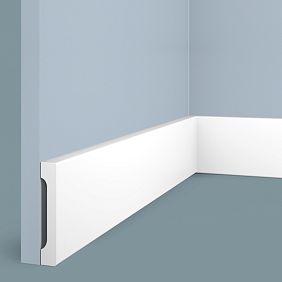
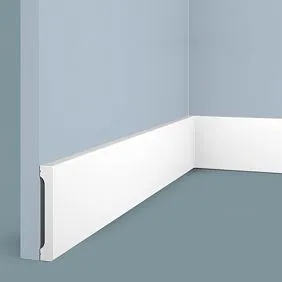
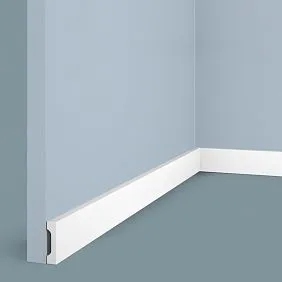
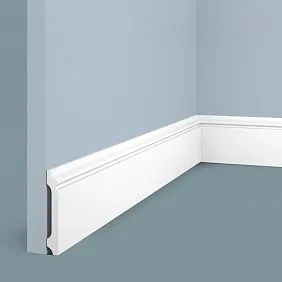
Our factory also produces:

Ancient Antiquity: first prototypes
The first mentions of wooden overlays appear in the works of ancient Greek and Roman architects. They used wooden strips to protect the base of wall panels and to mask joints between stone slabs. At that time, wooden skirting was not an independent decorative element, but rather a technological one: it was attached to the lower edge of marble or brick bases to prevent rainwater and condensation droplets from penetrating into the porous material.
Materials used were strong coniferous and deciduous species: cedar, pine, linden. Skirting was hand-treated, sanded with pumice abrasives, and coated with natural oils. Thanks to these methods, wooden moldings reliably served for decades without losing shape or color.
Get Consultation
Solid wood skirting board — this is a solid plank turned from a piece of natural wood. It remains the benchmark of quality and durability, and if you are wondering where to buy a wooden skirting board that is most reliable, start with solid wood products.
In medieval Europe, guild masters continued ancient traditions but elevated craftsmanship to a new level. Baseboards were no longer just for hiding gaps but became decorative accents in castle and monastery interiors. Wood carving — the primary skill of guild apprentices — allowed decorating profiles with intricate patterns: vegetal motifs, coats of arms, Latin inscriptions.
Manufacturing baseboards required careful drying of wood (from six months to a year) and aging in a controlled microclimate. Masters invested significant time to prevent subsequent warping and shrinkage. As a result, wooden baseboards crafted using guild techniques served for centuries and were a sign of the owner’s high status.
Renaissance: The Golden Age of Decorative Forms
In Italy during the 15th–16th centuries, baseboards became works of art. Masters drew inspiration from antiquity, blending classical motifs — ovals, fluting, complex column proportions. The profile consisted of alternating convex and concave curves, with rail heights reaching 30–40 cm. Carving was enhanced with gilding and colored inlays.
At the same time, architectural treatises appeared, providing detailed drawings of profiles: authors specified radius dimensions, recess depths, and spacing between elements. The baseboard became an indispensable element of the 'architectural order' — a system for decorating columns, cornices, and bases. This approach has persisted in our modern understanding of harmony and proportion.
Baroque and Rococo: The Era of Luxury
In the 17th–18th centuries, in Baroque and Rococo styles, baseboards acquired an even more expressive character. Carving became more complex, with intricate volutes, cartouches, and decorative shells. Wide profiles with numerous details created dynamic interplay of light and shadow on walls. Baseboards simultaneously served a protective function and showcased the craftsmanship of artisans.
At the same time, wood processing technologies improved: steam-heated machines appeared, facilitating bending of blanks and cutting complex shapes. Masters could produce longer and more intricate elements while maintaining geometric precision.
Classicism and Rationalism: Simplification of Forms
The late 18th — early 19th centuries marked a return to strict lines and simplified profiles. In classical interiors, baseboards adopted straight, clear contours, echoing the silhouettes of ancient orders. Rail width decreased to 5–10 cm, and complex ornamentation was replaced by minimalist bevels and barely noticeable fluting.
The introduction of new machines — milling and turning — standardized profiles: catalogs with standard solutions appeared. Clients could choose from ready-made models, reducing cost and production time.
Industrialization and Mass Production
From the mid-19th century, factory production of wooden baseboards experienced significant growth. Wood processing enterprises used conveyor belts, steam engines, and new abrasive materials. Profiles could be produced in hundreds of meters per day, and railroads and waterways ensured rapid delivery of raw materials from lumberyards.
In Russia, factory-made baseboards first appeared on enterprises near St. Petersburg and Moscow. By the end of the 19th century, standard models made of oak and beech were sold in large construction stores, while custom orders were offered for more complex orders.
Modernism and Functionalism: A New Approach
In the 20th century, during the modern and functionalist eras, emphasis shifted toward practicality and lightness. Baseboards became noticeably thinner, around 3–5 cm, with profiles simplified to straight planks or minimal bevels. Instead of heavy carved models, smooth rails became popular, harmonizing with minimalist geometric furniture and finishes.
The introduction of MDF baseboards with natural veneer in the 1950s–1960s provided an affordable alternative to solid wood. The veneer preserved the wood’s grain, while the core made of particleboard ensured dimensional stability and resistance to humidity fluctuations.
Contemporary: Technology and Design
Today, when you search where to buy wooden baseboards, you receive results from centuries of tradition and advanced technologies:
● CNC milling ensures precision down to 0.1 mm and enables reproduction of the most complex profiles.
● Laser engraving and 3D designs are used to create unique decorative inserts.
● Eco-friendly varnishes and oils with minimal content of VOCs allow wood to 'breathe' and not harm health.
● Moisture-resistant and thermowood composites (ThermoWood) allow using natural design in bathrooms, kitchens, and on terraces.
Thus, the history of wooden baseboards is a journey from simple technological rails to the most complex decorative solutions. In the next part of the article, we will describe various types, materials, and profiles available today, and explain which parameters to consider when choosing. If you are ready to decide where to buy wooden baseboards and obtain high-quality products, proceed to the section with recommendations for trusted suppliers.
Part 2. Types and Materials of Wooden Baseboards
When choosing where to buy wooden baseboards, it is important first to determine the material and construction of the product. There are several main categories of baseboards, each with its own technical characteristics, aesthetics, and price range. Below, we will examine the most popular and effective solutions to help you select the right option for your needs.
Baseboards from Solid Wood
Solid wood skirting board — this is a solid plank, turned from a piece of natural wood. It remains the benchmark of quality and durability, and if you are wondering where to buy a wooden skirting board that is most reliable, start with solid wood products.
Characteristics
● Wood species:
○ Oak – hard, durable, with distinct annual rings.
○ Beech – uniform texture, easily sanded.
○ Ash – balance of strength and flexibility, pleasant light beige tone.
○ Larch – enhanced moisture resistance due to natural resin content.
● Dimensions:
○ Height – from 50 to 150 mm.
○ Thickness – 18–28 mm.
● Finish:
○ Transparent lacquer (gloss, semi-matte).
○ Oil (matte velvet effect).
○ Colored toning lacquer (walnut, wenge, ebony).
Advantages
- Unlimited restorations: if needed, up to 2–3 mm of surface can be removed and reapplied with lacquer.
- High strength: solid wood withstands heavy use and furniture impacts.
- Ecological: no glue joints or synthetic additives, 100% natural product.
Disadvantages
● Cost: on average 800–1 500 ₽/linear meter.
● Sensitivity to microclimate: requires stable humidity (40–60 %).
Professional tip. If you are unsure about the stability of the room’s climate, consider species with natural moisture resistance (larch) or thermally treated wood.
2. MDF skirting boards with natural veneer
For those seeking a solution combining 'economy class' with a natural look, MDF skirting boards with a thin layer of natural veneer are ideal. Many ask where to buy wooden skirting that visually matches solid wood but costs significantly less — the answer is MDF products with veneer.
Construction and finish
● Base layer – MDF (Medium Density Fiberboard) 8–12 mm.
● Veneer layer – 0.6–2 mm of premium wood species.
● Protective layer – lacquer or oil to prevent veneer wear.
Advantages
- Low price: from 300 to 600 ₽/linear meter.
- Dimensional stability: MDF does not crack or warp under moderate humidity changes.
- Variety of shades: easy to match any interior.
Disadvantages
● Limited restoration: after veneer wear, full replacement is required.
● Less 'alive' grain: compared to solid wood, the texture may appear more uniform.
Where to buy MDF skirting boards with veneer? We recommend checking the veneer thickness and quality of adhesive compounds — this affects resistance to delamination and longevity.
3. Moisture-resistant HDF skirting boards and composite solutions
Classic MDF does not withstand "wet zones", so moisture-resistant variants are developed for kitchens and bathrooms:
HDF skirting boards
● HDF (High Density Fiberboard) — denser fiberboard, impregnated with water-repellent resins.
● Finish — high-protection acrylic or polyurethane varnishes.
Wood-Polymer Composites (WPC)
● Combination of wood particles and polymer binders.
● Full waterproofing, resistance to mold and insects.
Advantages
- Stability in high humidity conditions (85–95 %).
- Minimal swelling upon contact with water.
- Long service life even in "wet zones".
Disadvantages
● Artificial texture: does not always convey the depth of natural wood.
● Less eco-friendly compared to solid wood (presence of synthetic additives).
4. Ornamental and decorative moldings
If you need not just where to buy wooden skirting, but where to purchase an item capable of becoming a standalone art object, pay attention to ornamental moldings:
Features
● Carved patterns or complex profiles are created on CNC machines or by hand.
● Often used in classical, baroque, and art deco projects.
● Profile height may exceed 150 mm, width — 30–40 mm.
Advantages
- Uniqueness: each profile is exclusive and cannot be mass-produced.
- High decorative value: becomes a central accent in the interior.
Disadvantages
● High cost: from 1,500 ₽/linear meter and above.
● Complex installation: requires perfect wall preparation and professional installation.
If you are looking for where to buy wooden skirting with an exclusive profile, focus on woodworking workshops with their own CNC processing facilities.
5. Thermowood and modern composite solutions
In recent years, new technologies of wood thermo-treatment (ThermoWood) and composites have appeared on the market, allowing to combine the advantages of natural material and high stability.
Thermowood (ThermoWood)
● The essence of processing — heating to 180–220 °C in an oxygen-free environment, which increases moisture and biological resistance.
● Species — pine, spruce, oak.
● Appearance — warm tones from brown to dark brown, characteristic slightly "weathered" texture.
● "I needed a custom-made decorative molding. They made it according to the drawing, delivered it on time, without delays. I recommend Stavros!" — Anna.
● WPC – wood chips + PVC or polypropylene.
● BPC – wood chips + polyurethane.
● Used in "wet areas" and on open terraces.
Advantages
- Improved moisture and biological resistance (resistance to mold and insects).
- Dimensional stability – minimal shrinkage and swelling.
- Aesthetics of natural wood – deep color and expressive grain.
Disadvantages
● Price – thermowood is comparable in cost to hardwoods.
● Installation specifics – requires accounting for expansion during installation.
Already decided where to buy thermowood baseboard? Pay attention to treatment quality certificates and manufacturer warranty.
How to choose the optimal material
- For living rooms – oak or beech solid wood.
- For kitchen and hallway – moisture-resistant HDF or thermowood.
- For budget projects – MDF with veneer.
- For exclusive interiors – decorative moldings and thermowood.
In each case, to avoid mistakes, ask the supplier where to buy wooden baseboard, technical specifications, sample grain, and delivery terms. Reliable sellers provide demonstration samples and guarantee return if there is a mismatch.
Part 3. Criteria for choosing wooden baseboard
When searching for an answer to the questionwhere to buy wooden skirting Main goal – select an item that combines aesthetic value, technical reliability, and optimal price. Below are the main parameters to consider.
1. Wood species: hardness, durability, and texture
Choosing wood species – foundation of any solution. Different types of wood have unique characteristics affecting strength, moisture resistance, and appearance.
1.1 Hardness and durability
● Oak (Jung’s hardness class ≈ 11 GPa)
– Highest resistance to dents and scratches; ideal for high-traffic areas.
● Beech (≈ 10 GPa)
– Combines oak’s strength and elasticity; withstands temperature and humidity fluctuations.
● Birch (≈ 9 GPa)
– Slightly softer than oak, easily sanded, but may require more frequent restoration in areas with heavy mechanical stress.
● Larch (≈ 8 GPa)
– Resistant to rot and moisture due to natural resins; suitable for hallways and kitchens.
● Pine (≈ 5 GPa)
– Budget option; soft structure requires careful handling, but easily repairable.
Tip: If the room is subjected to heavy use (lifting heavy furniture, children’s play), prefer oak or beech.
1.2 Moisture Resistance
● Natural moisture resistance
Larch and Thermowood (ThermoWood) have enhanced resistance to water due to natural or technological resins.
● Additional protection
Solid wood and veneer models of skirting boards are often coated with acrylic or polyurethane lacquers, creating a moisture barrier.
1.3 Texture and Tone
● Expressive grain
Oak and ash show a clear annual ring pattern, making the skirting board a noticeable decorative element.
● Uniformity
Beech offers a smooth texture, suitable for minimalist interiors.
● Exotic species
If you're seeking exclusivity, consider wenge, merbau, or kumaru — deep tones and unusual grain patterns.
When choosing, always examine real samples: photographs often lack accuracy in color and texture representation.
2. Quality inspection methods: visual and physical examination
Before deciding where to buy wooden skirting boards, you must independently verify that the product meets the stated specifications.
2.1 Visual inspection
● Surface smoothness. There should be no lacquer drips, roughness, or chips.
● Color uniformity. With tonal staining, the color should be even along the entire length of the sample.
● Knots and cracks. Small knots are allowed only for species where this is characteristic, and should not protrude more than 1–2 mm.
2.2 Physical tests
● End grain inspection. The edge should be straight, without burrs.
● Impact resistance. A light tap with a hard but not sharp metal edge (e.g., a ruler’s corner) — the skirting board should not dent.
● Flexibility. For MDF veneer models, gently press with your finger: the base should not crumble.
2.3 Certificates and warranties
● Compliance with GOST 8486-86 (for solid wood), ISO 9001 (for manufacturers of large series).
● Environmental certifications (E1, FSC) confirm the absence of harmful resins and legal origin of the wood.
● Manufacturer warranty period — at least 1 year for the product and at least 3 years for the finish.
Without documentation, risk is minimal — request at least a copy of the certificate or information about it on the supplier’s official website.
3. Mounting systems: reliability and aesthetics of installation
The method of installation affects not only the appearance but also the longevity of the structure. There are three main methods.
3.1 Installation adhesive
● Description. Apply special adhesive with a notched trowel to the back of the skirting board, then press it against the wall.
● Pros. Negative elements are not visible, installation is quick, ideal for already furnished rooms.
● Cons. Removal without damage is difficult; wall flatness must be maintained.
3.2 Clip system (removable)
● Description. Attach a profile (aluminum or plastic) to the wall, insert clips into it, then snap the skirting board into place.
● Pros. Easy replacement or removal of the skirting board for access to hidden utilities, minimal damage during removal.
● Cons. Small technical gaps may be noticeable; precise marking is required.
3.3 Screws and anchors
● Description. The skirting board is directly screwed into the wall through previously drilled holes.
● Pros. Maximum fixing strength, suitable for heavy solid profiles.
● Cons. Screw heads must be covered with putty or decorative caps.
Where to buy wooden skirting board with a convenient mounting system? On the website of a reliable supplier, installation options and corresponding accessories are always indicated.
4. Pricing and price-to-quality ratio
The cost of wooden skirting board depends on several factors: wood species, processing method, profile, finish, and order volume.
|
Material / Wood species |
Price range, ₽/linear meter |
Main factors increasing price |
|
Spruce (solid) |
300 – 500 |
Wall thickness, wood grade |
|
MDF + Veneer |
350 – 700 |
Veneer thickness, adhesive type, lacquer finish |
|
Larch (solid) |
600 – 900 |
Water-resistant impregnation |
|
Beech, ash (solid) |
800 – 1 200 |
Wood grade, milling |
|
Oak (solid) |
1 000 – 1 500 |
Processing depth, wood grade, finish |
|
Exotic species, moldings |
1 500 – 2 500 |
Unique profiles, hand carving |
|
Thermowood |
1 200 – 1 800 |
Thermo-processing technology |
4.1 Discounts and promotions
● Bulk from 30–50 sq.m. often with 5–15% discount.
● Seasonal sales (autumn, spring) — price reductions up to 20%.
● Promo codes and partner programs with major dealers.
4.2 Delivery and installation conditions
● Free city delivery for orders over 50 sq.m.
● Service of a surveyor visit and project planning.
● Full "turnkey" installation with discount on skirting boards.
When comparing prices, ensure that all consumables (stopper, glue, clips) are included in the cost and delivery conditions are specified.
5. Purchase and service conditions
To understand where to buy wooden skirting with the best conditions, pay attention to the service component:
- Sample: request a piece of profile 0.5–1 m long for color and texture matching in your interior.
- Warranties: official warranty certificate and acceptance-transfer form.
- Exchange and return: possibility to replace skirting not matching in color or size without penalties and with payment only for delivery.
- Technical support: consultations on color, profile, and mounting system selection via phone or online chat.
- On-site installation and adjustments: presence of own installation team ready to perform "turnkey" work.
Look for where to buy wooden skirting, selecting not only the material but also the comprehensive service: samples, warranty, delivery, and installation.
Part 4. Where to buy wooden skirting: verified suppliers and reviews
After deciding on the material, profile, and dimensions, the question arises: where to buy wooden skirting with optimal price-to-quality-to-service ratio. Below are the most reliable options — from official distributors to local workshops.
1. Official online store Stavros
Why choose STAVROS
● Full assortment: solid oak, beech, ash, MDF veneer, exclusive decorative moldings, moisture-resistant profiles, and thermowood.
● Transparent pricing: prices are indicated per linear meter including finish and hardware.
● Quality guarantee: FSC, GOST 8486-86 certificates, eco-friendly lacquers with minimal VOC.
● Delivery and installation: free city delivery for orders over 30 sq.m. and option for surveyor visit; own installation team with discounted labor.
How to order
- Go to the page where to buy wooden skirting:https://www.stavros.ru/products/izdeliya-iz-massiva/moldingi-karnizy-plintusy/
- Select the species, profile, and finish using the interactive filter.
- Add the required length to the cart and specify the delivery address.
- Confirm the order — a manager will call to clarify details.
● “We ordered a beech skirting board. The sample was sent the next day, installation was done a week later. Everything was clear and high quality!” — Dmitry.
● “Needed a custom-shaped molding. Made according to the drawing, delivered on time, no delays. I recommend Stavros!” — Anna.
● "Needed a custom decorative molding. Made according to the drawing, delivered on time, no delays. Recommend Stavros!" — Anna.
2. Special showrooms for parquet and finishing materials
Advantages
● Live sample selection: you can evaluate the texture, shade, and lacquer quality under different lighting conditions.
● Design consultation: professional designers will help you choose skirting board to match your interior.
● Service of measurement and visualization: some showrooms offer 3D visualization of the skirting board in your room.
Disadvantages
● Higher prices due to rental space and service level.
● Limited profile-wood species assortment — showrooms display only the most popular items.
Recommendations
- Before searching where to buy wooden skirting board in a showroom, check the dealer’s website to see if the samples you’re interested in are in stock.
- Book an appointment with a designer to avoid queues and get personalized consultation.
- Compare prices in showrooms and online: sometimes you can order online with pickup at the same price as in the showroom, but with access to the full assortment.
3. Local woodworking workshops and CNC shops
If you need to buy a wooden skirting board with a non-standard profile or exclusive pattern, consider woodworking workshops:
Pros
● Custom design: exact reproduction of any shape and size.
● High precision: in-house CNC workshops ensure tolerances down to 0.1 mm.
● Unique materials: access to exotic wood species and mixed solutions (metal + wood).
Disadvantages
● Longer production time — from 7 to 21 days.
● High cost — hand finishing and intricate carving can increase price to 2,500–3,500 ₽/linear meter.
How to work with a workshop
- Formulate a technical specification: profile, wood species, shade, finish method.
- Request a visualization or sketch of the profile.
- Confirm deadlines and warranty for the product.
- Specify responsibility for packaging and delivery, especially if dealing with long planks (up to 4 m).
4. Large hypermarkets and marketplaces
From the standpoint of accessibility and promotions, many customers ask where to buy wooden skirting board on platforms like Leroy Merlin, OBI, Wildberries, Ozon.
Advantages
● Seasonal discounts and sales — up to 30% during sales periods.
● Pickup — option to receive the product on the day of ordering.
● Wide assortment – affordable MDF veneer and budget-grade softwood solids are available.
Limitations
● Quality may vary – we recommend ordering samples before placing a large order.
● Supplier reliability – on marketplaces, sellers are different companies; it’s important to check ratings and reviews.
● Limited service – usually no measurements or "door-to-door" delivery.
Tips
- Check reviews with photos and publication date.
- Request veneer or solid sample before purchasing.
- Compare prices for individual items and bulk packages.
5. Recommendations for personal inspection and supplier selection
- Get at least three commercial proposals. Compare prices, delivery times, and delivery terms.
- Visit the warehouse or showroom. Even for pre-ordered samples, this will help assess the finish and lacquer quality.
- Clarify packaging. Wooden planks require secure packaging in cardboard corners and plastic wrap to avoid scratches during transport.
- Check for documentation. Quality certificates, sanitary certificates, compliance declarations.
- Assess support level. Quick manager responses, willingness to send a sample, installation and maintenance consultations indicate a serious company.
6. Reviews from real buyers
Marina, interior designer
“When choosing a supplier, it was important to understand where to buy wooden skirting with minimal risk. We compared three companies, requested samples, and chose Stavros — quality, service, and logistics are excellent.”
Alexey, private developer
“I needed skirting for a cottage made of thermowood. I searched for a long time until I found a local workshop with CNC equipment. Delivery took 10 days, and the profiles fitted perfectly. However, the cost was 25% higher than that of a mass producer.”
Irina, apartment-studio owner
“I chose a budget option of MDF + oak veneer from a hypermarket. The order arrived without defects, but the lacquer was uneven in some places. I recommend paying a bit more and ordering from a specialized store, where there is a warranty.”
Conclusions and specific steps
- For a reliable "turnkey" solution with quality assurance, fast delivery, and installation, visit the official Stavros website, where you’ll immediately see where to buy wooden skirting:https://www.stavros.ru/products/izdeliya-iz-massiva/moldingi-karnizy-plintusy/
- For exclusive profiles, choose woodworking workshops with CNC equipment, prepare technical specifications and sketches in advance.
- For a quick and budget-friendly option, use hypermarket offers, but definitely order a sample and review customer feedback.
- For inspiration and consultation, visit a showroom with a designer to see all samples in person and get 3D visualization.
Part 5. Installation, maintenance, and restoration of wooden skirting
Question where to buy wooden skirting — this is only the first step. To ensure the item lasts for decades and retains its flawless appearance, it must be installed correctly, regularly maintained, and promptly restored. In this section, we will thoroughly examine all stages of work and provide practical recommendations.
1. Preparation for Installation
1.1 Checking Rough Finish
● Wall flatness. Walls must be level with a deviation of no more than 2 mm per 1 meter using a rule or long level.
● Base cleanliness. Remove construction debris, cut-off pieces, leftover spackle and adhesive. Wipe the surface with a damp sponge and allow it to dry completely.
● Level marking. Mark the wall with a line at the bottom edge of the skirting board using a laser level or long bubble level. Installation of each profile will be based on this marking.
1.2 Preparation of Tools and Consumables
● Miter saw and stop block for precise 45° angled cuts.
● Notched trowel for even application of adhesive.
● High-adhesion mounting adhesive compatible with wood and concrete.
● Sandpaper (grit 120–180) and sanding sponge.
● Clips/mounting profile (when selecting a disassemblable system).
● Screws and anchors (if selecting direct mounting).
● Wood putty and caulk for filling joints.
● Lacquer or oil for final finish after installation.
Tip: Always purchase adhesive and putty from the same manufacturer to avoid compatibility issues.
2. Installation Techniques
Depending on the mounting system, installation methods vary. We will consider three main approaches.
2.1 Mounting with Adhesive
- Apply adhesive using a notched trowel in a zigzag pattern along the entire backside of the skirting board, leaving a 5–10 mm gap from the ends to compensate for adhesive joints.
- Press and align the profile along the marked line, gently tapping with a rubber mallet.
- Fixation. Hold the profile firmly in place for 3–5 minutes, then check the tightness of fit along the entire perimeter.
- Removing excess adhesive. While the adhesive is still wet, use a soft, damp cloth to wipe away any squeezed-out drops.
- Final puttying. After the adhesive has fully dried (24–48 hours), fill the joints with specialized wood putty and smooth the surface with a sanding sponge.
Pros: Nearly invisible fasteners, quick installation.
Cons: Difficult to remove without damage.
2.2 Mounting with Clips and Mounting Profile
- Install the load-bearing profile (aluminum or ABS plastic) level using anchors spaced 300–400 mm apart.
- Install clips into the profile until you hear a distinct click.
- Engaging the skirting board onto clips: gently pry it from the side and press firmly along its entire length.
- End caps. Final end caps cover visible clip elements, making the installation invisible.
Pros: quick installation/removal, access to cables.
Cons: small technological gaps, slightly more expensive hardware.