Article Contents:
- Variety of wooden blanks for creativity
- Types of wooden blanks by purpose
- Wood species for blanks
- Online stores for wooden blanks: advantages of online shopping
- Criteria for choosing a reliable online store
- Popular product categories in online stores
- Features of ordering and delivery of wooden blanks
- Offline stores and workshops: advantages of personal selection
- Specialized stores for craft supplies
- Carpentry workshops and factories
- Hardware and furniture stores
- Choosing wooden blanks for specific projects
- Blanks for decoupage and painting
- Blanks for wood carving
- Blanks for creating furniture and interior items
- Economic aspects of buying wooden blanks
- Factors affecting the cost of blanks
- Wholesale purchases and discounts
- Price-to-Quality Ratio
- Ecological aspects of choosing wooden blanks
- Sustainable forestry and certification
- Safety of materials for health
- Trends and innovations in the world of wooden blanks
- Modern Wood Processing Technologies
- Composite materials and techniques
- Ecological innovations
- Tips for choosing and purchasing wooden blanks
- The Selection Process
- Assessing the quality of blanks
- Working with sellers or manufacturers
- Conclusion: creating unique masterpieces from wooden blanks
In the world of creativity, wooden blanks occupy a special place. Their versatility, eco-friendliness, and wide range of self-expression opportunities make them indispensable for artisans of various disciplines. But where to find quality wooden blanks to realize their ideas? This question concerns both beginners and experienced artisans.
Choosing the right place to buy wooden blanks can significantly affect the outcome of your work. The quality of the material, manufacturing precision, eco-friendliness, and, of course, price — all these factors play a decisive role. In this article, we will guide you through the maze of options and help you find the ideal source for purchasing wooden blanks that will become the foundation of your future masterpieces.


Variety of wooden blanks for creativity
Before embarking on the search for a place to purchase wooden blanks, it's worth understanding their diversity. Knowing what types of blanks exist and for what purposes they are intended will help make an informed choice and avoid getting lost in the vast assortment.




Types of wooden blanks by purpose
The world of wooden blanks is incredibly diverse. Each type has its own features and is intended for specific creative tasks:
- Blanks for decoupage and painting — these are items with smooth surfaces, ready to accept paints, varnishes, and decorative elements. Among them you can find boxes, trays, plates, photo frames, clocks, and many other items.
- Carving blanks — usually these are softwood blocks, panels, or platforms such as linden, birch, or cedar. They are ideal for creating relief patterns, sculptures, and decorative elements.
- Turning blanks — intended for processing on a lathe. From them, vases, candlesticks, furniture elements, and other items with round or cylindrical shapes are made.
- Blanks for furniture and interior — include slabs (wood slices preserving the natural edge shape), countertops, shelves, balusters, and other elements that become the basis for creating unique interior items.
- Children's toys and educational materials — wooden cubes, puzzles, construction sets that can be further decorated or used for educational purposes.
Our factory also produces:


Wood species for blanks
Choosing the wood species significantly affects the outcome of the work. Each species has its own characteristics, making it more or less suitable for specific types of creativity:
- Linden — one of the most popular materials for carving and painting. It is soft, easy to process, has a uniform structure, and a light color, making it ideal for beginners and for creating detailed works.
- Cedar and Siberian cedar — have a pleasant aroma, softness, and beautiful texture. These species are ideal for carving and creating items that will come into contact with food.
- Birch — has a reddish tint that becomes more saturated over time. It is soft enough for carving, yet strong and moisture-resistant.
- Spruce — an accessible species with a distinctive texture, ideal for decoupage and distressing (a technique for creating a relief surface by removing soft wood fibers).
- Oak, beech, and other hardwoods — used to create strong and durable items such as furniture, cutting boards, stands, and other items that must withstand significant loads.
Get Consultation
Online stores for wooden blanks: advantages of online shopping
In the era of digital technology, online stores have become one of the most popular places to purchase wooden blanks. They offer a wide variety, convenient selection, and delivery right to your door. Let’s consider the main advantages and features of online purchases.
Criteria for choosing a reliable online store
When choosing an online platform to purchase wooden blanks, pay attention to several key aspects:
- Reputation and reviews — study the opinions of other customers, pay attention to the store’s rating and history. Reliable sellers usually have positive reviews and a long history of working in the market.
- Assortment and specialization — some stores specialize in certain types of blanks or wood species, while others offer a wide selection. Choose the one that best suits your needs.
- Quality of photos and descriptions — a good online store provides detailed photos of products from different angles and thorough descriptions, including information about dimensions, wood species, level of processing, and other important characteristics.
- Delivery and return conditions — ensure that the store delivers to your region, and familiarize yourself with the return policy in case the blank does not meet expectations.
- Additional services — some stores offer additional processing of blanks (sanding, staining), custom manufacturing, or consultations with specialists.
Popular product categories in online stores
Online stores usually offer a wide range of wooden blanks, organized into categories for easier searching:
- Home and interior items - boxes, trays, key holders, shelves, photo frames, clocks, stands, and other functional and decorative elements.
- Kitchen accessories - cutting boards, hot pads, napkins, bread boxes, salt shakers, spoons, mugs, and other kitchen items.
- Holiday and event supplies - Christmas decorations, Easter eggs, wedding accessories, gift boxes, and other themed items.
- Craft materials - blocks, panels, discs, balls, beads, and other basic shapes for creating your own projects.
- Children's items - toys, educational materials, doll furniture, construction sets, and other items for children's creativity and play.
Features of ordering and delivery of wooden blanks
When ordering wooden blanks online, it is important to consider several key points:
- Exact dimensions and characteristics - carefully review the information about size, thickness, wood species, and finish of the blank. If any data is missing, don't hesitate to ask the seller.
- Packaging and protection during shipping - wooden items can be fragile, so it is important that the store provides reliable packaging to protect the product during delivery.
- Production and delivery timelines - some blanks may be in stock and shipped immediately after ordering, while others require custom manufacturing, which increases waiting time.
- Minimum order and wholesale discounts - many stores offer discounts for ordering specific quantities of items, which can be beneficial for those planning large-scale projects or engaging in professional crafts.
Offline stores and workshops: advantages of personal selection
Despite the popularity of online shopping, many artisans prefer to purchase wooden blanks in physical stores and workshops. This approach has undeniable advantages and unique features.
Specialized craft supply stores
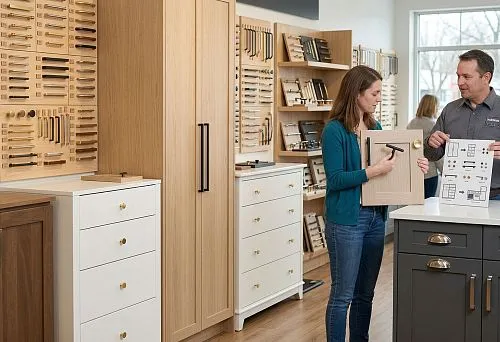
In large cities, you can find stores specializing in craft and creative supplies, which usually have a section for wooden blanks. Advantages of such stores:
- Ability to personally assess quality - you can hold the blank in your hands, evaluate its weight, texture, finish quality, and other characteristics that are difficult to determine from photos.
- Seller consultations - experienced consultants can help you choose the right blank for a specific project, explain the properties of different wood species, and provide advice on processing.
- No shipping costs - you pick up your purchase immediately and do not pay for shipping, which can be a significant saving, especially for large and heavy items.
- Comprehensive purchases - in such stores, you can usually purchase not only the blanks themselves but also all necessary materials for processing them: paints, varnishes, tools, decorative elements, etc.
Carpentry workshops and manufacturers
Another option is to contact wooden product manufacturers directly. Carpentry workshops and small manufacturers often offer blanks made in-house:
- Custom approach - the ability to order blanks to custom sizes and specifications, which is especially important for non-standard projects.
- High quality - many workshops specialize in working with specific wood species or types of products, ensuring high quality and professional approach.
- Direct communication with artisans - the opportunity to receive consultation directly from the person who makes the blanks, learn about material handling nuances, and get professional advice.
- Support for local manufacturers - by purchasing from local artisans, you support small businesses and traditional crafts.
Construction and furniture stores
For certain types of blanks, especially for large projects, you can visit construction and furniture stores:
- Wide selection of lumber - boards, beams, plywood, MDF, and other materials that can serve as the basis for your projects.
- Cutting and processing services - many stores offer services to cut materials to specified dimensions, simplifying further work.
- Affordable prices - due to high sales volumes, such stores often offer lower prices on basic materials.
- Availability of complementary items - tools, fasteners, paints and other items necessary for working with wood.
Choosing wooden blanks for specific projects
Correct selection of blanks is the key to the success of your creative project. Let's consider what to pay attention to when choosing blanks for different types of creativity.
Blanks for decoupage and painting
Decoupage and painting require special attention to the surface of the blank:
- Surface smoothness - for quality decoupage, a well-sanded surface free of burrs and roughness is required.
- Wood species - for painting, it is better to choose blanks made of light-colored woods with uniform structure, such as linden or pine. For decoupage, blanks with pronounced texture, such as pine, look interesting.
- Pre-treatment - some blanks have already undergone basic processing (sanding, priming), which simplifies further work. Others require additional preparation before applying decoration.
- Functionality - if you are creating an item intended for everyday use (e.g., a cutting board or a box), pay attention to the quality of assembly, strength of joints, and overall reliability of the construction.
Blanks for wood carving
Wood carving imposes special requirements on the material:
- Softness and pliability - for carving, it is better to choose soft wood species, such as linden, alder, cedar. They are easier to process and less likely to dull tools.
- Grain direction - pay attention to the grain direction in the blank. For some types of carving (e.g., relief carving), it is preferable for the grain to run parallel to the carving plane.
- Absence of defects - knots, cracks, and other defects may complicate the carving process and spoil the final result. Choose blanks with minimal defects.
- Wood moisture - overly dry wood may crumble during carving, overly wet wood may deform upon drying. Optimal moisture for carving is 8-12%.
Blanks for creating furniture and interior items
When selecting blanks for furniture and large interior items, it is important to consider:
- Strength and durability - for furniture, it is better to choose hardwoods such as oak, beech, ash, which can withstand daily use and loads.
- Aesthetic qualities - for visible furniture elements, attractive wood texture, color, and overall appearance are important. Slabs with natural edges can become an eye-catching accent in interior design.
- Dimensional stability - wood may change its dimensions under the influence of humidity and temperature. Choose well-dried blanks and account for possible changes during design.
- Ecological safety - especially important for furniture intended for living spaces. Prefer blanks without chemical treatment or with ecologically safe stains.
Economic aspects of purchasing wooden blanks
The cost of wooden blanks may vary significantly depending on many factors. Understanding these factors will help make an economically justified choice.
Factors affecting the cost of blanks
The price of wooden blanks is determined by several key factors:
- Wood species - rare and exotic species usually cost more than common ones. For example, blanks made of oak or walnut will be more expensive than those made of pine or linden.
- Size and complexity of shape - the larger the blank and the more complex its shape, the higher its cost due to greater material consumption and labor required for manufacturing.
- Degree of processing - blanks that have undergone additional processing (sanding, priming, varnishing) cost more than unprocessed ones.
- Uniqueness and exclusivity - original works and exclusive designs usually have a higher price than standard mass-produced blanks.
- Place of purchase - prices may vary depending on the type of store, region, and even season.
Wholesale Purchases and Discounts
For those who regularly work with wooden blanks or plan large-scale projects, wholesale purchases may be an economically advantageous solution:
- Volume discounts - many manufacturers and stores offer discounts when purchasing a certain quantity of goods. The discount size can reach 10-30% of the retail price.
- Direct supplier deliveries - ordering directly from the manufacturer excludes intermediary markups, which can significantly reduce the cost.
- Seasonal sales and promotions - keep an eye out for special offers and sales, which are often held before holidays or at the end of the season.
- Loyalty programs - some stores offer cumulative discounts or bonus programs for regular customers.
Price-to-quality ratio
When choosing wooden blanks it is important to find the optimal balance of price and quality:
- Not always the cheapest is the most advantageous - a low price may indicate low-quality material, inaccurate dimensions, or poor processing, which ultimately leads to additional time and cost for finishing work.
- Invest in quality - for important and long-term projects, it is worth investing in high-quality blanks that will ensure better results and greater durability.
- Balancing between ready-made blanks and self-processing - sometimes it is more economically advantageous to buy basic materials and make blanks yourself, especially if you have the necessary tools and skills.
- Accounting for all costs - when calculating the cost of a project, consider not only the price of the blanks but also the costs of their delivery, additional processing, decorative materials, etc.
Environmental aspects of choosing wooden blanks
In today's world, more attention is being paid to environmental aspects of production and consumption. Choosing wooden blanks also has an environmental dimension.
Sustainable Forestry and Certification
When choosing wooden blanks, pay attention to the source of the wood:
- FSC and PEFC Certificates - these international certificates confirm that the wood comes from forests where sustainable forestry is practiced. Buying blanks with such certificates supports responsible management of forest resources.
- Local wood species - using local wood species reduces the carbon footprint associated with transportation and supports the local economy.
- Reusing wood - some manufacturers offer blanks made from recycled or reclaimed wood, which helps reduce deforestation.
- Information about origin - reliable manufacturers are usually willing to provide information about the origin of the wood they use.
Material safety for health
The ecological nature of wooden blanks is also related to their safety for health:
- Natural material - wood is a natural material that is safe for humans and the environment when properly processed.
- Absence of harmful chemicals - pay attention to what stains, varnishes, and other chemicals were used in processing the blanks. Prefer blanks without treatment or with environmentally safe materials.
- Hypoallergenicity - some wood species may cause allergic reactions. If you have allergies, clarify which species are safe for you.
- Safety for children - if the blanks are intended for children's toys or items that will be used by children, it is especially important to choose safe materials without sharp edges and non-toxic treatment.
Trends and innovations in the world of wooden blanks
The world of wooden blanks is not standing still. New technologies, materials, and design solutions constantly expand creative possibilities.
Modern wood processing technologies
Technological progress has brought many innovations to the production of wooden blanks:
- Laser cutting and engraving - allows creating blanks with incredibly precise details and complex patterns that would be difficult or impossible to achieve manually.
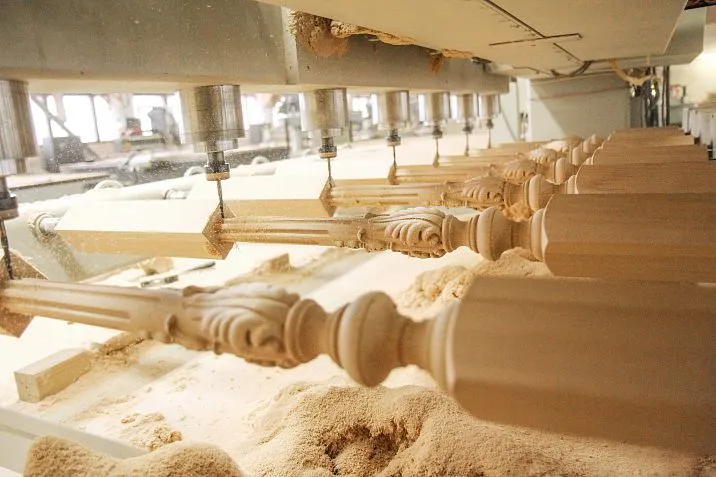
- CNC milling - computer-controlled milling process ensures high precision and repeatability, which is especially important for mass production.
- 3D modeling - before manufacturing the blank, you can create its 3D model, which helps visualize the final result and make necessary adjustments.
- New drying and wood stabilization methods - modern technologies allow obtaining more stable and durable blanks, less prone to deformation and cracking.
Combined materials and techniques
Modern masters are increasingly experimenting with combining different materials and techniques:
- Wood and epoxy resin - creating unique items where transparent or colored resin fills voids in wood, creating striking contrasts and unusual textures.
- Wood and metal - combining the warmth of wood with the cool sheen of metal to create modern and stylish items.
- Stabilized wood - impregnating wood with special compounds that fill pores and make the material stronger, more stable, and resistant to moisture.
- Brushing and aging - techniques that highlight the natural wood texture and create a vintage effect.
Ecological Innovations
Growing attention to ecological issues is driving innovations in sustainable production of wooden blanks:
- Fast-growing wood species - using species that regenerate quickly, such as bamboo or certain types of pine, to reduce pressure on forest resources.
- Recycling wood waste - creating blanks from recycled wood or wood composites, which promotes more efficient resource use.
- Ecologically safe stains and finishes - developing new materials for treating wood that contain no harmful chemicals and are safe for the environment.
- Zero-waste production - implementing technologies that minimize waste during blank production or allow efficient use of waste materials.
Tips for choosing and purchasing wooden blanks
Let’s summarize and formulate practical recommendations that will help you make the right choice when purchasing wooden blanks.
Purchase Planning
Before heading out to shop, it’s worth doing some preparatory work:
- Define your goal and requirements - clearly specify for which project you need blanks, what characteristics they should have (dimensions, wood species, level of processing, etc.).
- Research the market - study available options, compare prices and conditions at different stores, read reviews about manufacturers and sellers.
- Set a budget - determine how much you are willing to spend on blanks, and account for possible additional expenses (shipping, additional processing, etc.).
- Prepare a list of questions - if you have doubts or specific requirements, prepare a list of questions for the seller or manufacturer.
Assessing the quality of blanks
When selecting blanks, pay attention to the following aspects of quality:
- Appearance - inspect the blank for visible defects: cracks, chips, unevenness, stains. The surface should be smooth (unless otherwise specified), free of burrs and roughness.
- Moisture content - overly moist wood may warp when drying. If possible, measure moisture with a moisture meter or assess by touch (dry wood feels warmer than moist wood).
- Straightness and geometry - check whether the blank’s shape matches the stated specifications, and whether there are any bends, warps, or other deviations from the required geometry.
- Material uniformity - evaluate the uniformity of color and texture of the wood, absence of abrupt transitions or spots, if this is important for your project.
Working with the seller or manufacturer
Effective interaction with the seller or manufacturer can significantly influence the outcome of your purchase:
- Ask questions - don’t hesitate to ask about the origin of the wood, processing methods, and recommendations for further work with the blank.
- Clarify details - if any information is missing from the product description, be sure to clarify it before purchasing.
- Discuss specific requirements - if you have specific requirements for the blanks, discuss the possibility of fulfilling them with the seller or manufacturer.
- Request additional photos or samples - especially when purchasing online, additional photos or small samples can help better assess the quality of the material.
Conclusion: Creating unique masterpieces from wooden blanks
Wooden blanks are not just a material for creativity; they are the foundation for creating unique items that can become part of your home, gifts for loved ones, or even the start of your own business. Choosing the right blanks is an important step toward successfully realizing your creative ideas.
Regardless of where you decide to purchase wooden blanks - from an online store, a specialized offline shop, directly from the manufacturer, or in a hardware supermarket - it is important to approach the selection thoughtfully, considering the specifics of your project, your skills, and your preferences.
The world of wooden blanks is constantly evolving, offering new opportunities for creativity and self-expression. Stay updated on trends, experiment with different materials and techniques, and let your creative projects bring you joy and satisfaction.
Remember that each wooden blank has its own character and potential. Unleashing this potential, transforming a simple blank into a unique work of art or functional item, is true craftsmanship that comes with experience and passion for your craft. Good luck with your creative endeavors!