Article Contents:
- History and Evolution of Stair Railing
- From Ancient Civilizations to the Renaissance
- Golden Age of Balusters: From Baroque to Modern
- Modern Trends: Functionality and Minimalism
- Anatomy of the Ideal Stair Railing
- Key Components and Their Interaction
- Functional Significance of Handrails and Balusters
- Materials for Handrails and Balusters: Choice Determines the Character of the Staircase
- Wood: Eternal Classicism and Warmth
- Metal: strength and modernity
- Glass and Modern Composite Materials
- Technical parameters and standards: safety above all
- Optimal sizes and proportions
- Calculating the number of balusters and their placement
- Requirements for strength and reliability
- Design Solutions: From Classic to Avant-Garde
- Classic solutions: timeless and beyond trends
- Modern trends: minimalism and functionality
- Eclecticism and fusion: playing with styles and materials
- Installation and Mounting: From Theory to Practice
- Preparatory work: measurements and planning
- Ways to mount balusters: choosing the optimal solution
- Final Finishing and Protection
- Maintenance and Care: Preserving Beauty for Years
- Regular care for wooden elements
- Care for Metal and Glass Elements
- Repairing damage and restoration
- Economic aspects: investment in beauty and safety
- Factors Affecting Cost
- Long-Term Benefits of Quality Materials
- Conclusion: create your dream staircase
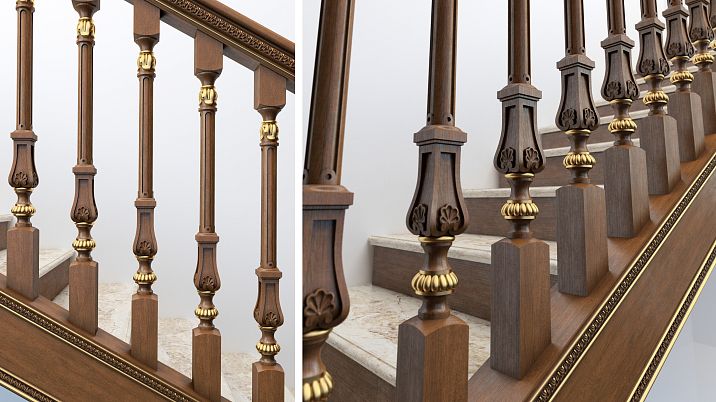
Have you ever wondered why some staircases look so attractive that you want to stop and admire them? Why some constructions seem complete and harmonious, while others feel soulless? The secret lies in the details, and the main ones are handrails and balustersThese elements do not merely ensure safety when ascending and descending—they create the character of the entire staircase structure, define its style and aesthetic value.
Imagine this: you enter a house, and the first thing that catches your attention is an elegant wooden staircase with carved balusters and a smoothly curved handrail that invites you to run your hand along it. Or perhaps you are greeted by a modern construction with minimalist metal balusters and a dark wood handrail, creating a striking contrast. In both cases, it is precisely these elements that form the first impression and set the tone for the entire interior.
In this article, we will dive into the wonderful world of stair railings, reveal the secrets of choosing ideal handrails and balusters, discuss their functional significance and aesthetic possibilities, and share practical tips for their installation and maintenance. Ready to embark on a journey through the world of staircase architecture? Then let’s begin!


History and Evolution of Stair Railing
Before diving into technical details and modern trends, let’s take a brief excursion into history and learn how handrails and balusters have evolved over centuries.




From Ancient Civilizations to the Renaissance
Amazingly, the first staircases, appearing even in ancient civilizations, had neither railings, nor handrails, nor balusters. People climbed and descended, risking falling from height, which was especially dangerous in public buildings with high and steep staircases.
The first prototypes of modern railings appeared in Ancient Rome and Greece—these were balustrades consisting of a horizontal beam supported by vertical posts. However, these structures were primarily used to enclose terraces and balconies, not staircases.
The true golden age of baluster art came during the Renaissance. It was precisely in the 15th century that balusters were first applied to staircases, and by the end of the century, they became an indispensable part of architectural design. Interestingly, the word 'baluster' comes from the ancient Greek 'balaustion,' meaning 'pomegranate flower'—the first balusters resembled this shape.
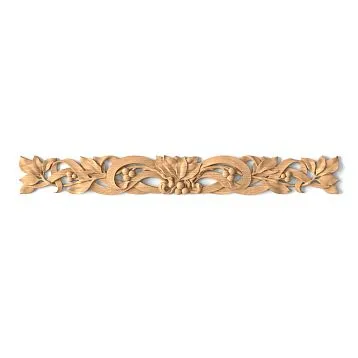
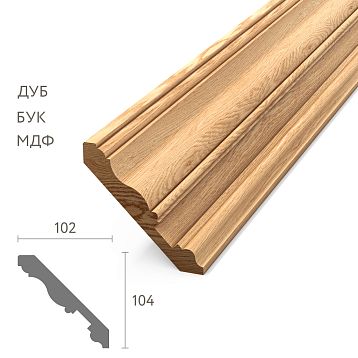
Our factory also produces:


Golden Age of Balusters: From Baroque to Modern
In the Baroque and Rococo eras, balusters became true works of art. Masters created complex carved compositions, where each baluster was a miniature sculpture. Handrails also became more elaborate—they became heavier, with elegant curves and decorative elements.
In Classicism, there was a return to more strict and minimalist forms, inspired by ancient models. Balusters acquired symmetrical, harmonious proportions, and handrails became more functional and comfortable for the hand.
The Modern era brought a new wave of experimentation with form. Balusters of this period feature smooth, flowing lines, botanical motifs, and asymmetry. Handrails often had organic shapes, perfectly suited for hand grip.
Get Consultation
Modern Trends: Functionality and Minimalism
In the 20th century, with the emergence of new materials and technologies, the design of stair railings underwent revolutionary changes. Metal, glass, plastic, and composite materials opened up new possibilities for experimenting with form and function.
Modern trends lean toward minimalism and functionality. Popular are sleek metal balusters, glass panels without visible fasteners, and cable systems. However, classical wooden handrails and balusters do not lose their relevance, especially in traditional interiors and homes where the naturalness and warmth of wood are valued.
Anatomy of the Ideal Stair Railing
To better understand how to choose optimal handrails and balusters for your staircase, let's examine the structure of the stair railing and the function of each element.
Key Components and Their Interaction
A stair railing is a complex system consisting of several interconnected elements:
- Handrail (rail) - a horizontal or inclined element to hold onto while ascending or descending. This is not merely a hand support, but also a crucial structural element that unifies the entire railing construction.
- Balusters - vertical supports that hold the handrail. They evenly distribute the load and provide rigidity to the entire structure.
- Support posts - more substantial vertical elements installed at key points of the staircase (start, end, turns). They bear the main load and ensure the stability of the entire railing.
- Baluster base - a horizontal element to which the lower ends of balusters are attached. In some constructions, balusters are directly attached to the treads.
- Decorative elements - spheres, finials, rosettes, and other details that give the railing a finished look and individuality.
All these elements must harmoniously complement each other, creating not only a safe but also an aesthetically pleasing structure.
Functional Significance of Handrails and Balusters
handrails and balusters perform several key functions:
Safety - the primary function of a stair railing. The handrail provides reliable support during ascent and descent, while balusters prevent falls from the stairs, which is especially important in homes with children or elderly people.
Structural rigidity - a properly designed and installed railing makes the entire staircase structure more stable and durable, evenly distributing loads.
Aesthetic appeal - handrails and balusters form the architectural appearance of the staircase, giving it completeness and stylistic expressiveness.
Interestingly, the reflex of gripping the handrail while moving up or down stairs is almost automatic in humans. That is why the shape and placement of the handrail must be maximally ergonomic and intuitive.
Materials for Handrails and Balusters: Choice Determining the Character of the Staircase
Choosing the material for a stair railing is one of the key factors determining not only the appearance but also the functional characteristics, durability, and cost of the structure.
Wood: Eternal Classic and Warmth
Wood remains the most popular material for manufacturing handrails and balusters, and there are solid reasons for this:
Aesthetic appeal - natural wood texture and warm tone create a cozy, home-like atmosphere. Each item is unique due to the distinctive grain pattern.
Tactile comfort - a wooden handrail is pleasant to the touch, does not chill the hand in winter and does not overheat in summer, making it ideal for residential spaces.
Ecological safety - wood does not emit harmful substances, and the essential oils and organic resins it contains positively affect the microclimate in the house.
Versatility in processing - wood is easily machined, turned, and milled, allowing for the creation of items of any complexity and style.
Various types of wood are used to manufacture handrails and balusters, each with its own characteristics:
- Oak - exceptionally strong and durable wood with a beautiful texture and noble color. Ideal for classic interiors and structures subjected to significant loads.
- Beech - a hard wood with a uniform structure, easy to process, and has a pleasant light tone. Excellent for modern interiors.
- Ash - strong and elastic wood with a distinct texture, resistant to mechanical impacts. Ash’s appeal is enhanced by its variety of color tones.
- Spruce - an affordable and easy-to-process wood, suitable for creating both simple and complex forms. It has a distinctive grain and aroma.
- Larch - distinguished by high density and moisture resistance, ideal for rooms with high humidity.
Metal: strength and modernity
Metal railings and balusters are becoming increasingly popular, especially in modern interiors:
Exceptional strength - metal structures withstand significant loads with smaller cross-sections, allowing for light, airy railings.
Durability - with proper treatment and protection, metal railings serve for decades without losing their functional or aesthetic qualities.
Variety of design solutions - from classic ornamental wrought iron to ultra-modern minimalist structures.
Ability to combine - metal combines beautifully with other materials (wood, glass, stone), opening up wide possibilities for design experiments.
Most common metals for stair railings:
- Stainless steel - a modern material with excellent performance characteristics. Resistant to corrosion, easy to clean, and has a stylish appearance.
- Black metal - a more affordable option, requiring additional corrosion protection (painting, powder coating). Suitable for both classic wrought iron and modern constructions.
- Brass, bronze - noble metals that give railings a luxurious look. Used primarily in premium interiors.
Glass and modern composite materials
Modern technologies open up new possibilities for designing stair railings:
Tempered glass - creates an effect of lightness and airiness, visually expanding space. Despite its fragile appearance, tempered glass is extremely strong and safe.
Acrylic and polycarbonate - lightweight, strong, and affordable materials, allowing for transparent or colored railings of various shapes.
Composite materials - combine the advantages of different materials. For example, handrails made of WPC (wood-plastic composite) have the appearance and tactile feel of wood, but are more resistant to moisture and mechanical impacts.
Technical specifications and standards: safety comes first
When designing and installing stair railings, it is necessary to consider not only aesthetic preferences but also technical requirements ensuring safety and comfort of use.
Optimal sizes and proportions
Dimensions of stair railings are regulated by building codes and regulations:
The height of railings in residential premises should be 900-1000 mm from the stair level. For public buildings and outdoor staircases, this value increases to 1200 mm.
The diameter of a handrail is usually 40-50 mm for round rails. For rectangular rails, the optimal width is 40-60 mm, and height is 50-70 mm. These dimensions ensure comfortable and secure handhold.
The distance between balusters should not exceed 150 mm for residential wooden staircases. This is a safety requirement, especially important in homes with children, to prevent falling through the railing.
The distance from the wall to the handrail should be at least 40 mm to ensure comfortable grip.
Calculating the number and placement of balusters
The number of balusters is calculated based on the length of the stair run and the required spacing between them:
N = (L - D) / (S + D) + 1,
where L – length of the handrail section, S – distance between balusters, D – diameter or width of the baluster.
To ensure maximum reliability, it is recommended to install one baluster per step. If this is not possible due to the staircase’s structural features, balusters must be evenly distributed and the required spacing between them must be maintained.
Requirements for strength and reliability
Stair railings must withstand significant loads:
- The horizontal load on the handrail should be at least 0.3 kN/m (about 30 kg per meter).
- The vertical load on the handrail - at least 1.0 kN (about 100 kg).
Special attention should be paid to the fastening of balusters to treads and handrails. They must be secure and durable, capable of withstanding not only static but also dynamic loads.
Design solutions: from classic to avant-garde
handrails and balusters These are not only functional elements but also an important part of interior design. Let's consider the main stylistic directions and their features.
Classic solutions: timeless and unfashionable
Classic stair railings are characterized by harmonious proportions, symmetry, and refined details:
Turned balusters with a distinctive "barrel-shaped" profile, adorned with rings, bosses, and other decorative elements. Such balusters are usually made from hardwoods (oak, beech, mahogany).
Heavy handrails with smooth curves and rounded edges. In classic style, the handrail often has a complex profile with a recess for the hand, making it not only beautiful but also comfortable to use.
Decorative elements - carved spheres and finials on support posts, rosettes and covers on joints, giving the structure completeness and luxury.
Classic railings are ideal for traditional interiors, country houses, and mansions, where the atmosphere of nobility and solidity is valued.
Modern trends: minimalism and functionality
Modern stair railings are characterized by minimalist forms, clean lines, and innovative materials:
Simple geometric forms - straight or slightly curved handrails, balusters in the form of thin rods or plates, creating a sense of lightness and airiness.
Combining materials - metal frame with wooden handrail, glass panels with metal fittings, rope systems with wooden elements.
Hidden fasteners - modern technologies allow creating structures with minimal visible fastening elements, giving the railing a cleaner and more elegant appearance.
Such solutions fit perfectly into modern minimalist interiors, lofts, and high-tech spaces.
Eclecticism and fusion: playing with styles and materials
Eclectic stair railings combine elements of different styles and eras, creating unique, memorable compositions:
Contrasting combinations - for example, rough wrought metal with smooth polished wood or modern glass with aged bronze.
Unusual shapes and proportions - asymmetric compositions, non-standard handrail profiles, balusters of different shapes and sizes within one structure.
Decorative accents - use of bright colors, unusual textures, inserts of exotic materials.
Eclectic solutions allow creating a truly unique railing that reflects the homeowner's individuality.
Installation and mounting: from theory to practice
Correct installation of handrails and balusters is essential not only for aesthetic appeal but also for the safety of the entire staircase structure.
Preparatory work: measurements and planning
Before beginning installation, conduct thorough measurements and create a detailed plan:
- Determine railing height - measure from the stair level to the top of the handrail (usually 900-1000 mm).
- Calculate the number of balusters - using the formula provided above, determine the required number of balusters based on the required spacing between them.
- Marking installation points - mark the attachment points on the stairs and handrail, ensuring even distribution and compliance with required spacing.
- Prepare materials and tools - ensure all structural elements are ready for installation (treated with protective coatings, have necessary holes and grooves).
Ways to mount balusters: choosing the optimal solution
There are several ways to mount balusters, each with its own advantages:
Dowel joint - a classic and most reliable method. Special holes are made in the treads and handrail, into which the baluster dowels are inserted. This method ensures maximum structural rigidity and an aesthetically pleasing appearance without visible fasteners.
Fastening with screws - a simpler method allowing quick installation of balusters. Screws are screwed in at an angle through the baluster into the tread and handrail. After installation, the fastening points are masked with wooden plugs or spackled and painted.
Use of special fasteners - a modern method combining ease of installation with structural reliability. Special metal fasteners allow quick and precise installation of balusters while also permitting their replacement if necessary.
Final finishing and protection
After installing all railing elements, perform final finishing:
- Sanding - carefully sand all wooden surfaces, paying special attention to joints and fastening areas.
- Priming - apply a special primer that ensures better adhesion to the final finish and additional protection for the wood.
- Final finish - depending on desired result, apply varnish, oil, or wax. Varnish creates a durable protective film and adds gloss, oil penetrates deeply into the wood structure and highlights its natural beauty, wax creates a pleasant silky surface and additional protection.
- Structural integrity check - after completing all work, check the structural integrity by applying a load comparable to real operating conditions.
Maintenance and care: preserving beauty for years
Proper care of handrails and balusters will help maintain their attractive appearance and functionality for many years.
Regular care for wooden elements
Wooden handrails and balusters require regular but simple maintenance:
Daily dust cleaning - use a soft dry cloth or special care cloths for wooden surfaces.
Periodic damp cleaning - once a week, wipe the handrail and accessible parts of balusters with a slightly damp cloth soaked in a mild detergent solution. Afterward, be sure to wipe the surface dry with a clean cloth.
Updating protective coating - depending on usage intensity and coating type, it is recommended to renew the protective layer (varnish, oil, or wax) every 3-5 years.
Care of metallic and glass elements
Metallic and glass elements of the railing also require regular maintenance:
Metallic surfaces - wipe with a soft cloth soaked in a specialized metal cleaning solution. For stainless steel, there are special formulations that not only clean but also create a protective film.
Glass panels - use regular glass cleaning solutions, avoiding abrasive compounds that may scratch the surface.
Combined constructions - pay special attention to junctions of different materials, where dirt and moisture may accumulate.
Damage repair and restoration
Even with the most careful handling, damage may appear over time:
Minor scratches and scuffs on wooden surfaces can be removed using furniture wax or matching colored wax pencils.
Deep scratches and chips require a more serious approach - sanding the damaged area, filling with wood putty, and then staining or varnishing.
Loose joints must be reinforced by tightening fasteners or using specialized wood adhesives.
Damage to metallic elements (scratches, paint chips) is repaired using appropriate paint or special touch-up markers.
Economic aspects: investment in beauty and safety
Choosing and installing quality handrails and balusters is not just a money expenditure, but a long-term investment in the beauty, comfort, and safety of your home.
Factors Affecting Cost
The cost of a stair railing depends on several key factors:
Material - natural wood of valuable species (oak, ash) costs significantly more than pine or birch. Metal structures made of stainless steel are more expensive than black metal with paint.
Design complexity - simple balusters cost less than intricate carved or wrought elements. Similarly, a straight handrail is cheaper than a curved or decorative one.
Method of manufacture - handcrafted items are valued higher than machine-made ones, which is reflected in the price.
Volume of work - the cost depends on the length of the staircase, number of turns, and need for custom elements.
Installation - professional installation increases the overall cost but guarantees quality and safety of the structure.
Long-term benefits of quality materials
Investment in quality materials and professional installation pays off in the long term:
Durability - quality handrails and balusters made from good materials can serve for decades without needing replacement.
Safety - a reliable railing prevents possible injuries and falls, which is especially important in homes with children and elderly people.
Aesthetic appeal - a beautiful staircase with elegant handrails and balusters enhances the overall interior attractiveness and can become its central element.
Increased property value - quality architectural details increase the market value of a house or apartment.
Conclusion: create the staircase of your dreams
handrails and balusters These are not just functional elements of the staircase, but important architectural details that define the character and style of the entire interior. When properly selected and professionally installed, they transform an ordinary staircase into a work of art that will delight you and your guests for many years.
When choosing a staircase railing, it is important to consider not only aesthetic preferences but also practical aspects: safety, durability, ease of use and maintenance. Harmonious combination of form and function - this is the key to creating the ideal staircase.
Regardless of whether you prefer the classic elegance of carved wooden balusters or the modern austerity of metal and glass, remember that quality materials and professional installation are the guarantee of longevity and safety of your staircase.
STAVROS Company offers a wide range of high-quality handrails, balusters, and other staircase elements made from various materials and in different styles. Years of experience, use of premium materials, and modern technologies allow us to create items that combine beauty, reliability, and durability. Entrust the creation of your dream staircase to STAVROS professionals, and the result will exceed all your expectations!