Article Contents:
- Philosophy of Choice: How Wooden Crown Molding Differs from Imitations
- Wood Species: Choosing the Character of Your Interior
- Oak: Symbol of Eternity and Reliability
- Beech: Elegance and Refinement
- Ash: Strength and Expressiveness
- Spruce and Pine: Democratic Classicism
- Larch: Strength of Siberian Forests
- Technological Aspects: How Wood Becomes Crown Molding
- Log Preparation and Primary Processing
- Drying: the art of moisture control
- Mechanical Processing: The Birth of the Profile
- Sanding and Preparation for Finishing
- Dimensional Series and Geometry: The Mathematics of Beauty
- Profile Height: The Golden Ratio Rule
- Base Width: The Question of Stability
- Product Length: Minimizing Joints
- Profile Thickness: The Balance of Strength and Elegance
- Master Installation: Secrets of Professional Mounting
- Preparation Stage: Creating Conditions for Success
- Marking: Precision — the Politeness of Kings
- Cutting and Fitting: Millimeter Precision
- Fastening: Reliability for Decades
- Final Processing: Attention to Details
- Finishes and Coatings: Protection and Beauty in One Bottle
- Oil-Based Finishes: Nature Above All
- Varnish Finishes: Long-Lasting Protection
- Wax Finishes: Genre Classicism
- Tinting and Staining: Playing with Color
- Stylistic solutions: from classic to avant-garde
- Classic Style: The Grandeur of Traditions
- Minimalism: beauty of simplicity
- Loft: industrial aesthetics
- Scandinavian style: northern restraint
- Economic Aspects: Investment in Quality
- Initial investments
- Operational costs
- Impact on property value
- Long-Term Return on Investment
- Care and Maintenance: Secrets of Longevity
- Daily care
- Climate Conditions
- Sunlight Protection
- Periodic refreshment
- Preventive Maintenance
- Innovations and development prospects
- Thermal Modification
- Polymer Impregnation
- Nanotechnology Coatings
- Digital design
- Company STAVROS: Traditions of Craftsmanship in Modern Execution
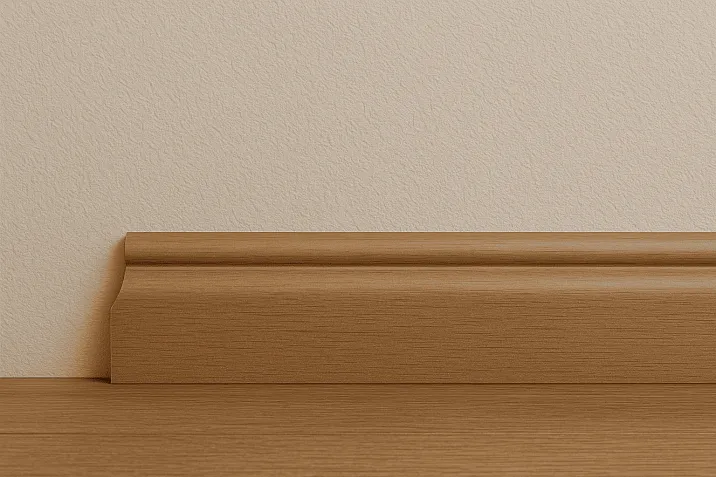
In the world of modern finishing, where synthetic materials compete for consumer attention with bright promises and low prices, wooden cornice remains an unshakeable symbol of true quality and natural beauty. But how to choose exactly the material that will turn your home into a work of art, rather than yet another standard interior?
Wood is a material that humanity has used for millennia, and over this time we have learned to distinguish the finest nuances of each species. Every tree has its own character, its own soul, its unique properties. And when it comes to choosing a material for cornices, these differences become critically important.
Why do experienced masters and interior designers increasingly return to natural wood, rejecting trendy novelties from the chemical industry? Because wood is not just a building material. It is a living substance that continues to live in your home, creating a unique microclimate, radiating warmth and energy.


Philosophy of Choice: How Does Wooden Cornice Differ from Imitations?
The modern market is flooded with "wood-like" offerings — laminated MDF, PVC profiles with printed texture, composite materials with wood filler. All of them promise to give you "naturalness" at a lower price. But let us honestly answer ourselves the question: can we replace Mozart's symphony with an electronic copy and get the same aesthetic enjoyment?
Real wooden cornice It differs from imitations primarily by its energy. When you touch the surface of natural wood, you feel its warmth, perceive a living texture that has been formed over decades under the influence of sun, rain, wind. Each grain, each pattern of annual rings tells its own story.
Imitations can reproduce the appearance of wood, but they will never convey its essence. Synthetic materials remain cold to the touch, their surface lacks the microrelief that makes natural wood alive and warm.
But it's not only about aesthetics. Wooden cornice "breathes" — it can absorb excess moisture from the air and release it back when necessary, regulating the room's microclimate. Synthetic materials cannot do this.
Sound absorption is another important factor. Natural wood has unique acoustic properties, making the space more comfortable for perception. Plastic imitations create resonance that may irritate sensitive ears.
Durability — here natural wood shows its true superiority. A properly manufactured and installed wooden cornice can serve for centuries, while synthetic analogs begin to lose their appearance within a few years of use.
Repairability — an important advantage of natural material. Scratches, wear, and even serious damage to wooden cornice can be removed by sanding and re-finishing. With synthetic materials, this won't work — they can only be replaced.
Ecological safety requires no proof. Wood is a natural material that does not emit harmful substances, but rather can absorb certain toxins from the air. Plastic products, on the other hand, may emit volatile compounds, especially when heated.




Wood Species: Choosing the Character of Your Interior
Choosing wood species for wooden cornice — is choosing the character of the entire interior. Each species has its unique properties, color, texture, and energy.
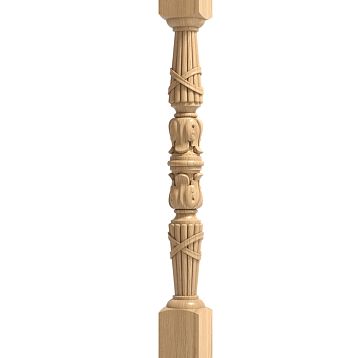
Our factory also produces:


Oak: Symbol of Eternity and Reliability
Oak cornices — the choice of those who value solidity and tradition. Oak is distinguished by its exceptional strength, beautiful pronounced texture, and ability to become even more beautiful over the years. The color range of oak varies from light golden to dark brown shades.
The density of oak is 650-750 kg/m³, providing excellent mechanical strength. The wood contains tannins — natural antiseptics that protect against decay and pests. Oak cornices are ideal for classic interiors, offices, libraries — anywhere where an atmosphere of solidity and respectability is important.
Get Consultation
Beech: Elegance and Refinement
Beech has won the recognition of designers due to its uniform structure and soft pink-cream color. It is medium-density wood (680-720 kg/m³), which is easy to work with and holds its shape. Beech cornices are distinguished by particular elegance and are suitable for modern interiors in Scandinavian or minimalist style.
Beech's feature — steam bending capability, which allows for a more uniform color and increases the wood's plasticity. This makes beech moldings ideal for creating complex curved shapes.
Ash: strength and expressiveness
Ash — wood with a distinctly pronounced texture and high mechanical properties. Ash density is 650-700 kg/m³, and its bending strength exceeds that of oak. The color range varies from light cream to brown with a grayish tone.
Ash moldings are perfect for modern interiors where the expressiveness of texture and material strength are valued. Ash especially looks striking when used with oil-based finishes, highlighting its natural beauty.
Pine and spruce: democratic classic
coniferous species — the most accessible option for wooden moldingPine and spruce are distinguished by their pleasant aroma, ease of processing, and affordable price. The density of these species is 450-500 kg/m³, making them easy to install.
The drawbacks of coniferous species — tendency to resin exudation and relatively low surface hardness. However, with proper processing, these drawbacks can be minimized, yielding a high-quality and inexpensive finishing material.
Larch: strength of Siberian forests
Larch combines the advantages of coniferous and deciduous species. High density (550-650 kg/m³), resistance to moisture and decay, and attractive grain make larch moldings an excellent choice for rooms with high humidity.
Larch's feature — high resin content, which polymerizes over time, creating a natural wood protection. The color varies from yellowish-white to reddish-brown.
Technological aspects: how wood becomes a molding
Transforming growing wood into an elegant wooden molding to buy which can be confidently purchased in quality — this is a complex technological process involving multiple stages.
Log preparation and primary processing
The quality of the future molding is established already at the stage of raw material preparation. Trees must be felled during the period of minimal sap movement — in winter, when the moisture content in the wood is minimal. This prevents cracking and deformation during subsequent drying.
Primary sawing is performed taking into account the direction of the grain and the position of the pith. For moldings, radial sawing is predominantly used, providing the most stable material with an attractive texture.
Drying: the art of moisture control
Wood drying — a critically important process, the quality of which determines all operational characteristics of finished products. Modern technologies offer several drying options.
Air drying outdoors — the most traditional method, requiring 1-3 years depending on the species and material thickness. This method provides the best quality but requires significant time investment.
Kiln drying allows reducing the time to several weeks while maintaining high quality. Drying programs are individually developed for each species, taking into account its specific characteristics.
Vacuum drying — a modern technology that allows drying wood at reduced temperatures, preserving its natural color and reducing internal stresses.
The final moisture content of wood for molding production should be 8-12%, ensuring dimensional stability during use.
Mechanical processing: the birth of the profile
Creating the molding profile — a high-precision operation requiring professional equipment and operator skill. Modern CNC routers allow creating profiles of any complexity with accuracy to tenths of a millimeter.
The quality of milling depends on tool sharpness, feed rate, and spindle speed. Properly selected parameters ensure a smooth surface without scratches or chips.
For complex profiles, multiple passes with different tools may be required. Each pass must be carefully calculated to avoid damaging thin profile elements.
Sanding and preparation for finishing
Sanding — the final mechanical processing operation, determining the quality of the finished product's surface. The process includes several stages using abrasives of different grits.
Coarse grinding with 80-120 grit abrasive removes milling marks and levels the surface. Intermediate grinding with 150-180 grit abrasive prepares the surface for final finishing.
Final grinding with 220-320 grit abrasive creates a perfectly smooth surface ready for coating application. After each grinding stage, the surface is carefully cleaned of dust.
Dimensional series and geometry: the mathematics of beauty
Wooden molding dimensions which must harmoniously match the proportions of the room, requires a thoughtful approach to selecting geometric parameters.
Profile height: the golden ratio rule
The height of the molding should correspond to the scale of the room. For standard apartments with ceiling heights of 2.7–3.0 m, optimal molding heights are 40–80 mm. In rooms with high ceilings, profiles up to 150–200 mm in height can be used.
The ratio of molding height to room height should be approximately 1:40 — 1:30. This rule is based on classical proportion principles and ensures a harmonious perception of space.
Base width: question of stability
The base width of the molding determines its mounting reliability and affects visual perception. For floor moldings, the base width should be at least 15–20 mm, and for ceiling moldings — 10–15 mm.
When selecting base width, wall curvature must be considered. In rooms with significant deviations from vertical, moldings with wide bases are required to compensate for unevenness.
Product length: minimizing joints
The standard length of wooden moldings is 2000–3000 mm. This is the optimal size from the standpoint of transportation and ease of installation. Some manufacturers offer products up to 6000 mm in length, which allows minimizing the number of joints in long rooms.
When planning material quantity, allowances for trimming waste must be considered, which amount to 5–10% of total requirement.
Profile thickness: balance of strength and elegance
The profile thickness of the molding should ensure sufficient strength while preserving the elegance of form. The minimum wall thickness is 6–8 mm for simple profiles and 10–12 mm for complex multi-step forms.
Too thin profiles are prone to deformation and damage during installation. Excessively thick profiles appear crude and weigh down the interior.
Installation mastery: secrets of professional mounting
Quality installation floor wooden molding requires not only technical skills but also an understanding of the specifics of working with natural wood.
Preparation stage: creating conditions for success
Material acclimatization — the first and critically important step. Wooden moldings must adapt to the room’s microclimate over 48–72 hours. During this time, the wood will reach equilibrium moisture, preventing deformation after installation.
Room geometry verification is performed using a laser level and tape measure. Deviations of walls from vertical and ceilings from horizontal should not exceed 3–5 mm per linear meter. Larger deviations require preliminary leveling.
Tool preparation includes checking the sharpness of cutting elements, calibrating measuring instruments, and preparing fastening materials. Quality tools are the guarantee of accuracy and speed of work.
Marking: precision — the courtesy of kings
Marking begins with defining the base line — horizontal for ceiling moldings or vertical for floor moldings. The base line must be perfectly straight and serve as a reference for all subsequent operations.
Mounting point markings are made considering the structural features of walls. The mounting spacing is 400–600 mm depending on the molding size and base type.
Special attention is given to marking corners. This is where geometry-related inaccuracies in the room most often occur.
Cutting and fitting: millimeter precision
Wooden moldings are cut using a circular saw with a fine-toothed blade. The quality of the cut depends on the sharpness of the blade, feed speed, and the reliability of the workpiece fixation.
Mitering is the most complex operation, requiring high skill. A standard 45° angle rarely suits real rooms, so angles must be adjusted according to actual geometry.
For complex profiles, it is recommended to manufacture templates that ensure repeatability of the result when processing multiple elements.
Fastening: reliability for decades
The choice of fastening method depends on the size of the molding, the type of base, and operating conditions. Small moldings can be attached only with adhesive, while larger ones require additional mechanical fastening.
Adhesives must provide strong bonding with various base types while maintaining a certain degree of elasticity. Polyurethane and hybrid adhesives show the best results.
Mechanical fastening is performed using self-tapping screws or finish nails with concealed heads. Holes for fasteners are pre-drilled to prevent wood cracking.
Final finishing: attention to details
Joint filling is an operation requiring artistic taste and technical skill. Wood putties, tinted to match the molding color, are used. After drying, joints are sanded and touched up to achieve complete invisibility.
Final sanding of the entire surface with fine abrasive removes minor contaminants and prepares the surface for coating application.
Coatings and finishing: protection and beauty in one bottle
The choice of coating for wooden moldings determines not only their appearance but also their performance characteristics, durability, and ease of maintenance.
Oil coatings: naturalness above all
Deep-penetration oils are the ideal choice for those who appreciate the natural beauty of wood. The oil penetrates into the wood pores, highlighting the texture and creating a soft matte finish.
Advantages of oil coatings: preservation of natural wood tactile sensations, possibility of local repair, ecological safety. Disadvantages: need for periodic renewal, limited water resistance.
Varnish coatings: long-lasting protection
Polyurethane varnishes create a strong protective film, reliably protecting wood from moisture, contamination, and mechanical damage. Modern varnishes allow achieving any gloss level — from deep matte to mirror shine.
Water-based varnishes are environmentally safe, odorless, and dry quickly. They are ideal for living rooms and children's rooms. Alkyd varnishes provide higher durability but have a specific odor when drying.
Wax coatings: genre classic
Natural waxes create a soft silk-like finish with deep matte sheen. Wax coatings are especially suitable for oak and other species with pronounced texture.
The drawback of wax coatings is relatively low resistance to mechanical impacts and the need for regular renewal.
Staining and wood preservation: color play
Stains allow changing the color of wood while preserving its texture. Water-based stains provide even tone, alcohol-based stains — deeper shades. Oil-based stains dry slowly but ensure even coloring.
Modern gel stains do not raise wood fibers and provide predictable results even when working with species of uneven density.
Stylistic solutions: from classic to avant-garde
Wooden ceiling molding can radically change the character of the interior, emphasize its style, or serve as a connecting element between different design solutions.
Classic style: greatness of traditions
Classic interiors require moldings with rich profiles and traditional decorative elements. Complex multi-step profiles with fluting, ovals, and acanthus leaves create an atmosphere of palace luxury.
Color solutions tend toward noble shades — golden oak, walnut, mahogany. Coatings should emphasize the natural beauty of wood, creating an impression of centuries-old history.
Minimalism: beauty of simplicity
Minimalist interiors require simple geometric profiles without excessive ornamentation. Quarter-round or rectangular profiles emphasize functionality and simplicity.
The color palette is limited to light shades — whitewashed oak, ash, light beech. Finishes should be as natural as possible, without gloss or decorative effects.
Loft: Industrial Aesthetic
Loft style allows the use of rough wooden elements with an emphasized industrial character. Brushing, artificial aging, and contrasting combinations create a unique atmosphere.
Dark shades are popular — wenge, black walnut, charred wood. Finishes should highlight the material's rawness, creating contrast with industrial interior elements.
Scandinavian style: Northern restraint
Scandinavian interiors value naturalness and functionality. Simple-profiled wooden moldings in light wood species create an atmosphere of purity and freshness.
Light shades are characteristic — pine, spruce, whitewashed oak. Finishes should be as natural as possible, emphasizing the connection to nature.
Economic aspects: Investment in quality
When choosing wooden molding on paneling ceiling It is important to consider not only initial costs but also long-term economic efficiency.
Initial investments
The cost of wooden moldings significantly exceeds the price of synthetic analogs. The difference may range from 300-500% depending on the wood species and profile complexity. However, this difference is offset by service life and performance characteristics.
Operating expenses
Wooden moldings require periodic finish renewal, which incurs certain costs. However, these expenses are significantly less than the cost of replacing synthetic analogs entirely.
Impact on property value
Quality natural wood finishing increases property market value by 10-15%. Such properties enjoy higher demand and sell faster.
Long-term return on investment
The service life of quality wooden moldings is 50-70 years, making them economically advantageous in the long term. The possibility of restoration and renewal further increases economic efficiency.
Care and maintenance: Secrets of longevity
Proper care of wooden moldings is the key to their longevity and preservation of their original appearance. Jointing of wooden moldings and their subsequent maintenance require understanding the characteristics of natural material.
Daily care
Regular dry cleaning with soft cloth or special anti-static cloths prevents dust and dirt accumulation. Wet cleaning should be minimal — excess moisture may damage the finish and wood.
Climate conditions
The optimal temperature for wooden items is 18-24°C at relative humidity of 40-60%. Sudden fluctuations in these parameters may cause cracking or deformation.
Protection from Sunlight
Direct sunlight may cause uneven color changes in wood. In rooms with large windows, sun protection systems are recommended.
Periodic renewal
The finish of wooden moldings requires renewal every 5-7 years for interior use. Timely renewal protects the wood and maintains the aesthetic qualities of the items.
Preventive repair
Minor damages — scratches, chips, scuffs — should be addressed immediately before they become serious problems. Modern restoration materials allow for nearly invisible local repairs.
Innovations and Development Prospects
Modern technologies open new opportunities to improve the properties of wooden moldings without compromising their naturalness.
Thermal modification
Thermo-treatment at 160-230°C in an inert atmosphere alters the wood structure, enhancing its stability, biostability, and moisture resistance. Thermally treated wood acquires a beautiful dark color and improved performance characteristics.
Polymer Impregnation
Impregnating wood with polymer compounds under pressure creates a composite material with unique properties — high strength, moisture resistance, and dimensional stability while preserving the natural wood appearance.
Nanotechnology coatings
Coatings with nanoparticles provide self-cleaning surface, antibacterial protection, and enhanced UV resistance. These technologies allow significantly simplified maintenance of wooden items.
Digital design
3D modeling and CNC machines allow creating profiles of any complexity with perfect precision. Individual design becomes accessible to mass consumers.
Company STAVROS: traditions of craftsmanship in modern execution
In the woodworking industry, there are names that have become synonymous with quality and reliability. STAVROS belongs to such brands that set industry standards and define development directions.
STAVROS is not just a manufacturer of wooden items — it is a guardian of traditional carpentry craftsmanship, skillfully combining age-old secrets of wood processing with the most advanced modern technologies. Over the years, the company has developed a unique production culture, where every employee understands their responsibility for the final product’s quality.
STAVROS’s production facilities represent a high-tech complex equipped with equipment from leading global manufacturers. Modern programmable drying chambers, precision CNC routers, automated finishing lines — all of this ensures consistently high product quality regardless of production volume.
STAVROS pays special attention to the selection and preparation of raw materials. The company works exclusively with verified suppliers who guarantee that the wood originates from sustainably managed forests. Each batch of raw material undergoes rigorous quality control using modern diagnostic methods.
STAVROS’s R&D center continuously works on improving technologies and developing new products. Collaboration with leading scientific institutes allows the company to be at the forefront of technological innovations and offer market solutions that anticipate needs by several years.
STAVROS’s quality management system is certified to international standards, guaranteeing that all processes meet the strictest requirements. Multi-level quality control at every production stage prevents defective products from reaching customers.
Environmental responsibility is an integral part of STAVROS’s corporate philosophy. The company actively participates in reforestation programs, uses energy-efficient technologies, and implements waste recycling systems.
STAVROS’s customer service is built on a full-cycle support principle — from initial consultation to after-sales service. Technical support, logistics solutions, and training for installation crews — all of this ensures maximum convenience for the company’s partners.
Choosing STAVROS products means you are not just getting high-quality wooden moldings, but a comprehensive solution including professional consultations, reliable warranties, and long-term support. This is an investment in beauty, quality, and prestige, which pays off over years of flawless service and aesthetic enjoyment.