Article Contents:
- Oak Aristocracy: why exactly this material won the hearts of designers
- Technological advantages and innovations in processing oak moldings
- Variety of profiles and design solutions
- Application areas and installation specifics
- Care and Maintenance: Secrets of Longevity
- Stylistic Solutions and Design Trends
- Economic Aspects and Investment Appeal
- Innovations and the future of oak moldings
- Selection and purchase: quality criteria and reliable suppliers
- Company STAVROS: craftsmanship, traditions, and innovations in producing oak moldings
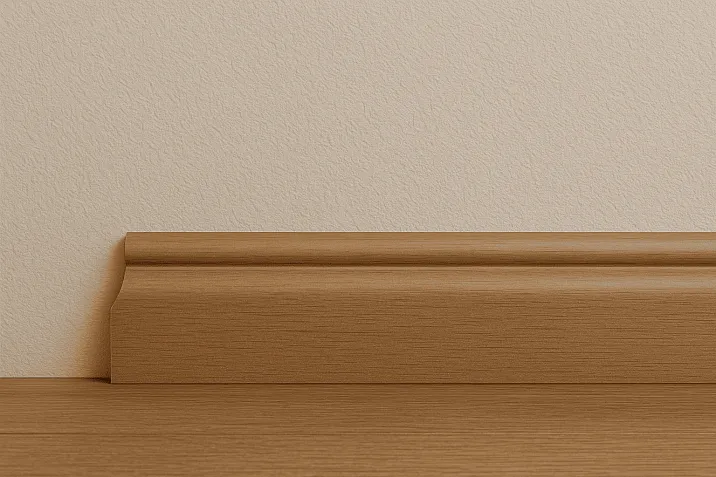
What could be more beautiful than the aroma of freshly sawn oak, when sunlight plays on the golden veins of the wood? Oak baseboard It is not just a decorative element, but an embodiment of centuries-old craftsmanship traditions combined with modern processing technologies. In every fiber of oak molding lives the story of mighty trees that for decades absorbed the strength of the earth and the energy of the sun.
Oak has always been considered a symbol of strength, reliability, and aristocracy. That is why wooden cornice oak species hold a special place in the hearts of lovers of quality finishes. This material seems to be created to highlight the owner's status, their refined taste, and understanding of the true value of natural materials.
When it comes to creating an interior that will delight the eye for decades, the choice inevitably falls on oak moldings. Why? Because oak is a material that does not merely age—it matures, like fine wine, acquiring an even more noble hue and unique patina over the years.
Imagine a living room where every line, every curve of the molding tells its own story. Where the warmth of natural wood creates an atmosphere of comfort and dignity. Only high-quality oak molding can create such an atmosphere, transforming an ordinary space into a true work of art.



Oak Aristocracy: why exactly this material won the hearts of designers
Oak is the king among deciduous species. Its wood possesses a unique set of characteristics that make wooden molding oak the unrivaled choice for the most demanding projects. The density of oak ranges from 650 to 750 kg/m³, ensuring exceptional strength and longevity of finished products.
The structure of oak wood is breathtaking in its beauty and complexity. Large annual rings, expressive medullary rays, a rich color palette ranging from light golden to dark brown—all this creates a unique pattern that cannot be artificially reproduced. Each board is unique, like a fingerprint, making every project exclusive.
Tannins present in oak wood provide natural protection against rot, mold, and insect pests. This natural quality makes oak moldings virtually eternal with proper care. It is no coincidence that oak structures stand for centuries, preserving their original strength and beauty.
Workability of oak is another factor determining its popularity. Despite its high density, oak is easily machined, allowing for the creation of complex profiles with sharp details. The wood does not splinter during processing, and edges come out perfectly smooth, which is critically important for the quality of finished products.
Oak’s color stability deserves special mention. Unlike many other species that may significantly change color under light exposure, oak only slightly darkens over time, acquiring an even more noble hue. This quality makes oak moldings an ideal choice for sunny rooms.
Oak’s acoustic properties are exceptional. The dense wood structure effectively absorbs sound waves, creating a comfortable acoustic environment in the room. Installing oak moldings around the room perimeter noticeably improves the sound insulation of the space.
Oak’s ecological purity is unquestionable. It is a completely natural material, free of synthetic additives and adhesives. Oak moldings are not only safe for health but also positively affect the room’s microclimate, regulating air humidity.
Oak’s energetic properties have been recognized by humanity for millennia. It is believed that oak wood emits a calming, stabilizing energy that promotes concentration and tranquility. Perhaps there is some truth to this—after all, it is no coincidence that work and rest are so comfortable in oak interiors.




Technological advantages and innovations in processing oak moldings
Modern oak processing technologies allow for the full potential of this noble material to be realized. wooden crown molding buy which today can be guaranteed in quality, goes through numerous technological stages, each designed to enhance the material’s natural qualities.
Oak drying is a process requiring special skill and patience. Traditional atmospheric drying lasts from two to five years, but modern kiln technologies allow achieving optimal moisture content of 8–12% within weeks. Programs are individually tailored for each batch, taking into account the thickness, origin of the wood, and intended use.
Oak thermo-treatment is an innovative technology that enhances dimensional stability and moisture resistance without using chemical agents. At temperatures of 160–230°C in a controlled atmosphere, the wood acquires new properties: reduced hygroscopicity, increased biostability, and color change from golden to chocolate-brown.
Stabilization of wood with polymer compositions is another achievement of modern technology. Special compositions penetrate into the wood structure at the molecular level, filling micro-pores and strengthening fibers. The result is a material with improved mechanical properties and practically zero water absorption.
Milling of profiles is performed on high-precision CNC machines, ensuring ideal geometry of the products. Diamond cutters provide surface finish purity, eliminating the need for additional sanding. Dimensional tolerances do not exceed ±0.1 mm, which is critically important for quality installation.
Protective-decorative coatings for oak moldings are specially developed taking into account the characteristics of this species. Deep-penetration oils highlight the natural wood texture, varnishes create protective films with varying gloss levels. Water-based compositions are environmentally safe and do not alter the natural color of the wood.
Staining oak allows obtaining a wide range of shades — from light gray to nearly black. Modern stains penetrate deeply into the wood structure, ensuring even coloring and colorfastness. Particularly popular are brushing techniques, emphasizing the grain of annual rings.
Antiseptic treatment is performed using environmentally safe compositions that protect wood from biological damage without altering its properties. The depth of antiseptic penetration reaches 5–8 mm, providing long-term protection for the products.
Our factory also produces:




Variety of profiles and design solutions
The world of oak moldings is impressive in its variety of shapes and profiles. From classic simple moldings to complex multi-profile constructions — wooden molding made of oak can satisfy any design requests and architectural requirements.
Classic moldings with simple profiles never go out of style. Semi-circular sections with diameters ranging from 15 to 50 mm are ideal for creating smooth transitions between walls and ceilings. These items are especially popular in Scandinavian and minimalist interiors, where simplicity and functionality are valued.
Moldings with complex shapes are a choice for luxurious interiors in classic style. Multi-tiered moldings with grooves, ovals, beads, and other decorative elements create rich play of light and shadow. The height of such moldings can reach 120–150 mm, and the complexity of processing requires exceptional craftsmanship.
Asymmetric profiles — a trend in modern design. Such moldings create dynamic, non-standard interiors, attract attention, and become a standalone decorative element. The complexity of manufacturing is compensated by exclusivity and uniqueness of the result.
Composite moldings made of multiple elements allow creating unique decorative compositions. By combining profiles of different heights and complexities, designers can realize the most daring creative concepts. The modular system simplifies installation and allows easy replacement of damaged elements.
Wooden molding dimensions Dimensions vary widely. Standard length is 2000–3000 mm, but items up to 6000 mm can be manufactured if appropriate raw material is available. Width of moldings ranges from 10 to 200 mm, thickness — from 8 to 50 mm.
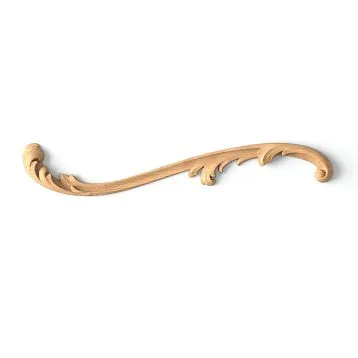
Decorative moldings with concave and convex elements create volumetric compositions on walls and ceilings. Such items require special craftsmanship during manufacturing, but the result exceeds all expectations. Complex transitions and smooth curves transform an ordinary room into a work of architectural art.
Corner elements solve the problem of finishing interior and exterior corners of rooms. Ready-made corner moldings eliminate the need for precise trimming and fitting, guaranteeing perfect joints. This is especially important for complex profiles, where even the slightest inaccuracy can ruin the overall appearance.
Get Consultation
Areas of application and installation specifics
Wooden ceiling molding Oak moldings are used in the most diverse projects — from restoration of historical buildings to decoration of modern luxury interiors. The versatility of oak as a material allows its use in virtually any conditions.
Residential interiors — the primary application area for oak moldings. In living rooms, they create an atmosphere of grandeur and respectability; in bedrooms — coziness and tranquility; in offices — solidity and a professional tone. The natural wood texture harmonizes with any finishing materials.
High-class commercial spaces — hotels, restaurants, executive offices — often choose oak moldings to create a prestigious image. The material emphasizes the status of the establishment and creates the necessary psychological atmosphere for clients and partners.
Restoration work in historical buildings requires the use of authentic materials. Oak moldings manufactured according to historical patterns allow precise recreation of original interior appearances, preserving cultural heritage for future generations.
Luxury yachts and boats traditionally are finished with natural wood. Oak moldings specially treated for marine conditions retain their beauty and functionality in aggressive environments of salty air and high humidity.
Installation of oak moldings requires a professional approach and special skills. The density of the material and its value exclude the possibility of error — every movement must be carefully planned and precise. Jointing of wooden moldings — a particularly critical operation, the quality of which determines the entire appearance of the finish.
Preparation of the base begins with careful checking of the room’s geometry. Deviations from vertical and horizontal alignment must be minimal — no more than 2–3 mm per linear meter. Surfaces are cleaned of dust and primed with deep-penetration compositions to improve adhesion of adhesive materials.
Marking is performed using laser levels and professional measuring tools. The accuracy of marking determines the quality of the final result — even minor inaccuracies will be noticeable after installing the moldings.
Mounting of oak moldings is performed using a combined method — adhesive plus mechanical fastening. Special adhesives for heavy wooden elements are used, ensuring reliable bonding with various types of substrates. Mechanical fastening is done with concealed screws or finish nails.
Corner processing — the most complex part of installation. Internal corners are formed using the "on the edge" method with precise 45-degree angle trimming. External corners require special skill — here, not only cutting accuracy but also end-face sanding quality matters.
Care and operation: secrets of longevity
Proper care of oak moldings is the key to their longevity and preservation of original beauty. Floor wooden cornice Oak moldings, with proper care, can serve for centuries, passing down generations as family heirlooms.
Daily care involves removing dust with soft cloth or special anti-static cloths. Oak does not like excessive moisture, so wet cleaning should be minimal. For cleaning heavy stains, specialized products for natural wood care are used.
Climate conditions play a decisive role in the longevity of oak trim. The optimal temperature is 18-24°C at a relative humidity of 40-60%. Sudden fluctuations in these parameters may lead to cracking or deformation of the wood.
Protection from direct sunlight is especially important for items located near large windows. Ultraviolet radiation may cause uneven color changes. Use curtains, blinds, or special UV filters on windows to protect wooden elements.
Periodic renewal of protective coating is a mandatory procedure to maintain the appearance and protective properties of trim. The frequency of renewal depends on the intensity of use and environmental conditions, but typically it is 3-5 years for interior use.
Preventive inspection should be conducted regularly to detect initial signs of damage. Minor scratches, scuffs, or small chips are easily remedied in the early stage, but may become a serious problem if ignored.
Repairing damage to oak trim requires a professional approach. Minor defects are repaired with wood putty matching the item's tone; severe damage may require replacing individual sections. It is important to use materials compatible with oak in terms of density and coefficient of expansion.
Pest control includes preventive treatment with antiseptics and regular monitoring of wood condition. Oak is naturally resistant to most pests, but under unfavorable conditions may be attacked by powderpost beetles or other insects.
Stylistic solutions and design trends
Oak trim fits organically into various stylistic directions, from strict classicism to bold avant-garde. Ceiling wooden molding on paneling Oak trim can become both a subtle functional element and a striking decorative accent, defining the character of the entire interior.
Classic style requires trim with rich profiles and traditional decorative elements. Complex multi-step profiles with grooves, ovals, and acanthus leaves create an atmosphere of palace luxury. The color palette leans toward dark, noble tones — walnut, mahogany, wenge.
English style implies a more restrained use of decorative elements. Trim of medium size with elegant, but not overly ornate profiles. Characteristic warm tones of natural oak with a light patina, creating an effect of noble antiquity.
Scandinavian style dictates the use of simple geometric forms and light shades. Oak trim is bleached or tinted in light gray or pearl tones. Profiles are maximally simple, with emphasis on material quality and line purity.
Loft style allows the use of roughly processed oak elements with an emphasized industrial character. Brushing, artificial aging, and contrasting combinations with metal and concrete create a unique atmosphere of industrial aesthetics.
Modern classicism combines traditional forms with innovative solutions. Oak trim may feature built-in LED lighting, hidden utilities, and integrated "smart home" elements. Technology serves beauty without disrupting the harmony of natural forms.
Eco-style prioritizes naturalness and eco-friendliness of materials. Oak trim with minimal processing, coated with natural oils and waxes, highlights the connection to nature. Knots, small cracks, and other natural wood features are not concealed but transformed into decorative elements.
Avant-garde solutions imply unconventional use of oak trim. Asymmetric compositions, unexpected color schemes, and combinations with modern materials create interiors of the future, where traditions organically intertwine with innovations.
Color trends in oak trim design reflect general interior design trends. Natural tones with light tinting, creating depth and texture expressiveness, are popular. Gray and graphite tones, achieved through special processing methods, are also fashionable.
Economic aspects and investment attractiveness
The cost of oak trim may seem high compared to items made from other materials, but an economic analysis shows its profitability in the long term. Buy wooden moldings in St. Petersburg It is an investment in quality that pays off through longevity and prestige.
Initial costs include material cost, installation, and finishing work. The price per square meter of oak trim is 3-5 times higher than that of MDF or plastic items, but this difference is offset by service life, which may span decades.
Operational expenses are minimal due to oak's high resistance to mechanical damage and natural aging. The need for repair or replacement arises very rarely when care guidelines are followed. Periodic renewal of protective coating is the only significant expense.
Impact on property value is an important factor when choosing finishing materials. Quality natural wood finishing significantly increases the market value of a property. Expert assessments show that using oak trim can increase apartment value by 5-8%.
The liquidity of such property is also higher — properties with quality wooden finishes sell faster and at higher prices. Buyers are willing to pay extra for the obvious quality and prestige of natural materials.
Warranty obligations for manufacturers of quality oak trim typically amount to 10-15 years, indicating confidence in product longevity. Some companies offer lifetime warranties on structural integrity of the items.
The possibility of restoration and renewal is another economic factor in favor of oak trim. Unlike synthetic materials that require complete replacement upon damage, oak items can be restored multiple times, extending their service life practically indefinitely.
The ecological component also has an economic dimension. Growing demands for eco-friendly building materials make natural wood increasingly sought after, supporting stable demand and pricing for oak products.
Innovations and the future of oak trim
Modern technologies open new possibilities for using oak in trim production. Thermal modification, polymer impregnation, nanotechnology coatings — all this allows improving the natural properties of wood without compromising its ecological purity.
3D milling opens boundless possibilities for creating complex profiles that were previously technically unfeasible. Computer modeling allows developing unique designs optimized for specific interior tasks.
Integration of "smart" technologies into wooden structures is a trend of the near future. Sensors for humidity, temperature, and lighting, embedded in oak trim, can transmit information to a "smart home" system, ensuring optimal conditions for material preservation.
Biotechnologies offer new methods of protecting wood from adverse effects. Probiotic compositions create a protective microflora on the wood surface, preventing pathogenic organism development without using chemical agents.
Sustainable forestry — the concept of sustainable forest management — is becoming increasingly important. Consumers demand guarantees that wood is sourced from responsibly managed forests. FSC and PEFC certification are becoming a mandatory requirement for operating in developed markets.
Recycling wooden products is gaining new dimensions with technological advancements. Old oak moldings can be reprocessed into new items without loss of material quality, aligning with the principles of a circular economy.
Product customization — another trend of the future. Technologies enable manufacturing moldings precisely to room dimensions, taking into account all architectural features. Each project becomes unique, and material waste is minimized.
Virtual and augmented reality are revolutionizing the design and selection of finishing materials. Clients can see how oak moldings will look in their interiors even before purchase, significantly reducing the risk of errors and increasing satisfaction with the result.
Nanotechnology opens new possibilities for protecting and decorating wood surfaces. Nanoparticles can impart oak with new properties — self-cleaning, antibacterial properties, color changes depending on lighting or temperature.
Artificial intelligence is beginning to be applied to optimize wood processing. Machine learning algorithms analyze the structure of each piece of wood and determine optimal processing parameters to achieve maximum quality at minimal cost.
Selection and purchase: criteria of quality and reliable suppliers
When selecting oak moldings, it is important to consider multiple factors — from raw material quality to manufacturer reputation. The right choice determines not only appearance, but also durability, ecological safety, and economic feasibility of investments.
Wood quality is the primary criterion for selection. Oak must be properly dried to a moisture content of 8–12%, free of rot, knots larger than 10 mm, cracks, and other defects. First-grade wood ensures maximum durability and aesthetic qualities of the finished products.
Processing technology affects dimensional accuracy, surface quality, and performance characteristics. Modern CNC equipment guarantees ideal profile geometry and surface finish cleanliness. Manual finishing ensures the final quality of the products.
Product certification confirms compliance with international quality and ecological safety standards. FSC and PEFC certificates guarantee that the wood is sourced from responsibly managed forests. Sanitary-epidemiological certificates confirm safety for health.
Manufacturer’s warranty obligations are an indicator of confidence in product quality. Serious manufacturers provide a warranty of at least 5 years for structural integrity of products and preservation of geometric dimensions.
Packaging and logistics affect the condition of the product during delivery. Quality packaging protects against mechanical damage and moisture exposure. Specialized climate-controlled transport ensures cargo integrity during transit.
Service support includes consultation on selection, calculation of required material quantities, installation and maintenance recommendations. Professional manufacturers provide a full range of services from design to after-sales support.
Price-to-quality ratio — a comprehensive indicator that considers not only purchase cost, but also operational expenses, durability, and impact on property value. Cheap products often cost more in the long run.
Customer reviews and portfolios of completed projects allow assessing the actual product quality and service level. Recommendations from professional designers and builders are a reliable indicator of supplier quality.
The product range must be sufficiently wide to address various tasks. Availability of standard and exclusive profiles, different sizes, and finishing options allows finding the optimal solution for any project.
Warehouse stock and delivery timelines are critical for construction projects with tight deadlines. Reliable suppliers maintain sufficient stock of popular items and guarantee adherence to agreed delivery schedules.
Company STAVROS: craftsmanship, traditions, and innovations in oak molding production
For many years, STAVROS has established itself as an unquestionable leader in the production of high-quality wooden moldings, embodying the best traditions of woodworking and the most advanced technological solutions. The company’s philosophy is based on a deep understanding of the unique properties of natural wood and a commitment to fully realize its potential in every product.
STAVROS’s production facility is a high-tech complex equipped with modern equipment from leading European manufacturers. Precision CNC machines, automated drying and processing lines, robotic packaging systems — all of this ensures exceptional product quality and stable technological processes.
STAVROS pays special attention to the selection and preparation of raw materials. Oak for molding production is sourced exclusively from ecologically clean regions where sustainable forestry principles are observed. Multi-stage quality control of wood at all stages — from harvesting to final processing — guarantees compliance with the strictest standards.
STAVROS’s own laboratory conducts continuous research into improving wood processing technologies. Development of new protective-decorative coatings, optimization of drying and heat-treatment regimes, creation of innovative profiles — the result of continuous work by a team of highly qualified specialists.
The company’s design bureau works closely with leading architects and interior designers, enabling the creation of molding collections that precisely meet current market trends and requirements. An individual approach to each project ensures the possibility of realizing the most complex and ambitious design concepts.
STAVROS’s quality management system is certified to international ISO 9001 standards, guaranteeing stability of all production processes and high quality of finished products. Multi-level control at every production stage eliminates the possibility of defects and ensures compliance with declared characteristics.
Environmental responsibility is an integral part of STAVROS’s corporate philosophy. The company is an active participant in forest conservation programs, uses only renewable raw materials, implements zero-waste production technologies. All products have environmental safety certificates and are approved for use in children’s and medical facilities.
STAVROS’s logistics network covers the entire country and neighboring countries, ensuring fast and reliable delivery to any location. The company’s own fleet of specialized vehicles equipped with climate control systems guarantees cargo integrity under any weather conditions.
STAVROS’s customer service includes a full range of services — from consultation during material selection to technical support during installation and operation. The company’s technical service is ready to promptly resolve any issues related to product use.
STAVROS’s training programs for installation crews and designers help specialists master the specifics of working with natural wood, learn new installation technologies, and obtain up-to-date information on trends and innovations in wooden finishing.
Decades of market experience, thousands of completed projects, positive customer reviews, and recognition by the professional community confirm STAVROS’s status as a reliable partner for solving the most responsible tasks in interior wooden finishing.
By choosing STAVROS products, you are investing not only in high-quality finishing materials, but in the long-term beauty, reliability, and prestige of your interior, backed by warranties from one of the leading manufacturers of wooden products.