Article Contents:
- Psychology of buying: what drives the buyer's choice
- Status and prestige
- Final reflections: Home as a reflection of the soul
- Emotional Component
- Anatomy of the right choice: quality criteria
- Wood moisture
- Geometric parameters
- Surface Quality
- Wood Grade
- Wood species: choosing the character of the interior
- Coniferous species: affordability and functionality
- Hardwood Species: Nobility and Refinement
- Exotic Woods: Luxury and Exclusivity
- Profiles and sizes: the mathematics of beauty
- Simple profiles: universality and functionality
- Complex profiles: richness of forms and decoration
- Functional profiles: technology in design
- Pricing: how not to overpay for quality
- Raw material cost
- Processing complexity
- Quality of processing
- Brand and reputation
- Where to buy: sales channels and their features
- Construction Hypermarkets
- Specialized Stores
- Online stores
- Direct sales from the manufacturer
- Seasonality and purchase planning
- Seasonal fluctuations in demand
- Procurement planning
- Logistics and delivery: the last mile to success
- Packaging and protection
- Transportation conditions
- Acceptance and storage
- Additional services and support
- Installation Services
- Need calculation
- Cutting and preparation services
- Installation work
- Warranties and after-sales service
- Types of warranties
- Warranty terms
- Trends and prospects for market development
- Ecological trends
- Technological Innovations
- Design Trends
- STAVROS: embodiment of the dream of perfection
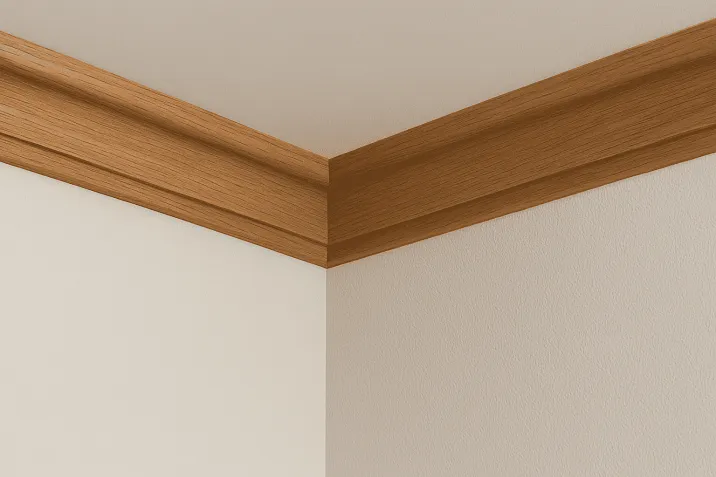
Have you ever wondered why some interiors look expensive and stylish, while others appear ordinary and cheap? The secret lies in the details, and one of the most important such details is the properly selected molding. When it comes time wooden crown molding buy, the buyer faces numerous questions: which wood species to choose, which profile suits the interior, how not to overpay for quality?
In the era of mass production of synthetic materials, wooden molding remains an island of authenticity and natural beauty. Each item is unique, like a fingerprint, because it is impossible to find two absolutely identical pieces of wood. But precisely this uniqueness makes the choice especially responsible — a mistake can cost dearly, both financially and aesthetically.
The modern buyer faces a paradox of choice: the market offers thousands of options, but finding a truly quality product becomes increasingly difficult. How to distinguish real craftsmanship from imitation? How to avoid falling for marketing tricks? This article will be your guide in the world of wooden moldings.


Psychology of Buying: What Drives the Buyer's Choice
Before diving into technical details, it's worth honestly answering the question: why do you need a wooden molding? Understanding the true motivations is crucial for making the right choice and ensuring satisfaction with the purchase.




Status and Prestige
For many buyers Oak baseboard or other elite species — this is a way to highlight your status and financial capabilities. There's nothing wrong with this, as beautiful things truly enhance our lives. However, it's important to understand that status is determined not only by material, but also by manufacturing quality, design, and craftsmanship.
Expensive wood in poor processing will look cheap, while simple pine, processed with care and skill, can appear very noble. Status is a complex concept where material plays an important, but not exclusive, role.
Our factory also produces:



Practicality and Durability
Rational buyers consider wooden molding as a long-term investment. Indeed, a quality item can serve for decades, recovering initial costs through the absence of replacement or repair needs.
With such an approach, it's important to consider not only the purchase price, but also operating costs, maintenance complexity, and restoration possibilities. Beech baseboardFor example, it has high strength and stability, making it an excellent choice for practical people.
Get Consultation
Emotional component
Some buyers choose wooden molding for emotional reasons — love for natural materials, desire to create a cozy atmosphere, connection with nature. These motivations are no less important than rational considerations, as home is the place where we spend most of our lives.
Wood possesses a unique ability to create a sense of warmth and comfort. The tactile sensation of touching natural wood, barely perceptible aroma, play of light on texture — all this forms a special atmosphere that synthetic materials cannot replicate.
Anatomy of the Right Choice: Quality Criteria
When emotions have settled and motivations are defined, it's time to move to rational analysis. A quality wooden molding must meet certain criteria; knowing them will help avoid disappointments.
Wood moisture content
This is the most important, but often ignored by buyers, parameter. The moisture content of the finished molding should not exceed 12±2%. Exceeding this value will inevitably lead to deformation of the item after installation — cracking, warping, misalignment of joints.
Unfortunately, checking moisture in a store without a special device is impossible. You must rely on the manufacturer's reputation and the presence of appropriate certificates. Serious manufacturers always indicate moisture content in the product's technical passport.
Geometric parameters
Quality molding should have ideal geometry. Any deviations from stated dimensions will cause problems during installation and negatively affect the appearance. Permissible deviations: length ±2 mm, width and thickness ±0.5 mm.
Geometry can be checked visually by placing several boards next to each other. Gaps and steps are unacceptable. The profile should be clear, without chips or scratches. Pay attention to the ends — they should be flat and perpendicular to the longitudinal axis.
Surface quality
The surface of quality molding should be perfectly smooth, without chips, tears, or tool marks. wooden cornice High-grade surface is ready for coating application without additional processing.
Natural wood features — knots, color variations, characteristic grain — are allowed. However, knots must be healthy, without signs of rot or shedding. Cracks deeper than 1 mm are not permitted.
Wooden Products Sorting
Wooden products are classified into grades depending on the quality of the raw material. The highest grade (Extra) allows the minimum number of healthy knots up to 10 mm in diameter. First grade permits knots up to 25 mm and minor defects that do not affect strength.
For residential spaces, it is recommended to choose molding of the highest or first grade. Second and third grades are suitable for technical spaces or cases where covering paint is planned.
Wood Species: Choosing the Interior Character
Choosing wood species is not only a matter of budget, but also defining the character of the entire interior. Each species has its unique properties and areas of application.
Coniferous Species: Democracy and Functionality
Spruce remains the most popular choice for wooden molding due to the optimal price-to-quality ratio. The density of spruce wood, 480-520 kg/m³, provides sufficient strength at a low weight, simplifying installation.
Spruce is easy to process, holds fasteners well, stains and paints beautifully. Resin, which many consider a drawback, does not create problems with proper drying and treatment. Moreover, resins provide natural wood preservation.
The fir differs from pine by its lighter, almost white color and less resin. The structure of fir wood is more uniform, making it ideal for painting in light tones. The density of fir is slightly lower than that of pine — 450-480 kg/m³.
Larch is a premium coniferous species. Its high density (600-650 kg/m³) and natural moisture resistance make larch moldings an ideal choice for rooms with high humidity. The price of larch is 2-3 times higher than that of pine, but these costs are justified by its exceptional performance characteristics.
Deciduous species: nobility and elegance
Oak is the king among wood species. Its use in interior design automatically lends a room a sense of solidity and prestige. The density of oak wood is 650-750 kg/m³, hardness by Brinell 3.7-4.0 kg/mm². Tannins present in oak provide natural bioprotection.
Oak stains beautifully and can imitate more expensive tropical species. Especially striking is stained oak with a deep dark color. When selecting oak moldings, it is important to pay attention to the cutting method — radial cut provides a more beautiful texture and dimensional stability.
Beech attracts designers with its uniform structure and ability to be steamed. The density of beech wood is 680-720 kg/m³, providing excellent mechanical strength. Beech is easy to work with, holds a sharp profile, and is ideal for complex molding shapes.
The color of beech ranges from light cream to rose-brown. Steamed beech has a more uniform rose tone, which is valued in furniture manufacturing.
Ash demonstrates impressive strength despite its relatively low density of 650-700 kg/m³. Its mechanical properties are comparable to oak, but its price is significantly lower. Ash has a more pronounced texture with contrasting bands of late and early wood.
Birch is an excellent choice for those planning to paint moldings. The uniform structure of birch wood ensures even coloring without revealing the texture. The density of birch is 600-650 kg/m³, with moderate hardness that facilitates processing.
Exotic species: luxury and exclusivity
Wenge, merbau, teak — these names speak for themselves. Tropical species possess unique decorative properties and exceptional resistance to external influences. However, their use for moldings is more of an exception than a rule due to their high cost and processing complexity.
Exotic species are often imitated by staining more accessible materials. Professional-quality imitation is practically indistinguishable from the original.
Profiles and sizes: the mathematics of beauty
The choice of molding profile determines the interior's style and visual perception. Wooden molding dimensions which must correspond to the scale of the room, requires a thoughtful approach to proportions.
Simple profiles: universality and functionality
Quarter-round molding — the most common and universal profile. Suitable for any interior style, from classic to modern. Sizes vary from miniature 8×8 mm for decorative work to substantial 50×50 mm for large rooms.
Advantages of simple profiles: easy installation, universal application, affordable price. Quarter-round easily fits in corners, requiring no complex trimming.
Rectangular profiles meet the requirements of minimalist design. Clear geometric lines emphasize the modernity of the interior. Such moldings are often used in high-tech, loft, and Scandinavian styles.
Complex profiles: richness of form and decoration
Moldings with grooves, ovals, and beads create luxurious interiors in classic style. The height of such moldings can reach 120-150 mm, and the complexity of manufacturing requires high craftsmanship.
When choosing a complex profile, it is important to consider the scale of the room. In small rooms, large moldings look inappropriate, visually reducing the space. For standard apartments, profiles with a height of 40-80 mm are optimal.
Asymmetric profiles — a trend in modern design. Such moldings become independent decorative elements, drawing attention and creating dynamism in the interior.
Functional profiles: technology in design
Modern technologies allow creating moldings with additional functions. Wooden ceiling molding may have a channel for concealed installation of LED lighting or low-voltage cable systems.
Such solutions are especially relevant in 'smart' homes, where the number of cables is constantly increasing. Concealed installation in moldings ensures both aesthetics and functionality simultaneously.
Pricing: how not to overpay for quality
Understanding pricing principles will help make an informed choice and avoid overpaying. The price of wooden molding consists of several components.
Raw material cost
Wood species — the primary pricing factor. The price difference between pine and oak can reach 300-400%. However, it is important to understand that an expensive species does not always mean the best choice for a specific task.
The grade of the material also affects the price. A gallery made from premium-grade wood costs 40-60% more than one made from first-grade material. For most tasks, first-grade material provides sufficient quality at significant savings.
Processing difficulty
A simple quarter-round profile costs 2-3 times less than a complex gallery. This is due to processing speed, material consumption, and equipment setup complexity.
The length of the items also affects the price. Standard lengths of 2000-3000 mm offer the optimal price-to-quality ratio. Non-standard lengths may cost 20-30% more.
Processing Quality
Surface quality, dimensional accuracy, absence of defects — all of this requires additional quality control costs, more skilled personnel, and modern equipment. Premium manufacturers incorporate these expenses into the product price.
Brand and Reputation
Well-established manufacturers with a solid reputation can afford premium pricing. The buyer pays not only for product quality but also for guarantees, service, and confidence in the outcome.
Where to Buy: Sales Channels and Their Features
Choosing where to buy is no less important than choosing the product itself. Each sales channel has its own advantages and disadvantages.
Construction Hypermarkets
Advantages: Wide assortment, competitive prices, opportunity to compare offers from different manufacturers in one place, developed logistics.
Disadvantages: Limited number of consultants, superficial knowledge of staff, difficulty obtaining specialized advice, standardized approach without considering individual needs.
Hypermarkets are suitable for purchasing standard solutions in large volumes. If you know exactly what you need and do not require specialized consultation, this is the optimal choice.
Specialized Showrooms
Advantages: Highly qualified staff, individual approach, opportunity to receive professional consultation, high-quality samples, installation services.
Disadvantages: Higher prices due to specialization, limited brand assortment, possible bias of consultants toward certain manufacturers.
Specialized showrooms are the best choice for complex projects when an individual approach and professional consultations are required.
Online stores
Advantages: Broadest selection, opportunity to compare prices, customer reviews, 24/7 availability, often lower prices due to cost savings on retail space maintenance.
Disadvantages: Inability to physically inspect the product, risk of receiving a product that does not meet expectations, difficulties with returns, absence of live interaction with a consultant.
Online purchases are suitable for standard products from well-known brands when the product's characteristics are well known.
Direct Sales from Manufacturer
Advantages: Best prices, quality guarantee, ability to order non-standard sizes, direct communication with technical specialists.
Disadvantages: Limited to one brand, need for large purchase volumes, possible logistical challenges.
Direct sales are ideal for large projects or when a product from a specific manufacturer fully meets requirements.
Seasonality and Purchase Planning
The timing of purchase can significantly affect the price and availability of the product. Buy wooden moldings in St. Petersburg or in any other city, it may be more advantageous during certain periods of the year.
Seasonal demand fluctuations
The peak of construction activity occurs during the spring-summer period. During this time, prices are at their highest, and the assortment may be limited due to high demand. The autumn-winter period is characterized by reduced activity and, consequently, more attractive prices.
New Year holidays are traditionally accompanied by promotions and sales. Many manufacturers strive to clear out year-end inventory, offering significant discounts.
Purchase Planning
Wooden galleries are not perishable goods, so they can be purchased in advance. This allows selecting the optimal time for purchase in terms of price and assortment.
When planning, it is important to consider storage conditions. Gallets must be stored in a dry area, protected from direct sunlight and sudden temperature changes.
Logistics and delivery: the last kilometer to success
Quality logistics is an important component of a successful purchase. Wooden items require special handling during transportation and storage.
Packaging and Protection
Quality packaging protects gallets from mechanical damage and moisture. Professional manufacturers use special packaging materials that ensure cargo preservation.
Upon receipt of the goods, check the integrity of the packaging and ensure the contents match the order. Any damage must be documented in the presence of the carrier's representative.
Transportation Conditions
Wooden gallets are sensitive to moisture and temperature fluctuations. Transportation must be carried out in enclosed transport with stable conditions maintained.
Long-shipment goods require special transport. Ensure the carrier has the appropriate capabilities to deliver gallets without damage.
Reception and Storage
After receiving the goods, visually inspect each item. Check the geometry, surface quality, and absence of defects. All remarks must be documented in the acceptance act.
Storage until the start of installation must be conducted in a dry room with stable temperature. Gallets should be laid horizontally on a flat surface with spacers between rows to allow air circulation.
Additional Services and Support
Modern manufacturers and sellers offer a wide range of additional services that enhance the value of the purchase.
Consultation Services
Professional consultation will help make the right choice, taking into account the specifics of the project. The consultant should consider the interior style, room dimensions, planned finishing method, and project budget.
Quality consultation saves time and money, helping avoid errors in material selection and calculating the required quantity.
Need Calculation
Accurate calculation of the required material quantity is an important service that allows optimizing costs. Professional calculation takes into account the room's features, installation method, and allowance for trimming.
Cutting and Preparation Services
Many suppliers offer services to cut gallets to size, prepare angles, and pre-process surfaces. This saves time and ensures higher quality preparation.
Installation work
Professional installation guarantees a high-quality result. Jointing of wooden moldings requires special skills and tools, which qualified professionals possess.
When selecting an installation crew, pay attention to their portfolio of completed work, customer reviews, and availability of specialized tools.
Warranties and After-Sales Service
Reliable warranties indicate the manufacturer's confidence in the quality of their product. Warranty obligations must clearly define conditions, terms, and procedures for making claims.
Types of Warranties
Quality warranty covers compliance of the product with stated characteristics — dimensions, moisture content, grade, absence of defects.
Warranty of durability implies maintaining operational properties for a specified period under specified operating conditions.
Warranty of result covers not only the material itself but also the quality of work performed during comprehensive service.
Warranty obligations apply under certain conditions: proper storage, qualified installation, and adherence to operating recommendations.
Carefully review warranty terms before purchase. Ensure they are realistic and achievable under your conditions.
Trends and prospects of market development
The market for wooden moldings continuously evolves under the influence of changes in interior design, manufacturing technologies, and ecological requirements.
Growing attention to ecology stimulates demand for products made from certified wood, produced in accordance with sustainable forestry principles. FSC and PEFC certification is becoming an important competitive advantage.
Ecological Trends
Technologies for recycling wood processing waste into high-quality products are developing. This reduces product cost and decreases the ecological impact of production.
Thermal modification of wood allows improving its properties without using chemicals. Thermally treated wood has enhanced dimensional stability, biostability, and moisture resistance.
Technological Innovations
Nanotechnologies open new possibilities for creating protective coatings with unique properties — self-cleaning, antibacterial, color-changing.
Design trends
Interior customization stimulates demand for non-standard solutions. Complex-profile, unusual-sized, and exclusive wood moldings are gaining popularity.
Integration of technologies into traditional materials creates new product categories — moldings with built-in lighting, communication channels, and "smart" features.
STAVROS: embodiment of the dream of perfection
In the world of wooden products, there are companies that don't just follow trends — they create them. STAVROS belongs to such innovators who combine deep respect for traditions with an unwavering pursuit of perfection.
STAVROS is not just a brand — it is a philosophy of relating to wood as a living material requiring a special approach and craftsmanship. Every molding leaving the company's production facilities carries a piece of the soul of artisans who invest not only professional knowledge but also genuine love for their craft.
The STAVROS production complex represents a unique combination of traditional craftsmanship and modern technologies. Here, the latest-generation CNC machines operate, but decisions are made by people with decades of experience working with wood.
The quality of STAVROS products begins with careful selection of raw materials. The company cooperates only with verified suppliers who share sustainable forestry principles and guarantee that the wood originates from responsibly managed forests.
Innovative wood drying and processing technologies allow STAVROS to produce items with unique characteristics. The company's own laboratory continuously works on refining technological processes and developing new products.
STAVROS's quality control system has no analogues in the industry. Multi-level inspection at every production stage, modern measuring equipment, and visual inspection by experienced craftsmen — all this guarantees flawless quality of every item.
Ecological responsibility is an integral part of STAVROS's corporate culture. The company actively participates in reforestation programs, uses energy-efficient technologies, and minimizes production waste.
STAVROS's customer service is built on principles of individualized approach and long-term partnership. Each client receives personalized attention, professional consultations, and technical support at every stage of cooperation.
The company's logistics network ensures fast and reliable delivery to any point in the country. Specialized climate-controlled transport, professional packaging, and real-time cargo tracking — all this guarantees product integrity during transportation.
Choosing STAVROS products means investing not just in finishing materials, but in the quality of life, beauty of your home, and confidence for tomorrow. This is the choice of those who understand the true value of craftsmanship and are unwilling to compromise on quality.
Buy wooden molding: complete guide to choosing the ideal solution for your home | STAVROS Company