












































































Article Contents:
- Hinges: The Invisible Heroes of Everyday Life
- Drawer Guides: Smooth Movement and Reliability
- Lift Mechanisms: Innovations in Upper Sections
- Extension Systems: Maximizing Space Usage
- Materials and Technologies: What Determines Hardware Quality
- Metals and Alloys: The Foundation of Durability
- Polymers and Composites: Innovations in Action
- Coatings and Finishes: Protection and Aesthetics
- Manufacturing Technologies: Precision as the Key to Quality
- Choosing Hardware for Different Types of Cabinets
- Closet Systems: Organizing Space for Clothing
- Kitchen Cabinets: Functionality in High-Humidity Conditions
- Office Cabinets: Reliability Under Heavy Use
- Children's Cabinets: Safety Above All Else
- Innovations and Trends in Cabinet Hardware
- Smart Technologies: Cabinets in the Age of the Internet of Things
- Ecology and Sustainable Development: Caring for the Future
- Ergonomics and Inclusive Design: Comfort for Everyone
- Aesthetics and Design: From Function to Form
- Practical Aspects of Choosing and Purchasing Cabinet Hardware
- Defining Needs: What Really Matters
- Calculating Required Quantity: Avoiding Excess and Shortage
- Compatibility and Standardization: Important Technical Aspects
- Where to Buy Cabinet Hardware: Overview of Options
- Installing and Maintaining Cabinet Hardware
- Professional Installation: When It Is Necessary
- Tools and Materials: What Is Needed for Installation
- Tools and Materials: What Is Needed for Installation

A cabinet without quality hardware is like a car without an engine — visually appealing but utterly useless. It is precisely the hardware that transforms an ordinary box with shelves into a functional space where every item finds its ideal place. It determines how silently a door closes, how smoothly a drawer slides out, and how long your furniture will last. The question of whether Where to buy wardrobe hardwarebecomes key for those who value the quality, durability, and aesthetics of their interior.
In a world where every square centimeter of living space is worth its weight in gold, properly organized storage systems are not a luxury but a necessity. Modern wardrobe hardware are high-tech solutions capable of turning even the most compact wardrobe into an ergonomic masterpiece. Lift mechanisms, pull-out baskets, multi-level storage systems — all these elements do more than just make the wardrobe convenient; they transform the quality of life, freeing up time from endless searches for needed items.
This article will be your guide through the world of modern wardrobe hardware. You will learn about the latest innovations and classic solutions, learn how to choose hardware tailored to specific tasks, and understand why investing in quality mechanisms is an investment in comfort for years to come. Ready to dive into an exciting world where engineering meets design art? Then let’s begin our journey!


Anatomy of a modern wardrobe: hardware as the foundation of functionality
A modern wardrobe is a complex engineering structure, each element of which performs a specific function. Hardware is not just an addition to furniture, but an inseparable part of it, determining ease of use, durability, and aesthetic qualities.




Hinges: the invisible heroes of daily life
Hinges are the foundation of any hinged wardrobe, an element we rarely notice until it is working properly. However, it is precisely the quality of the hinges that determines how smoothly the door will open, whether there will be creaking over time, and whether the facade will sag.
Surface-mounted hinges — a classic solution, where the hinge is visible when the door is open. They are distinguished by their simplicity of installation and reliability, but they lag behind in aesthetics compared to more modern solutions.
Semi-surface-mounted hinges — a compromise option used when the facade is partially overlaid on the wardrobe body. They are less noticeable than surface-mounted ones, but provide sufficient mounting strength.
Inset hinges — installed when the door fully enters the wardrobe body. They are practically invisible when the door is closed, making them a popular choice for modern minimalist interiors.
Hidden hinges — an innovative solution where the hinge is completely concealed within the end of the facade and the wardrobe body. Such hinges are invisible both when the door is open and when it is closed, creating a "floating" facade effect.
Modern hinges are equipped with soft-close systems that prevent door slamming and extend the lifespan of the facade. They feature three-way adjustments, allowing the facade to be perfectly aligned even with minor inaccuracies in the wardrobe body installation.
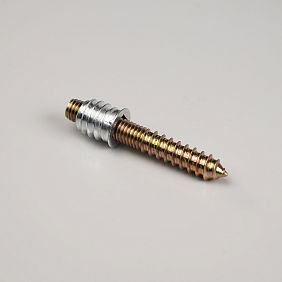
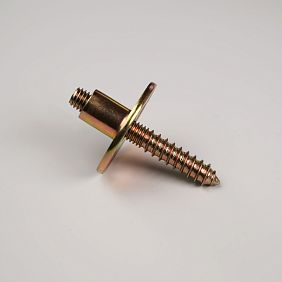
Our factory also produces:


Drawer guides: smooth movement and reliability
Guides determine how easily and smoothly a drawer will slide out, what weight it can support, and how long it will last without sticking or misalignment.
Ball-bearing guides — a more advanced solution, providing smooth operation and full drawer extension. They support up to 45 kg and have a lifespan of up to 50,000 cycles. Modern ball-bearing guides are equipped with soft-close systems and protection against accidental drawer ejection.
Hidden guides — installed under the drawer base and not visible during use. They provide an aesthetic appearance and maximum usable drawer width. Hidden guides can support up to 60 kg and have a lifespan of up to 80,000 cycles.
Tandem guides — an innovative solution combining the advantages of ball-bearing and hidden guides. They provide exceptionally smooth operation, support significant loads (up to 80 kg), and have a lifespan exceeding 100,000 cycles.
Modern guides are equipped with additional features such as:
Modern guides are equipped with additional features such as:
- Soft-close system
- Soft-open system
- Push-to-open mechanism for opening by pressing (without handles)
- Synchronizers for simultaneous extension of multiple drawers
- Dampers for smooth closing even with a sudden push
Get Consultation
Lift mechanisms: innovations in upper sections
Lift mechanisms are a modern solution for upper sections of wardrobes, especially relevant for kitchen cabinets and wardrobe systems. They allow the facade to open upward rather than sideways, saving space and providing convenient access to contents.
Gas lift mechanisms — use gas springs for smooth lifting and holding the facade in an open position. They provide smooth movement but require precise calculation of spring force depending on the facade weight.
Spring lift mechanisms — a simpler and more affordable solution using mechanical springs. They are less sensitive to facade weight but may lag behind gas mechanisms in smooth operation.
Electric lift mechanisms — an innovative solution allowing the facade to be opened and closed by pressing a button or even via voice control. They provide maximum user comfort but require connection to an electrical network.
Modern lifting mechanisms are equipped with soft-close systems, open-position latches, and facade drop protection. They can be integrated into "smart home" systems, allowing control via smartphone or voice commands.
Extension systems: maximum space utilization
Extension systems are specialized solutions that allow maximum efficient use of cabinet space and ensure convenient access to its contents.
Pull-out baskets - ideal for storing small items, clothing, accessories. They can be made from various materials (metal mesh, plastic, textile) and equipped with dividers for organizing storage.
Pull-out hangers - allow efficient use of wardrobe space. They can be designed as shoulder-bar rods extending forward or sideways, or as specialized hangers for pants, ties, belts.
Pull-out shelves - provide convenient access to contents of deep cabinets. They can be fully or partially extendable, depending on specific needs.
Rotating systems - an innovative solution for corner cabinets. They allow use of hard-to-reach space in corners, providing full access to contents by rotating a special mechanism.
Modern extension systems are equipped with smooth-running guides, open-position locking systems, and protection against accidental falling out. They can be integrated with lighting systems that automatically turn on when opened, providing additional comfort of use.
Materials and technologies: what determines the quality of hardware
The quality of cabinet hardware is determined not only by its structural features, but also by the materials it is made of, as well as the manufacturing technologies. Understanding these aspects will help make an informed choice when deciding on, Where to buy wardrobe hardware.
Metals and alloys: the basis of durability
Most cabinet hardware elements are made from metals and alloys that provide the necessary strength, wear resistance, and longevity.
Steel - the most commonly used material for manufacturing guides, hinges, and other mechanical components. Depending on specific applications, various types of steel are used:
- Carbon steel - an affordable material with good mechanical properties, but requiring additional corrosion protection.
- Stainless steel - has high corrosion resistance, making it an ideal choice for hardware used in humid areas (bathrooms, kitchens).
- Alloyed steel - contains additives that improve certain properties (strength, wear resistance, resistance to high temperatures).
Zinc alloys - widely used for manufacturing decorative hardware elements (handles, caps) and some functional parts. They have good corrosion resistance, are easily cast and machined, allowing creation of complex shapes with high precision.
Aluminum and its alloys - lightweight and strong material used for manufacturing sliding system profiles, handles, and decorative elements. Aluminum is corrosion-resistant, making it ideal for use in humid areas.
Brass - an alloy of copper and zinc, traditionally used for manufacturing premium-quality hardware. Brass has high strength, corrosion resistance, and an attractive appearance that can be further enhanced by various coatings.
Polymers and composites: innovations in action
Modern cabinet hardware increasingly uses polymer materials and composites, which provide unique properties unattainable with metals alone.
Polyamide (nylon) - a strong and wear-resistant polymer used for manufacturing rollers, bearings, and other components requiring low friction. Polyamide parts ensure silent operation of mechanisms and do not require lubrication.
Polyoxymethylene (POM) - a high-strength technical plastic with high rigidity and wear resistance. It is widely used for manufacturing gears, rollers, and other mechanical components of hardware.
Polypropylene - a lightweight and chemically resistant polymer used for manufacturing housings of extension systems, containers, and other elements not subjected to significant loads.
Composite materials - combine properties of various materials, providing optimal balance of strength, weight, and cost. For example, metal parts with polymer coatings combine metal strength with polymer quietness and aesthetics.
Coatings and finishes: protection and aesthetics
Coatings not only determine the appearance of hardware, but also provide additional protection against corrosion, wear, and other negative influences.
Electroplated coatings - a thin layer of metal (chromium, nickel, zinc) applied electrochemically. They provide high corrosion resistance and an attractive appearance, but may be susceptible to wear under intensive use.
Powder coatings - polymer powders applied to the surface and then cured at high temperatures. They form a strong, durable coating resistant to wear, chemical exposure, and ultraviolet radiation.
Anodizing - an electrochemical process creating a protective oxide layer on the surface of aluminum. Anodized aluminum has increased corrosion resistance and can be colored in various shades.
Decorative finishes - include a wide range of technologies, from traditional lacquering to modern methods of applying metallized films that create chrome, gold, bronze, and other metal effects.
Manufacturing technologies: precision as the key to quality
Modern cabinet hardware is produced using high-precision technologies that ensure perfect interaction of all components.
Injection molding - a technology that allows creating complex shapes from metal alloys and polymers with high precision. It is widely used for manufacturing mechanism casings, decorative elements, and other hardware components.
Stamping - a process of forming parts from sheet metal using special dies. This technology ensures high productivity and precision when manufacturing hinges, brackets, and other flat parts.
Extrusion - a process of obtaining products by forcing material through a die. This technology is widely used for manufacturing aluminum profiles for sliding systems.
Laser cutting - a modern technology that allows precisely cutting complex-shaped parts from sheet metal. It ensures perfect geometry of parts and absence of deformations typical for traditional cutting methods.
Robotic assembly - using industrial robots for assembling complex mechanisms ensures high precision and repeatability, which is critically important for proper hardware operation.
Choosing hardware for different types of cabinets
Hardware selection must correspond to the cabinet type, its purpose, and usage characteristics. Let's consider the specifics of choosing hardware for different cabinet types, which will help you make an informed decision when seeking an answer to the question, Where to buy wardrobe hardware.
Closet systems: organizing space for clothing
Closet systems require specialized hardware that ensures convenient storage of various types of clothing and accessories.
Pantographs (closet lifts) - mechanisms that allow lowering a rod with hooks from the upper level to the lower one. They provide access to clothing stored at height without using a ladder. Modern pantographs may be equipped with gas struts for smooth movement and latches for secure holding in the lower position.
Pull-out rods for hooks - allow efficient use of cabinet depth, providing convenient access to clothing stored deeper inside. They may be equipped with smooth extension systems and stops for comfortable use.
Pants organizers - specialized pull-out systems for storing pants. They may be made as pull-out frames with crossbars or as individual pull-out hangers. Modern pants organizers are equipped with smooth extension systems and can hold up to 30 pairs of pants on a single frame.
Tie and belt racks - compact systems for organized storage of ties, belts, and other accessories. They may be pull-out or rotating, ensuring convenient access and space-saving.
Laundry baskets - pull-out systems for storing laundry, socks, underwear, and other small clothing items. They may be made of metal mesh, plastic, or fabric and equipped with dividers for organized storage.
Shoe organizers - specialized systems for storing shoes. They may be made as pull-out shelves, slanted shelves, or special holders for individual pairs of shoes. Modern shoe organizers provide compact storage for up to 20 pairs of shoes per square meter of area.
Kitchen cabinets: functionality under high humidity
Kitchen cabinets operate under conditions of high humidity, temperature fluctuations, and possible contact with food products, which imposes special requirements on hardware.
Hinges with stops - provide smooth and silent closing of kitchen cabinet doors. They must be made of corrosion-resistant materials and have protective coatings. Modern hinges for kitchen cabinets have an opening angle up to 170 degrees and withstand up to 200,000 opening/closing cycles.
Lift mechanisms for upper cabinets - allow opening the facade upward rather than sideways, saving space and preventing accidental head impacts on open doors. For kitchen cabinets, mechanisms with locking in the open position are especially relevant, ensuring safety when accessing cabinet contents.
Pull-out systems for lower cabinets - provide convenient access to contents of deep lower cabinets. They may be made as pull-out drawers, baskets, or specialized systems (bottle racks, cargo, trash systems). For kitchen cabinets, high load-bearing capacity of guides (from 40 kg) and resistance to moisture are important.
Corner systems - specialized solutions for efficient use of kitchen corner space. They may be made as pull-out baskets, rotating shelves (carousel), or pull-out mechanisms providing access to contents of corner cabinets.
Internal space organization systems - include cutlery trays, drawer dividers, lid holders, specialized inserts for storing spices, knives, and other kitchen utensils. They must be made of materials allowing contact with food products and easily cleanable.
Office cabinets: reliability under intensive use
Office cabinets are often subjected to intensive use by many people, requiring especially reliable and durable hardware.
Reinforced hinges - for office cabinets, hinges with increased load capacity and a service life of at least 100,000 opening/closing cycles are recommended. They must ensure secure door closure and minimal play.
Locks and locking systems - an important element of office cabinets, ensuring the security of documents and valuable items. They may be mechanical (key or code) or electronic (with card access, biometric sensors). Modern locking systems can be integrated into the office's overall access control system.
High-strength guides - for drawers of office cabinets, especially archival ones, guides with high load capacity (from 50 kg) and full extension, ensuring convenient access to contents, are required. They must have a service life of at least 80,000 cycles and be equipped with systems preventing accidental drawer drop.
Adjustable feet - allow compensation for uneven floors and ensure cabinet stability. For office cabinets, especially tall ones, stability is critically important for safe use.
Wall mounting systems - prevent tipping of tall cabinets, which is especially important in offices with high foot traffic and in the presence of children (e.g., in childcare facilities).
Children's cabinets: safety comes first
Cabinets for children's rooms require special attention to safety and ergonomics, taking into account the characteristics of children of different ages.
Safe hinges - must have finger protection and angle limiters to prevent cabinet doors from contacting walls or other furniture. For children's cabinets, hinges with integrated soft-close mechanisms are recommended to prevent sudden door closure.
Handle-free edges - for children's cabinets, rounded handles without protruding elements are preferred, as children may otherwise get injured. They should be comfortable for small hands and positioned at a height accessible to children.
Tipping protection systems - mandatory safety feature for tall cabinets in children's rooms. They can be implemented as wall-mounted brackets or special counterweights integrated into the lower part of the cabinet.
Soft-close and damping systems - prevent sudden door and drawer closure, protecting children's fingers from pinching. They also reduce noise levels, which is especially important in children's rooms.
Height-adjustable elements - allow adapting the cabinet to the child's growth over time. These may include adjustable shelves, clothing rods, or pull-out systems.
Innovations and trends in cabinet hardware
The world of cabinet hardware is constantly evolving, offering new solutions that make furniture use more convenient, functional, and aesthetically appealing. Knowing current trends will help you make a forward-looking choice when deciding on, Where to buy wardrobe hardware.
Smart technologies: cabinets in the era of the Internet of Things
Modern technologies are penetrating all areas of life, and cabinet hardware is no exception. Smart solutions make cabinet use more convenient and intuitive.
Electronic opening systems - allow opening cabinets without physical contact, which is especially relevant in kitchens when hands are occupied or dirty. They can be activated by a simple push on the facade (push-to-open system) or via motion sensors.
Integration with smart home systems - allows controlling cabinets via voice commands, smartphone, or tablet. For example, you can program kitchen cabinets to open automatically upon entering the kitchen or close all cabinets before leaving the house.
Biometric access systems - provide high security without the need for keys or memorizing codes. They may use fingerprint recognition, facial recognition, or other biometric data to identify users.
Built-in lighting - automatically activates when the cabinet is opened, providing optimal illumination of its contents. Modern lighting systems can be integrated directly into hardware (handles, guides) and operate on batteries, without requiring connection to the electrical grid.
Monitoring systems - track the cabinet's status (open/closed), internal temperature and humidity, and presence of specific items. They can send notifications to smartphones upon detecting abnormal situations (e.g., if the cabinet remains open or the temperature inside a wine cabinet exceeds permissible limits).
Ecology and sustainability: caring for the future
Ecological aspects are becoming increasingly important when choosing any products, including cabinet hardware. Modern manufacturers offer solutions that minimize negative impact on the environment.
Eco-friendly materials - hardware made from materials free of harmful substances (lead, cadmium, formaldehyde) and not emitting toxic compounds during use and disposal.
Recycled materials - using recycled raw materials in hardware production reduces consumption of natural resources and waste volume. For example, some manufacturers use recycled aluminum or plastic to produce certain components.
Energy-efficient technologies - minimize energy consumption during hardware production and operation. This is especially relevant for electrified systems that can use energy-saving components and operating modes.
Durability and repairability - hardware designed for long-term use and allowing replacement of individual components instead of full replacement reduces waste and resource consumption in the long term.
Certification - many manufacturers undergo voluntary environmental certification (LEED, BREEAM, FSC), confirming that their products meet high environmental standards.
Aesthetics and design: from function to form
Modern cabinet hardware is not only functional elements but also an important part of furniture design, capable of highlighting its style and individuality.
Minimalism and hidden solutions - the trend toward invisible hardware continues to develop. Hidden hinges, integrated handles, and opening systems without visible elements create an effect of clean, continuous surfaces.
Contrasting combinations - using hardware that contrasts in color or material with the main furniture surface creates striking accents and emphasizes the designer's intent. For example, brass handles on a dark facade or black hardware on light-colored furniture.
Natural materials and textures - renewed interest in natural materials is reflected in hardware design. Wooden, leather, and stone elements, often combined with metal, create a warm, tactile atmosphere.
Customization - the ability to create unique hardware on individual order is becoming increasingly accessible due to advancements in 3D printing and digital manufacturing technologies. This allows full alignment with specific design requirements and the creation of truly unique furniture pieces.
Retro styling - modern hardware styled after historical designs (Victorian, Art Deco, mid-century modern), but using contemporary materials and technologies, allows creating furniture with character and history.
Ergonomics and inclusive design: comfort for everyone
Modern wardrobe hardware is developed considering ergonomic requirements and inclusive design principles, making furniture comfortable for people of different ages, heights, and physical abilities.
Adjustable systems - allow adapting the height of shelves, rods, and other elements to a specific user. This is especially important for families where furniture is used by people of different heights, or for people with disabilities.
Easy opening - systems requiring minimal effort to open doors and drawers make furniture accessible for children, elderly people, and individuals with physical disabilities.
Tactile feedback - hardware elements providing tactile feedback (click when closing, vibration at a certain position) help visually impaired individuals use furniture more confidently.
Contrasting colors - using hardware that contrasts in color with the main furniture surface makes it easier for visually impaired individuals to use.
Electric systems - automatic opening and closing controlled by a button or motion sensor make furniture accessible for people with limited mobility.
Practical aspects of selecting and purchasing wardrobe hardware
Selecting and purchasing wardrobe hardware is a process requiring attention to detail and understanding of basic principles. Let's consider practical aspects that will help you make the right choice and avoid common mistakes.
Defining needs: what is truly important
Before asking yourself, Where to buy wardrobe hardwareit is necessary to clearly define your needs and requirements for hardware.
Functional requirements - determine what functions the hardware should perform. For example, in a wardrobe, the ability to organize storage of different types of clothing is important; for a kitchen, moisture resistance and easy access to contents are needed; for an office, reliability and safety are key.
Intensity of use - assess how intensively the wardrobe will be used. For elements with high usage intensity (e.g., kitchen cabinets), hardware with increased durability and reliability is required.
Operating conditions - consider the conditions in which the wardrobe will be used. For humid areas (bathrooms, kitchens), hardware made from corrosion-resistant materials is required; for children's rooms, safe and durable mechanisms are needed.
Aesthetic preferences - determine what style and design of hardware will harmonize with the overall style of the furniture and interior. Hardware can be a subtle functional element or a striking accent highlighting the furniture's individuality.
Budget constraints - determine how much you are willing to invest in hardware. Remember that quality hardware is a long-term investment that pays off through ease of use and furniture longevity.
Calculating required quantity: avoiding excess and shortage
Accurate calculation of the required hardware quantity allows avoiding additional costs for excess or problems related to shortage.
Hinges - for standard hinged doors up to 2 meters high, typically 3-4 hinges are required per door (depending on door weight and manufacturer recommendations). For taller or heavier doors, the number of hinges may be increased.
Drawer guides - one set (two guides) is required per drawer. When selecting guides, consider the drawer depth and required load capacity.
Handles - typically one handle is required per door or drawer. For large doors, two handles may be used. When selecting handles, consider the distance between mounting holes (center-to-center distance) and compatibility with existing holes in the fronts (if fronts are already prepared).
Lift mechanisms - one set is required per lift door. When selecting a mechanism, consider the door's weight and dimensions, as well as the required opening angle.
Fastening elements - many types of hardware come with necessary fastening elements, but some require separate purchase. Confirm the included components and, if necessary, purchase additional fastening elements compatible with your furniture material.
Compatibility and standardization: important technical aspects
When selecting hardware, it is important to consider compatibility with specific furniture and compliance with standards.
Size compatibility - hardware must match the furniture dimensions. For example, hinges are selected based on front thickness and mounting type (surface-mounted, semi-surface-mounted, inset), while guides are selected based on drawer depth.
Material compatibility - different types of hardware are designed for different materials (solid wood, MDF, particleboard, glass) and have specific installation requirements. Ensure that the selected hardware is compatible with your furniture material.
Standardization - most modern hardware complies with certain standards, ensuring interchangeability and compatibility of components from different manufacturers. However, some manufacturers use proprietary systems, whose components are not compatible with products from other brands.
Modernization potential - when selecting hardware, consider its future modernization or replacement possibilities. For example, some hinge systems allow adding a closer to already installed hinges without requiring full replacement.
Where to buy cabinet hardware: overview of options
The question of Where to buy wardrobe hardwarehas many answers, each with its own advantages and disadvantages.
Specialized stores - offer a wide range of hardware and professional consultation. Here you can see and touch the product before purchasing, receive recommendations for selection and installation. However, prices in such stores may be higher than in other sales channels.
Online stores - offer the convenience of ordering from home and often lower prices due to the absence of costs for maintaining retail spaces. However, when purchasing online, you cannot physically assess the product's quality before buying, which requires additional research into the seller's reputation and product reviews.
Manufacturers and official distributors - ensure product authenticity, professional support, and often offer extended warranties. However, the selection is usually limited to one brand's products, and prices may be higher than with independent sellers.
Construction hypermarkets - offer a basic range of hardware along with other construction and finishing materials. This is convenient for small projects or urgent purchases, but the selection and quality of consultation may be limited.
Furniture factories and woodworking workshops - may sell hardware used in their own production. This ensures compatibility with specific furniture, but the selection is usually limited.
When choosing where to purchase, consider not only price, but also the seller's reputation, service quality, warranty obligations, and the possibility of receiving professional consultation.
Installation and maintenance of cabinet hardware
Even the highest-quality hardware will not last long without proper installation and regular maintenance. Let's consider the main aspects of installing and maintaining cabinet hardware, which will help ensure its long and flawless operation.
Professional installation: when is it necessary
Hardware installation can be done independently or entrusted to professionals, depending on the complexity of the mechanisms and your experience.
Simple hardware - basic hinges, handles, simple guides can be installed independently if you have the necessary tools and basic skills in furniture work. Most manufacturers provide detailed instructions and templates for installation.
Complex mechanisms - lifting systems, multi-point locks, electric mechanisms are recommended to be entrusted to professionals. Incorrect installation may not only result in malfunction of the mechanism, but also damage the furniture or even cause injuries during use.
Built-in systems - hardware requiring embedding into furniture (hidden hinges, locks, certain types of guides) requires precision and special tools. If you lack experience in such work, it is better to consult professionals.
Warranty obligations - some manufacturers provide warranty only if their products are professionally installed. Clarify this before purchasing, especially for expensive hardware.
Tools and materials: what you will need for installation
For independent hardware installation, you will need certain tools and materials, whose presence should be checked before starting work.
Basic tools - screwdrivers (cross and flat), drill with a set of wood drill bits, tape measure, pencil, level. These tools are necessary for most types of hardware.
Specialized tools - depending on the type of hardware, you may need templates for marking holes, a router for installing hinges and locks, guides for drilling holes for dowels and eccentric bolts.
Fasteners - screws, bolts, anchors, dowels, eccentric bolts. Many types of hardware come with necessary fasteners, but some require separate purchase.
Auxiliary materials - silicone lubricant for mechanisms, wood glue, putty for filling defects, painter's tape for marking.


