Article Contents:
- Anatomy of a paneled front: construction and aesthetics
- Frame: load-bearing perimeter
- Panel: central insert
- Muntins: internal division
- Panel typology: from simplicity to opulence
- Flat panel: minimalist honesty
- Raised panel: classical depth
- Carved panel: baroque expression
- Fluted panel: neoclassical rigor
- Panel geometry: proportions and rhythm
- Golden ratio: proportions of beauty
- Symmetry and rhythm: organizing multiplicity
- Scale correspondence: panel and front
- Furniture and architecture dialogue: unified spatial code
- Wall panels and furniture fronts: mirror reflection
- Doors and fronts: kindred spirits
- Ceiling and furniture divisions: vertical and horizontal
- Panel style specifics: from baroque to minimalism
- Baroque: opulence and movement
- Classicism: order-based rigor
- Art Nouveau: asymmetry and nature
- Modern classic: simplified forms
- Manufacturing technology: from board to front
- Selection and preparation of wood
- Milling and assembly
- Finishing
- Frequently asked questions about solid wood fronts
- Why are solid wood fronts better than MDF?
- How to care for paneled fronts?
- Can I order fronts with custom panel profiles?
- Which wood species to choose for cabinet fronts?
- How much do solid wood paneled fronts cost?
- Conclusion: The Language of Forms by STAVROS
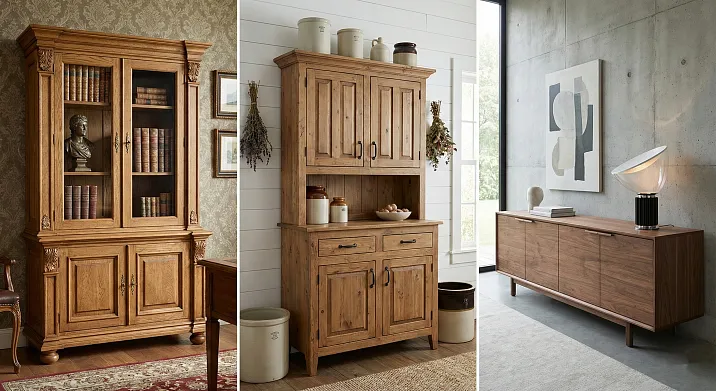
Open the door of an antique cabinet — and before you unfolds not just a wooden plane, but a complex composition of frames and inserts, creating depth, rhythm, history.Solid wood furniture frontsspeak of who you are, which era you value, what principles you hold. A panel is not a technical construction detail, but an architectural code that permeates the entire space, repeating on doors, walls, panels. When the panel pattern on a cabinet echoes the geometry of wall panels, a visual harmony arises, turning a collection of objects into a cohesive interior.
What is a panel? It is the central part of a door or panel, inserted into a frame. The frame is the load-bearing element made of solid wood strips forming the perimeter. The panel is a thinner insert that fills the space within the frame. This construction did not arise by chance — it solves the problem of wood movement due to humidity changes. A wide solid board will inevitably warp, bend, and crack. The frame-and-panel construction allows the panel to move within the grooves of the frame, compensating for dimensional changes without destroying the whole. Function gave birth to form, form became style.


Anatomy of a Paneled Front: Construction and Aesthetics
Before discussing styles and variations, it is important to understand the basic structure of a paneled front. It is not a monolithic slab, but an assembled construction of several elements, each with its own function.




Frame: The Load-Bearing Perimeter
The front frame consists of four elements — two vertical stiles (left and right) and two horizontal rails (top and bottom). The width of frame elements is typically 60-100 millimeters for kitchen cabinet fronts, 80-120 millimeters for wardrobes, sideboards. The frame thickness is 18-25 millimeters — sufficient for strength, but not creating excessive bulk.
The profile of the frame's inner edge — where the panel is inserted — has a groove 8-12 millimeters deep. The groove is milled along the entire frame perimeter, creating a seat for the panel. The groove width is 1-2 millimeters greater than the panel thickness, providing clearance for wood movement.
The outer edge of the frame can be straight, chamfered, or profiled. A simple chamfer — a beveled edge at a 45-degree angle, 3-5 millimeters wide — softens the rigidity of a right angle. A profiled edge with a bead or cove creates a decorative effect, a play of light and shadow. The choice of profile defines the style — a simple chamfer for modern classic, a complex profile for historical styles.
Frame corners are joined with a tenon — straight or mitered (at 45 degrees). A tenon joint ensures strength and durability, withstanding decades of use. A glue seam reinforces the joint, but the tenon bears the main load. The quality of the tenon fit determines the quality of the entire front — a gap in the frame corner is unacceptable.
Our factory also produces:


Panel: The Central Insert
The panel is a flat or profiled panel inserted into the frame grooves. The thickness of a flat panel is 8-12 millimeters — sufficient for rigidity, but allows insertion into the frame groove. Panels are made from solid wood, plywood, MDF, veneered board depending on the concept and budget.
A solid wood panel from a single piece of wood is a premium option, offering maximum tactile feel and warmth. The wood grain is visible across the entire surface, creating natural beauty. However, a solid panel requires correct grain direction and precise gap calculation — it changes size across the grain with humidity changes.
A veneered panel — a core of stable plywood or MDF, faced with veneer of a valuable wood species. Such a panel is more stable than solid wood, does not warp, and allows economical use of rare, expensive species. Visually, high-quality veneering is indistinguishable from solid wood, but there is a tactile difference — plywood feels colder, less responsive to touch.
A profiled panel has relief — a convex center (canalure), stepped levels, milled ornamentation. The profile is created on a milling machine, giving volume and dynamism to a flat surface. A profiled panel creates a play of light and shadow, visually enriching the front.
Get Consultation
Muntins: Internal Division
A muntin is a thin strip 15-40 millimeters wide that divides the space within the frame into several parts. Instead of one large panel, two or three smaller ones are installed, separated by muntins. This creates a more detailed, intricate composition.
Muntins can be horizontal, vertical, or cross-shaped. A horizontal muntin divides the front into upper and lower zones — characteristic of doors where the upper part is smaller than the lower. Vertical muntins create a rhythm of vertical stripes — suitable for tall, narrow fronts. A cross-shaped muntin divides the front into four parts — a symmetrical solution for square fronts.
The muntin profile is usually simpler than the frame profile — rectangular cross-section or with a simple chamfer. This creates a hierarchy — the frame as the main element, muntins as secondary. An overly complex muntin profile will create visual cacophony.
Panel Typology: From Simplicity to Opulence
The character of the panel defines the front's style more than any other element. The frame can be almost identical in different styles, but the panel differs radically.
Flat Panel: Minimalist Honesty
A flat panel is a smooth panel without relief, inserted flush with the frame or slightly recessed. This is the simplest and simultaneously the most restrained solution. A flat panel emphasizes the wood grain, creates calm planes, and avoids visual noise.
In modern interpretations of classic style, the flat panel becomes a backdrop for material quality — the beautiful grain of oak or walnut wood speaks for itself, requiring no additional decoration. A panel made of solid wood with expressive grain is sufficient to create a noble impression.
A flat panel can be veneered with grain matching — radial cut with straight annual ring lines creates strict graphics. Tangential cut with a wavy pattern introduces softness. Book-matched veneering (two veneer sheets opened like book pages) creates a symmetrical, mirrored pattern.
Painting a flat panel to match the frame tone or in contrast changes perception. A panel matching the tone creates a monochrome surface where only the frame relief is distinguishable. A contrasting panel — light on a dark frame or dark on a light one — emphasizes the geometry of the composition, creating graphic quality.
Frame panel: classic depth
A frame panel has a stepped profile — the central part is recessed relative to the edges, creating a frame-within-a-frame effect. The edge of the panel rises by 3-8 millimeters, forming a border. The central part is flat or slightly convex.
This type of panel creates depth, interplay of planes, and architectural complexity. Light falls on the raised edges, shadow lies in the recess — creating a three-dimensional perception of a flat facade. Frame panels are characteristic of English, French, and American furniture from the 18th-19th centuries.
The width of the frame panel's border influences its character. A narrow border of 15-25 millimeters creates a delicate transition. A wide border of 40-60 millimeters forms an expressive frame. The border can have a profile — a bevel, a bead, a cove — complicating the composition.
The central part of a frame panel can be decorated — milled geometric patterns, applied carved overlays, fabric inserts.Furniture decorin the form of carved rosettes, cartouches, garlands transforms the frame panel into a decorative object.
Carved panel: baroque expression
A carved panel is a surface covered with a three-dimensional ornament, creating a sculptural relief. Floral motifs — acanthus leaves, grapevines, roses, garlands. Geometric patterns — meanders, guilloche, rosettes. Figurative images — putti, masks, trophies.
The carving can be bas-relief — the design is recessed into the plane by 3-8 millimeters, the background remains flat. Or high-relief — the ornament protrudes above the background by 10-20 millimeters, creating strong volume. Bas-relief carving is more delicate, suitable for restrained interiors. High-relief is expressive, requiring a formal context.
The technology for creating a carved panel — hand carving by a master carver or CNC machining. Hand carving is unique, each element differs slightly, possessing vitality, the breath of a human hand. Machine carving is precise, repeatable, cheaper, but lacks individuality. A compromise — machine carving with hand finishing, where the main volume is done by the machine, and details are worked by the carver.
Toning a carved panel emphasizes the relief. Dark stain accumulates in the recesses, light protrusions contrast — enhancing the readability of the ornament. Patination — applying light pigment into recesses on a dark background — creates an effect of noble antiquity. Gilding — coating the protruding parts of the carving with gold leaf or gold paint — palatial luxury.
Panel with fluting: neoclassical rigor
Fluting — vertical grooves, repeating the motif of ancient columns. A panel covered with fluting creates a rhythm of vertical lines, visually elevating the space. Fluted panels are characteristic of Neoclassicism, Empire, and styles oriented towards antiquity.
The number of flutes on a panel varies from five to fifteen depending on width. A narrow panel of 200-300 millimeters has 5-7 flutes. A wide one of 500-600 millimeters — 10-15. Too frequent flutes create visual clutter, too sparse ones lack rhythm.
Flute depth is 3-6 millimeters, width 15-25 millimeters. Profile — semicircular or parabolic. Flat bands 8-15 millimeters wide remain between the flutes. A variation — flutes filled with a round rod (reeded flutes) for one-third or half their height — complicating the motif.
Fluted panels on furniture facades echo fluted pilasters on walls, creating stylistic unity.Classic Furniturewith fluting requires an architectural environment with the same motif — otherwise it looks alien.
Panel geometry: proportions and rhythm
The arrangement of panels on a facade, their sizes, and proportions create a composition perceived as harmonious or disharmonious. There are rules developed over centuries that ensure visual correctness.
Golden ratio: proportions of beauty
The classical proportion of a panel is based on the golden ratio — a width-to-height ratio of approximately 1:1.618. A panel 300 millimeters wide has a height of about 485 millimeters. This ratio is perceived by the eye as most harmonious, corresponding to natural proportions.
For vertical facades — tall and narrow, characteristic of wardrobes — the ratio can be more elongated, up to 1:2 or even 1:2.5. This emphasizes verticality, creates an upward aspiration. For horizontal facades of chests, cabinets — the ratio approaches 1:1.3 or 1:1.4, emphasizing horizontality.
Panel sizes on a single facade can vary. On a door with two panels, the upper one is smaller than the lower — typically the upper occupies one-third of the height, the lower two-thirds. This creates visual stability — the heavy part at the bottom, the light part at the top. Equal panels look static, sometimes boring.
Symmetry and rhythm: organizing multiplicity
When there are several panels on a facade, their arrangement follows symmetry. The central axis of the facade is a vertical line dividing it in half. Panels are arranged symmetrically relative to this axis. If one panel — it is centered. If two — they are mirrored. If three — the central one is on the axis, the side ones are symmetrical.
The distance between panels (muntin width) is usually less than the frame width. Frame 80 millimeters, muntin 40-50 millimeters. This creates a hierarchy — the frame is primary, the muntin secondary. Equal width of frame and muntin creates visual confusion; it's unclear what is more important.
The rhythm of panel repetition across multiple facades must be coordinated. If one cabinet door has three panels, the adjacent door also has three, positioned at the same levels. This creates horizontal lines running across the entire cabinet, organizing the composition. Chaotic panel placement on different doors creates disorder.
Scale correspondence: panel and facade
The panel size must correspond to the facade size. On a small facade of 400×600 millimeters, a large panel with a wide frame will consume all space, leaving a tiny center. Optimal — frame 50-60 millimeters, panel 280×480 millimeters. On a large facade of 800×2000 millimeters, a narrow frame will be lost — a frame of 80-100 millimeters is needed.
The number of panels also depends on the facade size. Small facade — one panel. Medium 500×1200 millimeters — two panels vertically. Large 800×2000 millimeters — three to four panels. Attempting to cram many small panels into a small facade creates visual fragmentation, a busy look.
The thickness of the frame and mullions also scales. For kitchen fronts of the standard 400×600 millimeters, a frame of 50-70 millimeters is optimal. For wardrobe fronts of 600×2400 millimeters — 80-120 millimeters. Proportional correspondence creates visual correctness that the eye perceives without even analyzing the dimensions.
Furniture and architecture in dialogue: a unified spatial code
When the geometry of furniture panels echoes the geometry of wall panels and doors, compositional unity arises. The space is perceived as a system where everything is interconnected, subject to a common logic.
Wall panels and furniture fronts: a mirror reflection
Wall panels, especially boiserie in classic interiors, have a frame-and-panel structure, similar to furniture fronts. Vertical pilasters and horizontal rails form the frames. Inside — panels, flat or relief.interior decorationin the form of carved elements adorns the panels of wall panels.
If wall panels have panels sized 600×1000 millimeters with a 100-millimeter frame, the furniture should have proportionally similar panels. Cabinet fronts — panels 400×800 millimeters with a 70-millimeter frame. The proportion of frame width to panel size is maintained, creating proportional correspondence.
The profile of frames on walls and furniture should be identical or related. If wall frames have a bead and a cove, furniture frames repeat this profile. Even if the size is smaller, the character is the same — the eye reads the repetition and perceives harmony.
The type of panels is also coordinated. Flat panels on walls require flat ones on furniture. Frame-and-panel — frame-and-panel. Carved — carved. Mixing types is possible but requires refined taste. Carved wall panels and flat furniture panels can work if the color, scale, and overall style are unified.
Doors and fronts: kindred spirits
Interior doors with a panel structure are natural allies of furniture fronts. A door with two vertical panels and a cabinet with three vertical panels speak the same language. The difference in quantity is not critical; the commonality of structure is important.
The width of the door and front frames can match — 70 millimeters in both. Or be proportional — door 90 millimeters, front 60 millimeters. It is important that a visual kinship, belonging to the same family of forms, is readable.
The color of doors and furniture is a critical parameter. The ideal option is one wood species, one tint, one finish. Oak doors with oil and oak furniture with oil create material unity. Variation in tones is acceptable — doors lighter, furniture darker, but the species is the same.
Door and furniture handles are also coordinated. If the doors have brass handles of a classic shape, similar ones are used on the furniture. Mixing handle styles — modern on doors, classic on furniture — creates a stylistic break.
Ceiling and furniture divisions: vertical and horizontal
Ceiling coffers — recesses framed by beams or moldings — create a geometric grid on the ceiling. This grid can echo the division of furniture fronts. Square coffers 800×800 millimeters and square panels on fronts 400×400 millimeters — a 1:2 proportion, visually connected.
Vertical pilasters on walls with a 1200-millimeter pitch create a rhythm. Furniture placed between pilasters has a width corresponding to this rhythm. A cabinet 1100 millimeters wide fits between pilasters; its fronts are divided by vertical mullions with a pitch derived from the overall rhythm.
Horizontal moldings on walls — chair rail at a height of 900 millimeters, picture rail at a height of 2000 millimeters — create horizontal lines. Furniture aligns with these lines — a dresser height of 900 millimeters coincides with the chair rail, the top of a display cabinet at the level of the picture rail. Horizontal mullions on furniture fronts are placed at the same levels.
Stylistic specifics of panels: from Baroque to Minimalism
Each era, each style created its own language of panels — forms, proportions, decoration. Understanding this language allows for accurate reproduction of the style or its conscious interpretation.
Baroque: opulence and movement
Baroque panels are distinguished by complexity, abundance of decoration, and a dislike for straight lines. Frames are not rectangular but curvilinear — the upper part with a curve, the sides wavy. Frame corners are not right angles but rounded or with scrolls.
Panels are adorned with high-relief carving — acanthus leaves, putti, masks, trophies. The central part of the panel is convex, domed, creating volume. Carving covers the entire surface, leaving no voids. Gilding on the carving is essential — it emphasizes every scroll, creates a play of light.
The color of Baroque furniture — dark wood (walnut, mahogany) with gilding or light wood (linden, chestnut), completely covered with colored enamel and gold. The contrast of a dark background and bright gold or a combination of several enamel colors creates decorative richness.Solid Wood Itemsin the Baroque style require the highest skill of carvers.
Classicism: order and strictness
Classicist panels obey geometry and proportions. Frames are strictly rectangular, corners are right angles, lines are clear. Proportions follow the golden ratio or simple ratios — 1:2, 2:3. The frame profile is simple — a bead, a cove, no complex multi-stage transitions.
Panels are flat or frame-and-panel, without excessive decoration. If there is carving — it is restrained, symmetrical, based on antique motifs — meander, palmettes, rosettes. Carving is localized — in the center of the panel or at the corners, not covering the entire surface.
The color of Classicist furniture — light tones of natural wood, white or gray enamel. Gilding is applied delicately — thin lines, fillets along the edges of the carving. The overall impression — clarity, lightness, harmony of proportions, not an exuberance of decoration.
Art Nouveau: asymmetry and nature
Art Nouveau panels reject rectangularity, creating organic shapes. The frame can have a wavy top edge, asymmetrical sides. The panel is not strictly centered, it can be offset, creating dynamism.
Panel decoration features stylized plants (irises, lilies, poppies), winding stems, female profiles with flowing hair. The carving is smooth, without sharp transitions, creating fluid lines. The carving depth is moderate — 5-10 millimeters, sufficient to create volume but not overloaded.
Art Nouveau colors are complex, muted tones. Gray-green, lilac, brown with a greenish or purple tint. Patina is used to create an effect of noble antiquity. The surface is matte, velvety, without bright gloss.
Modern classic: simplification of forms
Modern interpretations of classic styles preserve the frame-and-panel structure but simplify details. Frames are wide but with minimal profile — a rectangle with a bevel or no profiling at all. Panels are flat, emphasizing wood grain or painted in restrained tones.
Carving is absent or minimized — perhaps one small overlay in the center of the panel. Emphasis is on material quality, fitting precision, and line purity. This is classicism filtered through minimalism, retaining structure but rejecting excessive decoration.
Color — natural wood with a transparent coating or painted in modern shades. Gray, graphite, whitewashed oak. Enamel is matte, velvety, without gloss. Hardware is minimalist — inset handles, profiles without handles, push-to-open systems.
Manufacturing technology: from board to door front
Creating a quality paneled door front requires precision at every stage — from wood selection to finishing.
Wood selection and preparation
Solid wood for door fronts is selected based on several criteria. Absence of defects — knots, cracks, rot, wormholes. Uniformity of grain — sharp changes in pattern create visual imbalance. Moisture content 8-12% — a critical parameter ensuring stability.
Boards are cut considering grain direction. For frames — grain along the length of the element, ensuring strength. For panels — grain vertically on vertical door fronts, horizontally on horizontal ones, so wood movement with humidity changes is predictable.
Selecting grain for visible surfaces is an important stage. Panels on one door front should have similar wood grain patterns. Strongly differing panels create an impression of randomness, of using scraps. Professional selection is when panel grains form a harmonious composition.
Milling and assembly
The frame profile is created on a milling machine. A profile cutter of a given shape passes along the workpiece edge, creating a decorative profile on the outer edge and a groove for the panel on the inner one. Milling precision is critical — a deviation of fractions of a millimeter will create gaps during assembly.
Mortise and tenon joints for frame corners are made on a special machine or with a hand router using a template. The tenon and mortise must match perfectly — the tenon fits into the mortise tightly, without play, but without needing to be hammered. Glue reinforces the tenon but does not replace it.
The panel is inserted into the frame grooves during assembly. A 1-2 millimeter gap around the perimeter allows the panel to move. The panel is not glued to the frame — it must lie freely in the grooves. Rigid gluing will lead to cracking with humidity changes.
Assembly is performed with glue using clamps. The frame is assembled on a flat surface, diagonals are checked — both diagonals must be equal, ensuring rectangularity. The panel is inserted before the glue sets. Excess glue squeezed from the seams is immediately removed.
Final finishing
After assembly, the door front is sanded — first with coarse sandpaper to remove irregularities, then medium and fine to create smoothness. Sand along the grain, avoiding cross-grain scratches. Pay special attention to frame corners and profile transitions.
Staining, if provided, is done with wood stain. Stain is applied with a brush or sponge, distributed evenly, excess is removed. Staining emphasizes wood grain, reveals the pattern. Different wood areas absorb stain differently, creating a natural play of tones.
Final coating — oil, wax, varnish. Oil penetrates the wood, emphasizing grain, creating a matte velvety surface. Wax provides a soft sheen, tactile comfort. Varnish forms a protective film, ensuring high durability but creating a less natural look.
For carved panels, patination is performed after the main coating. Patina — a pigmented composition — is applied into carving recesses with a brush, excess is removed from raised parts. After drying — a final layer of transparent coating, securing the patina.
Frequently asked questions about solid wood door fronts
How are solid wood door fronts better than MDF?
Solid wood has natural grain, tactile warmth, durability. Each door front is unique — the wood pattern is unrepeatable. Solid wood is repairable — scratches are sanded, chips are restored. Over decades, solid wood does not lose its nobility, sometimes becoming even more beautiful with the patina of time.
MDF is more stable — does not warp with humidity changes, cheaper, allows creating complex shapes. But MDF lacks the texture of living wood, is cold to the touch, and if the enamel is damaged, the internal structure of the board is exposed. Solid wood is the choice for those who value naturalness and durability.
How to care for paneled door fronts?
Regular wiping with a dry soft cloth once a week removes dust. Dust accumulates in frame corners, carving recesses — use a soft brush. Wet cleaning is acceptable for varnished door fronts — a well-wrung cloth without excess water.
Door fronts with oil coating are wiped only with a dry cloth. Once a year or two, the oil coating is renewed — a new layer of oil is applied to the cleaned surface. This restores protection, refreshes color, eliminates minor scratches.
Avoid aggressive cleaning agents, abrasives, coarse sponges. Use special products for wooden furniture care. Protect door fronts from direct sunlight — ultraviolet causes fading. Maintain air humidity at 40-60% — this prevents cracking.
Can custom facades with individual panel designs be ordered?
Yes, custom facade design is a common practice. You determine the facade size, number and placement of panels, frame width, profile, and type of decoration. A designer creates a sketch, coordinates it with you, and after approval, initiates production.
Custom facades allow furniture to be precisely integrated into the architectural context of the room, replicating the geometry of wall panels and doors. This creates compositional unity unattainable with standard facades.
The cost of custom facades is higher than standard ones due to development, manufacturing of non-standard cutters, and piece production. But the result is unique furniture that exactly matches your interior vision.
Which wood species to choose for facades?
Oak is hard, durable, with an expressive texture. Oak facades last for decades without losing shape. Color ranges from light honey to dark brown. Oak is the choice for prestigious interiors where solidity is important.
Beech is a more uniform wood with a pinkish tint, takes stains well. Beech facades are ideal for carving—clarity of details, no chipping. Beech suits interiors requiring softness and warmth.
Ash is a contrasting wood with an expressive grain similar to oak but lighter. Ash facades create a dynamic visual effect. Ash is the choice for modern interpretations of classic styles.
Walnut is a dark wood with a rich chocolate range of shades. Walnut facades create nobility and status. Walnut is more expensive than oak and beech, used in premium projects.
How much do solid wood facades with panels cost?
Cost depends on wood species, facade size, panel complexity, and finish. A simple 400×600 mm beech facade with a flat panel starts from 3000-5000 rubles. An oak facade with carved paneling and patination starts from 8000-12000 rubles.
Custom facades are 30-50% more expensive than standard ones. Hand carving increases cost 2-3 times compared to machine carving. Rare species—walnut, mahogany—are 1.5-2 times more expensive than oak and beech.
When budgeting, consider not only facade costs but also carcasses, hardware, and installation. Facades are the visible part, but furniture is a system. Saving on carcasses with expensive facades is irrational—a low-quality carcass will fail before facades wear out.
Conclusion: The Language of Forms by STAVROS
Panels on furniture facades are not just structural elements but an architectural code that organizes space, creates stylistic definition, and connects furniture with room architecture. From simple flat panels of Scandinavian minimalism to lavish carved Baroque compositions—the range of solutions is vast. It's important to understand the logic, follow proportions, and create interplay between furniture, doors, and walls.
STAVROS specializes in manufacturing furniture facades and architectural elements from solid oak, beech, and ash. Production facilities are equipped with modern CNC equipment for milling complex profiles and carving. In-house chamber drying ensures wood moisture of 8-12%, guaranteeing geometric stability for decades.
STAVROS's assortment includes dozens of facade options with various panel types—flat, framed, fluted, carved. Standard sizes for kitchens, wardrobes, libraries. Possibility of custom manufacturing facades of any sizes and configurations for specific projects.
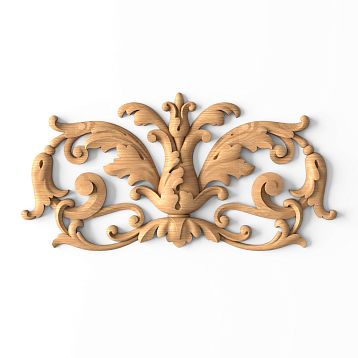
STAVROS furniture decor—carved overlays, rosettes, corner elements, moldings—allows creating unique compositions on facades. Hundreds of carved element options in various styles—from strict classicism to lavish Baroque. Custom carving based on customer sketches for exclusive projects.
Consultation support at all stages—from concept to installation. STAVROS designers will help design facades that interact with room architecture, creating compositional unity. Calculation of required elements, hardware selection, recommendations for installation and finishing.
STAVROS works with private clients, interior designers, furniture factories, and construction companies across Russia and abroad. Logistics ensures delivery from Kaliningrad to Vladivostok with guaranteed preservation of each facade. Showrooms in Moscow and St. Petersburg—opportunity to see facade samples, assess processing and carving quality, receive professional consultation.
Choosing STAVROS means choosing quality natural solid wood, production precision, rich selection, and professional support. Create interiors where furniture doesn't just occupy space but dialogues with architecture, where facade panels interact with wall panels, where every detail is considered and meaningful. Solid wood facades are an investment in durability, beauty, and nobility that don't age but become more valuable over years.