Article Contents:
- The Art of Window Framing: History and Modernity
- Evolution of Window Finishing Through the Centuries
- Modern Requirements for Window Finishing
- Anatomy of Window Framing: Elements and Their Functions
- Sills — The Foundation of Composition
- Sash Rails and Hoods — Functional Beauty
- Sill Elements and Their Role
- Materials for Window Finishing: The Professional’s Choice
- Polyurethane — The Material of the Future
- Traditional Materials in a New Light
- Stylistic Directions in Window Finishing
- Classicism — The Mathematics of Beauty
- Baroque — Theater of Light and Shadow
- Modernism — Natural Organicism
- Modern directions
- Technological Aspects of Window Finishing
- Design and Calculations
- Manufacturing Technologies
- Installation and Setup: Professional Approach
- Preparatory work
- Mounting methods
- Sealing and final finishing
- Regional characteristics and climatic requirements
- Northern Regions of Russia
- Southern Areas
- Coastal areas
- Economic Aspects of Window Finishing
- Cost of Ownership Analysis
- Impact on property value
- Modern Trends and Innovations
- Integration of smart technologies
- Ecological innovations
- Individual Approach to Each Project
- Design Tailored to Specific Tasks
- Adaptation to local conditions
- Quality Control and Standardization
- Requirements for materials
- Certification and Standards
- Practical recommendations for selection and application
- Supplier selection criteria
- Planning and Logistics
- Frequently Asked Questions About Facade Decoration for Window Finishing
- Which material is better to choose for the Russian climate?
- How long does it take to manufacture the elements?
- Can decoration be installed on an already completed house?
- Does Decoration Require Special Care?
- Does decoration affect window insulation?
- Can the color of decoration be changed after installation?
- How to calculate the required amount of materials?
- Is the decoration compatible with modern window systems?
- What warranties are provided for decorative elements?
- Can different styles be combined in one project?
- Conclusion: mastery in every detail
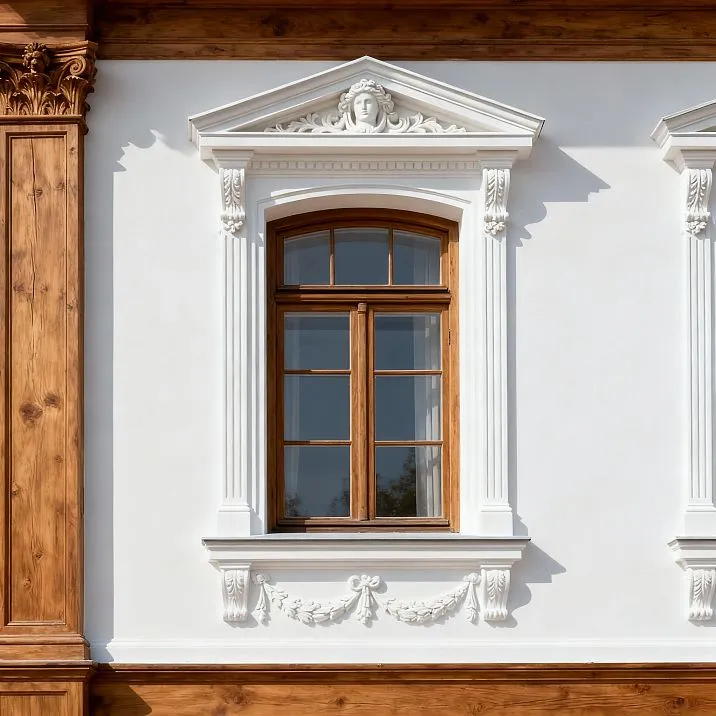
Imagine a house without window frames — no matter how expensive the glazing is, no matter how advanced the technologies are, the building appears unfinished, lacking soul and character.Facade decoration transforms ordinary functional openings into exquisite architectural accents capable of radically transforming the appearance of any building. In today's world, where every exterior detail affects perception and property value, quality window framing becomes not a luxury, but a necessity.Properly executed window framing solves multiple tasks simultaneously: protects joints from moisture, improves thermal insulation, creates visual harmony of the facade, and emphasizes the architectural style of the building. Modern materials and technologies allow achieving results that were once considered unattainable — combining the beauty of classical forms with the practicality of innovative solutions.
Art of window framing: history and modernity
Evolution of window framing through centuries




How has the art of window framing evolved? The history of window decoration is inseparably linked with the evolution of architectural styles and construction technologies. In ancient Russian architecture, carved window casings served not only decorative but also sacred functions — it was believed that ornaments protected the house from evil spirits. Baroque masters of the 18th century created lavish compositions where every detail served to glorify the power and wealth of the owner.
Neoclassicism introduced strict proportions and mathematical precision into window framing. Modernism rejected canons in favor of natural forms and asymmetrical compositions. Each era left its mark on the history of architectural decoration, creating a rich palette of stylistic solutions that we still use today.
Modern requirements for window framing
Our factory also produces:


What has changed in approaches to window framing in the 21st century? Modern window framing must meet much stricter requirements than in the past. Climatic loads, ecological standards, energy efficiency, durability, and economic feasibility — all these factors influence the choice of materials and technologies.
What has changed in window finishing approaches in the 21st century? Modern window opening finishes must meet much stricter requirements than in the past. Climatic loads, ecological standards, energy efficiency, durability, and economic feasibility — all these factors influence the choice of materials and technologies.
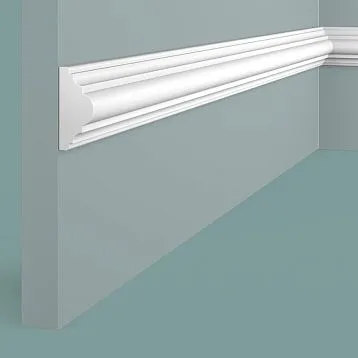
Polyurethane ItemsRevolutionized the architectural decoration industry, offering a material that surpasses traditional solutions on most parameters. The density of modern polyurethane is 500-700 kg/m³, frost resistance exceeds 500 cycles, water absorption coefficient is less than 1.5% — such characteristics ensure decades of flawless service.
Get Consultation
Anatomy of window framing: elements and their functions
Casings — the basis of composition
A casing is the main element of window framing, defining the stylistic affiliation of the entire building. A properly designed casing consists of several functional parts: a sill, main body, and finishing cornice. Each element performs not only decorative but also protective functions.
The sill of the casing is a kind of foundation of the window composition. It should divert water from the lower part of the window opening, protect the windowsill from direct precipitation. The main body of the casing frames the window frame, creating a smooth transition between the window and the wall. The finishing cornice protects the entire structure from above and serves as a base for more complex decorative elements.
Sills and cornices — functional beauty
A cornice is a decorative overhang above the window, performing the most important protective function. A well-executed cornice diverts rainwater from the window frame, prevents glass from getting wet, protects the windowsill from constant moisture. At the same time, the cornice is an important element of architectural composition.
The variety of cornice forms is breathtaking. Triangular cornices emphasize classical rigidity, arched ones create a sense of softness, complex multi-tiered constructions demonstrate the richness of decorative possibilities.Moldings, cornices, pilastersModern manufacturing technologies allow creating cornices of any complexity with minimal time and cost.
Windowsill elements and their role
The windowsill board completes the window composition from below, but its role is not limited to decorative function. A properly designed windowsill diverts water from the wall, creates additional thermal insulation in the critically important zone of window-wall junction, serves as a base for placing flower boxes or other landscaping elements.
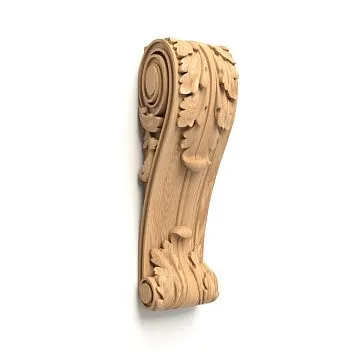
Decorative InsertsBrackets and support elements can significantly enrich the windowsill composition. Brackets and support elements not only support the structure but also serve as independent decorative accents, creating a sense of reliability and solidity.
Materials for window framing: choice of a professional
Polyurethane — material of the future
Why has polyurethane become the material of choice for modern window framing? This revolutionary material combines the best qualities of traditional materials, eliminating their drawbacks. Polyurethane elements have the detail of plaster, the strength of wood, the durability of stone, and yet weigh several times less than any of these materials.
The technology of producing polyurethane elements is based on the polymerization reaction of two components under pressure. This allows obtaining products with variable density — a dense surface layer ensures detail and strength, while a porous internal structure reduces weight and improves thermal insulation properties.
UV stabilizers in polyurethane prevent degradation under solar radiation. Biocides protect against mold and fungi. Antioxidants prevent oxidative aging of the material. Such a comprehensive approach ensures a service life of polyurethane elements of 30-50 years in the most severe climatic conditions.
Traditional materials in a new interpretation
Despite the revolutionary properties of modern polymers,Solid Wood Itemsthey retain their appeal for admirers of natural materials. Modern wood processing technologies have radically changed its operational characteristics.
Deep vacuum impregnation with protective compositions penetrates into the wood structure to a depth of 15-20 mm, creating a reliable barrier against moisture, insects, and fungal damage. Thermomodification at temperatures of 180-220°C changes the molecular structure of wood, increasing its dimensional stability and biostability.
Modified wood surpasses traditional species in many parameters. It does not crack, warp, or require frequent maintenance. At the same time, it retains the unique texture of natural material, its ability to 'breathe', and to create a cozy atmosphere.
Stylistic directions in window trim
Classicism — the mathematics of beauty
Classical window trim is based on ancient principles of harmony and proportions. This is not merely a decorative direction, but an architectural philosophy, where each element adheres to strict mathematical laws. The golden ratio, modular systems, canonical orders — all of this finds embodiment in classical window framing.
The Doric order demonstrates strictness and simplicity of form. The Ionic adds elegance through characteristic volutes. The Corinthian impresses with its ornate decoration. Each order has its own proportional relationships, which must not be violated for authentic classical style.
Baroque — theater of light and shadow
Baroque window trim turns every opening into a small theater of architectural forms. Curvilinear elements, plant ornaments, cartouches with coats of arms and monograms create a dynamic composition where light and shadow play the main roles. Baroque window casings are often asymmetrical, include unexpected details, and impress with the richness of the creators' imagination.
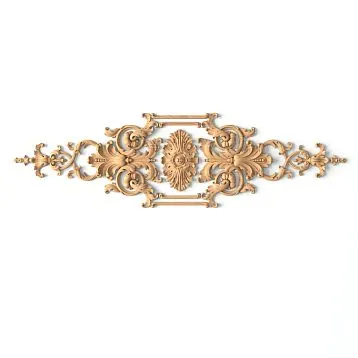
ModernDecor collectionsThey include elements of baroque style of varying complexity. From relatively simple profiled casings to luxurious multi-element compositions — the choice is limited only by the client's imagination and budgetary possibilities.
Modern — natural organicism
The modern style rejected the strict geometric canons of classicism, drawing inspiration from living nature. Plant motifs, flowing lines, asymmetrical compositions create a sense of naturalness and organicism. Each element of modern decor is unique, created for a specific project.
Window trim in the modern style often imitates natural forms — bends of branches, petals of flowers, sea waves. This requires the highest level of skill from designers and manufacturers, capable of embodying complex organic forms in artificial materials.
Modern interior styles also use oak skirting boards, but in a different interpretation. Minimalism prefers simple rectangular profiles without decorative elements. Smooth surfaces with matte finish create a sense of strictness and elegance.
Modern architecture has developed its own approaches to window trim. Minimalism leans toward simple geometric forms, where decorativeness is not the main concern, but perfection of proportions and quality of execution. High-tech demonstrates the beauty of modern technologies, integrating decorative elements with engineering systems.
Neoclassicism reinterprets traditional forms from the standpoint of modern needs. Eclecticism allows combining elements of different styles, creating unique compositions. Each direction has its own features and requirements for materials and technologies.
Technological aspects of window trim
Design and calculations
QualityFacade decorative window trimIt begins with proper design. This is not simply selecting attractive elements from a catalog — it is a comprehensive process taking into account the building's architecture, climatic conditions, operational requirements, and budgetary constraints.
Design includes analysis of building proportions, selection of stylistic direction, calculation of element sizes, determination of mounting methods, material and coating selection. Modern 3D modeling programs allow creating photorealistic images of future decor, evaluating various options, and making adjustments before production begins.
Manufacturing Technologies
Manufacturing high-quality window trim elements requires advanced equipment and strict adherence to technological processes. Creating master models is an art requiring the skill of experienced sculptors. Each detail must be meticulously crafted with jewel-like precision.
Molds for casting are made from special silicone compounds capable of withstanding hundreds of casting cycles without loss of surface quality. The casting process occurs under pressure at strictly controlled temperature. Automated dosing systems ensure precise adherence to component proportions.
Installation and mounting: professional approach
Preparation Work
Quality installation begins with careful preparation of the base. Surfaces must be flat, dry, and free of dust, oil stains, and peeling coatings. Irregularities exceeding 3 mm must be leveled with plaster or putty. The base moisture content must not exceed 4% by mass.
Marking is a critically important stage of work. All elements must be positioned strictly symmetrically relative to the window axis and horizontally relative to ground level. Laser levels and high-precision measuring tools are used. Even minor deviations will be noticeable and spoil the entire appearance.
Methods of mounting
Light polyurethane elements can be mounted exclusively with adhesive without additional mechanical fastening. Adhesive compositions must have high adhesion to various materials — concrete, brick, plaster, painted surfaces. The elasticity of the adhesive ensures compensation for thermal deformations without damaging the joint.
For heavy elements or under special requirements for reliability, combined mounting — adhesive plus mechanical fasteners — is used. Hidden mounting with anchor bolts or special anchors ensures maximum reliability without compromising aesthetics. Mounting points are calculated based on element weights and additional loads.
Sealing and final finishing
Sealing joints is one of the most important stages of installation. High-quality sealants must have high elasticity, resistance to UV radiation, thermal deformation, and atmospheric precipitation. Proper sealing ensures system monolithicity and prevents moisture penetration.
Final finishing includes priming and painting elements. Polyurethane items are supplied in white and require a final coating. This allows the client to choose any color, create any color combinations, or change the facade’s color scheme if needed.
Regional characteristics and climatic requirements
Northern regions of Russia
Severe climatic conditions of the North impose extreme requirements on window trim materials. Temperatures down to -60°C, sharp fluctuations, heavy snowfalls, and strong winds create conditions under which not every material can operate effectively.
Polyurethane elements for northern regions contain special additives — plasticizers that retain elasticity at low temperatures. Increased concentration of antioxidants prevents oxidation processes accelerated by sharp temperature fluctuations. Reinforced mounting systems are designed to withstand additional loads from snow and ice.
Southern regions
Hot climate of southern regions creates another set of problems. Intense solar radiation, temperatures up to +50°C, large daily temperature fluctuations require special material resistance to thermal effects.
UV stabilizers become critically important components of polyurethane compositions. Modern stabilizers based on benzotriazoles and HALS effectively absorb ultraviolet radiation, preventing polymer photodegradation. Light colors are preferable to dark ones, as they heat up less under sunlight.
Coastal areas
Proximity to the sea creates a particularly aggressive environment. Sea salts, carried by the wind, settle on building surfaces, causing corrosion of metallic elements and degradation of porous materials. High humidity accelerates all degradation processes.
The chemical inertness of polyurethane ensures resistance to salt aggression. Special coatings impart self-cleaning properties to surfaces, preventing the accumulation of salt deposits. Enhanced protection of metallic fasteners prevents their corrosion.
Economic aspects of window cladding
Analysis of ownership cost
Investments in quality window cladding should be viewed in terms of total cost of ownership over the entire building's life cycle. Cheap materials often prove economically unviable due to high operating costs and frequent replacement needs.
Polyurethane elements have a higher initial cost compared to polystyrene or gypsum, but they last 3-5 times longer with minimal operating expenses. The ability to repaint multiple times allows updating the appearance without replacing elements. Savings on maintenance far exceed additional initial investments.
Impact on property value
Quality architectural detailing significantly impacts property market value. Buildings with striking facades enjoy higher demand from buyers and tenants. Market studies show that investments in facade decoration can increase property value by 15-30%.
This influence is especially noticeable in the premium segment, where individuality and exclusivity are valued above all else. A unique architectural appearance becomes the property's calling card, distinguishing it from competitors in the real estate market.
Modern trends and innovations
Integration of smart technologies
The future of window cladding is linked to the integration of 'smart' technologies. Framing elements may include sensors for lighting, temperature, humidity, and air quality. Built-in LED lighting creates striking visual effects and can be programmed for various operational modes.
Adaptive systems automatically regulate lighting and microclimate based on external conditions. Solar panels integrated into decorative elements power lighting and sensor systems. Wireless communication systems allow remote control of all functions.
Ecological Innovations
Growing demands for eco-friendliness stimulate the development of new materials and technologies. Biopolymers based on renewable plant resources may gradually replace traditional petrochemical polymers. Recycling technologies reduce the environmental footprint of production.
Self-cleaning coatings with photocatalytic properties break down organic contaminants under sunlight. Antibacterial additives based on silver nanoparticles prevent microbial growth on element surfaces.
Individual approach to each project
Design tailored to specific tasks
Every building is unique, and window cladding should highlight this uniqueness. An individual approach begins with a detailed analysis of the building's architecture, proportions, stylistic features, functional purpose, and surrounding development.
Modern parametric modeling programs allow quickly generating multiple solution variants, optimizing them to meet specific client requirements. Virtual reality enables "walking around" the building and evaluating results from various perspectives even before production begins.
Adaptation to local conditions
Regional architectural traditions and climatic characteristics must be considered when designing window cladding. In historic urban districts, new elements must harmonize with existing buildings without disrupting the established architectural context.
This does not mean mechanical copying of historical forms, but requires a deep understanding of local architectural traditions, climatic features, and cultural preferences of the population. Modern interpretations of classical forms may be more expressive than direct copying.
Quality control and standardization
Material requirements
The quality of window cladding elements is determined not only by appearance but also by a complex set of technical characteristics. Polyurethane density should be at least 500 kg/m³ to ensure required strength. Water absorption should not exceed 2% by volume. Freeze resistance — at least 300 cycles for Russia's middle belt.
Geometric parameters are also critically important. Deviations from nominal dimensions should not exceed ±1 mm. Surface quality is visually assessed — impermissible are pits, inclusions, color spots, mold marks. Surface hardness should be at least 60 Shore A units.
Certification and Standards
Quality window cladding elements must comply with Russian and international quality and safety standards. Mandatory certification confirms absence of toxic substances, fire safety, and compliance with sanitary-hygienic norms.
Voluntary certification under ISO 9001 quality management systems demonstrates the manufacturer's commitment to high standards at all production stages. Environmental certification confirms minimal impact on the environment.
Practical recommendations for selection and application
Supplier selection criteria
Choosing a reliable supplier of window cladding elements is one of the key factors for project success. What should be prioritized first? Presence of own production guarantees consistent quality and delivery timelines. Intermediary companies cannot provide such control level.
Manufacturer reputation, confirmed by portfolios of completed projects, client reviews, awards, and certifications, indicates professionalism and reliability. Technical support throughout all project stages — from design to warranty service — ensures successful implementation even of the most complex tasks.
Planning and logistics
Successful implementation of window cladding projects requires careful planning of all work stages. Material orders must be placed in advance, considering manufacturing, delivery, and potential delays. Standard elements are typically delivered within 1-2 weeks; custom items may take 4-8 weeks.
Delivery of large-format elements requires special transport and may be limited by weather conditions, road conditions, and site-specific features. Material storage on the construction site must ensure preservation and ease of access to installation locations.
Frequently Asked Questions about facade decoration for window cladding
What material is best for the Russian climate?
For Russian climatic conditions, high-density polyurethane with freeze resistance of at least 500 freeze-thaw cycles is optimal. The material should contain UV stabilizers for protection against sunlight and have water absorption less than 2%. For particularly harsh Arctic conditions, special formulations with plasticizers are recommended.
How long does it take to manufacture elements?
Standard catalog elements are typically delivered within 1-2 weeks after order placement. Manufacturing custom elements according to the client's sketches may take 4-8 weeks depending on complexity. Creating new molds for unique items requires an additional 2-4 weeks.
Can decorative elements be installed on an already completed house?
Yes, window trim elements can be installed at any stage — whether during new construction or renovation of existing buildings. It is important to properly prepare the base and choose the appropriate mounting method. Installation on an existing building may require additional work to level surfaces.
Does decor require special care?
Polyurethane elements require virtually no special maintenance. Periodic washing with water and a mild detergent is sufficient to remove dirt. Wooden elements require periodic renewal of protective coating — usually every 3-5 years depending on usage conditions.
Does decoration affect window insulation?
When properly installed, window trim elements can improve the thermal insulation properties of the window unit, sealing cold bridges at the junctions between the frame and the wall. Some decorative systems are specifically designed to integrate with insulation materials.
Can the color of decoration be changed after installation?
Polyurethane elements are easily repainted using specialized exterior paints. The surface is first sanded, degreased, primed, and then painted in the desired color. This allows updating the facade’s appearance without replacing decorative elements.
How to calculate the required amount of materials?
Calculation is performed based on the perimeter of each window, taking into account the specific features of the opening configuration. An additional 10-15% allowance is added to the calculated length for trimming and possible installation errors. For complex elements with multiple details, the allowance may increase up to 20%. For precise calculation, it is better to consult professionals.
Is the decor compatible with modern window systems?
Modern window trim elements are fully compatible with any type of windows — wooden, plastic, aluminum, or composite. Design takes into account the specific features of window profiles, opening systems, and presence of additional equipment.
What warranties are provided for decorative elements?
Quality manufacturers provide a 15-25 year warranty on the operational properties of polyurethane elements. The warranty covers frost resistance, water resistance, geometric stability, and UV resistance. Wooden elements typically have a 10-15 year warranty if usage conditions are met.
Can different styles be combined in one project?
Combining elements of different styles is possible, but requires a professional approach and artistic taste. Eclectic solutions can be very expressive, but it is important to maintain overall stylistic logic and proportional relationships. It is better to entrust such work to experienced designers.
Conclusion: craftsmanship in every detail
Quality window trim is a symphony, where each element plays its part in creating a harmonious architectural masterpiece. In today’s world, where technology develops at a rapid pace and demands for comfort and aesthetics constantly grow,Facade decoration transforms ordinary functional openings into exquisite architectural accents capable of radically transforming the appearance of any building. In today's world, where every exterior detail affects perception and property value, quality window framing becomes not a luxury, but a necessity.it becomes not just decoration, but a necessary element of complete architecture.
Investments in quality window trim pay off many times over — through increased property value, reduced operating costs, and the creation of a comfortable visual environment. Modern materials and technologies allow achieving results that surpass even the most ambitious expectations, combining the beauty of classic forms with the reliability of innovative solutions.
Choosing quality materials, professional design, and proper installation — all these components determine the success of the project. In a world where details create the overall impression, every element of window trim must be flawless. Only such an approach can guarantee a result that will delight the eye and serve as a source of pride for many years.
The art of architecture lives in details, and window trim is one of the most important of these details. It can transform an ordinary building into a work of art, create a unique architectural image, express the individuality and taste of the owner. In an era when individuality is valued above all else, quality window trim becomes a way to make a statement, highlight one’s status, and create an environment worthy of a modern person.
STAVROS embodies the best traditions of architectural craftsmanship, enhanced by the most modern technologies and innovative materials. Extensive experience in facade decoration, deep understanding of the Russian market’s needs, continuous investment in production capacity and technology enable STAVROS to create products that set new quality standards in the industry. In-house production lines ensure full quality control at every stage — from raw material receipt to delivery of finished products to the client. A team of talented designers, experienced technologists, and skilled craftsmen work as a single mechanism, focused on creating architectural masterpieces that will serve as building adornments for many decades. A wide range of products covers all popular architectural styles and price categories, allowing to find the optimal solution for any project — from a modest private home to a large-scale commercial complex. Individual approach to each client, professional technical support at every stage of project implementation, flexible pricing system, and reliable warranty obligations make cooperation with STAVROS not only profitable, but also a pleasant process of creating architectural beauty. Choosing STAVROS, clients receive not just quality products, but a reliable partner in realizing their architectural dreams, guaranteeing that every detail will be executed with flawless quality and attention to the smallest nuances.